PHILADELPHIA--(BUSINESS WIRE)--May 4, 2026--
Lannett Company, Inc., Lanexa Biologics, a wholly owned subsidiary of Lannett, and Sunshine Lake Pharma today announced that the U.S. Food and Drug Administration (FDA) has approved LANGLARA™ (insulin glargine-aldy), as a biosimilar to Lantus ® (insulin glargine), for the treatment of adults and pediatric patients with type 1 diabetes mellitus and adults with type 2 diabetes mellitus. The FDA has determined that LANGLARA is interchangeable with the reference drug, enabling pharmacists to substitute LANGLARA for Lantus without prescriber intervention in states that permit such substitution.
This press release features multimedia. View the full release here: https://www.businesswire.com/news/home/20260504761789/en/
The approval for LANGLARA was based on a comprehensive analytical, preclinical and clinical program which confirmed the PK/PD, efficacy, safety profile and immunogenicity of LANGLARA as compared to Lantus in patients with type 1 and type 2 diabetes.
“Often, the greatest barrier to care for patients living with diabetes is the cost or the availability of the medicine itself. Upon the launch of LANGLARA, supported by the tremendous manufacturing scale of our partner, patients will have expanded access to a safe, affordable and available treatment option. In fact, the scale required to support this medicine is the very reason so few insulin manufacturers exist,” stated Tim Crew, CEO of Lannett. “Moreover, earning the interchangeability designation is critical for patient access and reflects the extraordinary quality and scientific rigor of both Lannett and our partner Sunshine Lake Pharma. Lannett and Lanexa Biologics intend to pursue broad formulary placement across all commercial channels, to make this medicine accessible for all who need it.”
LANGLARA is manufactured by Sunshine Lake Pharma Co., Ltd., which is the pharmaceutical business arm of HEC Group and commercialized in the United States exclusively through Lanexa Biologics LLC, a newly formed wholly owned subsidiary of Lannett Company.
“The approval of LANGLARA reflects the significant effort Lannett and Sunshine Lake Pharma invested in bringing affordable insulin to patients in the US. The Sunshine Lake Pharma group has made very substantial investments to support the massive production scale necessary to be a meaningful supplier of this critical medicine,” stated Richard Tang, President of HEC Group. “We are incredibly proud of what this partnership has produced, we look forward to working with Lannett and Lanexa to make this medicine available to patients in the US in the near future.”
FDA Biosimilar Interchangeability Designation
An interchangeable biosimilar is a biosimilar that may be substituted for the reference product without the intervention of the prescribing health care provider, depending on state pharmacy laws. Not all biosimilars are interchangeable biosimilars. A manufacturer must specifically seek FDA approval for an interchangeable product.
The approval process for interchangeable biosimilars has additional requirements related to the potential for substitution. Patients receiving their medications through their pharmacies may be able to switch between a brand-name biological product and an interchangeable biosimilar.
Strategic Partnership with Sunshine Lake Pharma
LANGLARA is manufactured by Sunshine Lake Pharma, a leading biopharmaceutical company with world-class biologics manufacturing capabilities and a strong track record of regulatory compliance across international markets. The collaboration between Lannett and Sunshine Lake Pharma reflects a shared commitment to delivering high-quality, affordable biologic medicines to patients who need them. Sunshine Lake Pharma’s state-of-the-art manufacturing facility has been designed and operated to meet the exacting standards of both the FDA and international regulatory authorities, providing a robust and scalable supply chain for LANGLARA and future pipeline products. Lannett and Sunshine Lake Pharma also continue to collaborate on a short acting insulin aspart which is in development.
About Lanexa Biologics LLC
Lanexa Biologics LLC is a wholly owned subsidiary of Lannett Company, Inc., established to serve as the commercial platform for Lannett’s biosimilar portfolio in the United States. Lanexa combines the distribution infrastructure, payer relationships, and regulatory expertise of its parent company with a dedicated focus on the unique commercial demands of the biologics market. The formation of Lanexa reflects Lannett’s long-term commitment to biosimilars as a core growth driver and its belief that purpose-built commercial capabilities are essential to competing effectively in this space. LANGLARA™ is Lanexa’s inaugural insulin product. A short acting insulin aspart is also under development.
On July 31, 2025, Aurobindo Pharma announced its intent to acquire Lannett Company, Inc. Upon close of the acquisition, Lanexa will become a stand-alone company.
About Lannett Company, Inc.
Founded in 1942, Lannett Company, Inc. is a leading manufacturer or distributor of about 100 unique pharmaceutical product families that extend and enhance people’s lives. Lannett is a US-based company, with headquarters in Trevose, PA, and top-notch facilities for manufacturing, packaging, and distribution located in Seymour, Indiana.
About Sunshine Lake Pharma
Sunshine Lake Pharma is a multi-billion-dollar China-based pharmaceutical and biotechnology company, and a Hong Kong-listed biopharmaceutical firm under HEC Group (Stock Code: 6887.HK). Driven by independent research and development, the company focuses on key therapeutic areas including pediatric medicines, infectious diseases, chronic diseases and oncology. The company has established integrated capabilities across development and large-scale manufacturing, supporting both domestic and international markets. Through strategic collaborations, including its partnership with Lannett, Sunshine Lake Pharma leverages its technical expertise and production infrastructure to advance complex and biosimilar products. Sunshine Lake Pharma plays a central role in product development and manufacturing execution, supporting global regulatory and commercial efforts.
LANGLARA™ is a registered trademark of Lannett Co.
Lantus ® is a registered trademark of Sanofi

Lannett Company, Lanexa Biologics and Sunshine Lake Pharma announce FDA Approval of LANGLARA™ an Interchangeable Biosimilar of Lantus® (insulin glargine)
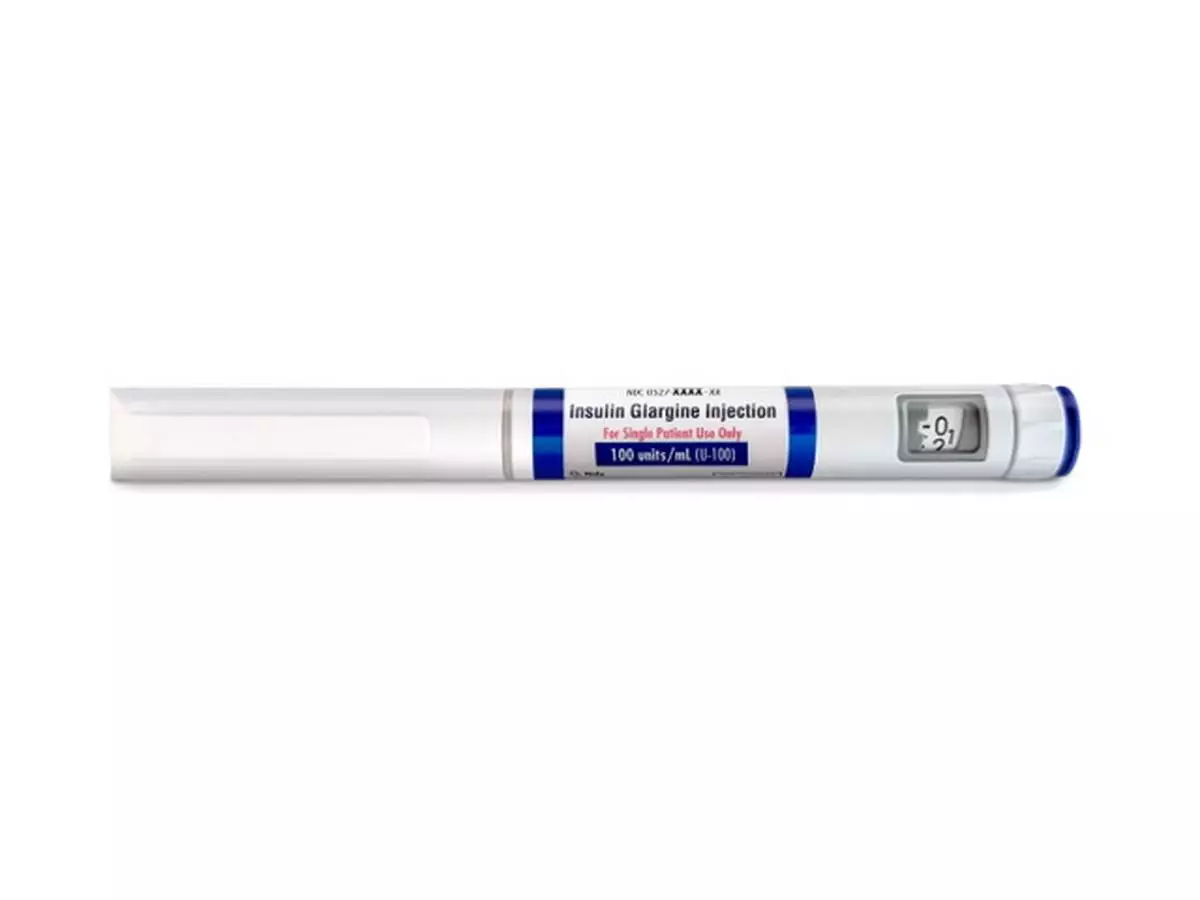
Lannett Company, Lanexa Biologics and Sunshine Lake Pharma announce FDA Approval of LANGLARA™ an Interchangeable Biosimilar of Lantus® (insulin glargine)

Lannett Company, Lanexa Biologics and Sunshine Lake Pharma announce FDA Approval of LANGLARA™ an Interchangeable Biosimilar of Lantus® (insulin glargine)
DUBAI, United Arab Emirates (AP) — The U.S. military on Monday denied claims that Iran struck a Navy vessel as U.S. forces now offer to guide commercial ships through the Strait of Hormuz, where hundreds have been stuck since the Iran war began. Tehran over the past two months has attacked some vessels and blocked others that don’t receive its authorization.
The U.S. military’s Central Command also said two American-flagged merchant ships have “successfully transited through the Strait of Hormuz" and that that Navy guided-missile destroyers in the Persian Gulf are helping to restore commercial shipping traffic.
The statement on X said the destroyers transited the Strait of Hormuz “in support of Project Freedom” and that the merchant ships are ” safely headed on their journey.” It did not say when the Navy ships arrived or when the merchant vessels departed.
Shortly after the announcement, authorities in the United Arab Emirates issued a emergency missile alert urging residents to immediately seek shelter. It was the first such alert since a ceasefire in the Iran war went into effect in early April. There were no immediate reports of casualties or damage.
Iranian news agencies, including the semiofficial Fars and the Iranian Labour News Agency, had earlier claimed that Iran struck a U.S. vessel near an Iranian port southeast of the strait, accusing it of “violating maritime security and navigation norms.” The reports said the vessel was forced to turn back.
The U.S. Central Command said on social media that “no U.S. Navy ships have been struck.”
The U.S. military has said the new initiative, announced by President Donald Trump on Sunday, might involve guided-missile destroyers, more than 100 aircraft and 15,000 service members but has not specified what kind of assistance it would provide. The U.S.-led Joint Maritime Information Center has advised ships to cross the strait in Oman’s waters, saying it set up an “enhanced security area.”
It was unclear whether whether shipping companies, and their insurers, will feel comfortable taking the risk given that Iran has fired on ships in the waterway and vowed to keep doing so.
Iran has responded to the new U.S. effort by calling it a violation of the fragile ceasefire that has held for more than three weeks.
Iran’s control of traffic through the crucial artery for a significant amount of the world’s oil and gas supplies has proved a strategic advantage in its war with the U.S. and Israel, allowing Tehran to inflict tremendous pain on the global economy despite being outgunned on the battlefield.
Trump's announcement that the U.S. would “guide” ships out of the strait warned that Iranian efforts to block them "will, unfortunately, have to be dealt with forcefully.”
He described “Project Freedom” in humanitarian terms, designed to aid stranded seafarers, many on oil tankers or cargo ships, who have been stuck in the Persian Gulf since the war began. Crews have described to The Associated Press seeing drones and missiles explode over the waters as their vessels run low on drinking water, food and other supplies.
Iran’s state-run IRNA news agency called “Project Freedom” part of Trump's “delirium."
Iran’s military command on Monday said ships passing must coordinate with them.
“We warn that any foreign military force — especially the aggressive U.S. military — that intends to approach or enter the Strait of Hormuz will be targeted,” Maj. Gen. Pilot Ali Abdollahi told state broadcaster IRIB.
The Joint Maritime Information Center urged mariners to coordinate closely with Omani authorities “due to anticipated high traffic volume.” It warned that passing close to usual routes, known as the traffic separation scheme, “should be considered extremely hazardous due to the presence of mines that have not been fully surveyed and mitigated.”
But the head of security for the Baltic and International Maritime Council, a leading shipping trade group, said no formal guidance or details about the U.S. effort had been issued to the industry. Jakob Larsen questioned whether the effort was sustainable in the long run or envisioned as a more limited operation, and said there is a “risk of hostilities breaking out again” if it goes ahead.
And the United Arab Emirates on Monday accused Iran of targeting a tanker linked to its main oil company with two drones as it passed through the strait. It did not say when the attack took place. No injuries were reported.
The disruption of the waterway has squeezed countries in Europe and Asia that depend on Persian Gulf oil and gas, raising prices far beyond the region.
Trump has promised to bring down gas prices as he faces midterm elections this year.
The U.S. has warned shipping companies they could face sanctions for paying Iran for transit of the strait. It has enacted a naval blockade on Iranian ports since April 13, telling 49 commercial ships to turn back, U.S. Central Command said Sunday.
The blockade has deprived Tehran of oil revenue it needs to shore up its ailing economy.
U.S. officials have expressed hope that the blockade forces Iran back to the negotiation table.
“We think that they’ve gotten less than $1.3 million in tolls, which is a pittance on their previous daily oil revenues,” U.S. Treasury Secretary Scott Bessent told Fox News on Sunday, adding that Iran’s oil storage is rapidly filling up and “they’re going to have to start shutting in wells, which we think could be in the next week.”
Iran’s latest 14-point proposal for ending the war, made public over the weekend, calls for the U.S. lifting sanctions, ending the U.S. naval blockade, withdrawing forces from the region and ceasing all hostilities, including Israel’s operations in Lebanon, according to the semiofficial Nour News and Tasnim agencies, which have close ties to Iran’s security organizations.
Iranian officials said they were reviewing the U.S. response, though Foreign Ministry spokesperson Esmail Baghaei told reporters on Monday that changing demands, which he did not detail, made diplomacy difficult.
Iran has claimed its proposal does not include issues related to its nuclear program and enriched uranium — long a driving force in tensions with the U.S. and Israel.
Iran’s proposal wants other issues resolved within 30 days and aims to end the war rather than extend the ceasefire. Trump on Saturday said he was reviewing the proposal but expressed doubt it would lead to a deal.
Pakistan said Monday it has facilitated the transfer of 22 crew members from an Iranian vessel seized earlier by the U.S., describing the move as a confidence-building measure as Islamabad attempts to revive talks. Pakistan hosted face-to-face talks last month.
Pakistan's Foreign Ministry said the crew members, who had been aboard the Iranian container ship MV Touska, were flown to Pakistan overnight. They were expected to be handed over to Iranian authorities.
The vessel will be brought into Pakistani territorial waters for necessary repairs before being returned to its original owners, the ministry said, adding that the process is being coordinated with the support of Iran and the U.S.
Metz reported from Ramallah, West Bank. Munir Ahmed contributed from Islamabad, Pakistan.
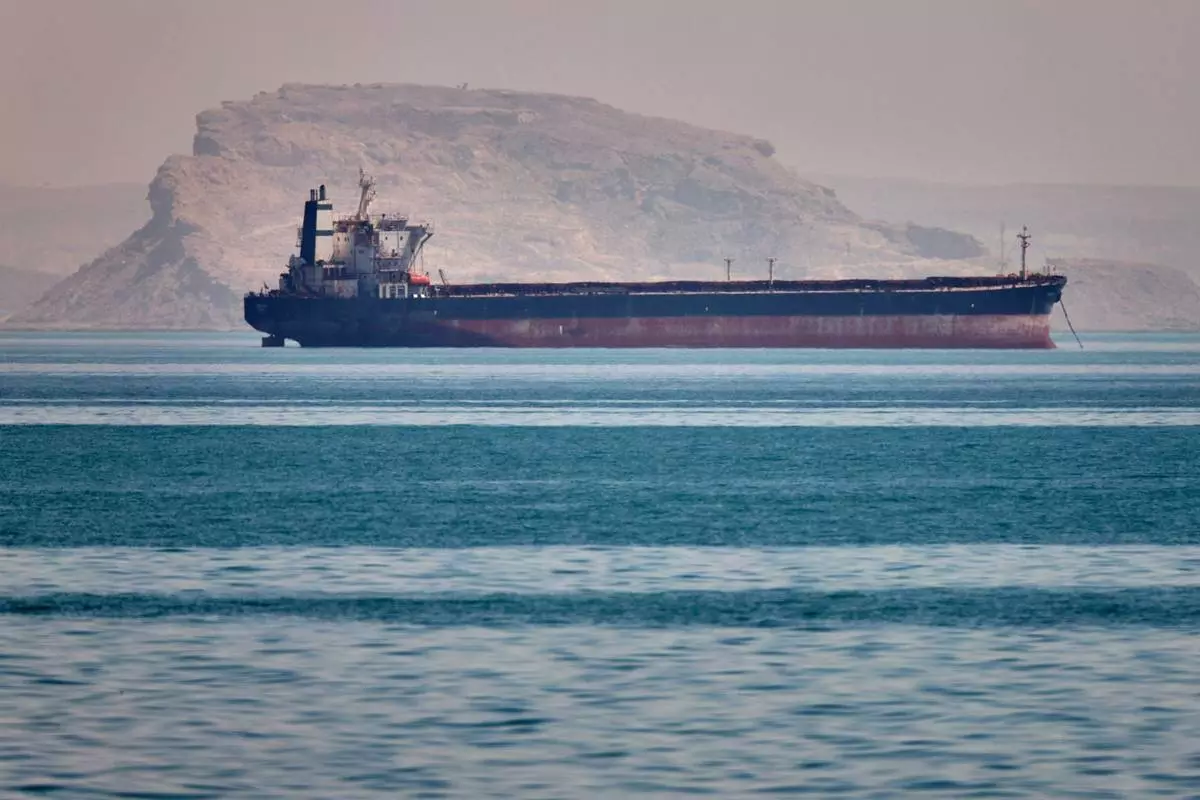
A bulk cargo ship sits at anchor in the Strait of Hormuz off Bandar Abbas, Iran, Saturday, May 2, 2026.(Amirhosein Khorgooi/ISNA via AP)
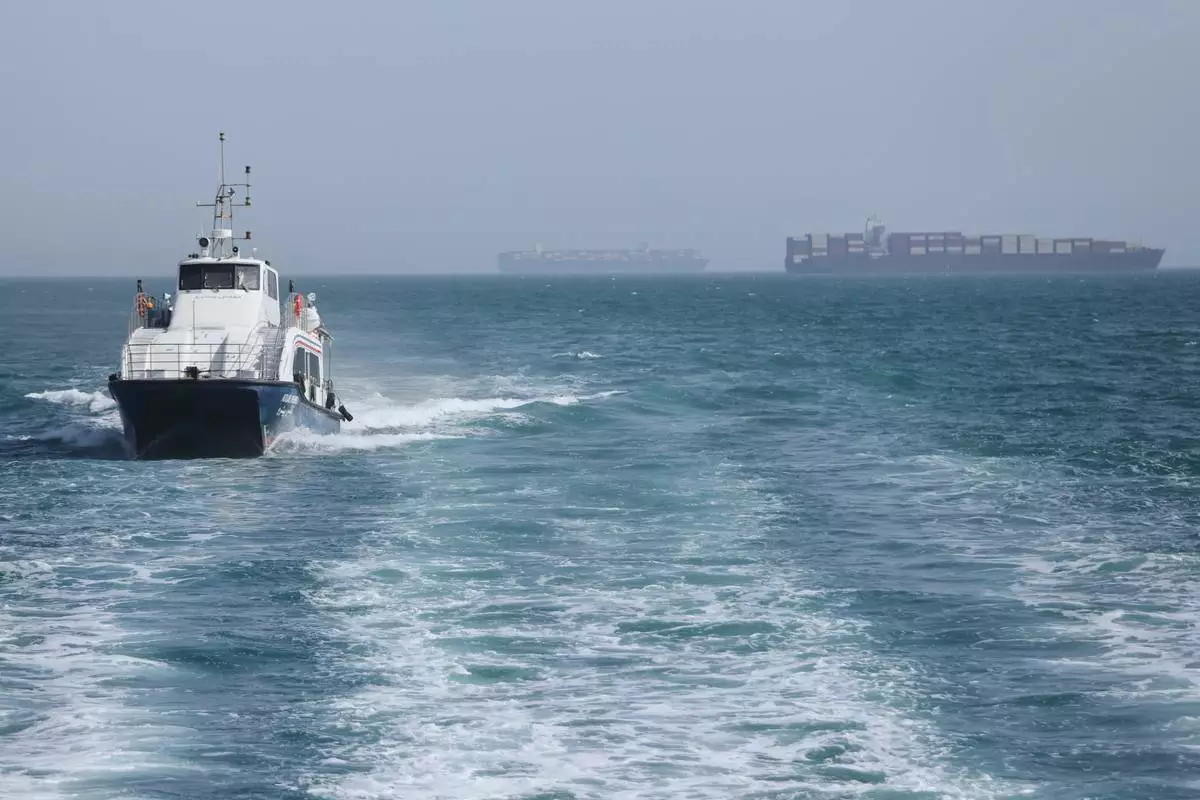
A patrol boat moves through the water as cargo ships sit at anchor in the Strait of Hormuz off Bandar Abbas, Iran, Saturday, May 2, 2026.(Amirhosein Khorgooi/ISNA via AP)
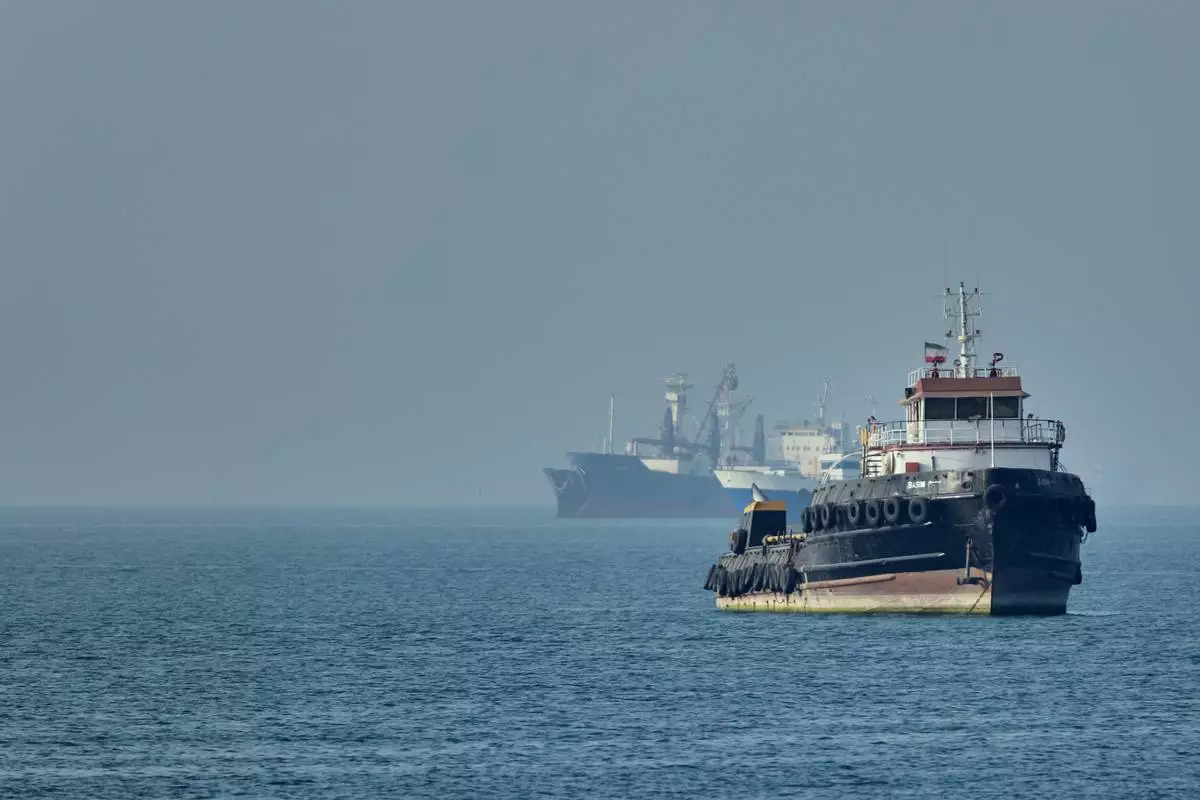
An Iranian tugboat floats in the foreground as cargo ships sit at anchor in the Strait of Hormuz off Bandar Abbas, Iran, Monday, May 4, 2026. (Amirhosein Khorgooi/ISNA via AP)

A container ship sits at anchor as a small motorboat passes in the foreground in the Strait of Hormuz off Bandar Abbas, Iran, Saturday, May 2, 2026. (Amirhosein Khorgooi/ISNA via AP)
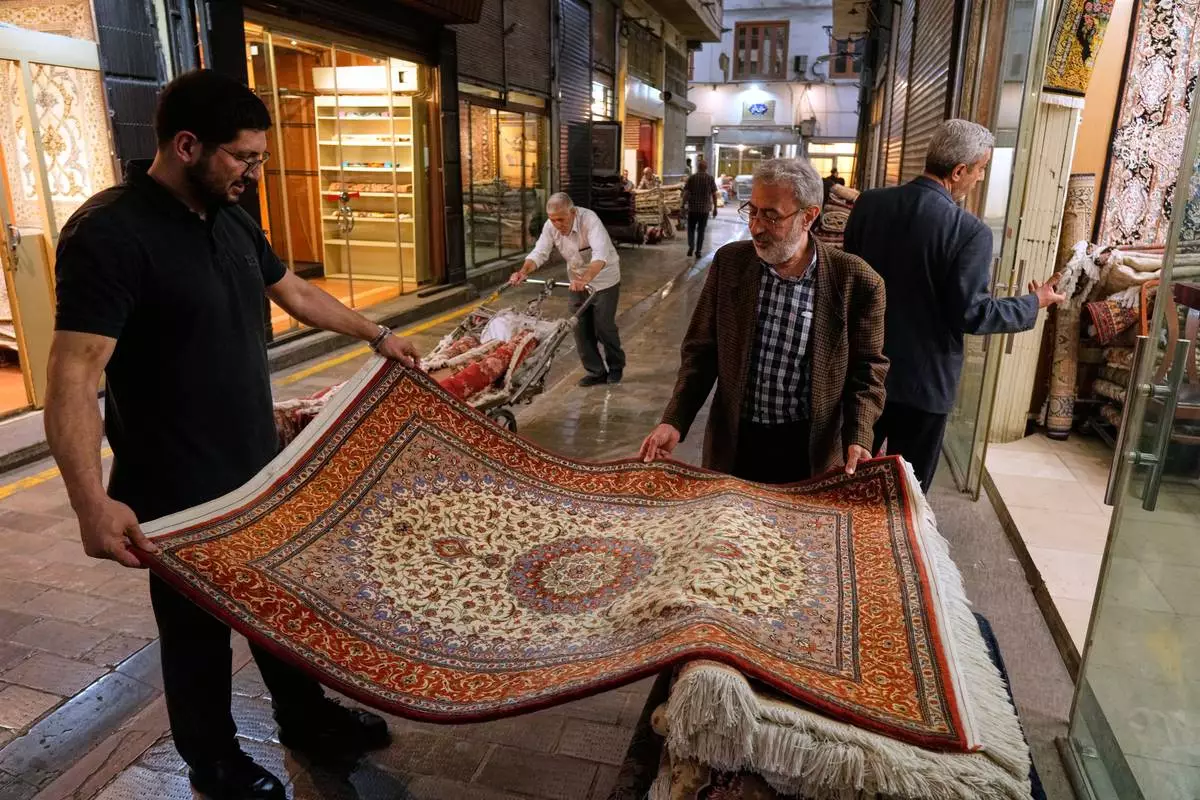
People view rugs at the Grand Bazaar in Tehran, Sunday, May 3, 2026. (AP Photo/Vahid Salemi)

A woman looks at jewelry in the window of a gold shop at Tehran's historic Grand Bazaar, Iran, Sunday, May 3, 2026. (AP Photo/Vahid Salemi)
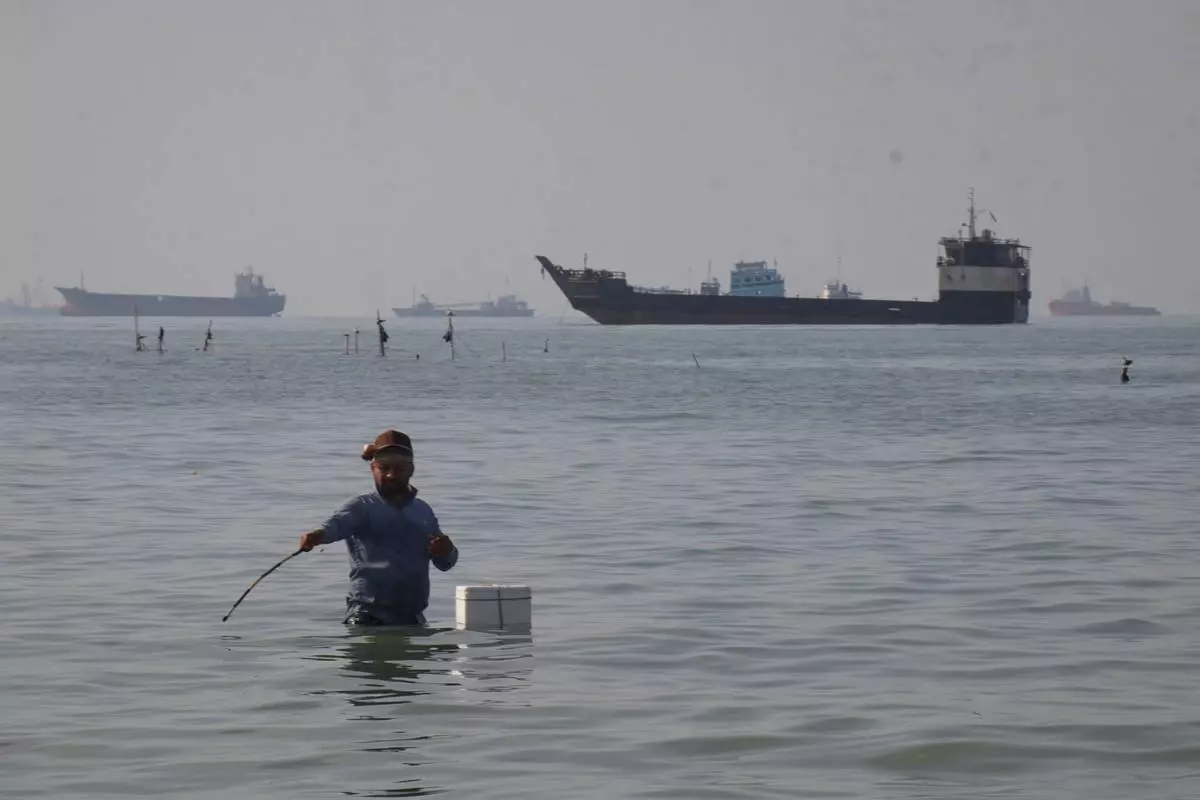
A man stands in the water, appearing to fish, as bulk carriers, cargo ships, and service vessels line the horizon in the Strait of Hormuz off Bandar Abbas, Iran, Monday, April 27, 2026.(Razieh Poudat/ISNA via AP)
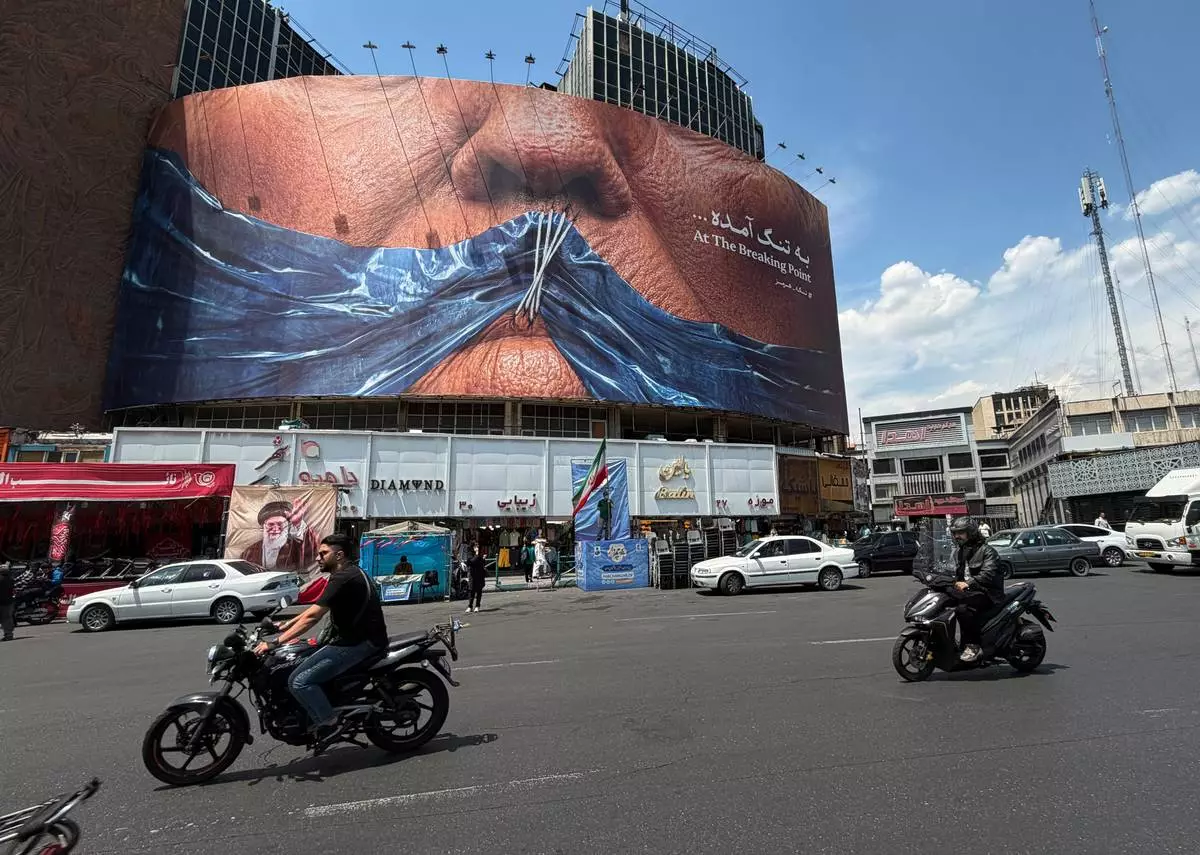
Vehicles drive past a billboard with graphic showing Strait of Hormuz and sewn lips of U.S. President Donald Trump in a square in downtown Tehran, Iran, Saturday, May 2, 2026. (AP Photo/Vahid Salemi)
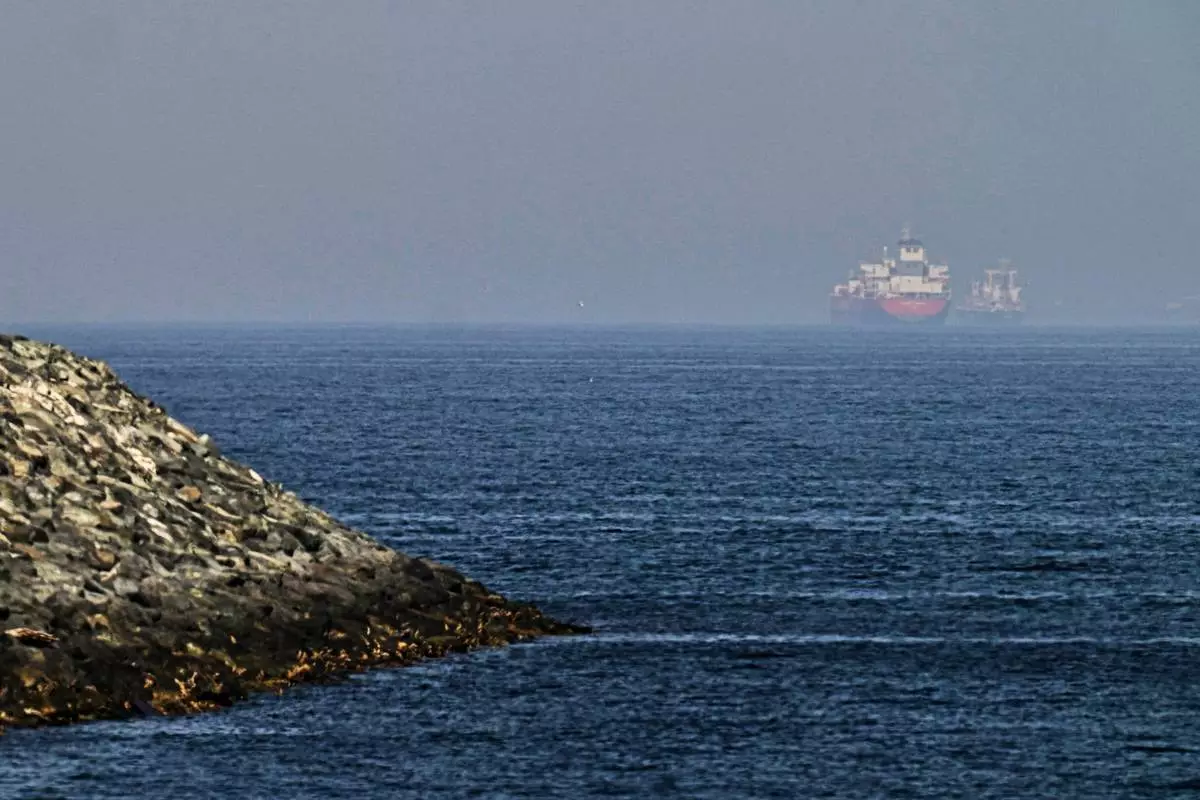
Cargo ships are seen at sea near the Strait of Hormuz, as viewed from a rocky shoreline near Khor Fakkan, United Arab Emirates, Friday, May 1, 2026. (AP Photo/Fatima Shbair)