MINNEAPOLIS--(BUSINESS WIRE)--May 4, 2026--
Infios, a global leader in intelligent supply chain execution, today announced that it has been recognized as a Leader in the 2026 Gartner® Magic Quadrant™ for Warehouse Management Systems (WMS) for the eighth consecutive year.
This press release features multimedia. View the full release here: https://www.businesswire.com/news/home/20260504814255/en/
Infios was also recently acknowledged in the 2025 Gartner® Peer Insights™ Voice of the Customer for Warehouse Management Systems. The ‘Voice of the Customer’ report, which aggregates user reviews into actionable insights, highlighted Infios with an average rating of 4.5 out of 5 based on 32 reviews as of 31 st August 2025. Placed in the upper-right corner of the “Voice of the Customer” grid, Infios was recognized as a Gartner Peer Insights Customers’ Choice. Infios (formerly Körber Supply Chain Software) also received this recognition in 2023.
“We believe being named a Leader in the Gartner Magic Quadrant for Warehouse Management Systems and the only WMS provider recognized as a Gartner Peer Insights Customers’ Choice underscores Infios’s commitment to delivering real outcomes for our customers through a relentless focus on execution and purposeful innovation,” said Ed Auriemma, CEO of Infios. “Our WMS spans entry to enterprise, orchestrating people, processes, robotics and automation in a single, scalable system. This is how we power the next generation of connected intelligent supply chain execution.”
Infios’s WMS brings together real-time inventory visibility, advanced slotting, labor management, automation and embedded AI to enable intelligent orchestration across workflows. The result is faster decisions, less rework and more reliable execution helping organizations improve efficiency, accelerate decision‑making and build more resilient supply chain operations.
“With Infios, we’ve moved beyond simply managing warehouse operations to running a far more connected, intelligent supply chain. We were able to scale through our largest peak on record, exceeding forecast by 170%, while nearly doubling throughput without adding labor, all while improving inventory accuracy and operational control,” commented Jeff Durham, CEO of Durham Brands. “What stands out is not just the performance gains, but the ability to adapt quickly, make better decisions in real time, and continuously improve how we operate. It’s had a lasting impact across the business.”
View a complimentary copy of the 2026 Gartner Magic Quadrant for Warehouse Management Systems (WMS) report here.
Gartner, Magic Quadrant for Warehouse Management Systems, Simon Tunstall, Rishabh Narang, Federica Stufano, 29 April 2026
Gartner, Voice of the Customer for Warehouse Management Systems, Peer Community Contributor, 30 October 2025
Gartner, Magic Quadrant, Peer Insights, and Customers' Choice are trademarks of Gartner, Inc., and/or its affiliates.
Gartner Peer Insights content consists of the opinions of individual end users based on their own experiences, and should not be construed as statements of fact, nor do they represent the views of Gartner or its affiliates. Gartner does not endorse any vendor, product or service depicted in this content nor makes any warranties, expressed or implied, with respect to this content, about its accuracy or completeness, including any warranties of merchantability or fitness for a particular purpose.
Gartner does not endorse any company, vendor, product or service depicted in its publications, and does not advise technology users to select only those vendors with the highest ratings or other designation. Gartner publications consist of the opinions of Gartner’s business and technology insights organization and should not be construed as statements of fact. Gartner disclaims all warranties, expressed or implied, with respect to this publication, including any warranties of merchantability or fitness for a particular purpose.
About Infios
Infios is a global leader in Intelligent Supply Chain Execution, relentlessly making supply chains better. Trusted by more than 5,000 customers across 70 countries, Infios helps organizations move from fragmented, reactive operations to coordinated, real-time action across order, warehouse and transportation management. Its portfolio of adaptable solutions enables businesses of all sizes to simplify operations, improve efficiency and drive meaningful results.
At the core is Infios AI, execution intelligence embedded directly into operational workflows. Infios AI senses disruption, determines the best response and executes coordinated action across systems, creating a continuous decision-action loop where execution keeps pace with change.
Infios is a joint venture of international technology provider Körber and global investment firm KKR.
Learn more at www.infios.com.

Infios has been recognized as a Leader in the 2026 Gartner® Magic Quadrant™ for Warehouse Management Systems (WMS) for the eighth consecutive year.
DUBAI, United Arab Emirates (AP) — A cargo ship caught fire off the coast of the United Arab Emirates on Monday as the nation warned of incoming attacks from Iran.
The British military’s United Kingdom Maritime Trade Operations center announced the fire on the ship, saying it was in the vessel’s engine room. It said the ship’s crew was accounted for.
THIS IS A BREAKING NEWS UPDATE. AP’s earlier story follows below.
DUBAI, United Arab Emirates (AP) — The U.S. military said Monday that two American-flagged merchant ships had successfully transited the Strait of Hormuz after it launched a new initiative to restore traffic. Iran has effectively controlled the critical waterway since the U.S. and Israel launched the war in late February.
Breaking Iran’s chokehold over the strait would ease global economic concerns and deny Tehran a major source of leverage in talks aimed at ending the war. But U.S. President Donald Trump's latest effort also risks reigniting full-scale fighting as the U.S. and Iran steadily ramp up pressure.
The United Arab Emirates issued its first three missile alerts since a ceasefire reached in early April and accused Iran of targeting an oil tanker. An explosion and fire meanwhile broke out aboard a South Korean-operated ship anchored in the strait, though its cause was unknown, the South Korean government said.
In another sign of possible escalation, Iran claimed to have struck a U.S. Navy vessel near the strait. The U.S. denied the claim.
Iran's effective closure of the strait, which runs between Iran and Oman, has caused a spike in worldwide fuel prices and rattled the global economy. The U.S.-led Joint Maritime Information Center is now advising ships to cross the strait in Oman’s waters, saying it set up an “enhanced security area.”
It was unclear whether shipping companies, and their insurers, will feel comfortable taking the risk given that Iran has fired on ships in the waterway and vowed to keep doing so. Iran has said the new U.S. effort is a violation of the fragile ceasefire that has held for more than three weeks.
The U.S. military’s Central Command said the two American-flagged merchant ships were “safely headed on their journey” after transiting the Strait of Hormuz. It said Navy guided-missile destroyers in the Persian Gulf were helping to restore traffic.
Its statement on X said that U.S. destroyers had also transited the strait. It did not say when the Navy ships arrived or when the merchant vessels departed.
Trump's announcement Sunday that the U.S. would “guide” ships out of the strait warned that Iranian efforts to block them “will, unfortunately, have to be dealt with forcefully.”
He described “Project Freedom” in humanitarian terms, designed to aid stranded seafarers on hundreds of ships that have been stuck in the Persian Gulf since the war began. Crews have described to The Associated Press seeing drones and missiles explode over the waters earlier in the war as their vessels run low on drinking water, food and other supplies.
Iran’s state-run IRNA news agency called the effort part of Trump's “delirium.”
Iran’s military command on Monday said ships passing through the strait must coordinate with them.
“We warn that any foreign military force — especially the aggressive U.S. military — that intends to approach or enter the Strait of Hormuz will be targeted,” Maj. Gen. Ali Abdollahi told state broadcaster IRIB.
The disruption of the waterway has squeezed countries in Europe and Asia that depend on Persian Gulf oil and gas, raising prices far beyond the region.
The U.S. has warned shipping companies they could face sanctions for paying Iran for transit of the strait.
The Joint Maritime Information Center urged mariners to coordinate closely with authorities in Oman “due to anticipated high traffic volume.” It warned that passing close to usual routes “should be considered extremely hazardous due to the presence of mines that have not been fully surveyed and mitigated.”
The head of security for the Baltic and International Maritime Council, a leading shipping trade group, said no formal guidance or details about the U.S. effort had been issued to the industry. Jakob Larsen questioned whether the effort was sustainable and said it carries a “risk of hostilities breaking out again.”
The United Arab Emirates accused Iran of targeting a tanker linked to its main oil company with two drones as it navigated the strait. It did not say when the attack occurred. No injuries were reported. ADNOC Logistics & Services, an affiliate of the oil company, said on X that the ship held no cargo when it was hit off the coast of Oman.
Iranian news agencies, including the semiofficial Fars and ILNA, reported Monday that Iran struck a U.S. vessel near an Iranian port southeast of the strait, accusing it of “violating maritime security and navigation norms.” The reports said the vessel was forced to turn back.
U.S. Central Command said on X that “no U.S. Navy ships have been struck.”
The U.S. has enforced a naval blockade on Iranian ports since April 13, telling at least 49 commercial ships to turn back, according to Central Command.
The blockade has deprived Tehran of oil revenue it needs to shore up its ailing economy. U.S. officials have expressed hope that the blockade forces Iran to make concessions in talks on its disputed nuclear program and other longstanding issues.
Iran’s latest proposal for ending the war calls for the U.S. lifting sanctions, ending the blockade, withdrawing forces from the region and ceasing all hostilities, including Israel’s operations in Lebanon, according to the semiofficial Nour News and Tasnim agencies, which have close ties to Iran’s security apparatus.
Iranian officials said they were reviewing the U.S. response, though Foreign Ministry spokesperson Esmail Baghaei told reporters Monday that changing demands made diplomacy difficult. He did not give details.
Iran has claimed its proposal does not include issues related to its nuclear program and enriched uranium — long a driving force in tensions with the U.S. and Israel.
Iran wants other issues resolved within 30 days and aims to end the war rather than extend the ceasefire. Trump expressed doubt over the weekend that the proposal would lead to a deal.
Metz reported from Ramallah, West Bank. Associated Press journalists Munir Ahmed in Islamabad, Pakistan; Tong-hyung Kim in Seoul, South Korea; and Russ Bynum in Savannah, Georgia, contributed.
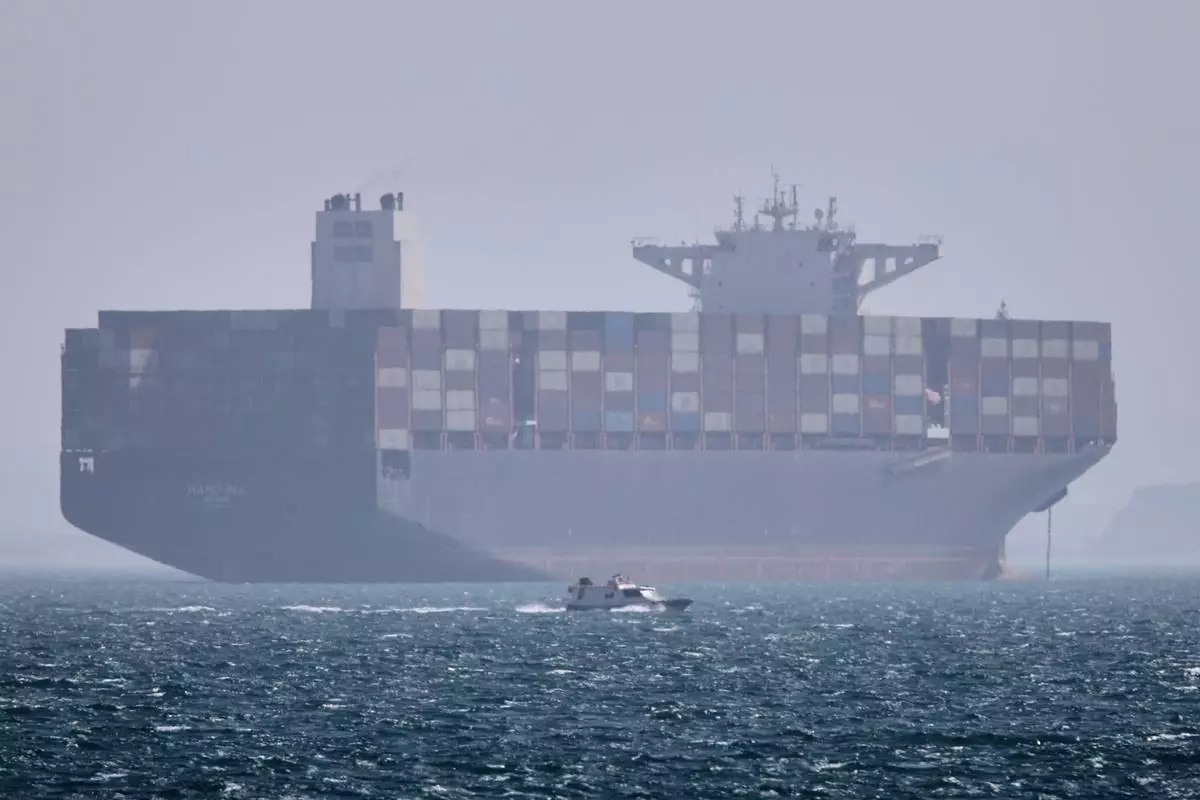
A container ship sits at anchor as a small motorboat passes in the foreground in the Strait of Hormuz off Bandar Abbas, Iran, Saturday, May 2, 2026. (Amirhosein Khorgooi/ISNA via AP)
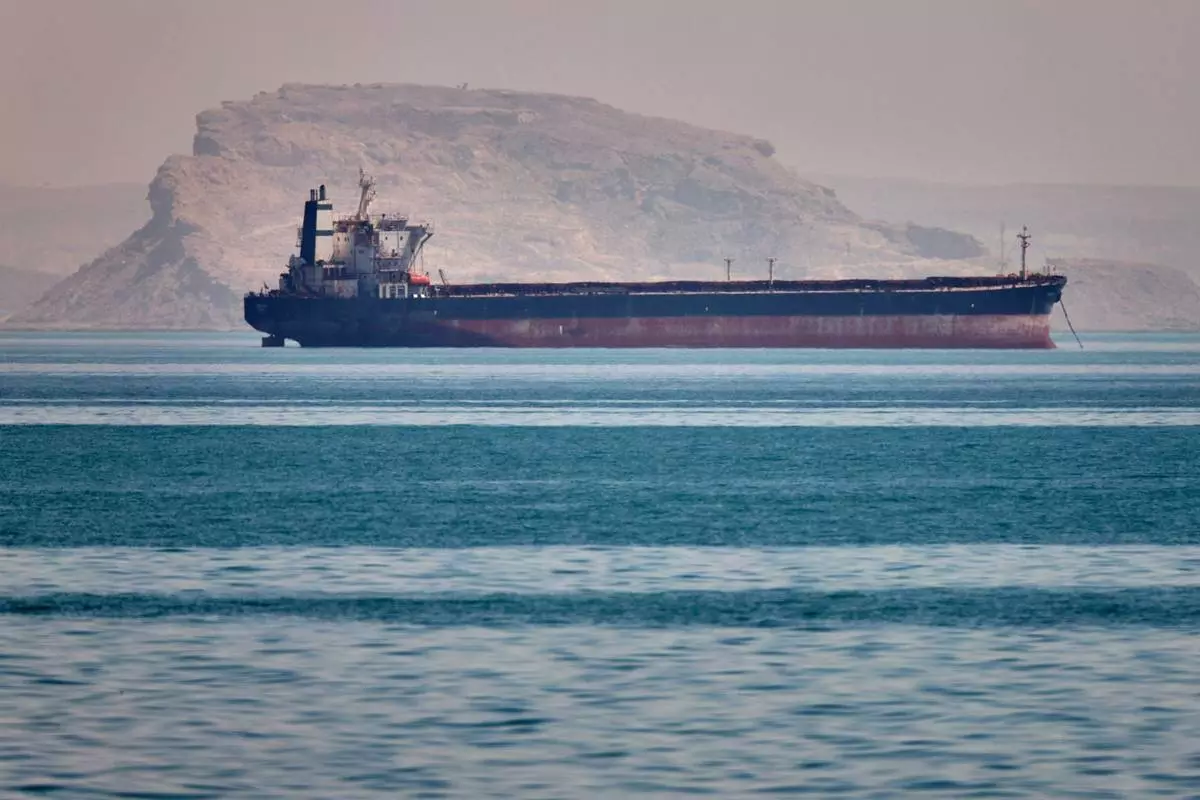
A bulk cargo ship sits at anchor in the Strait of Hormuz off Bandar Abbas, Iran, Saturday, May 2, 2026.(Amirhosein Khorgooi/ISNA via AP)
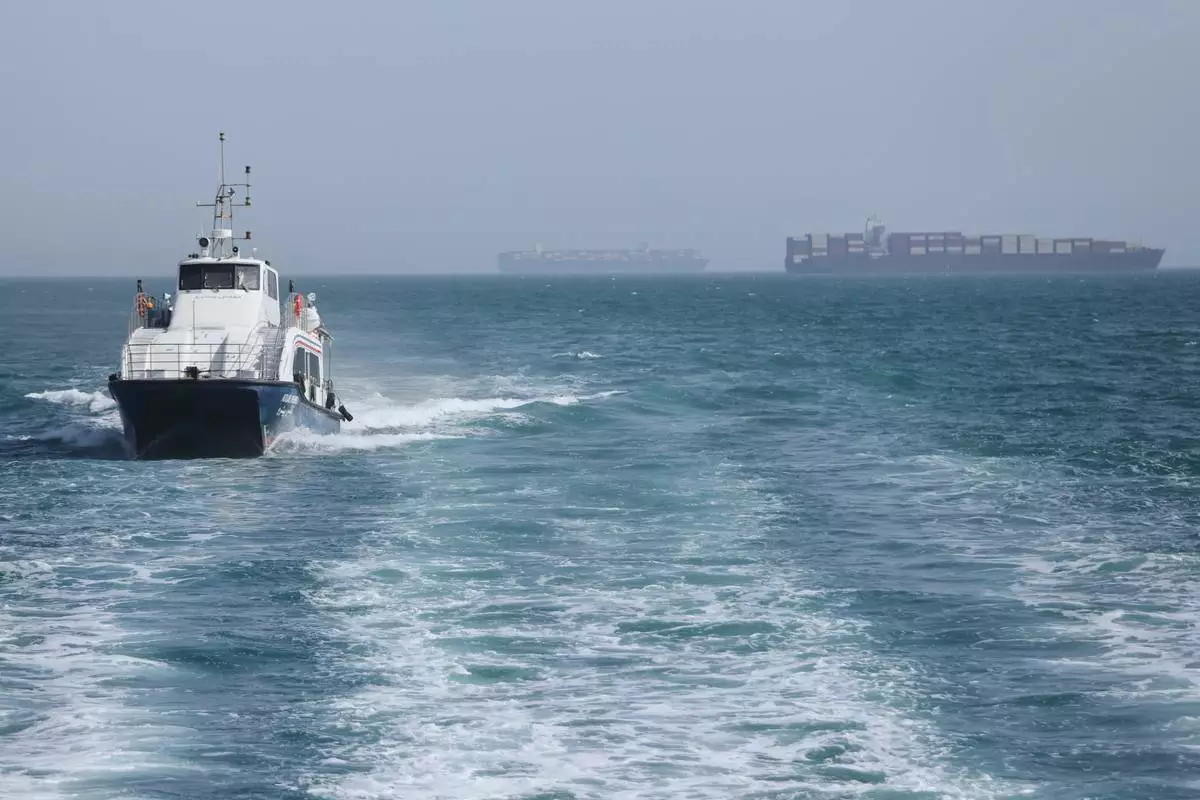
A patrol boat moves through the water as cargo ships sit at anchor in the Strait of Hormuz off Bandar Abbas, Iran, Saturday, May 2, 2026.(Amirhosein Khorgooi/ISNA via AP)
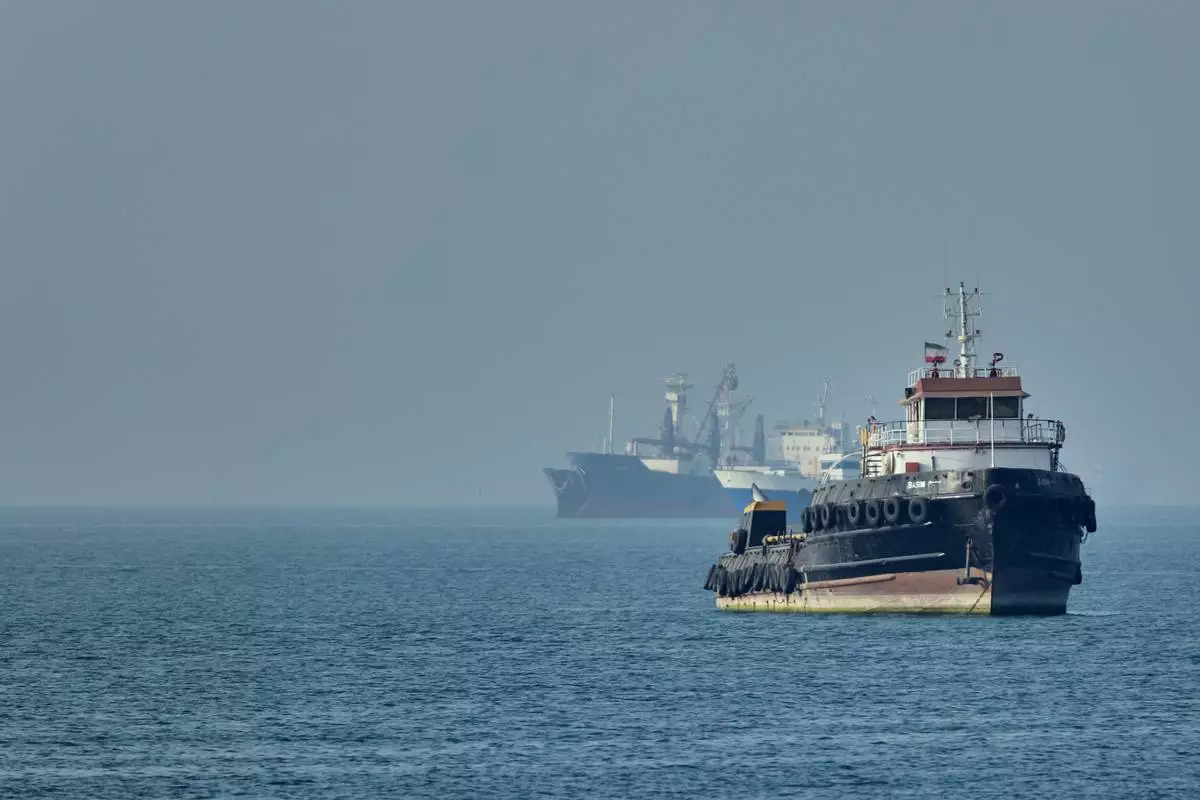
An Iranian tugboat floats in the foreground as cargo ships sit at anchor in the Strait of Hormuz off Bandar Abbas, Iran, Monday, May 4, 2026. (Amirhosein Khorgooi/ISNA via AP)

A container ship sits at anchor as a small motorboat passes in the foreground in the Strait of Hormuz off Bandar Abbas, Iran, Saturday, May 2, 2026. (Amirhosein Khorgooi/ISNA via AP)
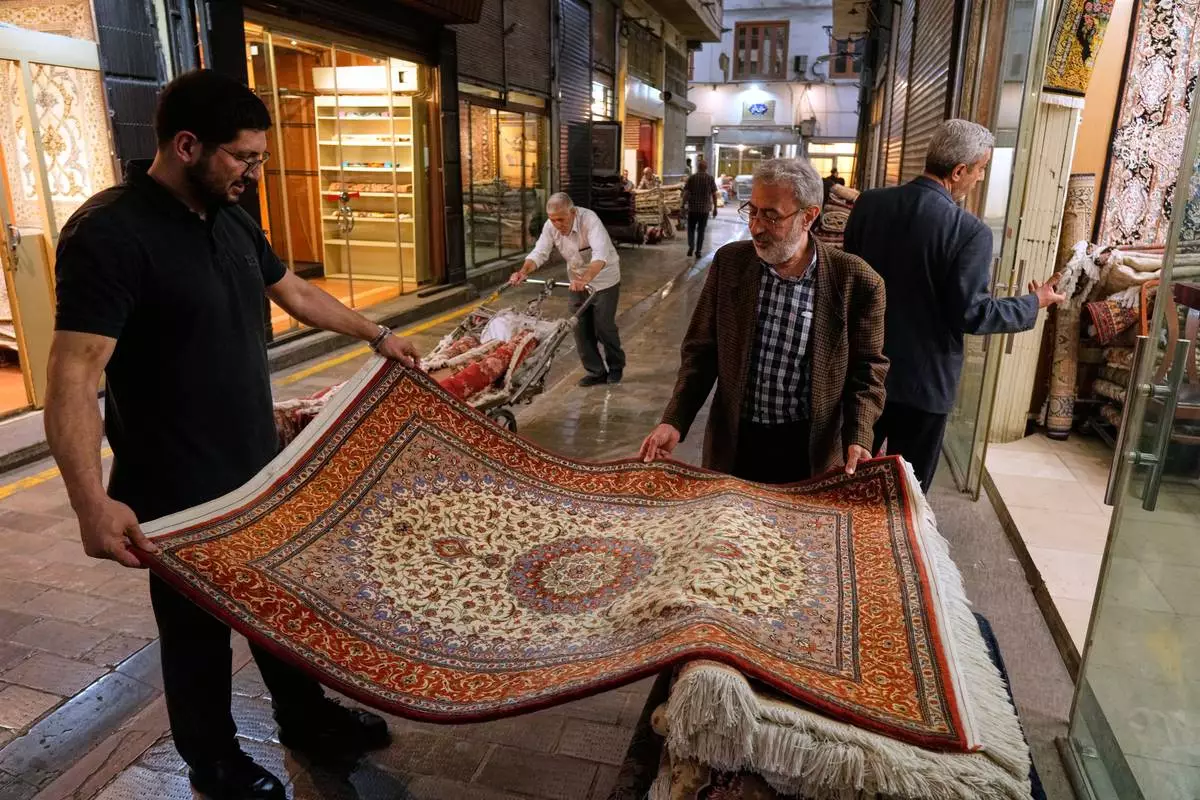
People view rugs at the Grand Bazaar in Tehran, Sunday, May 3, 2026. (AP Photo/Vahid Salemi)

A woman looks at jewelry in the window of a gold shop at Tehran's historic Grand Bazaar, Iran, Sunday, May 3, 2026. (AP Photo/Vahid Salemi)
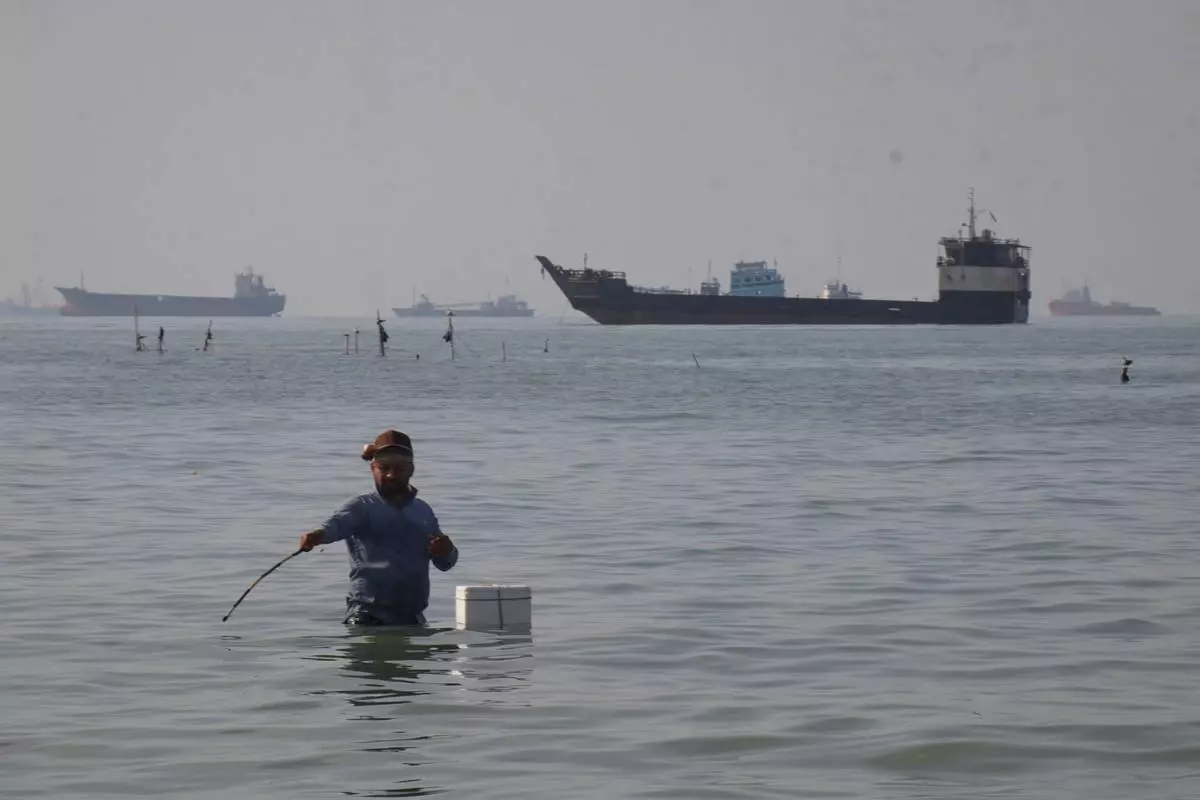
A man stands in the water, appearing to fish, as bulk carriers, cargo ships, and service vessels line the horizon in the Strait of Hormuz off Bandar Abbas, Iran, Monday, April 27, 2026.(Razieh Poudat/ISNA via AP)

Vehicles drive past a billboard with graphic showing Strait of Hormuz and sewn lips of U.S. President Donald Trump in a square in downtown Tehran, Iran, Saturday, May 2, 2026. (AP Photo/Vahid Salemi)
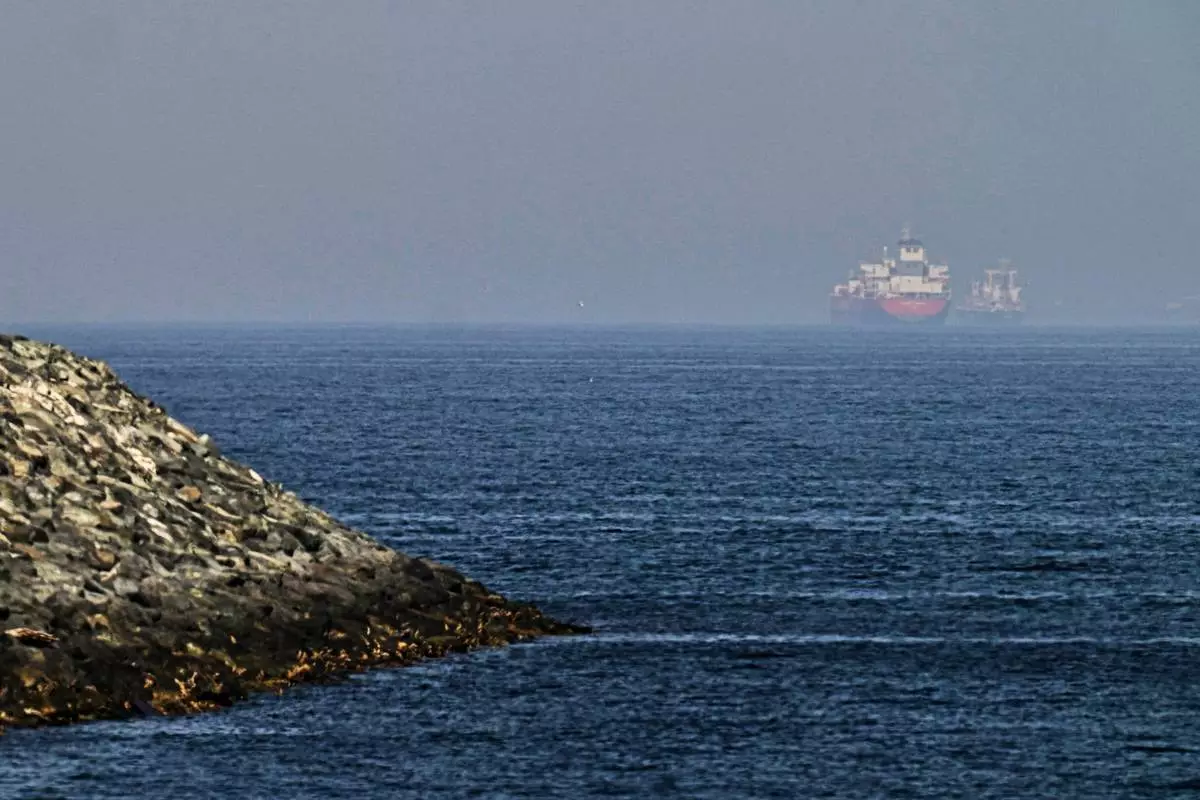
Cargo ships are seen at sea near the Strait of Hormuz, as viewed from a rocky shoreline near Khor Fakkan, United Arab Emirates, Friday, May 1, 2026. (AP Photo/Fatima Shbair)