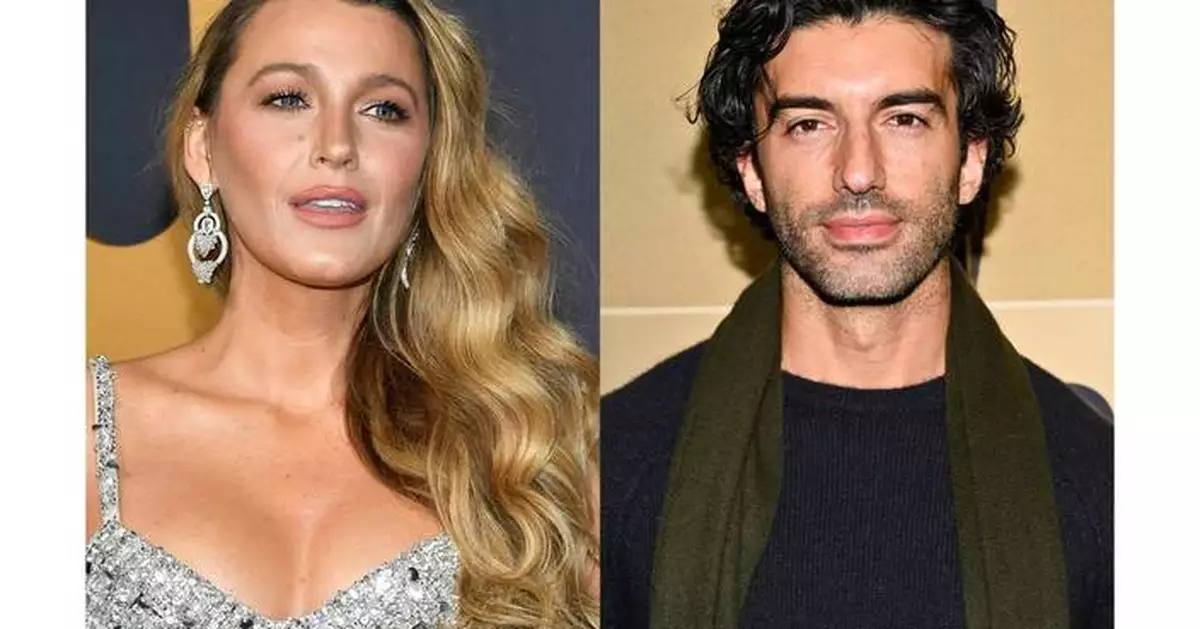
NEW YORK (AP) — Actors Blake Lively and Justin Baldoni agreed Monday to end their legal feud over the acrimonious production of their 2024 film “It Ends With Us,” averting a trial that threatened to further tarnish their reputations and expose the dark side of Hollywood moviemaking.
The costars turned courtroom adversaries settled the civil case two weeks before they were to go to trial in New York on Lively’s claims that Baldoni conspired with publicists to preemptively destroy her reputation after she privately accused him of sexually harassing her on the movie set.
“Raising awareness, and making a meaningful impact in the lives of domestic violence survivors — and all survivors — is a goal that we stand behind," Lively and Baldoni said in a joint statement issued through their lawyers.
"It is our sincere hope that this brings closure and allows all involved to move forward constructively and in peace, including a respectful environment online."
The terms of the settlement were not disclosed.
Lively, 38, sued Baldoni, 42, and his production company, Wayfarer Studios, at the end of 2024. Weeks later, Baldoni sued Lively, accusing her, her husband — “Deadpool” actor Ryan Reynolds — and their publicist of defamation and extortion.
Baldoni, who directed the dark romantic drama and starred in it with Lively, had denied harassing her or orchestrating a smear campaign. He’d claimed the complaints about his behavior were made up by Lively as part of an effort to seize creative control of the movie.
Monday's settlement came after a federal judge in Manhattan tossed some of each actors' claims.
Last June, Judge Lewis J. Liman dismissed Baldoni’s defamation and extortion lawsuit. In April, he threw out Lively’s sexual harassment claims, ruling that she couldn’t pursue them under federal law because she was an independent contractor rather than an employee on the movie set.
In their joint statement, the parties said they recognize that Lively’s concerns “deserved to be heard” and that they ”remain firmly committed to workplaces free of improprieties and unproductive environments."
The trial, now no longer necessary, had been scheduled to begin with jury selection on May 18.
“It Ends With Us,” an adaptation of Colleen Hoover’s bestselling 2016 novel about a relationship devolving into domestic violence, was released in August 2024 and exceeded box office expectations despite criticism that it glorified abuse. Lively and Baldoni's fractious falling out took attention away from the film, overshadowing its message and success.
“The end product — the movie ‘It Ends With Us’ — is a source of pride to all of us who worked to bring it to life,” Lively and Baldoni said in their statement.
Lively said in her lawsuit that during filming, Baldoni made inappropriate comments about her appearance, violated physical boundaries while filming a love scene, and pushed for nudity — against Lively’s wishes — during a scene in which her character was giving birth.
Baldoni denied doing anything outside the realm of the normal creative process of making a movie.
The judge, in the decision tossing out the sexual harassment claims, acknowledged the complexity of the matter, noting that creative artists “must have some amount of space to experiment within the bounds of an agreed script without fear of being held liable for sexual harassment.”
The trial was to focus on Lively’s claim that Baldoni and the studio retaliated against her sexual harassment complaints by hiring publicists to turn the public against her. Her lawyers said that campaign including hiring a “digital army” to post bogus negative content about Lively on social media platforms, and feeding “manufactured content to unwitting reporters.”
The lawsuit said the purpose was to “retaliate against Ms. Lively by battering her image, harming her businesses, and causing her family severe emotional harm.”
Baldoni’s lawyers have claimed it was Lively who was strategically manipulating Baldoni’s public image, partly by leveraging help from her famous friends.
Lively appeared in the 2005 film “The Sisterhood of the Traveling Pants” and the TV series “Gossip Girl” from 2007 to 2012 before starring in films including “The Town” and “The Shallows.”
Baldoni starred in the TV comedy “Jane the Virgin,” directed the 2019 film “Five Feet Apart” and wrote “Man Enough,” a book challenging traditional notions of masculinity.
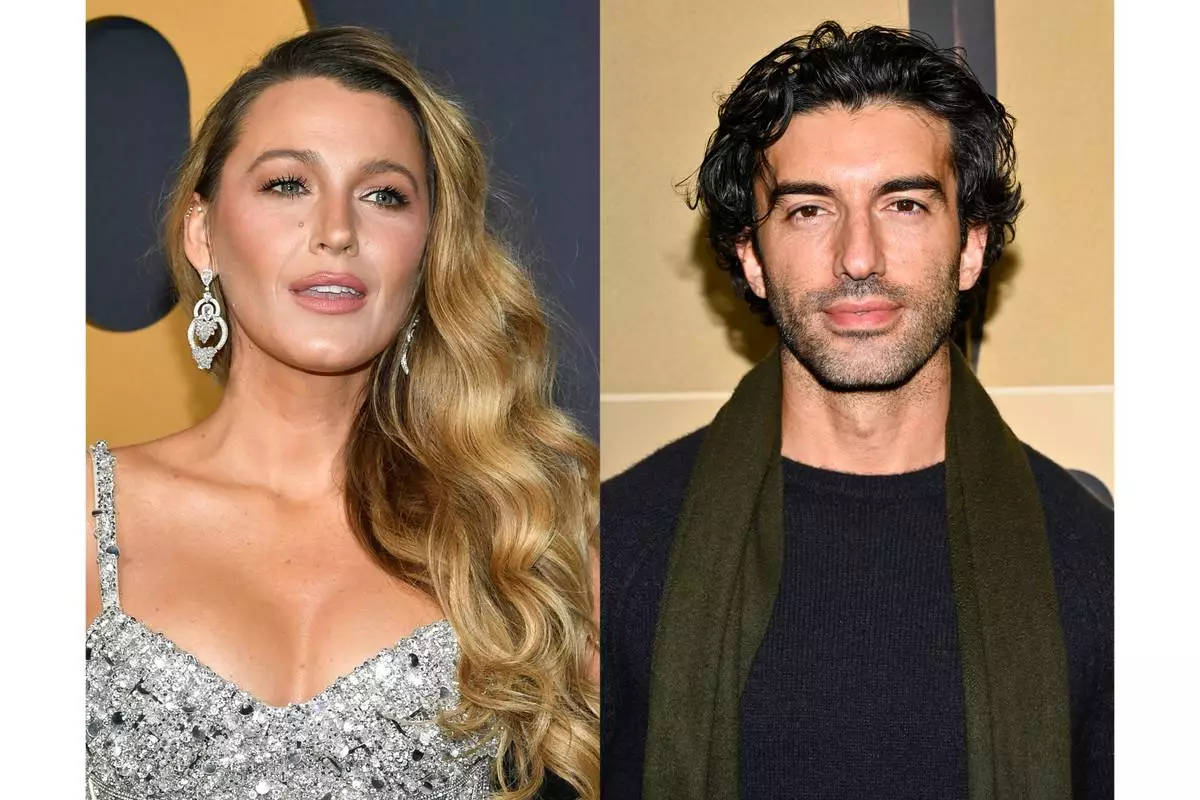
Blake Lively appears at the SNL50: The Anniversary Special at Rockefeller Plaza in New York on Feb. 16, 2025, left, and Justin Baldoni appears at a special screening of "The Boys in the Boat" in New York on Dec. 13, 2023. (Photos by Evan Agostini/Invision/AP)
NEW YORK (AP) — The Washington Post won the Pulitzer Prize for public service for scrutinizing the Trump administration’s sweeping, choppy overhaul of federal agencies, and The Associated Press won the award Monday for international reporting about surveillance.
In a year when several prize-winning projects zoomed in on the Trump presidency, the Post's coverage illuminated the fast-moving, sometimes opaque particulars of the administration's drive to reshape the national government and what the cuts and changes meant for individual Americans.
The Miami Herald’s Julie K. Brown was given a special citation for her reporting, nearly a decade ago, that drew attention to Jeffrey Epstein ’s abuses. The New York Times won three of the coveted prizes, the Post and Reuters each won two, and smaller outlets ranging from The Connecticut Mirror to the podcast “Pablo Torre Finds Out” also were recognized in a challenging year for American journalism.
“This is always a day of celebration in our communities, but perhaps never more so than today as we face tremendous political and economic pressures,” prize administrator Marjorie Miller said in a livestream announcing the awards.
In the last few months, the Post cut a third of its staff, CBS News announced it would shutter its nearly century-old radio service, The AP offered buyouts to over 120 journalists and some regional newspapers also publicly struggled. CBS parent Paramount’s acquisition of CNN has raised questions about what’s next for those networks. Meanwhile, President Donald Trump continued to bash, and sometimes sue, outlets whose coverage he finds objectionable.
Spanning three years, thousands of pages of documents and numerous interviews, the AP project found that American companies help lay the foundations of the Chinese government’s system for monitoring and policing its citizens.
“This was sweeping and deeply impactful reporting, the kind of work that highlights the unique strengths of AP’s global, multiformat newsroom,” executive editor Julie Pace said in an email to staffers. She is among the Pulitzer Board's new members.
Some of The Washington Post's winning work was by reporter Hannah Natanson, whose home was searched and devices were seized in what federal authorities say was an investigation into a Pentagon contractor’s handling of classified documents but the Post says was a violation of the First Amendment.
Two winning entries focused on Trump's pulverizing approach to norms and constraints. Reuters, which won for national reporting, looked at how Trump has used the federal government and his supporters’ influence to expand presidential authority and target foes, the award judges noted. The Times took the investigative reporting prize for exploring the Republican president’s boundary-pushing approach to the notion of conflicts of interest.
Joseph Kahn, executive editor of the Times, said its reporters have been threatened over their work. “We have not, and will not” bow to the pressure, he said in a statement.
Reuters' reporting on scam ads, AI chatbots and the social media giant Meta — which owns Facebook, Instagram and WhatsApp — won the newly revived prize for beat reporting. The award, for journalists consistently assigned to a particular topic, was last given two decades ago.
Reuters' wins spotlighted "fearless, deeply reported, original work that holds powerful institutions to account,” editor-in-chief Alessandra Galloni said in a statement.
The prize for breaking news went to The Minnesota Star Tribune’s coverage of last year’s deadly mass shooting during Mass at a Minneapolis Catholic school. Judges praised the thoroughness and compassion of the newspaper’s reporting on a scene of carnage in its hometown.
“To me, it’s really a moment to appreciate the power of local journalism,” Kathleen Hennessey, the Star Tribune's editor and senior vice president, said in an interview. One Tribune reporter who lives in the neighborhood heard the gunshots and called 911 before running to the scene, she noted; an editor at the paper has children who attend the school.
“It feels really gratifying to be recognized, but for this newsroom, this is also just still a really painful event,” Hennessey said.
The San Francisco Chronicle received the award for explanatory reporting, which means work that makes a complex topic comprehensible to everyday readers and viewers. The Chronicle's series laid out how insurers, aided by algorithmic tools, undervalued and denied rebuilding claims for fire-destroyed homes, the judges said.
In visual journalism, The Times got a breaking news photography award for depicting devastation and starvation in Gaza resulting from Israel's war in the territory. The Post won the feature photography prize, for a visual essay on a family welcoming a firstborn as the child’s father grappled with terminal cancer. The award for illustrated reporting and commentary — a category that includes editorial cartoons and more — went to Bloomberg for a graphic novel about online scams that threaten “digital arrest.”
In a statement, Bloomberg Editor-in-Chief John Micklethwait called it "deeply reported public service journalism, published in an inventive format.”
While several prizes reflected the year’s biggest news stories, others highlighted work that wasn’t pushed to everyone’s phones.
One of two local reporting awards went to The Connecticut Mirror and ProPublica for a series on how towing companies profited off Connecticut laws, at the expense of poor car owners; the state soon changed the laws. The Chicago Tribune also was honored for its coverage of the Trump administration’s intense immigration crackdown in the Windy City.
Texas Monthly won the feature writing award for an editor's first-person story of flooding that killed his toddler nephew and swept his home away. Also in Texas, The Dallas Morning News' architecture critic won the criticism award; judges praised Mark Lamster's wit and expertise. The New York Times' M. Gessen won the opinion writing award for essays on authoritarianism.
The audio award went to “Pablo Torre Finds Out” for probing financial arrangements between Los Angeles Clippers superstar Kawhi Leonard and an environmental startup in which the team owner invested. The judges called the project a “pioneering and entertaining form of live podcast journalism.”
The Pulitzer announcement — usually followed by a dinner later in the year — came little more than a week after an armed man rushed a security checkpoint and exchanged gunfire with Secret Service agents outside another big event for U.S. journalists, the White House Correspondents’ Association dinner in Washington. The man is now charged with trying to assassinate Trump, who was attending the event for his first time as president.
Separately, Monday’s awards also honored books, music and theater.
The prizes were established in newspaper publisher Joseph Pulitzer’s will and were first awarded in 1917. Winners receive $15,000, and the public service award carries a gold medal. Decisions are made by the Pulitzer Board, based at Columbia University in New York.
Associated Press writer Sarah Raza contributed from Canton, Michigan.

FILE - Signage for The Pulitzer Prizes appear at Columbia University, May 28, 2019, in New York. (AP Photo/Bebeto Matthews, File)