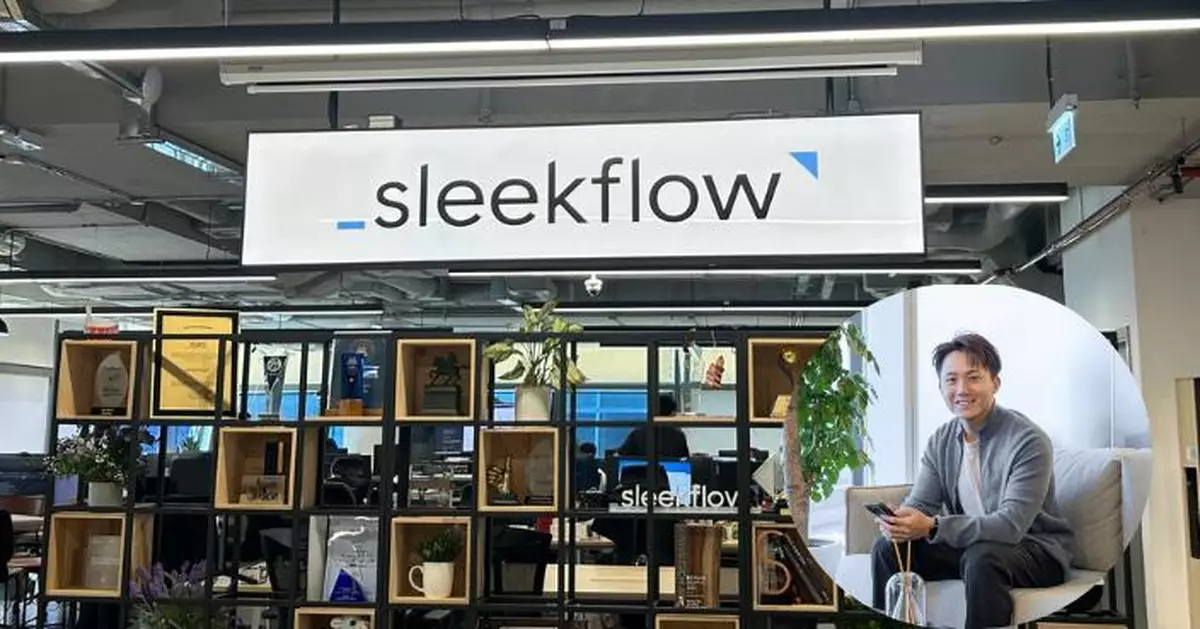
Social commerce has surged in popularity in recent years, with merchants using instant messaging platforms such as WhatsApp, WeChat, and Instagram to answer customer inquiries and complete online transactions, which has become a vital marketing channel for businesses. Nevertheless, managing customer messages across multiple platforms simultaneously can easily lead to delayed responses or missed sales opportunities. To help merchants solve this problem, SleekFlow, a social communication integration platform, was established to enable merchants to manage all customer interactions from a single platform.

Mr. Henson Tsai, Photo source: SleekFlow
In an interview with Bastille Post, Mr. Henson Tsai, Founder and CEO of SleekFlow, said that businesses receive a sea of customer messages daily through channels such as WhatsApp, WeChat, email, and phone calls. Faced with chats from various platforms, handling them effectively — whether for product inquiries, purchase requests, or customer support — has become a major challenge. To address this, SleekFlow offers a one-stop platform that integrates all channels, unifying sales, marketing, and customer service functions. Over the past four to five years, it has served thousands of clients.
Click to Gallery
Mr. Henson Tsai, Photo source: SleekFlow

AI can handle everything autonomously, from the moment a customer asks a question, to recommending products, guiding the conversation, completing the payment, and even providing follow-up customer service. Photo source: SleekFlow
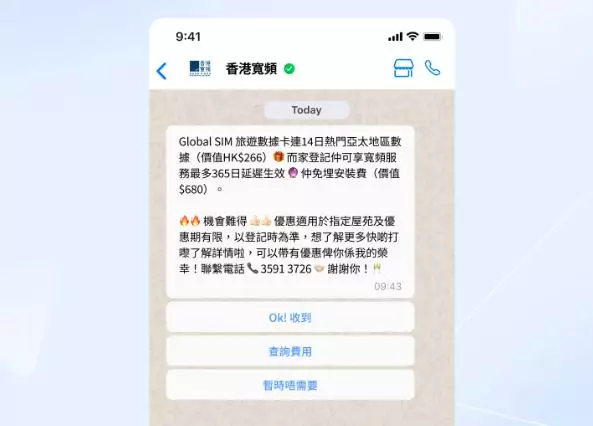
HKBN has received a 95% message read rate, a 50% response rate, and a 35% renewal conversion rate with the assistance of SleekFlow. Photo source: SleekFlow
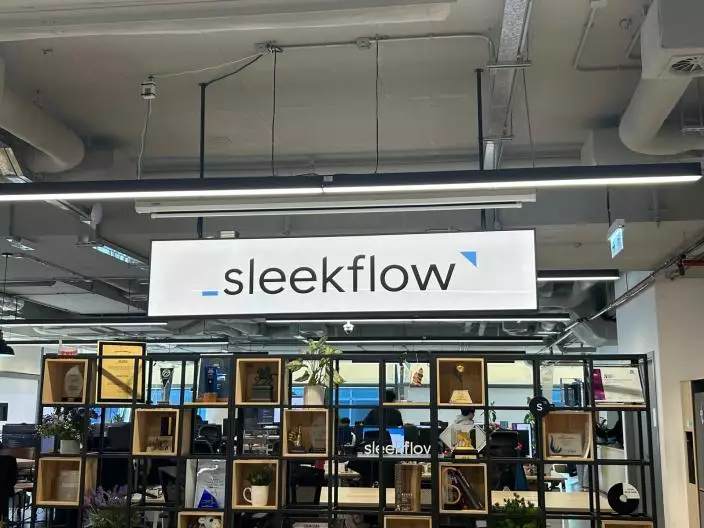
Looking ahead, SleekFlow will continue to expand its AI capabilities, aiming for AI to not only handle marketing and support but also proactively assist businesses with tasks such as reaching out to potential customers and closing deals. Photo by Bastille Post
AI Handles One-Stop Service Autonomously
Breakthroughs in AI technology have driven a significant transformation. Mr. Tsai noted that compared to traditional human-dependent responses, AI can achieve tenfold or even greater efficiency. For example, if a customer searches for beauty or e-commerce products at 2 a.m., AI can instantly recommend suitable items and even provide a direct payment link to complete the transaction. "We envision a future where AI acts as an automated sales agent or even a support agent." Such a vision has prompted SleekFlow to pivot over the past year from an omnichannel communication tool into an AI-native platform.
As for "AI-native", Mr. Tsai explained it means AI can handle everything autonomously, from the moment a customer asks a question, to recommending products, guiding the conversation, completing the payment, and even providing follow-up customer service, directly replacing 60% to 70% of tedious customer service processes and allowing employees to focus on higher-value tasks.
AI can handle everything autonomously, from the moment a customer asks a question, to recommending products, guiding the conversation, completing the payment, and even providing follow-up customer service. Photo source: SleekFlow
In Mr. Tsai's view, AI not only solves problems but also creates greater value. "Previously, software was sold using an IT budget. Now, AI-native platforms sell 'headcount budgets' and 'service budgets'. The future pricing model may shift toward outcome-based pricing — for example, if AI generates HK$1 million in revenue for a company, a fee will be charged accordingly, which means customers pay only when they achieve real value. That's the concept of an AI-native platform," he said.
Since every company has its own product knowledge, pricing rules, and standard operating procedures (SOPs), SleekFlow's core product, AgentFlow, can learn all of the knowledge and processes and collaborate with human teams. "Previously, companies worried about knowledge loss due to employee turnover. Now with AgentFlow, AI can continuously handle each customer's unique needs," Mr. Tsai said. He noted that while an employee might manage 60 to 70 customer conversations per month, AI can handle 2,000 to 2,500, making it more than 30 times more efficient than a human.
Hong Kong: A Growing Market for Message Handling
In Hong Kong, Mr. Tsai observed that industries handling high volumes of customer inquiries have the most urgent need for AI-powered business platforms, including beauty, healthcare, retail, e-commerce, tourism, and large enterprises such as telecoms and airlines.
Take local telecom giant HKBN as an example. The company previously struggled to deliver notifications and product promotions due to a rise in phone fraud and busy customer lifestyles, as many people refused to answer calls from unknown numbers. After adopting SleekFlow's WhatsApp Business API, HKBN integrated multiple official accounts into a single platform, significantly improving efficiency through automated message routing, shared team inboxes, and marketing broadcast functions. The results showed a 95% message read rate, a 50% response rate, and a 35% renewal conversion rate.
HKBN has received a 95% message read rate, a 50% response rate, and a 35% renewal conversion rate with the assistance of SleekFlow. Photo source: SleekFlow
Another success story is Avène. Previously, the brand's membership program relied on different retailer systems and mobile apps, resulting in a cumbersome registration process and high user drop-off. Through SleekFlow, dedicated member zones were established on WhatsApp and WeChat, making customers instantly earn points by simply scanning a QR code, registering with their mobile number, and uploading receipts. Within two months, the brand successfully acquired over 60,000 new members.
SleekFlow primarily focuses on four key metrics: 1. Resolution rate: The percentage of customers who successfully resolve issues or complete purchases after interacting with AI has increased from 50–60% to approximately 90%. 2. AI involvement: Many customers interact with over one million users monthly, with more than 90% of those interactions handled by AI. 3. Purchase intent: Previously, about 20,000 out of one million customers reached the purchase intent stage. After AI optimization, it can be increased by 50–60%, driving long-term business growth of 30–40%. 4. 7-day resolution rate: Most customers achieve a 90% problem resolution rate within seven days.
Pay Only for Value Created
Many worry that AI will replace human jobs in the near future. But Mr. Tsai, citing the views of renowned AI scientist Yann LeCun, pointed out that new technologies will not eliminate existing jobs. On the contrary, they will significantly increase job opportunities. "Just like after the internet emerged, the frequency of people making WhatsApp calls or Zoom calls is tens of thousands of times greater than it was 20 years ago." He believes that AI will improve everyone's quality of life and productivity, and that new roles such as AI Operators and AI Managers will emerge in the future, creating more job opportunities overall. "I am an AI optimist," he said.
Considering that the open-source AI agent OpenClaw has raised concerns about the software industry being replaced, Mr. Tsai acknowledged that OpenClaw impacts SaaS companies and may lead to the elimination of some industry players. However, he noted that companies need to adapt to market changes. SleekFlow has proactively adjusted its pricing model: customers do not pay when setting up the system; fees only kick in when AI truly solves problems and delivers value. "This represents a major shift in business models. SaaS can no longer rely solely on revenue per user; it must now charge based on value."
Looking ahead, SleekFlow will continue to expand its AI capabilities, aiming for AI to not only handle marketing and support but also proactively assist businesses with tasks such as reaching out to potential customers and closing deals. Meanwhile, AI will also enhance data analytics, allowing managers to simply input questions and receive charts and suggestions instantly.
Looking ahead, SleekFlow will continue to expand its AI capabilities, aiming for AI to not only handle marketing and support but also proactively assist businesses with tasks such as reaching out to potential customers and closing deals. Photo by Bastille Post
Mr. Tsai emphasized that in the AI era, companies should "both take attempts and learn from mistakes fast enough." Since integrating AI into its R&D process, the number of features and products launched each month has increased by 50% to 70% compared to before for him.
He also noted that SleekFlow's customers are currently concentrated in Hong Kong and Southeast Asia, accounting for approximately 60% to 70% of its total customer base, with the remaining 30% to 40% coming from the Americas and the Middle East. The corporation also has offices in Texas, USA, and São Paulo, Brazil, and has already entered the European market.