Skip to Content Facebook Feature Image

US attempt to open the Strait of Hormuz tests Iran war's fragile ceasefire

News

US attempt to open the Strait of Hormuz tests Iran war's fragile ceasefire
News

News

US attempt to open the Strait of Hormuz tests Iran war's fragile ceasefire

2026-05-05 19:18 Last Updated At:19:20

DUBAI, United Arab Emirates (AP) — The Iran war risked reigniting after the U.S. tried to force open the Strait of Hormuz for commercial shipping, though a ceasefire seemed to be holding Tuesday even after the United Arab Emirates said Iran fired missiles and drones at it.

Iran’s powerful parliamentary speaker and chief negotiator, Mohammad Bagher Qalibaf, accused the U.S. of undermining regional security with the effort to end Iran’s stranglehold on the strait and warned that Tehran will respond.

More Images
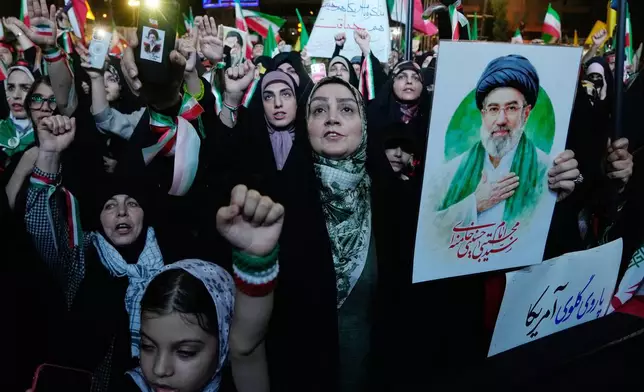
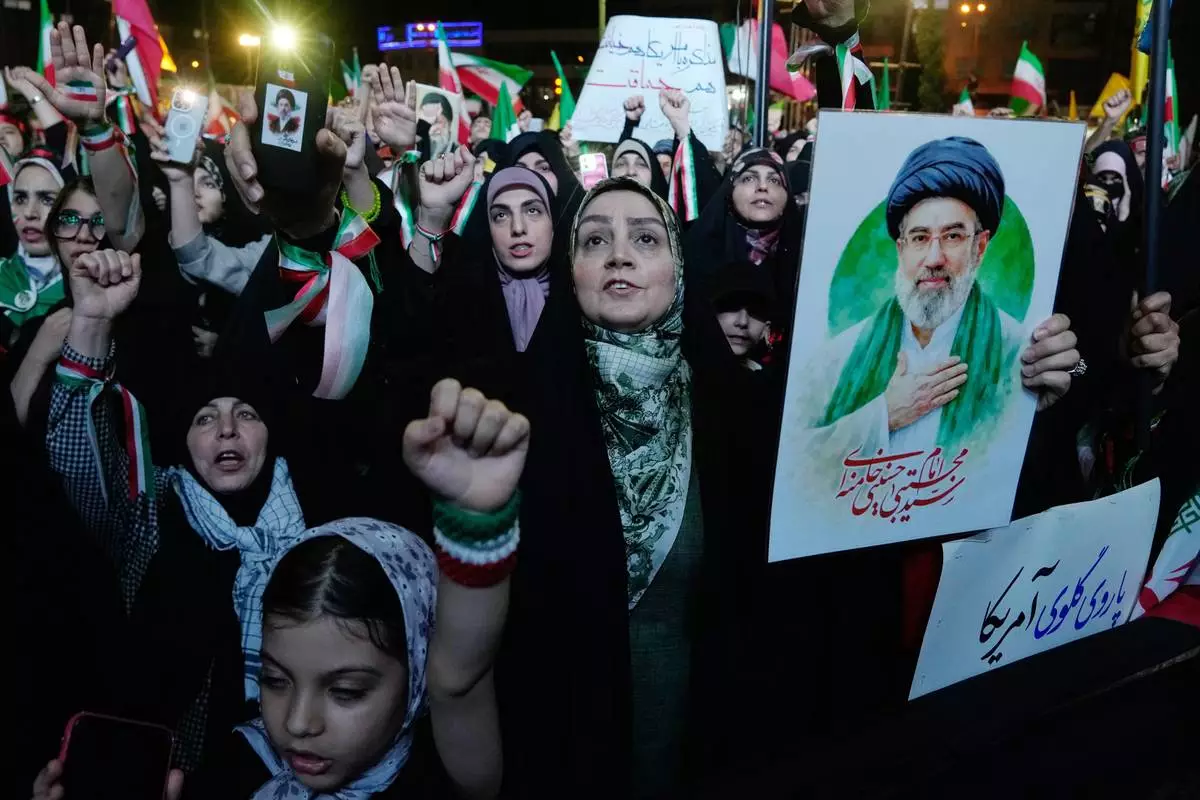
Pro-government demonstrators chant slogans as one of them holds a poster of the Iranian Supreme Leader Ayatollah Mojtaba Khamenei during their gathering at Enqelab-e-Eslami, or Islamic Revolution, square in Tehran, Iran, Monday, May 4, 2026. (AP Photo/Vahid Salemi)
Pro-government demonstrators chant slogans as one of them holds a poster of the Iranian Supreme Leader Ayatollah Mojtaba Khamenei during their gathering at Enqelab-e-Eslami, or Islamic Revolution, square in Tehran, Iran, Monday, May 4, 2026. (AP Photo/Vahid Salemi)

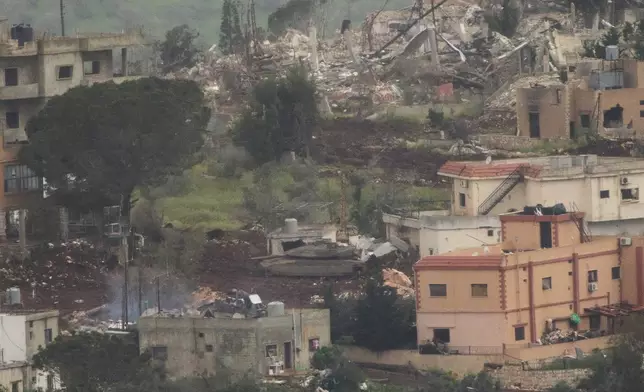
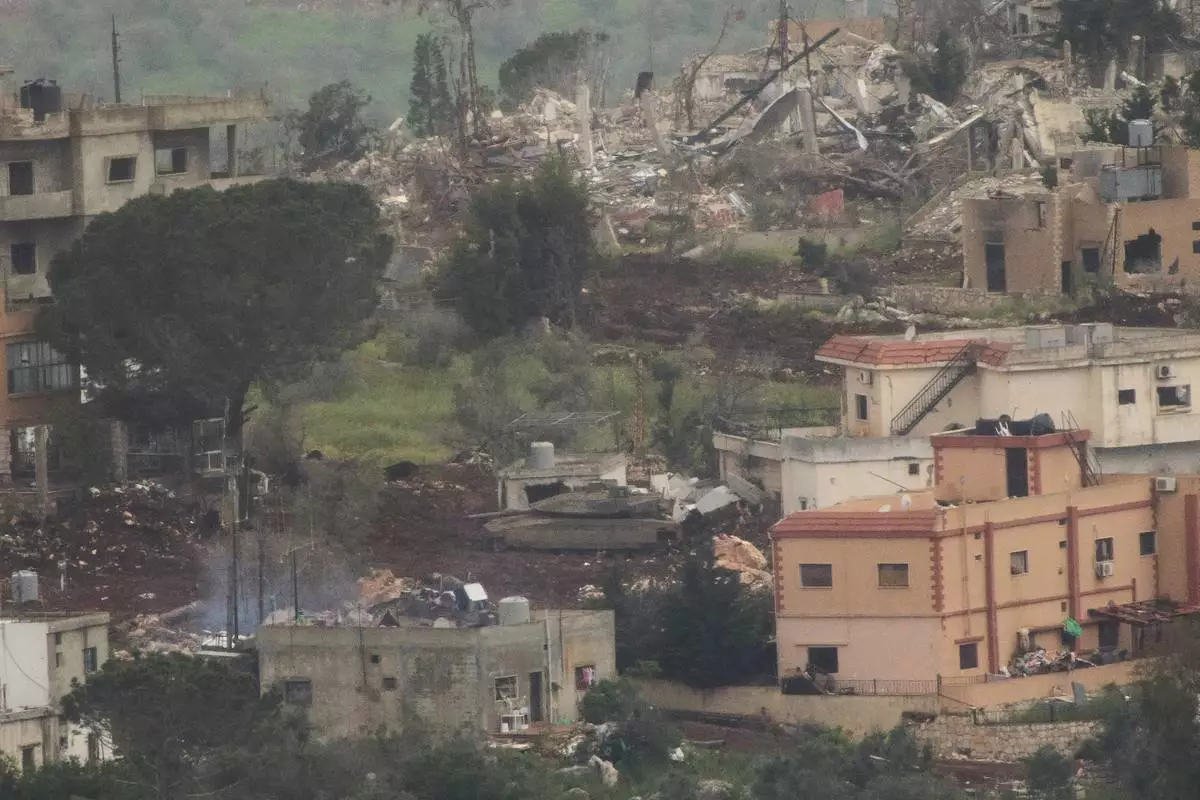
Israeli soldiers drive a tank inside a village in southern Lebanon, as seen from northern Israel, Tuesday, May 5, 2026. (AP Photo/Ariel Schalit)
Israeli soldiers drive a tank inside a village in southern Lebanon, as seen from northern Israel, Tuesday, May 5, 2026. (AP Photo/Ariel Schalit)

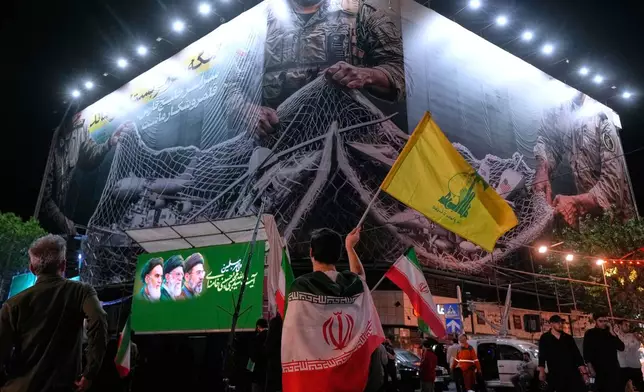
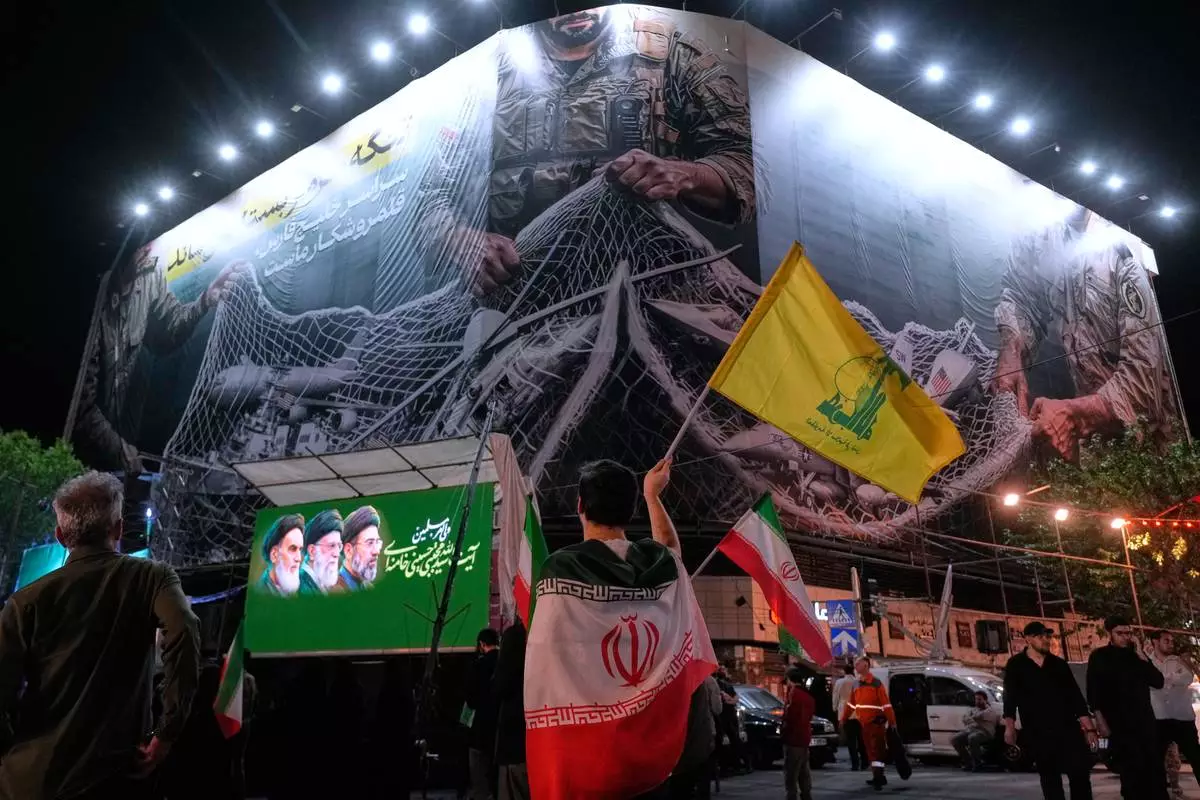
An Iranian demonstrator waves a flag of Lebanon's militant Hezbollah group under an anti-U.S. billboard depicting the American aircrafts into the Iranian armed forces fishing net with signs that read in Farsi: "The Strait of Hormuz will remain closed, The entire Persian Gulf is our hunting ground," during a pro-government gathering at Enqelab-e-Eslami, or Islamic Revolution, square in Tehran, Iran, Monday, May 4, 2026. (AP Photo/Vahid Salemi)
An Iranian demonstrator waves a flag of Lebanon's militant Hezbollah group under an anti-U.S. billboard depicting the American aircrafts into the Iranian armed forces fishing net with signs that read in Farsi: "The Strait of Hormuz will remain closed, The entire Persian Gulf is our hunting ground," during a pro-government gathering at Enqelab-e-Eslami, or Islamic Revolution, square in Tehran, Iran, Monday, May 4, 2026. (AP Photo/Vahid Salemi)

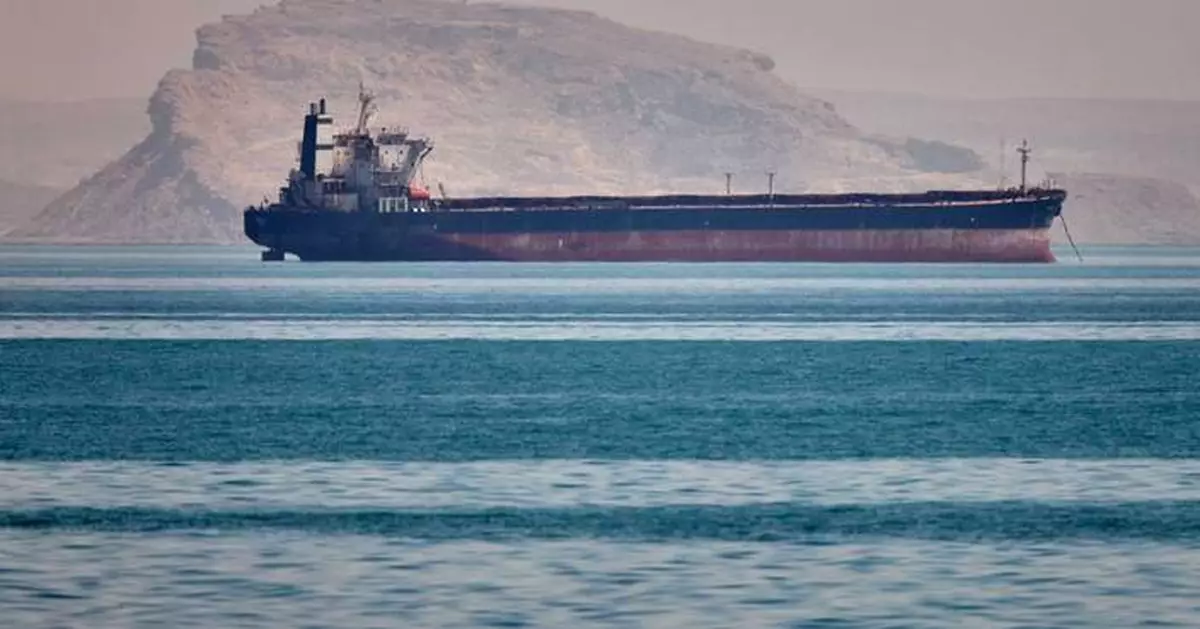
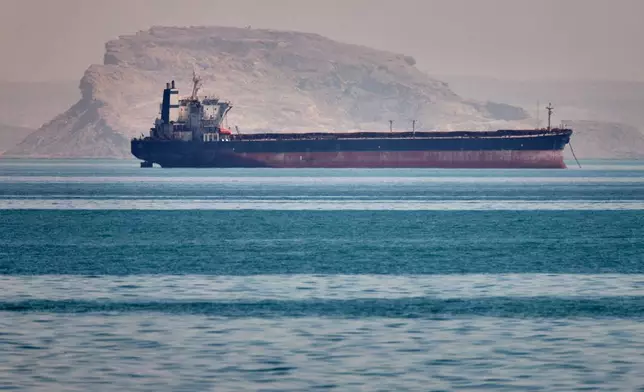
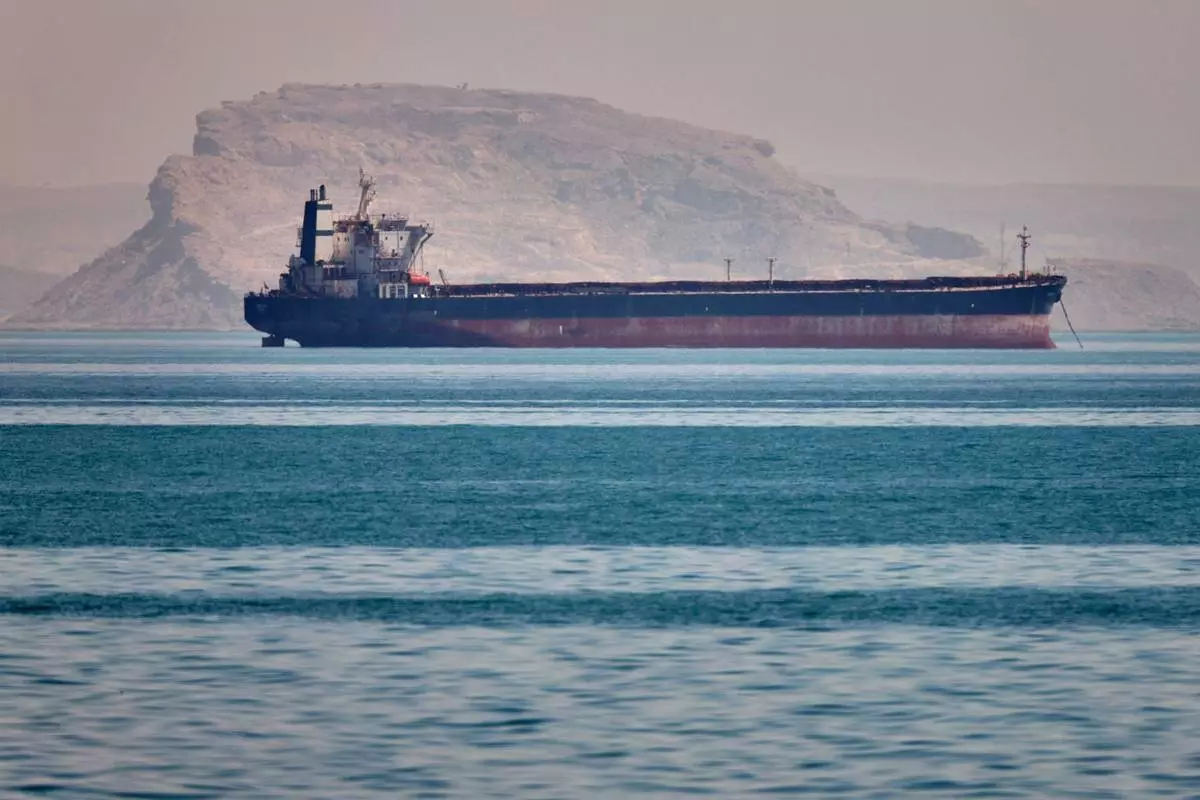
A bulk cargo ship sits at anchor in the Strait of Hormuz off Bandar Abbas, Iran, Saturday, May 2, 2026.(Amirhosein Khorgooi/ISNA via AP)

A bulk cargo ship sits at anchor in the Strait of Hormuz off Bandar Abbas, Iran, Saturday, May 2, 2026.(Amirhosein Khorgooi/ISNA via AP)

The U.S. military said two American-flagged merchant ships successfully transited the strait on Monday, the first day of the effort, and that it fired on Iranian forces, sinking six small boats that were targeting vessels.

Disputing Washington’s claim of sinking six boats, an Iranian military commander said two small civilian cargo boats were hit on Monday, killing five civilians, Iran’s state TV reported.

Ship tracking data showed a Panamanian-flagged crude oil tanker heading toward the center of the strait Tuesday morning after leaving an anchorage in the Persian Gulf, though it was unclear if it would try to pass through. The tanker had a stated destination of Singapore, according to the MarineTraffic ship tracking site.

Iran’s effective closure of the strait, through which about a fifth of the world’s trade in oil and natural gas typically passes, along with fertilizer and other petroleum-derived products, has sent fuel prices skyrocketing, rattled the global economy and proved a major strategic advantage in negotiations to end the war. Breaking that grip would deny Tehran a major source of leverage.

But such efforts risk reigniting the full-scale fighting that erupted when the U.S. and Israel attacked Iran on Feb. 28, prompting it to close the strait.

Iran has called the new U.S. effort a violation of the fragile ceasefire that has held for more than three weeks.

In a post on X on Tuesday, Qalibaf accused Washington of undermining shipping security in the Strait of Hormuz, and warned that a “new equation” there is taking shape.

He signaled that Iran has yet to fully respond to the U.S. attempt to reopen the waterway, saying: “We know full well that the continuation of the status quo is intolerable for America; while we have not even begun yet.”

His statement did not mention negotiations with the U.S. that are now in the form of passing messages via Pakistan.

U.S. President Donald Trump on Sunday warned that Iranian efforts to halt passage through the strait “will, unfortunately, have to be dealt with forcefully.”

He said the U.S. effort, “Project Freedom,” was intended to aid tens of thousands of stranded seafarers on hundreds of ships stuck in the Persian Gulf since the war began.

The U.S.-led Joint Maritime Information Center advised ships on Monday to cross the strait in Oman’s waters, saying it had set up an “enhanced security area.”

But shippers remained wary.

The United Arab Emirates' Defense Ministry said its air defenses had engaged 15 missiles and four drones fired by Iran. Authorities in the eastern emirate of Fujairah said one drone sparked a fire at a key oil facility, wounding three Indian nationals. The British military reported two cargo vessels ablaze off the UAE.

Indian Prime Minister Narendra Modi on Tuesday condemned the attacks, calling the targeting of civilians and infrastructure “unacceptable.” On X, Modi said India stands in “firm solidarity” with the UAE, and stressed the need for safe and uninterrupted shipping through the Strait of Hormuz.

Tehran did not confirm or deny the attacks but Iran’s Foreign Minister Abbas Araghchi early Tuesday said on X that both the U.S. and the UAE “should be wary of being dragged back into quagmire.”

Pakistan and Saudi Arabia condemned the strikes against the UAE. The Saudi condemnation came despite increasingly strained relations between it and the UAE.

The disruption of the waterway has squeezed countries in Europe and Asia that depend on Persian Gulf oil and gas, raising prices far beyond the region.

The U.S. meanwhile has enforced a naval blockade on Iranian ports since April 13, telling at least 49 commercial ships to turn back, according to its Central Command. It also has warned shipping companies they could face sanctions if they pay Iran for transit of the strait.

The blockade has deprived Tehran of oil revenue it needs to shore up its ailing economy. U.S. officials have expressed hope the blockade will force Iran to make concessions in talks on its disputed nuclear program and other longstanding issues.

Iran’s latest proposal for ending the war calls for the U.S. to lift sanctions, end the blockade, withdraw forces from the region and cease all hostilities including Israel’s operations in Lebanon, according to the semiofficial Nour News and Tasnim agencies, which have close ties to Iran’s security apparatus.

Iranian officials over the weekend said they were reviewing the U.S. response. Tehran has claimed its proposal does not include its nuclear program and enriched uranium, long a driving force in tensions with the U.S. and Israel.

Iran wants other issues resolved within 30 days and aims to end the war rather than extend the ceasefire. Trump expressed doubt over the weekend that the proposal would lead to a deal.

Becatoros reported from Athens, Greece. Sally Abou AlJoud in Beirut, Lebanon and Sheikh Saaliq in New Delhi contributed to this report.
Pro-government demonstrators chant slogans as one of them holds a poster of the Iranian Supreme Leader Ayatollah Mojtaba Khamenei during their gathering at Enqelab-e-Eslami, or Islamic Revolution, square in Tehran, Iran, Monday, May 4, 2026. (AP Photo/Vahid Salemi)
Pro-government demonstrators chant slogans as one of them holds a poster of the Iranian Supreme Leader Ayatollah Mojtaba Khamenei during their gathering at Enqelab-e-Eslami, or Islamic Revolution, square in Tehran, Iran, Monday, May 4, 2026. (AP Photo/Vahid Salemi)

Israeli soldiers drive a tank inside a village in southern Lebanon, as seen from northern Israel, Tuesday, May 5, 2026. (AP Photo/Ariel Schalit)
Israeli soldiers drive a tank inside a village in southern Lebanon, as seen from northern Israel, Tuesday, May 5, 2026. (AP Photo/Ariel Schalit)

An Iranian demonstrator waves a flag of Lebanon's militant Hezbollah group under an anti-U.S. billboard depicting the American aircrafts into the Iranian armed forces fishing net with signs that read in Farsi: "The Strait of Hormuz will remain closed, The entire Persian Gulf is our hunting ground," during a pro-government gathering at Enqelab-e-Eslami, or Islamic Revolution, square in Tehran, Iran, Monday, May 4, 2026. (AP Photo/Vahid Salemi)
An Iranian demonstrator waves a flag of Lebanon's militant Hezbollah group under an anti-U.S. billboard depicting the American aircrafts into the Iranian armed forces fishing net with signs that read in Farsi: "The Strait of Hormuz will remain closed, The entire Persian Gulf is our hunting ground," during a pro-government gathering at Enqelab-e-Eslami, or Islamic Revolution, square in Tehran, Iran, Monday, May 4, 2026. (AP Photo/Vahid Salemi)

A bulk cargo ship sits at anchor in the Strait of Hormuz off Bandar Abbas, Iran, Saturday, May 2, 2026.(Amirhosein Khorgooi/ISNA via AP)

A bulk cargo ship sits at anchor in the Strait of Hormuz off Bandar Abbas, Iran, Saturday, May 2, 2026.(Amirhosein Khorgooi/ISNA via AP)
KYIV, Ukraine (AP) — Russian drone and missile strikes targeting Ukraine’s power grid during the night killed at least five people and wounded 39 others, Ukrainian authorities said Tuesday, less than a day before Kyiv said it would enact a ceasefire and three days before Moscow promised its own truce.

Ukrainian President Volodymyr Zelenskyy rebuked Moscow for what he said was its “utter cynicism” in launching the attacks after Russia announced a unilateral truce over two days later this week while it marks the 81st anniversary of the defeat of Nazi Germany in World War II.

“Russia could cease fire at any moment, and this would stop the war and our responses,” Zelenskyy said in a post on X. “Peace is needed, and real steps are needed to achieve it. Ukraine will act in kind.”

The truce proposal follows a familiar pattern of Russia declaring short unilateral ceasefires during the war timed to various holidays — most recently Orthodox Easter — that don't produce any tangible results amid deep mistrust between Moscow and Kyiv more than four years after Russia launched an all-out invasion of its neighbor. U.S.-led diplomatic efforts to stop the war have come to nothing.

The Russian Defense Ministry declared a unilateral ceasefire in Ukraine for Friday and Saturday, but said that it would strike back at the country if it tries to disrupt the festivities on Victory Day, which Russia marks annually on May 9.

Zelenskyy replied that Ukraine would observe a truce beginning at the end of Tuesday and would respond in kind to Russia’s actions from that moment on. He didn't put an end date on the truce.

Russian forces fired 11 Iskander-M ballistic missiles and 164 strike drones at Ukraine overnight from Monday to Tuesday, including a jet-powered Shahed drone variant, the Ukrainian Air Force said.

Air defense units stopped 149 drones and one missile, but others got through, it said. Two ballistic missiles failed to reach their targets, the air force said without elaborating.

Russia has repeatedly hammered Ukraine’s energy infrastructure during the war, which began on Feb. 24, 2022. It hit natural gas production facilities in Ukraine’s central Poltava and northeastern Kharkiv regions, state energy company Naftogaz Group said.

Since the start of the year, Naftogaz facilities have come under attack 107 times, the company said.

Zelenskyy said that the Poltava attack was “especially vile,” because Russia launched a second missile at the same target when emergency rescuers were working at the scene.

Ukrainian Prime Minister Yulia Svyrydenko said that Russia’s main targets were energy facilities, oil and gas infrastructure, railways and industrial sites, although the attacks also damaged homes, businesses and the transportation network.

Russia’s ceasefire proposals “remain only statements,” Svyrydenko said.

Ukraine also kept up the pace of its long-range attacks on Russian rear areas, apparently aiming at more oil facilities in an effort to further disrupt Moscow's war economy.

Russia’s Defense Ministry said that its forces destroyed 289 Ukrainian drones overnight in 18 Russian regions. Drones were also intercepted over the occupied Crimean Peninsula, which Russia annexed from Ukraine in 2014, and over the Azov Sea, it said.

Ukraine during the night launched its F-5 Flamingo cruise missiles at targets including military-industrial complex facilities in Cheboksary, located more than 1,500 kilometers (900 miles) away, Zelenskyy said.

The plant supplied navigation components for the Russian Navy, the missile industry, aviation and armored vehicles, he said.

The regional health ministry said a Ukrainian drone attack wounded three people in the city of Cheboksary.

Ukrainian drones also attacked the Kirishi oil refinery in the Leningrad region close to St. Petersburg, sparking a blaze in the town’s industrial zone, local Gov. Alexander Drozdenko said.

Drozdenko said on social media that 29 Ukrainian drones had been shot down during the attack. No casualties were reported.

Ukraine doubled its midrange strikes on Russia in April compared to March and quadrupled them compared to February, according to a monthly battlefield report from Ukraine’s Defense Minister Mykhailo Fedorov published Tuesday.

The midrange attacks were focused on enemy warehouses, command posts, air defense systems and supply lines up to about 100 miles (160 kilometers) behind the front line.

Also, Ukrainian ground robots completed 10,281 resupply and evacuation missions in April, an average of almost 343 per day, according to Fedorov.

It was not possible to independently confirm the claims.

Follow the AP’s coverage of the war in Ukraine at https://apnews.com/hub/russia-ukraine

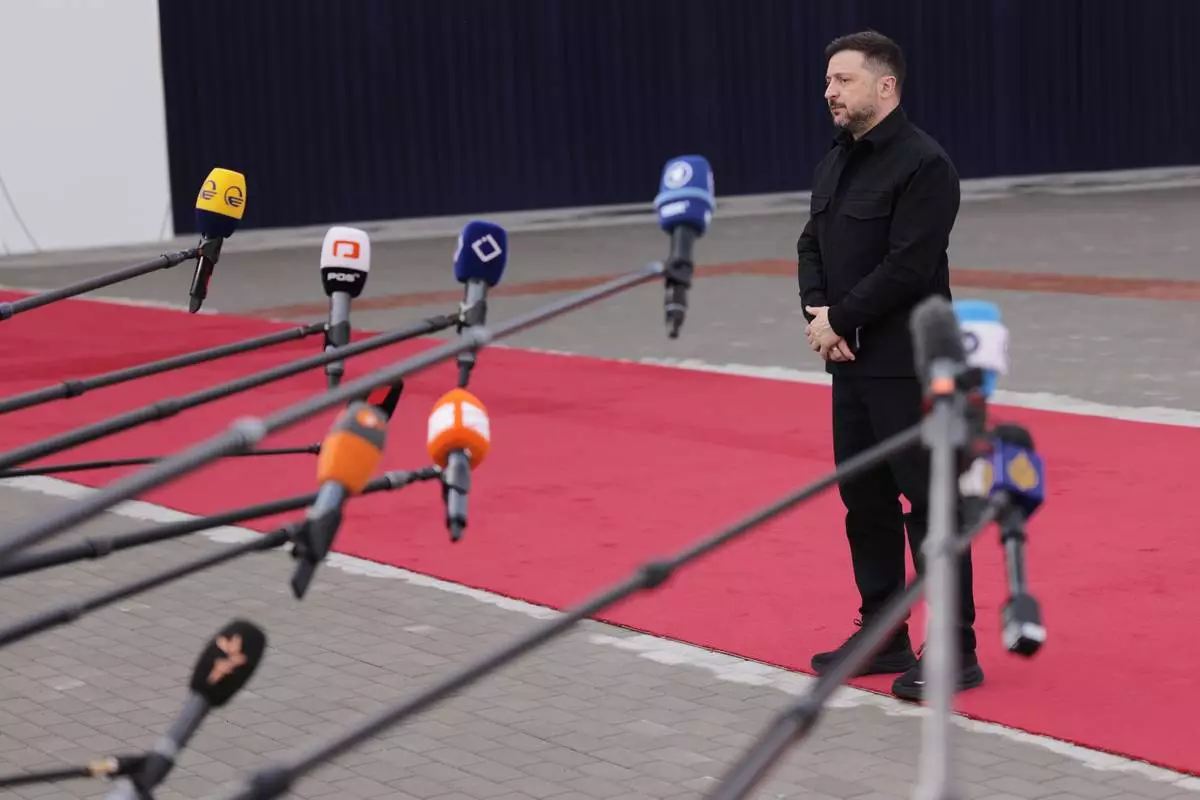
Ukraine's President Volodymyr Zelenskyy speaks with the media as he arrives for a meeting of the European Political Community in Yerevan, Armenia, Monday, May 4, 2026. (AP Photo/Anthony Pizzoferrato)

Ukraine's President Volodymyr Zelenskyy speaks with the media as he arrives for a meeting of the European Political Community in Yerevan, Armenia, Monday, May 4, 2026. (AP Photo/Anthony Pizzoferrato)

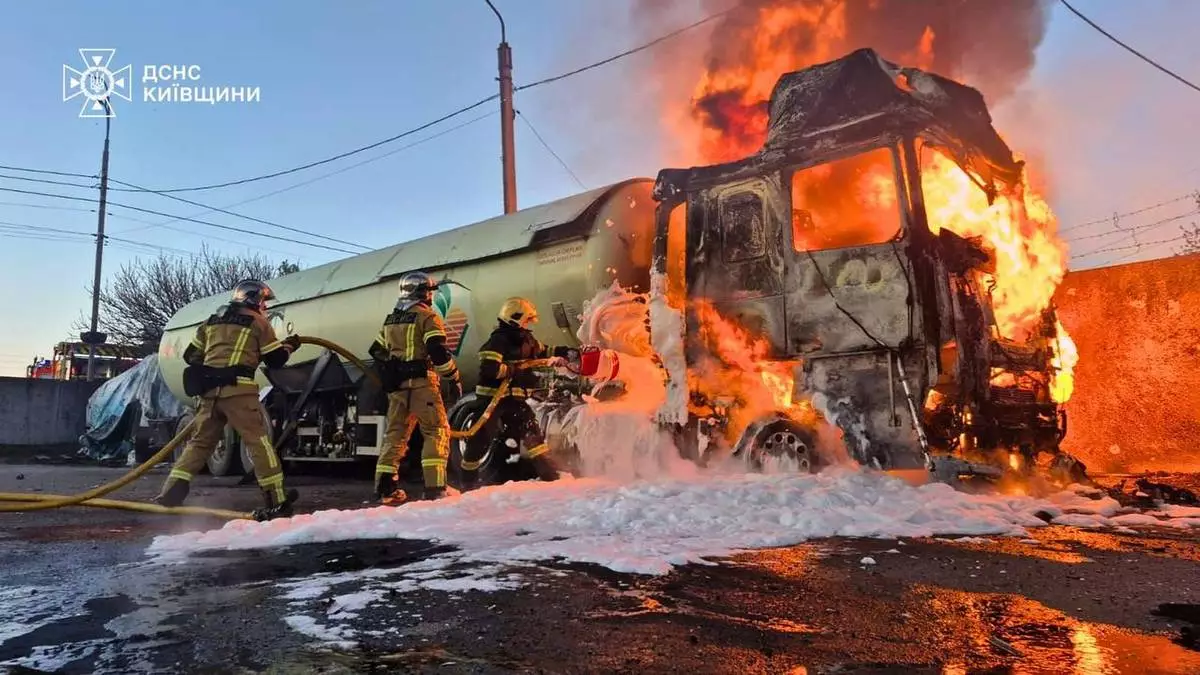
In this photo, provided by the Ukrainian Emergency Service, emergency services personnel work to extinguish a fire a vehicle following a Russian drone attack in Kyiv region, Ukraine, Tuesday, May 5, 2026. (Ukrainian Emergency Service via AP)

In this photo, provided by the Ukrainian Emergency Service, emergency services personnel work to extinguish a fire a vehicle following a Russian drone attack in Kyiv region, Ukraine, Tuesday, May 5, 2026. (Ukrainian Emergency Service via AP)

Recommended Articles