The adoption of high-tech 'digital twinning' technology which creates a virtual replica of entire urban environments is helping authorities in the coastal city of Qingdao in east China's Shandong Province improve safety by predicting potential risks and improving infrastructure to better protect the public.
As cities become larger and more complex, the emergence of this advanced technological tool is helping city planners and urban management stay on top of the associated challenges, with urban digital twin engineers using real-time data and artificial intelligence to build these digital models of urban landscapes.
Putting together the digital twin of the infrastructure of a city often requires using drones to survey the site from above and draw up an accurate depiction of various buildings and infrastructure of the area.
Zhu Yuanlin, chief architect at Hainayun, an Internet of Things (IoT) digital city eco-platform developed by leading Chinese home appliance and electronics firm Haier, said that digital twin technology can cover all aspects of a city – from communities to entire urban systems.
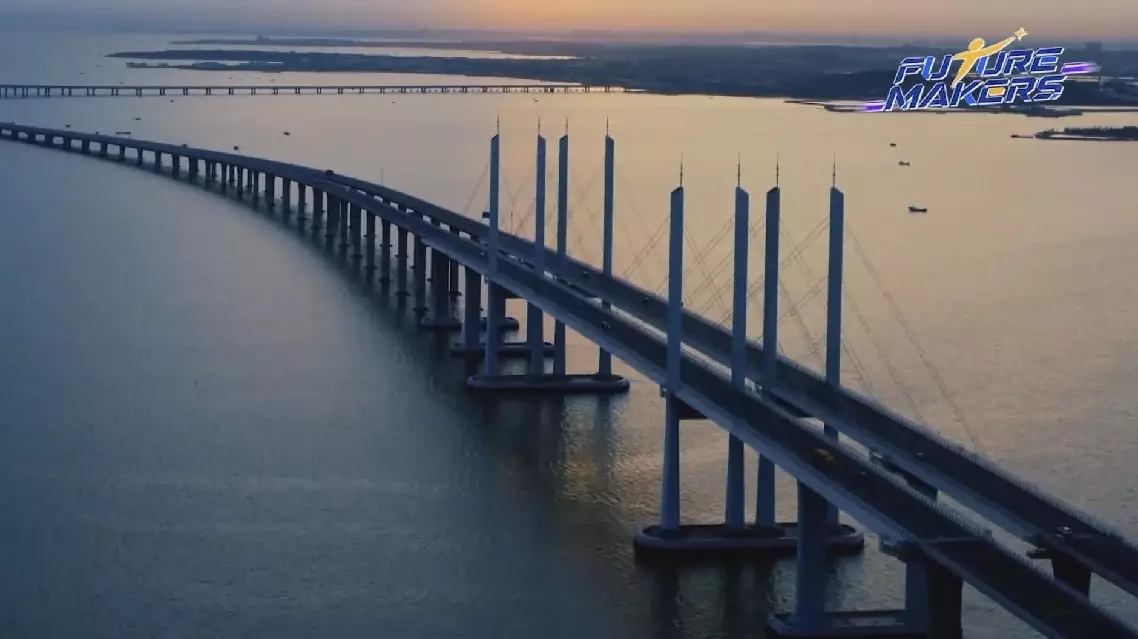
Zhu's team was recently dispatched with a drone to gather key data around a bridge in Qingdao.
"There are two extremely dangerous conditions for bridges. The first is insufficient load-bearing capacity, which can lead to bridge collapse. The second is the risk of bridge overturning. Therefore, we need to collect all relevant data," he said.
Local authorities say there are warning systems in place, through which engineers will be sent out to examine the situation more closely in-person.
"Once an alarm is triggered, an early warning will be activated, and we will dispatch personnel to the site to recheck the structure of the bridge," said Li Kai, deputy director at the Qingdao Urban Property Management Information Center.
The arrival of urban digital twin engineering has become a rising profession in China, but there is much more to it than just surveying and modeling, according to Zhu.
"There is a three-tier framework. In the first stage, the engineers are modelers. In the second stage, they will become simulation engineers, who are able to integrate and analyze the data. This step enables simulation and linkage with the real world. In the third stage, they will become digital twin prediction engineers," he said.
Beyond bridges, digital twin systems are now being applied to water supply monitoring, drainage management and even gas leak prevention, integrating IoT sensors, real-time simulation and artificial intelligence into a comprehensive urban safety network.
The fast-developing field is expected to continue to expand, with China's digital twin solutions market growing from just over 4 billion yuan (around 600 million U.S. dollars) in 2020 to reach nearly 15 billion yuan in 2024 and is projected to reach nearly 70 billion yuan by 2029.
Digital twin technology helps improve urban management in Qingdao