The Trump administration sued Denver and its police department on Tuesday seeking to strike down an assault weapons ban that's been in place for Colorado's largest city since 1989.
The lawsuit came a day after city officials publicly rejected calls by the Department of Justice to repeal the longstanding local ordinance that makes it a crime to possess assault weapons.
Trump's Republican administration alleges the ban violates the Constitution's Second Amendment right to bear arms. The administration also is threatening to sue Colorado over a statewide ban on large-capacity ammunition magazines adopted following a 2012 mass shooting at a movie theater.
“The Constitution is not a suggestion and the Second Amendment is not a second-class right,” acting Attorney General Todd Blanche said in a statement on Tuesday. “Denver’s ban on commonly owned semi-automatic rifles directly violates the right to bear arms.”
Department of Justice attorneys had asked the city last week to stop enforcing the ban and enter negotiations with federal officials to resolve the matter. But Denver’s mayor and police chief during a Monday news conference forcefully rejected the Trump administration’s request.
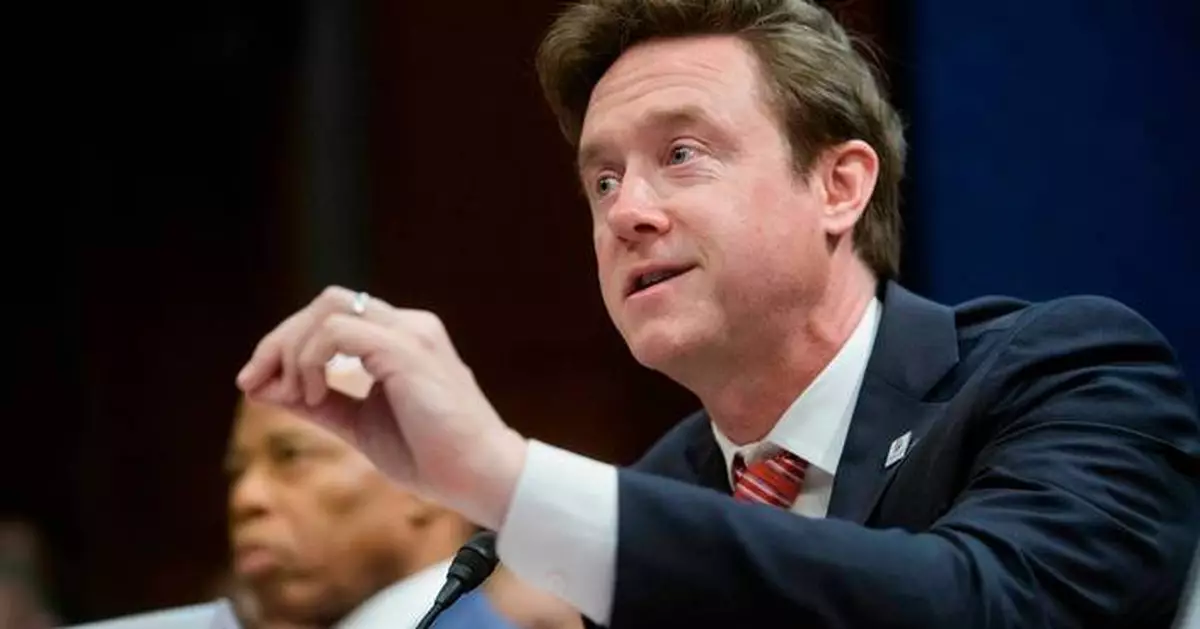
“Our answer is hell no,” Mayor Mike Johnston said. “No, we will not roll back a common sense policy that has kept weapons of war off of these city streets for 37 years. No, we will not put first responders at greater risk every time they respond to a dangerous incident No, we will not go back to a time when folks are worried about walking into movie theaters or grocery stores or public elementary schools.”
The assault weapons ban was enacted during a period of heightened concern over gun violence in the city.
There have been numerous mass shootings elsewhere in the state in the years since — the 1999 Columbine High School massacre that killed 14 people, the Aurora movie theater attack that killed 12 people and injured 70, a 2021 shooting at a supermarket in Boulder that killed 10 people and a 2022 attack at an LQBTQ nightclub in Colorado Springs that killed five people.
Denver police Chief Ron Thomas said he joined the department the year the city's assault weapons ban was adopted and having it in place has helped address gun violence. Of 2,100 guns recovered in the city last year, fewer than 2% were assault-style weapons, Thomas said.
Federal officials said in their lawsuit that Denver's ban includes AR-15-style rifles owned by at least 16 million people in the country. Government attorneys described them as “ordinary semiautomatic rifles" used for lawful purposes, "including but not limited to self-defense.”
Justice Department attorneys have made similar claims about the Colorado law banning large-capacity magazines, which the state's Supreme court upheld in 2020. In an April 28 letter to state officials, the administration threatened to file a lawsuit unless the state stops enforcing the law and agrees it's unconstitutional.
“Law-abiding Americans own literally hundreds of millions of magazines identical to those banned in Colorado,” Assistant Attorney General Harmeet Dhillon wrote.
Colorado Attorney General Phil Weiser said in response that firearms with large-capacity magazines are a major threat to public safety. Weiser said in a statement that the ban was reasonable.
“Large-capacity magazine laws are responsible policies that decrease the deadly impacts of mass shootings and save lives,” he said.
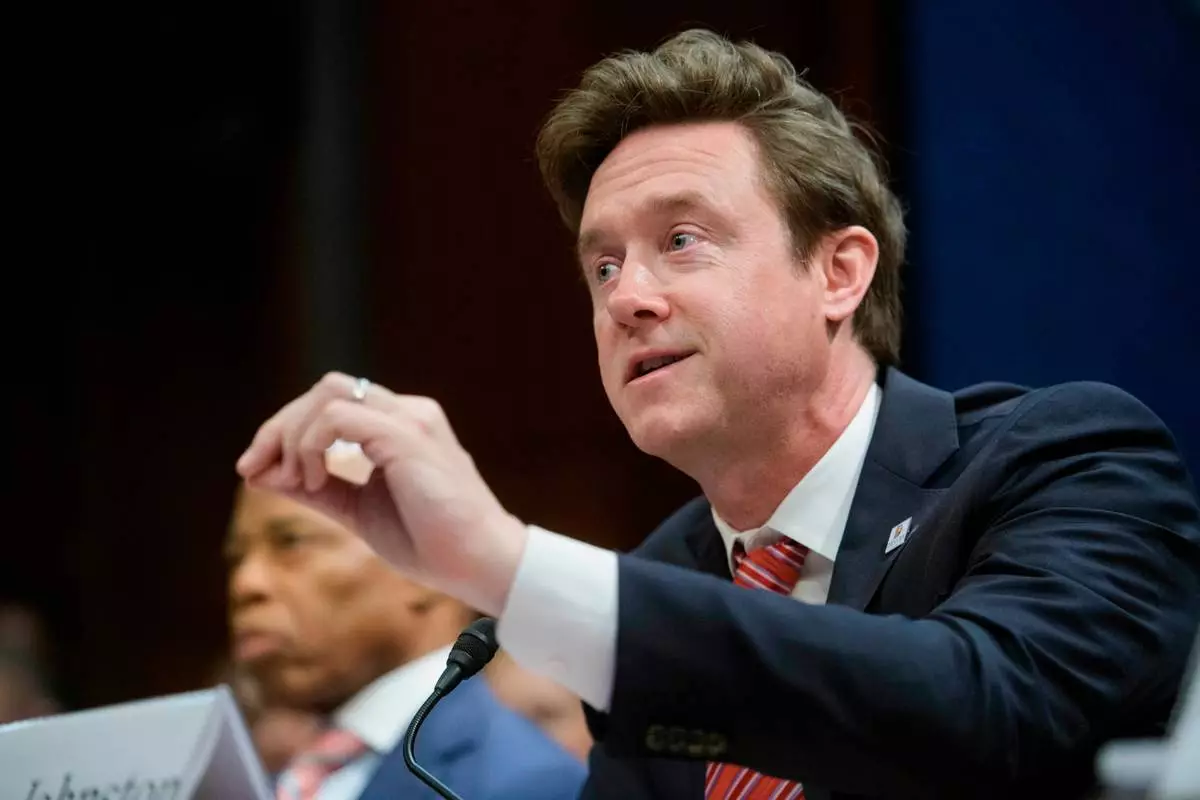
FILE - Denver Mayor Mike Johnston responds to questions during a House Committee on Oversight and Government Reform hearing with Sanctuary City Mayors on Capitol Hill, March 5, 2025, in Washington. (AP Photo/Rod Lamkey, Jr., File)
UNITED NATIONS (AP) — The United States and its Gulf allies have proposed a U.N. resolution threatening Iran with sanctions or other measures if it doesn’t halt attacks on ships in the Strait of Hormuz, stop imposing “illegal tolls,” and disclose the placement of all mines to allow freedom of navigation.
The draft Security Council resolution, obtained Tuesday by The Associated Press, also demands that Iran “immediately participate in and enable” United Nations efforts to establish a humanitarian corridor in the strait for the delivery of vital aid, fertilizer and other goods.
It is the latest diplomatic effort by the U.S. and its Gulf allies after a watered-down resolution aimed at opening the strait was vetoed by China and Russia hours before Washington and Tehran announced a temporary ceasefire in early April.
U.S. Secretary of State Marco Rubio in a statement on Tuesday accused Iran of continuing “to hold the world’s economy hostage” by trying to close the strait, threatening to attack ships, laying sea mines, and attempting to charge tolls “for the world’s most important waterway.”
While Rubio said he looks forward to the resolution being voted on in the coming days, he told journalists later in the day that he remained uncertain if “slight adjustments” the U.S. made to the text would be enough to avoid a veto from Tehran's allies on the council. These adjustments included removing language authorizing the use of force and focusing instead on the threat of sanctions.
Whether the resolution succeeds will be “a real test" for the U.N. “as something that functions, that can solve global problems," Rubio added at the White House briefing.
U.S. Ambassador Mike Waltz told reporters Monday he believes the new, narrow proposal will gain the necessary support it needs to pass the 15-member council, without triggering opposition or a veto from Iran’s allies.
The U.S. and Gulf nations proposed the new draft as the Trump administration tries to restore freedom of navigation in the strait, which carried about 20% of the world’s crude oil before the U.S. and Israel began the war on Feb. 28. A shaky ceasefire remains in effect.
The proposed resolution, which was drafted under Chapter 7 of the U.N. Charter and thus could be enforced militarily, threatens “effective measures that are commensurate with the gravity of the situation, including sanctions” if Iran doesn’t comply. The earlier resolution removed a Chapter 7 reference but was still vetoed.
One Security Council diplomat told AP that as in previous negotiations on Hormuz resolutions, specific language directly condemning Iran, without also reflecting U.S. and Israeli strikes, has been an issue with some members. The diplomat spoke on condition of anonymity to discuss sensitive deliberations.
The new draft resolution reaffirms the right of all countries to defend their vessels from attacks and provocations, and orders all other countries not to assist Iran in closing the strait or levying tolls.
The draft also “welcomes ongoing efforts to deconflict and coordinate safe and secure transit passage through the Strait of Hormuz, expresses support for ongoing efforts to seek a durable peace in the region, and encourages member states in the region to strengthen dialogue and consultations in this regard.”
The diplomat also said that the U.S. has been engaging in serious efforts to convince China to abstain from vetoing the resolution, including at the highest diplomatic levels as both countries prepare for President Donald Trump's visit next week to meet with Chinese President Xi Jinping.
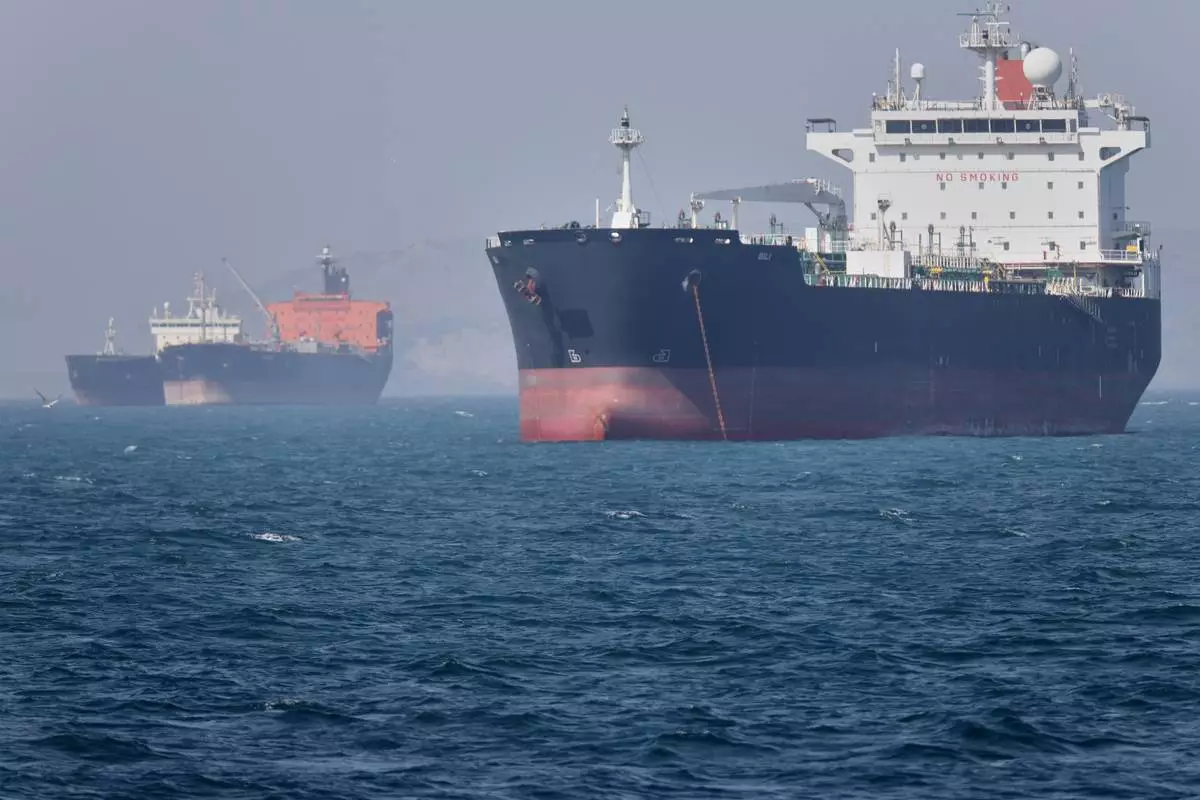
Oil tankers sit at anchor offshore in the Strait of Hormuz off Bandar Abbas, Iran, Saturday, May 2, 2026. (Amirhosein Khorgooi/ISNA via AP)