DALLAS--(BUSINESS WIRE)--May 6, 2026--
Aurora Innovation, Inc. (NASDAQ: AUR) and McLane Company, Inc., a Berkshire Hathaway (NYSE: BRK.A) subsidiary, today announced an agreement to begin driverless hauls in Texas with the Aurora Driver, an SAE L4 self-driving system that is first being deployed in long-haul trucking. The partnership enables McLane – one of the largest distributors in America, serving chain restaurants, convenience stores, and mass merchants – to move supplies and perishable food more efficiently for America’s most beloved restaurant brands with autonomous trucks.
This press release features multimedia. View the full release here: https://www.businesswire.com/news/home/20260506997128/en/
“The business of moving food is essential to our economy and our way of life. With a 134-year legacy, McLane is deeply woven into the American distribution industry,” said Ossa Fisher, president at Aurora. “We’re excited to enter the next chapter with McLane and transform the American food supply chain with autonomous trucks. Our collective momentum in logistics is palpable."
Proven Safety and Reliability
The companies began their supervised autonomy pilot in 2023. Since then, the Aurora Driver logged over 280,000 autonomous miles in Texas and delivered 1,400 loads for McLane, helping it serve restaurant customers across the state.
Based on Aurora's record of safely delivering goods for McLane with 100% on-time performance, McLane approved the transition to driverless operations between Dallas and Houston. Aurora plans to expand to new routes between McLane distribution centers across the U.S. Sun Belt by the end of the year, with plans to serve additional McLane business in the future.
“We’ve been thoroughly impressed with Aurora’s technology, exceptional safety performance and commitment to operational excellence,” said Susan Adzick, president of McLane Restaurant. “Autonomous technology helps us drive greater efficiency across the supply chain, while our drivers remain focused on the critical last mile—and continuing to serve as the face of our company to customers.”
Strengthening the Supply Chain with Autonomy
During the pilot, Aurora met the demands of McLane’s rigorous schedule, expanding to two round-trips daily between Dallas and Houston, seven days a week. The workflow utilizes a hybrid model: the Aurora Driver manages the long-haul ‘middle mile,’ while McLane drivers handle local deliveries to customer locations. This hybrid model with autonomous and human drivers will continue as the companies deepen their work together.
Autonomous trucks moving refrigerated hauls 24/7 offer scalable, reliable capacity that can flex with demand—bringing greater efficiency to operations and helping address ongoing labor constraints. By supporting more consistent transit schedules and dependable middle-mile coverage, the Aurora Driver helps keep freight moving smoothly.
About Aurora
Aurora (Nasdaq: AUR) is delivering the benefits of self-driving technology safely, quickly, and broadly to make transportation safer, increasingly accessible, and more reliable and efficient than ever before. The Aurora Driver is a self-driving system designed to operate multiple vehicle types, from freight-hauling trucks to ride-hailing passenger vehicles, and underpins Aurora’s driver as a service product for trucking. Aurora is working with industry leaders across the transportation ecosystem, including AUMOVIO, FedEx, Hirschbach, NVIDIA, PACCAR, Ryder, Schneider, Toyota, Uber, Uber Freight, Volvo Trucks, Volvo Autonomous Solutions, and Werner. To learn more, visit aurora.tech.
About McLane
Founded in 1894, McLane Company Inc. is one of the largest distributors in America, serving convenience stores, mass merchants, and chain restaurants. As an industry-leading partner to the biggest retail and restaurant businesses, McLane buys, sells, delivers, and serves the world’s most beloved brands. With headquarters in Temple, Texas, McLane has more than 80 distribution centers across the country, employs more than 25,000 teammates, and delivers to nearly every zip code in the US. McLane is a wholly owned subsidiary of Berkshire Hathaway, Inc.
Cautionary Statement Regarding Forward-Looking Statements
This press release contains certain forward-looking statements within the meaning of the federal securities laws. All statements contained in this press release that do not relate to matters of historical fact should be considered forward-looking statements, including but not limited to, those statements around our driverless operations and future financial and operating performance; our ability to meet customer demand, reduce costs and general expectations beyond that year; the safety benefits of our technology and product; our ability to achieve certain milestones around, and realize the potential benefits of, the development, manufacturing, scaling and commercialization of the Aurora Driver and related services, on the timeframe we expect or at all; our relationships with our partners and customers and anticipated benefits that they may derive from our product; and the anticipated impact of our product on the freight industry and economy. Statements in this press release about McLane’s intent to expand its partnership reflect current plans and discussions, and whether that intent is finalized and results in binding orders is subject to definitive documentation, which may not occur on the expected timeline, or at all. These statements are based on management’s current assumptions and are neither promises nor guarantees, but involve known and unknown risks, uncertainties and other important factors that may cause our actual results, performance or achievements to be materially different from any future results, performance or achievements expressed or implied by the forward-looking statements. For factors that could cause actual results to differ materially from the forward-looking statements in this press release, please see the risks and uncertainties identified under the heading “Risk Factors” section of Aurora Innovation, Inc.’s (“Aurora”) Annual Report on Form 10-K for the year ended December 31, 2025, filed with the U.S. Securities and Exchange Commission (the “SEC”) on February 11, 2026, and other documents filed by Aurora from time to time with the SEC, which are accessible on the SEC website at www.sec.gov. Additional information will also be set forth in our Quarterly Report on Form 10-Q for the quarter ended March 31, 2026. All forward-looking statements reflect our beliefs and assumptions only as of the date of this press release. Aurora undertakes no obligation to update forward-looking statements to reflect future events or circumstances.
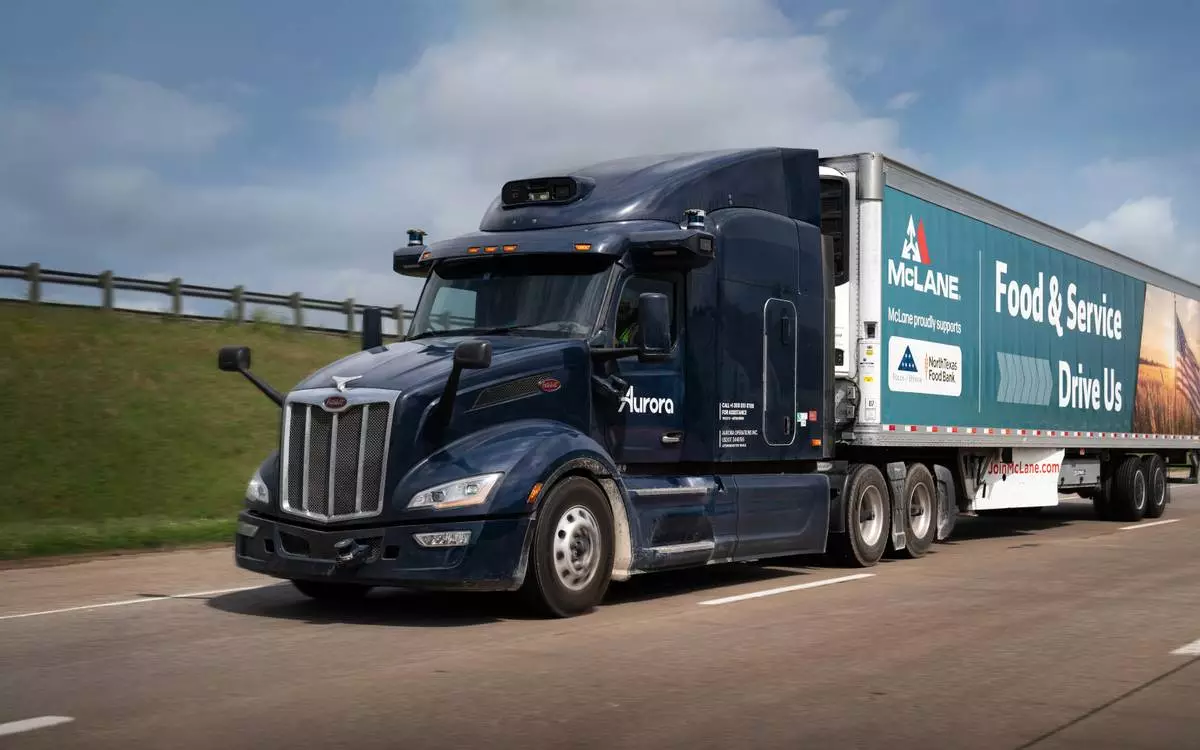
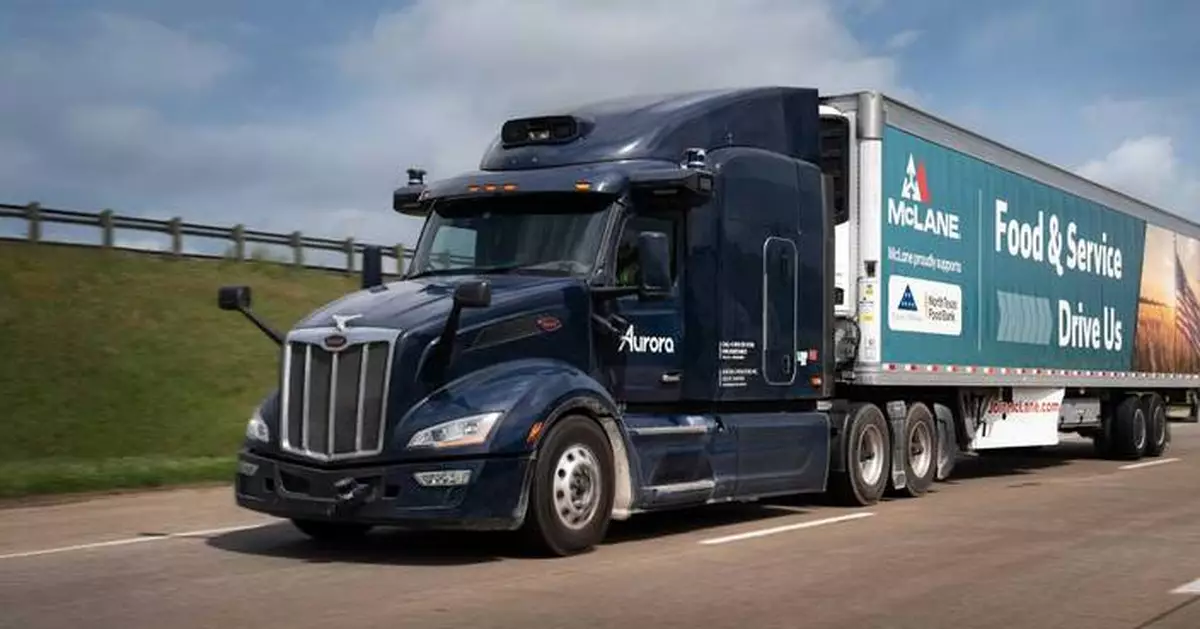
After a successful pilot program with one of the largest private fleets in America, Aurora transitions to driverless commercial operations on select routes for McLane Company (Credit: Aurora)