BOULDER, Colo. (AP) — A man accused of a firebomb attack that killed one person and injured a dozen others while they were demonstrating in Boulder, Colorado, in support of Israeli hostages in Gaza has pleaded guilty to murder and other charges.
Mohamed Sabry Soliman entered the pleas Thursday in Boulder County District Court. He now faces up to life in prison without the possibility of parole in the attack in downtown Boulder last June 1.
Soliman, who is expected to be sentenced later Thursday, made no comments through two translators. He just agreed to guilty pleas and said he understood the judge’s reading of the charges.
Soliman initially pleaded not guilty in state court to murder and dozens of attempted murder and assault charges for throwing two Molotov cocktails at demonstrators at a pedestrian mall in downtown Boulder, a city of 100,000 people northwest of Denver that’s home to the University of Colorado.
Karen Diamond, 82, was injured in the attack and later died. A dozen others were also injured.
In a statement read in court by a prosecutor, Diamond’s sons asked that Soliman not be allowed to see his family again “since he is responsible for our mother never seeing her family again.”
Andrew and Ethan Diamond said their mother suffered “indescribable pain” for over three weeks before her death. “In those weeks, we learned the full meaning of the expressions living hell and fate worse than death,” Diamond’s sons said in the statement.
In another statement read by a prosecutor, a physician who was a victim of the attack described the helplessness of seeing Diamond suffering and knowing that she would not survive.
Soliman is an Egyptian national who federal authorities say was living in the U.S. illegally. Investigators allege he planned the attack for a year and was driven by a desire “to kill all Zionist people.”
Boulder Mayor Pro Tem Tara Winer said the victims included some of her close friends.
“It was a horrific attack,” Winer said by email this week. “Their lives were changed forever.”
Soliman’s attorneys revealed he would plead guilty in a Sunday court filing in a related federal case. Soliman has meanwhile pleaded not guilty to federal hate crime charges.
Prosecutors are weighing whether to seek the death penalty in the federal case, according to his attorneys.
Soliman’s federal attorneys have said in court filings the attack “was profoundly inconsistent” with Soliman’s prior conduct and “came as a total shock to his family.”
Soliman had been living with his family in a two-bedroom apartment in Colorado Springs — about 97 miles (156 kilometers) away — at the time of the attack. He had moved to the U.S. from Kuwait in 2022 with his wife and their five children and worked in a series of low-paying jobs.
The couple divorced in April.
Investigators allege Soliman told them he intended to kill the roughly 20 participants at the weekly demonstration at Boulder’s Pearl Street pedestrian mall. He threw two of more than two dozen Molotov cocktails he had with him while yelling, “Free Palestine!”
Police said he told them he got scared because he had never hurt anyone before.
Federal prosecutors allege the victims were targeted because of their perceived or actual connection to Israel. Soliman’s federal defense lawyers argue he should not have been charged with hate crimes because he was motivated by opposition to Zionism, the political movement to establish and sustain a Jewish state in Israel.
An attack motivated by someone’s political views is not considered a hate crime under federal law.
State prosecutors have identified 29 victims in the attack. Thirteen were physically injured. The others were nearby and considered victims because they could have been hurt. A dog was also injured in the attack, and Soliman was charged with animal cruelty.
Soliman’s wife, Hayam El Gamal, and their children spent 10 months in immigration detention until a federal judge in Texas ordered their release in April.
An immigration appeals court had dismissed their case to stay in the U.S. and issued a deportation order. But U.S. District Judge Fred Biery in San Antonio allowed their release on the condition that El Gamal and her oldest child, who is 18, wear electronic monitoring.
Soliman’s attorneys seek to block the family’s deportation until a judge determines they won’t need to be present for court proceedings in his federal case.
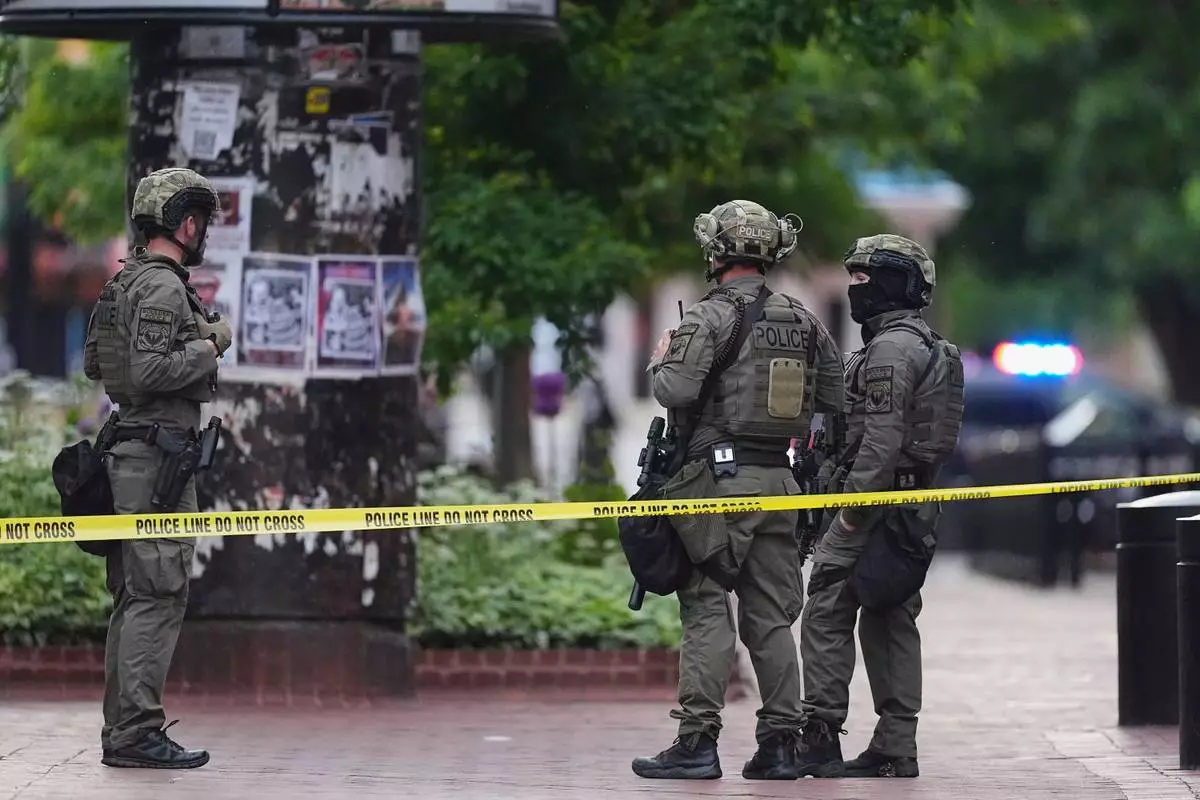
FILE - Law enforcement officials investigate after an attack on the Pearl Street Mall, June 1, 2025, in Boulder, Colo. (AP Photo/David Zalubowski, file)
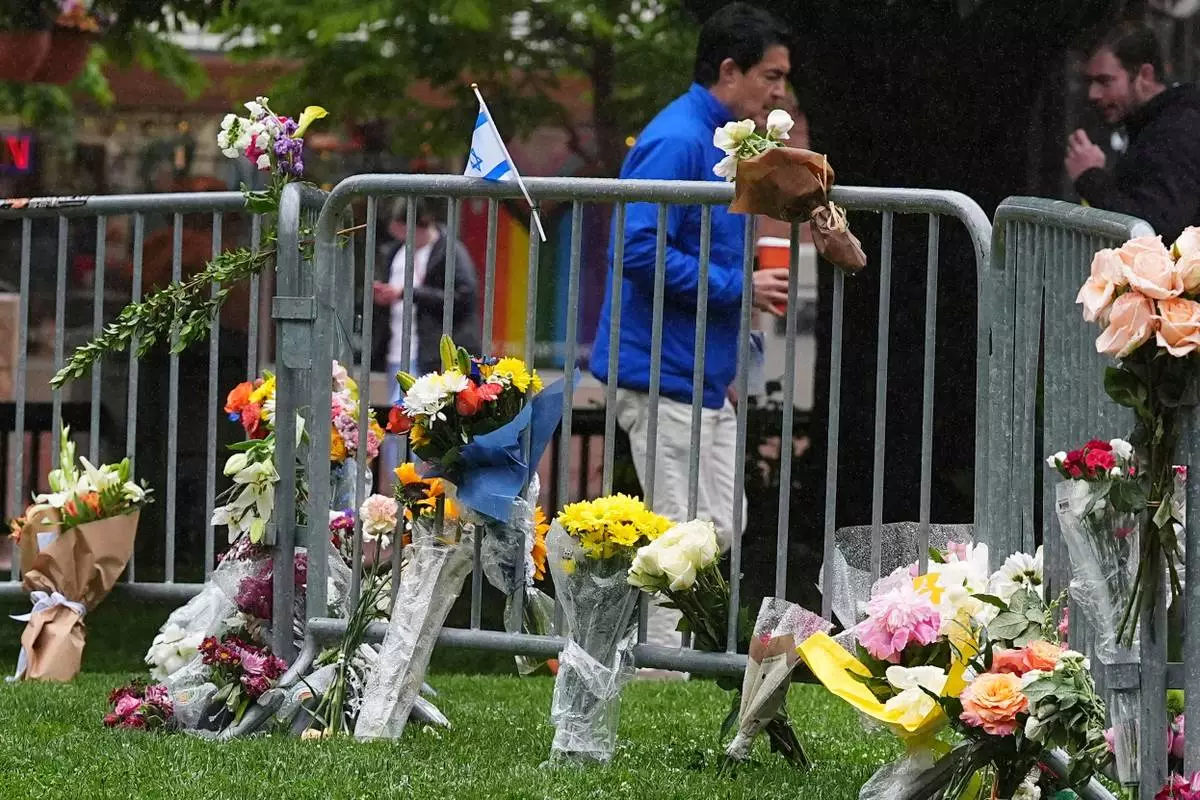
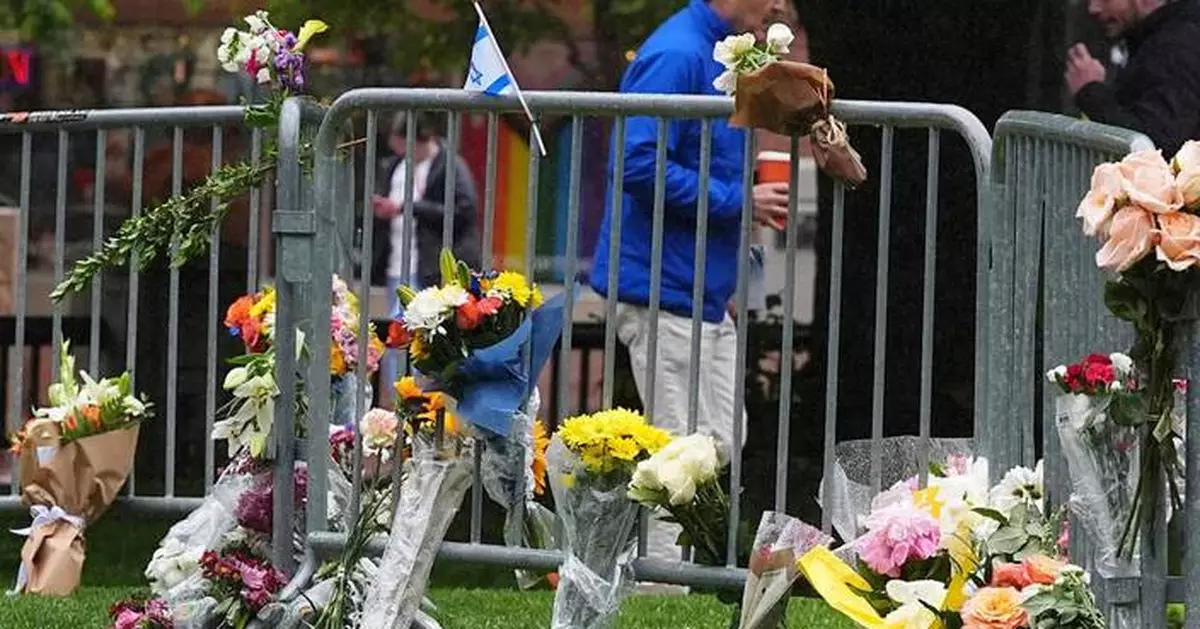
FILE - Bouquets of flowers stand along a makeshift memorial for victims of an attack outside of the Boulder County courthouse on June 3, 2025, in Boulder, Colo. (AP Photo/David Zalubowski, file)
NASHVILLE, Tenn. (AP) — Republican lawmakers in Tennessee forged ahead with a plan Thursday that could carve up a majority-Black congressional district, reshaping it to the GOP's advantage as part of President Donald Trump's strategy to hold on to a slim House majority in the November midterm elections.
Protesters shouted “No Jim Crow” outside the House and Senate chambers as lawmakers convened to consider the legislation. As the Republican-led House voted for the new map, Democratic lawmakers locked arms at the front of the chamber while protesters in the gallery yelled, chanted and blew air horns. Shouts from protesters who flooded the halls, where Tennessee state troopers held them back, could be heard inside both chambers. A final vote in the Senate would send the map to Republican Gov. Bill Lee, who called lawmakers into special session.
The redistricting effort in Tennessee is one of several rapidly advancing plans in Southern states as Republicans try to leverage a U.S. Supreme Court ruling that weakened the federal Voting Rights Act.
The court ruled that Louisiana relied too heavily on race when creating a second Black-majority House district as it attempted to comply with federal law. The high court's decision altered a decades-old understanding of the law, giving Republicans grounds to try to eliminate majority-Black districts that have elected Democrats.
Louisiana has postponed its congressional primary to give time for state lawmakers to craft a new House map. Legislation awaiting a final vote in Alabama also would upend the state’s congressional primaries if courts allow the state to change its U.S. House districts. In South Carolina, meanwhile, Republican lawmakers urged on by Trump have taken initial steps to add congressional redistricting to their agenda.
The states are the latest to join an already fierce national redistricting battle. Since Trump prodded Texas to redraw its U.S. House districts last year, eight states have adopted new congressional districts. From that, Republicans think they could gain as many as 13 seats while Democrats think they could gain up to 10. But some competitive races mean the parties may not get everything they sought in the November elections.
As a first step to adopting new House districts, Tennessee lawmakers gave final approval Thursday to legislation that would repeal a state law prohibiting mid-decade redistricting. They then passed a bill that would reopen candidate qualifying until May 15 to allow time for new people to enter the U.S. House primaries and existing candidates to switch districts or drop out.
The proposed House map would break up Tennessee’s lone Democratic-held district, centered on the majority-Black city of Memphis, creating a ripple effect of alterations to districts throughout the western and central parts of the state.
Republican House Speaker Cameron Sexton said the proposed districts were drawn based on population and politics, not racial data.
But Democrats dismissed such assertions.
“These maps are racist tools of white supremacy at the behest of the most powerful white supremacist in the United States of America, Donald J. Trump,” said state Rep. Justin Pearson, a Black Democrat from Memphis who is running for the U.S. House.
Republican state Sen. John Stevens defended the new districts he sponsored by noting that Democrats in Illinois, Massachusetts and other states also had drawn congressional districts to their advantage.
“This bill represents Tennessee’s attempt to maximize our partisan advantage,” he said.
It does so at the expense of both Memphis residents and democracy, said Sen. London Lamar, a Democrat from Memphis.
“You cannot take a majority Black city, fracture its voting power and then tell us race has nothing to do with it," she said.
Democrats noted that the state Supreme Court in April 2022 rejected a challenge to the current congressional map, finding it was too close to the election to make changes. This year, there’s even less time before the Aug. 6 primary, raising the potential of confusion for both candidates and voters, Democrats said.
Protesters watching an Alabama legislative committee Thursday erupted in shouts of “shame” as Republican lawmakers advanced legislation to authorize special congressional primaries if the state can put a new congressional map in place for the November midterms.
In the wake of the Supreme Court decision arising from Louisiana, Alabama is seeking to overturn a court injunction that created a second U.S. House district with a substantial percentage of Black voters. That map led to the 2024 election of Rep. Shomari Figures, a Black Democrat. Republicans want instead to use a 2023 map drawn by state lawmakers that would give the GOP an opportunity to reclaim Figures’ district.
If a court grants Alabama's request, the legislation under consideration would ignore the May 19 primary results for congressional seats and direct the governor to schedule a new primary under the revised districts.
The House passed the legislation on a party-line vote Thursday after four hours of fiery debate. A final vote in the Senate is expected Friday.
The South Carolina Senate could take up a resolution Thursday giving lawmakers permission to return later, after their regular work ends, to redraw congressional districts that could eliminate the state’s only Democratic-held district. The proposal, which passed the House on Wednesday, needs a two-thirds vote in both chambers.
Republican House leaders said after the vote that they plan to introduce a new map Thursday and hold committee meetings on Friday. But during debate Wednesday, Republicans fended off specific questions from Democrats, including why they were willing to stop the June 9 U.S. House primary elections well after candidates filed and how much a rescheduled primary could cost.
Democratic Rep. Justin Bamberg said he felt sorry for Republicans who, he said, were giving up their principles to follow the whims of Trump.
“The president of the United States is a very powerful man. Wields a heavy, heavy thumb — Truth Social, X, Meta, Instagram. To be honest I don’t envy our Republican colleagues,” Bamberg said.
Chandler reported from Montgomery, Alabama; Collins from Columbia, South Carolina; and Lieb from Jefferson City, Missouri. Associated Press reporter Kristin M. Hall contributed.
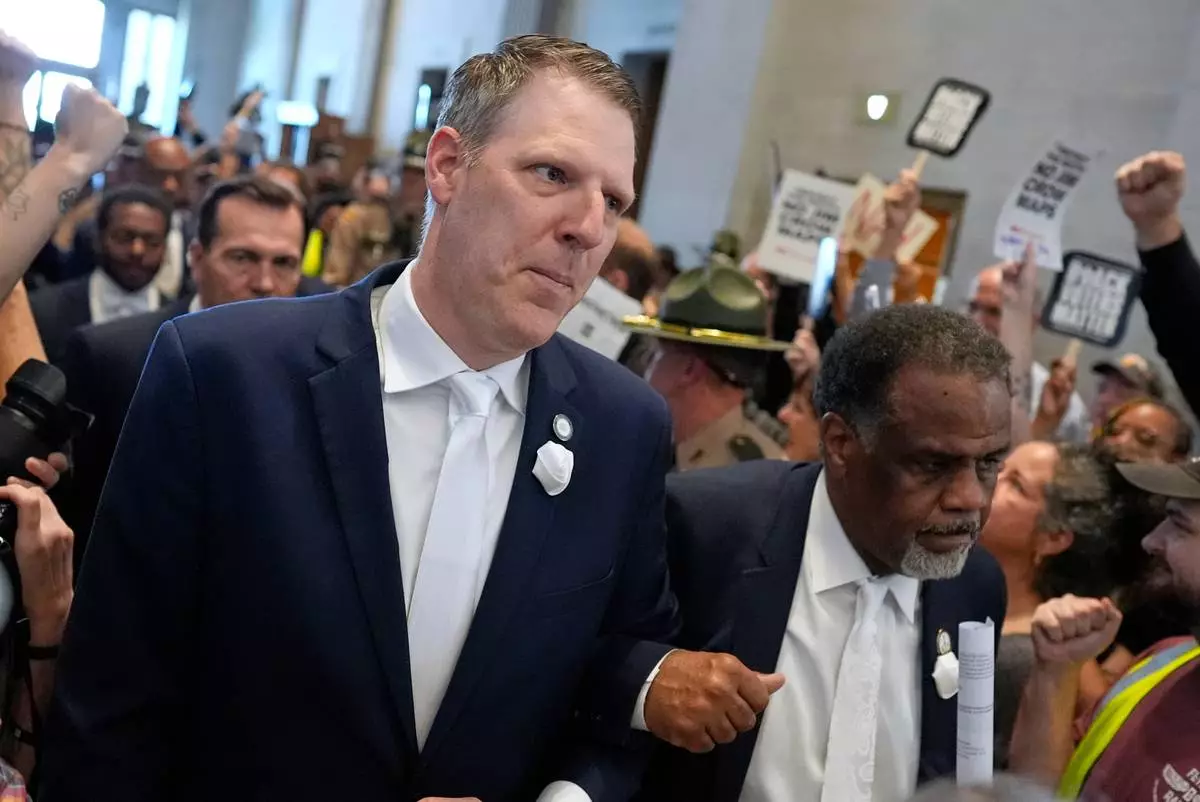
Rep. Caleb Hemmer, D-Nashville, and Rep. Sam McKenzie, D-Knoxville, walk to the House chamber arm in arm for a special session of the state legislature to redraw U.S. Congressional voting maps Thursday, May 7, 2026, in Nashville, Tenn. (AP Photo/George Walker IV)
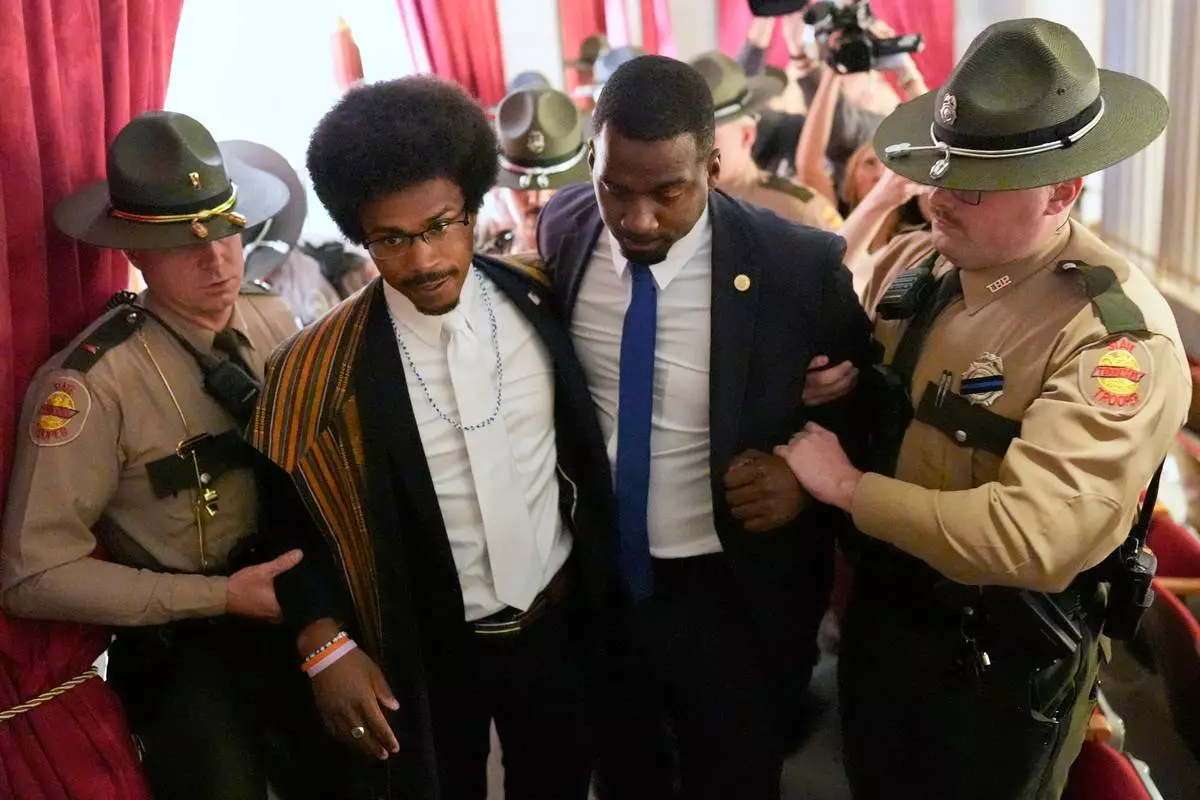
Rep. Justin J. Pearson, D-Memphis, second from left, walks with his brother KeShaun Pearson, as he is arrested and removed from the House gallery during a special session of the state legislature to redraw U.S. Congressional voting maps Thursday, May 7, 2026, in Nashville, Tenn. (AP Photo/George Walker IV)
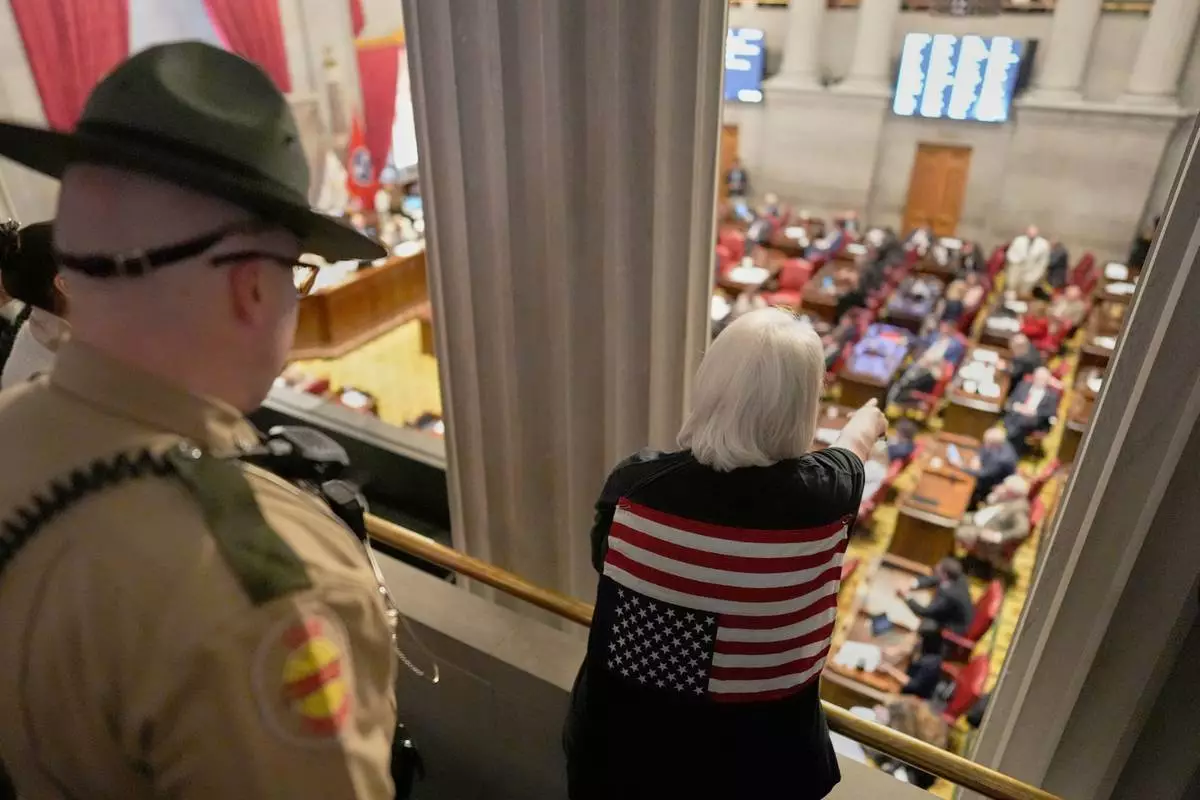
A woman yells down to the House floor as the gallery is cleared by state troopers during a special session of the state legislature to redraw U.S. Congressional voting maps Thursday, May 7, 2026, in Nashville, Tenn. (AP Photo/George Walker IV)
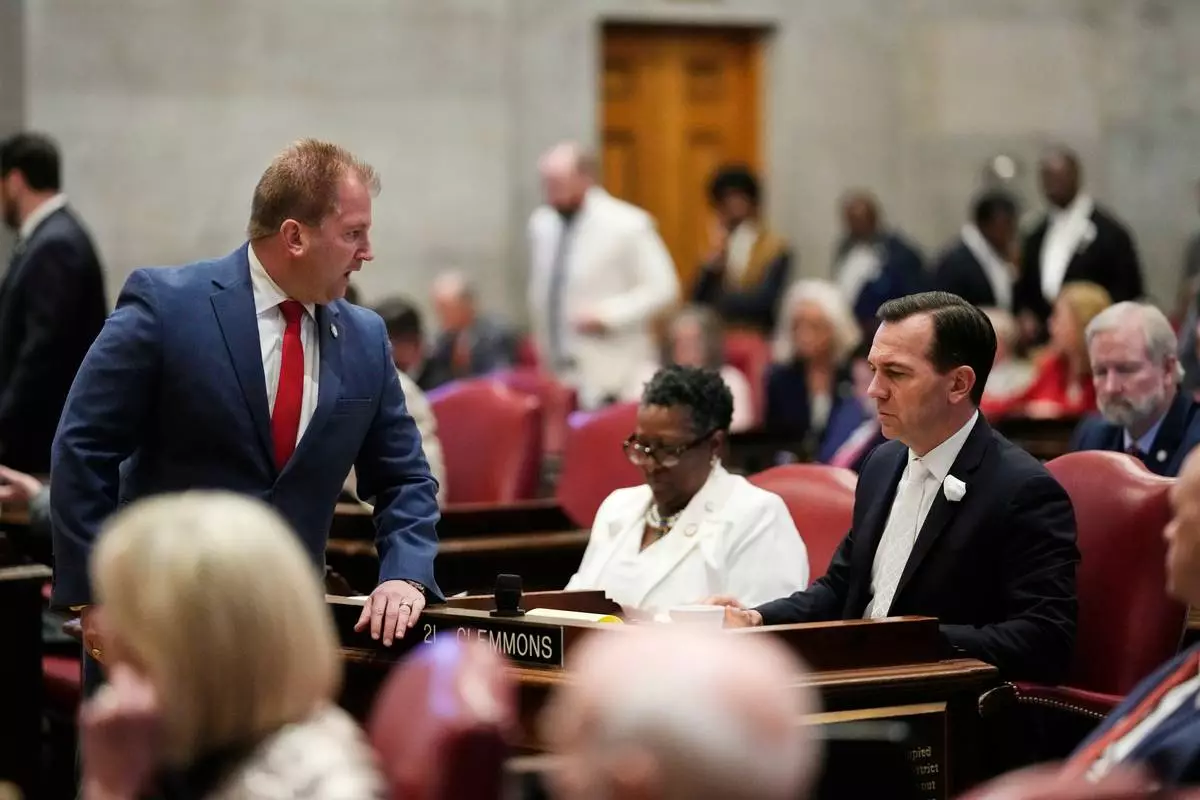
Rep. William Lamberth, R-Portland, left, speaks with Rep. John Ray Clemmons, D-Nashville, right, during a special session of the state legislature to redraw U.S. Congressional voting maps Thursday, May 7, 2026, in Nashville, Tenn. (AP Photo/George Walker IV)
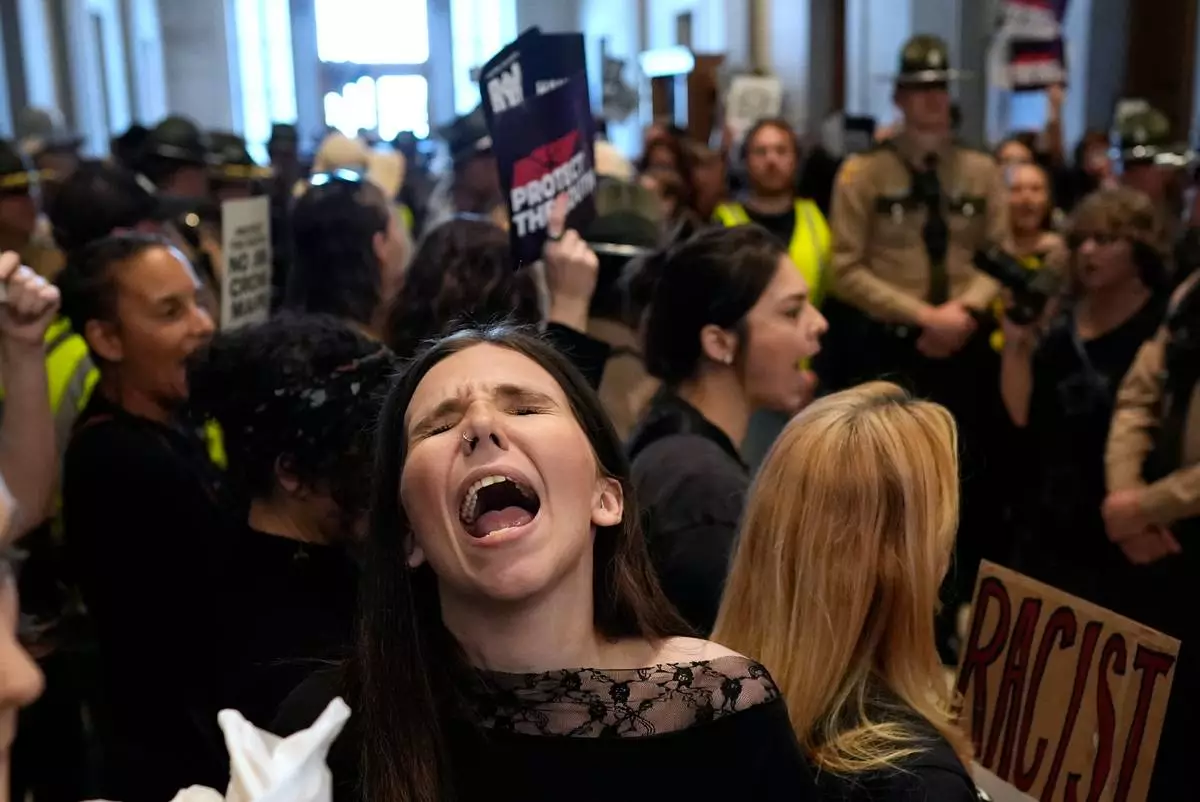
A woman protests outside the House chamber before a special session of the state legislature to redraw U.S. Congressional voting maps Thursday, May 7, 2026, in Nashville, Tenn. (AP Photo/George Walker IV)
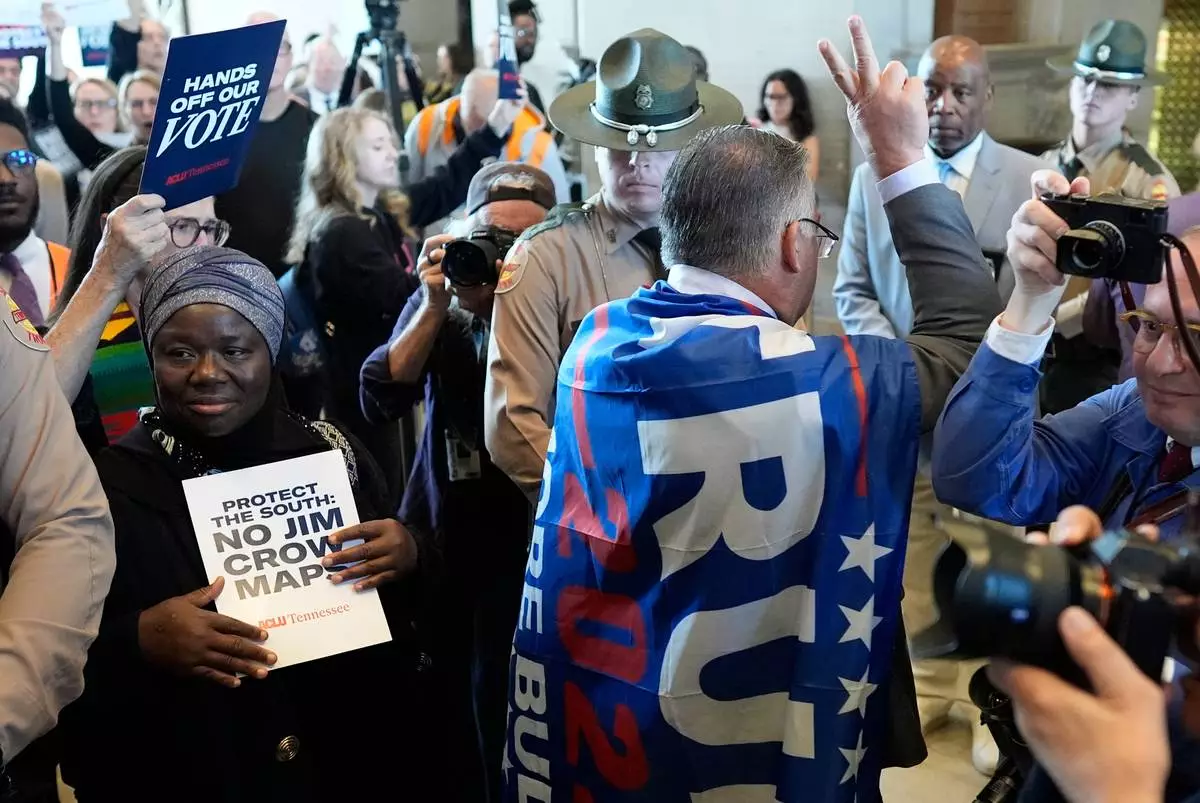
Rep. Todd Warner, R-Chapel Hill, arrives to the House chamber wearing a Trump flag for a special session of the state legislature to redraw U.S. Congressional voting maps Thursday, May 7, 2026, in Nashville, Tenn. (AP Photo/George Walker IV)
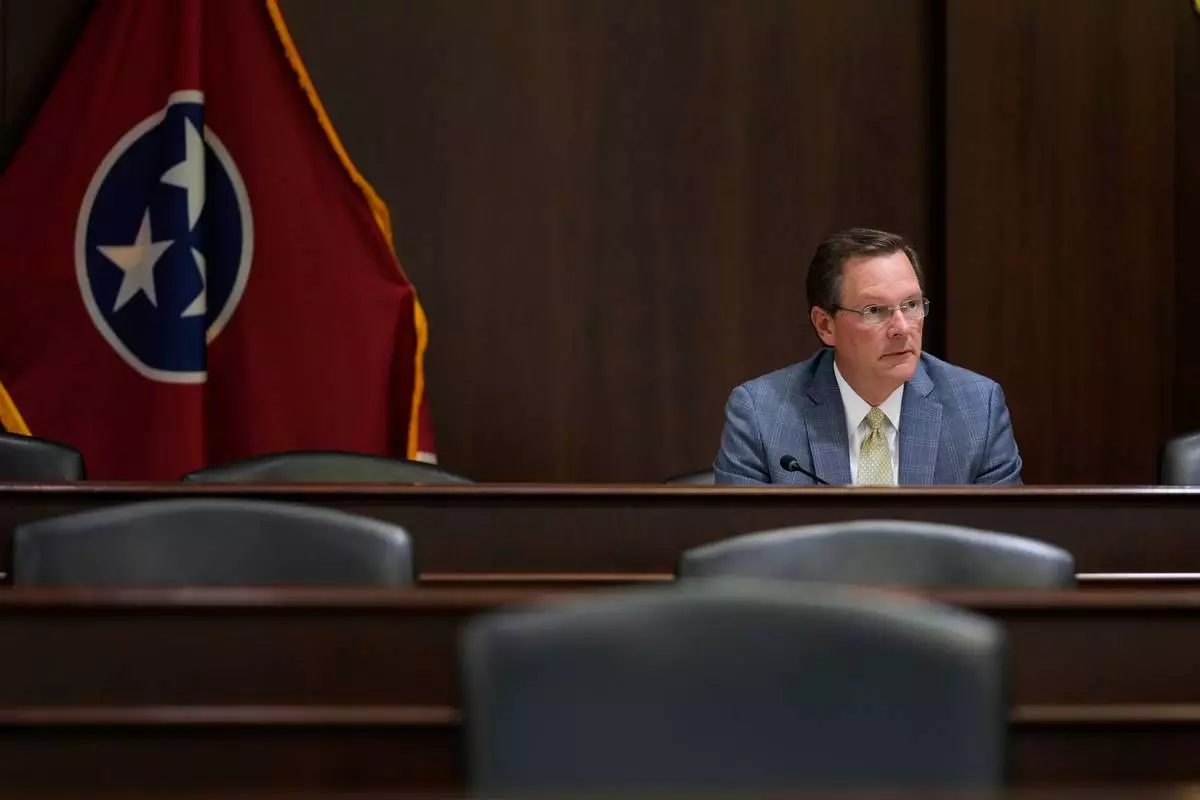
House Speaker Cameron Sexton, R-Crossville, sits alone after a House committee meeting during a special session of the state legislature to redraw U.S. Congressional voting maps Wednesday, May 6, 2026, in Nashville, Tenn. (AP Photo/George Walker IV)
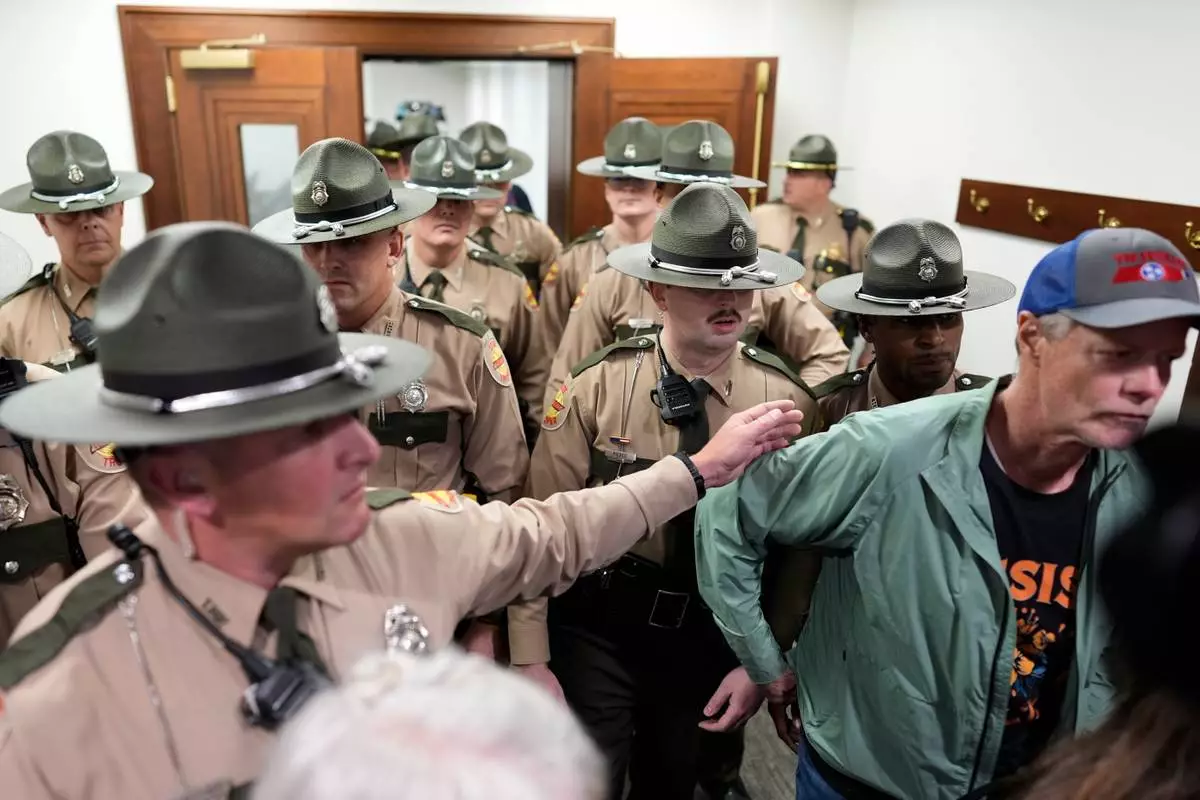
State troopers clear a House committee meeting after it was disrupted by protesters during a special session of the state legislature to redraw U.S. Congressional voting maps Wednesday, May 6, 2026, in Nashville, Tenn. (AP Photo/George Walker IV)
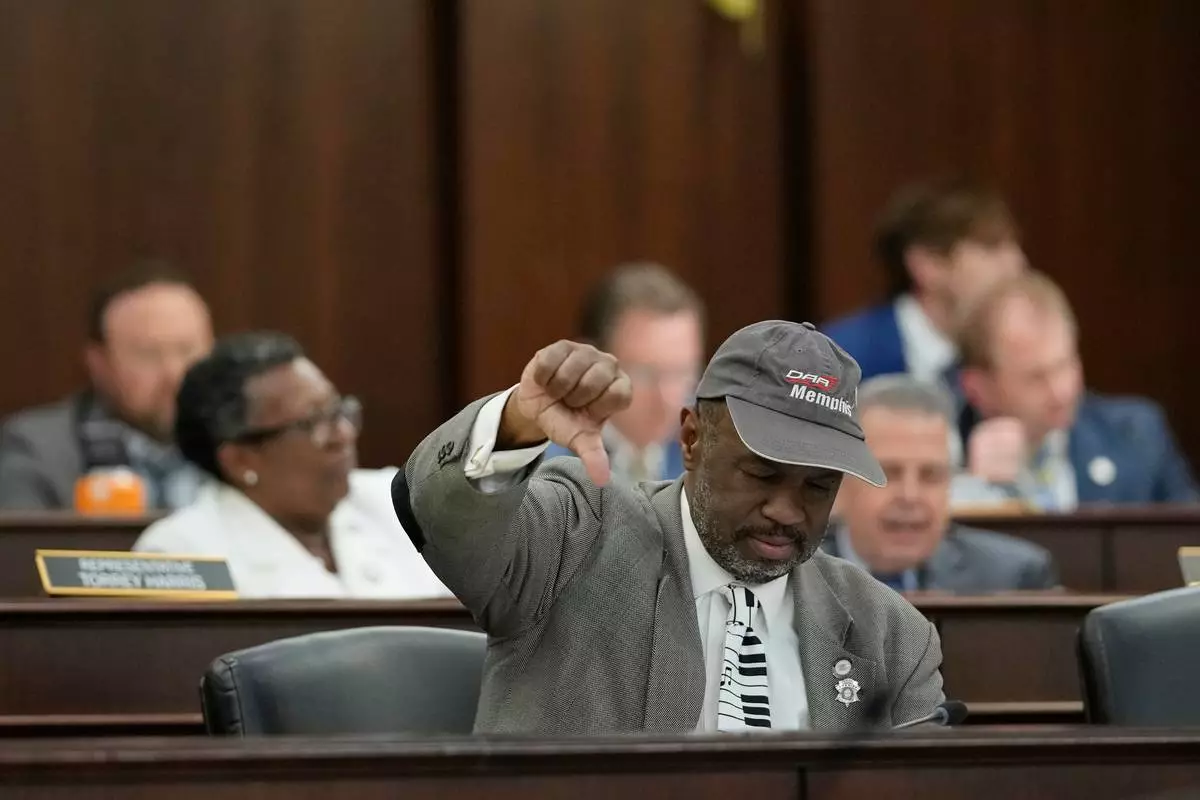
Rep. Joe Towns Jr., D-Memphis, gestures during procedural vote in a House committee meeting of a special session of the state legislature to redraw U.S. Congressional voting maps Wednesday, May 6, 2026, in Nashville, Tenn. (AP Photo/George Walker IV)