LOS ANGELES, US - Newsaktuell - 7 May 2026 - The newly released 2026 Berggruen Governance Index (BGI) paints a mixed picture of global governance heading into a future of mounting shocks, finding widespread gains in public-goods provision from 2000 to 2023 even as democratic accountability edged down and state capacity showed little overall improvement.

Presentation of the 2026 Berggruen Governance Index: On 6 May in Los Angeles, the following individuals discussed the findings of the study (from left): Vinay Lai (Professor of History, UCLA), Michael Storper (Distinguished Professor of Urban Planning, UCLA), Stella Ghervas (Professor of History, UCLA) and the two authors of the study, Joseph Saraceno and Prof. Helmut Anheier (both from UCLA's Luskin School of Public Affairs). Democracy News Alliance / Jordan Strauss/AP for DNA
The BGI, presented Wednesday by an international group of governance scholars, analyses measurable benchmarks of democratic accountability across 145 countries.
On a 100-point scale, the global score for democratic accountability slipped slightly from 65 in 2000 to 64 in 2023, the most recent data used in the project. The wave of democratisation observed in the closing decades of the last century has stalled in the last 15 years. Democratic accountability fell in 54 countries while it improved in 48 countries.
Yet the BGI — a collaborative project of the Luskin School of Public Affairs at the University of California, Los Angeles (UCLA), Berlin's Hertie School and the Berggruen Institute, a think tank headquartered in Los Angeles — captures remarkably widespread growth in provision of public goods.
Encompassing healthcare, education, infrastructure, environmental sustainability and conditions to foster employment and rising prosperity, public goods improved in 135 of the countries studied, while declining slightly in just four. The global average jumped from 58 to 69 points from 2000 to 2023.
The third component of what the BGI authors refer to as the "governance triangle" is state capacity, defined as the ability to tax, borrow and spend, control territory, operate scrupulous, competent bureaucracies and administer predictable rule of law. The index finds the global average ticking up from 48 to 49 points; 56 countries had increased state capacity while 57 declined.
"What does it tell us about the world ahead?" Prof. Helmut K. Anheier, a Luskin School sociologist and BGI principal investigator, asked during the public release of the 2026 BGI on the UCLA campus.
"Countries are not really improving in their governance performance in significant ways. ... We're not really having forward-looking investment in governance capacity. There is considerable inertia."
The largest improvements across all three BGI components occurred in Gambia, which the report groups with "low-capacity developing states." These states score low across the board, particularly in the provision of public goods. This cluster constitutes the poorest countries with the least developed economies, which face the most serious challenges.
"They have the greatest exposure to likely future crises, whether it's global warming, whether it's a new pandemic, whether it's another financial crisis, whether it's the impact of AI," Anheier said. "And they have the least capacity to respond to it."
Bhutan, Georgia, Iraq and Tunisia — which make up the remaining top five countries with the largest improvements in the BGI — are classified as "capacity-constrained states." They tend to be middle-income with struggling democracies. These countries score higher across the board than the low-capacity developing states, but their state capacity tends to lag compared to public goods and democratic accountability.
The capacity-constrained states risk falling into "a cycle that erodes the institutions they have built," Anheier said.
"Consolidated democratic states", a cluster of most of the world's richest countries, which score highly in all three BGI components, have to confront domestic complacency. Further, in the United States and some others, "political dysfunction" is leaving mounting problems unaddressed and risking erosion of state capacity, Anheier said.
At the other end of the spectrum, the country with the farthest fall on the BGI since 2000 is Nicaragua. Second from last is Venezuela, followed by Hong Kong, Hungary and Turkey. The rest of the bottom 10 are Russia, Iran, Poland, El Salvador and Belarus.
Since 2023, which is the last year of data available for the study, Poland and Hungary have both seen government changes via election, despite serious democratic backsliding. Both had fallen out of the group of "consolidated democratic states" by 2023 and moved into the capacity constrained cluster.
The other eight countries at the bottom of the list are all places that once had some semblance of competitive elections, but by now have little or no remaining pretense of democracy. They are grouped by the authors among the "authoritarian and hybrid states", which have by far the lowest democratic accountability but outperform even some struggling democracies in delivering public goods.
These regimes have tended toward faster economic growth in the period observed. But that seeming prosperity, typically fueled by extractive industries or overreliance on exports, masks "serious institutional weaknesses in these countries, including divided elites," Anheier said.
Relatively few countries — 21 of the 145 — changed enough for better or worse to be classified in a new group by the end of the 23-year study period.
"Movement between them is rare, but this is largely what we should expect," said Stella Ghervas, a UCLA historian on a panel of experts who discussed the BGI findings Wednesday. "Government systems are not created in a moment. They evolve over long periods of time."
Local conditions shaping governance in each country can rarely be quickly reset through political will or even external shocks, Joseph C. Saraceno, a Luskin School data scientist and BGI co-author, said Wednesday.
"Despite all the talk of major transformations happening in global affairs, the underlying configuration of governance simply doesn't appear to change very much," Saraceno said. "We use the term inertia to describe this reoccurring pattern. In other words, the structures of global governance are resistant to movement as the conditions beneath them are quite sticky: political economies, demographics, resource endowments. These are deeply layered, and they push each country toward the world that it already inhabits."
But the challenges lurking around the world may not wait for the slow and difficult processes of political change and development to catch up.
"With the few exceptions of those countries in the consolidated democratic world," Anheier said, "the great majority of the countries in the world is ill-prepared for the future."
The full report, ' 2026 Berggruen Governance Index - The Four Worlds of Governance', can be viewed and downloaded from the website of the UCLA's Luskin School.
Frank Fuhrig, DNA
----------------------------------------------------
This text and the accompanying material (photos and graphics) are an offer from the Democracy News Alliance, a close co-operation between Agence France-Presse (AFP, France), Agenzia Nazionale Stampa Associata (ANSA, Italy), The Canadian Press (CP, Canada), Deutsche Presse-Agentur (dpa, Germany) and PA Media (PA, UK). All recipients can use this material without the need for a separate subscription agreement with one or more of the participating agencies. This includes the recipient's right to publish the material in own products.
The DNA content is an independent journalistic service that operates separately from the other services of the participating agencies. It is produced by editorial units that are not involved in the production of the agencies' main news services. Nevertheless, the editorial standards of the agencies and their assurance of completely independent, impartial and unbiased reporting also apply here.
The issuer is solely responsible for the content of this announcement.
** This press release is distributed by Media OutReach Newswire through automated distribution system, for which the client assumes full responsibility. **
SINGAPORE - Media OutReach Newswire - 7 May 2026 - Dr. Terence Tan, Medical Director of Halley Medical Aesthetics and Halley Body Slimming Clinic, shared his clinical insights on integrating Glucagon-Like Peptide-1 Receptor Agonists (GLP-1 RAs) into everyday practice at the symposium “Optimising Longevity and Weight Management with GLP-1 RAs”. The event brought together approximately 80 general practitioners (GPs) and aesthetic doctors for a focused discussion on the evolving role of medical weight management in Singapore.
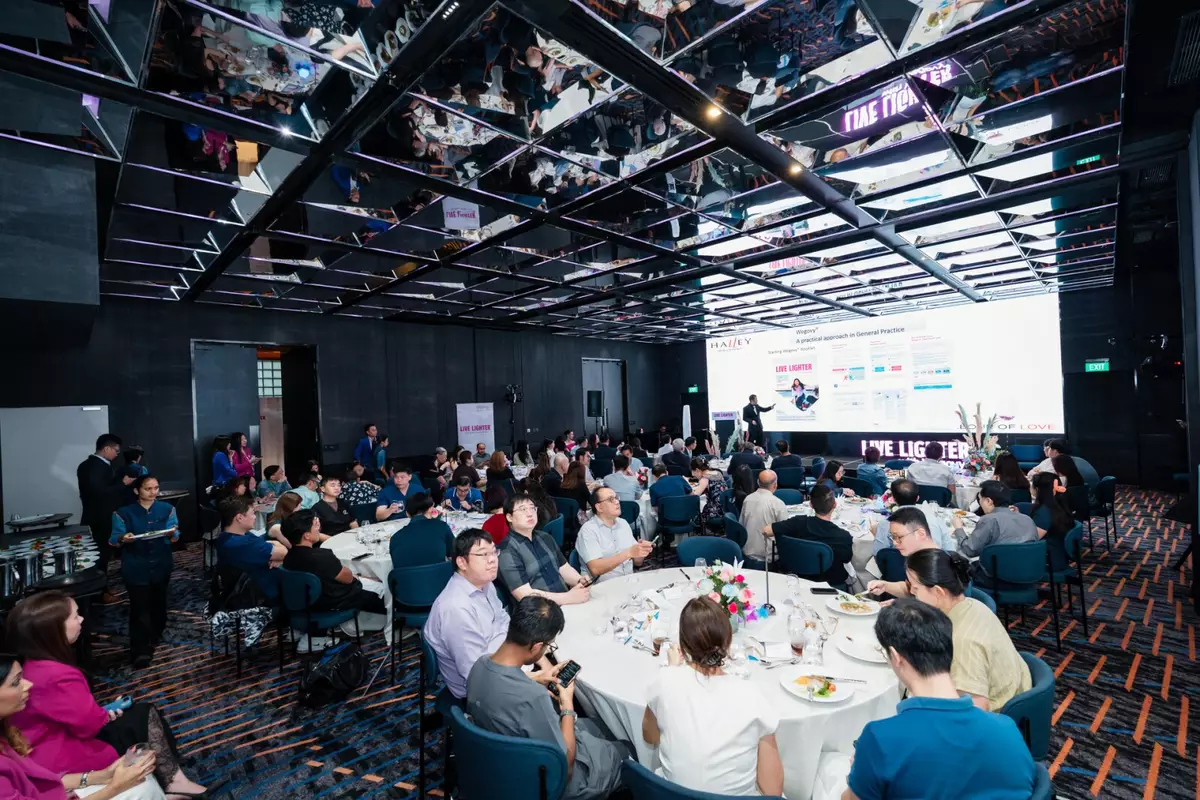
Dr. Terence Tan presenting at a symposium, sharing insights on medical weight management in Singapore and the use of GLP-1 receptor agonists (GLP-1 RAs), including patient selection and common clinical challenges.
The Growing Role of GLP-1 Therapies in Clinical Practice
This continuing medical education (CME) session addressed a clear shift in clinical practice, where more patients are actively seeking medical support for weight loss and management. They are increasingly arriving informed, often asking specifically about newer medications and expecting clear guidance on suitability and outcomes.
GLP-1 RAs, including semaglutide and tirzepatide, have contributed to this change. These medications work by influencing appetite and satiety, helping to reduce overall caloric intake. Semaglutide acts on GLP-1 receptors to regulate hunger, while tirzepatide targets both GLP-1 and GIP pathways, offering an additional mechanism that supports weight reduction and metabolic control.
As a result, consultations are becoming more complex. Patients may have expectations shaped by online information or anecdotal experiences, making it important for doctors to guide discussions based on clinical suitability rather than demand alone.
“This shift calls for a more structured and informed approach,” said Dr. Tan. “Doctors must take a more active role in assessing patients, setting expectations, and ensuring that treatment is used appropriately as part of a broader weight management strategy.”
Looking Beyond BMI When Determining Treatment Suitability
Dr. Tan emphasised that successful use of GLP-1 RAs begins with careful patient selection. Clinical guidelines typically recommend treatment for individuals with a body mass index (BMI) of 30 kg/m² or higher, or 27 kg/m² with at least one weight-related condition such as hypertension or dyslipidaemia.
However, beyond these criteria, real-world decision-making often requires a more nuanced approach. Doctors should work to assess each patient’s broader context, including their occupation, psychological readiness, and ability to commit to follow-up. For example, many patients in GP settings are working adults who are motivated to lose weight but may struggle with consistency. For this group, medical support can offer a more practical pathway than lifestyle changes or advice.
A Structured Approach to GLP-1 Therapy in General Practice
A key theme of Dr. Tan’s presentation was that GLP-1 therapy should not be treated as a one-off prescription, but as part of a structured care process. He outlined the importance of setting clear goals from the outset, guiding patients towards gradual and realistic weight loss. Early targets may involve a reduction of 1.5 to 2 kilograms per month, followed by a slower and more sustainable pace.
Weight loss injections are introduced gradually, with doctors adjusting the dose over time while monitoring patients' responses. During this period, patients may experience side effects such as nausea or fatigue, particularly in the early stages, which are reviewed during follow-up visits. Clinics should also schedule monthly reviews at the start, before spacing them out based on progress.
Within the clinic, staff play an active role in supporting treatment. Beyond administrative duties, they guide patients through injection techniques, provide counselling, and reinforce key instructions throughout the process. They should also share educational materials and structured programmes to help patients stay more consistent and engaged with treatment.
Together, these elements form a coordinated care pathway in which doctors actively guide patients through each stage of treatment rather than relying solely on medication.
Reinforcing Lifestyle and Behavioural Change Alongside Treatment
While GLP-1 RAs support weight loss, Dr. Tan emphasised that they do not replace lifestyle change. Dietary adjustments, including reduced-calorie approaches and structured eating patterns such as time-restricted eating, remain important. Physical activity also plays a key role, increasing energy expenditure and maintaining a caloric deficit, thereby supporting sustained weight loss over time.
He also highlighted the importance of behavioural factors. Encouraging patient commitment and involving family or social support systems can strengthen adherence and improve long-term outcomes. Weight management, he noted, requires attention to both biological and behavioural factors.
Maintaining Long-Term Weight Loss Outcomes
Weight management does not end once initial targets are achieved. Dr. Tan noted that maintaining weight loss can be challenging, particularly for patients who have experienced significant reductions. While motivation plays a role, physiological factors such as appetite regulation can make long-term maintenance difficult.
Patients who adopt consistent lifestyle changes, including regular physical activity and more mindful food choices, may sustain their results over time. For others, ongoing or adjusted treatment may be considered. Options can include continuing medication, reducing the dosage, or using treatment periodically, depending on individual needs and preferences.
At the same time, doctors should inform their patients about the possibility of a weight-loss plateau, a common and expected phase of treatment. Even in such cases, continued management may still provide meaningful health benefits.
Addressing Real-World Challenges in Clinical Implementation
Dr. Tan also addressed practical challenges in adopting GLP-1 RAs. Cost remains a key consideration, particularly in the absence of broader subsidies. However, as other types of weight-loss medication become more widely available and competition grows, GLP-1 therapies may gradually become more affordable.
Patient awareness is another factor. Some individuals may not be familiar with these treatments, while others may have concerns about side effects. Dr. Tan emphasised that these concerns are best addressed through doctor-led consultations, where treatment decisions are guided by an individual assessment of benefits and risks.
Weight management is also influenced by underlying biological factors. Differences in appetite regulation and satiety can affect how individuals respond to food intake, which partly explains why maintaining weight loss can be challenging. According to Dr. Tan, some patients are able to sustain results through increased physical activity and more mindful eating, while others may find it difficult to maintain their weight after stopping medication.
A Shift Towards More Comprehensive, Long-Term Weight Management
As GLP-1 therapies become more widely used in Singapore, weight management is increasingly being approached as an ongoing clinical discipline rather than a short-term intervention. This shift places greater emphasis on continuity of care, patient education, and the doctors' role in guiding treatment decisions over time.
“GLP-1 therapies are changing how patients approach weight loss, but medication alone is not the solution,” said Dr. Tan. “As doctors, it is our responsibility to ensure that patients are properly assessed, supported, and followed up throughout their weight management journey.”
To learn more about Halley Body Slimming Clinic’s approach to weight management, visit their website.
Hashtag: #HalleyBodySlimmingClinic #GLP1RA #Glucagon-LikePeptide-1ReceptorAgonists #weightlossmanagement
The issuer is solely responsible for the content of this announcement.
About Halley Body Slimming Clinic
Halley Body Slimming Clinic is a Singapore-based clinic offering doctor-led treatments focused on weight loss, body contouring, skin firming, and more. The clinic takes a consultative approach, where each patient undergoes a clinical assessment before receiving a personalised treatment plan tailored to their goals and needs. Services include prescription weight-loss medications, along with non-invasive fat-reduction and body-contouring treatments using CoolSculpting Elite and Vanquish to address specific areas. By combining medical interventions with regular follow-up and patient education, the clinic supports individuals through different phases of their weight management journey.
** This press release is distributed by Media OutReach Newswire through automated distribution system, for which the client assumes full responsibility. **