Skip to Content Facebook Feature Image

Quantum Motion Raises $160 Million Series C to Deliver Quantum Computing’s “Transistor Moment”

Business

Quantum Motion Raises $160 Million Series C to Deliver Quantum Computing’s “Transistor Moment”
Business

Business

Quantum Motion Raises $160 Million Series C to Deliver Quantum Computing’s “Transistor Moment”

2026-05-07 16:01 Last Updated At:16:20

LONDON--(BUSINESS WIRE)--May 7, 2026--

Quantum Motion, the leading company in silicon transistor-based quantum computing, today announced a $160 million Series C round to commercialise its scalable and energy-efficient approach to quantum computing. The round is co-led by DCVC and Kembara, with participation from new investors, the British Business Bank and Firgun, alongside existing investors. The financing positions Quantum Motion to deliver utility-scale and commercially viable quantum computers that fit inside existing standard data centres and racks.

This press release features multimedia. View the full release here: https://www.businesswire.com/news/home/20260507881033/en/

This financing round comes at a defining moment for the computing industry, as governments and industry invest heavily in next-generation HPC and AI systems that demand vast capital and infrastructure investments. Quantum is on course to become the next wave of computing to strain a power grid already being tested by AI data centres. In other approaches, a useful quantum computer is expected to demand infrastructure on an industrial scale, including multi-megawatt power consumption. Quantum Motion is built on the premise that this trajectory is neither inevitable nor affordable.

Quantum Motion’s silicon transistor-based approach – the same technology used in every smartphone and laptop chip manufactured today – enables delivering utility-scale systems with 100-fold reduction in cost and space requirements, and 1,000-fold reduction in energy consumption compared to alternatives. Its systems are designed for deployment into standard data-centre racks, avoiding the need for bespoke facilities and the heavy energy overhead associated with alternative architectures.

Since its last funding round in 2023, the company has expanded internationally, opening new offices and labs in Spain and Australia, and deepened its manufacturing partnership with GlobalFoundries, tying its roadmap directly into commercial semiconductor supply chains. In contrast to an industry that often competes on headline qubit counts and laboratory demonstrations, Quantum Motion has deliberately focused on industrial scalability, delivering the world’s first commercial deployment of a full-stack silicon CMOS quantum computer at the UK National Quantum Computing Centre (NQCC) in 2025 and advancing to Stage B of DARPA’s Quantum Benchmarking Initiative.

“Today’s announcement reflects the strength of the team we have built and the progress they have delivered. Quantum computing will only achieve its full potential if it can be built on a platform that scales, and we believe silicon is the strongest route to achieving that,” said Dr.James Palles-Dimmock, CEO of Quantum Motion. “We are pleased to be joined by investors who share our vision and understand what it takes to build a foundational company in this field.”

Quantum Motion co-founders Dr. John Morton (CTO) and Dr. Simon Benjamin (CSO) said: “As founders we were inspired by the breathtaking accomplishments of silicon technology, with city-like complexity delivered on centimetre scale chips. Now, Quantum Motion’s chips can be used not only for bits but also for qubits, unlocking a future in which quantum computers are both fast and ubiquitous.”

“Quantum is critical infrastructure for the next century of computing, AI, and security, and leadership will go to whoever can industrialise it,” said Dr. Prineha Narang, Operating Partner at DCVC. “DCVC led this investment in Quantum Motion because silicon is the foundation that scales, and this team is building on the CMOS advantage to turn quantum from a demonstration into a commercial success story.”

Yann de Vries, Partner and co-founder of Kembara, said: “If you believe quantum computing is going to be world-changing, as we do, then the obvious next question is which of the many ways of building one will actually work at scale? This investment signals our strong belief in where the answer lies.”

"The race for a fully scalable quantum computer is one of the defining technological challenges of our time,” said Charlotte Lawrence, Managing Director of Direct Equity, British Business Bank. “Quantum Motion’s unique approach that combines cutting-edge quantum physics with established silicon manufacturing provides a distinct global edge. We are no longer just theorizing about quantum computing but are actively starting to build the platforms to deliver it here in the UK.”

Alongside the new investors DCVC, Kembara, British Business Bank and Firgun, the Series C round is joined by returning backers Oxford Science Enterprises, Inkef, Bosch Ventures, Porsche Automobil Holding SE and Parkwalk Advisors.

About Quantum Motion

Quantum Motion is building utility-scale quantum computers using industry-standard silicon transistors. The proprietary architecture uses a scalable array of qubits, manufactured with the same silicon technology found in smartphones and computers. The result is the most scalable, cost-efficient and energy-efficient quantum computers, which also fit inside existing industry standard data centres. The company operates offices and labs in the UK, Spain and Australia. Learn more at www.quantummotion.com.
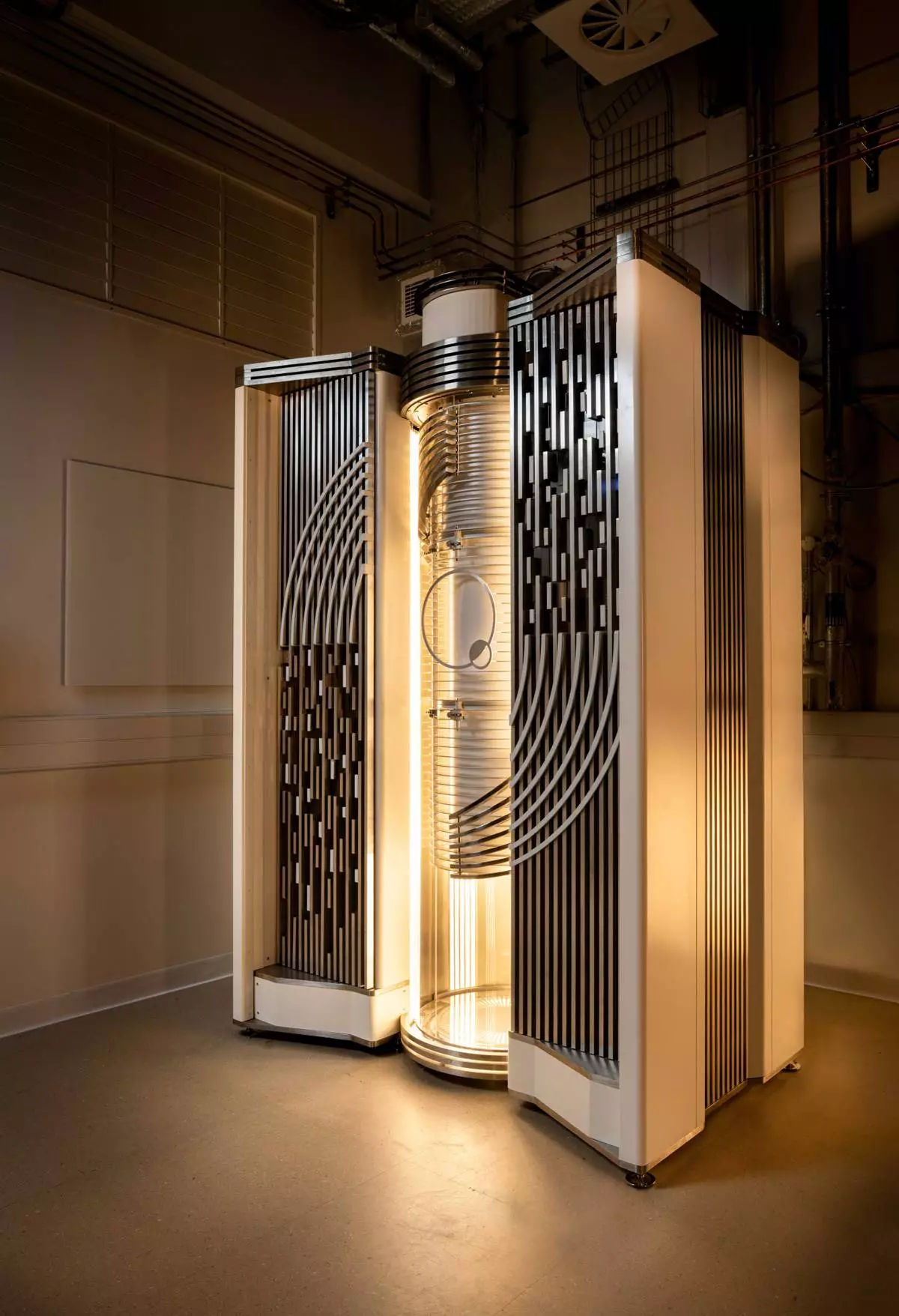
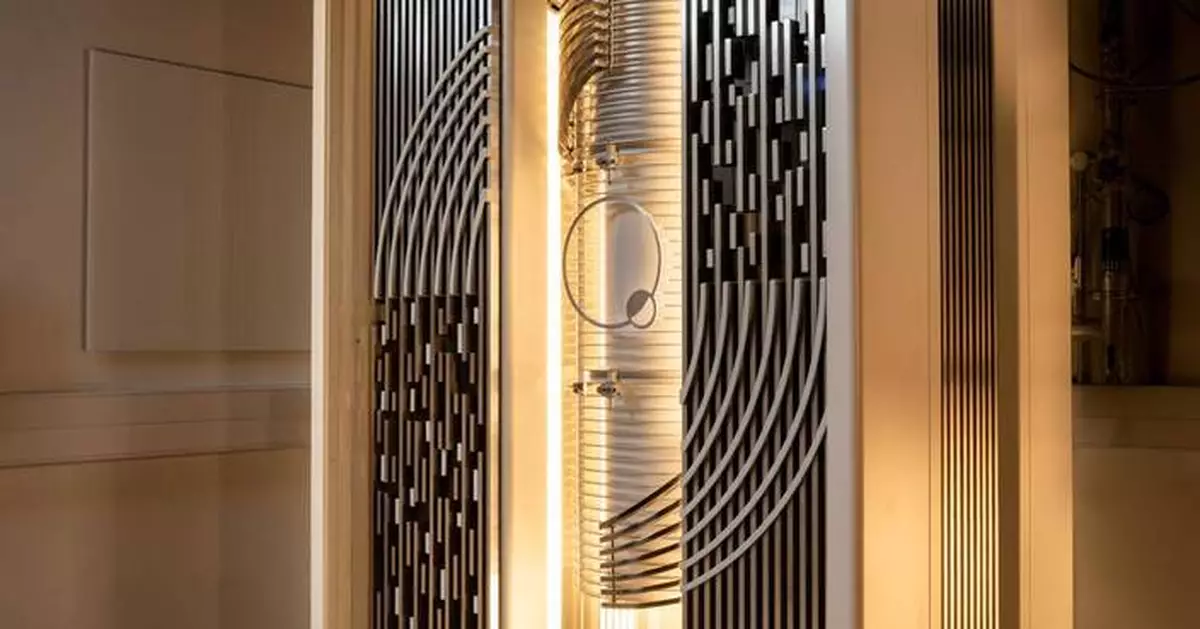
Quantum Motion's QM One System at the UK's National Quantum Computing Centre (NQCC)

Quantum Motion's QM One System at the UK's National Quantum Computing Centre (NQCC)

NEW YORK (AP) — A note Jeffrey Epstein’s former cellmate claimed he found after the millionaire sex offender’s first suspected jail suicide attempt was made public Wednesday, years after being sealed and locked in a courthouse vault as part of an unrelated legal dispute.

U.S. District Judge Kenneth Karas in White Plains, New York, ordered the release of the note after The New York Times asked him last week to unseal it and other documents in a case involving the former cellmate, Nicholas Tartaglione. Federal prosecutors did not oppose the request.

Few people had known about the note until Tartaglione, a former police officer serving a life sentence for killing four people, mentioned it last year on writer Jessica Reed Kraus’ podcast.

Tartaglione claimed he discovered the note in a book after Epstein was found on the floor of their cell at a Manhattan federal jail on July 23, 2019, with a strip of bedsheet around the financier's neck. That was about three weeks before Epstein was found dead in his cell in what authorities concluded was a suicide.

“They investigated me for month -- found nothing!!!” said the short note, which is hard to decipher in some places. “It is a treat to be able to choose” the “time to say goodbye," the note continues. “Watcha want me to do -- Bust out cryin!!”

“NO FUN,” the note concludes, with those words underlined. “NOT WORTH IT!!”

It is unclear who wrote the note Tartaglione claimed to have found. It wasn’t mentioned in the lengthy government reports examining the circumstances of Epstein’s death, nor did it surface in the Justice Department’s recent release of files on the late financier.

In a written ruling, Karas said he weighed the privacy interests of third parties, including Epstein, before ruling to release the note. He said existing case law suggests that privacy interests of a deceased person, such as Epstein, "are vastly reduced and disclosure of the deceased’s information is unlikely to ‘work a concrete harm.‘”

According to jail records, Epstein had friction marks and skin irritation on his neck from the suspected July 23 attempt. Jail officers said he was breathing heavily but responsive. One officer reported at the time that Epstein said he believed Tartaglione had tried to kill him, according to a memo included in the Justice Department’s files.

Jail officials placed Epstein on suicide watch for 31 hours after the incident before downgrading him to psychiatric observation — his status when he killed himself. According to jail records, he denied trying to harm himself, telling a jail psychologist that suicide was against his Jewish religion and that he was a “coward” who didn’t like pain.

A chronology included in the files states that Tartaglione told his lawyer about the note four days after the suspected July 23 attempt. The note was later submitted as evidence in Tartaglione’s criminal case and was placed under seal amid a dispute over his legal representation.

Both men were interviewed by jail personnel on July 31, 2019, according to jail records.

Epstein said he had never had any issues with Tartaglione, wasn't threatened by him and didn't “want to make up something that isn’t there.” Tartaglione said he didn't have any issues being Epstein’s cellmate, though he said they kept their conversations to a minimum. On July 23, he said, he thought Epstein was having a heart attack because his eyes were open and he appeared to be snoring.

Epstein and Tartaglione shared a cell for about two weeks, beginning soon after Epstein’s July 6, 2019, arrest and ending with the suspected suicide attempt. Both were awaiting trials — Epstein on sex trafficking charges and Tartaglione on charges that in 2016 he killed four men, including a man he tortured and strangled over stolen drug money.

Tartaglione, who had been an officer in the Hudson River Valley village of Briarcliff Manor, was convicted in 2023. He is currently incarcerated at a federal penitentiary in California and has petitioned President Donald Trump for a pardon.

Epstein was without a cellmate when he was found dead at the Metropolitan Correctional Center in Manhattan, on Aug. 10, 2019. Authorities have pointed to a series of missteps by jail personnel — including browsing the internet and sleeping when they should've been checking on Epstein — for allowing him to take his own life.

Officials said they found a handwritten note in Epstein’s cell at the time of his death, but that it didn't appear to be a suicide note. Rather, they said, it appeared to be a list of grievances about conditions at the jail, including about food, showers and the presence of bugs.

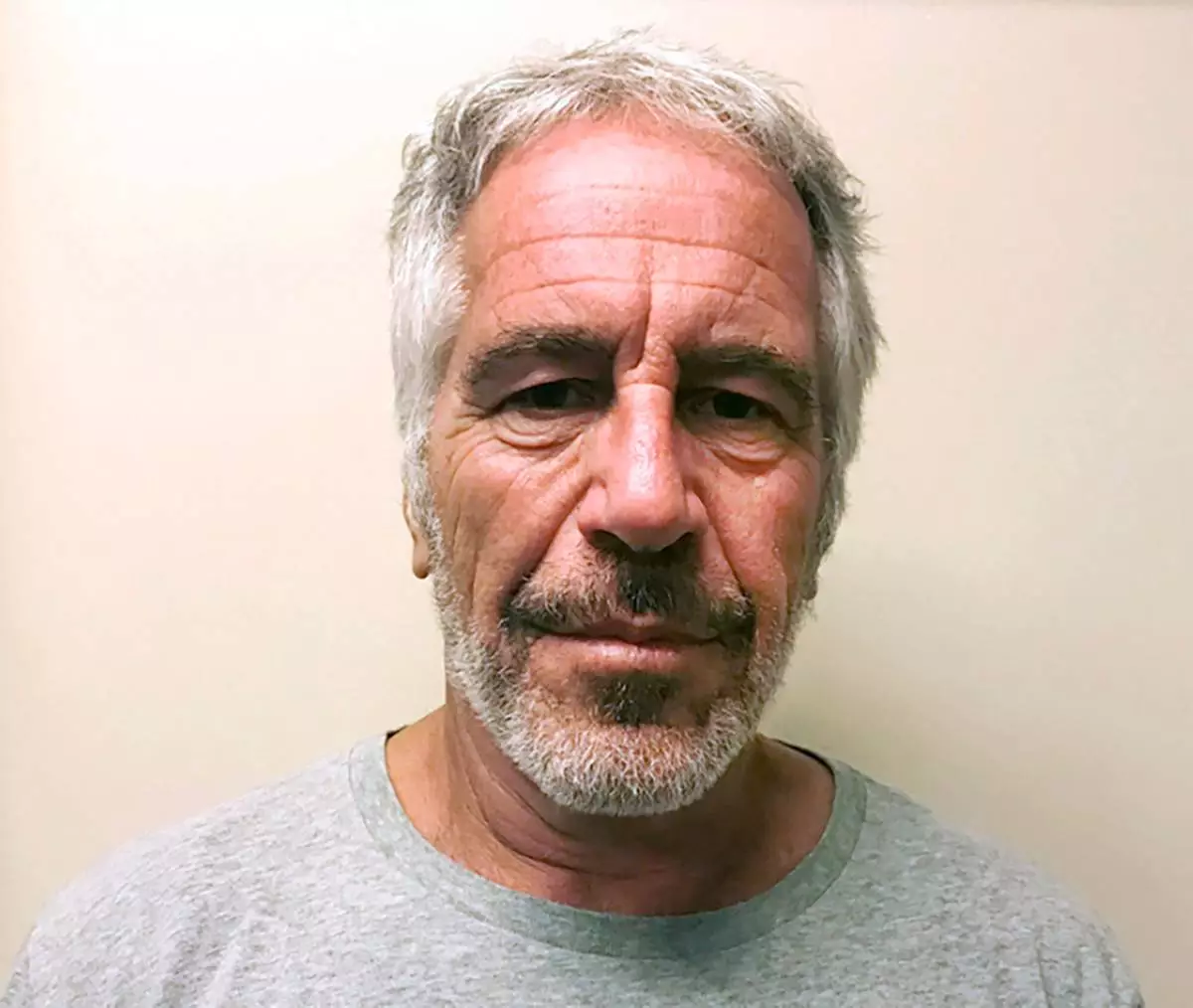
FILE - This March 28, 2017, photo provided by the New York State Sex Offender Registry shows Jeffrey Epstein. (New York State Sex Offender Registry via AP, File)

FILE - This March 28, 2017, photo provided by the New York State Sex Offender Registry shows Jeffrey Epstein. (New York State Sex Offender Registry via AP, File)

Recommended Articles