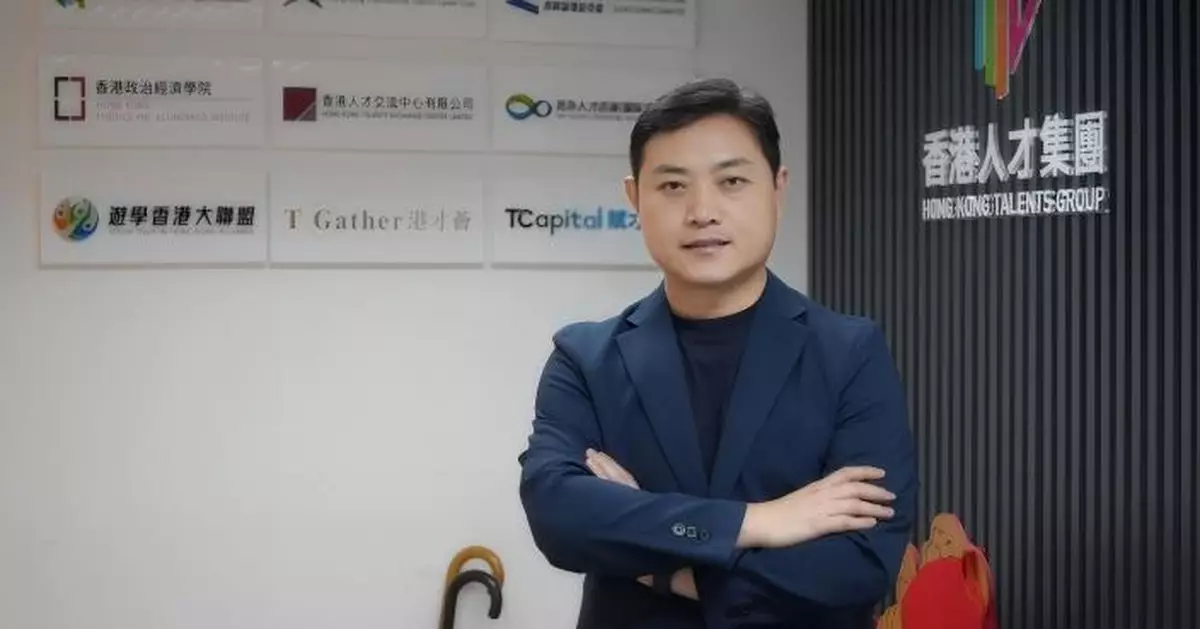
Since the HKSAR government launched various talent recruitment schemes, nearly 300,000 people have come to the city. But whether they can truly settle and thrive depends on one thing: development opportunity.
Mr. Loman Luo, Managing Director of the Hong Kong Talents Group, believes the city's most fundamental structural issue is its narrow industrial base. "Many talents arrive only to realise that their profession has little room for development here," he said.
Click to Gallery
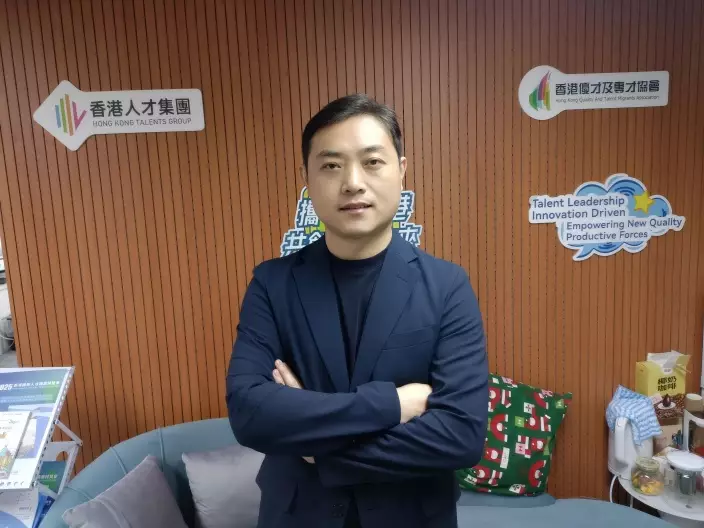
Mr. Loman Luo, Photo by Bastille Post
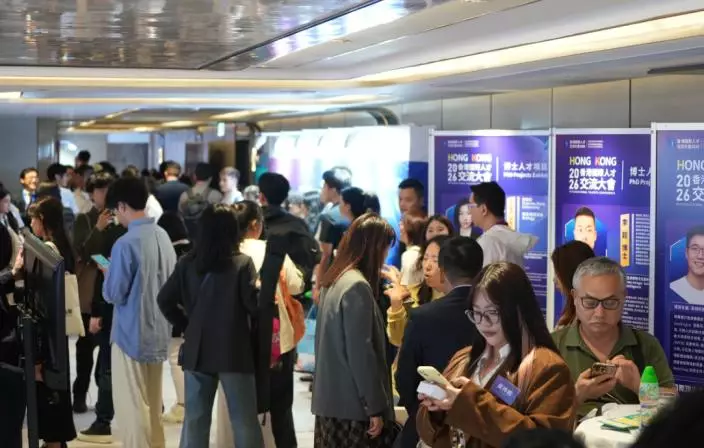
The 2026 Hong Kong International Talents Career Expo, Photo by Bastille Post
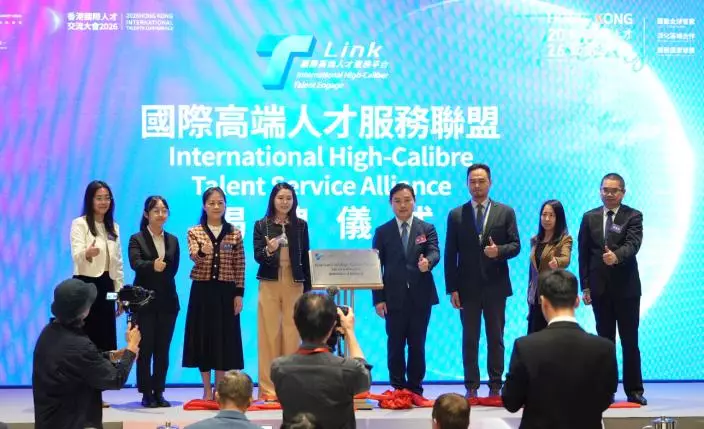
The unveiling ceremony of TLink, Photo by Bastille Post
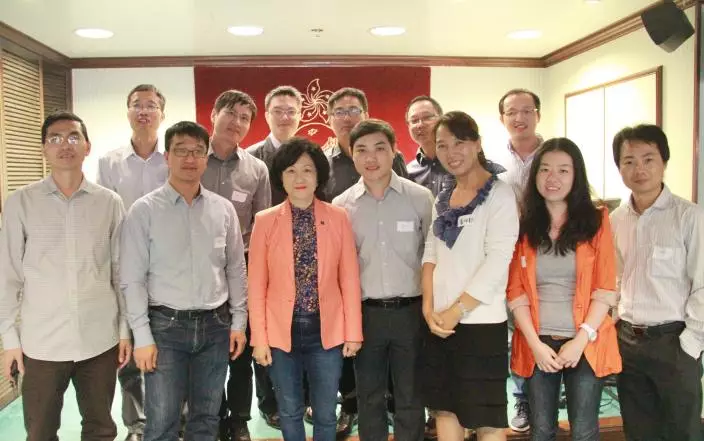
The first event of the Association held at the Immigration Department, Photo source: Provided by the interviewee

The Hong Kong Talents Group hopes to help more talents find their footing in the city. Photo source: the Hong Kong Talents Group
Mr. Loman Luo, Photo by Bastille Post
In an interview with Bastille Post, Mr. Luo noted that the HKSAR government's focus has shifted from "attracting talent" to "retaining talent". And retention, he stressed, starts with job availability.
To assist the newcomers in finding their ideal positions in Hong Kong, the Hong Kong Talents Group has held the "Hong Kong International Talents Career Expo", which connects incoming talent with companies. Mr. Luo shared one memorable case: a talent whose industry was so niche in Hong Kong that he couldn't find a job after arriving. Consequently, he ended up volunteering at the career expo. "Volunteering would certainly provide a 'close proximity' effect," Mr. Luo explained, "But the cost is showing up at six or seven in the morning to help." Wearing a volunteer vest, the young man struck up a conversation with an exhibitor. The two clicked immediately, and the talent landed a job before the event even ended.
The 2026 Hong Kong International Talents Career Expo, Photo by Bastille Post
Moreover, the group has also launched TLink, a platform that brings together organisations looking to recruit high-end talent. Its members include PhDs, professors, international corporate executives, technicians, holders of key core technologies, and aspiring entrepreneurs with globally leading tech innovations, etc. Through TCapital, a talent fund that provides early-stage funding for PhDs and other high-end talent looking to start a business in Hong Kong, the group has provided significant convenience and opportunities for new talent.
The unveiling ceremony of TLink, Photo by Bastille Post
Beyond industry mismatches, Mr. Luo pointed out another major hurdle for newcomers in Hong Kong: the information gap. "The information channels between Hong Kong and the Chinese Mainland are fundamentally different," he said. "In Hong Kong, people use Facebook more. In the Mainland, we use WeChat instead." Many job platforms, he added, would not update their listings in ways that serve newcomers well.
Renting a home in Hong Kong is another hidden pain point for newcomers. "The quality of agents varies a lot," Mr. Luo said. To help the talents, the group has partnered with several major local property developers to offer screening advice, including recommendations based on school districts for families with children. "For families with kids, we suggest housing based on the school zone."
Faced with the challenge of "failing to retain talent," Mr. Luo has chosen to take the initiative. He revealed that the group plans to set up overseas liaison offices in the U.K., Spain, Singapore, and Australia this year. The first, in Australia, is expected to open as early as June.
As a talent settling in Hong Kong from the Mainland, Mr. Luo himself knows what it's like to start over. Before coming to Hong Kong, he was the regional manager for Panasonic Corporation of China in Shanghai. In 2010, he was approved under the Quality Migrant Admission Scheme and gave up the high-paying job to start fresh in Hong Kong. "I've always had a Hong Kong dream," he said. Growing up watching Hong Kong movies and listening to Hong Kong pop songs, he was full of curiosity about the city. After arriving, He first worked as a marketing manager for a luxury brand. Later, he received an offer from a listed enterprise to become a brand director and gradually found his footing.
In 2013, three years after his arrival, Mr. Luo took the lead in founding the Hong Kong Quality and Talent Migrants Association, where he now serves as the founding chairman. He had spotted a gap in the market: "Hong Kong is a city filled with associations. For instance, professional associations, hometown associations, and alumni associations. Nevertheless, we realized there wasn't an association specifically for people coming to Hong Kong as talents." By that time, the Admission Scheme for Mainland Talents and Professionals had been around since 2003, and the Quality Migrant Admission Scheme had officially launched in 2006, both bringing waves of elite newcomers. He recalled that when he first proposed the idea of establishing the association, the government responded enthusiastically. The association's very first event was held at the Immigration Department.
The first event of the Association held at the Immigration Department, Photo source: Provided by the interviewee
To date, the Association has nearly 100,000 contact members and 16,000 formal members. But Mr. Luo admitted that some needs raised by the talents are hard for a non-profit to meet. "Talents come and tell us they need jobs, housing, schools - these are deep-seated needs that an association alone can't solve." So in 2023, he officially founded the Hong Kong Talents Group to take on what the Association couldn't realize on a market-driven basis. As a designated partner of Hong Kong Talent Engage, the group comprises about six or seven subsidiaries, covering large-scale events, headhunting, visa applications and renewals, property matching, talent funds, as well as education and training, etc.
The Hong Kong Talents Group hopes to help more talents find their footing in the city. Photo source: the Hong Kong Talents Group
As for the future development of the group, Mr. Luo said he hoped to expand the overseas market. In his view, the planned liaison centres abroad are not only a response to Mainland enterprises' "going global" objectives, but also a reflection of Hong Kong's role as a bridge between China and the world.