WASHINGTON (AP) — In one of his first major announcements as health secretary, Robert F. Kennedy Jr. called a news conference to unveil a plan to “phase out” synthetic food dyes.
Food and Drug Administration Commissioner Marty Makary opened the event by saying his agency was “removing all petroleum-based food dyes" from U.S. foods. But the specifics did not become clear until the final minutes, when Kennedy revealed that the government had “an understanding” with foodmakers to voluntarily stop using the chemicals. A “national standard and timeline” for completing the process would soon follow, according to an FDA statement.
More than a year later, the FDA has not introduced any of the detailed, scientific regulatory documents needed to establish a safety issue with the half-dozen widely used dyes. Instead, the FDA maintains an online list of manufacturers that have pledged to phase out the chemicals.
The administration’s handling of food dyes reflects its approach to a number of health priorities. Instead of using the time-consuming process of federal rulemaking, which can stretch across multiple administrations, officials working under Republican President Donald Trump have found a quicker approach: Announce sweeping changes first and deal with the regulations later.
“It speaks volumes that the administration has yet to produce a document articulating the scientific basis for the voluntary request,” said Susan Mayne, a Yale University public health expert and former director of the FDA’s food program. Meanwhile, the FDA's website continues to carry the government's longtime conclusion that “the totality of scientific evidence” does not show a link between synthetic dyes and health problems.
“If FDA has changed its position, then FDA should document why and pursue a ban,” Mayne said.
A spokesperson for Kennedy said the administration has used “multiple approaches” to quickly make more progress on food dyes “than at any point in the past.”
“FDA engaged industry early in this effort to encourage timely changes while continuing its scientific and regulatory work,” said Emily Hilliard of the U.S. Department of Health and Human Services. “The agency maintains its role in evaluating safety and will continue to use its regulatory authorities, guidance, and review processes as appropriate.”
The lack of initiative in drafting new regulations is particularly striking at the FDA. Under federal law, the agency is supposed to refrain from making major policy announcements in news releases, speeches or other informal settings.
But a string of changes from Makary and his deputies have appeared first in articles in subscription-only medical journal articles, television interviews or online posts, including new restrictions on COVID-19 vaccines and other therapies.
Traditionally, those changes would be published first in the Federal Register, giving consumers, experts, and companies a chance to comment and suggest revisions to FDA proposals.
Almost as surprising as the agency’s shift away from rulemaking is the fact that the powerful companies FDA regulates have put up little resistance.
The FDA has faced hundreds of lawsuits over the decades — from drugmakers, pharmacies, tobacco companies and others — that accused the agency of failing to follow the legally required steps for new regulations and guidelines.
But drugmakers and other multibillion-dollar companies are sitting on the sidelines, at least for now.
Industry observers point to the administration's unusual willingness to pressure drugmakers, including on drug pricing concessions sought by Trump.
“Does the government have the ability to basically bully companies?” asked Dan Troy, the FDA’s former chief counsel. “Yes, and I think we’re seeing that.”
One of the biggest FDA changes came last May, when Makary and then-vaccine chief Dr. Vinay Prasad published a medical journal article announcing that the FDA would no longer routinely approve COVID-19 shots for healthy adults under age 65 and children without underlying health problems. To win approval for that group, vaccine manufacturers would need to conduct large studies that many experts say may not be feasible in today's post-pandemic environment.
As with other vaccine decisions, Makary and Prasad bypassed the agency’s outside experts, who had traditionally been consulted on major decisions involving the shots. Makary says FDA advisory panels are often biased and take too much time and money to convene.
“We had all of this experience looking at the safety of how these vaccines work, and then these two cowboys come and say: ‘We’re going to make this policy’,” said Dr. Kathryn Edwards, who previously led the FDA’s vaccine panel.
Edwards and other experts say the lack of pushback from vaccine manufacturers may reflect the tremendous power the FDA holds over them.
“Ultimately, you need the FDA to license your product,” said Edwards, a retired vaccine scientist at Vanderbilt University. “If you’re going to try and buck the FDA -- especially in this environment — the likelihood of your product getting a positive review is going to be pretty low.”
Earlier this year, the FDA briefly refused to consider a new mRNA flu shot from Moderna. The agency reversed its decision after pushback from the company and the White House.
There may be other reasons why normally litigious companies are not challenging the agency.
Some FDA initiatives have the potential to benefit companies, including a program that awards ultrafast reviews to drugs favored by the Trump administration.
Even seemingly burdensome changes may have little staying power because the agency is not going through the process to enshrine them in federal rules or guidelines. That includes stringent new standards to win approval for CAR-T therapies that were previously approved for various forms of cancer, based on early results.
“Anything that this administration does that they don’t embody in law can easily be undone by a future administration,” Troy said.
Still, with more than two years remaining under Trump, there are signs at least some companies may be willing to raise objections.
The FDA last year began releasing rejection letters for drugs it declined to approve. Previously, that information was considered confidential and the property of drugmakers.
Last month, an unnamed drugmaker filed a formal petition challenging the practice, noting the FDA had provided “only a two-sentence explanation addressing its purported legal authority” to release the letters.
The petition does not carry the force of a lawsuit, but it invokes the same language as numerous legal challenges to the agency, calling the FDA’s action “arbitrary and capricious.”
The Associated Press Health and Science Department receives support from the Howard Hughes Medical Institute’s Department of Science Education and the Robert Wood Johnson Foundation. The AP is solely responsible for all content.
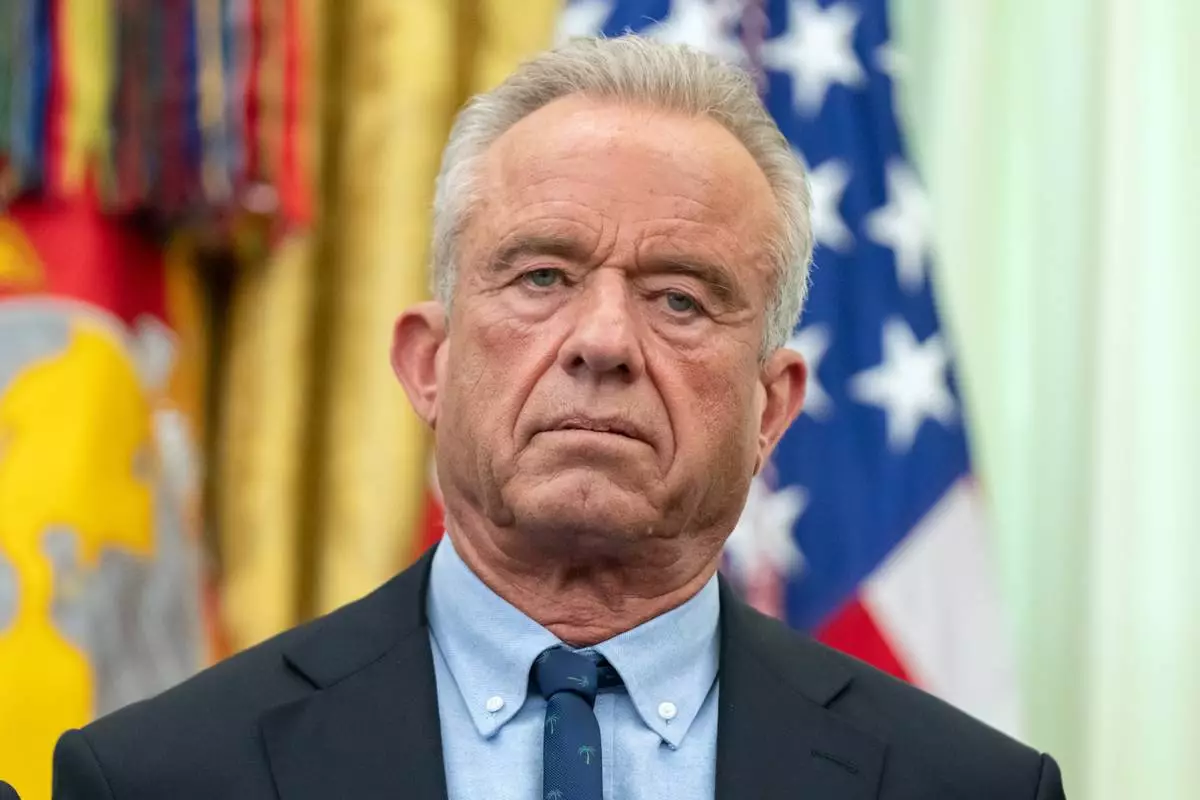
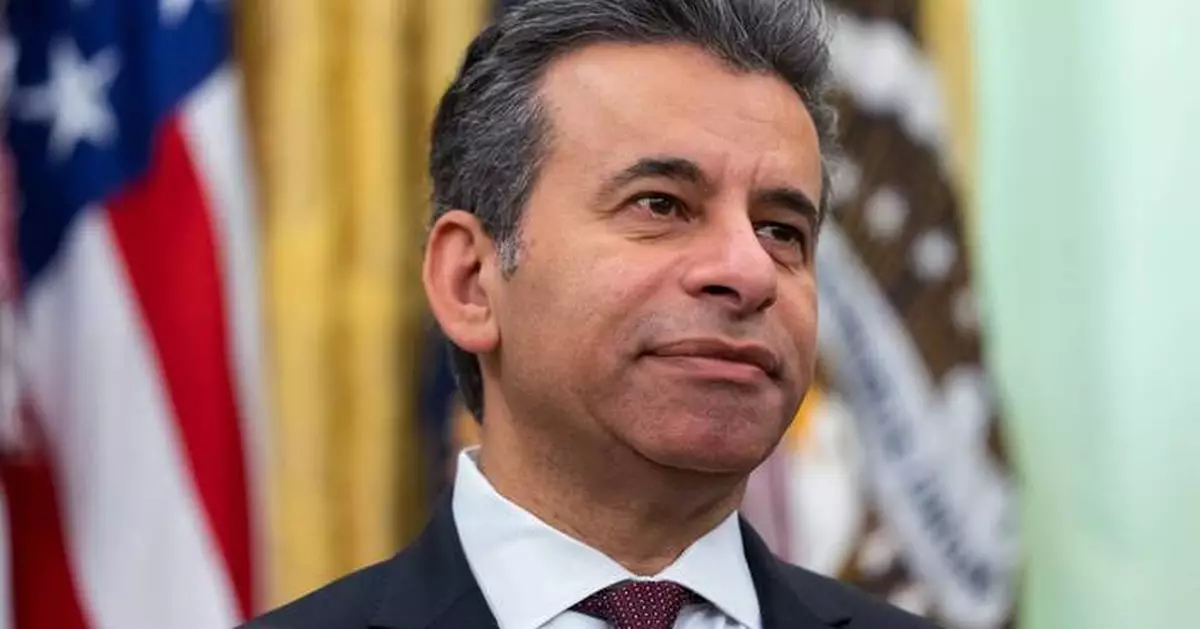
Health and Human Services Secretary Robert F. Kennedy Jr. attends an event on health care affordability in the Oval Office at the White House, Thursday, April 23, 2026, in Washington. (AP Photo/Mark Schiefelbein)
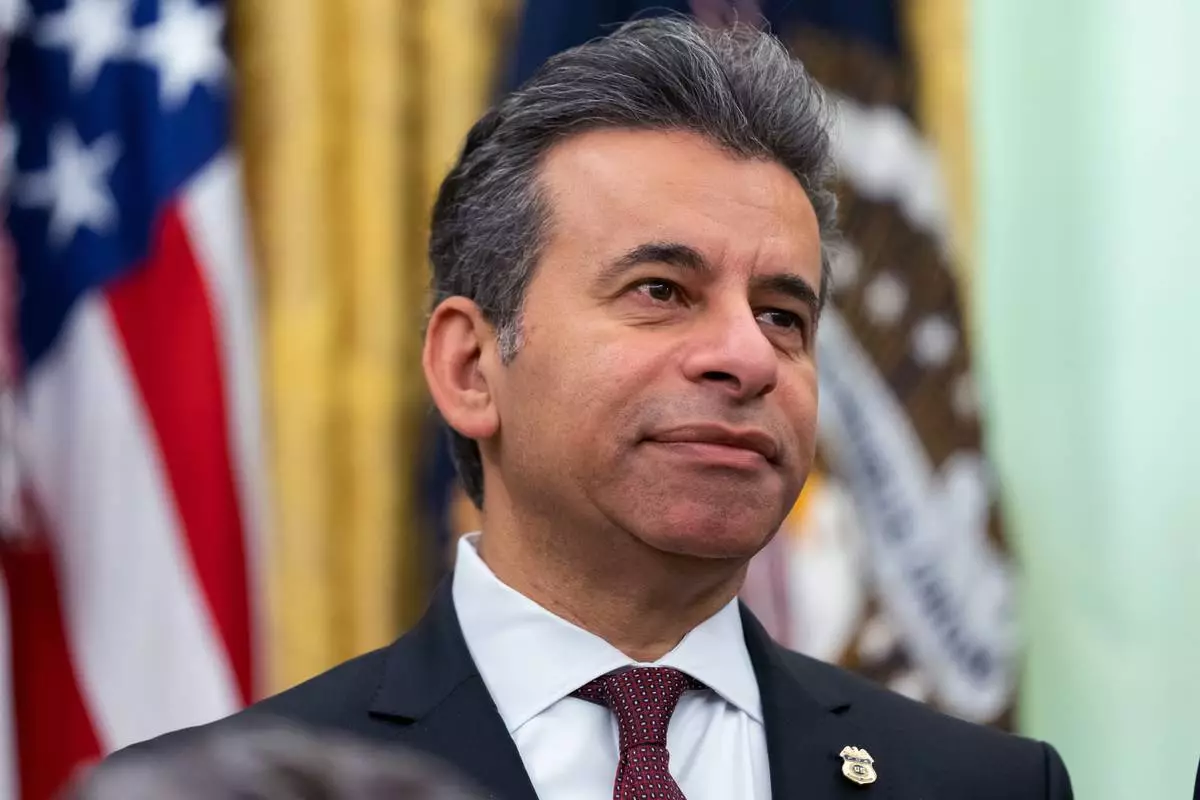
Dr. Marty Makary, Food and Drug Administration (FDA) commissioner, attends an event on health care affordability in the Oval Office at the White House, Thursday, April 23, 2026, in Washington. (AP Photo/Mark Schiefelbein)
U.S. Secretary of State Marco Rubio discussed “efforts to achieve a durable peace in the Middle East” in talks at the Vatican on Thursday aimed at easing tensions following U.S. President Donald Trump’s criticisms of Pope Leo XIV.
Rubio met with Leo and then Vatican Secretary of State Cardinal Pietro Parolin in a visit that lasted 2½ hours.
Also, Iran said it was reviewing the latest American proposals on ending the war, as Trump threatened the country with a new wave of bombing unless a deal is reached that includes reopening the crucial Strait of Hormuz to international shipping. The developments followed days of mixed messaging from the Trump administration over its strategy to end the war.
Here's the latest:
Iran established the new government agency to approve transit and collect tolls from shipping in the strait, shipping data firm Lloyd’s List Intelligence said Thursday. The move has raised concerns about eroding the freedom of navigation on which global trade depends.
The agency, called the Persian Gulf Strait Authority, is “positioning itself as the only valid authority to grant permission to ships transiting the strait,” Lloyd’s reported in an online briefing. Lloyd’s said the authority had emailed it an application form for ships seeking passage.
The Iranian effort to formalize control over the channel comes as hundreds of commercial ships remain bottled up in the Persian Gulf and unable to reach the open sea.
▶ Read more
A group of Democratic U.S. senators have called for the U.S. Central Command to answer questions about American coordination with Israel in declaring broad “ evacuation zones ” in Lebanon and Iran, alleging the practice may violate international law.
The letter underlines how the Democratic Party — both its leaders and the base — has grown increasingly critical of Israel.
Since the beginning of the U.S.-Israeli war against Iran and the latest Israel-Hezbollah war in Lebanon, the Israeli military has regularly issued maps covering large areas of territory along with warnings telling all residents of the zones to flee. Israel had previously used a similar approach in Gaza.
The senators said the sweeping warnings have “been used to permanently displace people and destroy homes and towns” and that some civilians who refused to leave their homes in the areas have been killed by subsequent strikes.
▶ Read more
The official, who spoke on condition of anonymity to discuss plans for the closed-door talks, said the meeting would take place next week on May 14 and 15. The official did not specify the venue but the previous two rounds have taken place at the State Department and the White House.
The earlier rounds were led by the U.S. ambassador to Lebanon and the Israeli and Lebanese ambassadors to the United States, although Secretary of State Marco Rubio participated in both and President Trump greeted the participants at the second.
— Matthew Lee
The U.S. Treasury Department announced new sanctions on an Iraqi oil official, several Iraqi firms and leaders of Iran-backed militias accused of helping Iran evade U.S. sanctions and finance militants.
The Treasury Department alleges that Iraq’s deputy oil minister, Ali Maarij Al-Bahadly, helped divert Iraqi oil and falsify documents so Iranian oil could be sold as Iraqi oil, benefiting Iran and allied militias.
“Treasury will not stand idly by as Iran’s military exploits Iraqi oil to fund terrorism against the United States and our partners,” Treasury Secretary Scott Bessent said in a statement Thursday.
The Vatican said the “need to work tirelessly in favor of peace” was discussed in talks Thursday with U.S. Secretary of State Marco Rubio, who came to Rome on a fence-mending visit after President Trump’s criticisms of Pope Leo XIV.
During Rubio’s meeting with Leo, and the Vatican secretary of state, Cardinal Pietro Parolin, “the shared commitment to fostering good bilateral relations between the Holy See and the United States of America was reaffirmed,” the Vatican said.
In a statement, the Vatican said the two sides then exchanged views on current events “with particular attention to countries marked by war, political tensions, and difficult humanitarian situations, as well as on the need to work tirelessly in favor of peace.”
Republican lawmakers in Tennessee are debating a plan that could carve up a majority-Black congressional district, reshaping it to the GOP’s advantage as part of President Trump’s strategy to try to hold on to a slim House majority in the November midterm elections.
Protesters shouted “No Jim Crow” outside the House and Senate chambers as lawmakers convened to consider the legislation. The redistricting effort in Tennessee is one of several rapidly advancing plans in Southern states as Republicans try to leverage a U.S. Supreme Court ruling that weakened the federal Voting Rights Act.
▶ Read more
The U.S. stock market is holding near its records as oil prices keep dropping on hopes that a deal may be nearing to allow tankers to carry crude once again from the Persian Gulf.
The S&P 500 added 0.1% early Thursday to its all-time high set the day before. The Dow Jones Industrial Average rose 193 points, and the Nasdaq composite added 0.1%.
DoorDash jumped after reporting better results than expected. Whirlpool tumbled after reporting much weaker results than expected. The seller of home appliances said it would raise prices by at least 10% for some of its offerings, while accelerating cost cuts.
▶ Read more
Supreme Court justices are not “political actors,” Chief Justice John Roberts said Wednesday, insisting unpopular court decisions are based solely on the law.
“I think, at a very basic level, people think we’re making policy decisions, we’re saying we think this is how things should be, as opposed to what the law provides,” he said. “I think they view us as purely political actors, which I don’t think is an accurate understanding of what we do.”
His remarks to a conference of judges and lawyers from the 3rd U.S. Circuit in Pennsylvania came at a time of low public confidence in the court, and about a week after the court handed down a decision that hollowed out the Voting Rights Act.
▶ Read more
Republican lawmakers in Tennessee are poised to take up a plan Thursday that could carve up a majority-Black congressional district, reshaping it to the GOP’s advantage as part of President Trump’s strategy to try to hold on to a slim House majority in the November midterm elections.
The redistricting effort in Tennessee is one of several rapidly advancing plans in Southern states as Republicans try to leverage a U.S. Supreme Court ruling that weakened the federal Voting Rights Act.
The court ruled Louisiana relied too heavily on race when creating a second Black-majority House district as it attempted to comply with the federal law. The high court’s decision altered a decades-old understanding of the law, giving Republicans grounds to try to eliminate majority-Black districts that have elected Democrats.
▶ Read more
U.S. Secretary of State Marco Rubio met with Pope Leo XIV and then Vatican Secretary of State Cardinal Pietro Parolin in a visit that lasted 2½ hours.
U.S. State Department spokesperson Tommy Pigott said Rubio and Leo discussed the situation in the Middle East “and topics of mutual interest in the Western Hemisphere. The meeting underscored the strong relationship between the United States and the Holy See and their shared commitment to promoting peace and human dignity,” he said.
In a separate statement about the Parolin meeting, Pigott said the two diplomats discussed “ongoing humanitarian efforts in the Western Hemisphere and efforts to achieve a durable peace in the Middle East. The discussion reflected the enduring partnership between the United States and the Holy See in advancing religious freedom,” the statement said.
▶ Read more
Trump’s lawyer, hoping for an eventual Supreme Court victory, has asked a federal appeals court in New York to temporarily block a longtime columnist from collecting an $83 million defamation award.
The lawyer told the 2nd U.S. Circuit Court of Appeals in a filing Tuesday to stay its decision supporting the award so that Trump won’t have to pay writer E. Jean Carroll while he appeals to the high court.
A Manhattan jury awarded Carroll the payout in January 2024. Another jury in May 2023 awarded Carroll $5 million after concluding Trump sexually abused her in a Manhattan luxury department store dressing room in 1996 and then defamed her after she published her account of it in 2019.
Trump has vehemently denied sexually abusing Carroll or ever knowing her and has repeatedly accused her of making accusations against him for political purposes or to promote her memoir.
Attorney Roberta Kaplan, who represents Carroll, declined to comment through a spokesperson.
▶ Read more
Trump’s proposal to put a coat of white paint on the exterior of a 19th-century historic landmark building next to the White House is slated for a hearing Thursday by a key federal agency, which he expects to approve what would be a dramatic makeover.
The National Capital Planning Commission is scheduled to begin considering the plan on Thursday, according to its meeting agenda. Trump calls for painting all or most of the Eisenhower building’s gray granite exterior with white paint. He last year called the gray a “really bad color.”
But the proposal has alarmed preservationists, architects, historians and others who argue that granite is not meant to be painted and that paint would trap moisture, deteriorate the stone and not solve problems the administration wants to fix.
▶ Read more
The Trump administration’s approach to the Iran war over the past 24 hours has pinballed from declarations that a tenuous ceasefire was holding and military operations were over to new threats of bombing the Islamic Republic.
Tuesday started with Defense Secretary Pete Hegseth explaining how the U.S. military was protecting stranded ships so they could traverse the Strait of Hormuz.
That afternoon, Secretary of State Marco Rubio told reporters at the White House that the military operation was “concluded” and that the U.S. achieved its objectives. But in almost the same breath, he said Trump was still seeking a “path of peace” that required Iran to agree to a deal to reopen the vital oil shipping corridor.
By Tuesday evening, Trump announced that the effort to protect ships was paused to see if an agreement could be reached. Then on Wednesday morning, he again warned that bombing would resume if Tehran didn’t agree to U.S. terms.
▶ Read more
Iran said it was reviewing the latest American proposals on ending the war, as Trump threatened the country with a new wave of bombing unless a deal is reached that includes reopening the crucial Strait of Hormuz to international shipping.
Hope that the two-month conflict could soon end buoyed international markets on Thursday, even as the U.S. military fired on an Iranian oil tanker attempting to breach an American blockade of Iran’s ports hours earlier. The developments followed days of mixed messaging from the Trump administration over its strategy to end the war.
Trump posted on social media that the two-month war could soon end and that oil and natural gas shipments disrupted by the conflict could restart. But he said that depends on Iran accepting a reported agreement that he did not detail.
“If they don’t agree, the bombing starts,” Trump wrote.
▶ Read more
U.S. Secretary of State Marco Rubio opened a fence-mending visit to the Vatican on Thursday after President Donald Trump’s broadsides against Pope Leo XIV and the U.S.-Israeli war in Iran angered the Holy See and sparked ongoing sparring between the two American leaders.
Rubio, a practicing Catholic, had an audience scheduled with Leo, which was complicated at the last minute by Trump’s latest criticism of the Chicago-born pope. Leo has pushed back, calling out Trump’s misrepresentations of his views on Iran and nuclear weapons and insisting that he is merely preaching the biblical message of peace.
Rubio was also due to meet with the Vatican secretary of state, Cardinal Pietro Parolin, who on the eve of his visit strongly defended Leo and criticized Trump’s attacks in understated diplomatic terms. “Attacking him like that or criticizing what he does seems a bit strange to me, to say the least,” Parolin said Wednesday.
Parolin said Washington had requested Rubio’s audience, and that the pope was open to continued dialogue.
▶ Read more
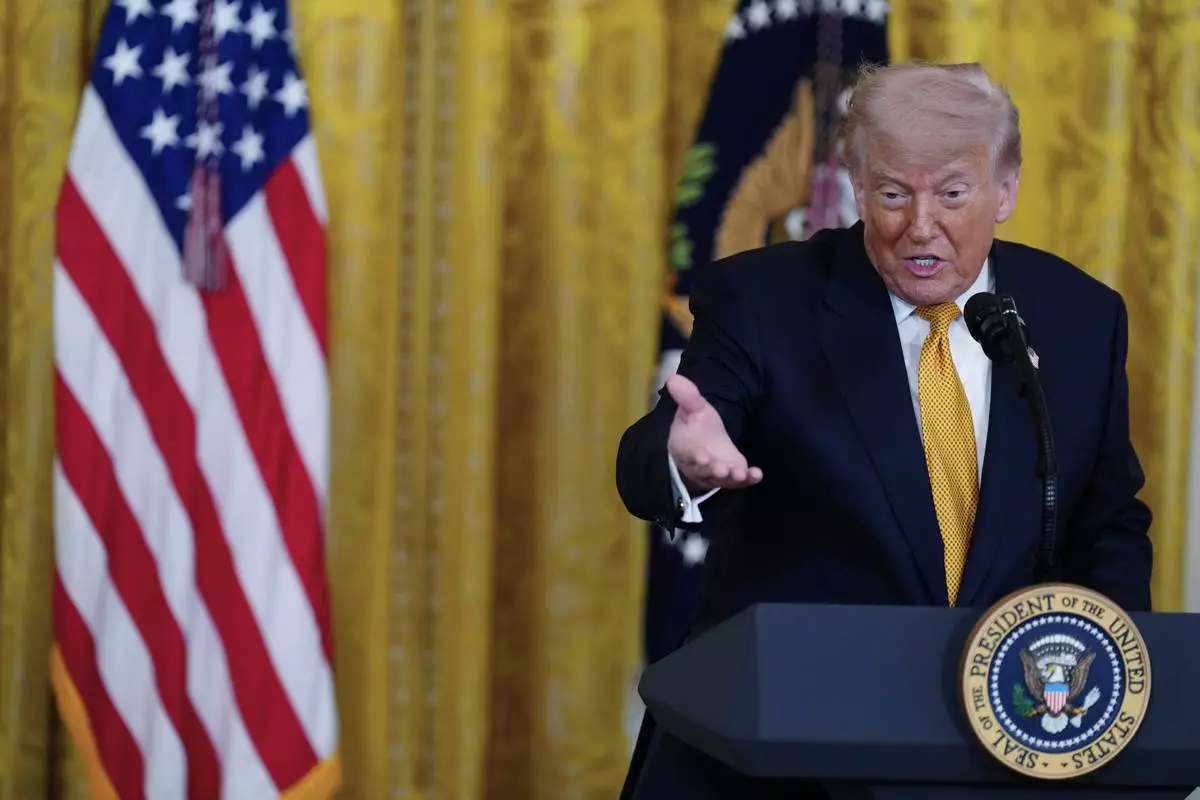
President Donald Trump speaks during a Mother's Day event for members of the military, Wednesday, May 6, 2026, in the East Room of the White House, in Washington. (AP Photo/Jacquelyn Martin)
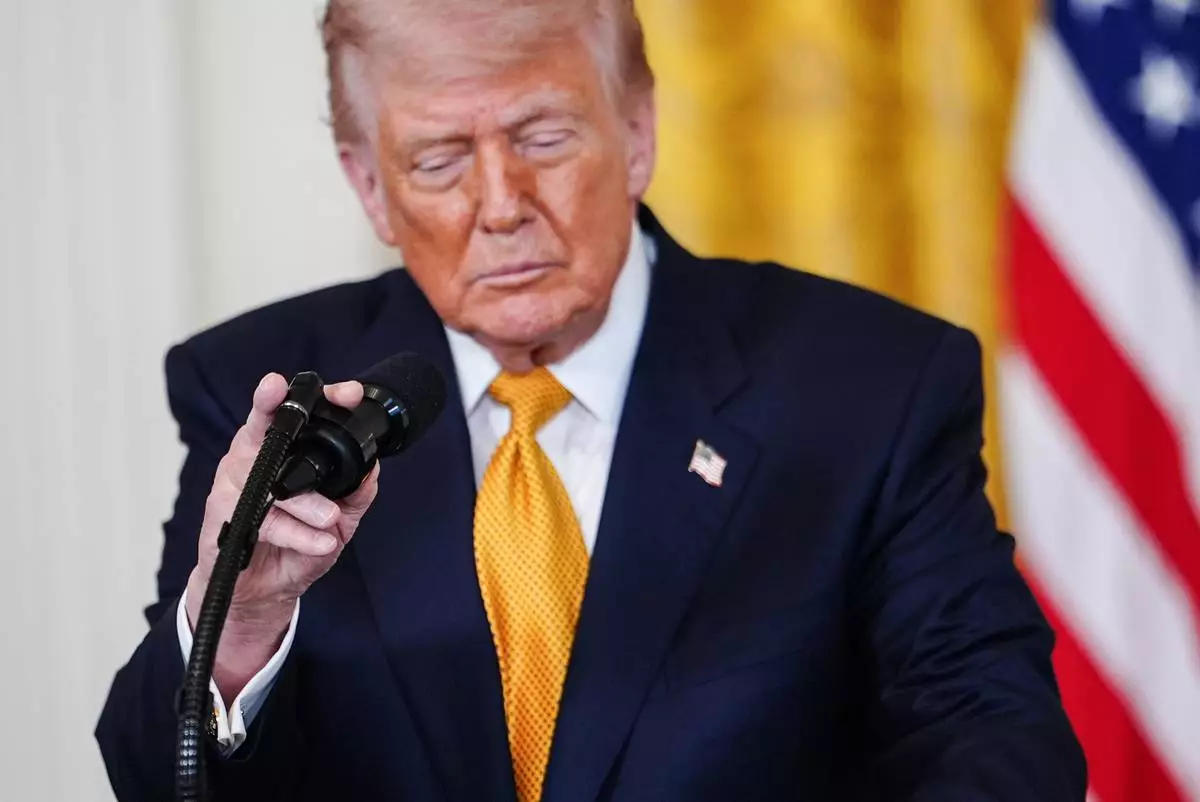
President Donald Trump adjusts his microphone while speaking during an event for military mothers in the East Room of the White House, Wednesday, May 6, 2026, in Washington. (AP Photo/Julia Demaree Nikhinson)