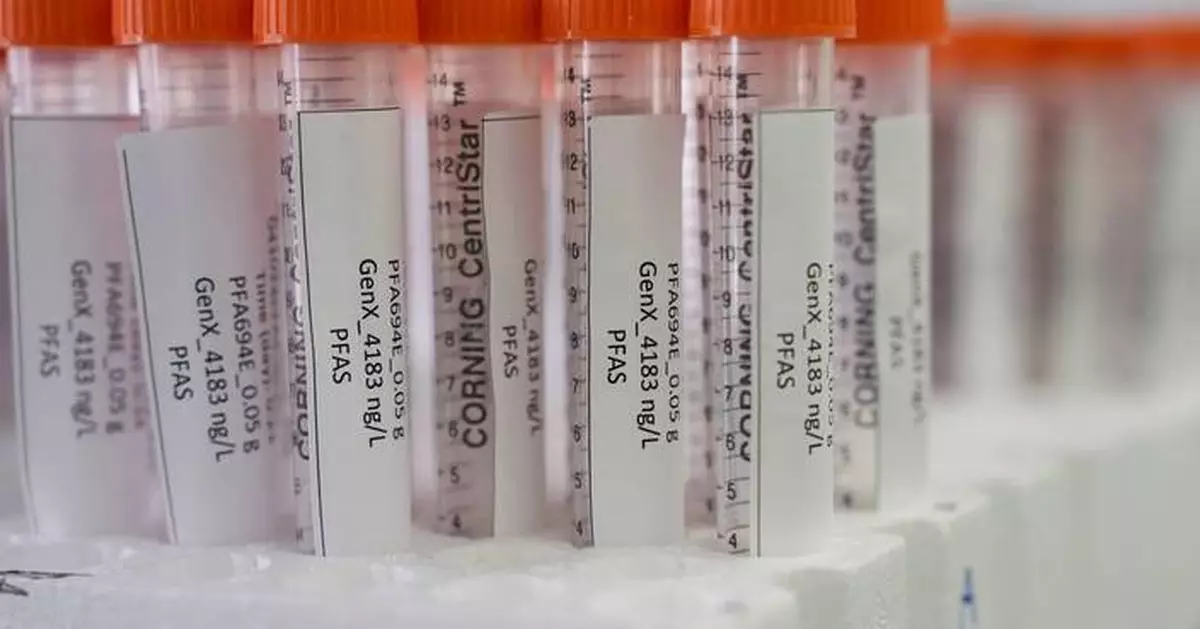
WASHINGTON (AP) — The Trump administration will soon propose softening Biden-era limits on “forever chemicals” in drinking water, delaying but keeping tough standards for two common types and rescinding limits on some rarer forms of the substance, according to an EPA official.
The proposal will start the formal process of rolling back parts of the first-ever limits on PFAS in drinking water finalized during former President Joe Biden's administration. Officials at the time found they increased the risk of cardiovascular disease, certain cancers and babies being born with low birth weight.
Jessica Kramer, head of the Environmental Protection Agency's Office of Water, said at a conference in Washington, D.C., on Thursday the agency intended to rescind and revisit certain limits she said were improperly issued by the Biden administration. The move would align with actions the EPA had said a year ago they intended to take.
The proposal comes at a time when the agency is facing scrutiny from the Make America Healthy Again movement on issues like PFAS and pesticides. The group in part advocates against corporate environmental harms and has been championed by Health Secretary Robert F. Kennedy Jr.
The details of the plan haven't yet been released, but officials previously said they would propose rescinding limits on three types of PFAS, including what are known as GenX substances found in North Carolina. They will then reconsider them. They will do the same with a limit on a mixture of several types of PFAS.
“We need drinking water rules that are legally defensible. We need drinking water regulations that are not susceptible to legal challenge because the explicit process in the Safe Drinking Water Act wasn’t followed. And so that is a huge concern,” said Kramer at a conference focused on ensuring everyone has access to safe drinking water and wastewater.
She said the intent is to start the process over and follow the law. The Biden administration faced allegations they did not follow the correct legal process, moving too quickly on limits on the less common types of PFAS the agency is proposing to rescind limits for.
The agency said they are committed to helping utilities reduce PFAS in drinking water. The agency provides technical assistance and there have been billions of dollars in extra funding available to assist in installing and navigating the expensive and sometimes complex treatment that's needed to remove the chemicals.
The Biden administration’s rule also set tight standards for the two common types of PFAS, referred to as PFOA and PFOS, at 4 parts per trillion. The EPA has said they intend to keep those standards, but give utilities two extra years — until 2031 — to comply.
EPA Administrator Lee Zeldin said last year when they first announced they would take this action that delaying the deadline was “common-sense flexibility.”
“This will support water systems across the country, including small systems in rural communities, as they work to address these contaminants," he said at the time.
On drinking water broadly, the Trump administration said they would defend tough standards to reduce lead in tap water. That's in contrast to their efforts to slash health protections for coal and other polluting energy sources.
“Where they may have taken a wrecking ball to those rules, this is a little more surgical and measured in part because of the resonance of these issues among voters,” said Melanie Benesh, vice president of government affairs with the nonprofit Environmental Working Group.
Forcing utilities to treat for several types of PFAS can help ensure that other potentially harmful substances are filtered out of water, too, according to the nonprofit.
Benesh also said the move is likely illegal — the Safe Drinking Water Act, which authorizes EPA to regulate contaminants in drinking water, prevents officials from issuing regulations that are weaker than those previously in place.
The public will have a chance to comment before the change is finalized.
The Associated Press receives support from the Walton Family Foundation for coverage of water and environmental policy. The AP is solely responsible for all content. For all of AP’s environmental coverage, visit https://apnews.com/hub/climate-and-environment
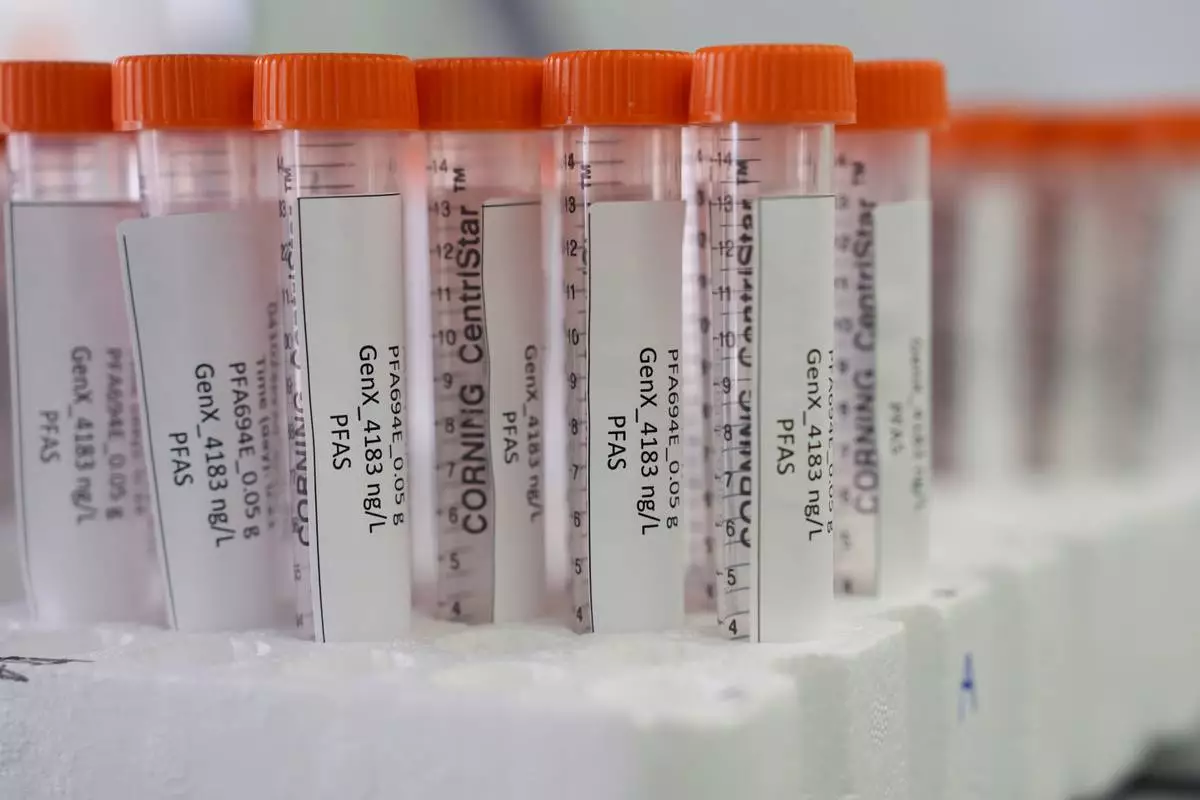
FILE - Vials containing PFAS samples sit in a tray April 10, 2024, at a U.S. Environmental Protection Agency lab in Cincinnati. (AP Photo/Joshua A. Bickel, File)
NEW YORK (AP) — The U.S. stock market is hanging just below its records Thursday as oil prices keep dropping on hopes that a deal may be nearing to allow tankers to deliver crude once again from the Persian Gulf to customers.
The price for a barrel of Brent crude oil, the international standard, fell 0.5% to $100.76, down from more than $115 early this week. It and gasoline are still much more expensive than they were before the war with Iran began, but hope is rising in financial markets as Iran said it was reviewing the latest U.S. proposals on ending their war.
On Wall Street, the S&P 500 fell 0.3% from its all-time high set the day before after a spokesperson for Pakistan’s Foreign Ministry said, “We expect an agreement sooner rather than later.” Pakistan has been acting as a mediator between the United States and Iran, and the hope is that they will reopen the Strait of Hormuz. Its closure during the war has kept oil tankers trapped in the Persian Gulf and sent prices higher for crude and all kinds of products.
The Dow Jones Industrial Average was down 244 points, or 0.5%, as of 1:14 p.m. Eastern time, and the Nasdaq composite fell 0.1% from its own record.
Of course, Wall Street has rallied strongly before on hopes for a coming end to the war with Iran, only to get quickly disappointed. That could happen again, and tensions are still high in the Middle East after a U.S. fighter jet shot out the rudder of an Iranian oil tanker in the Gulf of Oman Wednesday as it tried to breach the American blockade of Iran’s ports.
Despite all those uncertainties, a powerful parade of U.S. companies saying they made even bigger profits during the first three months of the year than analysts expected has helped support the U.S. stock market. Stock prices tend to follow the path of corporate profits over the long term.
Datadog leaped 25.7% to help lead the U.S. market after the monitoring and security platform for cloud applications topped analysts' expectations for profit in the latest quarter.
Albemarle rose 6.1% after the lithium products and specialty chemicals company likewise delivered better-than-expected results. Taser maker Axon Enterprise rallied 10.2% after raising its forecast for revenue this year in part because of big growth for its counter-drone products.
They helped offset a 12.5% drop for Whirlpool, which tumbled after reporting much weaker results than analysts expected. It announced the largest price increases in a decade for its major appliances in North America, while accelerating cuts to its costs, as it contends with weaker confidence among U.S. consumers.
Shake Shack dropped 28.4% after its results for the latest quarter fell well below analysts' expectations.
McDonald’s was mostly unchanged even though its revenue for the latest quarter edged past analysts’ expectations. CEO Chris Kempczinski said high gasoline prices and consumer anxiety over the Iran war could dent its sales this spring.
In the bond market, Treasury yields held relatively steady. The yield on the 10-year Treasury rose to 4.38% from 4.36% late Wednesday, but remains down from 4.45% early this week.
Lower yields can bring down rates for mortgages and other kinds of loans going to U.S. households and businesses, which in turn can give the economy a boost. Lower yields also tend to push upward on prices for stocks and other kinds of investments.
The 10-year Treasury yield, though, remains well above its 3.97% level from just before the war.
Several reports on the U.S. economy also came in mixed. One said more U.S. workers applied for unemployment benefits last week, but the increase was not as bad as economists expected. Another report suggested that productivity for U.S. workers improved by only half of what economists expected for the latest quarter.
In stock markets abroad, indexes fell in Europe following a stronger finish in Asia.
Japan’s Nikkei 225 roared 5.6% higher as trading in Tokyo reopened following a holiday and caught up with big gains for Asian markets from earlier in the week. It’s at a record after soaring nearly 71% in the last 12 months on strength for tech stocks benefiting from the boom in artificial intelligence.
“I think it’s a kind of bubble because buying activity concentrated on leading AI, artificial intelligence stock and semiconductor-related stocks. It’s a situation where only semiconductor stocks are being bought,” said Takashi Hiroki, chief strategist at MONEX.
AP Business Writers Matt Ott and Elaine Kurtenbach contributed to this report.

Robert Finnerty, Jr., foreground right, works with colleagues on the floor of the New York Stock Exchange, Thursday, May 7, 2026. (AP Photo/Richard Drew)
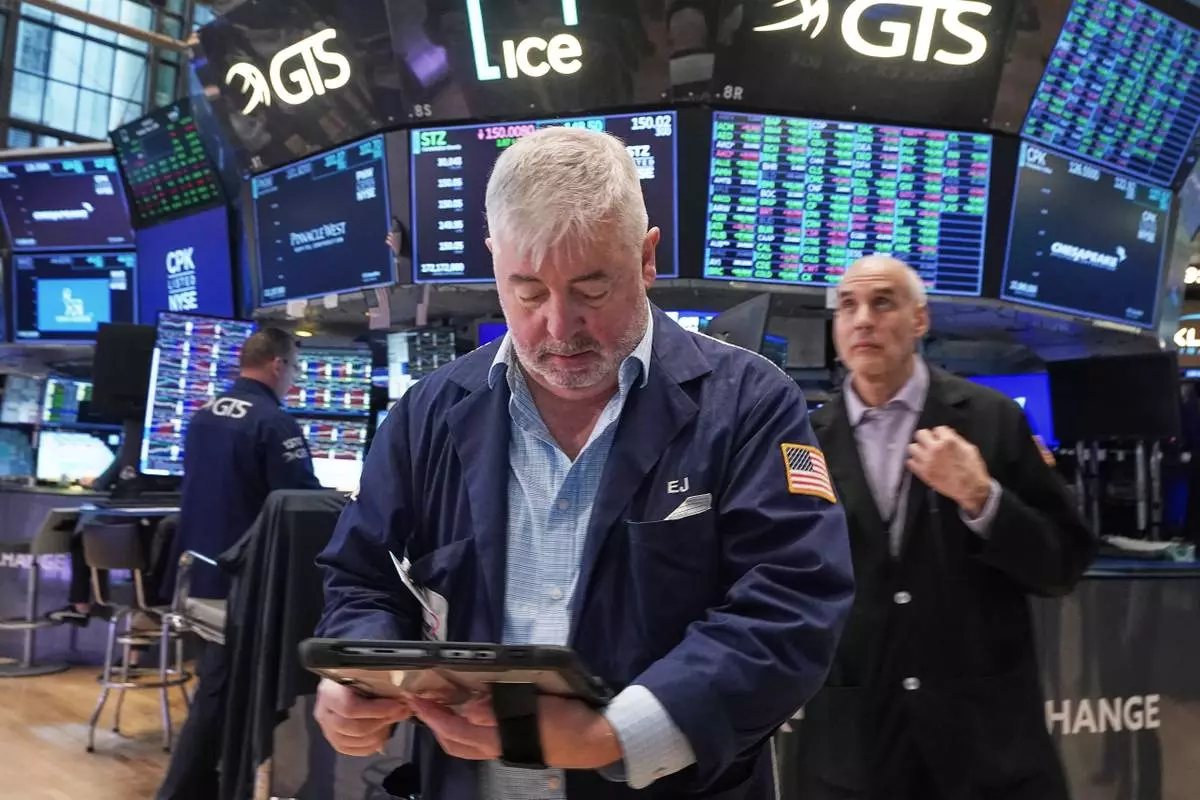
Trader Edward McCarthy, center, works on the floor of the New York Stock Exchange, Tuesday, May 5, 2026. (AP Photo/Richard Drew)
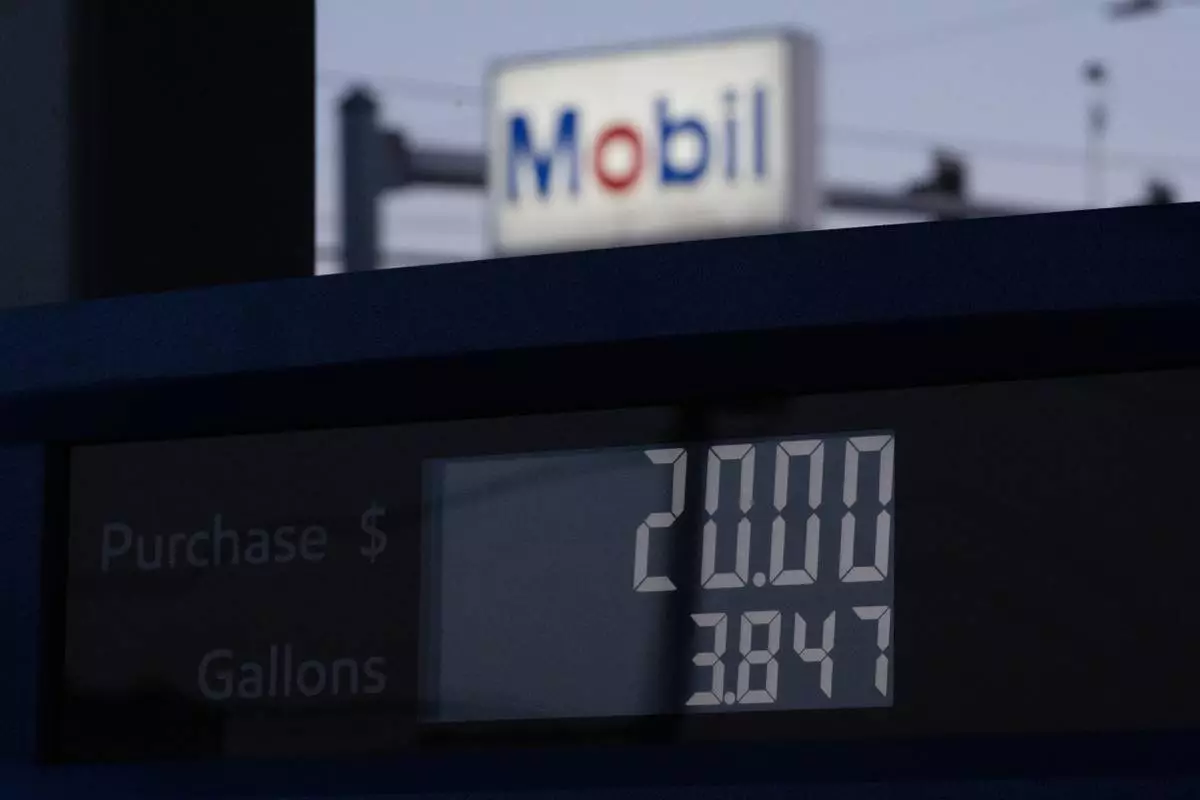
A display shows $20 for gasoline on a gas pump at a Mobil gas station on Wednesday, April 29, 2026, in Portland, Ore. (AP Photo/Jenny Kane)
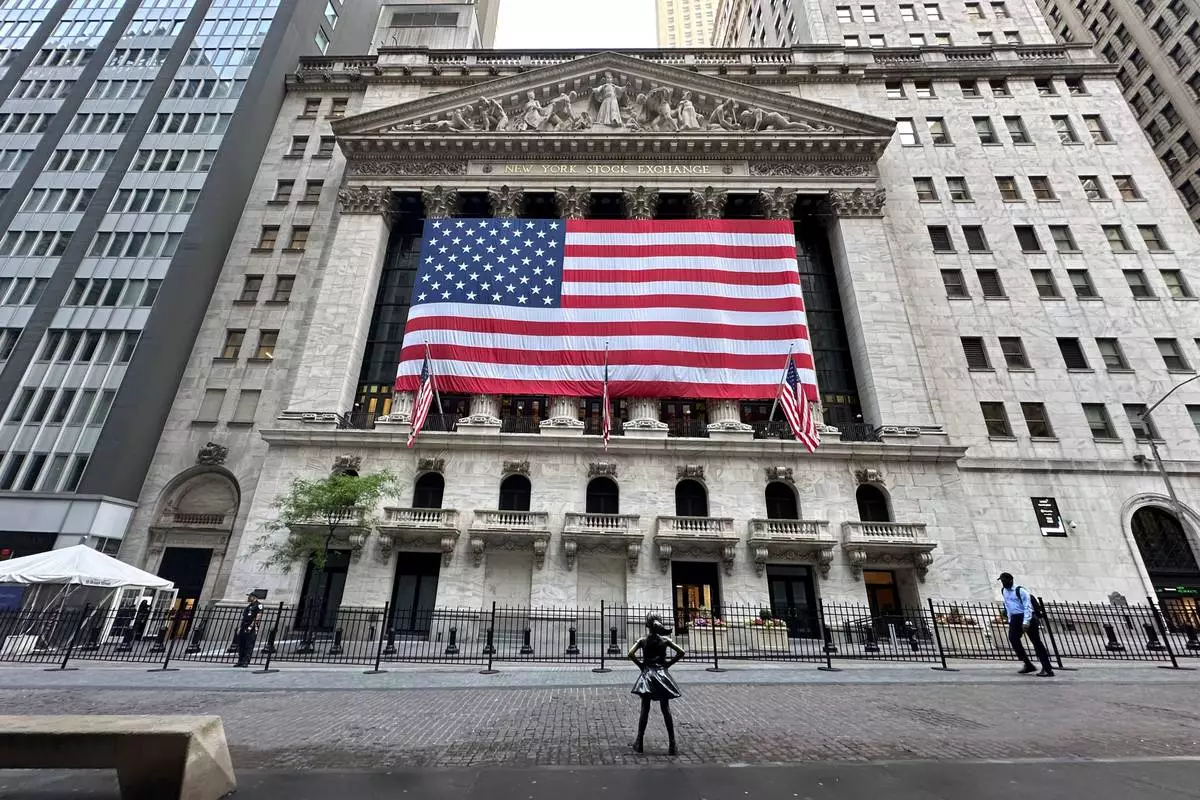
FILE - People pass the New York Stock Exchange on May 28, 2024, in New York. (AP Photo/Peter Morgan, File)
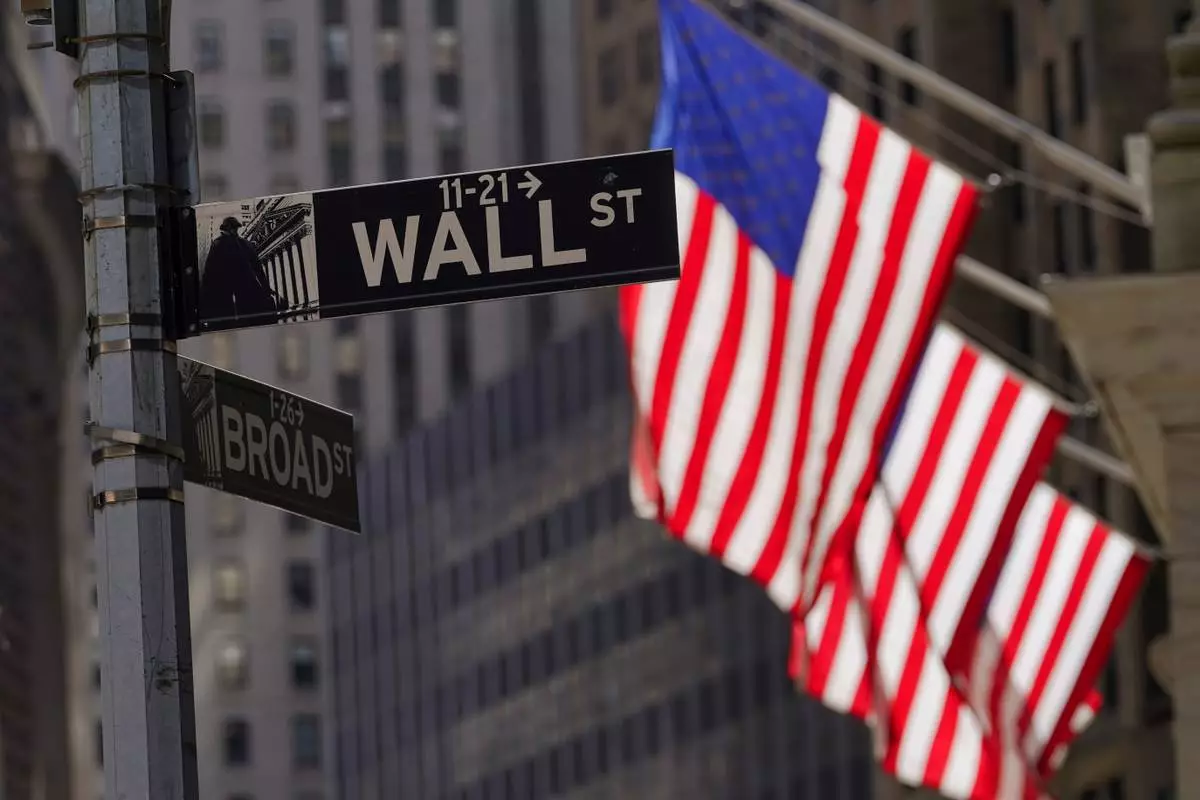
FILE - American flags fly outside the New York Stock Exchange, Friday, Sept. 23, 2022, in New York. (AP Photo/Mary Altaffer, File)
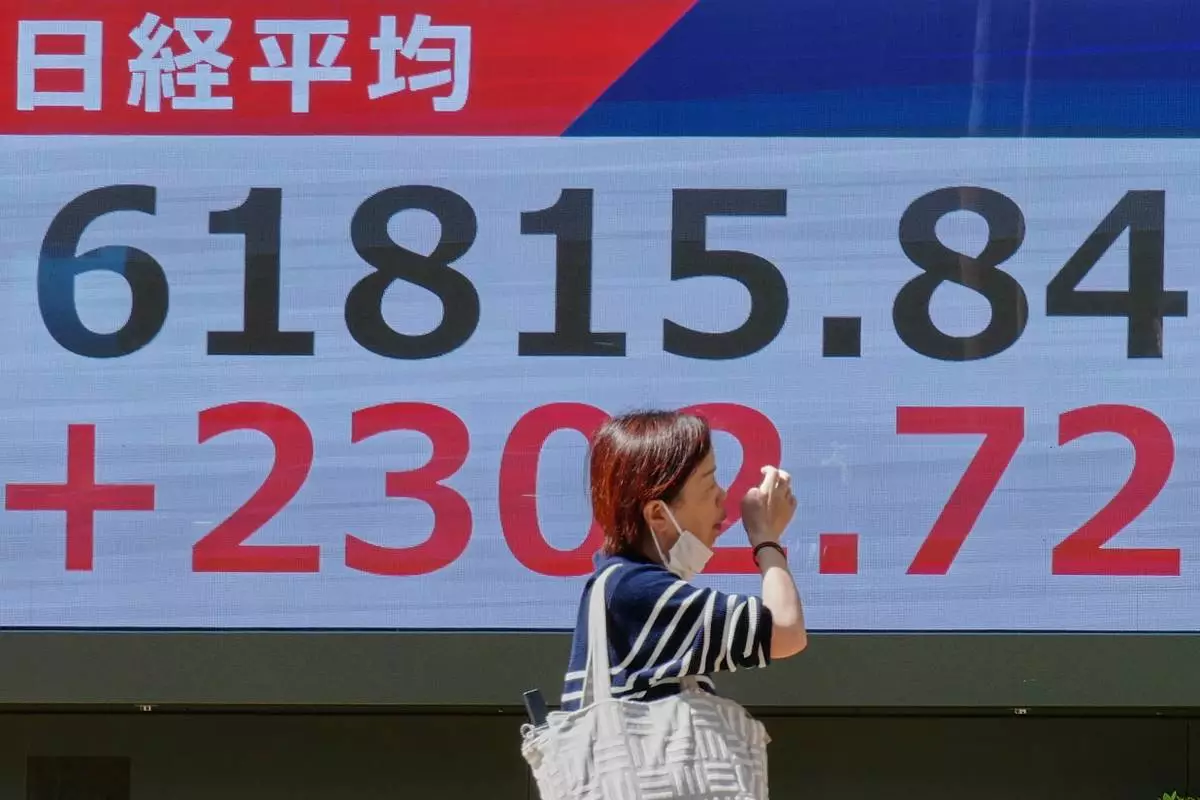
A person walks in front of an electronic stock board showing Japan's Nikkei index at a securities firm Thursday, May 7, 2026, in Tokyo. (AP Photo/Eugene Hoshiko)

A person walks in front of an electronic stock board showing Japan's Nikkei index at a securities firm Thursday, May 7, 2026, in Tokyo. (AP Photo/Eugene Hoshiko)

A person walks in front of an electronic stock board showing Japan's Nikkei index at a securities firm Thursday, May 7, 2026, in Tokyo. (AP Photo/Eugene Hoshiko)
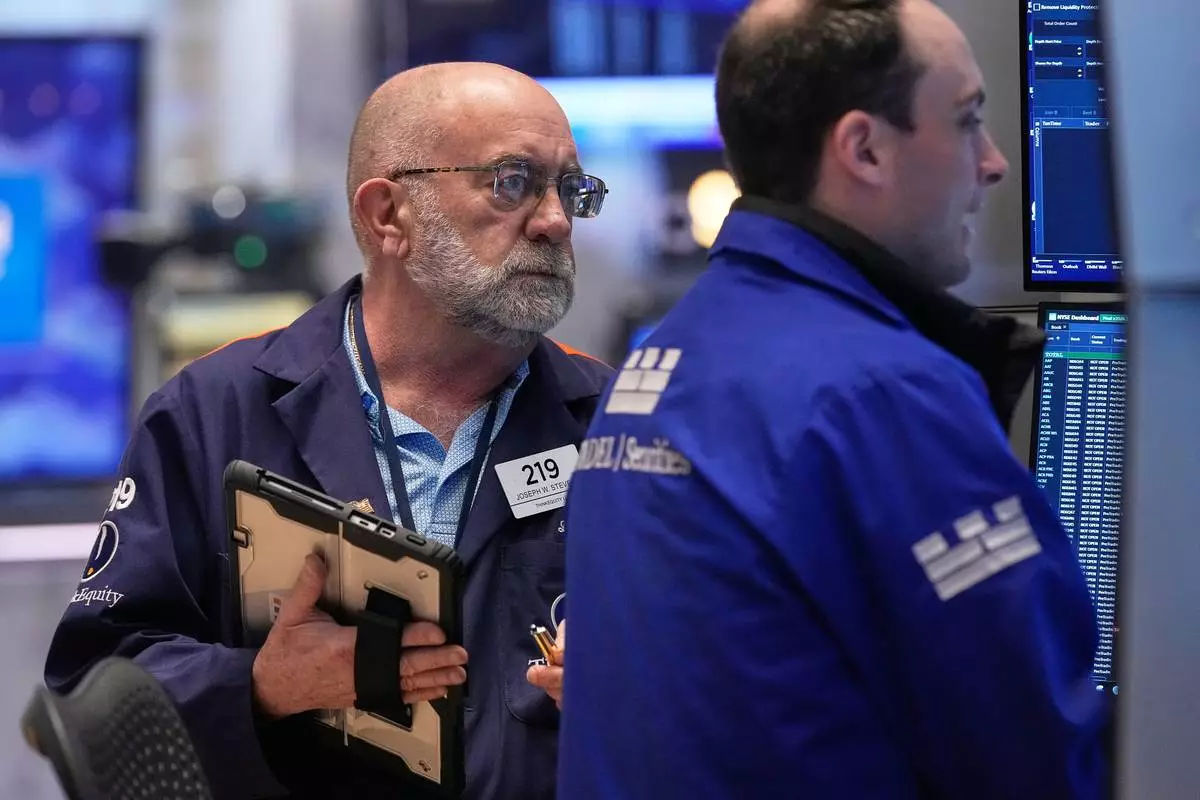
Trader Joseph Stevens, left, works on the floor of the New York Stock Exchange, Tuesday, May 5, 2026. (AP Photo/Richard Drew)