KAMPALA, Uganda (AP) — A Rwandan academic and government critic died in custody as he was set to be freed from jail, immediately raising concern from a prominent rights group that urged an investigation into the death of Aimable Karasira.
Karasira died on Wednesday after he took an overdose of his own medication, according to Rwandan authorities. Human Rights Watch questioned that account, urged the international community to pay attention, and called for a “body of experts” to conduct an independent probe.
“There are many reasons to question the circumstances surrounding Aimable Karasira’s death in custody, not least the years of harassment and persecution he experienced at the hands of the authorities,” the group's Clémentine de Montjoye said in a statement. “The government bears the burden of proving that Karasira was not unlawfully killed."
Karasira died at the Nyarugenge District Hospital in Kigali, the Rwandan capital. Hillary Sengabo, a spokesman for the Rwandan prison system, told The New Times newspaper of Rwanda that Karasira "took chunks of medicine which he had been prescribed for a preexisting condition.”
In 2020, Karasira released a video on his YouTube channel in which he discussed losing relatives during the 1994 genocide and in its aftermath — after the rebels who stopped the genocide had taken charge of Rwanda's government. Karasira later faced pressure from intelligence officials and threats from others he didn't know, according to Human Rights Watch, which has documented the case.
Karasira was arrested in 2021, charged with several crimes relating to genocide denial and sowing division. He was convicted of some offenses and acquitted of others.
“The prosecution appealed his acquittal on several charges, including genocide denial and justification, and demanded a 30-year sentence, which was pending at the time of his death,” said the statement by Human Rights Watch. “But as Karasira had already served four years of his five-year term awaiting trial, his sentence was nearing its end, and he was to be released on May 6.”
Michela Wrong, a British historian who has written a book about the alleged crimes of the Rwandan government, said the death of Karasira “says so much about Rwanda.”
"He told visitors he was being beaten and tortured," she said on social platform X. “Prison eventually proved a fatal experience, as for so many in Rwanda. Now he’s supposedly died of an overdose of his prescription medicine."
According to Human Rights Watch, Karasira’s death is reminiscent of the 2020 death in custody of singer and government critic Kizito Mihigo. The group said both men had the "moral authority" that resonated with the public and confounded officials.
The government of President Paul Kagame, whose party has ruled Rwanda since 1994, has tried to bridge ethnic divisions using legal means and other measures. He is also praised by many for presiding over relative peace and stability.
The government imposed a tough penal code to punish genocide and outlaw the ideology behind it, and Kagame has fostered a culture of obedience among his roughly 14 million people. Rwandan ID cards no longer identify a person by ethnicity and lessons about the genocide are part of the curriculum in schools.
Hundreds of community projects, backed by the government or civic groups, focus on uniting Rwandans and every April the nation joins hands in somber commemorations of the genocide anniversary.
But critics accuse Kagame of crushing all dissent. Many see him as the architect of an authoritarian regime that has stamped out virtually all opposition in Rwanda as opponents are jailed, flee, disappear or die under mysterious circumstances.
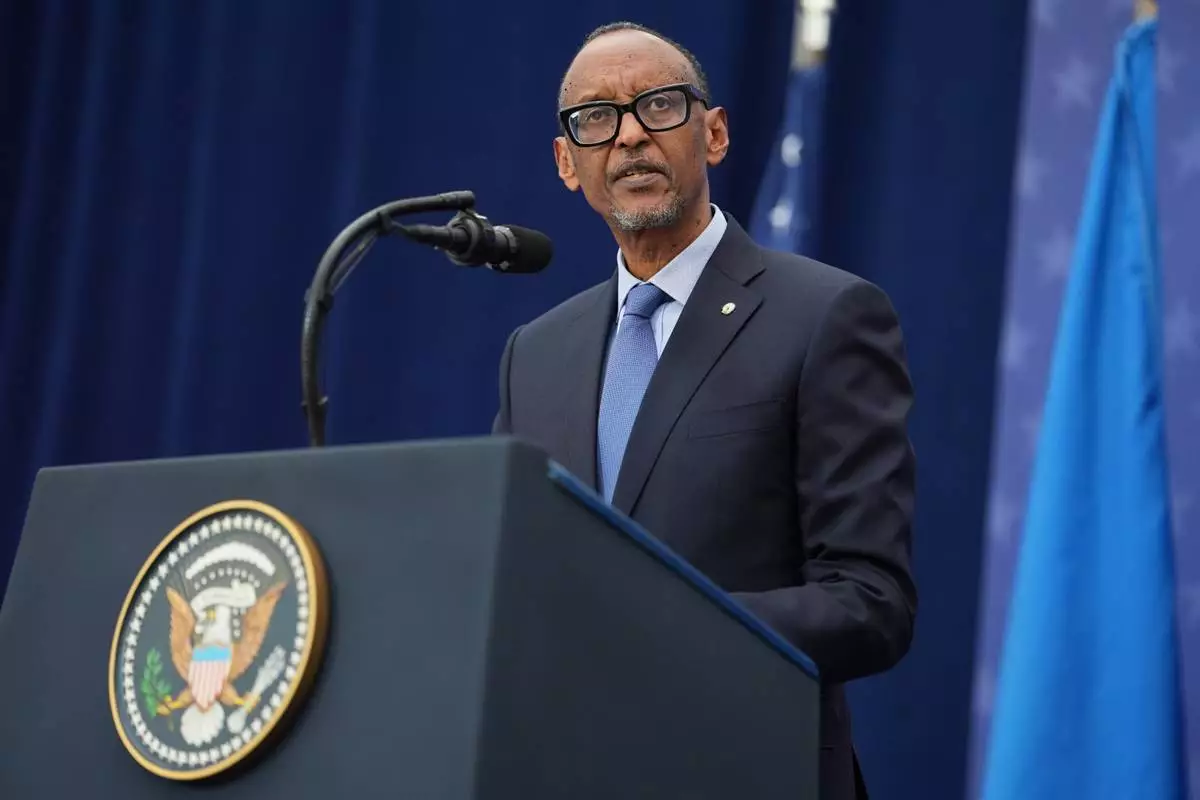
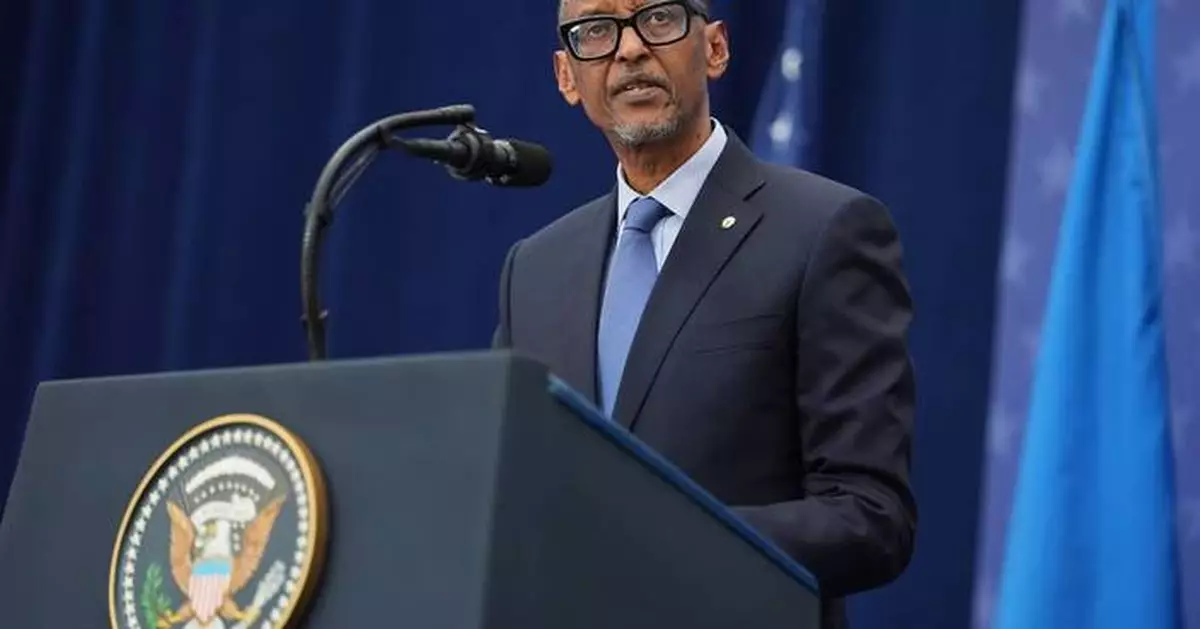
FILE - Rwanda's President Paul Kagame speaks during a signing ceremony with President Donald Trump and Democratic Republic of the Congo President Felix Tshisekedi, at the U.S. Institute of Peace, on Dec. 4, 2025, in Washington. (AP Photo/Evan Vucci, File)
NEW YORK (AP) — U.S. stocks are rising toward records Friday following the latest sign that the nation’s job market is doing better than economists expected.
The S&P 500 climbed 0.5% toward an all-time high after a report said U.S. employers added 115,000 more jobs than they cut last month, even though the war with Iran is raising fuel costs and uncertainty for everyone. The Dow Jones Industrial Average was up 118 points, or 0.2%, as of 9:35 a.m. Eastern time, and the Nasdaq composite was 0.8% higher and heading for its own record.
While hiring slowed from March’s level, it was nevertheless nearly double what economists expected. And it kept the S&P 500 on track for a sixth straight winning week, which would be its longest such streak since 2024. The U.S. stock market has blasted higher since late March, in part on hopes that the war will not mean a worst-case scenario for the global economy and that the Strait of Hormuz will reopen to allow oil tankers to deliver crude from the Persian Gulf again.
It’s still to be determined if those hopes are warranted or just wishful. The United Arab Emirates said Friday that it responded to another Iranian missile barrage, hours after the United States said it traded fire with Iranian forces in the Strait of Hormuz, in the latest blows to a shaky month-old ceasefire.
But economists said the latest jobs data was encouraging, particularly given that it followed a stronger-than-expected report for March. Those two months saw the price for a barrel of Brent crude oil spike from roughly $70 in late February to as high as $119 at times as the fighting and closure of the Strait of Hormuz kept crude oil pent up in the Persian Gulf.
On Friday, Brent edged down 0.1% to $99.97 amid the uncertainty about the ceasefire with Iran.
Another big factor helping to support the U.S. stock market despite the war’s uncertainties is the strong profits that companies have been reporting for the start of 2026.
Monster Beverage jumped 12.7% after the energy drink maker joined the parade of companies topping analysts’ expectations for profit and revenue for the latest quarter. It benefited from strong growth outside the United States, and total net sales there made up about 45% of its total, the highest percentage ever for it.
Akamai Technologies leaped even more, 23.1%, after its results squeaked past expectations. It announced a $1.8 billion deal to provide cloud infrastructure services to an unnamed client over seven years. The cybersecurity and cloud computing company is benefiting from the surge in artificial-intelligence technology.
Such voracious demand for AI helped CoreWeave report revenue for the latest quarter that was more than double a year earlier, but its net loss was worse than analysts expected. It also gave a forecasted range for revenue in the current quarter whose midpoint fell below analysts’ expectations. The stock of the company, which offers AI computing power to customers over the cloud, fell 9.2%.
In stock markets abroad, indexes fell across much of Europe and Asia. France’s CAC 40 fell 0.9%, and Hong Kong’s Hang Seng dropped 0.9% for two of the bigger losses.
South Korea’s Kospi was an exception, and it inched up 0.1% to another all-time high.
In the bond market, Treasury yields eased. The yield on the 10-year Treasury fell to 4.35% from 4.41% late Thursday and from 4.45% early this week.
Lower yields can bring down rates for mortgages and other kinds of loans going to U.S. households and businesses, which in turn can give the economy a boost. Lower yields also tend to push upward on prices for stocks and other kinds of investments.
The 10-year Treasury yield, though, remains well above its 3.97% level from just before the war.
AP Business Writers Chan Ho-him and Matt Ott contributed to this report.

Options trader Justin Kanda works on the floor of the New York Stock Exchange, Thursday, May 7, 2026. (AP Photo/Richard Drew)
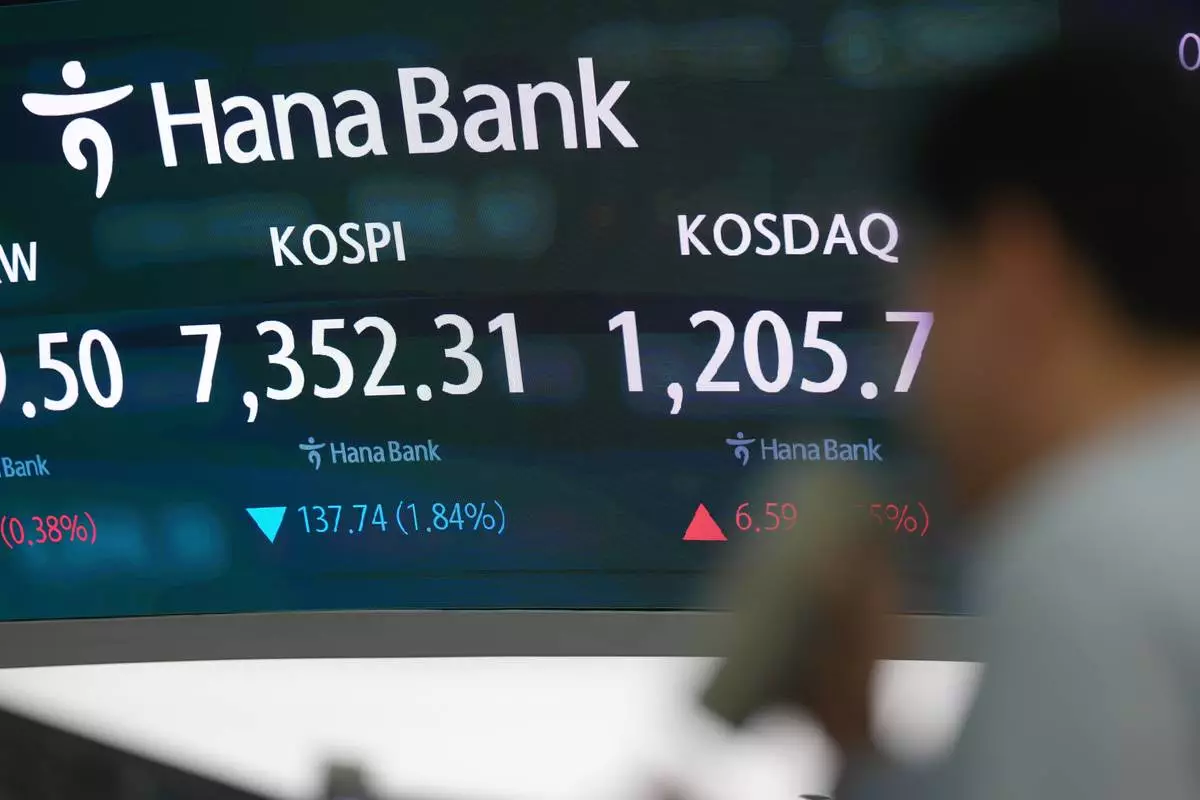
A dealer walks past near the screen showing the Korea Composite Stock Price Index (KOSPI) and the Korean Securities Dealers Automated Quotations (KOSDAQ) at a dealing room of Hana Bank in Seoul, South Korea, Friday, May 8, 2026. (AP Photo/Lee Jin-man)
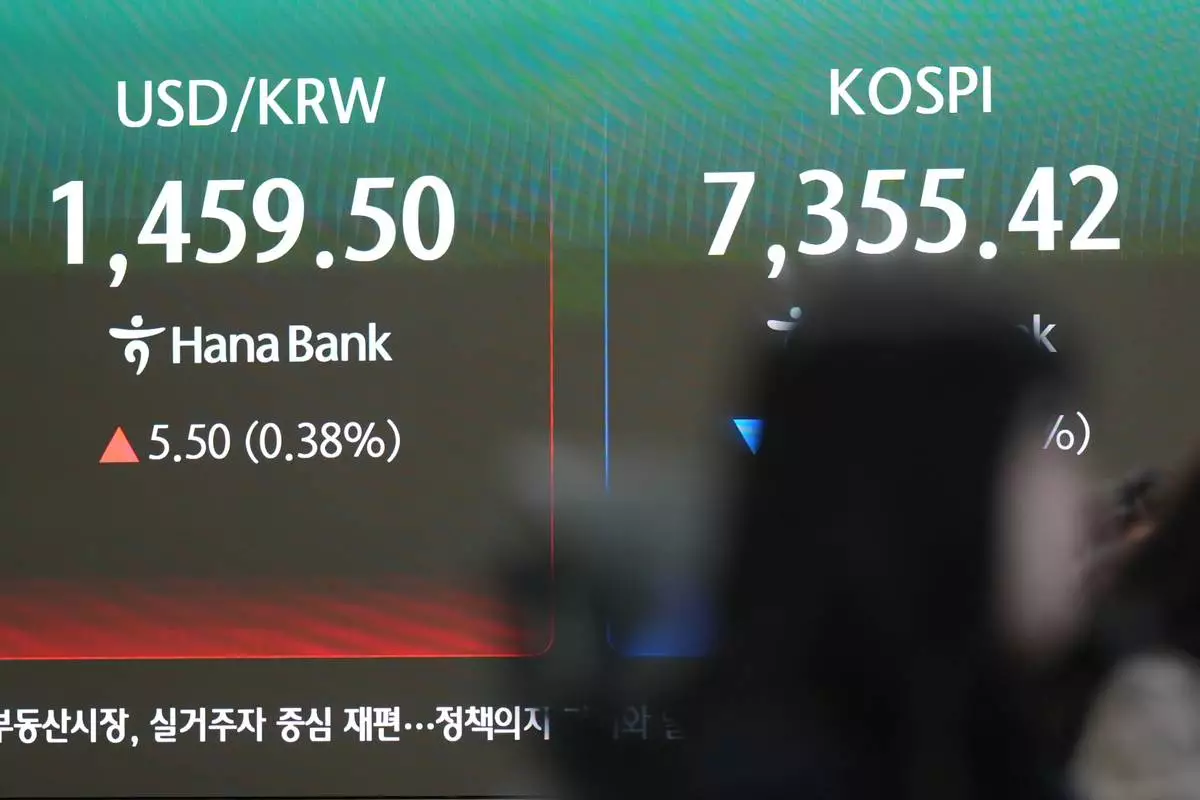
The screens showing the Korea Composite Stock Price Index (KOSPI) and the foreign exchange rate between U.S. dollar and South Korean won are displayed at a dealing room of Hana Bank in Seoul, South Korea, Friday, May 8, 2026. (AP Photo/Lee Jin-man)
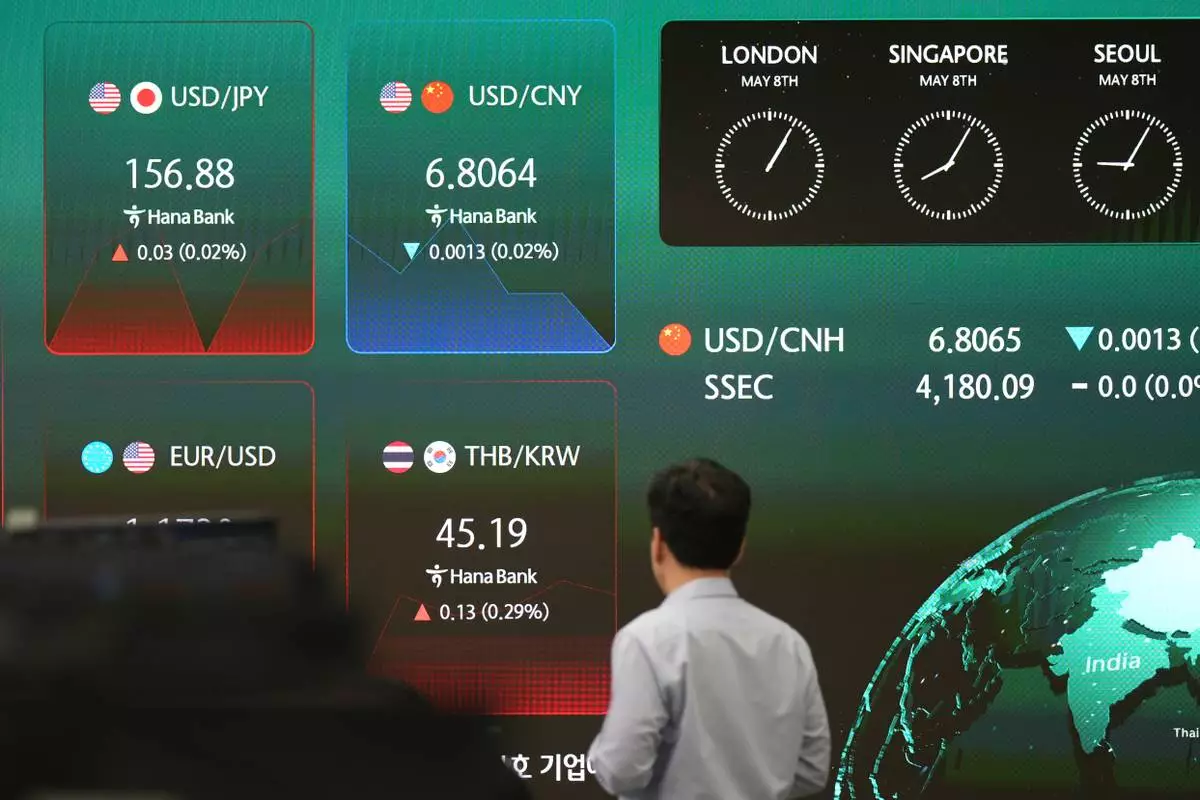
A dealer walks past near the screens showing the foreign exchange rates at a dealing room of Hana Bank in Seoul, South Korea, Friday, May 8, 2026. (AP Photo/Lee Jin-man)
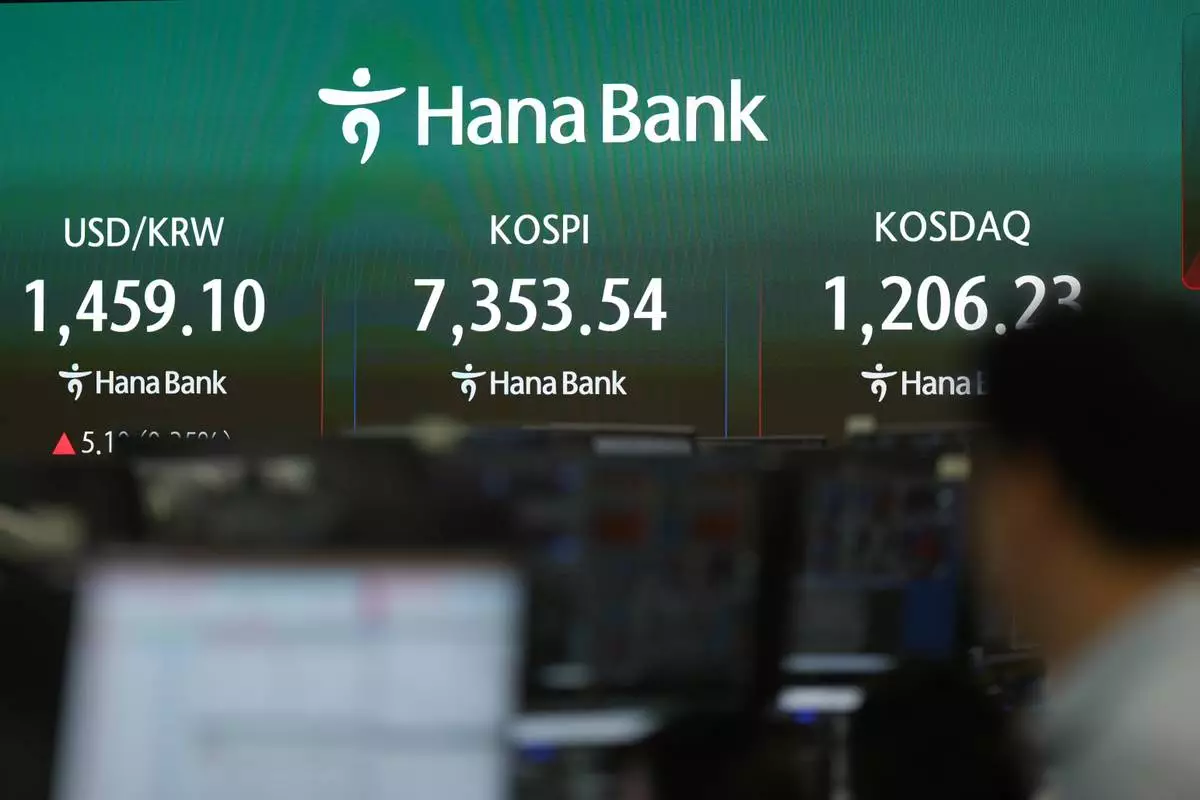
A dealer walks past near the screens showing the Korea Composite Stock Price Index (KOSPI), the foreign exchange rate between U.S. dollar and South Korean won and the Korean Securities Dealers Automated Quotations (KOSDAQ) at a dealing room of Hana Bank in Seoul, South Korea, Friday, May 8, 2026. (AP Photo/Lee Jin-man)

A dealer watches computer monitors at a dealing room of Hana Bank in Seoul, South Korea, Friday, May 8, 2026. (AP Photo/Lee Jin-man)