Tensions are high as Russia prepares to celebrate its most important secular holiday Saturday. Fears in Moscow about security amid the war with Ukraine have forced officials to scale back the annual celebrations, and signs of domestic discontent are casting a shadow over President Vladimir Putin's Red Square events.
A unilateral ceasefire in Ukraine that Russia announced for Friday and Saturday quickly unraveled. Moscow and Kyiv blamed each other for the continued fighting, just as they did when Ukraine’s own unilateral ceasefire swiftly collapsed earlier in the week.
Click to Gallery
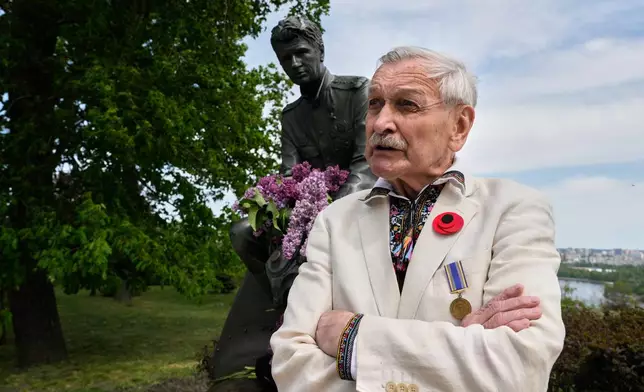
Famous Ukrainian actor Volodymyr Talashko looks on at a monument to pilots to mark Victory Day in World War II, in Kyiv, Ukraine, Tuesday, May 8, 2026, as the Russian attack on Ukraine continues. (AP Photo/Efrem Lukatsky)
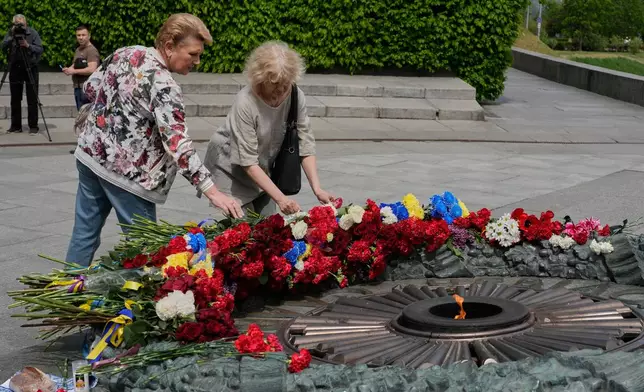
People lays flowers to the monument of the Unknown Soldier to mark Victory Day in World War II, in Kyiv, Ukraine, Tuesday, May 8, 2026. (AP Photo/Efrem Lukatsky)
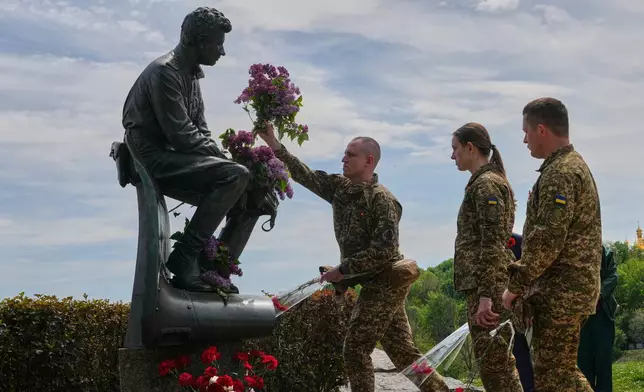
Ukrainian army officers lay flowers at a monument to pilots to mark Victory Day in World War II, in Kyiv, Ukraine, Friday, May 8, 2026, as the Russian attack on Ukraine continues. (AP Photo/Efrem Lukatsky)
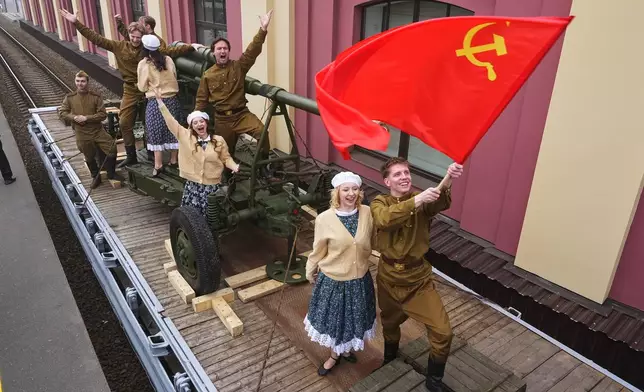
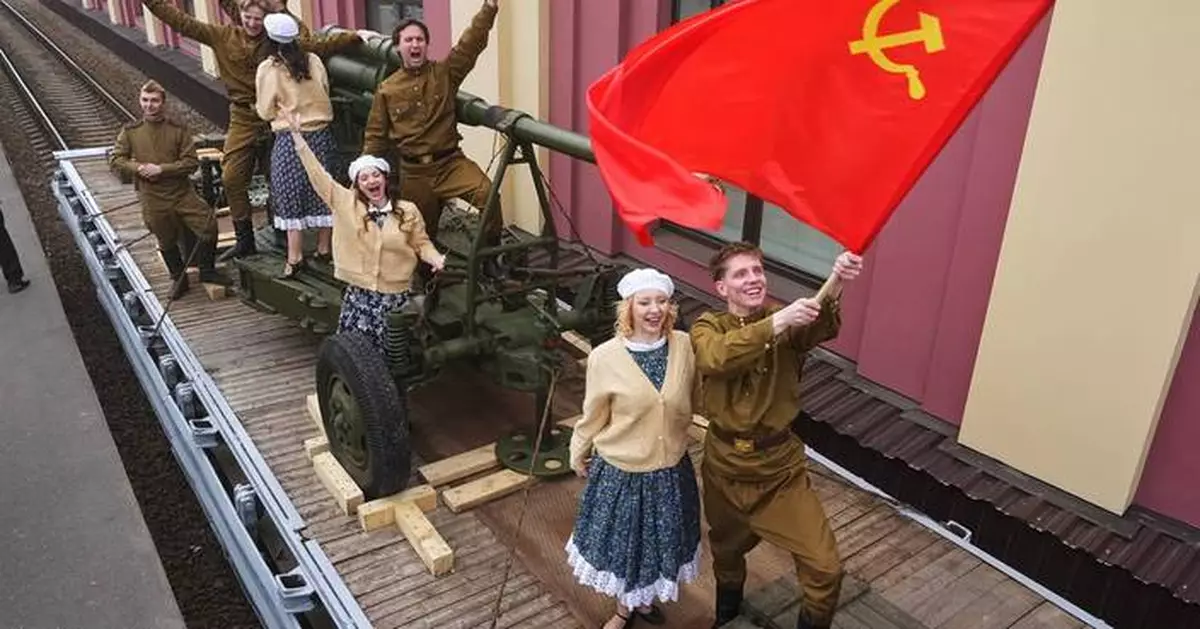
Actors attend a historical reenactment depicting the arrival of trains after the end of the war as a part of celebrations ahead of the 81st anniversary of the Soviet Union's victory over Nazi Germany during World War II, at the Baltiysky railway station in St. Petersburg, Russia, Thursday, May 7, 2026. (AP Photo/Dmitri Lovetsky)
The accusations reflect the deep-seated lack of trust between the two sides more than four years after Russia’s full-scale invasion of its neighbor. That has thwarted U.S.-led diplomatic efforts to find a peace settlement.
Ukraine's new drone and missile technology has helped it hit deep inside Russia frequently and accurately in recent months, especially major oil facilities.
Meanwhile, rumblings of unhappiness with some of the Kremlin’s wartime policies have put the spotlight on Russian President Vladimir Putin, who is due to make a speech on Saturday to mark Victory Day. It commemorates victory over Nazi Germany 81 years ago in World War II and has in the past provided an opportunity for fanfare and national fervor as well as showcasing Russia's military might.
This year is different.
The Russian Defense Ministry claimed Friday that its forces in Ukraine “completely ceased combat operations and remained at their previously occupied lines and positions” from midnight, when Putin’s unilateral ceasefire came into force.
But it accused Ukrainian forces of continuing to strike Russian positions as well as civilian infrastructure in border areas of the Belgorod and the Kursk regions.
Air defenses shot down 390 Ukrainian drones and six Neptune long-range guided missiles aimed at Russia after midnight, according to the ministry.
A Ukrainian drone strike hit the administrative building of the Southern Russia Air Navigation branch in Rostov-on-Don, forcing 13 airports in the south of the country to suspend operations, Russia’s Transport Ministry said. Flights resumed Friday afternoon.
Ukrainian President Volodymyr Zelenskyy had a different story. Russian forces continued attacking on the front line overnight, he said, while Ukrainian air defense forces shot down 56 Russian drones.
“All this clearly shows that there was not even a pretense of a ceasefire attempt from the Russian side,” Zelenskyy said.
Ukraine also claimed Friday more long-range strikes on Russian oil facilities. Zelenskyy said one hit the Yaroslavl region, more than 700 kilometers (400 miles) from the border, although he didn’t specify when the attack happened. Ukraine’s Security Service said a separate strike hit a major Russian oil refinery and pipeline pumping station in the Perm region, more than 1,500 kilometers (900 miles) away.
Putin, who has ruled Russia for more than 25 years, has used the USSR’s victory in World War II to rally support for him and the war in Ukraine, as well as to project Russia’s global clout.
That made it surprising that the traditional parade will take place without tanks, missiles and other military equipment, aside from war planes in a traditional flyover, for the first time in nearly two decades. Officials put the move down to the “current operational situation,” without elaborating.
Russia’s bigger and better-equipped army has been engaged in a slow, hard slog in Ukraine. The February 2022 invasion was supposed to deliver a quick win for the Kremlin.
Ukraine’s long-range attacks deep inside Russia are rattling the Kremlin. The attacks are targeting Russian oil production as well as manufacturing plants and military depots.
Some Russians are disgruntled about internet censorship and government control over online activities, including the blocking of the popular messaging app Telegram.
All mobile internet access and text messaging services will be restricted in Moscow on Saturday, according to the Ministry of Digital Development, Communications and Mass Media. It said the drastic measures were to ensure public safety
The restrictions will apply to websites on the Russian government’s “white list,” a group of state-approved online services that are kept available during the country’s increasingly common connectivity blackouts. Home internet and Wi-Fi will be unaffected, authorities said.
“A military parade is intended as a demonstration of strength and bravery, but if it is held furtively ... and with the internet jammed (to reduce the chances of a Ukrainian attack drone being able to navigate to the site), it demonstrates nothing but fear and weakness,” Alexander Baunov of the Carnegie Russia Eurasia Center, a Berlin-based think tank, wrote in an analysis this week.
Russian officials have repeatedly warned that Moscow would take decisive action — including a potential mass strike on Kyiv — if Ukrainian attacks disrupt official events scheduled for Saturday.
“We have strengthened our focus on the possibility of retaliatory measures,” presidential aide Yuri Ushakov told journalists Thursday.
Russia’s Foreign Ministry advised foreign embassies and international organizations located in Kyiv to evacuate their offices in case such a strike did take place, and the Defense Ministry urged civilians to evacuate, too.
Zelenskyy, meanwhile, expressed surprise that foreign dignitaries would be going to Moscow for the commemorations.
Malaysia’s King Sultan Ibrahim Iskandar, Laos President Thongloun Sisoulith, Kazakh President Kassym-Jomart Tokayev and Belarus’ authoritarian leader Alexander Lukashenko were due in the Russian capital. Prime Minister Robert Fico of Slovakia, a European Union member, was to meet with Putin and lay flowers at the Tomb of the Unknown Soldier memorial just outside the Kremlin walls but stay away from the Red Square parade.
AP reporter Hanna Arhirova contributed to this story from Kyiv, Ukraine.
Follow AP’s coverage of the war in Ukraine at https://apnews.com/hub/russia-ukraine
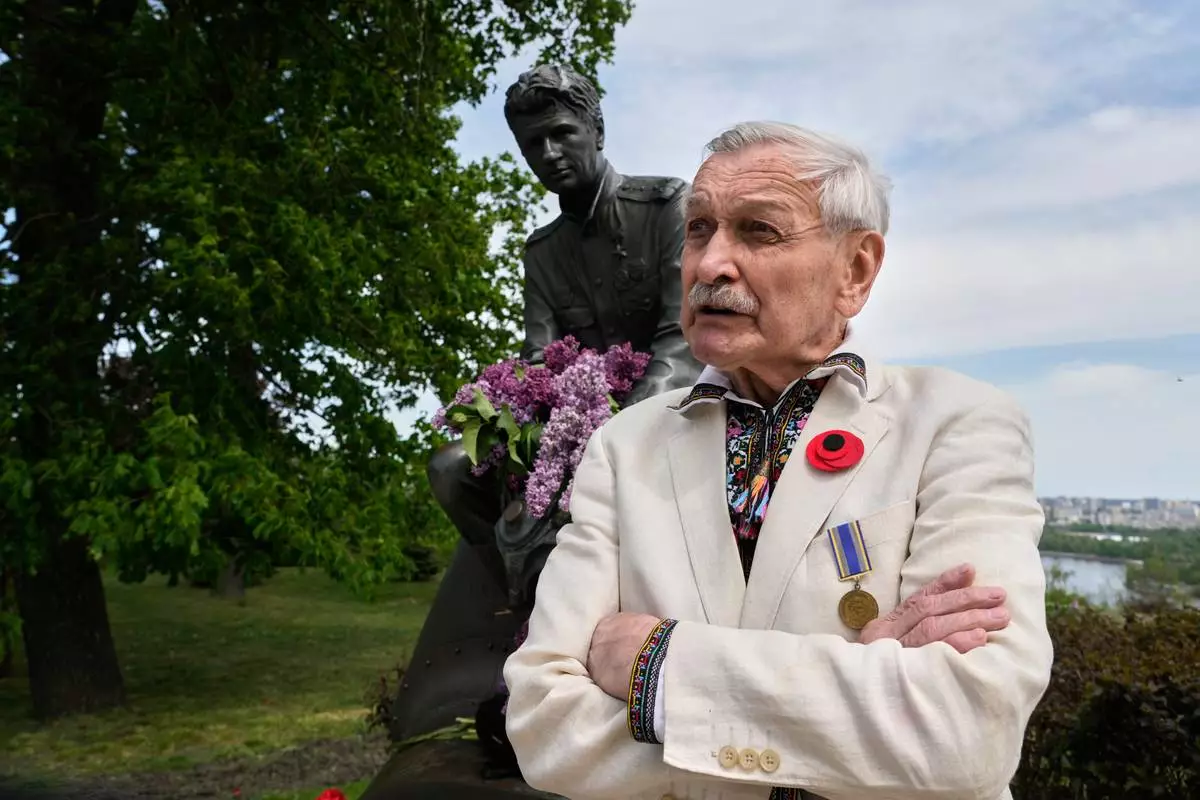
Famous Ukrainian actor Volodymyr Talashko looks on at a monument to pilots to mark Victory Day in World War II, in Kyiv, Ukraine, Tuesday, May 8, 2026, as the Russian attack on Ukraine continues. (AP Photo/Efrem Lukatsky)
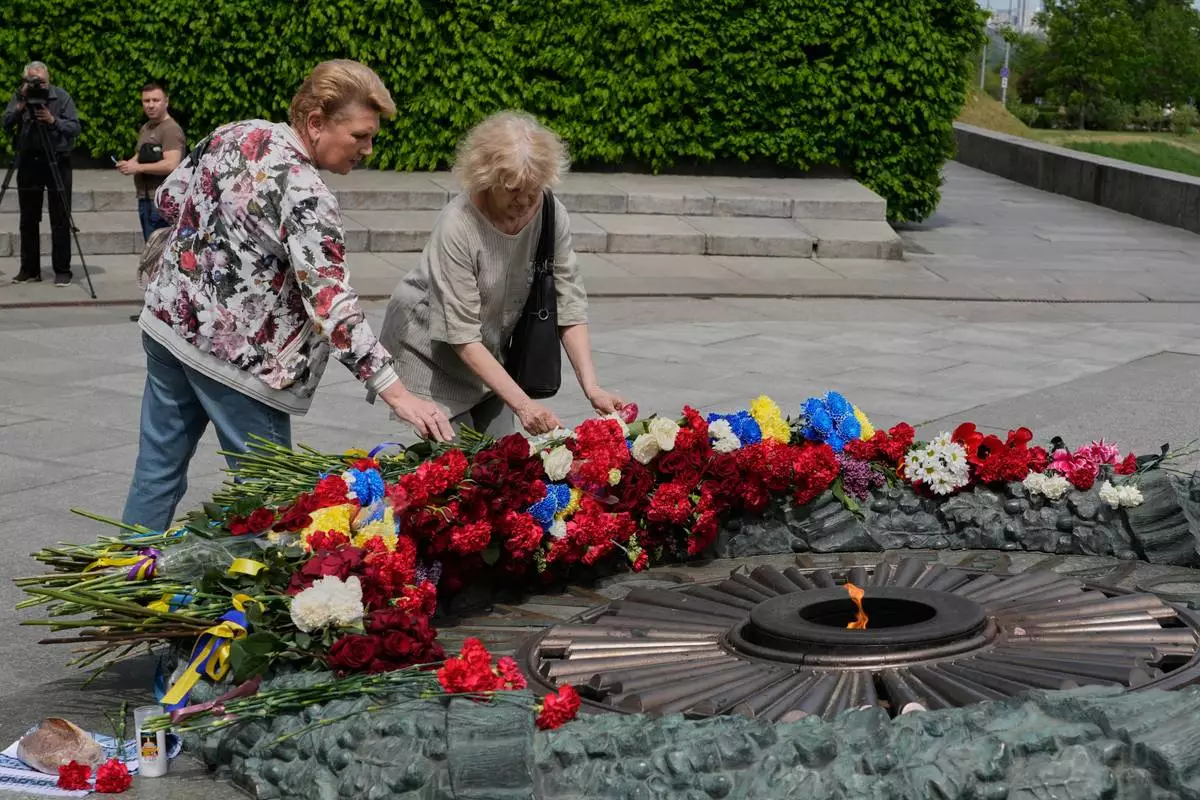
People lays flowers to the monument of the Unknown Soldier to mark Victory Day in World War II, in Kyiv, Ukraine, Tuesday, May 8, 2026. (AP Photo/Efrem Lukatsky)
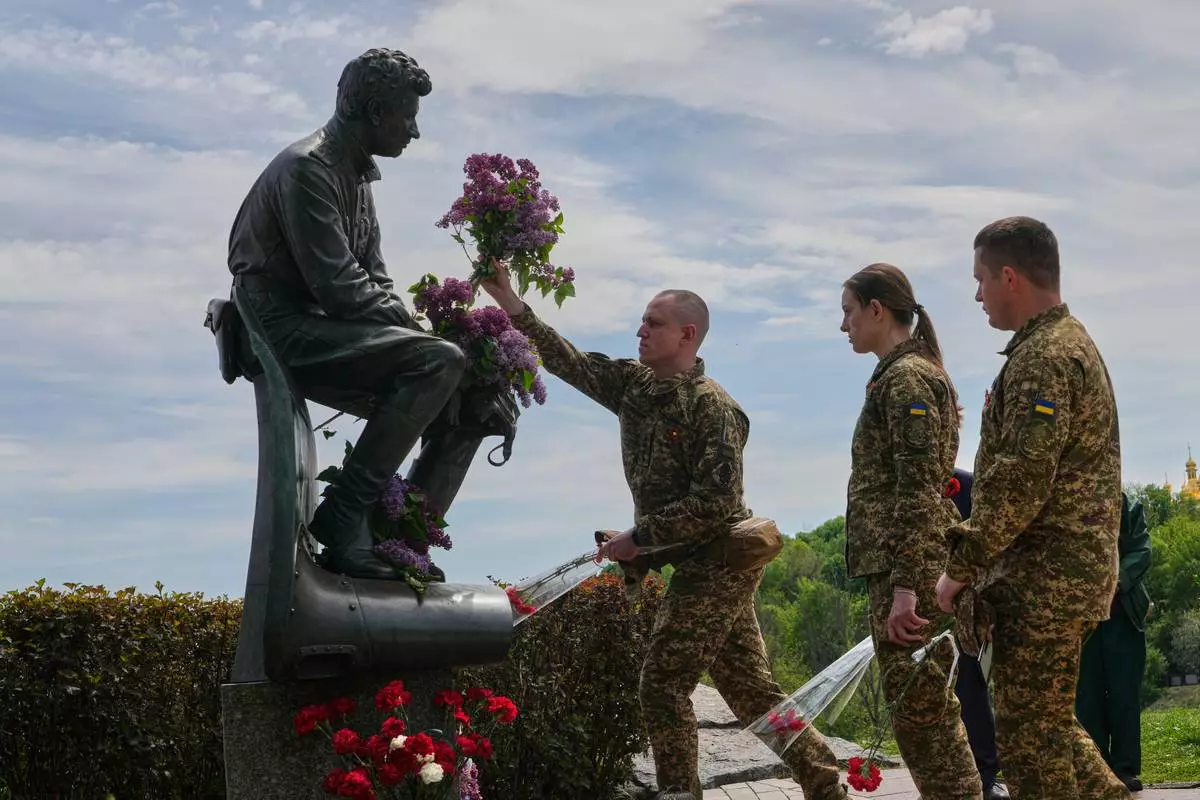
Ukrainian army officers lay flowers at a monument to pilots to mark Victory Day in World War II, in Kyiv, Ukraine, Friday, May 8, 2026, as the Russian attack on Ukraine continues. (AP Photo/Efrem Lukatsky)
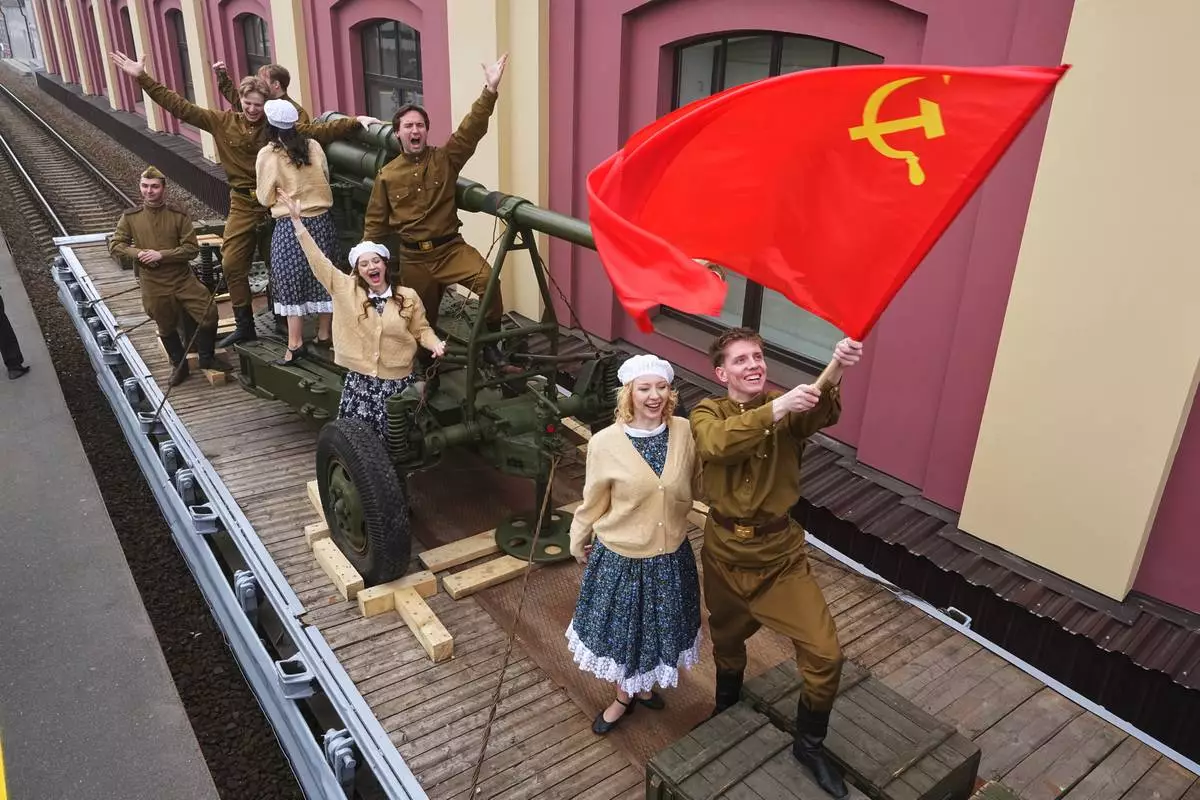
Actors attend a historical reenactment depicting the arrival of trains after the end of the war as a part of celebrations ahead of the 81st anniversary of the Soviet Union's victory over Nazi Germany during World War II, at the Baltiysky railway station in St. Petersburg, Russia, Thursday, May 7, 2026. (AP Photo/Dmitri Lovetsky)