Health and wellness advice is available in abundance on social media — from trendy to informative to straight-up disinformation — and you're far from alone in seeing it.
A new survey by the Pew Research Center finds that about 4 in 10 U.S. adults — and around half of those under 50 — get health information from social media or podcasts.
Researchers also looked at the social media profiles of 6,828 health and wellness influencers with at least 100,000 followers. Only about 4 in 10 list a background as a health professional. About one-third called themselves coaches, about 3 in 10 described themselves as entrepreneurs and about 1 in 10 cited their own life experience, like being a parent.
Despite the wide range of expertise, about half of people who get health and wellness information from influencers said the influencers help them better understand their own health, while about one-third said it hasn't made much difference. About 1 in 10 said it made them more confused.
Experts say a bit of skepticism is key to interacting with posts about fitness, mental health and personal health. Here are their tips on how to be a smarter consumer.
Experts said the biggest green flag is when an influencer's credentials are easy to find on their profile. Beware the fill-in-the-blank “coach” who can't prove their training.
Courtney Babilya, a certified medical exercise specialist and personal trainer who has more than 430,000 followers on Instagram, has seen this with maternity content: "Someone has a baby and suddenly they’re a pregnancy coach.”
“We have to be careful with people who have an experience in one thing and suddenly become a ‘coach’ on that,” she said.
Coach is a business model, not a sign of training. Babilya shares her own experience dealing with chronic illness online, but keeps it separate from her professional advice.
"You do have an obligation to make sure that you are not giving someone a false idea or spreading a message that isn’t going to be applicable to everyone," she said.
If it brings up big emotions, pause. For people who can't access care or feel unheard by their doctors, an offbeat opinion could feel like a long-sought answer. The Pew survey found 53% of uninsured people got health information from social media, compared to 38% of those who were insured.
But people who are trying to share good medical information online are not trying to incite fear or surprise, said Dr. Fatima Daoud Yilmaz, an OB-GYN at Stony Brook Medicine in New York, whose popular “Feminine Aisle” video series rates drug store products.
Even if the person has expertise, ask yourself: Are they speaking outside the scope of their knowledge? Is what they're saying in line with scientific consensus?
“All opinions are not created equal when it comes to something such as health or medicine or science,” said Daoud.
Look out for exaggerated or definitive claims, especially in the first few seconds of the video when influencers are trying hard to grab your attention, added Babilya.
Ambivalent wording is a good sign, said Nedra Glover Tawwab, a practicing therapist and author. In her videos on boundaries and mental health, she couches with “maybe,” “sometimes,” “perhaps," rather than diagnosing her 1.8 million followers on Instagram.
If you feel like you've found a diagnosis online, that is your sign to seek out a professional, Tawwab said.
People on social media are making money — for some, it is their livelihood.
“It doesn’t mean that all of the information that they put out is biased, but it should tell consumers of that information to take it with a grain of salt because they do have financial incentive to be pushing information like this,” Daoud said.
Babilya's platform is now a full-time job, and the way she helps support her family. Taking partnerships and brand deals was not an easy decision, but one that makes her work sustainable.
Babilya said she prioritizes being upfront with her audience and making sure her ads are transparently labeled.
Experts also recommend pausing to check the video’s sources. Look for gold standard science. Some posts are not well fact-checked, Babilya warned, citing studies that have nothing to do with what the influencer says it does.
Use the same standard as when you’re vetting a purchase online. Look at the larger conversation around the advice as you would reading product reviews, Tawwab said.
Two-thirds of users said they just happen to come across the content rather than seeking it out, according to the Pew survey.
If you want to control your feed, it will take time and ongoing effort, said Ash Milton of the University of Minnesota, who studies how users navigate online mental health information.
“You have to work for it because the algorithm is designed to be passive consumption,” Milton said.
You can use “Hidden Words” on Instagram or “Not Interested” on TikTok to filter out certain content, though Milton notes TikTok might not know exactly what in the video you're not interested in. Use your own reaction as a barometer to limit content by asking yourself: Is the health information actually applicable and helpful to your life, or just relatable?
Confirm with a trusted health professional before acting on anything you see online.
Influencers can say anything while medical professionals are ethically and legally liable for your care, and “may face professional and personal consequences for the advice that they give you," Daoud said.
“Ultimately, talk to the medical provider who knows you,” she said.
The Associated Press Health and Science Department receives support from the Howard Hughes Medical Institute’s Department of Science Education and the Robert Wood Johnson Foundation. The AP is solely responsible for all content.

FILE - Young people use their phones to view social media in Sydney, Nov. 8, 2024. (AP Photo/Rick Rycroft, File)
LONDON (AP) — British Prime Minister Keir Starmer pledged revive his struggling government but faced growing calls to resign after a disastrous set of local and regional elections for his Labour Party.
As the final results came in Saturday, Labour had lost 1,000 local council seats across England and was booted from power in Wales after 27 years. Anti-immigration party Reform UK won almost 1,300 seats across England, came second in Wales and made significant gains in Scotland.
It was a blunt verdict from voters in elections widely seen as an unofficial referendum on Starmer, whose popularity has plummeted since he led the center-left party to power less than two years ago.
Here are five things we’ve learned from the elections.
Starmer insisted he would not walk away and "plunge the country into chaos,” and the dire election results did not produce an immediate challenge to his leadership.
"The right thing to do is rebuild and show the path forward," Starmer said Saturday. “That’s what I’m going to do in the coming days.”
Starmer’s Cabinet colleagues expressed support, and none of the high-profile Labour politicians considered potential challengers has made a move. Health Secretary Wes Streeting, former Deputy Prime Minister Angela Rayner and Greater Manchester Mayor Andy Burnham are keeping quiet for now.
But a growing number of Labour lawmakers urged the prime minister to set a timetable for his departure this year. British politics allows parties to change leader midterm without the need for a new election.
“There has to be a timetable,” legislator Clive Betts told the BBC. Another lawmaker, Tony Vaughan, said there should be an “orderly transition of leadership.”
Starmer tried to demonstrate change on Saturday by bringing back two figures from past Labour governments. He made former Prime Minister Gordon Brown a special envoy on global finance, and appointed the party's ex-deputy leader Harriet Harman an adviser on women and girls.
Starmer is due to make a speech on Monday in an attempt to regain momentum, before the government sets out its legislative plans on Wednesday in a speech delivered by King Charles III at the State Opening of Parliament.
The elections were a breakthrough for Reform UK, the latest hard-right party led by the veteran nationalist politician Nigel Farage.
Running on an anti-establishment and anti-immigration message, the party won hundreds of local council seats in working-class areas in England’s north, such as Sunderland, that were solid Labour turf for decades. It also made gains from the Conservatives in areas like the county of Essex, east of London.
Farage said the results marked a “historic change in British politics.” He said he's confident that “voters who have come to us are not doing it as a short-term protest.”
Reform UK currently holds just eight of the 650 seats in Parliament and it’s unclear whether it could repeat its success in a national election.
The elections produced semiautonomous administrations in Scotland and Wales led by parties devoted to independence and the breakup of the United Kingdom — though neither has that policy on the front burner.
The Scottish National Party, which has governed in Edinburgh since 2007, won another term but fell short of a majority, meaning an independence referendum is unlikely. Labour and Reform tied in a distant second place.
Plaid Cymru (The Party of Wales) won the most seats in the Cardiff-based legislature, the Senedd. The party, which has an ambition for Wales to leave the U.K. but no plan to do so anytime soon, fell short of a majority but will likely form the new government. Reform came second and Labour a distant third in one of its most historic heartlands, with outgoing First Minister Eluned Morgan losing her seat.
The economy lies at the heart of Labour’s troubles, as it does for many incumbent governments.
Since ending 14 years of Conservative rule roiled by austerity and the COVID-19 pandemic, Labour has struggled to ease the cost of living and jump-start a sluggish economy against the tough economic backdrop of war in Ukraine and, more recently, Iran. Starmer also has angered supporters with attempts to cut welfare spending, some of which were reversed after Labour revolts.
Some in Labour say the government's achievements, including protections for renters and a higher minimum wage, are going unnoticed. Many blame Starmer, an uninspiring leader distracted by scandals including his disastrous decision to appoint Peter Mandelson, a scandal-tarnished friend of Jeffrey Epstein, as Britain’s ambassador to Washington.
But Stephen Houghton, the outgoing leader of Barnsley council in northern England, where Labour lost to Reform, said the problem “goes deeper than the prime minister.”
“This has been coming for 30 years around the country, in post-industrial communities, coastal communities, that have been left behind,” he said. “You can change prime ministers all day long. If you don’t change policy, it’s not going to charge.”
The results reflect a fragmentation of U.K. politics after decades of domination by Labour and the Conservative Party, which also suffered major losses on Thursday.
The elections offered voters a rainbow of choices, including the centrist Liberal Democrats and the nationalist parties in Scotland and Wales.
But the big winners were populist insurgents, Reform UK and the Green Party, whose focus has expanded from the environment to social justice and the Palestinian cause under self-described “eco populist” leader Zack Polanski. The Greens won hundreds of council seats from Labour in urban centers and university towns and took control of several local authorities.
Tony Travers, professor of government at the London School of Economics, said the results suggest the next national election, due by 2029, won’t produce a majority for any party.
“So then you’re in the world of, after the election, two or three big minority parties trying to work out how they would govern,” he said — something traditionally considered “very un-British.”
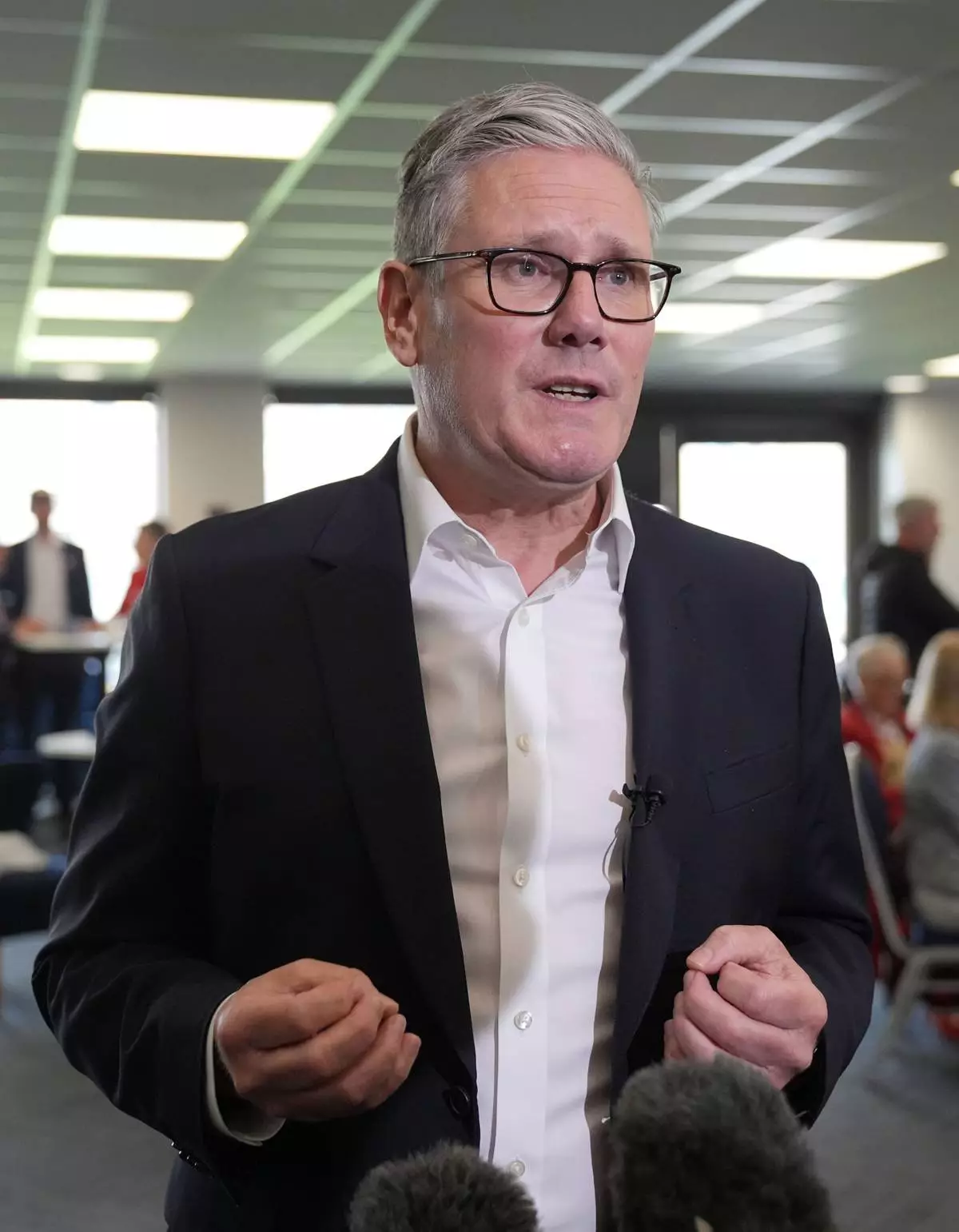
British Prime Minister Sir Keir Starmer speaking to the media after meeting Labour Party members during a visit to AFC Wimbledon in south London, Saturday May 9, 2026. (Maja Smiejkowska/PA via AP)
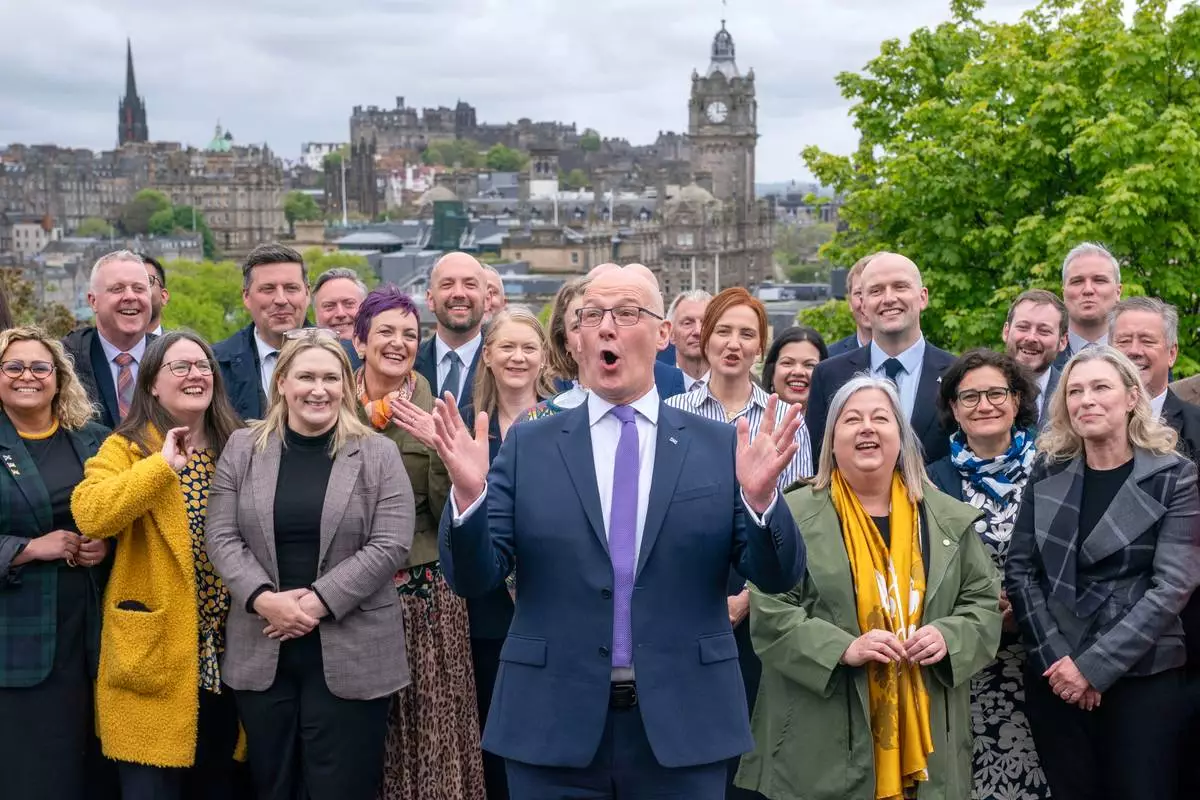
First Minister and SNP leader John Swinney with some of the newly elected SNP MSPs in Edinburgh, Saturday May 9, 2026, following the 2026 Holyrood elections. (Jane Barlow/PA via AP)
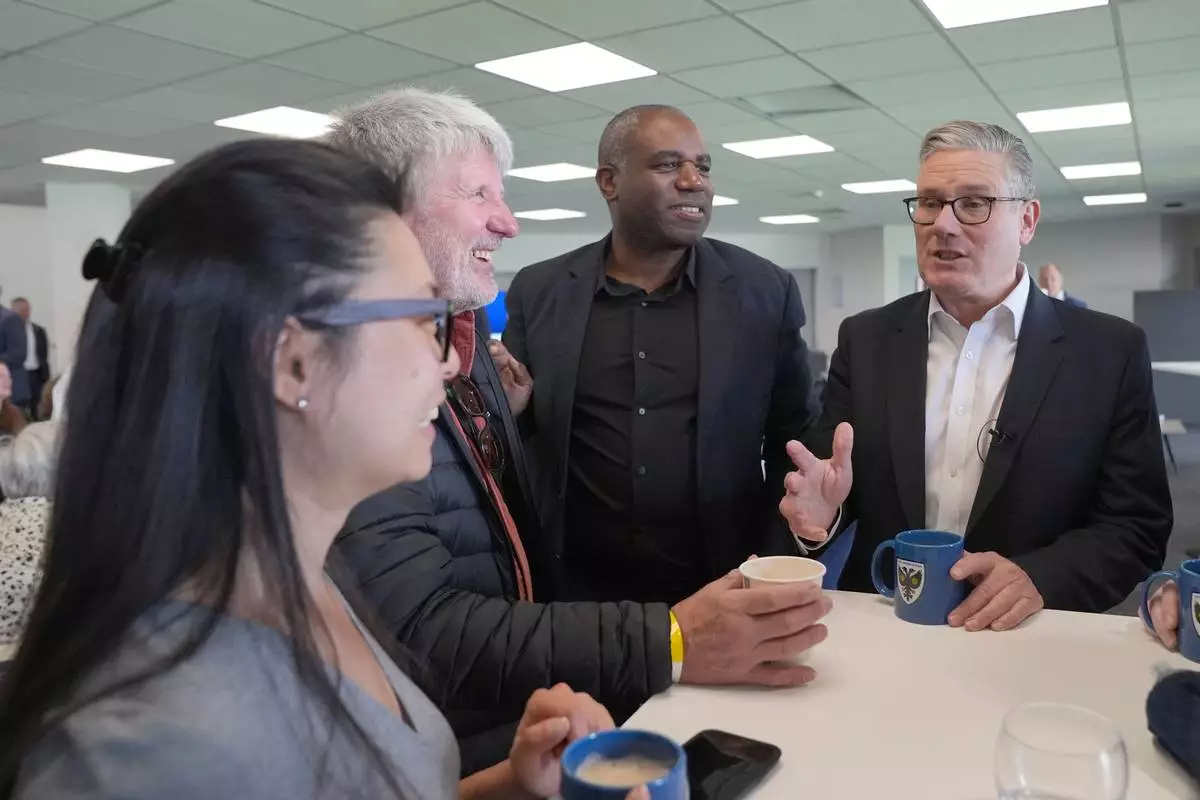
British Prime Minister Sir Keir Starmer and Foreign Secretary David Lammy meeting Labour Party members during a visit to AFC Wimbledon in south London, Saturday May 9, 2026. (Maja Smiejkowska/PA via AP)
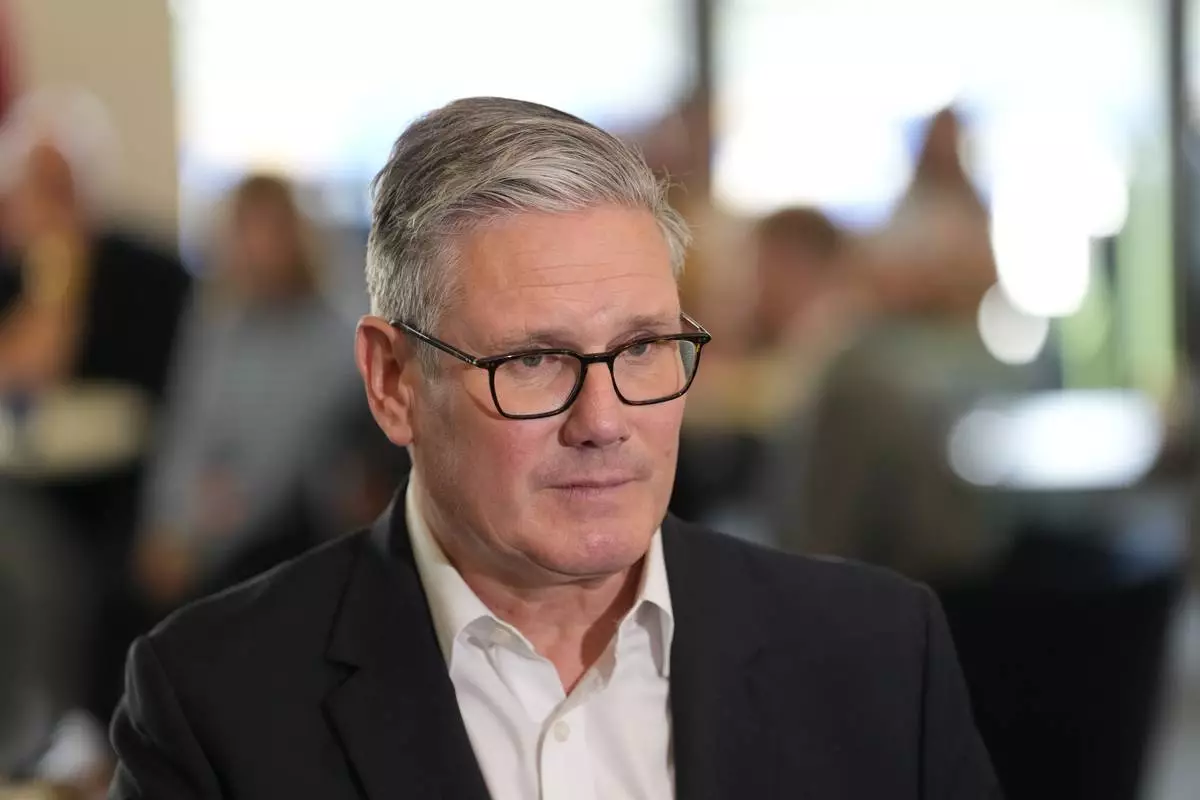
British Prime Minister Sir Keir Starmer speaking to the media after meeting Labour Party members during a visit to AFC Wimbledon in south London, Saturday May 9, 2026. (Maja Smiejkowska/PA via AP)
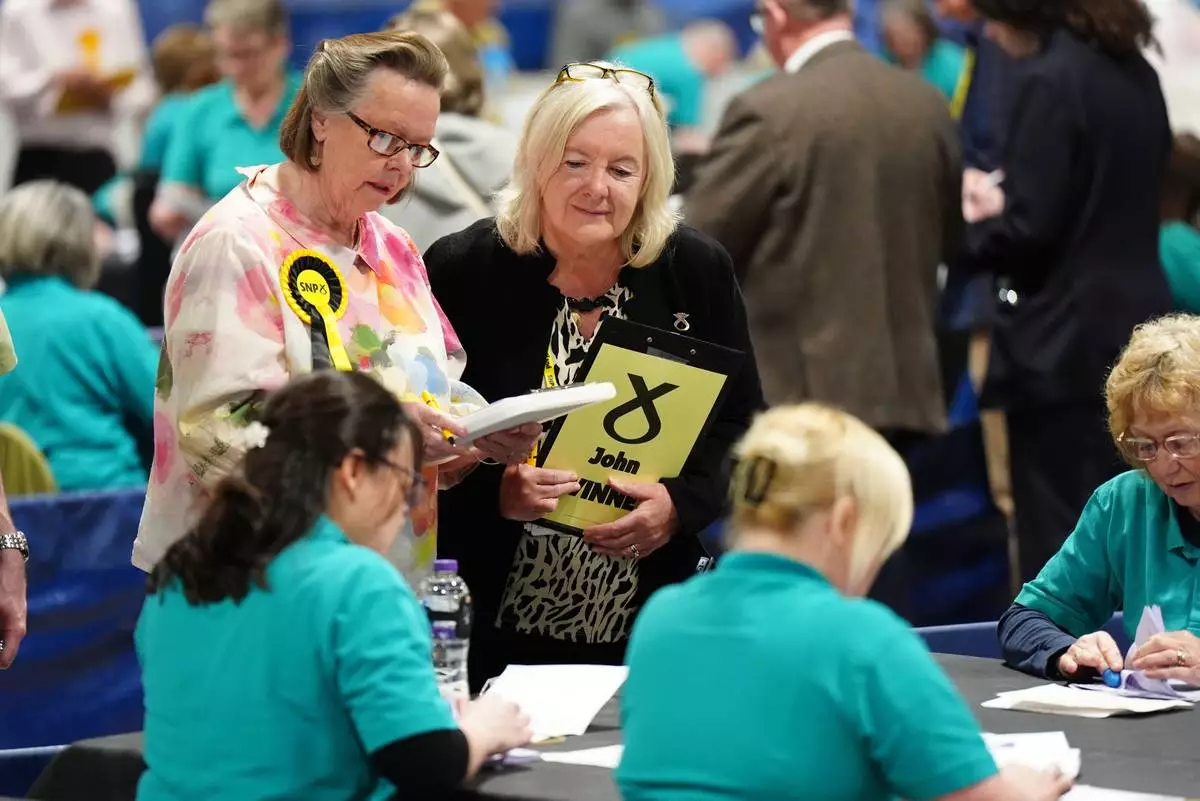
Observers from the Scottish National Party (SNP) watch as votes are counted for the 2026 Holyrood elections, at Dewars Centre in Perth, Scotland, Friday May 8, 2026. (Jane Barlow/PA via AP)
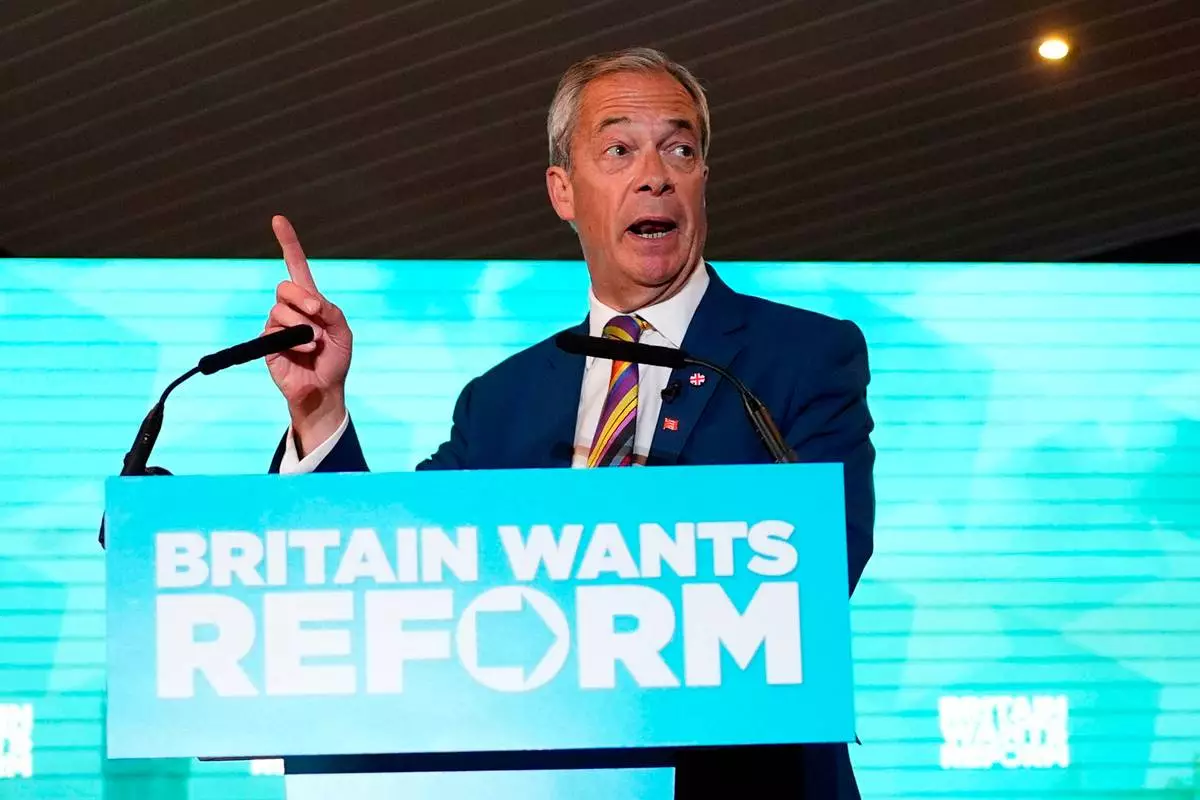
Reform UK leader Nigel Farage speaks to supporters at Chelmsford City Racecourse, Friday May 8, 2026, in Essex, England, following the 2026 local election results. (Jordan Pettitt/PA via AP)
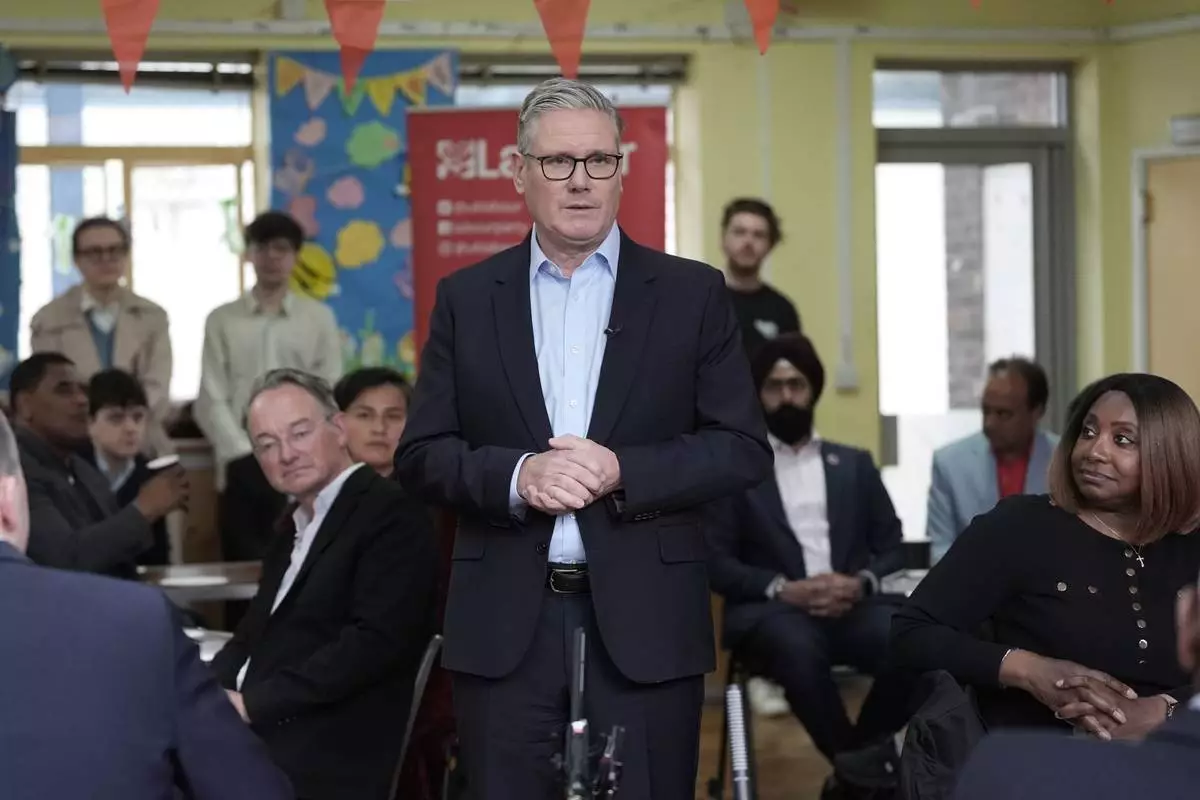
Britain's Prime Minister Sir Keir Starmer speaks to Labour Party members at Kingsdown Methodist Church Hall, in Ealing, west London, Friday May 8, 2026, a day after the local elections. (Stefan Rousseau/PA via AP)