In 2025, the Food & Environmental Hygiene Department (FEHD) cracked a case of illegal goat slaughtering. The premises involved were located in a remote rural area and concealed from view. Accordingly, a key factor in foiling the perpetrators was the use of aerial intelligence.

Aerial surveillance : The FEHD cracked a case of illegal goat slaughtering last year, with drones serving as a key investigative tool. Image source: www.news.gov.hk

Officers used drones to capture footage, then cross-referenced this with aerial photographs taken by the Lands Department. This allowed them to identify suspicious locations.
Click to Gallery
Aerial surveillance : The FEHD cracked a case of illegal goat slaughtering last year, with drones serving as a key investigative tool. Image source: www.news.gov.hk
Risk reduction: FEHD Senior Superintendent (Operations) Lo Chi-man says that operatives using traditional detection methods faced greater safety risks. The deployment of drones can therefore improve staff safety while boosting efficiency. Image source: www.news.gov.hk

Enhanced efficiency: FEHD Senior Superintendent (Innovation & Technology) Kuan Man-hou says adopting an automated inspection system will allow the department to analyse street cleanliness more quickly and accurately. Image source: www.news.gov.hk

Phased trials: Electrical & Mechanical Services Department Senior Engineer (Drones, Robotics & Automation) Vanessa Yau says her team is seeking operational approval from the Civil Aviation Department for drone use. Image source: www.news.gov.hk

Joint project: The FEHD is working with the Electrical & Mechanical Services Department to study the feasibility of using drones to support street cleanliness inspections. Image source: www.news.gov.hk

The FEHD outlined that using drones to collect evidence reduces the need for manned patrols, boosts efforts to combat illegal slaughtering activities, illegal meat distribution centres and unlicensed food premises, and improves staff safety.
Expanded capabilities
Explaining the limitations of traditional methods, Food & Environmental Hygiene Department Senior Superintendent (Operations) Lo Chi-man remarked: “Relying solely on manpower-based patrols, plain-clothes operatives could only conduct surveillance in the vicinity of the target premises. Operatives also faced significant safety risks such as potential violence, aggressive dogs and structural hazards.”
After the introduction of drones, however, intelligence can now be gathered at high altitude, adopting a bird’s eye view. This allows operatives to clearly map entry or exit points, personnel distribution, suspicious vehicle locations and escape routes in advance.
Risk reduction: FEHD Senior Superintendent (Operations) Lo Chi-man says that operatives using traditional detection methods faced greater safety risks. The deployment of drones can therefore improve staff safety while boosting efficiency. Image source: www.news.gov.hk
Smart inspections
Beyond intelligence gathering, the FEHD has been working with the Electrical & Mechanical Services Department since 2025 to study the feasibility of using drones to support street cleanliness inspections.
Under planned trials, drones will conduct automated aerial patrols along pre-set routes in order to detect accumulated rubbish, overflowing litter bins and damaged refuse collection facilities. The captured images will then be analysed using artificial intelligence, enabling the FEHD to arrange timely follow-up actions.
Enhanced efficiency: FEHD Senior Superintendent (Innovation & Technology) Kuan Man-hou says adopting an automated inspection system will allow the department to analyse street cleanliness more quickly and accurately. Image source: www.news.gov.hk
Food & Environmental Hygiene Department Senior Superintendent (Innovation & Technology) Kuan Man-hou highlighted that street cleaning inspections largely depend on frontline staff making in-person site visits. Officers are required to carry out visual checks and take photos to record conditions. However, some locations are remote and transport can be inconvenient, so the trips are often time-consuming.
With the automated inspection system, however, the FEHD will be able to analyse street cleanliness more quickly and accurately, enabling more effective deployment of manpower and resources.
Drone docking stations are expected to be installed on top of public toilets managed by the FEHD, serving as bases for take-off, landing and charging. The team revealed that flight tests for the project will commence soon.
Phased trials: Electrical & Mechanical Services Department Senior Engineer (Drones, Robotics & Automation) Vanessa Yau says her team is seeking operational approval from the Civil Aviation Department for drone use. Image source: www.news.gov.hk
Phased trials
Electrical & Mechanical Services Department Senior Engineer (Drones, Robotics & Automation) Vanessa Yau said her team is applying to the Civil Aviation Department for operational approvals.
”The trials will be conducted in two main stages. In the first stage, flights under visual line of sight and extended visual line of sight will be tested. Once stable performance is achieved, beyond-visual-line-of-sight operations will be tested for fully automated aerial patrols.”
Joint project: The FEHD is working with the Electrical & Mechanical Services Department to study the feasibility of using drones to support street cleanliness inspections. Image source: www.news.gov.hk

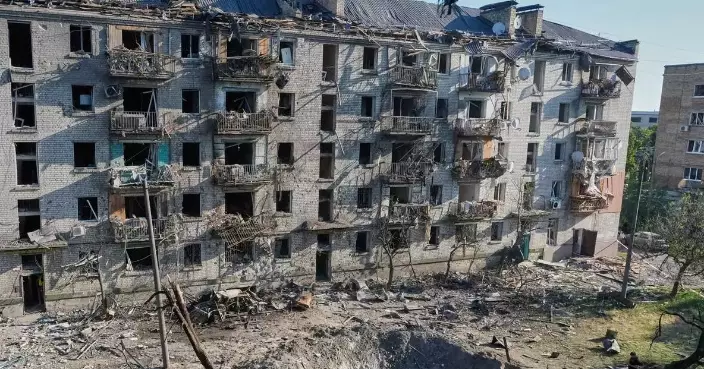
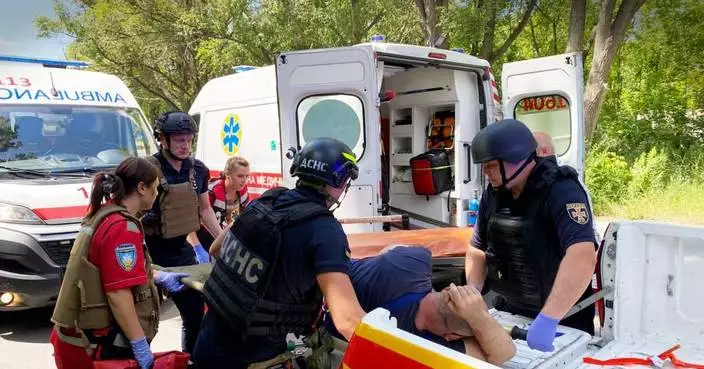
KYIV, Ukraine (AP) — Russian drone and missile strikes carried out overnight and later on Tuesday killed at least 22 people and wounded more than 80 others, Ukrainian authorities said, hours before Kyiv was due to enact a ceasefire and three days before Moscow promised its own pause in hostilities.
On Tuesday afternoon, powerful Russian glide bombs smashed into the eastern city of Kramatorsk, the southern city of Zaporizhzhia and the northern city of Chernihiv, killing at least 17 civilians and wounding 45 others, officials said.
Attacks the previous night killed five people and wounded 39, according to authorities.
President Volodymyr Zelenskyy rebuked Moscow for what he said was its “utter cynicism” in launching the attacks after Russia announced a unilateral ceasefire over two days later this week while it marks the 81st anniversary of the defeat of Nazi Germany in World War II.
“Russia could cease fire at any moment, and this would stop the war and our responses,” Zelenskyy said in a post on X. “Peace is needed, and real steps are needed to achieve it. Ukraine will act in kind.”
The Russian Defense Ministry declared a unilateral ceasefire in Ukraine for Friday and Saturday, but said that it would strike back at the country, if it tries to disrupt the festivities on Victory Day, which Russia marks annually on May 9.
Zelenskyy replied that Ukraine would observe a ceasefire beginning at the end of Tuesday and would respond in kind to Russia’s actions from that moment on. He didn’t put an end date on the move.
U.N. Secretary-General António Guterres welcomed the unilateral ceasefires and “looks forward to their successful implementation,” U.N. spokesman Stephane Dujarric said. The U.N. chief reiterated his call for "a full, immediate, unconditional and lasting ceasefire, leading to a just, comprehensive, and sustainable peace, in line with the U.N. Charter, international law and relevant U.N. resolutions.”
Moscow's proposal to stop fighting follows a familiar pattern of Russia declaring short unilateral ceasefires during the war timed to various holidays, most recently Orthodox Easter. Those suspensions of combat don't produce any tangible results amid deep mistrust between Moscow and Kyiv more than four years after Russia launched an all-out invasion of its neighbor. U.S.-led diplomatic efforts to stop the war have come to nothing.
Zelenskyy was in Bahrain on Tuesday where he met with King Hamad bin Isa Al Khalifa, proposing a bilateral drone defense partnership amid the Iran war.
The Ukrainian leader said that he offered to share Ukraine’s air defense expertise with Bahrain, drawing a parallel between Iranian attacks on Gulf states and Russia’s daily aerial strikes on Ukrainian territory, which often use Shahed drones initially developed by Iran.
Zelenskyy said last month that Ukrainian officials are helping Saudi Arabia, United Arab Emirates, Qatar, Kuwait and Jordan with drone expertise and air defense.
Russian forces fired 11 Iskander-M ballistic missiles and 164 strike drones at Ukraine overnight from Monday to Tuesday, including a jet-powered Shahed drone variant, the Ukrainian Air Force said.
Air defense units stopped 149 drones and one missile, but others got through, it said. Two ballistic missiles failed to reach their targets, the air force said without elaborating.
Russia has repeatedly hammered Ukraine’s energy infrastructure during the war, which began on Feb. 24, 2022. It hit natural gas production facilities in Ukraine’s central Poltava and northeastern Kharkiv regions, state energy company Naftogaz Group said.
Since the start of the year, Naftogaz facilities have come under attack 107 times, the company said.
Zelenskyy said that the Poltava attack was “especially vile,” because Russia launched a second missile at the same target when emergency rescuers were working at the scene.
Ukrainian Prime Minister Yulia Svyrydenko said that Russia’s main targets were energy facilities, oil and gas infrastructure, railways and industrial sites, although the attacks also damaged homes, businesses and the transportation network.
Russia’s ceasefire proposals “remain only statements,” Svyrydenko said.
Ukraine also kept up the pace of its long-range attacks on Russian rear areas, apparently aiming at more oil facilities in an effort to further disrupt Moscow's war economy.
Russia’s Defense Ministry said that its forces destroyed 289 Ukrainian drones overnight in 18 Russian regions. Drones were also intercepted over the occupied Crimean Peninsula, which Russia annexed from Ukraine in 2014, and over the Azov Sea, it said.
During the night, Ukraine launched its F-5 Flamingo cruise missiles at targets, including military-industrial complex facilities in Cheboksary, located more than 1,500 kilometers (900 miles) away, Zelenskyy said.
The plant supplied navigation components for the Russian navy, the missile industry, aviation and armored vehicles, he said.
The regional health ministry said that a Ukrainian drone attack wounded three people in the city of Cheboksary.
Ukrainian drones also attacked the Kirishi oil refinery in the Leningrad region close to St. Petersburg, sparking a blaze in the town’s industrial zone, regional Gov. Alexander Drozdenko said.
Drozdenko said on social media that 29 Ukrainian drones had been shot down during the attack. No casualties were reported.
Ukraine doubled its midrange strikes on Russia in April compared with March and quadrupled them compared with February, according to a monthly battlefield report from Ukrainian Defense Minister Mykhailo Fedorov published Tuesday.
The midrange attacks were focused on enemy warehouses, command posts, air defense systems and supply lines up to about 100 miles (160 kilometers) behind the front line.
Also, Ukrainian ground robots completed 10,281 resupply and evacuation missions in April, an average of almost 343 per day, according to Fedorov.
It wasn't possible to independently confirm the claims.
Follow the AP’s coverage of the war in Ukraine at https://apnews.com/hub/russia-ukraine
This photo provided by Ukraine's 93rd Kholodnyi Yar Separate Mechanized Brigade press service, shows the site of an aerial guided bomb strike after Russia's air attack in Kramatorsk, Donetsk region, Ukraine, Tuesday, May 5, 2026. (Iryna Rybakova/Ukraine's 93rd Mechanized Brigade via AP)
In this photo provided by Ukraine's 93rd Kholodnyi Yar Separate Mechanized Brigade press service, a man covers bodies of civilians killed in Russia's aerial guided bomb attack in Kramatorsk, Donetsk region, Ukraine, Tuesday, May 5, 2026. (Iryna Rybakova/Ukraine's 93rd Mechanized Brigade via AP)
In this photo provided by Ukraine's 93rd Kholodnyi Yar Separate Mechanized Brigade press service, people cover bodies of civilians killed in Russia's aerial guided bomb attack in Kramatorsk, Donetsk region, Ukraine, Tuesday, May 5, 2026. (Iryna Rybakova/Ukraine's 93rd Mechanized Brigade via AP)
Ukraine's President Volodymyr Zelenskyy speaks with the media as he arrives for a meeting of the European Political Community in Yerevan, Armenia, Monday, May 4, 2026. (AP Photo/Anthony Pizzoferrato)
In this photo, provided by the Ukrainian Emergency Service, emergency services personnel work to extinguish a fire a vehicle following a Russian drone attack in Kyiv region, Ukraine, Tuesday, May 5, 2026. (Ukrainian Emergency Service via AP)