JAKARTA, Indonesia (AP) — Rescuers on Indonesia ’s remote island of Halmahera found the bodies of two Singaporean hikers on Sunday, two days after they were caught in a volcanic eruption on Mount Dukono, officials said.
The bodies of the men, aged 30 and 27, were located a few meters (yards) from where the first victim, an Indonesian female hiker, was found dead on Saturday, Abdul Muhari, the National Disaster Management Agency’s spokesperson, said. All three had been about 50 meters (165 feet) from the rim of the main crater.
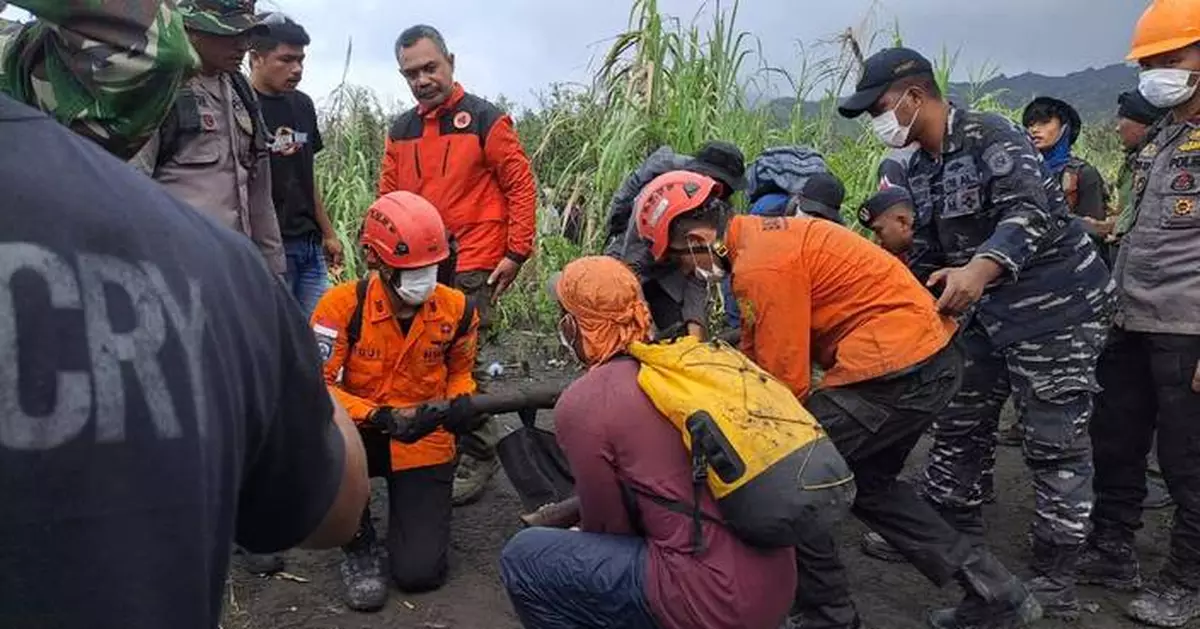
The men's bodies were covered by thick layers of volcanic material, Muhari said, adding that the densely packed material had complicated evacuation efforts and significantly slowed progress.
“The bodies were buried under deep, densely packed volcanic material that is difficult to dig through,” Muhari said, “Rescue teams must proceed cautiously to ensure safety.”
The trio were among 20 hikers who set out to ascend the 1,355-meter (4,445-foot) volcano, in North Maluku province, in defiance of safety restrictions. They became stranded when Dukono erupted early Friday, spewing a thick ash column that rose about 10 kilometers (6 miles) into the air.
Seventeen people were safely evacuated hours after the eruption, including seven Singaporean nationals. Ten of those evacuated had suffered minor burns, while two were able to join the rescue operation and provided information to help locate those missing.
Search teams involving nearly 100 personnel faced extreme terrain and continuing volcanic activity, according to Muhari.
Iwan Ramdani, heads of the local search and rescue department, said the evacuation efforts on Sunday had been monitored by volcanology officials as the volcano continues to spew ash, hot material and glowing rocks.
“The search operation was repeatedly disrupted by Mount Dukono’s continued volcanic activity,” Ramdani said, “Teams must be extremely careful during the evacuation process.”
The bodies of the three victims were transported to an emergency response post before being taken to Tobelo Regional Hospital for identification and further handling, Ramdani said.
The National Disaster Management Agency said the search and rescue operation was now closed.
The agency urged residents, tourists and tour operators to comply with safety regulations and avoid restricted areas.
Authorities have banned all activities within a 4-kilometer (2.5-mile) danger zone around the crater, in line with recommendations from Indonesia’s volcanology agency.
Mount Dukono is among more than 120 active volcanoes in Indonesia, which is prone to seismic upheaval due to its location on the Pacific “Ring of Fire,” an arc of volcanoes and fault lines encircling the Pacific Basin.
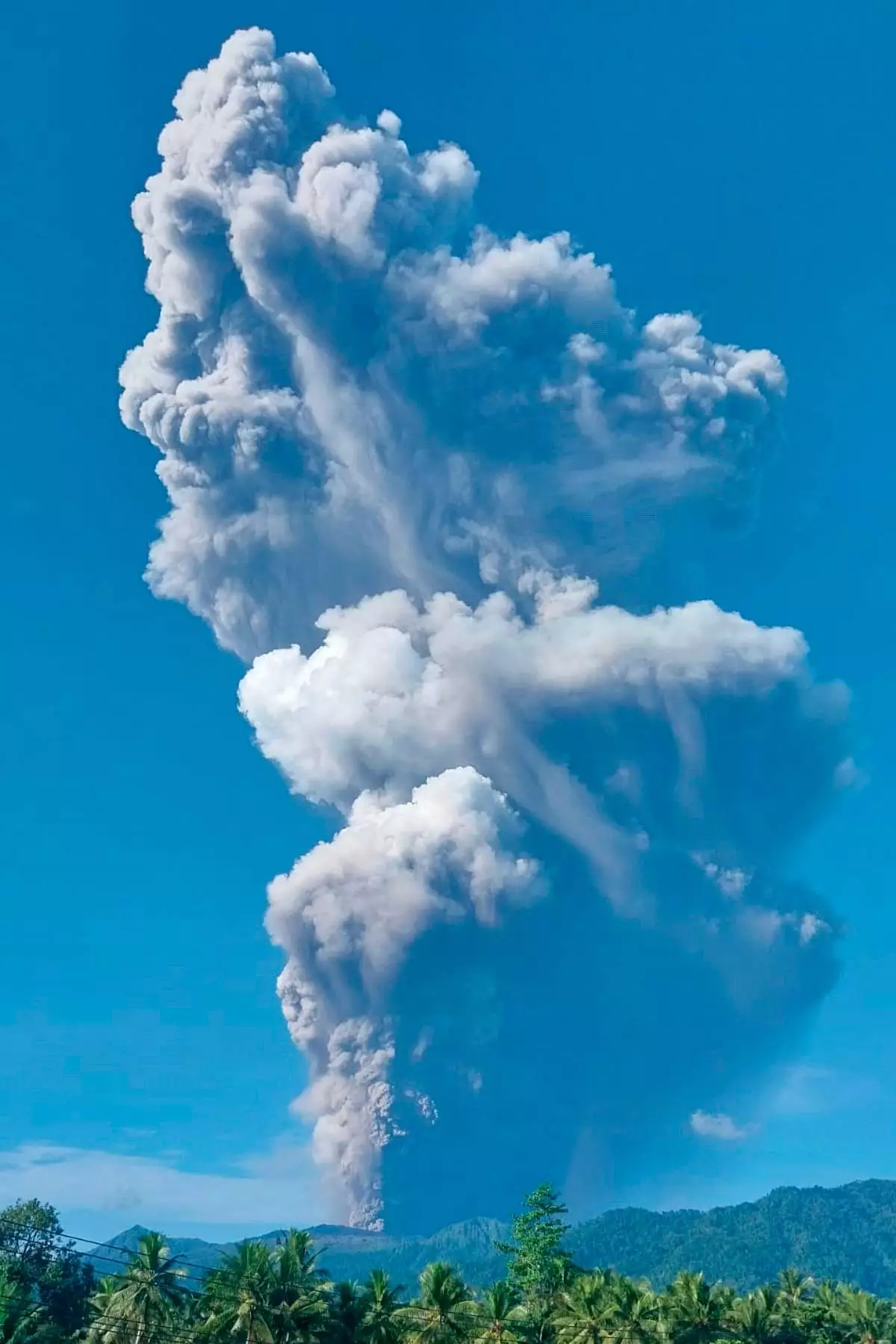
In this photo released by the Badan Geologi, the geological agency of Indonesia's Ministry of Energy and Mineral Resources, Mount Dukono releases volcanic materials during an eruption in North Halmahera, Indonesia, Friday, May 8, 2026. (Badan Geologi via AP)
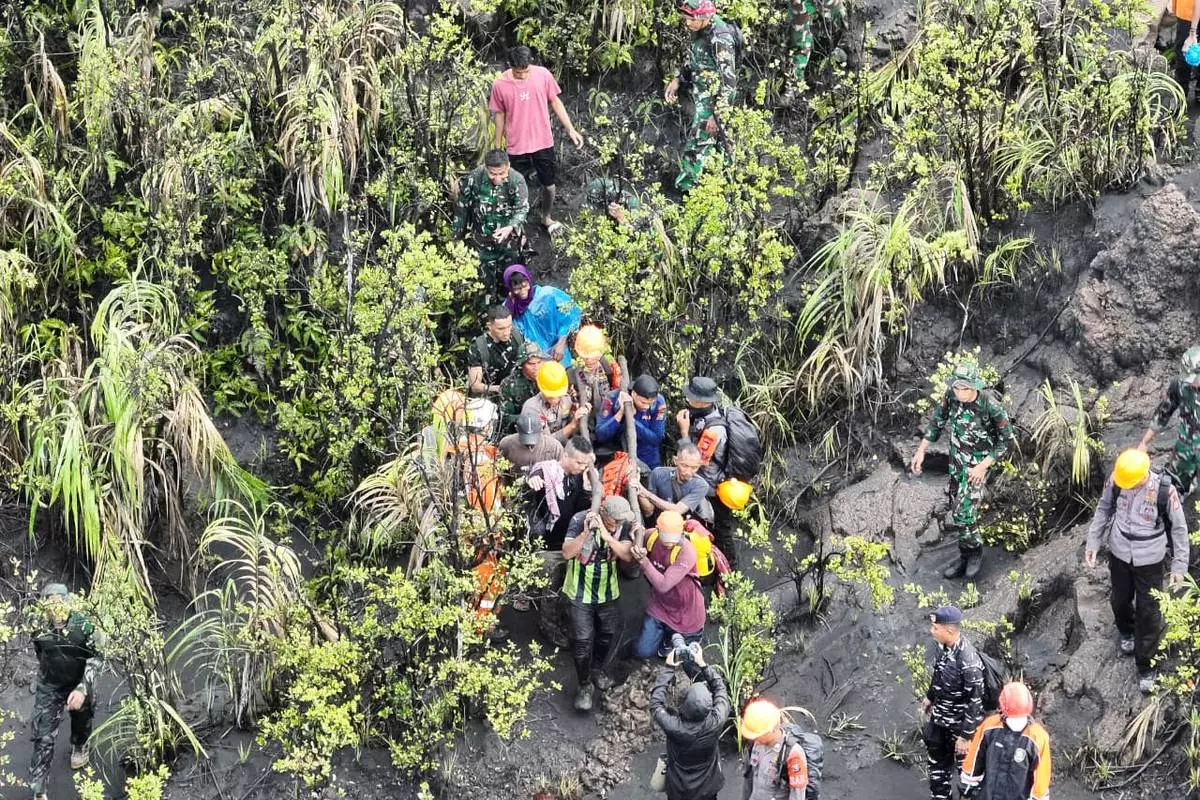
In this drone photo released by the Indonesian National Search and Rescue Agency (BASARNAS) rescuers carry the body of a victim of the eruption of Mount Dukono, on Halmahera Island, Indonesia, Saturday, May 9, 2026. (BASARNAS via AP)
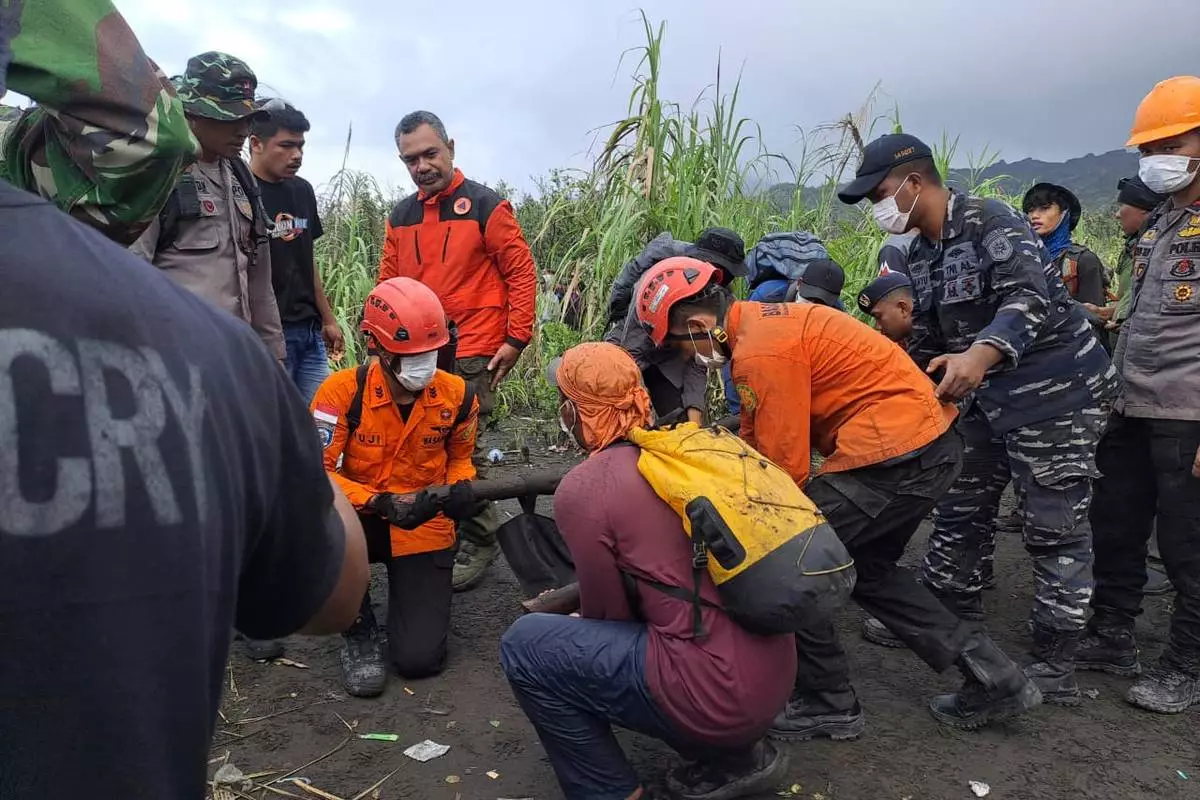
In this photo released by the Indonesian National Search and Rescue Agency (BASARNAS) rescuers carry the body of a victim of the eruption of Mount Dukono, on Halmahera Island, Indonesia, Saturday, May 9, 2026. (BASARNAS via AP)
DUBAI, United Arab Emirates (AP) — Iran has sent its response to the latest U.S. ceasefire proposal to Pakistani mediators and wants negotiations to focus on permanently ending the war, Iran’s state-run media said Sunday.
State TV said Iran seeks to end the war on all fronts, including in Lebanon, and ensure the security of shipping. Washington’s latest proposal had addressed a deal to end the war, reopen the Strait of Hormuz and roll back Iran’s nuclear program, an issue that Tehran would rather discuss later.
There was no immediate comment from the White House about Iran’s reply.
President Donald Trump is giving diplomacy “every chance we possibly can before going back to hostilities,” the U.S. ambassador to the United Nations, Mike Waltz, told ABC.
Meanwhile, the fragile ceasefire was tested Sunday when a drone ignited a small fire on a ship off Qatar, while the United Arab Emirates and Kuwait reported drones entering their airspace. The UAE blamed Iran for its attack. No casualties were reported, and no one immediately claimed responsibility.
The Qatari Foreign Ministry called it a “dangerous and unacceptable escalation that threatens the security and safety of maritime trade routes and vital supplies in the region."
Iran and armed allied groups have used drones to carry out hundreds of strikes since the war began with U.S. and Israeli attacks on Feb. 28.
Trump has reiterated threats to resume full-scale bombing if Iran does not accept an agreement to reopen the strait and roll back its nuclear program. Iran has mostly blocked the strategic waterway key to the global flow of oil since the war began, rattling world markets.
The U.S. in turn has imposed a blockade of Iranian ports. On Friday, the U.S. struck two Iranian oil tankers that it said were trying to breach the blockade. Iran’s Revolutionary Guard navy has reiterated its warning that any attack on Iranian oil tankers or commercial vessels would be met with a “heavy assault” on one of the U.S. bases in the region and enemy ships.
Another sticking point in negotiations is the fate of Iran’s highly enriched uranium. The U.N. nuclear agency says Iran has more than 440 kilograms (970 pounds) of uranium that is enriched up to 60% purity, a short, technical step from weapons-grade levels.
In an interview with state media posted late Saturday, a spokesman for Iran's military said its forces were on “full readiness” to protect nuclear sites where uranium is stored.
“We considered it possible that they might intend to steal it through infiltration operations or heliborne operations,” Brig. Gen. Akrami Nia told the IRNA news agency.
The majority of Iran’s highly enriched uranium is likely at its Isfahan nuclear complex, International Atomic Energy Agency Director-General Rafael Mariano Grossi told The Associated Press last month. The facility was bombarded by U.S.-Israeli airstrikes in the 12-day war last year and faced less intense attacks this year.
Pakistan, which oversaw face-to-face talks between the U.S. and Iran last month, continues to pursue mediation. In rare public comments, Pakistani army chief Field Marshal Asim Munir said Islamabad remains committed to helping end the conflict. And Pakistani Prime Minister Shehbaz Sharif spoke by phone with Qatari counterpart Sheikh Mohammed bin Abdulrahman Al Thani.
The UAE's Defense Ministry said it shot down two drones and blamed the attack on Iran.
In Kuwait, Defense Ministry spokesman Brig. Gen. Saud Abdulaziz Al Otaibi said hostile drones entered Kuwait’s airspace early Sunday and forces responded “in accordance with established procedures.” The ministry did not say where the drones came from.
The Qatari Defense Ministry said a drone targeted a commercial ship coming from Abu Dhabi into a southern port, setting a small fire that was extinguished. The United Kingdom Maritime Trade Operations Center said the attack happened 23 nautical miles (43 kilometers) northeast of Qatar’s capital, Doha. It provided no details about the ship’s owner or origin, and there was no claim of responsibility.
There have been several attacks against ships in the Persian Gulf over the past week.
South Korea announced initial findings from a investigation that said two unidentified airborne objects struck the stern of the South Korean-operated vessel HMM NAMU about one minute apart while it was anchored in the Strait of Hormuz last week, causing an explosion and fire. A foreign ministry spokesperson said officials have yet to determine who was responsible.
Magdy reported from Cairo. Associated Press writers Munir Ahmed in Islamabad; Melanie Lidman in Tel Aviv, Israel; Tong-hyung Kim in Seoul; Julia Frankel in Jerusalem; and Josh Boak in Washington contributed to this report.
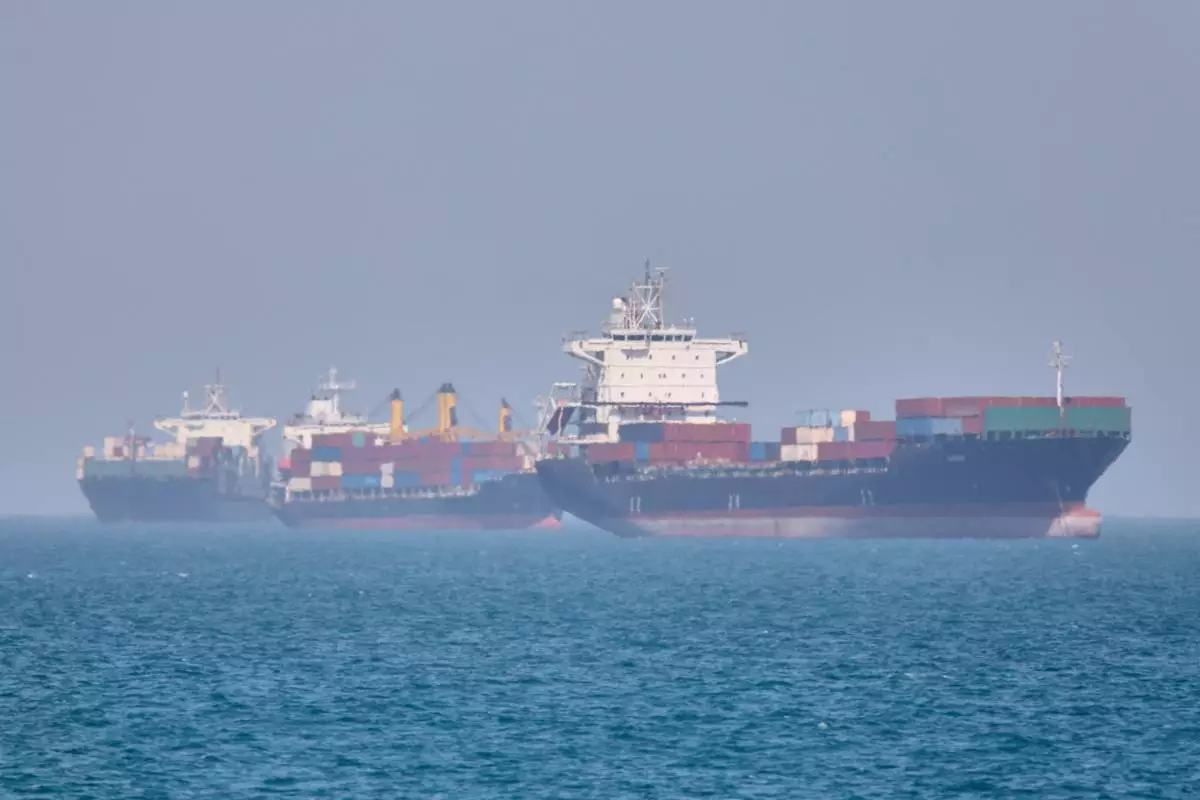
Container ships sit at anchor in the Strait of Hormuz off Bandar Abbas, Iran, Saturday, May 2, 2026.(Amirhosein Khorgooi/ISNA via AP)