MINNEAPOLIS (AP) — San Antonio Spurs star Victor Wembanyama was ejected for throwing an elbow out of frustration at the throat of Minnesota Timberwolves forward Naz Reid early in the second quarter of Game 4 of their rugged second-round NBA playoff series on Sunday night.
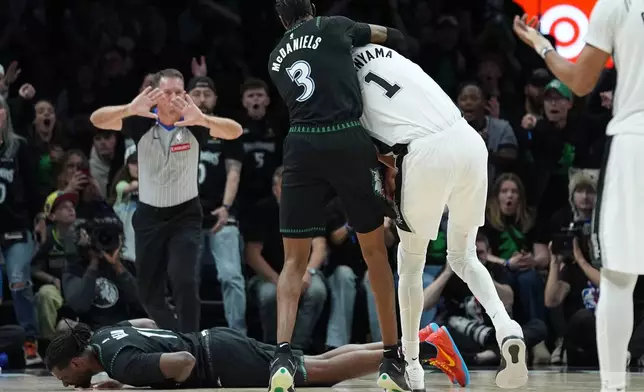
Wembanyama was whistled for an offensive foul as soon as he struck Reid, who had swarmed the NBA Defensive Player of the Year outside the paint along with teammate Jaden McDaniels after the 7-foot-4 Wembanyama rebounded a missed 3-pointer by the Spurs.
Click to Gallery
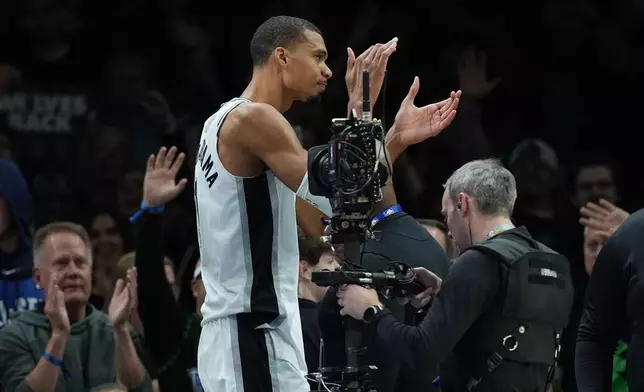
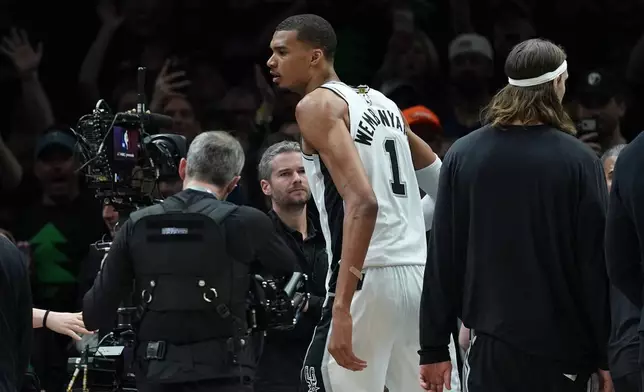
San Antonio Spurs forward Victor Wembanyama (1) reacts after he was ejected for a flagrant foul during the first half of Game 4 of a NBA basketball second-round playoff series against the Minnesota Timberwolves in Minneapolis, Sunday, May 10, 2026. (AP Photo/Abbie Parr)
Minnesota Timberwolves center Naz Reid (11) falls to the court after he was fouled by San Antonio Spurs forward Victor Wembanyama (1) as he and forward Jaden McDaniels (3) battled for a rebound during the first half of Game 4 of a NBA basketball second-round playoff series in Minneapolis, Sunday, May 10, 2026. (AP Photo/Abbie Parr)
San Antonio Spurs forward Victor Wembanyama (1) reacts after he was ejected for a flagrant foul during the first half of Game 4 of a NBA basketball second-round playoff series against the Minnesota Timberwolves in Minneapolis, Sunday, May 10, 2026. (AP Photo/Abbie Parr)
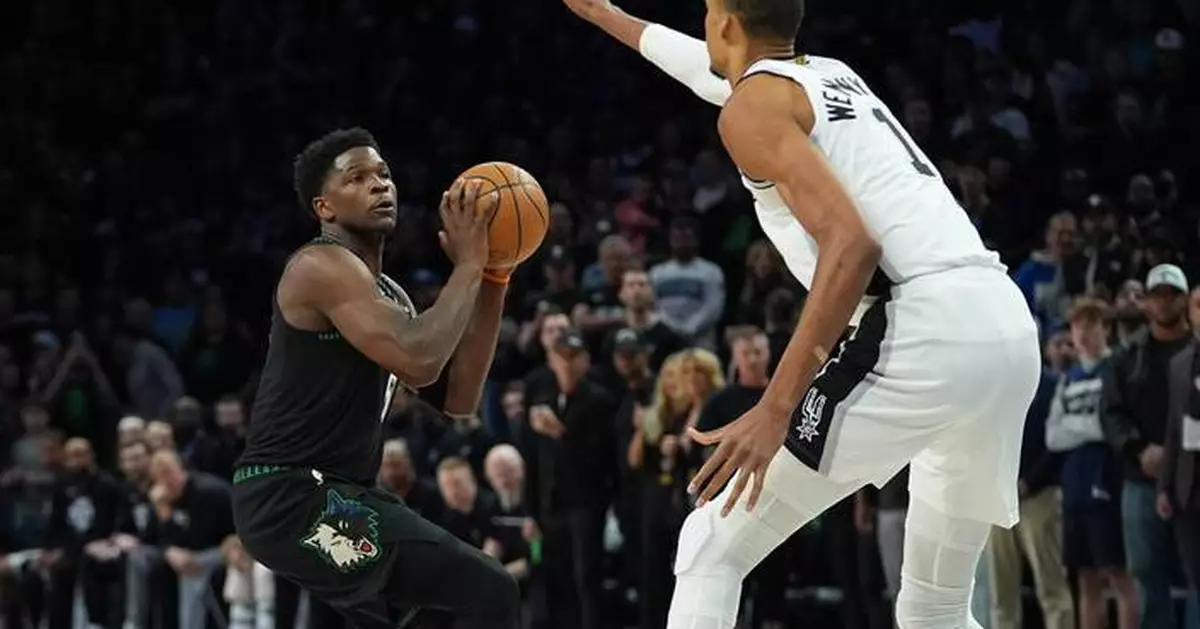
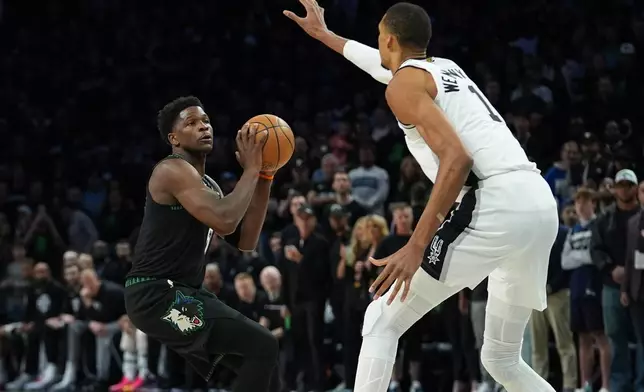
Minnesota Timberwolves guard Anthony Edwards (5) looks to shoot against San Antonio Spurs forward Victor Wembanyama (1) during the first half of Game 4 of a NBA basketball second-round playoff series in Minneapolis, Sunday, May 10, 2026. (AP Photo/Abbie Parr)
After a video review of the play, with the fans at Target Center chanting, “Kick him out! Kick him out!,” the foul was upgraded to a Flagrant 2 for excessive contact above the neck. That penalty triggers an automatic ejection, immediately swinging the balance of a pivotal game in the series toward the Timberwolves. The Spurs took a 2-1 lead with their 115-108 win in Game 3 on Friday.
When the penalty was announced, Wembanyama appeared to ask teammate Harrison Barnes: “What does that mean?”
After he slapped hands with each of his Spurs teammates on his way off the floor, with the arena sound system blaring Michael Jackson's “Beat it!,” Reid sank both free throws to give the Timberwolves a 38-34 lead. Wembanyama finished with four points, four rebounds and three fouls in 13 minutes.
With Reid, Julius Randle and McDaniels in their frontcourt, the Timberwolves have had plenty of muscle and tenacity to send at Wembanyama, even if he's been good enough offensively to overcome it. He had 39 points on 13-for-18 shooting from the floor in Game 3.
AP NBA: https://apnews.com/hub/NBA
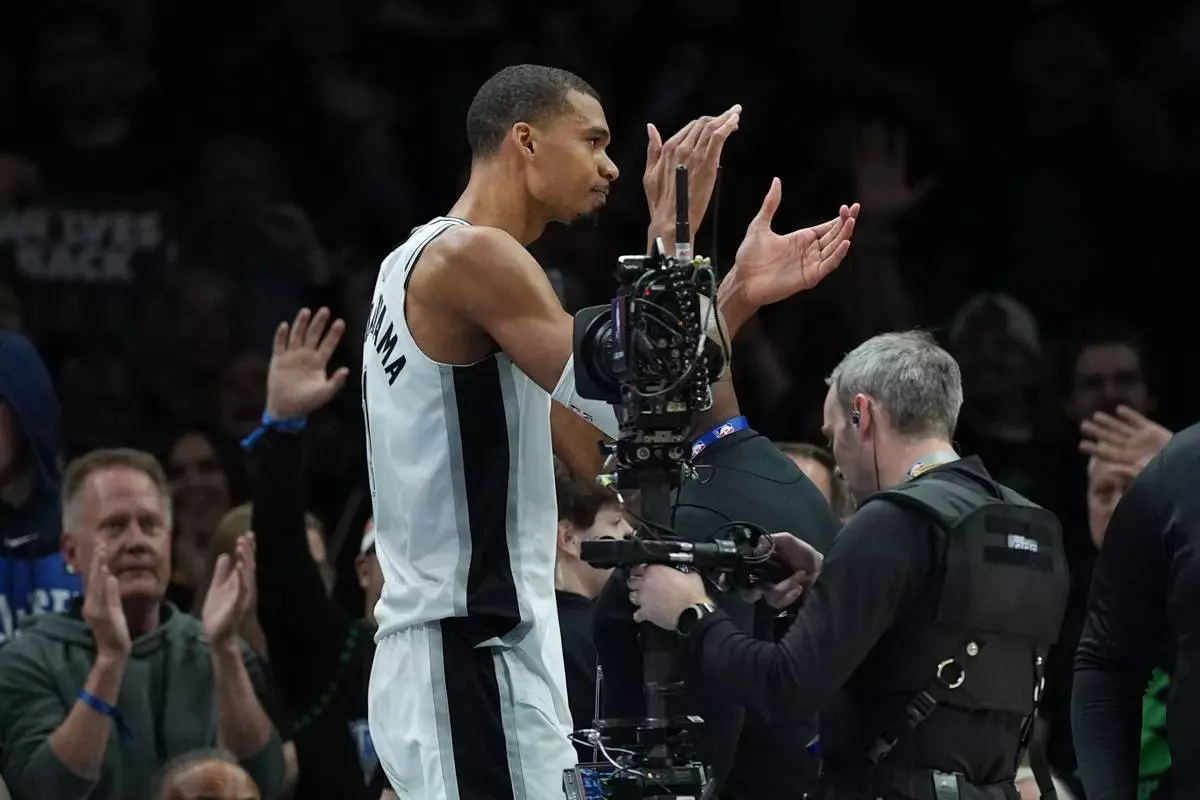
San Antonio Spurs forward Victor Wembanyama (1) reacts after he was ejected for a flagrant foul during the first half of Game 4 of a NBA basketball second-round playoff series against the Minnesota Timberwolves in Minneapolis, Sunday, May 10, 2026. (AP Photo/Abbie Parr)
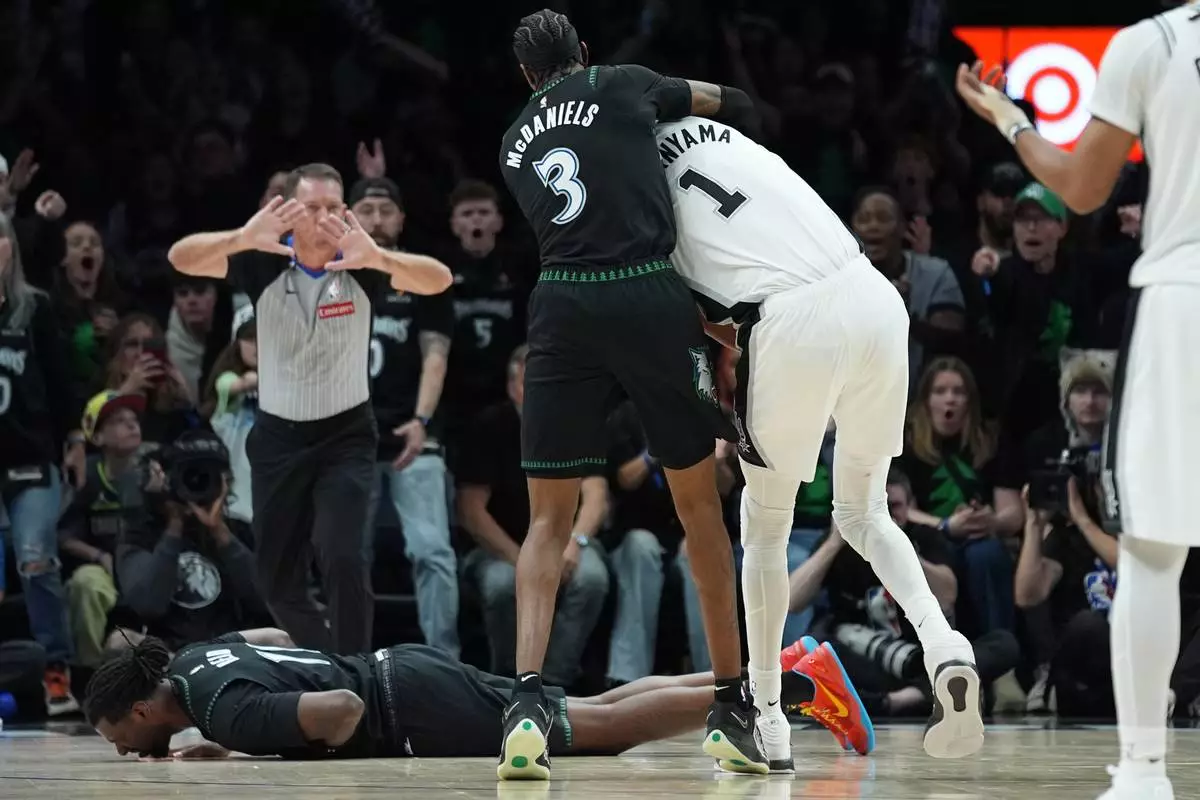
Minnesota Timberwolves center Naz Reid (11) falls to the court after he was fouled by San Antonio Spurs forward Victor Wembanyama (1) as he and forward Jaden McDaniels (3) battled for a rebound during the first half of Game 4 of a NBA basketball second-round playoff series in Minneapolis, Sunday, May 10, 2026. (AP Photo/Abbie Parr)
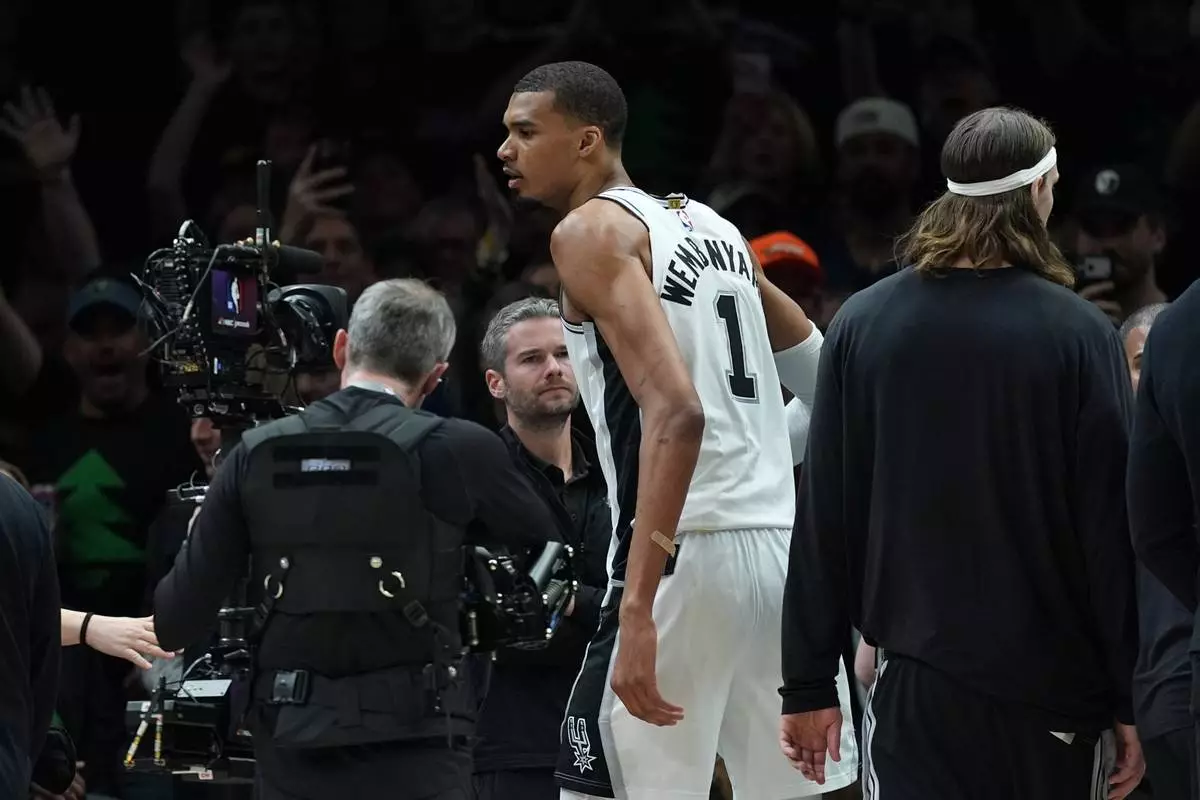
San Antonio Spurs forward Victor Wembanyama (1) reacts after he was ejected for a flagrant foul during the first half of Game 4 of a NBA basketball second-round playoff series against the Minnesota Timberwolves in Minneapolis, Sunday, May 10, 2026. (AP Photo/Abbie Parr)
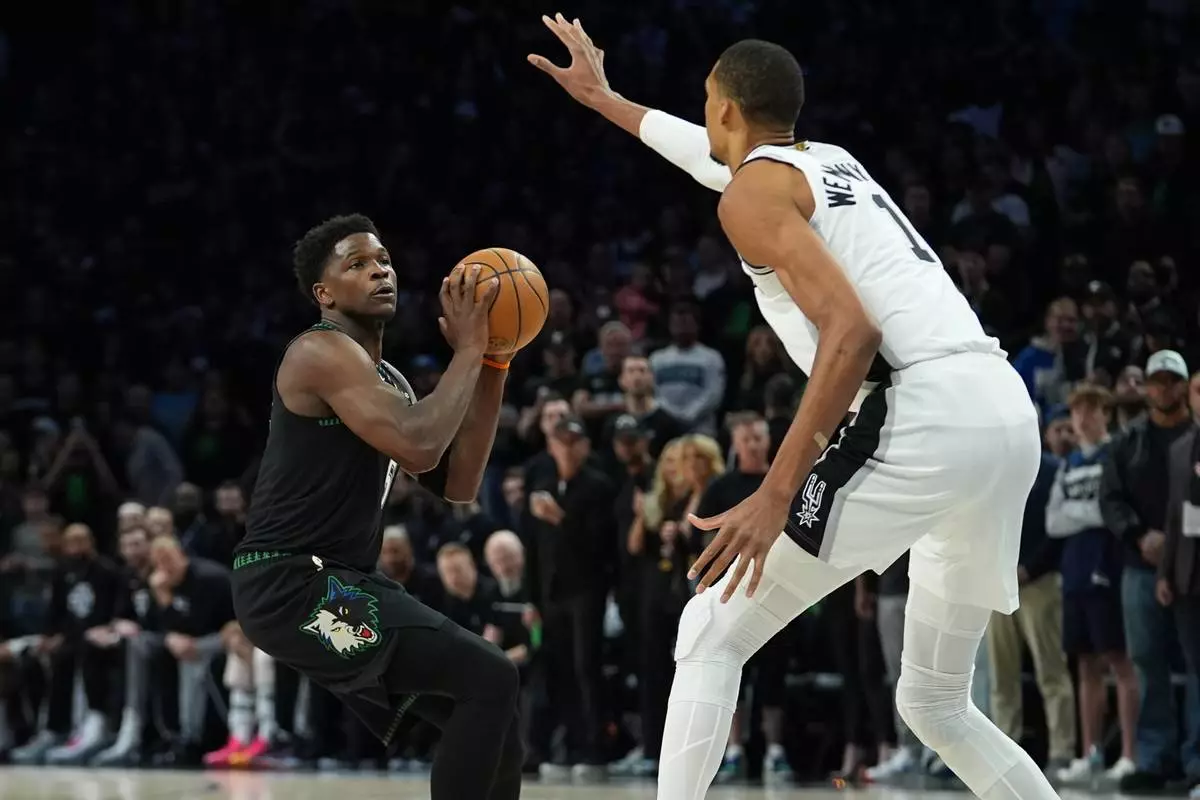
Minnesota Timberwolves guard Anthony Edwards (5) looks to shoot against San Antonio Spurs forward Victor Wembanyama (1) during the first half of Game 4 of a NBA basketball second-round playoff series in Minneapolis, Sunday, May 10, 2026. (AP Photo/Abbie Parr)
DUBAI, United Arab Emirates (AP) — Iran sent its response to the latest U.S. proposal to end the Iran war via Pakistani mediators on Sunday, but U.S. President Donald Trump quickly rejected it in a social media post as “TOTALLY UNACCEPTABLE!” — the latest setback to efforts to resolve the standoff in the Persian Gulf that has throttled shipping and sent energy prices soaring.
Iranian state television reported that Tehran rejected the U.S. proposal as amounting to surrender, insisting instead on “war reparations by the U.S., full Iranian sovereignty over the Strait of Hormuz, an end to sanctions, and the release of seized Iranian assets.”
Washington’s latest proposal addressed a deal to end the war, reopen the strait and roll back Iran’s nuclear program.
Trump's rejection of the Iranian response included no details. In an earlier post, he accused Tehran of “playing games” with the United States for nearly 50 years, adding: "They will be laughing no longer!"
Trump is giving diplomacy “every chance we possibly can before going back to hostilities,” the U.S. ambassador to the United Nations, Mike Waltz, told ABC earlier.
Iran's new supreme leader, Mojtaba Khamenei, who has not been seen or heard publicly since the war began, “issued new and decisive directives for the continuation of operations and the powerful confrontation with the enemies” while meeting with the head of the joint military command, the state broadcaster reported, with no details.
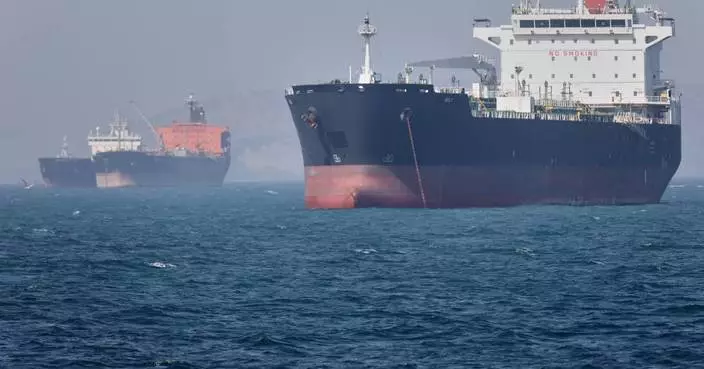
The fragile ceasefire was tested when a drone ignited a small fire on a ship off Qatar and the United Arab Emirates and Kuwait reported drones entering their airspace. The UAE said it shot down two drones and blamed Iran. No casualties were reported, and no one immediately claimed responsibility.
Qatar's Foreign Ministry called the ship attack a “dangerous and unacceptable escalation that threatens the security and safety of maritime trade routes and vital supplies in the region." The United Kingdom Maritime Trade Operations Center gave no details about the ship's owner or origin.
Kuwait Defense Ministry spokesperson Brig. Gen. Saud Abdulaziz Al Otaibi said forces responded to drones but did not say where they came from.
Iran and armed allied groups such as the Lebanese militant Hezbollah group have used drones to carry out hundreds of strikes since the war began with U.S. and Israeli attacks on Feb. 28.
Trump has reiterated threats to resume full-scale bombing if Iran does not accept an agreement to reopen the strait and roll back its nuclear program. Iran has largely blocked the strategic waterway that's key to the global flow of oil, natural gas and fertilizer since the war began, rattling world markets.
The U.S. military in turn has blockaded Iranian ports since April 13, saying it has turned back 61 commercial vessels and disabled four. On Friday, it struck two Iranian oil tankers it said were trying to breach the blockade. Iran’s Revolutionary Guard navy says any attack on Iranian oil tankers or commercial vessels would be met with a “heavy assault” on U.S. bases in the region and enemy ships.
In an interview posted late Saturday, an Iranian military spokesperson said forces were on “full readiness” to protect sites where uranium is stored.
The U.N. nuclear agency says Iran has more than 440 kilograms (970 pounds) of uranium enriched up to 60% purity, a short, technical step from weapons grade.
“We considered it possible that they might intend to steal it through infiltration operations or heli-borne operations,” Brig. Gen. Akrami Nia told the IRNA news agency.
Israeli Prime Minister Benjamin Netanyahu in an interview with CBS that aired Sunday said the war isn't over because the enriched uranium needs to be taken out of Iran. “Trump has said to me, ‘I want to go in there,’ and I think it can be done physically,” he said.
Russian President Vladimir Putin said Saturday that Moscow’s proposal to take enriched uranium from Iran to help negotiate a settlement remains on the table.
The majority of Iran’s highly enriched uranium is likely at its Isfahan nuclear complex, the International Atomic Energy Agency director-general told The Associated Press last month. The facility was hit by U.S.-Israeli airstrikes in the 12-day war last year and faced less intense attacks this year.
Iran's deputy foreign minister warned against a planned French-British effort that aims to support maritime security in the Strait of Hormuz after hostilities are over.
“The presence of French and British vessels, or those of any other country, for any possible cooperation with illegal U.S. actions in the Strait of Hormuz that violate international law will be met with a decisive and immediate response from the armed forces,” Kazem Gharibabadi said on social media.
French President Emmanuel Macron responded by saying it won't be a military deployment but an international mission to secure shipping once conditions allow.
Several attacks against ships in the Persian Gulf have occurred over the past week, and a U.S. effort to “guide” ships through the strait was quickly paused.
South Korea announced initial findings from an investigation that said two unidentified objects struck the South Korean-operated vessel HMM NAMU about one minute apart while it was anchored in the strait last week, causing an explosion and fire. Officials have yet to determine who was responsible.
In the interview with CBS’ “60 Minutes,” the Israeli prime minister denied New York Times reporting that he made a hard sell for Trump to start the Iran war by saying it would bring about regime change.
“We both agreed, you know, that there was both uncertainty and risk involved,” Netanyahu said. “And I remember that we — I said and he said — that the danger, there’s danger in action, in taking action, but there’s greater danger in not taking action.”
Asked whether he said in that February meeting that Iran would be so weakened it could not choke off the Strait of Hormuz, he said “the problem” of the vital oil shipping corridor “was understood as the fighting went on.”
“I don’t claim the perfect foresight," he said.
Netanyahu also said he wants to “draw down to zero” the military aid provided by the U.S., which he said now stands at $3.8 billion per year.
Israel has been a leading recipient of U.S. military aid for decades, but the war in Gaza, with its high number of civilian casualties, has caused that aid to come under greater scrutiny as American public support for Israel declines.
Netanyahu, however, offered an extended timeline, saying he wants to see the aid cut off over the next decade.
Magdy reported from Cairo. Associated Press writers Munir Ahmed in Islamabad; Melanie Lidman in Tel Aviv, Israel; Tong-hyung Kim in Seoul, South Korea; Julia Frankel in Jerusalem and Josh Boak in Washington contributed to this report.

Women walk in northern Tehran, Iran, Sunday, May 10, 2026. (AP Photo/Vahid Salemi)
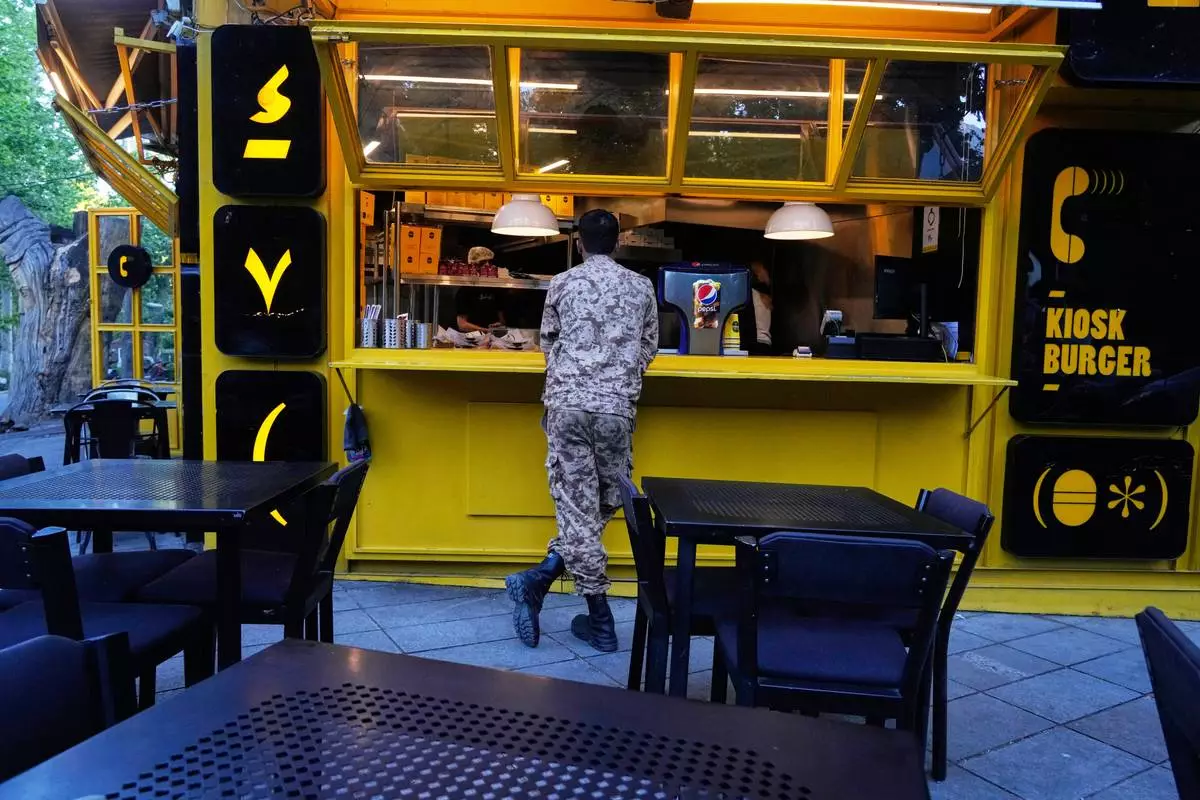
A Revolutionary Guard soldier stands at the counter of a fast food restaurant in northern Tehran, Iran, Sunday, May 10, 2026. (AP Photo/Vahid Salemi)
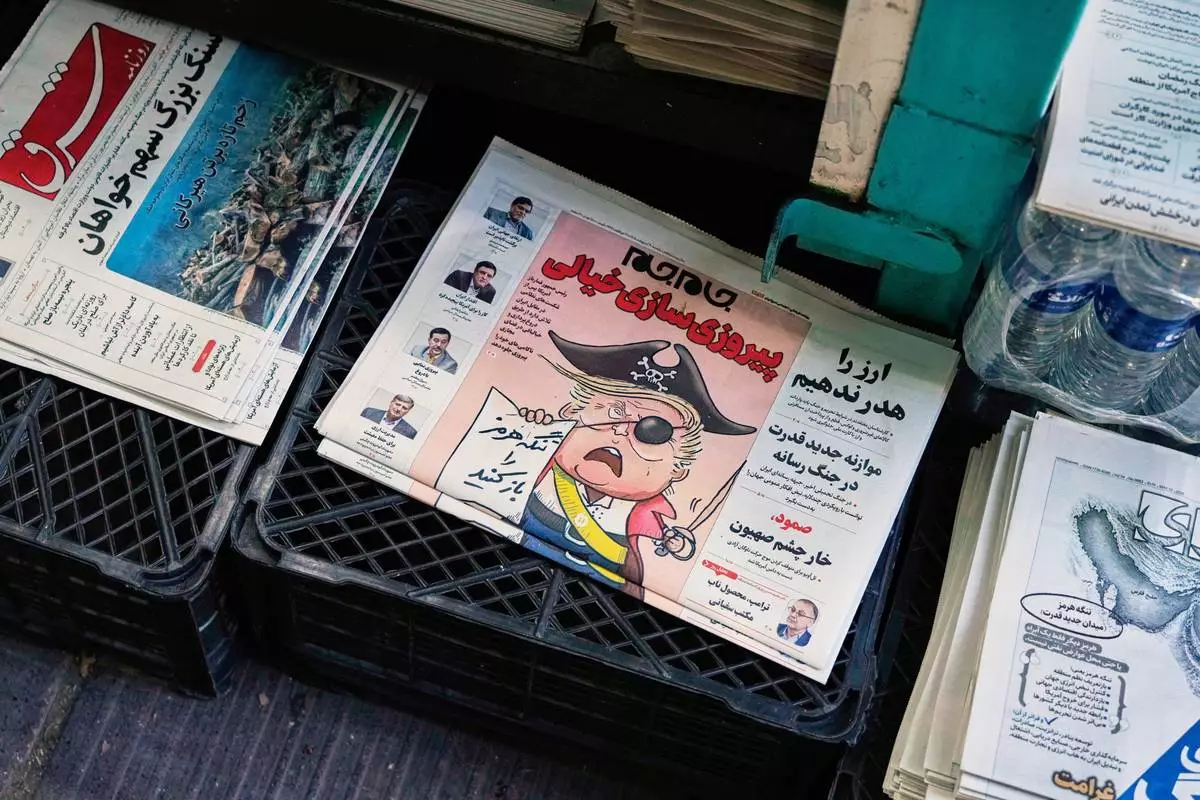
The front page of the Sunday May 10, 2026, edition of Iranian newspaper, Jamejam, is seen with a cartoon satirizing the U.S. President Donald Trump that asks: "Open the the Strait of Hormuz" on a news stand in northern Tehran, Iran, Sunday, May 10, 2026. (AP Photo/Vahid Salemi)
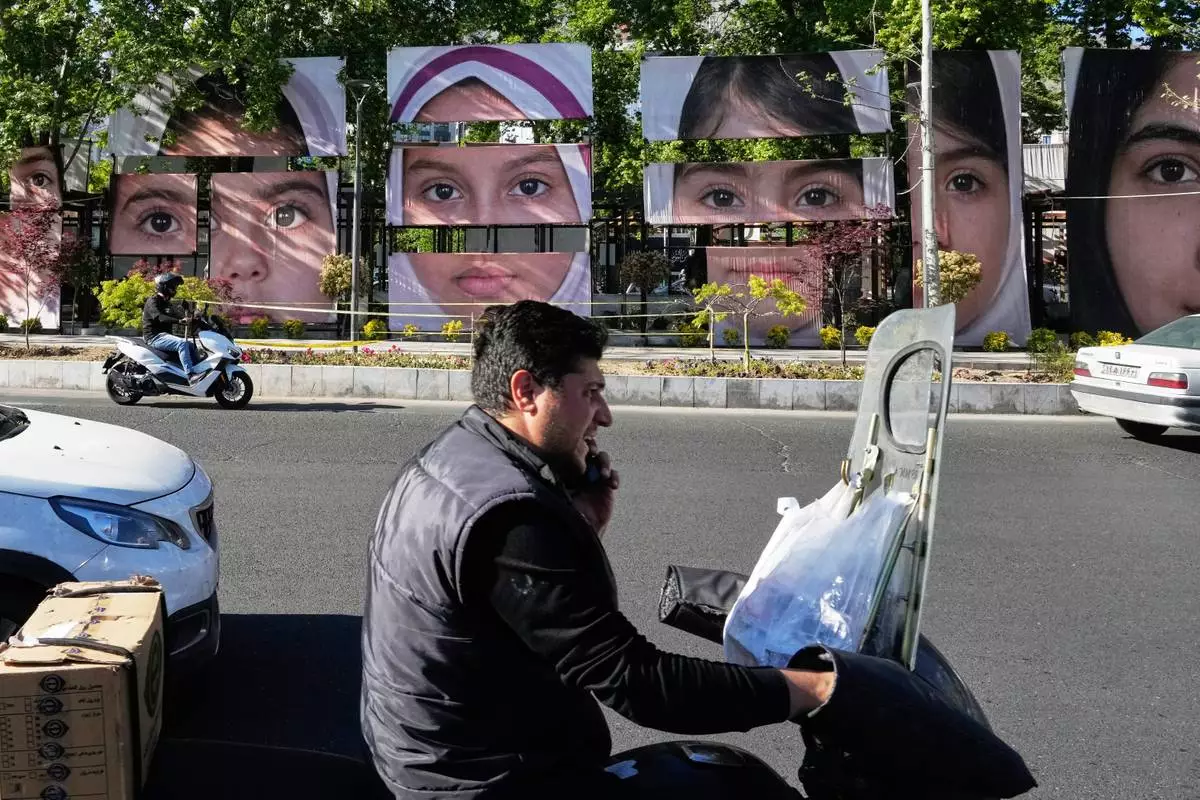
Vehicles drive past banners showing portraits of the school children who were killed during a strike on a school in southern town of Minab on Feb. 28, at Tajrish square in northern Tehran, Iran, Sunday, May 10, 2026. (AP Photo/Vahid Salemi)
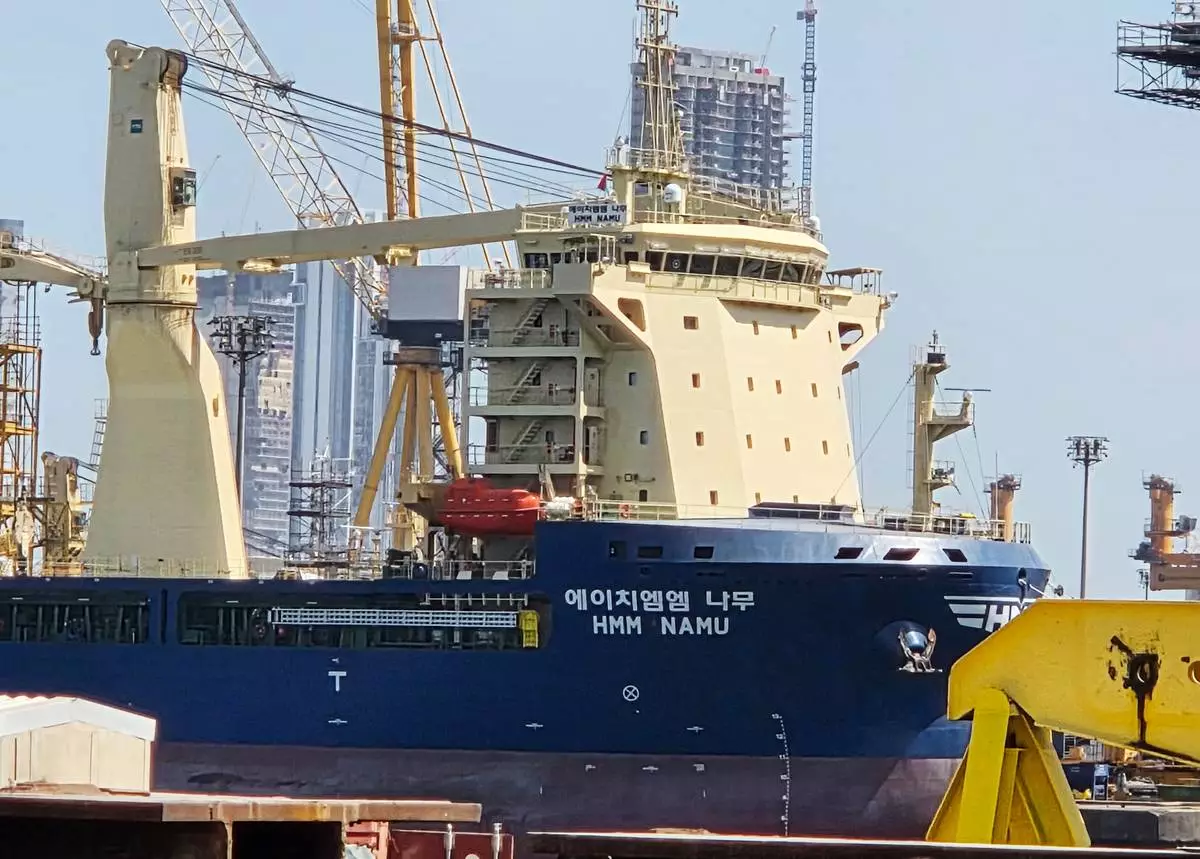
The South Korean-operated vessel HMM NAMU is docked after being damaged from a fire following an explosion in the Strait of Hormuz, at a port in Dubai, United Arab Emirates, Friday, May 8, 2026. (Kim Sang-hun/Yonhap via AP)
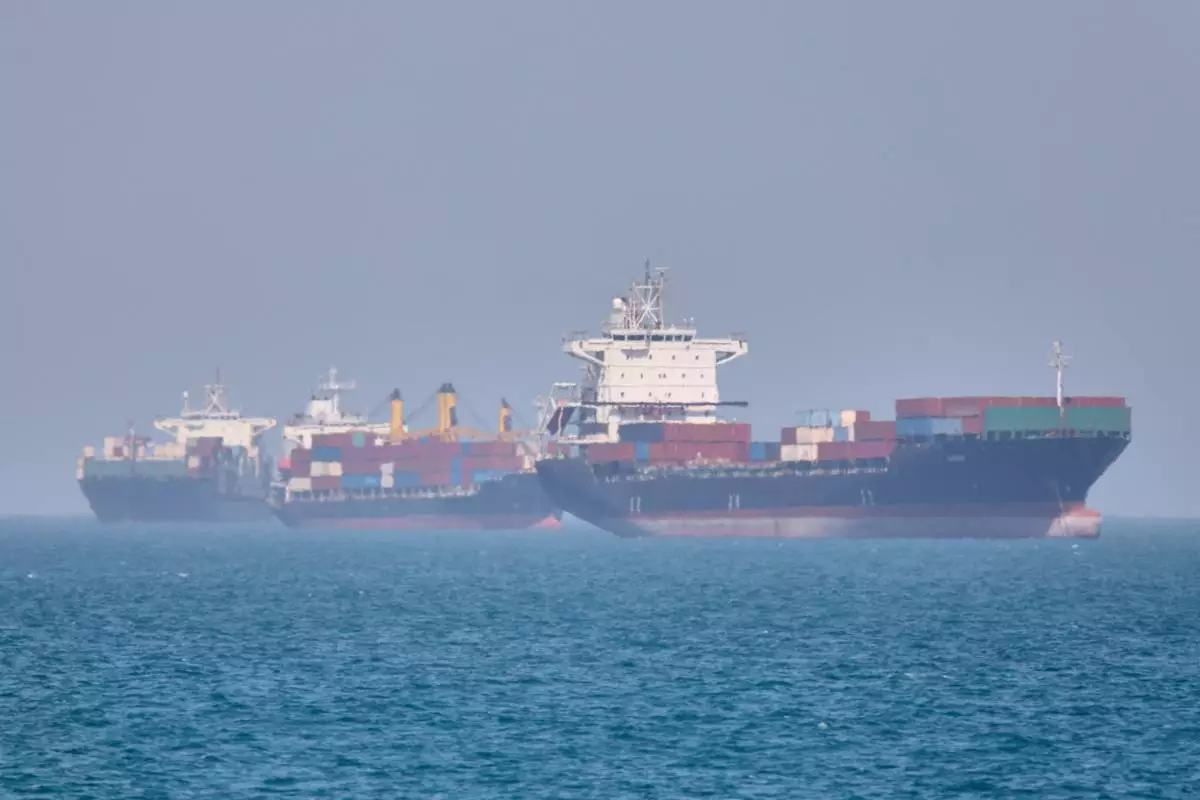
Container ships sit at anchor in the Strait of Hormuz off Bandar Abbas, Iran, Saturday, May 2, 2026.(Amirhosein Khorgooi/ISNA via AP)