The Tianzhou-10 cargo spacecraft successfully docked with the Tiangong space station on Monday, delivering biological samples, including zebrafish embryos and cells, to conduct in-orbit biomedical experiments.
A research team from the China Astronaut Research and Training Center, in collaboration with the space science and application system, will use the zebrafish cultivation device to study the mechanisms regulating protein homeostasis underlying bone loss and myocardial changes under microgravity.
"Zebrafish are excellent model organisms for studying bone metabolism and myocardial remodeling. Building on previous experiments with adult zebrafish, this study uses normal and genetically modified zebrafish embryos and mouse osteoblasts as experimental subjects. We are investigating the impact of microgravity on organ development, as well as the role of a protein homeostasis regulator, which we have been studying for over a decade, in counteracting bone loss," said Li Yingxian from the China Astronaut Research and Training Center in Wenchang, south China's Hainan Province.
According to researchers, this experiment will provide crucial cellular-level evidence for studies on weightlessness-induced bone loss. Furthermore, it is expected to offer a theoretical basis for developing new targets to prevent and protect against bone loss in space.
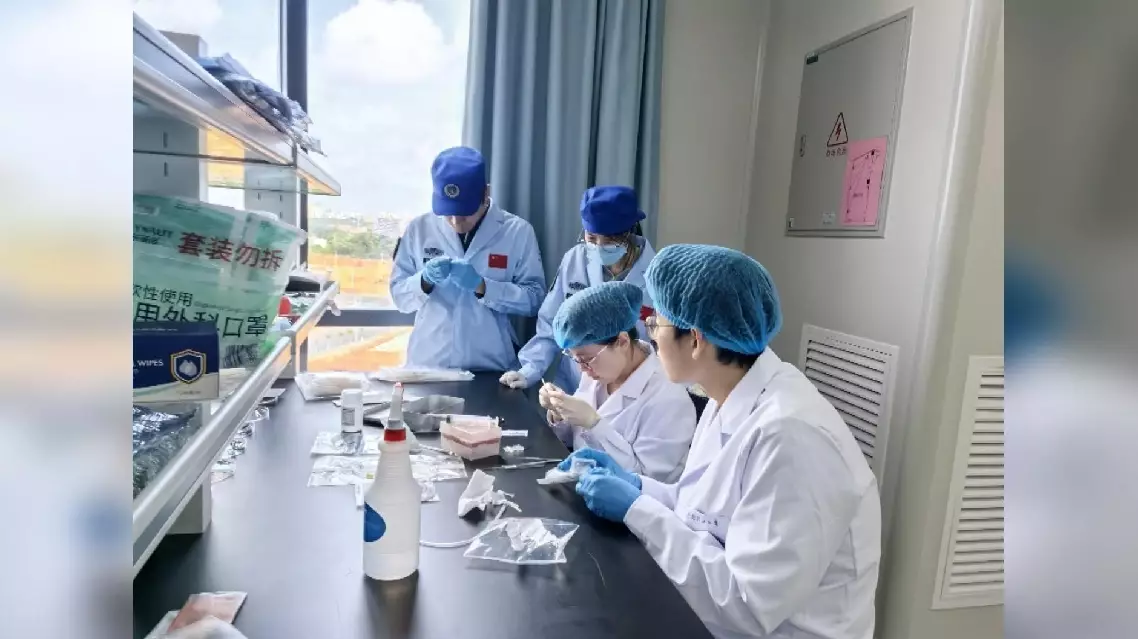
Tianzhou-10 sends zebrafish embryos, cells to space station for scientific research
Shenzhou-23 crew astronauts Zhu Yangzhu, Zhang Zhiyuan, and Lai Ka-ying have been making steady progress aboard China's Tiangong space station over the past four months.
Launched on May 24 and entering the complex the following day, the three members remain in excellent physical and mental health while achieving significant milestones in orbit.
During their ongoing mission, the crew has successfully conducted critical extravehicular maintenance on the station's solar wings, installed space debris defense systems, and advanced more than 100 scheduled scientific research and application projects.
Currently, the crew is advancing experiments in microgravity physics and other fields. The astronauts have completed the scheduled replacement and processing of experimental samples inside the high-temperature materials experiment cabinet, while also carrying out image recognition exercises under various initial conditions using a metacognitive training system.
The more than 100 scientific projects planned for their mission focus on in-depth research and technical verification across cutting-edge fields, including space life sciences, space materials science, microgravity fluid physics, space medicine, and new space technologies.
Leveraging their one-year spaceflight, the astronauts are exploring human adaptation characteristics and capability boundaries during long-duration flights, aiming to generate a multi-system, multi-omics human atlas in space. Additionally, in-orbit testing of a new type of space energy storage battery is underway, which holds potential for future space station upgrades.
On August 28, the three astronauts completed tasks including extravehicular maintenance of the space station's solar wings and the installation of space debris protection devices. This marked the second time Chinese astronauts had performed extravehicular repairs on solar wings, effectively ensuring the safety and stability of the space station's power supply.
The crew also gave students from the Hong Kong Special Administrative Region (HKSAR) and the Macao Special Administrative Region (Macao SAR) a science lesson from the Tiangong space station on September 9.
The lesson featured engaging demonstrations, including baking a cake in the space kitchen, wringing a wet towel, and showing a bauhinia flower—Hong Kong's floral emblem—floating in the microgravity environment, which was streamed live to primary and secondary students across both regions.
Throughout their stay, the crew has completed tasks such as in-orbit rotation and application payload extravehicular operations, while undergoing training for rendezvous, docking, and medical emergency care alongside full-system pressure emergency drills. They have also maintain routine operations to care for the space station platform and ensure their own health and daily living needs.
Moving forward, the crew will continue to carry out planned scientific experiments, technical tests, and payload operations.
This year marks the 23rd anniversary of China's first manned spaceflight mission. China's first manned spaceflight was the Shenzhou-5 mission, which launched in October 2003.
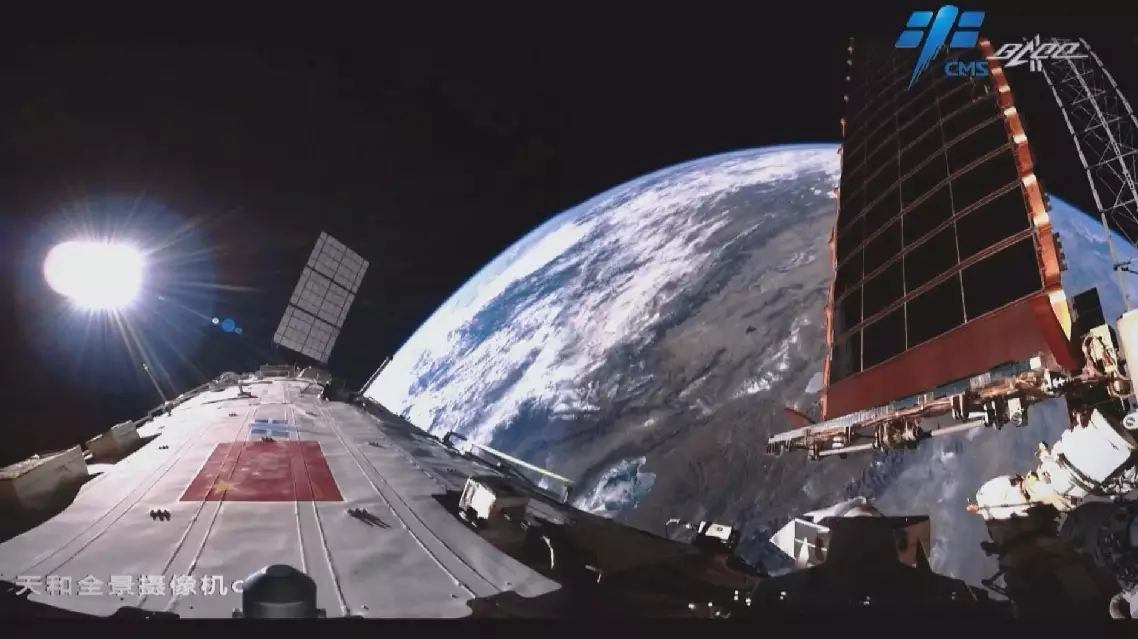
China's Shenzhou-23 crew advances over 100 in-orbit projects after four months aboard Tiangong