THE HAGUE, Netherlands (AP) — The International Criminal Court unsealed Monday an arrest warrant for a prominent Philippine senator linked to the deadly “war on drugs” overseen by ex-President Rodrigo Duterte, which allegedly involved the extrajudicial killings of suspects.
The warrant, originally issued confidentially in November, charges Ronald Marapon dela Rosa, a former Philippine national police chief and a Duterte ally, with the crime against humanity of murder of “no less than 32 persons" allegedly committed between July 2016 and the end of April 2018.
Duterte, dela Rosa and other police officials have denied authorizing the killings of drug suspects, who, they said, were shot dead after allegedly threatening law enforcers. Duterte openly and repeatedly threatened drug suspects with death while in office.
The warrant said judges decided after studying evidence submitted by prosecutors that dela Rosa "made essential contributions to committing the alleged crime” of murder and listed him as an “indirect co-perpetrator.”
Dela Rosa appeared unexpectedly in the Philippines Senate on Monday after being summoned as part of a new investigation into the alleged extrajudicial killings. National Bureau of Investigation officers tried to run after dela Rosa as he entered the Senate, but failed to reach him as he dashed into the plenary hall and sought the protection of fellow senators.
Former Philippines Senator Antonio Trillanes showed the warrant to the media in Manila on Monday, and the ICC confirmed its authenticity.
Dela Rosa once served as the national police chief under Duterte, and was the first to enforce the bloody campaign against illegal drugs that left thousands of mostly petty suspects dead. Philippine police officials have summoned dela Rosa to appear before them for an investigation into his role in the Duterte-era killings.
Maria Elena Vignoli, senior international justice counsel at Human Rights Watch, welcomed the warrant, calling it “another blow to the wall of impunity protecting those who allegedly committed atrocities during the Philippines’ murderous ‘drug war.'”
She called on Philippine authorities to swiftly detain dela Rosa and send him to the court in The Hague.
Duterte was arrested in March last year and detained in the Netherlands on charges of crimes against humanity. The charges are also linked to deadly anti-drugs crackdowns he ordered while he was in office. He denies the charges, but judges have ruled that there is enough evidence to warrant his standing trial. No date has been set for the case to start and Duterte has skipped several court hearings due to ill health.
The thousands of killings of mostly impoverished drug suspects took place when Duterte was mayor of the southern city of Davao and after he became president in 2016. The killings during police raids alarmed human rights groups and Western governments, led by the United States.
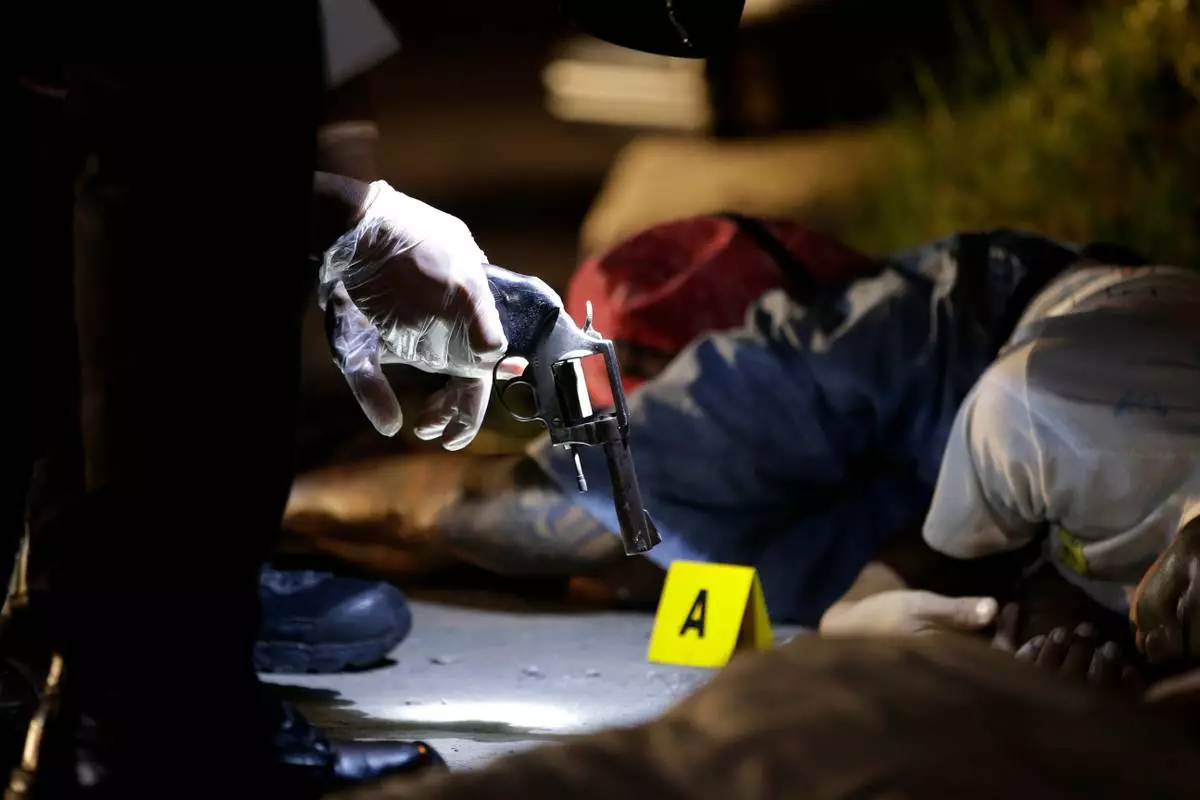
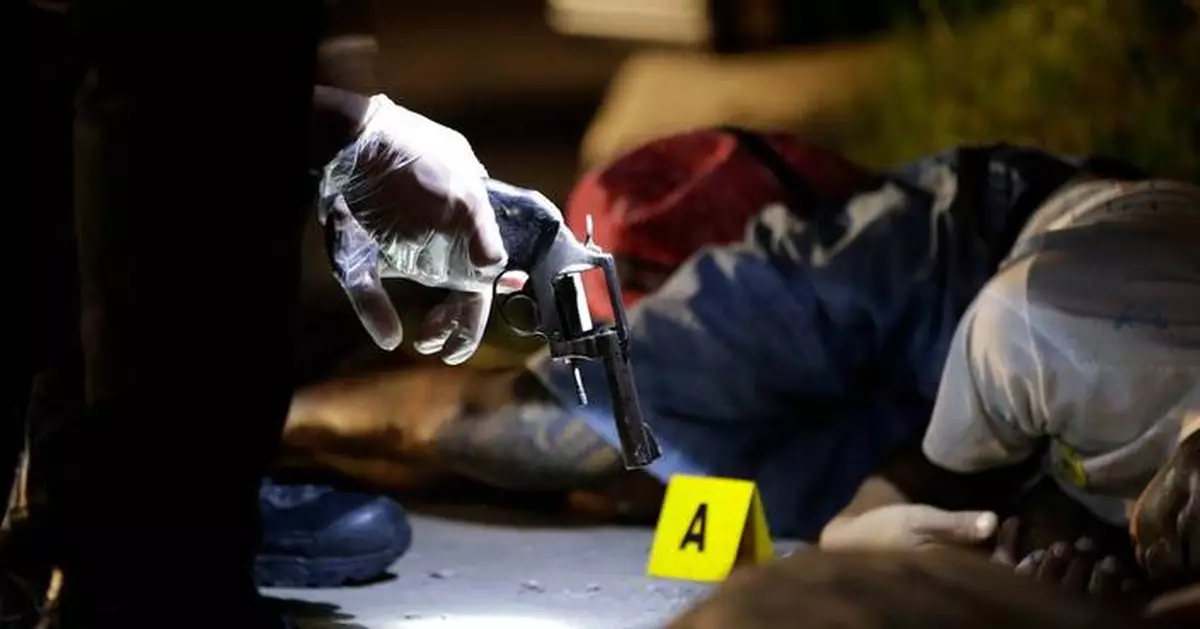
FILE - Policemen check the gun recovered from one of two unidentified drug suspects after they were shot dead by police while trying to evade a checkpoint in Quezon city, north of Manila, Philippines, Sept. 6, 2016. (AP Photo/Aaron Favila, File)
The execution of a man who killed two real estate agents in Georgia was halted by a judge’s late-night decision a day before he was scheduled to die, while an execution in Texas of a man convicted of a triple murder in his neighbor’s home was still expected to take place Wednesday.
This would be the fifth execution in Texas this year, while Georgia has yet to put anyone to death. The nation's busiest death chamber is in Florida, which accounted for more than half the 25 executions already carried out in the U.S. this year.
In the Texas case, LeJames Norman, 40, was sentenced to death over the 2005 fatal shootings of Samuel Roberts, 24, Tiffani Peacock, 18, and Celso Lopez, 38, while looking for cocaine inside their home. He is scheduled to die by injection of the sedative pentobarbital at 6 p.m. CDT at the state penitentiary in Huntsville.
Stacey Humphreys, 53, was convicted of malice murder and other crimes in the 2003 killings of 33-year-old Cyndi Williams and 21-year-old Lori Brown in an Atlanta suburb. He too had been scheduled to die by an injection of the same drug at 7 p.m. EDT at the state prison near Jackson.
However, a judge halted Humphreys’ execution late Tuesday after his lawyers filed a petition seeking a resentencing under a new state law that allows victims of abuse to have their sentences reconsidered and reduced, if they can tie their crimes to abuse they suffered.
The state appealed that ruling, asking the Georgia Supreme Court to find that Humphreys is not entitled to have his sentence reconsidered under the new law. But the high court declined to hear that appeal before the scheduled execution time and left the lower court's stay in place.
Georgia's high court said it would consider the questions raised about the new law in the state’s appeal “in the ordinary course of business and according to a forthcoming scheduling order.”
Norman believed there was cocaine in the house in Edna, a small, rural city about 100 miles (160 kilometers) southwest of Houston, and hoped to steal it alongside Ker’Sean Ramey, according to court records. But they never found any drugs and fatally shot three people in the home. Lopez was shot four times, including three in the back of his head. Peacock was shot twice in the head. Roberts was shot five times to the chest, neck and head.
Norman was arrested about five months after the killings while trying to cross back into the U.S. from Mexico. He pleaded guilty to capital murder, leaving a jury to decide his punishment.
Ramey was also convicted in the shootings and sentenced to death. His execution is set for next week.
The U.S. Supreme Court denied a request on Wednesday from Norman's attorneys to stop his execution.
The two women who Humphreys killed were working as real estate agents for a new subdivision in the Atlanta suburb of Powder Springs. He entered the sales office in a model home around midday on Nov. 3, 2003, and forced them to strip naked and give him their bank PINs before fatally shooting them, according to evidence presented at trial.
Humphreys withdrew more than $3,000 from the women's bank accounts, according to court filings. He told police after his arrest that he had recently taken out some high-interest payday loans and needed money for a payment on his truck.
Witnesses told police they saw a man fitting Humphreys’ description at the sales office and a vehicle in the parking lot that matched his black Dodge Durango. Police zeroed in on Humphreys and tried to question him at his Dunwoody home days later. He fled and was arrested in Wisconsin after leading police on a high-speed chase.
In addition to the petition for a reduced sentence, Humphreys’ lawyers have argued that he should be resentenced because his death sentence was tainted by a biased juror who lied during jury selection and bullied other jurors into voting for a death sentence. Courts have repeatedly rejected those arguments for procedural reasons, though U.S. Supreme Court Justice Sonia Sotomayor, joined by the other two liberal justices, argued last year that the issue should be further explored rather than leaving it “caught in a web of procedural barriers.”
Additionally, Humphreys' lawyers have argued that it was not fair that his clemency application was heard by only four members of the five-person State Board of Pardons and Paroles. A judge had ordered one member of the board to recuse herself, agreeing with Humphreys’ legal team that there was a conflict of interest because she previously worked as a victim advocate with the Cobb County district attorney’s office and had worked with the victims in his case. The parole board on Tuesday denied clemency for Humphreys.
Brumback reported from Atlanta and Stengle reported from Dallas.
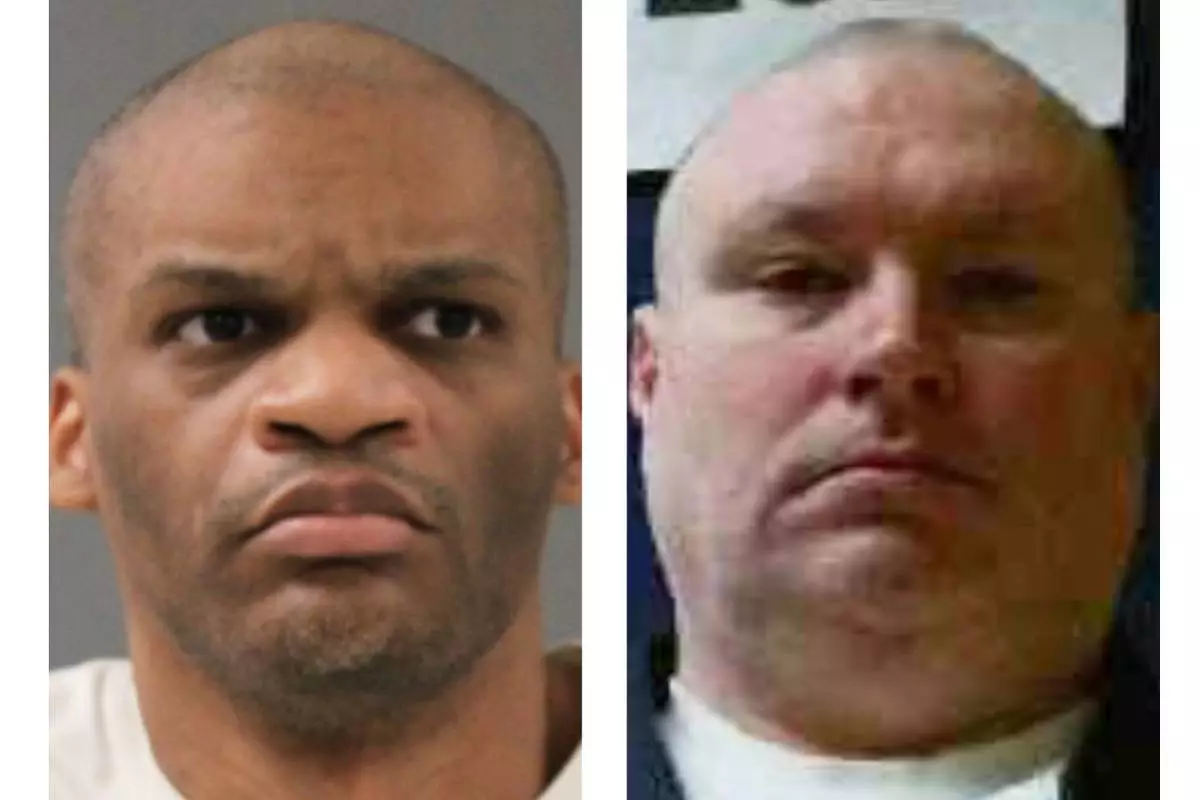
This combination of photos provided by the Texas Department of Criminal Justice and Georgia Department of Corrections shows LeJames Norman, left, and Stacey Humphreys, right. (Texas Department of Criminal Justice/Georgia Department of Corrections via AP)
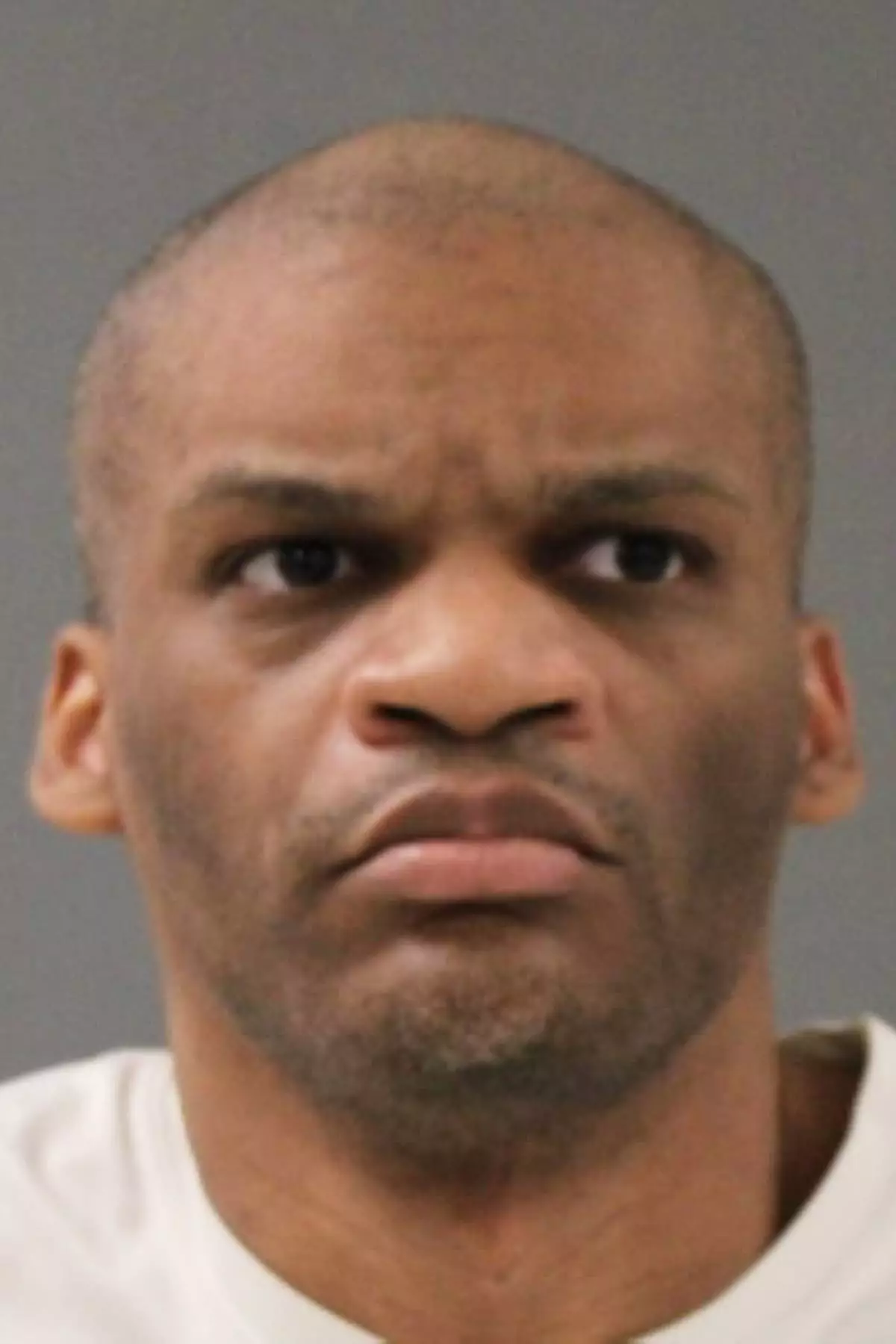
This photo provided by the Texas Department of Criminal Justice shows LeJames Norman on Feb. 28, 2024. (Texas Department of Criminal Justice via AP)