THE HAGUE, Netherlands (AP) — Venezuela ’s acting President Delcy Rodríguez told journalists Monday that her country had no plans to become the 51st U.S. state after President Donald Trump said he was “seriously considering” the move.
Rodríguez was speaking at the International Court of Justice in The Hague on the final day of hearings in a dispute between her country and neighboring Guyana over the massive mineral- and oil-rich Essequibo region.
“We will continue to defend our integrity, our sovereignty, our independence, our history,” said Rodríguez, who assumed power in January following a U.S. military operation that ousted then-President Nicolás Maduro. Venezuela is “not a colony, but a free country,” she added.
Speaking to Fox News earlier on Monday, Trump said he was “seriously considering making Venezuela the 51st US state,” according to a post by Fox News' co-anchor John Roberts on social media. The White House did not immediately respond to a request for comment on the matter.
Trump has made similar comments about Canada.
Rodríguez went on to say that Venezuelan and U.S. officials have been in touch and are working on “cooperation and understanding.”
Before addressing Trump's comments, Rodríguez defended her country’s claim to Essequibo at the United Nations' highest court, telling judges that political negotiations — not a judicial ruling — will resolve the century-old territorial dispute.
The 62,000-square-mile territory, which makes up two-thirds of Guyana, is rich in gold, diamonds, timber and other natural resources. It also sits near massive offshore oil deposits currently producing an average 900,000 barrels a day.
That output is close to Venezuela’s daily production of about 1 million barrels a day and has transformed one of the smallest countries in South America into a significant energy producer.
Venezuela has considered Essequibo its own since the Spanish colonial period, when the jungle region fell within its boundaries. But an 1899 decision by arbitrators from Britain, Russia and the United States drew the border along the Essequibo River largely in favor of Guyana.
Venezuela has argued that a 1966 agreement sealed in Geneva to resolve the dispute effectively nullified the 19th-century arbitration. In 2018, however, three years after ExxonMobil announced a significant oil discovery off the Essequibo coast, Guyana’s government went to the International Court of Justice and asked judges to uphold the 1899 ruling.
Tensions between the countries further flared in 2023, when Rodríguez’s predecessor, Maduro, threatened to annex the region by force after holding a referendum asking voters if Essequibo should be turned into a Venezuelan state. Maduro was captured Jan. 3 during a U.S. military operation in Venezuela’s capital, Caracas, and taken to New York to face drug trafficking charges. He has pleaded not guilty.
Rodríguez did not address the referendum in her remarks, but she told the court that the 1966 agreement is designed to allow negotiations between Venezuela and Guyana to resolve the territorial dispute. And she accused Guyana’s government of undermining the agreement with the “opportunistic” decision to ask the court to address the dispute.
“At a time when the mechanisms established in the Geneva agreement were still fully in force, Guyana unilaterally chose to shift the dispute from the negotiating arena to a judicial resolution,” she said. “This change was not accidental; it coincided with the discovery in 2015 of the oil field that would become world-renowned.”
When hearings opened last week, Guyana’s foreign minister, Hugh Hilton Todd, told the panel of international judges that the dispute “has been a blight on our existence as a sovereign state from the very beginning.” He said that 70% of Guyana’s territory is at stake.
The court is likely to take months to issue a final and legally binding ruling in the case.
Venezuela has warned that its participation in the hearings does not mean either consent to, or recognition of, the court’s jurisdiction.
Garcia Cano reported from Mexico City.

FILE - Venezuela's acting President Delcy Rodriguez waves after bidding farewell to U.S. Energy Secretary Chris Wright following their meeting at Miraflores Palace in Caracas, Venezuela, Feb. 11, 2026. (AP Photo/Ariana Cubillos, File)
NEW YORK (AP) — Oil prices are rising Monday as the war with Iran threatens to drag on for longer, but the U.S. stock market is nevertheless inching toward more records.
The price for a barrel of Brent crude oil climbed 2.7% to $104.02 after President Donald Trump said the U.S.-Iran ceasefire was on “life support” after he rejected Iran's latest proposal to end their war. The rejection raises the stakes for Trump’s trip this week to China, where he could urge President Xi Jinping to pressure Iran into making concessions. Xi has leverage because China is the biggest buyer of Iran’s sanctioned crude oil.
The war has already sent the price for a barrel of Brent up from roughly $70 and delivered a blast of painful inflation through the global economy. That’s because it has shut the Strait of Hormuz and kept oil tankers stuck in the Persian Gulf instead of delivering crude to customers worldwide.
Still, the U.S. stock market has been setting records recently on hopes that the war will not keep oil prices high for very long. U.S. companies are meanwhile producing even bigger profits than analysts expected, while signals suggest the U.S. economy is holding up even though households are feeling discouraged by expensive gasoline and tariffs.
On Wall Street, the S&P 500 rose 0.3% from its record set Friday. The Dow Jones Industrial Average was up 107 points, or 0.2%, as of 2:18 p.m. Eastern time, and the Nasdaq composite was 0.3% higher and on track to set its own all-time high.
Mosaic helped drag on the market after the fertilizer company reported much weaker results for the latest quarter than analysts expected. The company is benefiting from higher prices for its products, but it’s also contending with much higher prices for sulfur and other raw materials because of logistics snarls created by the war with Iran.
Mosaic’s stock fell 1.5%, and more stocks within the S&P 500 sank than rose.
Stocks of companies whose customers have the least cushion to absorb higher gasoline prices struggled, and Dollar General fell 6.8%. Businesses with big fuel bills likewise had some of the market's sharpest losses, including drops of 4.4% for Carnival and 3.2% for Southwest Airlines.
Helping to offset that was Fox, which rose 4.8% after reporting stronger profit and revenue for the latest quarter than analysts expected.
More than four out of every five companies in the S&P 500 index that have reported their results for the latest quarter so far have topped profit expectations, and they're on track to deliver overall growth of nearly 28%, according to FactSet. If that turns out to be the case, it would be the best growth since the end of 2021.
Outside of earnings reports, Beazer Homes USA soared 34.8% after Dream Finders Homes offered to buy it in a deal valuing it at roughly $704 million. A combination would create the country’s seventh-largest homebuilder, and Dream Finders is asking Beazer’s shareholders to push its management and board to OK the deal after making several attempts itself.
Dream Finders added 1.5%.
Tech stocks were also strong, continuing their big run amid big spending in the boom around artificial-intelligence technology. Gains of 2.7% for Nvidia and 7.8% for Micron Technology were two of the strongest forces pushing upward on the S&P 500.
In stock markets abroad, indexes were mixed across Europe and Asia. France’s CAC 40 fell 0.7%, and South Korea’s Kospi soared 4.3% for two of the world’s bigger moves
In the bond market, Treasury yields held relatively steady. The 10-year yield rose to 4.40% from 4.38% late Friday.
Yields have moderated a bit this month, but they remain well above where they were before the war began. Higher yields can raise rates for mortgages and other kinds of loans going to U.S. households and businesses, which in turn can slow the economy. Higher yields also tend to push downward on prices for stocks and other kinds of investments.
A report on Monday said the pace of sales for previously occupied U.S. homes was weaker last month than economists expected.
AP Business Writers Chan Ho-him and Matt Ott contributed to this report.
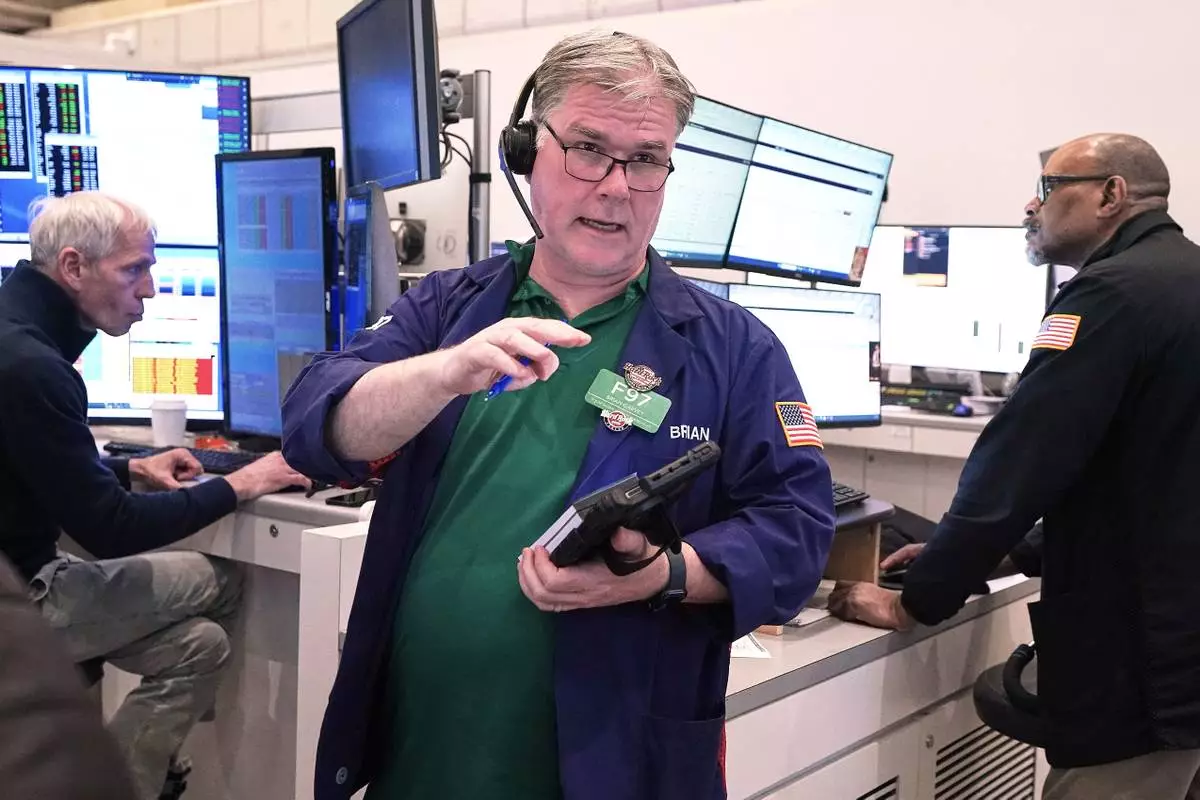
Options trader Brian Garvey, center, works on the floor of the New York Stock Exchange, Monday, May 11, 2026. (AP Photo/Richard Drew)
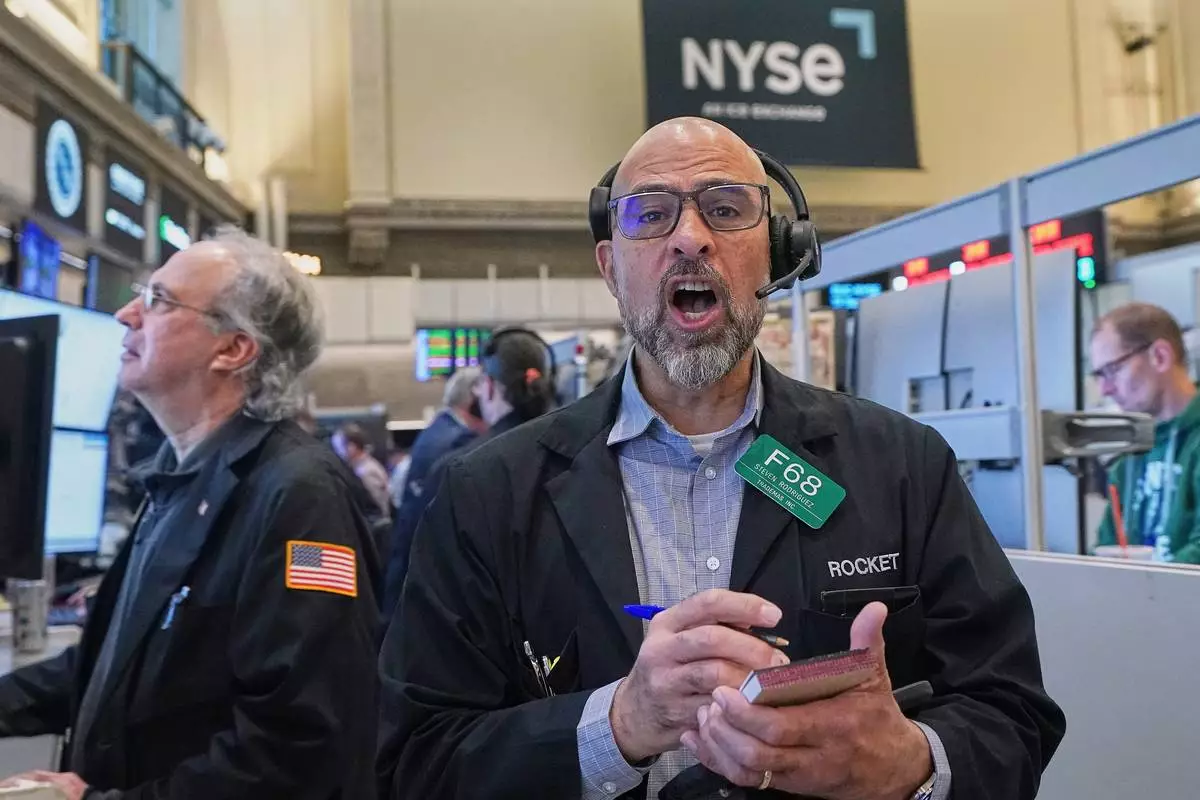
Options trader Steven Rodriguez, center, works on the floor of the New York Stock Exchange, Monday, May 11, 2026. (AP Photo/Richard Drew)
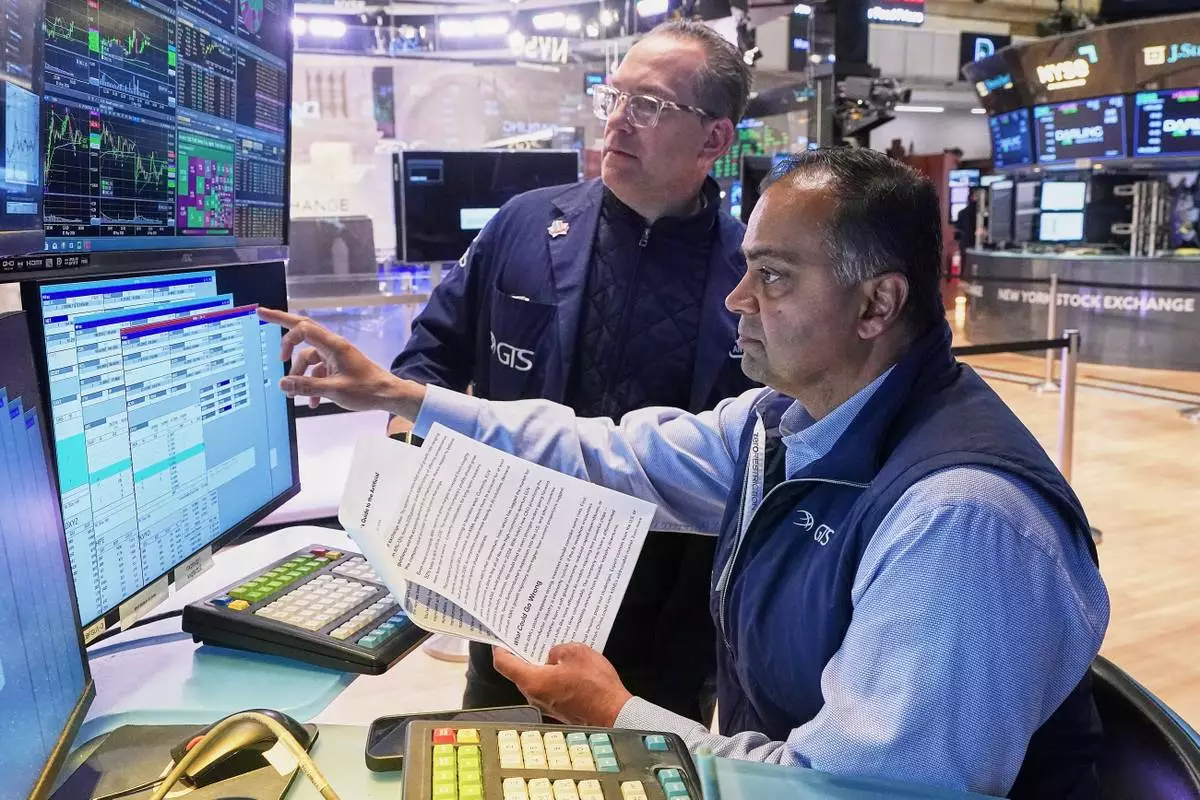
Specialists Anthony Matesic, left, and Dilip Patel work on the floor of the New York Stock Exchange, Monday, May 11, 2026. (AP Photo/Richard Drew)
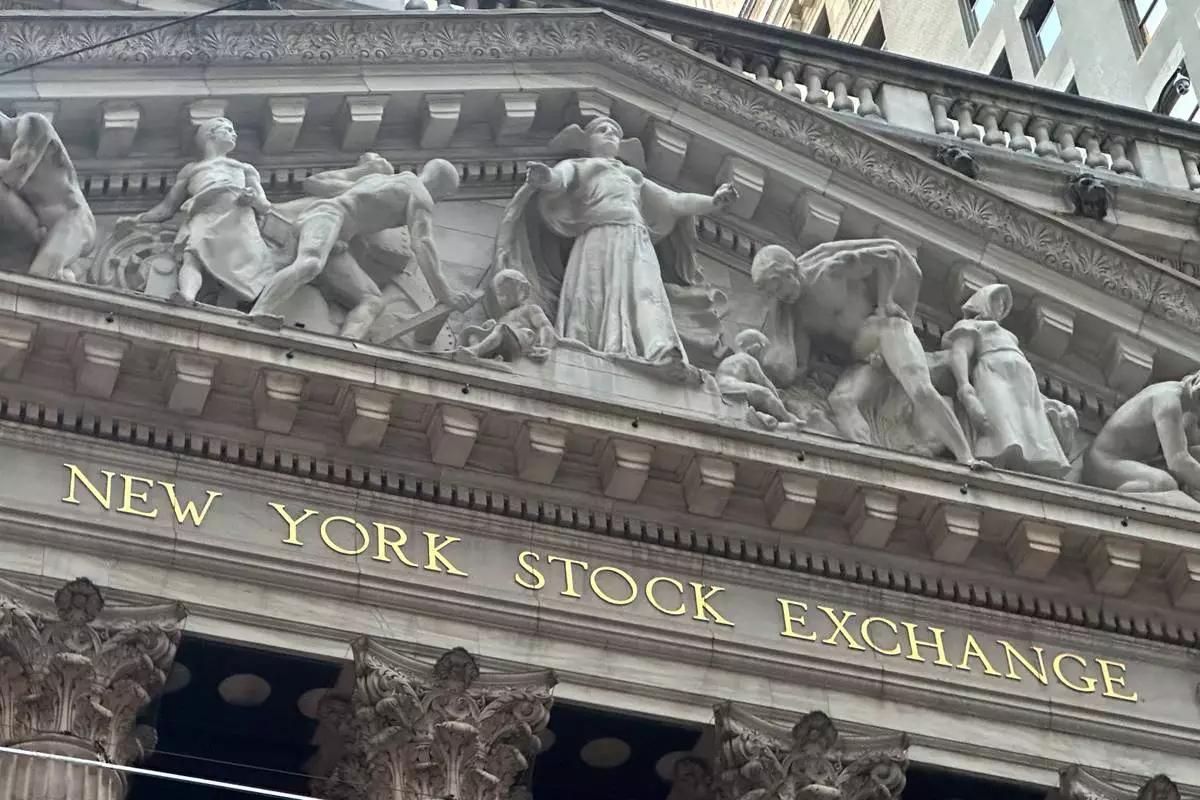
FIL:E - The New York Stock Exchange is shown in New York's Financial District on Dec. 23, 2024. (AP Photo/Peter Morgan, File)

The South Korean-operated vessel HMM NAMU is docked after being damaged from a fire following an explosion in the Strait of Hormuz, at a port in Dubai, United Arab Emirates, Friday, May 8, 2026. (Kim Sang-hun/Yonhap via AP)

Options trader Justin Kanda works on the floor of the New York Stock Exchange, Thursday, May 7, 2026. (AP Photo/Richard Drew)

People walk in front of an electronic stock board showing Japan's Nikkei index at a securities firm Monday, May 11, 2026, in Tokyo. (AP Photo/Eugene Hoshiko)

People work and rest near an electronic stock board showing Japan's Nikkei index in an office building Monday, May 11, 2026, in Tokyo. (AP Photo/Eugene Hoshiko)
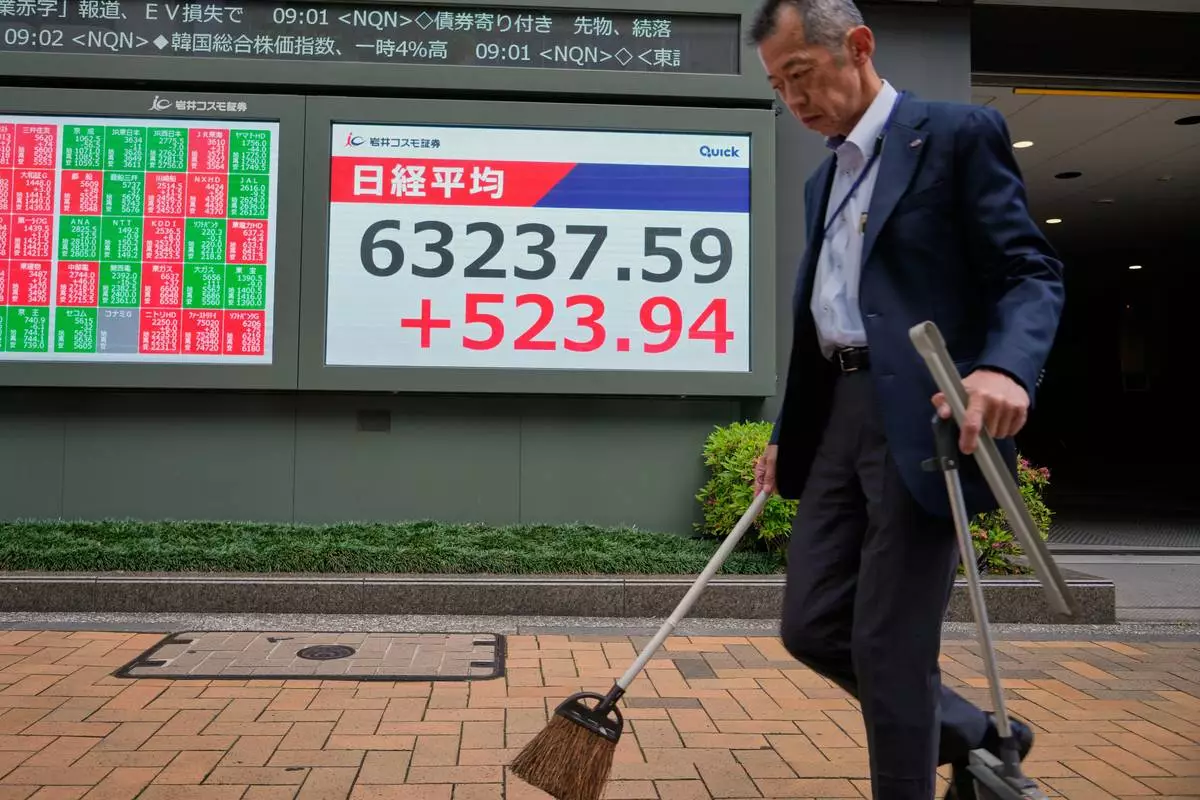
A man sweeps in front of an electronic stock board showing Japan's Nikkei index at a securities firm Monday, May 11, 2026, in Tokyo. (AP Photo/Eugene Hoshiko)
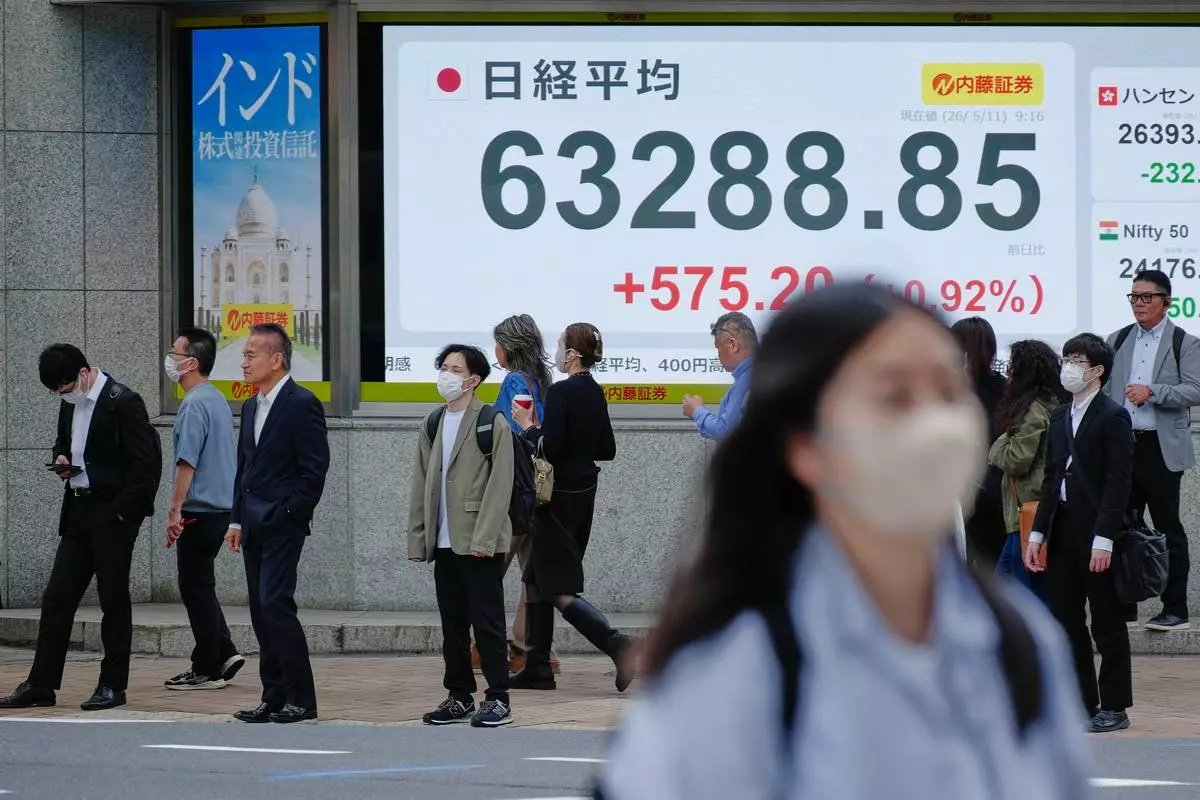
People stand in front of an electronic stock board showing Japan's Nikkei index at a securities firm Monday, May 11, 2026, in Tokyo. (AP Photo/Eugene Hoshiko)