Skip to Content Facebook Feature Image

South Florida officers sue Ben Affleck and Matt Damon, claiming details in 'The Rip' are too real

ENT

South Florida officers sue Ben Affleck and Matt Damon, claiming details in 'The Rip' are too real
ENT

ENT

South Florida officers sue Ben Affleck and Matt Damon, claiming details in 'The Rip' are too real

2026-05-12 09:52 Last Updated At:10:00

MIAMI (AP) — Two South Florida police officers claim Ben Affleck and Matt Damon's recent action thriller “The Rip” used too many real-life details in its fictionalized narrative, causing harm to the officers' personal and professional reputations, according to a defamation lawsuit.

Jason Smith and Jonathan Santana, sergeants in the Miami-Dade Sheriff’s Office, filed the lawsuit in Miami federal court earlier this month against Artists Equity, a film production company owned by Affleck and Damon. Court filings don't say how much the officers are suing for, but the civil complaint says they're seeking compensatory damages, punitive damages and attorney fees, as well as a public retraction and correction.

“The Rip” features Affleck and Damon as South Florida police officers who find millions of dollars inside a house. Parts of the movie were inspired by a real 2016 case, where police found over $21 million linked to a suspected marijuana trafficker in a Miami Lakes home.

Affleck and Damon have said while promoting the film that the story is loosely based on accounts from Miami-Dade Police Capt. Chris Casiano, who served as a technical advisor on the film. Damon told The Associated Press during a January interview that he and Affleck spent time with Casiano and other narcotics officers in preparation for the film.

“We really wanted to kind of understand what those dynamics were like,” Damon said. “I mean, these units are very tight because they’re really putting their lives in each other’s hands, and they’re doing something that’s very dangerous.”

An attorney for Artists Equity declined to comment when reached Monday by the AP. But in a March 19 response to the plaintiffs' demand letter, Leita Walker, an attorney for Artists Equity, wrote that the film does not purport to tell the true story of that incident or portray real people, which had been stated by a disclaimer in the film's credits.

Although Smith and Santana aren't named in the film and weren't involved in its production, the lawsuit claims that Santana was serving as the lead detective assigned to the real case, and Smith was the sergeant who supervised the investigative team. The film's inclusion of real details about the case gives the impression that the characters are based on the plaintiffs, the suit said.

This, the lawsuit claims, has given friends, family members and colleagues the impression that the plaintiffs committed the criminal acts that appear in the film, which include (SPOILER ALERT) conspiring to steal seized drug money, murdering a supervising officer, communicating with cartel members, committing arson in a residential neighborhood, endangering the lives of civilians, repeatedly violating core law-enforcement protocols and executing a federal agent rather than making an arrest.

Walker wrote in March that the plaintiffs haven't even identified which particular character is supposed to be based on Smith or Santana, so even if “The Rip” was actually about a real-life narcotics team, there's no way to connect any of the characters to the plaintiffs.

“The Rip,” directed by Joe Carnahan, debuted in January on Netflix. It's currently rated 78% Fresh on Rotten Tomatoes.

Associated Press video journalist Brooke Lefferts in New York contributed.
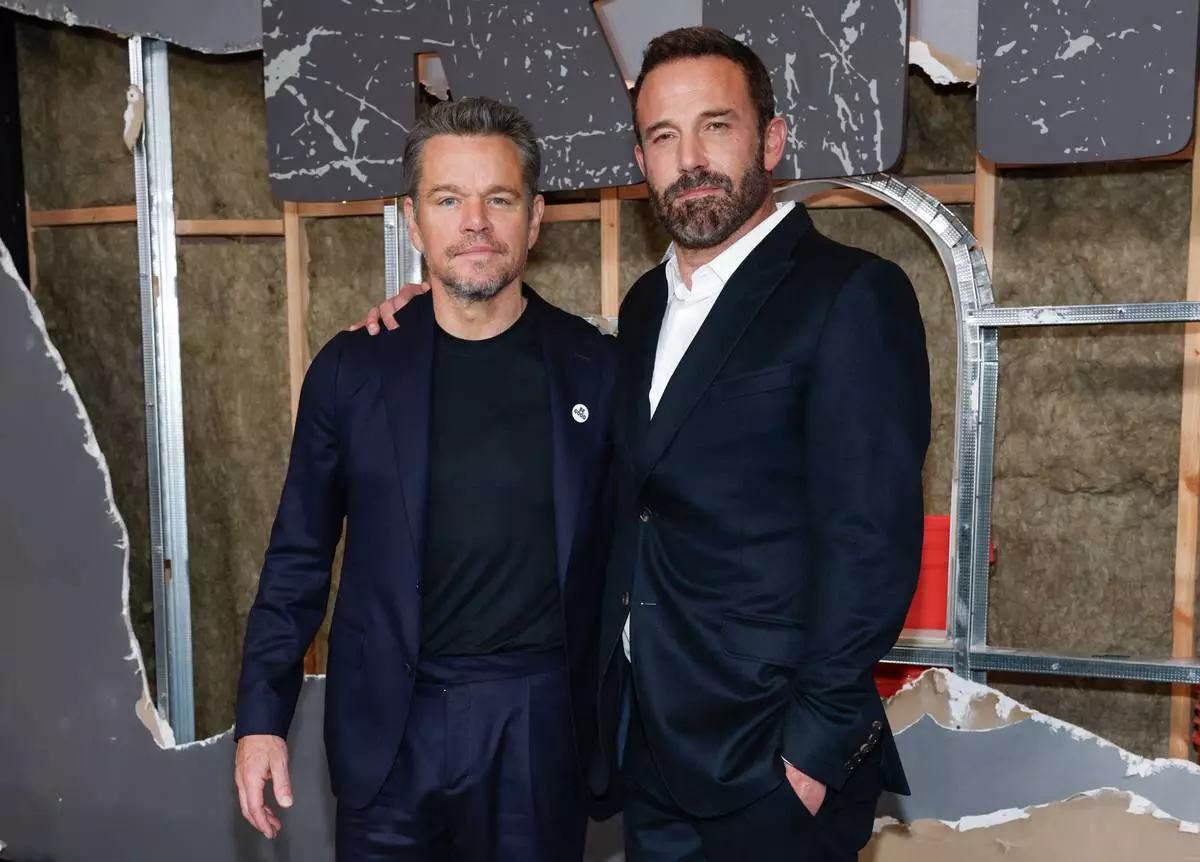
FILE - Matt Damon, left, and Ben Affleck attend the world premiere of "The Rip" at Alice Tully Hall, on Jan. 13, 2026, in New York. (Photo by CJ Rivera/Invision/AP, File)

FILE - Matt Damon, left, and Ben Affleck attend the world premiere of "The Rip" at Alice Tully Hall, on Jan. 13, 2026, in New York. (Photo by CJ Rivera/Invision/AP, File)

An arbitrator ruled in favor of the College Sports Commission on Monday in a case brought on behalf of Nebraska football players that is viewed as a key test for the new entity in charge of approving third-party name-image-likeness deals in college sports.

The CSC in a statement said the arbitrator affirmed the commission's decision to reject third-party NIL agreements between Nebraska's multimedia rights (MMR) partner, Playfly, and the players.

At issue was whether Nebraska's MMR partner would be considered an “associated entity" — deals from which are subject to CSC scrutiny.

With that decided, the CSC said the arbitrator rejected the deals because:

— They lacked what the CSC calls a “valid business purpose” because they did not include goods or services offered to the general public for profit.

— Playfly violated a rule against “warehousing” NIL rights — i.e., paying for the rights to use for some purpose later instead of employing them right away.

Speaking to media at the Atlantic Coast Conference meetings in Florida, the CSC's CEO, Bryan Seeley, said he didn't consider the deal to be a precedent.

“Even if it’s not precedential, the fact is it’s influential, and it’s influential in people’s minds about how they think about enforcement,” he said. "So, for me, it was a good day.”

The CSC said it would release the arbitrator's full decision later.

Some observers are curious to see whether the university or the state will sue over the decision, something the CSC was hoping to avoid when it sent out a “participation agreement” for schools to sign that forbid them from suing the commission.

Many schools have been reluctant to sign the agreement, arguing they’re not allowed under their state laws to sign away their ability to take legal action.

“It’s whether their state attorney general challenges it in court and what the outcome of that is, I think that is the true test of whether this (CSC) is a legitimate governing body,” sports attorney Paia LaPalombara told The Associated Press in an interview last week in discussing the Nebraska case.

In acknowledging the decision, Nebraska AD Troy Dannen said the school would continue to operate under the CSC process “while monitoring changes in the collegiate landscape.”

“We fully support all our student-athletes maximizing the value of their Name, Image and Likeness during their time at the University of Nebraska,” he said.

Officials from the Nebraska attorney general's office did not immediately respond to emails from the AP.

Seeley still thinks there are ways for the Nebraska players to get paid within the rules.

“I don’t believe litigation is necessary for these student-athletes to get money for their NIL,” he said. "I cannot control what happens, though, outside of what we do.”

In a separate case pending in the federal court that approved NIL payments via the House settlement, attorneys are arguing that MMR partners should not be considered “associated entities.” A hearing in that case is scheduled for May 27.

AP Sports Writer Mark Long in Amelia Island, Florida, contributed to this report.

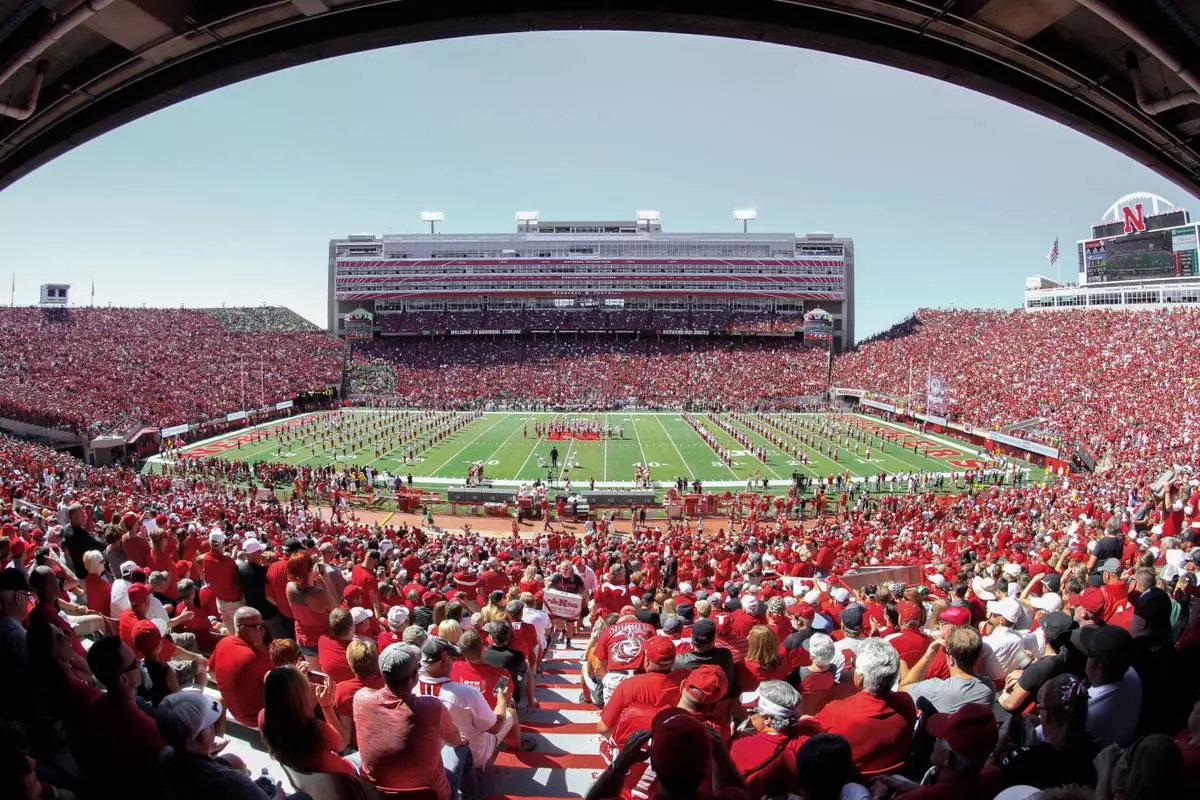
FILE - Fans fill Memorial Stadium in Lincoln Neb., on Saturday, Sept. 17, 2016. (AP Photo/Nati Harnik File, File)

FILE - Fans fill Memorial Stadium in Lincoln Neb., on Saturday, Sept. 17, 2016. (AP Photo/Nati Harnik File, File)

Recommended Articles