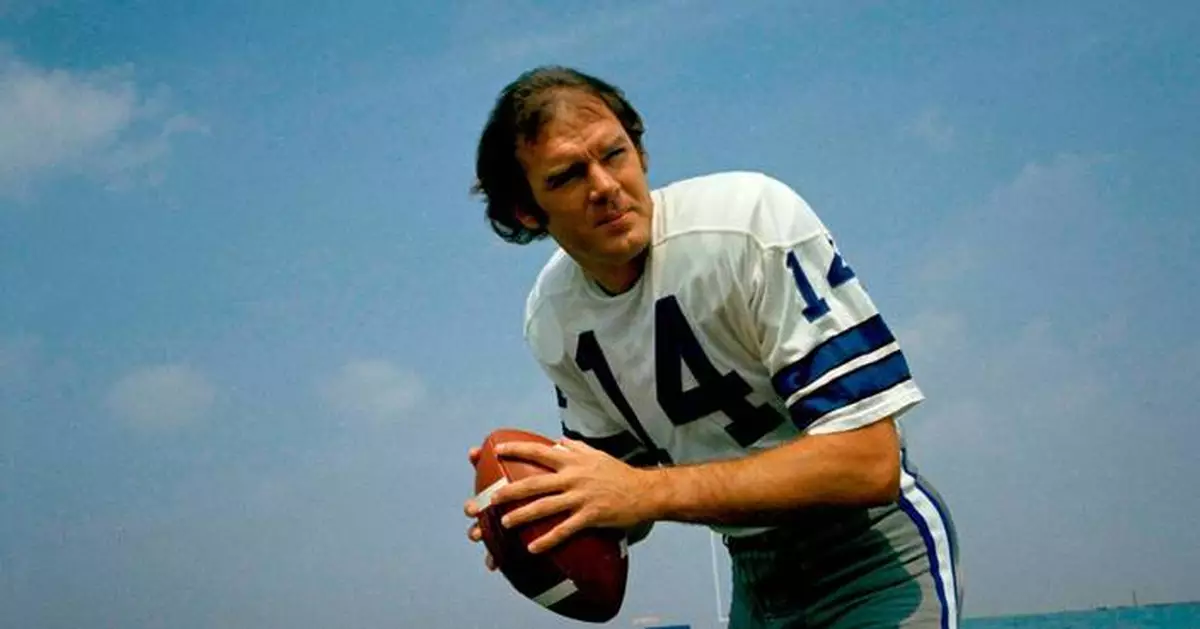
DENVER (AP) — Craig Morton, who spent 18 years in the NFL and became the first quarterback to start the Super Bowl for two franchises — the Dallas Cowboys and Denver Broncos — has died. He was 83.
Morton died Saturday in Mill Valley, California, the Broncos confirmed through his family.
Morton is one of only four QBs to start the NFL’s biggest game with two organizations. The other three — Peyton Manning, Tom Brady and Kurt Warner — all ended up with at least one win. Morton's only Super Bowl ring came as a backup.
His first Super Bowl start was in a turnover-plagued Super Bowl V to end the 1970 season — a 16-13 loss by the Cowboys to the Colts. Morton threw the Cowboys’ first touchdown pass in a title game.
Seven years later, and after an unsuccessful stint with the New York Giants, Morton led the Broncos to a matchup against his former team. He threw for 39 yards and four interceptions before getting pulled for Norris Weese in a 27-10 loss, which marked the first of four straight Super Bowl defeats for Denver.
Known for his strong arm, Morton turned in a college football Hall of Fame career at California, where he played for coach Marv Levy and assistant Bill Walsh. Morton went fifth in the 1965 NFL draft to the Cowboys. Oakland also took him in the 10th round of the AFL draft.
He joined a Cowboys team coached by Tom Landry that had veteran Don Meredith at QB. Morton played in four games that season. He then split time with up-and-coming Roger Staubach in 1970-71, the year the Cowboys went to their first Super Bowl.
The next season, Morton and Staubach also split time — at some points, even alternating every play. But ultimately, it was Staubach who took over the starting job, then led the Cowboys to the Super Bowl and a 24-3 win over Miami. Staubach was the MVP of that game and it wasn’t hard to imagine the end of Morton’s time in Dallas.
The Cowboys dealt their backup to the Giants in 1974 for a package that included a pick Dallas would use to take defensive lineman Randy White, who became a Super Bowl MVP and Pro Football Hall of Famer.
Morton struggled in New York, but enjoyed a renaissance after getting traded to Denver before the 1977 season — the season that put the Broncos on the map.
The veteran QB became the final piece for a Broncos team under a new coach, Red Miller, who inherited a strong defense that would become known as the Orange Crush.
Morton led the Broncos to a 12-2 record and playoff wins over the Steelers and Raiders. He famously spent the week in the hospital with a hip injury before spearheading the win over rival Oakland.
Four years later — and after the Broncos had toyed unsuccessfully with finding his replacement — Morton teamed with a new coach, his former Cowboys teammate Dan Reeves. In 1981, Morton threw for 3,195 yards and 21 TDs, both career highs (he matched his best mark in TDs).
He retired after starting three games in the strike-shortened 1982 season. Denver would trade for John Elway, who supplanted Morton as the franchise’s most famous and revered No. 7.
Morton threw for 27,908 yards over his career with 183 touchdowns and 187 interceptions. Morton ranked in the top 20 all-time in yards passing and TD passes when he retired following the 1982 season.
He was voted into the Broncos’ Ring of Fame in 1988, along with two other standouts from that ’77 team — Haven Moses and Jim Turner.
AP National Writer Eddie Pells and AP Pro Football Writer Josh Dubow contributed to this report.
AP NFL: https://apnews.com/hub/NFL
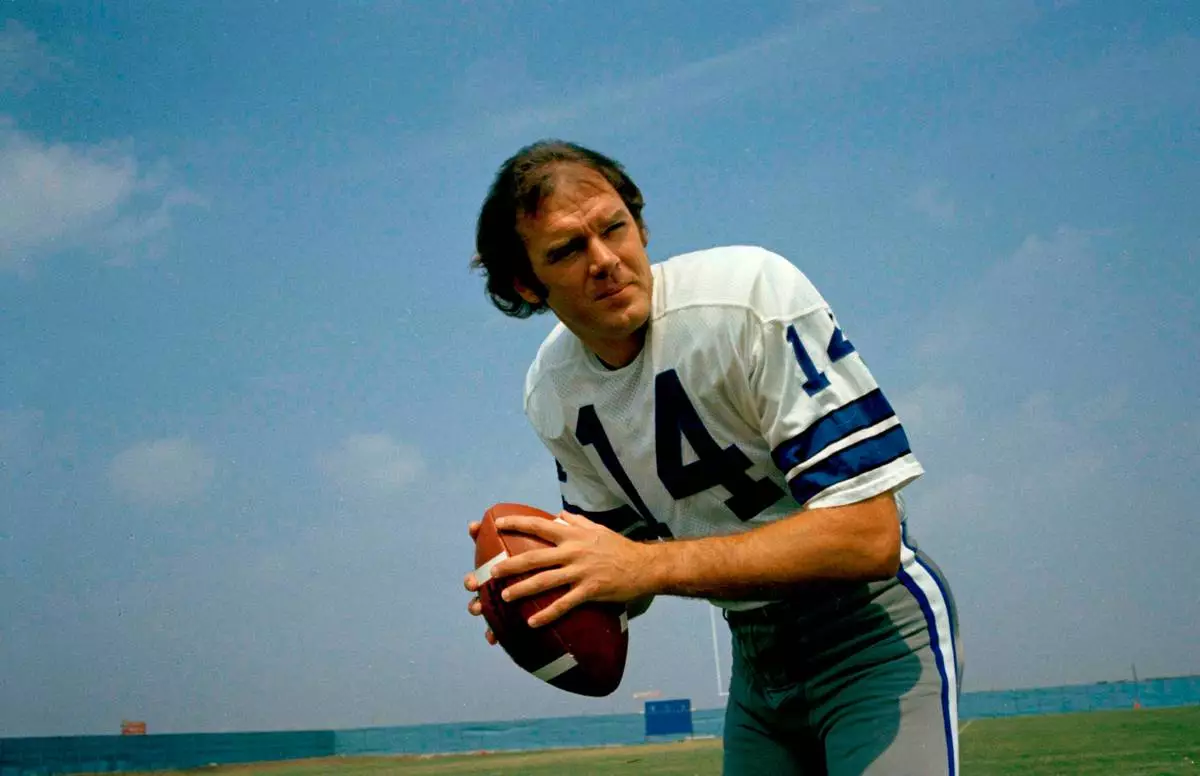
FILE -Dallas Cowboys Craig Morton is pictured in 1973. (AP Photo, File)
The model of cargo plane that crashed in Kentucky last fall after an engine fell off a UPS jet as it was taking off resumed flying over the weekend.
The Federal Aviation Administration said it approved Boeing’s proposed fix for the workhorse MD-11s “after extensive review.” And then FedEx started flying them to deliver packages again Sunday.
The UPS plane crashed in November 2025 shortly after taking off once the left engine flew off the wing as the plane rolled down the runway. Three pilots on the plane that was headed for Hawaii loaded with packages and fuel were killed along with 12 more people on the ground near Louisville’s Muhammad Ali International Airport.
Boeing developed a plan to replace a key spherical bearing and step up inspections of the parts that hold the engines to the wings. The National Transportation Safety Board has said that in 2011 Boeing had documented four previous failures of the part that helps secure the MD-11’s engines to the wings on three different planes, but at that point the plane manufacturer “determined it would not result in a safety of flight condition.” These planes were built by McDonnell Douglas, which was later bought by Boeing.
The FAA grounded all MD-11s after the crash because of concerns that the planes might not be safe. Earlier this year, UPS retired its entire fleet of the aircraft, which made up about 9% of its total fleet. But FedEx had remained committed to getting them back in the air even though they only account for about 4% of its fleet. The other package hauler that used MD-11s, Western Global Airlines, has not commented publicly since the crash and didn't respond to an email about the FAA's decision.
FedEx said in a statement that it worked closely with Boeing, the FAA and its own experts to inspect and repair its planes, and the government certified that it had complied with Boeing's recommendations. It owns 46 of these planes though even before the crash it had been storing more than two dozen of them.
“Safety is our highest priority at FedEx,” the company said.
But FedEx does plan to eventually retire its MD-11s and replace them with more efficient models. They had announced that long-term plan even before the crash.
Aviation lawyers who are representing some of the families that have sued over the Louisville crash said they hope the FAA made sure these planes will be safe.
“We hope the FAA does a thorough job of investigating the fixes before the MD-11 fleet is allowed to return to flight,” lawyer Bradley Cosgrove said.
But aviation safety expert Jeff Guzzetti said he’s surprised it took this long to get these planes flying again given how quickly the NTSB identified key concerns that likely contributed to the engine falling off. The NTSB is planning two days of investigative hearings on the UPS crash next week to delve deeper into what happened.
“I’m confident that the solution will work, and I would like to see the MD-11s back up in the air. It will be a safe airplane with regards to its engines after these corrective actions are made,” said Guzzetti, who used to investigate crashes for both the NTSB and FAA.
Some experts speculated after the crash that the MD-11s might never fly again if the repair proved to be more expensive that it was worth in these older planes. But Boeing found a way to address the safety concerns with just replacing the bearing and stepping up inspections.
Associated Press writer Jack Dura contributed to this report from Bismarck, North Dakota.
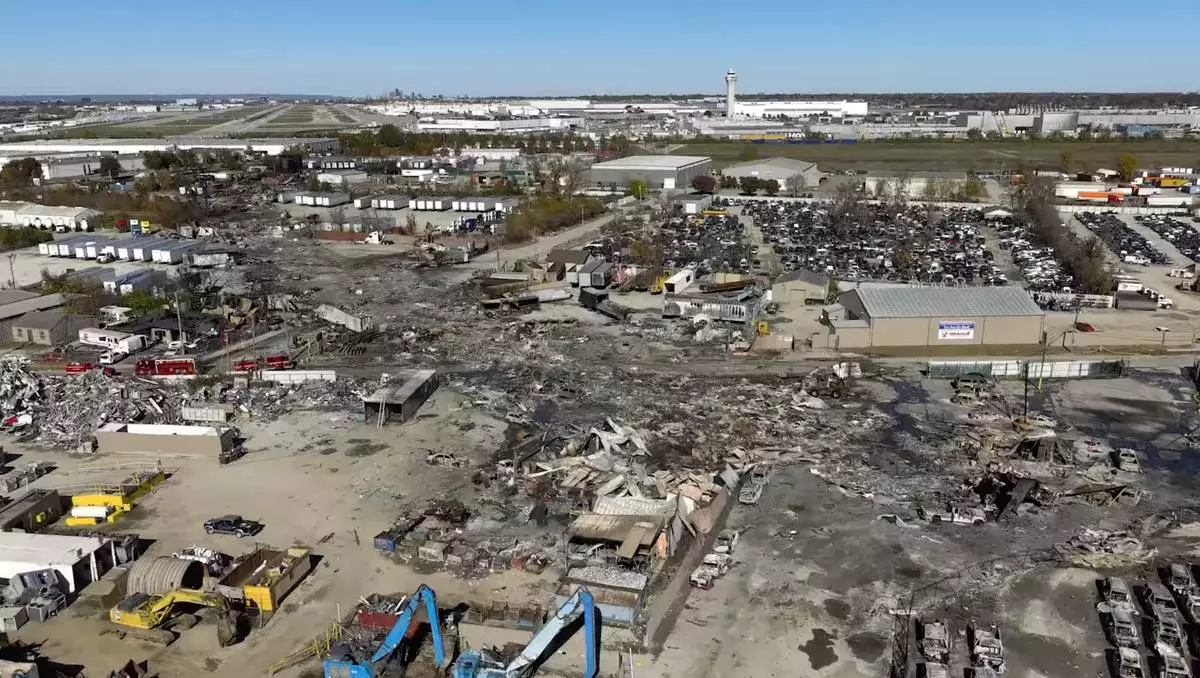
FILE - This photo provided by the National Transportation Safety Board shows UPS plane crash scene, Nov. 6, 2025 in Louisville, Ky. (NTSB via AP, File)
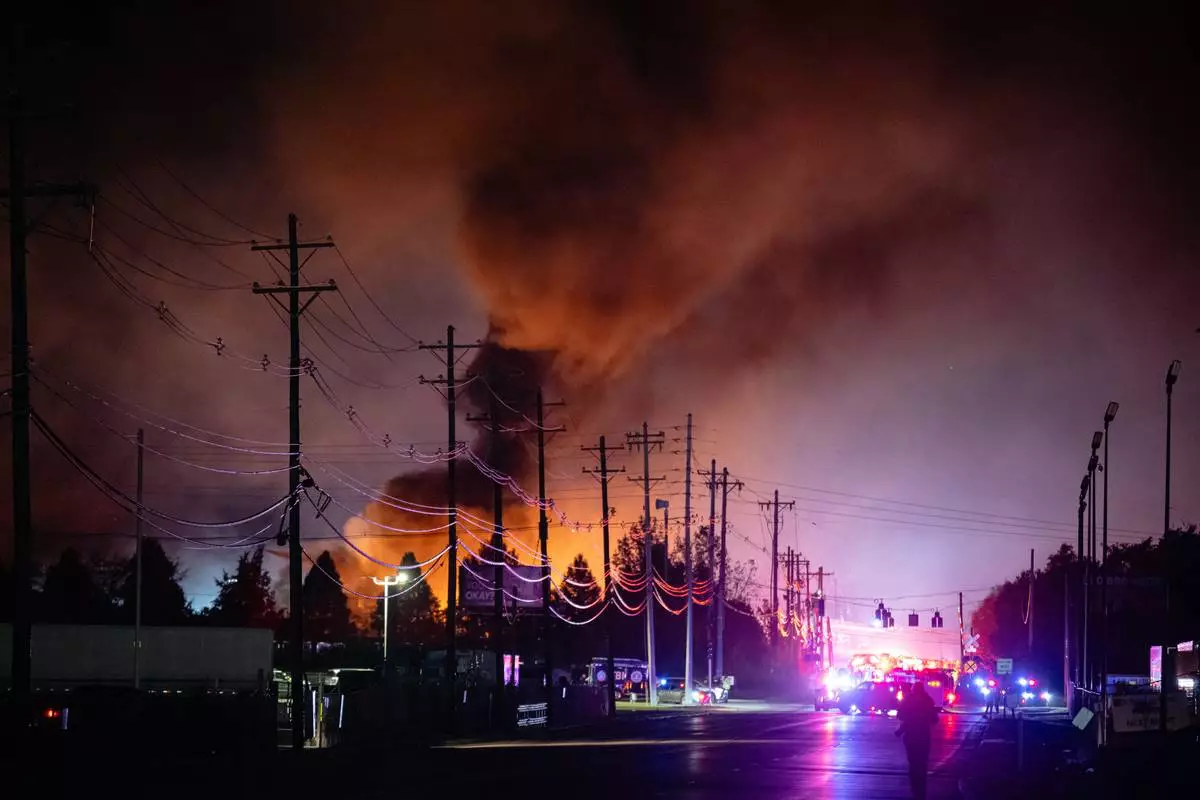
FILE - Plumes of smoke rise from the area of a UPS cargo plane crash at Louisville Muhammad Ali International Airport, Nov. 4, 2025, in Louisville, Ky. (AP Photo/Jon Cherry, File)