Diversified spending models of "film-plus" have been explored across China this year, aiming to activate new consumption drivers and reshape urban economy.
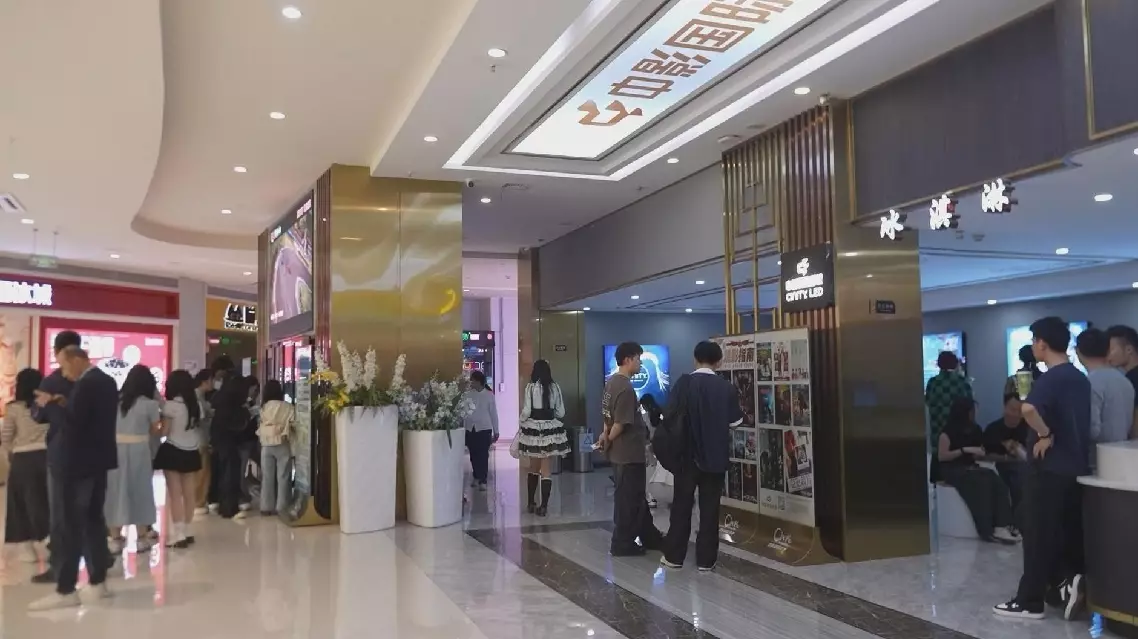
Nowadays, going to the movies, browsing shopping malls, and enjoying related leisure activities have become important choices for people as daily pastimes, for family gatherings, and for socializing with friends. So many cities initiated programs to encourage businesses to cross-market with cinemas.
In 2025, the China Film Administration (CFA) rolled out a series of "film-plus" initiatives nationwide.
Through "film plus cultural and creative products" and "film plus retail," Chinese films have entered a new stage of full industry-chain intellectual property (IP) development.
"It has been one of my consumption habits to watch movies with my family or friends. It makes me feel very relaxed to have a meal or go shopping in the mall after watching movies, which is very convenient," said Zeng Tianpeng, a local resident in Fuzhou City, east China's Jiangxi Province.
Taking advantage of the movie-watching craze, many core business districts in Fuzhou City have actively collaborated with cinemas.
Consumption points from shopping and dining in malls can be exchanged for movie tickets. With the ticket stubs of the same day, people can enjoy exclusive discounts at over 30 restaurants, retail stores, entertainment outlets and nearby scenic spots across the city.
Films have effectively connected multiple fields such as culture and tourism, catering and shopping, gradually forming a new consumption pattern driven by films.
"We have transformed the cinema into a comprehensive experience space integrating social interaction, leisure and consumption through discounted ticket prices for the public, collaboration among business districts and upgraded service quality. This has boosted the popularity of the surrounding business districts, and helped to achieve a win-win situation for the cinema, merchants and citizens," said Wan Niu, manager of a cinema in Fuzhou City.
"We have been exploring 'ticket stub economy', providing discounts on meals or tickets, or other benefits to consumers with movie ticket stubs. We are developing the all-around radiation capacity of a film as an IP to empower a city or an industry," said Zhi Feina, a professor with the Chinese National Academy of Arts.
Film-plus initiatives spur new consumption trends across Chinese cities
China will push for the rollout of next-generation communication networks ahead of market demand in the coming five years, a senior official with the Ministry of Industry and Information Technology (MIIT) said on Wednesday at the annual International Postal and Telecommunications Expo (PT Expo).
The push mirrors the development plan recently issued by the ministry for the information and communications industry during the 15th Five-Year Plan period (2026-2030).
According to the plan, a new-generation communications network with comprehensive coverage and leading performance is expected to be fully established by 2030, the 5G user penetration rate will reach 95 percent, gigabit-capable broadband will connect to 320 million households, and intelligent computing power will reach 9,800 EFLOPS -- a unit of computing performance, with each unit representing one quintillion floating-point operations per second.
"We will systemically promote the development of an application-driven and appropriately future-oriented next-generation communications network, push broadband networks toward dual 10-gigabit evolution, and advance the construction of low-Earth orbit satellite internet systems. We will also holistically optimize a communications network that links ground and sea, expand and improve computing facilities, and strengthen computing-network integration and the interconnection of computing power, so as to better support the national integrated computing network," said Yu Xiaohui, vice minister of the Ministry of Industry and Information Technology.
The move came as breakthroughs in digital intelligence technologies -- represented by artificial intelligence -- brought opportunities for the development of information and communication.
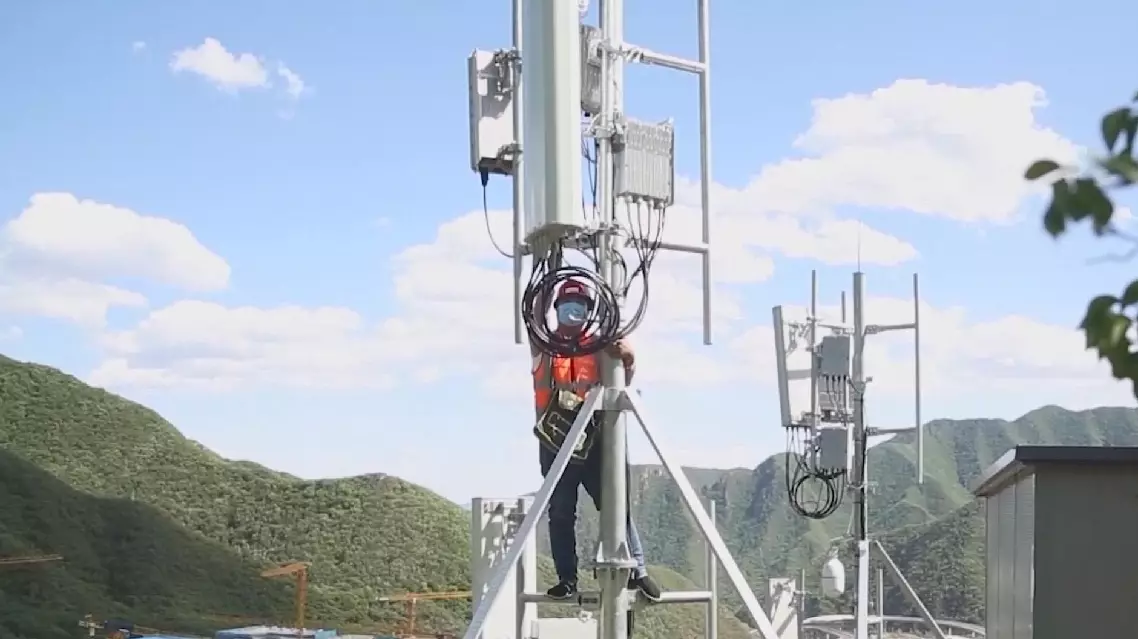
As of the end of July, China had deployed over 5.15 million 5G base stations, with early-stage deployment of 10-gigabit optical networks already underway and intelligent computing power standing at 2,185 EFLOPs, according to official data.
China will also deepen the integration of terrestrial and satellite networks, including commercial applications for smartphone direct-to-satellite services and the Internet of Things (IoT), ramp up research and development for 6G base stations, and advance the development of standards in key information and communication sectors, such as computing power networks and quantum communication, according to the development plan.
The PT Expo this year is being held from Tuesday to Thursday in Beijing.
China to push ahead-of-demand rollout of next-generation communications networks