Skip to Content Facebook Feature Image

SITI: Hong Kong and Finland Aim to Advance Life and Health Technology Innovation via Collaboration

HK

SITI: Hong Kong and Finland Aim to Advance Life and Health Technology Innovation via Collaboration
HK

HK

SITI: Hong Kong and Finland Aim to Advance Life and Health Technology Innovation via Collaboration

2026-05-14 00:07 Last Updated At:11:25

Speech by SITI at forum organised by Healthtech Finland and Finland Chamber of Commerce in Helsinki, Finland

Following is the speech by the Secretary for Innovation, Technology and Industry, Professor Sun Dong, at a forum organised by the Healthtech Finland and the Finland Chamber of Commerce in Helsinki, Finland on May 13 (Helsinki time):

Marko (Minister Counsellor, Trade and Business Promotion, Embassy of Finland, Beijing, Mr Marko Tiesmäki), Timo (Consul-General of Finland to Hong Kong, Mr Timo Kantola), Saara (CEO of Healthtech Finland, Ms Saara Hassinen), ladies and gentlemen,

Good afternoon. It is a great pleasure to meet you here in Helsinki and engage with the HealthTech Finland.

Finland has long been recognised for its excellence in digital health, medical engineering, and human-centric innovation. These strengths make Finland an ideal partner for Hong Kong as we are accelerating the development of our innovation and technology (I&T) ecosystem, particularly in life and health technology, which has been identified as a strategic priority under the Hong Kong I&T Development Blueprint. Today, I would like to share how Hong Kong is advancing this sector, and why this opens meaningful opportunities for collaboration between our two economies.

Hong Kong's progress in life and health technology begins with our strong foundation in research excellence and clinical capability. Our city is now home to five universities ranked among the global top 100, including two of the world's top 40 medical schools. This academic strength is complemented by a healthcare system internationally recognised for its quality, safety, and efficiency. Our clinical research environment is trusted for its rigour and adherence to international standards — an essential asset for translating scientific discoveries into real-world medical applications.

Building on this foundation, Hong Kong has established a flagship R&D (research and development) platform called the InnoHK Research Clusters. InnoHK brings together more than 30 world-renowned universities and research institutes from 12 economies to conduct cutting-edge research in Hong Kong, pooling together more than 3 000 research talents from all over the world. A total of 38 research centres have been established recently, with 16 dedicated to health technologies. Their research spans precision medicine, AI-assisted diagnostics, regenerative medicine, neurodegenerative disease research, infectious disease modelling, biomedical robotics, and advanced therapeutics. These laboratories have already produced high-impact scientific publications and developed start-ups or created commercial spin-offs. This demonstrates Hong Kong's ability not only to conduct world-class research, but also to convert it into solutions that benefit patients and society.

To ensure that innovation can move efficiently from lab to market, Hong Kong is rapidly expanding its I&T infrastructure. The Hong Kong Park of the Hetao Shenzhen-Hong Kong Science and Technology Innovation Co-operation Zone (Hong Kong Park) is a major cross-border innovation hub located at the boundary between Hong Kong and Shenzhen. It enables the seamless cross-boundary flow of talent, capital, data and critical materials like biological samples. This unique advantage has attracted more than 80 I&T enterprises so far to establish a presence there since the Park's official opening in December last year.

To further accelerate the development, the Hong Kong SAR Government is establishing the Life and Health Technology Research Institute. Using a "One plus Three" model, the Institute's headquarters focused on "AI+ life sciences/ medicine" will be set up at the Hong Kong Park, while three branches led by local universities will each specialise in their own strengths, such as medical diagnosis, advance treatments, elderly neurodegenerative diseases. This cluster will create one of the most important health-tech ecosystems in Asia by linking up Hong Kong's research strengths and the plenty of application scenarios and market of the Chinese Mainland, in particular the Greater Bay Area which has a population of 87 million and a GDP of RMB 15 trillion, that is approximately 1.87 trillion euros.

As a natural extension of the Hong Kong Park, we are building the San Tin Technopole to provide the industrial capacity needed for biomedical engineering, medical-device manufacturing, and AI-driven health solutions. This will serve as a comprehensive platform that supports the entire innovation journey — from basic research to commercialisation, to large-scale production, and ultimately to market and customers.

The Hong Kong SAR Government is making unprecedented investments in life and health technology. To attract international top-notch talent, we launched a HK$3 billion (EUR326 million) Frontier Technology Research Support Scheme to accelerate breakthrough research. Matching funds are provided to universities to attract leading overseas talents to Hong Kong. A new HK$10 billion (EUR 1.1 billion) I&T Industry-Oriented Fund will channel market capital into strategic industries, including life and health technology. These initiatives complement two other HK$10 billion schemes — one is the Research, Academic and Industry Sectors One-plus Scheme to commercialise university research outcomes, another is the New Industrialisation Acceleration Scheme to support new industrialisation and smart manufacturing in strategic sectors. Together, they demonstrate Hong Kong's long term commitment to building a globally competitive health-tech ecosystem.

With strong research capabilities, robust clinical excellence, significant government investment, unparalleled access to the Greater Bay Area and a highly reliable environment in data governance, clinical standards and the integrity of research, we are building Hong Kong as one of Asia's most dynamic healthtech ecosystems. By combining Finnish innovation with Hong Kong's strengths, together we can develop next-generation medical technologies, accelerate clinical trials, and bring impactful solutions to patients around the world. We deeply value the expertise and creativity of Finnish and Nordic enterprises and talents, and we warmly welcome you to explore Hong Kong as your trusted base for research, commercialisation, and expansion into the Asian market. I look forward to the collaborations that will grow from today's dialogue. Thank you.
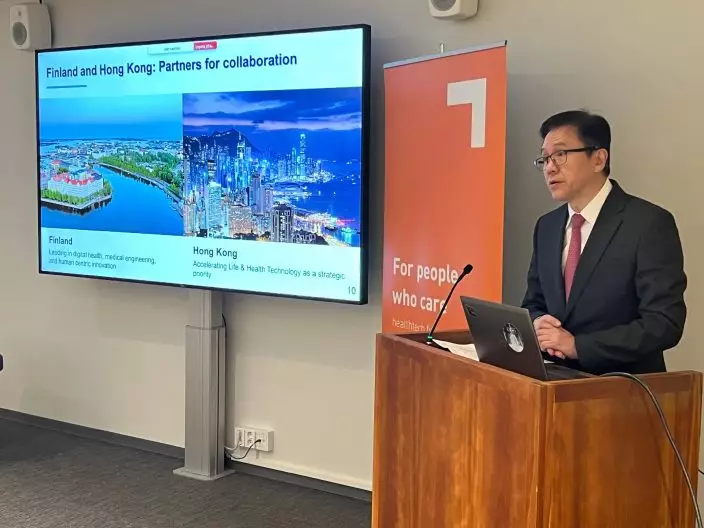
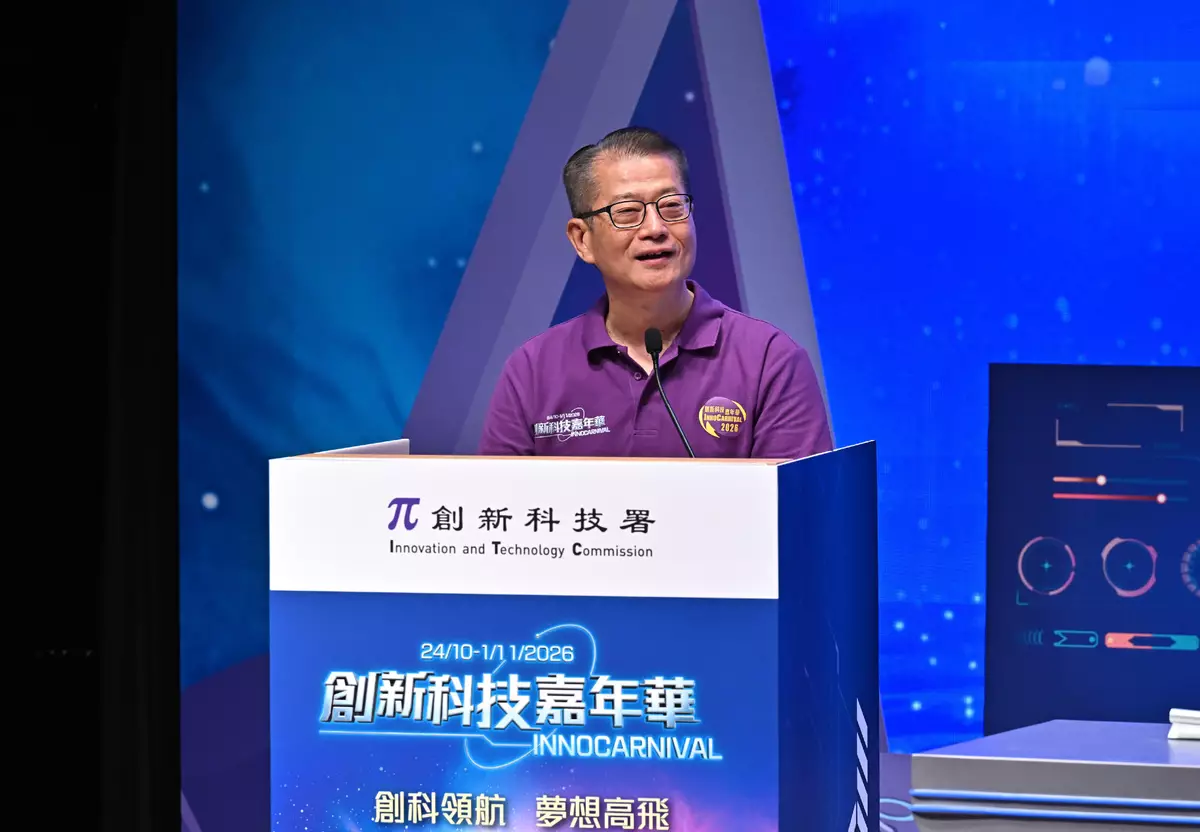
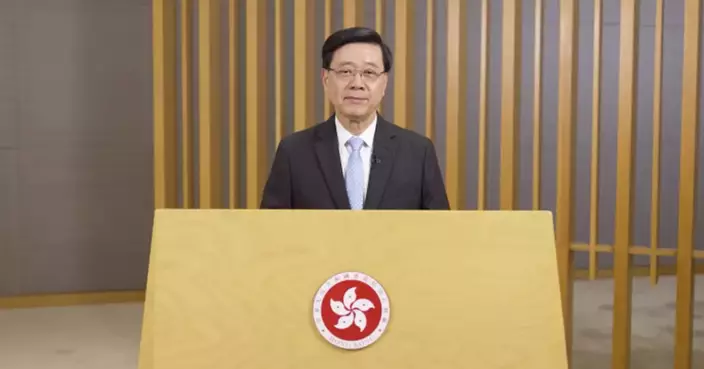
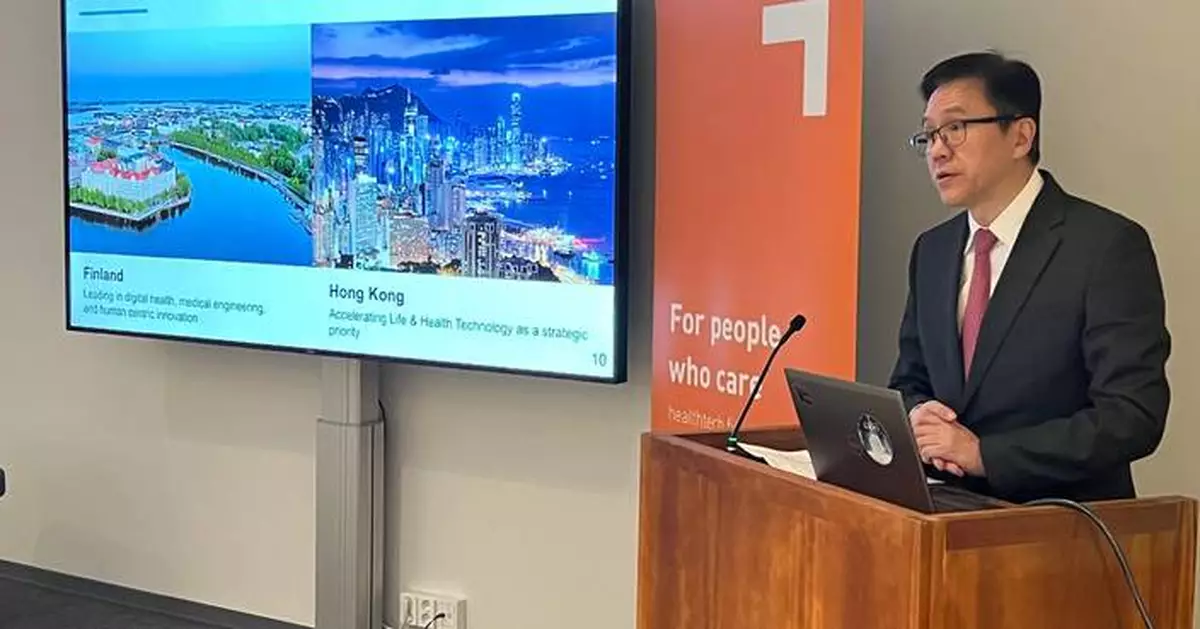
The Secretary for Innovation, Technology and Industry, Professor Sun Dong, attended a forum organised by Healthtech Finland and Finland Chamber of Commerce in Helsinki, Finland on May 13 (Helsinki time). Photo shows Professor Sun speaking at the forum. Source: HKSAR Government Press Releases


The Secretary for Innovation, Technology and Industry, Professor Sun Dong, attended a forum organised by Healthtech Finland and Finland Chamber of Commerce in Helsinki, Finland on May 13 (Helsinki time). Photo shows Professor Sun speaking at the forum. Source: HKSAR Government Press Releases
Development Bureau announces tender result for Hung Shui Kiu pilot area under large-scale land disposal

The Development Bureau (DEVB) announced today (August 24) that the pilot area project under large-scale land disposal located in Hung Shui Kiu/Ha Tsuen New Development Area (HSK) in the Northern Metropolis (NM) has the tender assessment completed. With the approval of the Central Tender Board (CTB), the Government decided to award the project to HSK New Development Limited. The successful tenderer scored higher marks than the other tenderer in both non-premium and premium aspects, with an accepted tender price at $1.03 billion.

The six shareholders of the successful tenderer are the subsidiaries of China Overseas Land and Investment Limited, China Merchants Land Limited, China Resources Land Limited, China Tourism Group Corporation Limited, JD.com, Inc. (JD) and Sino Land Company Limited respectively.

The Secretary for Development, Ms Bernadette Linn, said, "The HSK pilot area is the first tender project under large-scale land disposal in the NM, covering a total area of nearly 11 hectares. It is a project of considerable scale with a long investment period. The consortium of the successful tenderer encompasses not only major enterprises that have long participated in local real estate development, but also market leaders that are well-established in other industries with undeniable experience and capability. This demonstrates that a large-scale land disposal project can facilitate co-operation across different business sectors. The six enterprises pool their strengths and join forces to cast a vote of confidence in the NM through concrete actions, setting a new course for the diversified development models in the NM."

The DEVB said that the successful tenderer will be responsible for forming and developing three residential sites, on which some 3 000 flats can be built in total (assuming that each flat is about 50 square metres in size), and also complete site formation to build a smart modern logistics centre on an Enterprise and Technology Park (E&TP) site of permissible gross floor area (GFA) up to 50 950 square metres. The centre will adopt modern and quality design with JD stationing as the leading enterprise. It will commence operation with no less than 15 300 square metres of GFA within 55 months, faster than the minimum requirement of 96 months in the tender documents. The mentioned three residential sites and one E&TP site (namely HSK Town Lot Nos. 18 to 21), with a total area of about 3.6 hectares, will be leased to the successful tenderer for a term of 50 years.

The successful tenderer will also be responsible for forming various remaining sites in the HSK pilot area. Amongst them, two E&TP sites (namely HSK Town Lot Nos. 23 and 24, about 4.5 hectares) and one "Government, Institution or Community" site (about 0.6 hectares) for government facility shall have the site formation completed and handed back to the Government by end 2028. Besides, the successful tenderer will construct an open space, a pedestrian street and a footpath, which need to be completed and handed back to the Government no later than 2030 to 2033 by batches.

Ms Linn said, "After the successful tenderer completes the site formation and hands back the sites to the Government, the Government will grant the two mentioned E&TP sites of 4.5 hectares directly to Hung Shui Kiu Industry Park Company Limited (the Park Company), which is wholly owned by the Government, for development of superstructure and operation. The size of sites granted to the Park Company at a nominal land premium for a term of 50 years will increase by 20 per cent, previously from 23 hectares to 27.5 hectares, which facilitates the introduction of industries with a competitive edge to the NM. This land grant arrangement also enables the Park Company to start working on attracting investments and enterprises for the additional sites, so that enterprises may settle in early after completion of site formation in 2028."

As estimated by the successful tenderer, the implementation of the whole large-scale land disposal project involves an investment of about $16.8 billion, and is anticipated to create over 6 000 employment opportunities.

The successful tenderer will need to enter into a service deed with the Government, submit a performance guarantee and arrange for a bank bond within 14 days, with a view to ensuring the timely implementation of the non-premium proposal and various requirements. As the successful tenderer has not elected to pay land premium in instalments and will settle the accepted tender price in full within 28 days, the Government can receive the full amount of the tender early.

The Northern Metropolis Project Supervision Office established by the DEVB earlier will render full support to the successful tenderer in taking forward the HSK pilot area project to expedite its implementation.

To develop the HSK pilot area, the Government has adopted a two-envelope approach in the tender, with the weighting for premium proposal at 30 per cent and non-premium proposal at 70 per cent. The assessment criteria for non-premium proposal focus on the development of the E&TP sites, including whether strategic industries are developed, whether leading enterprises are introduced, development speed, investment scale, employment opportunities to be created, etc., with a view to attracting high-quality enterprises to establish their presence in the HSK pilot area and promoting the development of industry chains.

The Government launched the open tender on December 30, 2025, which closed on July 3, 2026 with two tenders received. After the Tender Assessment Panel (TAP) assessed the tenders in accordance with the marking scheme in the tender documents, HSK New Development Limited attained the highest marks for both its premium and non-premium proposals with an overall score of 100. The TAP recommended to the CTB to accept the relevant tender, and the recommendation was approved.

Source: AI-found images

Source: AI-found images

Recommended Articles