Israel said on Wednesday that Prime Minister Benjamin Netanyahu made a secret visit to the United Arab Emirates (UAE) during the U.S.-Israeli war on Iran, a claim that was immediately denied by the UAE.
The Israeli Prime Minister office said Netanyahu also met with UAE President Sheikh Mohammed bin Zayed Al Nahyan.
The visit led to a historic breakthrough in relations between Israel and the UAE, Netanyahu's office said in a statement, without providing details.
This marks the first time Netanyahu has publicly confirmed his visit to the UAE.
However, UAE, on the same day, denied reports of a visit by Netanyahu to the country, noting that reports claiming that the UAE had received the Israeli prime minister or any Israeli military delegation were false.
In a statement posted on social media platform X, the UAE Ministry of Foreign Affairs said that its relations with Israel are conducted within the framework of the publicly known Abraham Accords, not based on secret arrangements.
The ministry added that any claims regarding undeclared visits or unofficial arrangements are baseless unless announced by relevant official UAE authorities.
Israel and the UAE normalized diplomatic relations in 2020.
Recent reports from U.S. officials indicated that Israel has deployed Iron Dome air defense systems in the UAE to help intercept Iranian missiles.
The normalization agreements, known as the Abraham Accords, are a set of agreements signed in 2020 that established diplomatic normalization between Israel and several Arab states.

Israel says Netanyahu made secret visit to UAE during US-Israeli war on Iran, UAE denies reports
U.S. stocks ended mixed on Wednesday as investors balanced strong technology sector performances against data showing a significant acceleration in producer prices and soaring energy costs.
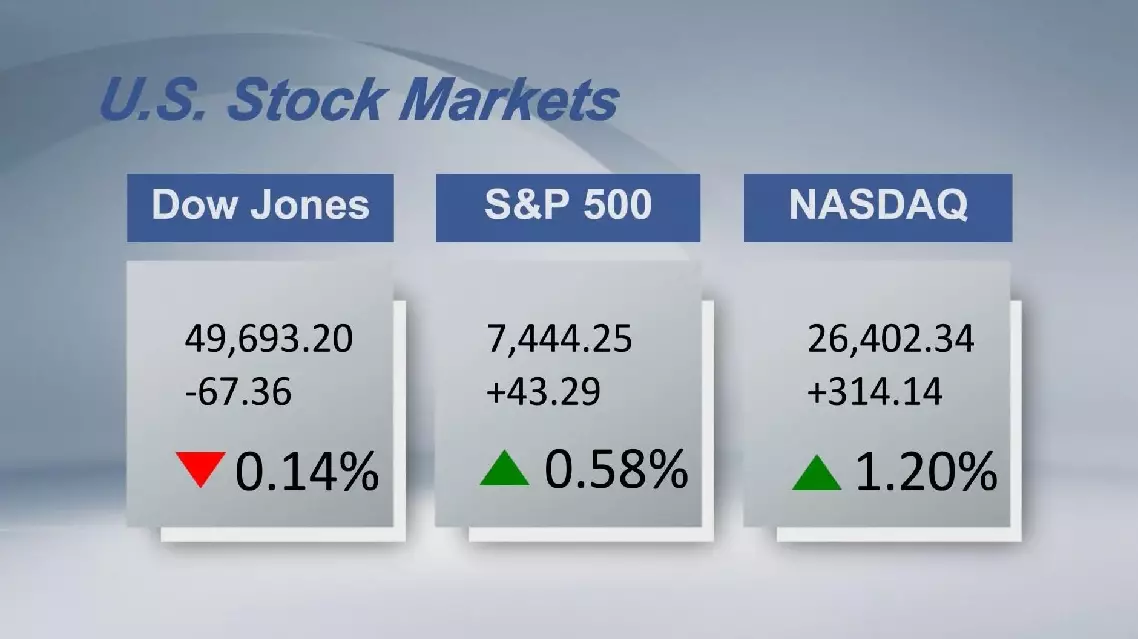
The Standard and Poor's 500 climbed 43.29 points, or 0.58 percent, to a new all-time high of 7,444.25, while the Nasdaq Composite Index increased 314.14 points, or 1.2 percent, to a fresh record of 26,402.34. Conversely, the Dow Jones Industrial Average fell 67.36 points, or 0.14 percent, to 49,693.2.
Performance was divided among the 11 primary Standard and Poor's 500 sectors, with six finishing in the green. Communication services and technology led the gainers, advancing 2.65 percent and 0.98 percent, respectively. In contrast, the utilities and financial sectors led the laggards, dropping 1.26 percent and 1.07 percent.
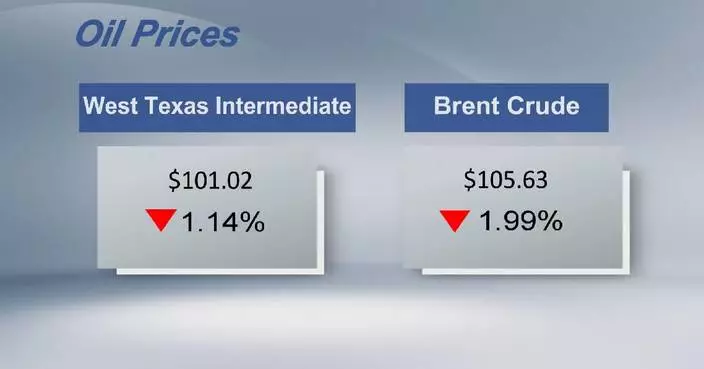
Reports from the U.S. Bureau of Labor Statistics highlighted deepening inflationary trends. The Producer Price Index for final demand surged 1.4 percent in April, the largest monthly advance since March 2022. On an unadjusted basis, the index rose 6 percent over the 12 months ended in April. This followed Tuesday's Consumer Price Index report, which showed annual inflation hitting a three-year high of 3.8 percent, driven largely by a 28.4 percent annual spike in gasoline prices.
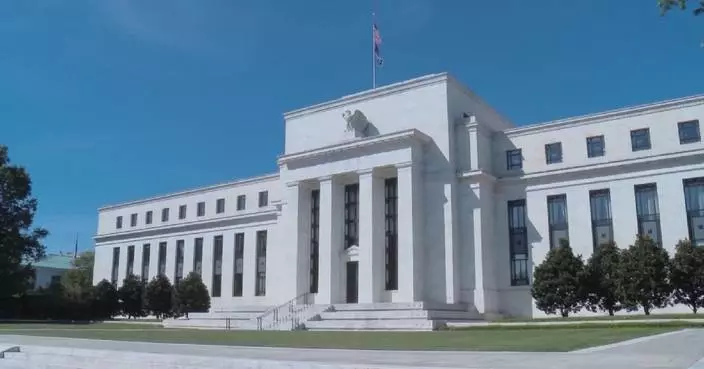
In a pivotal development for U.S. monetary policy, the U.S. Senate on Wednesday voted 54-45 to confirm Kevin Warsh as the next chairman of the Federal Reserve. Warsh is set to succeed current Fed Chair Jerome Powell -- whose term concludes on Friday -- and is expected to lead his first policy-setting meeting on June 16-17.
In corporate news, the quarterly earnings season boosted several major companies. Cisco Systems and Alibaba both exceeded analyst expectations for revenue and earnings per share, supporting the rally in tech-heavy indices. Alibaba rallied 8.18 percent. However, footwear company Birkenstock was down nearly 13 percent after missing expectations on both revenue and profit.
U.S. stocks close mixed amid tech rallies, inflation data