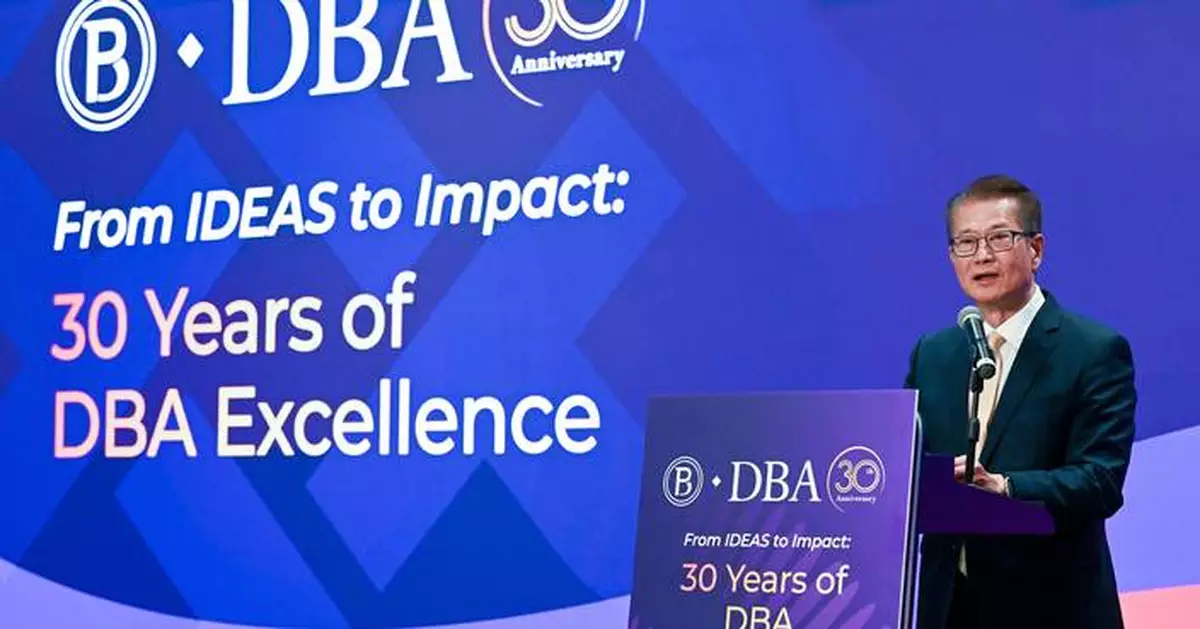
Speech by FS at PolyU DBA 30th Anniversary Dinner
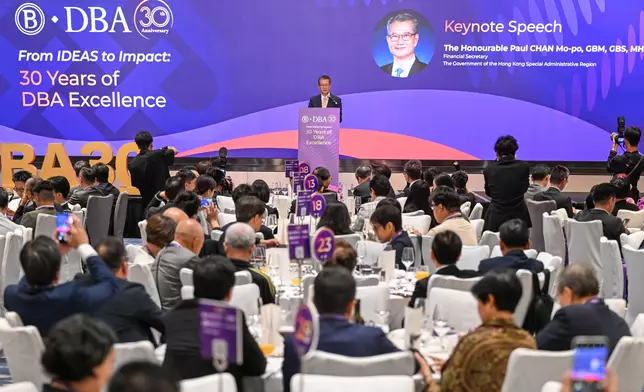
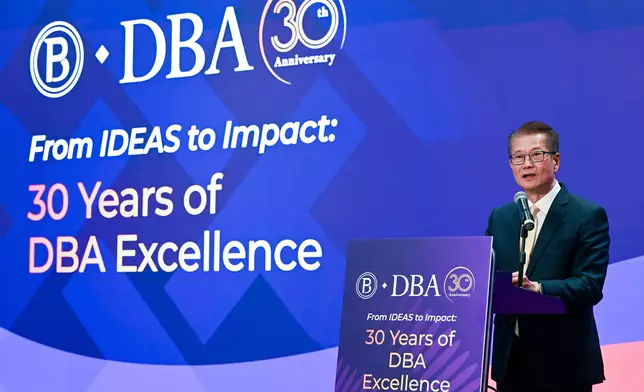
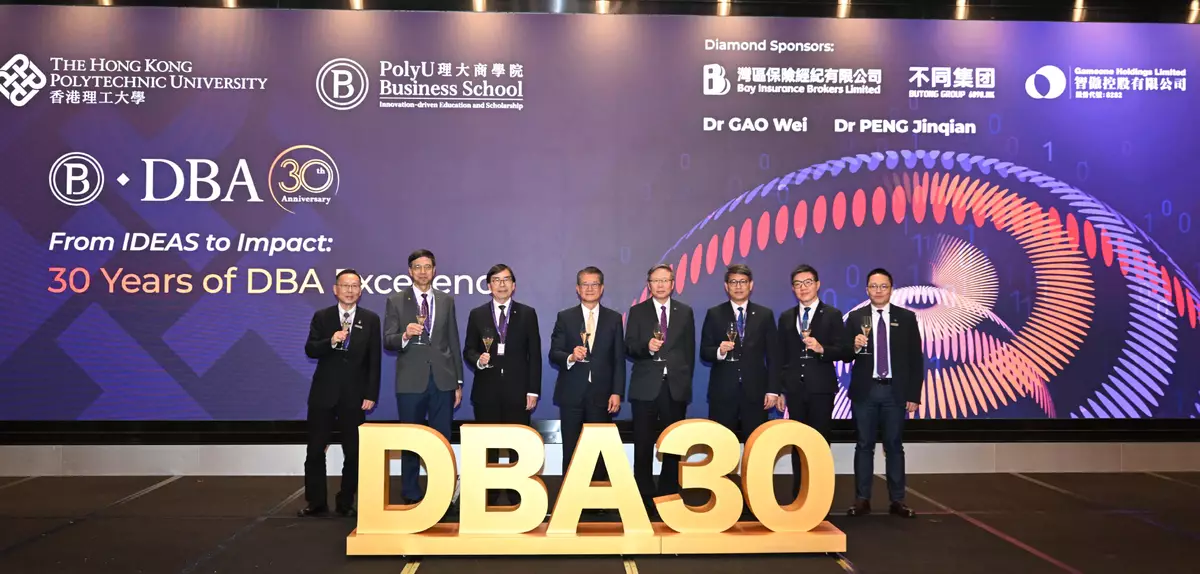
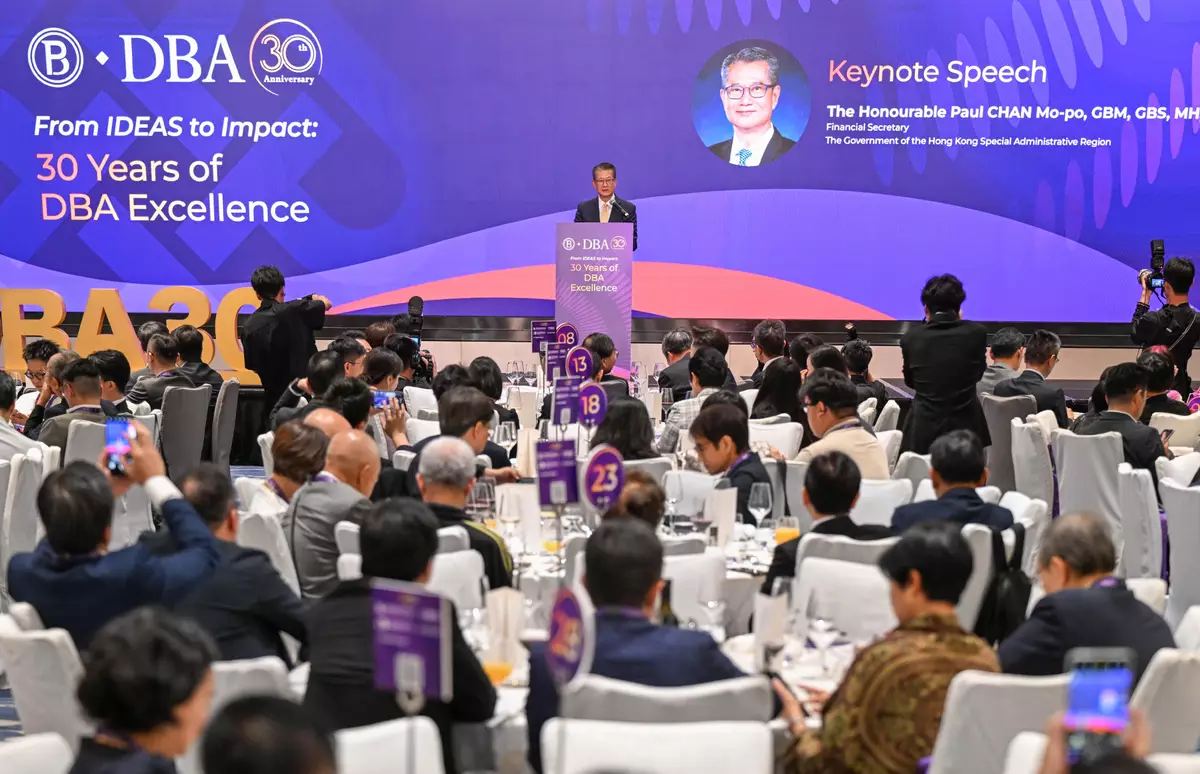
Following is the speech by the Financial Secretary, Mr Paul Chan, at the Hong Kong Polytechnic University (PolyU) Doctor of Business Administration (DBA) 30th Anniversary Dinner today (May 14):
Click to Gallery
Source: AI-found images
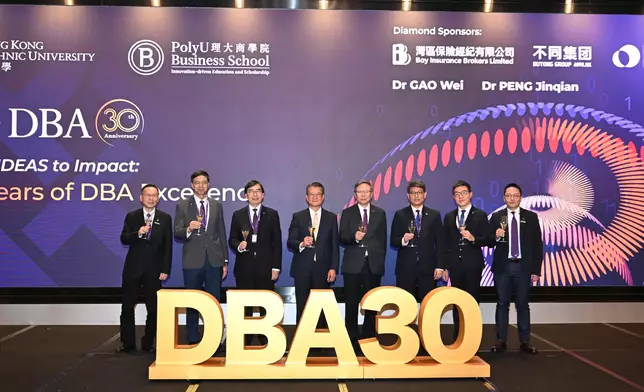
Speech by FS at PolyU DBA 30th Anniversary Dinner Source: HKSAR Government Press Releases
Speech by FS at PolyU DBA 30th Anniversary Dinner Source: HKSAR Government Press Releases
Speech by FS at PolyU DBA 30th Anniversary Dinner Source: HKSAR Government Press Releases
Source: AI-found images
Professor Jinguang Teng (President of PolyU, Professor Teng Jinguang), Professor Edwin Cheng (Dean of the Faculty of Business of PolyU), DBA alumni and students, distinguished guests, ladies and gentlemen,
Good evening. It is a pleasure to be here tonight to celebrate the 30th anniversary of PolyU's DBA programme. Founded in 1996, it was the first of its kind in Hong Kong - and it remains to this day the largest DBA community in this city and across the Mainland.
Building a community of scholar-leaders over three decades is no small feat. My warmest congratulations to everyone who has contributed to this achievement.
A DBA programme is an endeavour to bridge rigorous research with real-world practice, translating ideas into decisions that move businesses and societies forward. Tonight's theme - "From Ideas to Impact" - perfectly captures the spirit that has defined this programme from the very beginning.
I am particularly pleased to see that tonight's panel will explore how AI and Web3 are turning ideas into business and societal impact, with a focus spanning supply chain management, digital asset infrastructure and robotics. The breadth of that agenda reflects the true scope of the transformation before us - and it is a transformation we must confront with the utmost attention.
Technology and business transformation
Let's take a moment to reflect on how technology and innovation have transformed business and commerce.
Back to 1996 - the year this programme was born. The Internet was in its infancy. A mobile phone was the size of a water bottle. Data was a scarce resource. Business strategy was often about optimising within known boundaries: how to produce more efficiently, distribute more widely, price more competitively.
What we have witnessed since then is not incremental improvement, but the rewriting of the grammar of commerce. Consider these: we used to buy a CD; now we stream. We used to purchase software; now we subscribe. We used to own the things we relied on; but increasingly, ownership has evolved into a greater emphasis on getting access. Products have become platforms.
And value is no longer created solely within individual companies; it emerges across ecosystems, where capital, talent and data flow across organisational boundaries supported by interoperable systems, digitalisation and sophisticated logistics.
Profound challenges of AI era
Today, we have entered the age of AI - a moment more far-reaching and more disruptive than anything that came before. The challenge is no longer simply about adopting new tools. It is about recalibrating the way we think - and doing so with urgency.
First, AI is compressing the distance between insight and action. A strategist might once have spent months analysing market data before moving, but an AI agent today monitors market sentiment in real time, simulates scenarios and recommends courses of action or even has them executed - all at once. The bottleneck is no longer information, but our ability to direct machines with precision, and to verify and act on what they present.
Second, AI is redrawing the architecture of value chains. Middle layers that were justified by their ability to co-ordinate and process, are being compressed. At the same time, new intermediary roles are emerging - data curators, model trainers, compliance architects. I suspect many of you are quietly asking yourselves: in the new organisational structures that are taking shape, where do I stand? Will I still sit at a node that adds value?
For Hong Kong, these shifts carry particular weight. As an international financial centre and a super connector, our competitive edge has long rested on intermediation - in capital, information, markets and talent. AI will challenge each of these roles. But it also gives us the opportunity to reinvent ourselves and move forward.
Opportunities we must seize together
This brings me to the core message I want to leave with you tonight. The opportunities ahead are enormous - but they will not materialise on their own. They require purposeful, co-ordinated action among the Government, business and academia. I want to highlight three areas where our collective leadership can make a decisive difference.
First, the digital workforce. The conversation about AI and jobs tends to focus on displacement - on what AI will take away. But that is only one side of the story. The more important question is what AI makes possible. Businesses need digital employees to scale what they do. Employees need digital assistants to keep them focused on what they do best. AI agents, if deployed well, can become a genuine extension of both. They can absorb the repetitive, the routine and the administrative, so that human energy can be directed to where it matters most: judgement, relationships and creative problem-solving.
But none of this works if the gains stay at the top. When AI doubles what a team can produce, the people who made that possible need to feel it - in their salaries, in their roles, in their prospects. That is how a virtuous cycle begins. Companies that share the gains through new skills, new responsibilities and better rewards will not just outperform their peers. They will be the ones that attract and keep the best people.
Second, the human-machine relationship. In the future, much of the information that companies produce - press releases, annual reports, regulatory filings, even research papers - may be written, processed and read primarily by AI systems, with humans as the secondary audience. When machines become the primary intermediaries of information between organisations, what matters is not just what you communicate, but whether your systems can communicate with theirs. Interoperability becomes the new baseline requirement.
But alongside that shift comes an equally important truth: distinctly human skills - curation, verification, ethical judgement - become more valuable, not less, precisely because they are what machines cannot be trusted to do alone. The question is whether our institutions, our training systems and our own habits can adapt quickly enough to ride on this development.
Third, AI literacy. We must treat AI literacy as a societal imperative. In this year's Budget, we outlined significant investment in computing infrastructure, the AI+ strategy and providing AI Training for All. But government effort alone will not be enough. We need a coalition of employers, educational institutions, professional bodies, business chambers and trade unions to build AI capability at every level of the workforce.
The history of technology tells us that the fruits of innovation tend to concentrate before they spread - accruing first to innovators and those who own capital, and reaching workers and communities only much later. The steam era followed that pattern. So did the early Internet. AI presents us with a rare opportunity to do better because it can empower even the ordinary people.
When a small business owner can deploy a digital agent to handle customer enquiries around the clock; when a nurse can spend less time on paperwork and more time at the bedside; when a teacher can tailor lessons to every student in the classroom - that is the moment productivity becomes prosperity. That is the transformation towards which we should build.
Concluding remarks
Ladies and gentlemen, 30 years ago, PolyU had the foresight to create a programme that would turn experienced executives into scholar-leaders - people who think critically, research rigorously and act decisively. That foresight is worth more today than it has ever been. The world does not lack ideas. What it often needs is the capacity to turn ideas into impact - to move from concept to execution, from pilot to scale, and from individual achievement to collective progress.
Tonight is therefore both a celebration and a call to action. A celebration of what this programme and its remarkable community have built across three decades; and a call to all of us to ensure that the transformation underway is pursued with ambition, guided by responsibility and designed to benefit the many, not just the few.
That is the future worth building - together.
Thank you very much.
Source: AI-found images
Speech by FS at PolyU DBA 30th Anniversary Dinner Source: HKSAR Government Press Releases
Speech by FS at PolyU DBA 30th Anniversary Dinner Source: HKSAR Government Press Releases
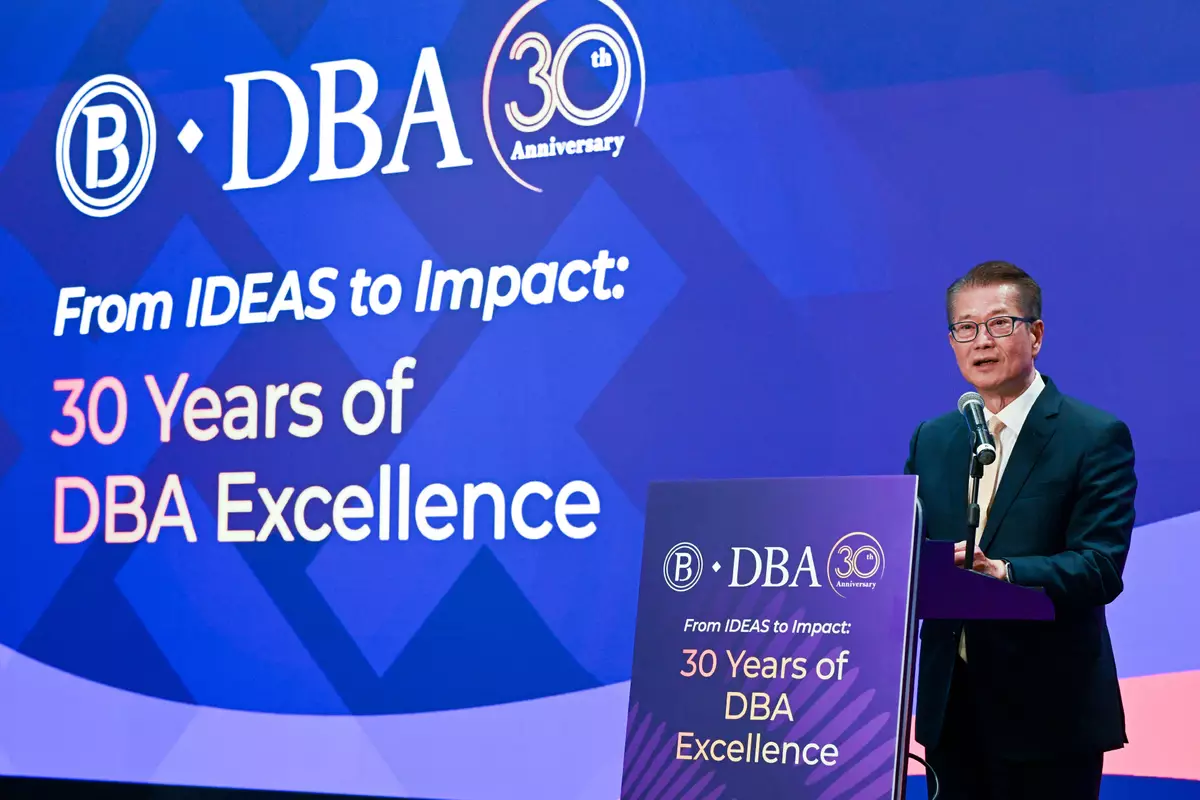
Speech by FS at PolyU DBA 30th Anniversary Dinner Source: HKSAR Government Press Releases
Source: AI-found images