Skip to Content Facebook Feature Image

Harvey Weinstein back in court after feeling ill as jury deliberates in his rape retrial

ENT

Harvey Weinstein back in court after feeling ill as jury deliberates in his rape retrial
ENT

ENT

Harvey Weinstein back in court after feeling ill as jury deliberates in his rape retrial

2026-05-14 23:16 Last Updated At:23:21

NEW YORK (AP) — Harvey Weinstein returned to court and jurors resumed deliberating in his rape retrial Thursday, a day after the former movie tycoon reported chest pains while in the courthouse.

Weinstein, who's 74 and has a history of heart trouble and other health woes, looked pale but alert as he was brought into court in the wheelchair he has used for years. He said he felt “good, fine.”

The ex-studio boss was in a courthouse holding area Wednesday when jurors, after a few hours of deliberating, sent a note asking to rehear some of accuser Jessica Mann ’s testimony and to review a lengthy prosecution timeline of emails and other evidence.

After defense lawyers, prosecutors and Judge Curtis Farber convened in court to decide how to respond, Weinstein attorney Marc Agnifilo said court officers had told him Weinstein was experiencing chest pains.

Weinstein wasn't brought into court at that point, and Farber ultimately sent jurors home Wednesday a bit earlier than planned, telling them there were “unforeseen reasons” for the early dismissal.

Jurors got the requested information Thursday. Then they returned to their closed-door discussions, and Weinstein was taken back to the holding area.

The testimony spanned a point that Agnifilo had highlighted in his closing argument: a moment when Mann said she was “spacing out” as a defense lawyer asked why she didn't want friends to know that anything sexual had happened between her and Weinstein. The defense was trying to suggest that she was worried about her reputation, not a rape that Weinstein says never happened.

Mann, 40, has testified that she willingly had some sexual interludes with the then-married producer, but that he subjected her to unwanted sex in a Manhattan hotel room in March 2013 after she repeatedly said no.

Weinstein's lawyers maintain that the encounter was consensual. They have emphasized that Mann subsequently continued seeing Weinstein and expressing warmth toward him. Mann has said she was mired in complicated feelings about him, herself and what had happened.

Her viewpoint changed in 2017, when a series of sexual misconduct allegations against the Oscar-winning Weinstein propelled the #MeToo campaign to hold people — especially powerful men — accountable for sexual misbehavior. Weinstein has said he “acted wrongly” but never assaulted anyone.

Some of those accusations generated criminal convictions against Weinstein in New York and California.

An appeals court overturned his 2020 New York conviction on charges that involved Mann and another accuser. At a retrial last year, jurors failed to reach a verdict on Mann's portion of the case, leading to this retrial. Weinstein is charged with one count of rape in the third degree.

The current jury heard nearly three weeks of testimony, five days of it from Mann. Weinstein did not testify.

The Associated Press generally does not identify people who say they have been sexually assaulted. Mann, however, has agreed to be named.
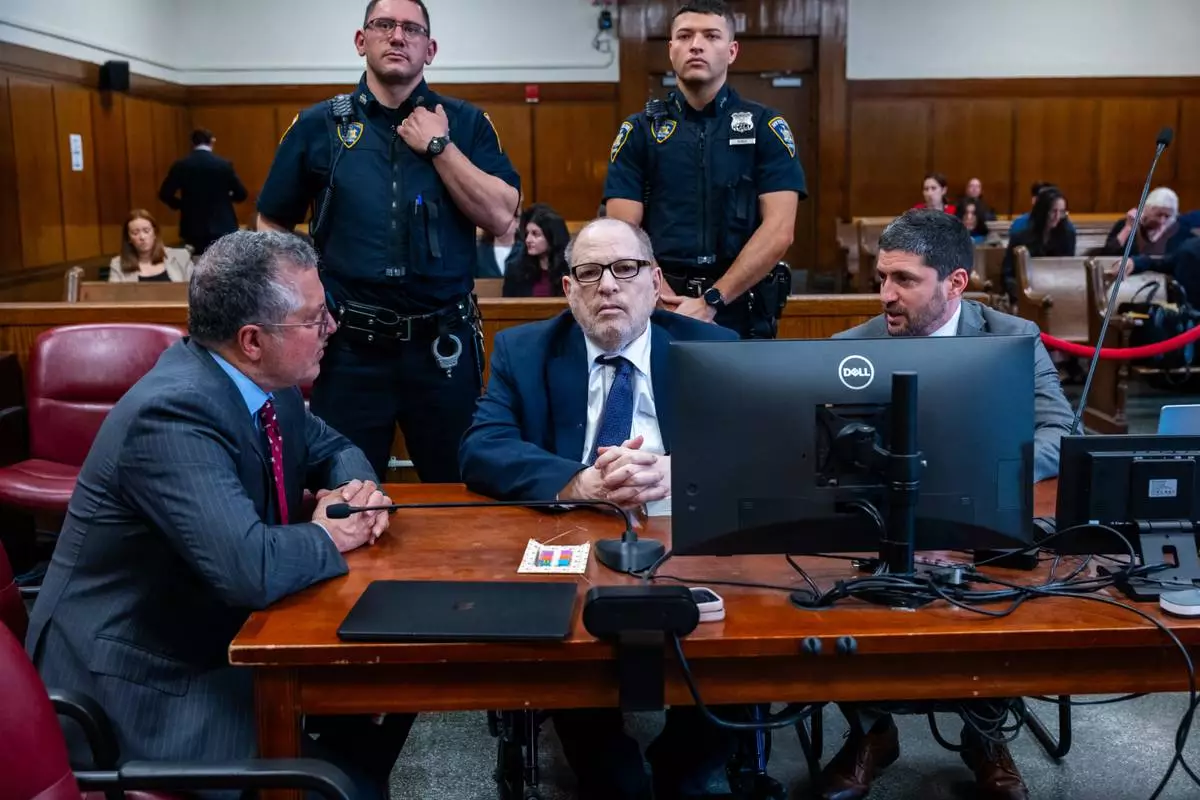
Harvey Weinstein appears with attorneys Marc Agnifilo, left, and Jacob Kaplan in Manhattan criminal court, Thursday, May 14, 2026, in New York. (Spencer Platt/Pool Photo via AP)
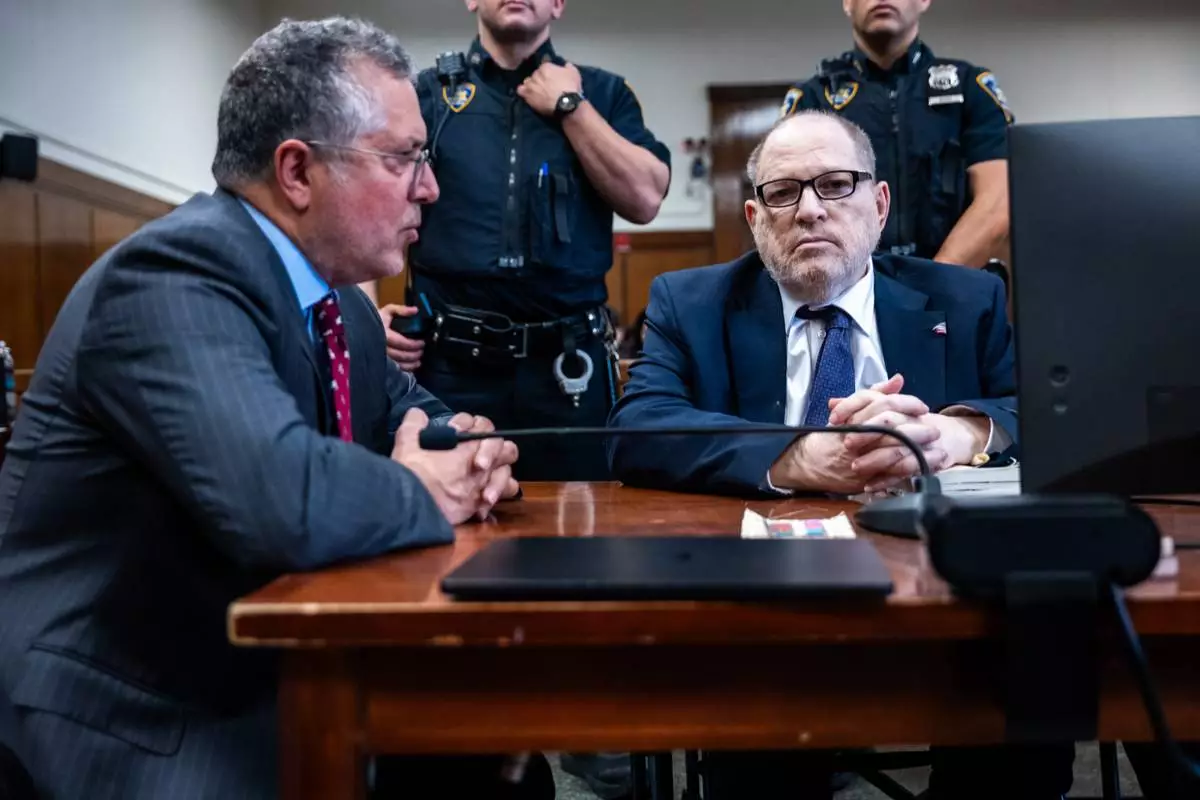
Harvey Weinstein appears with attorneys Marc Agnifilo, left, and Jacob Kaplan in Manhattan criminal court, Thursday, May 14, 2026, in New York. (Spencer Platt/Pool Photo via AP)
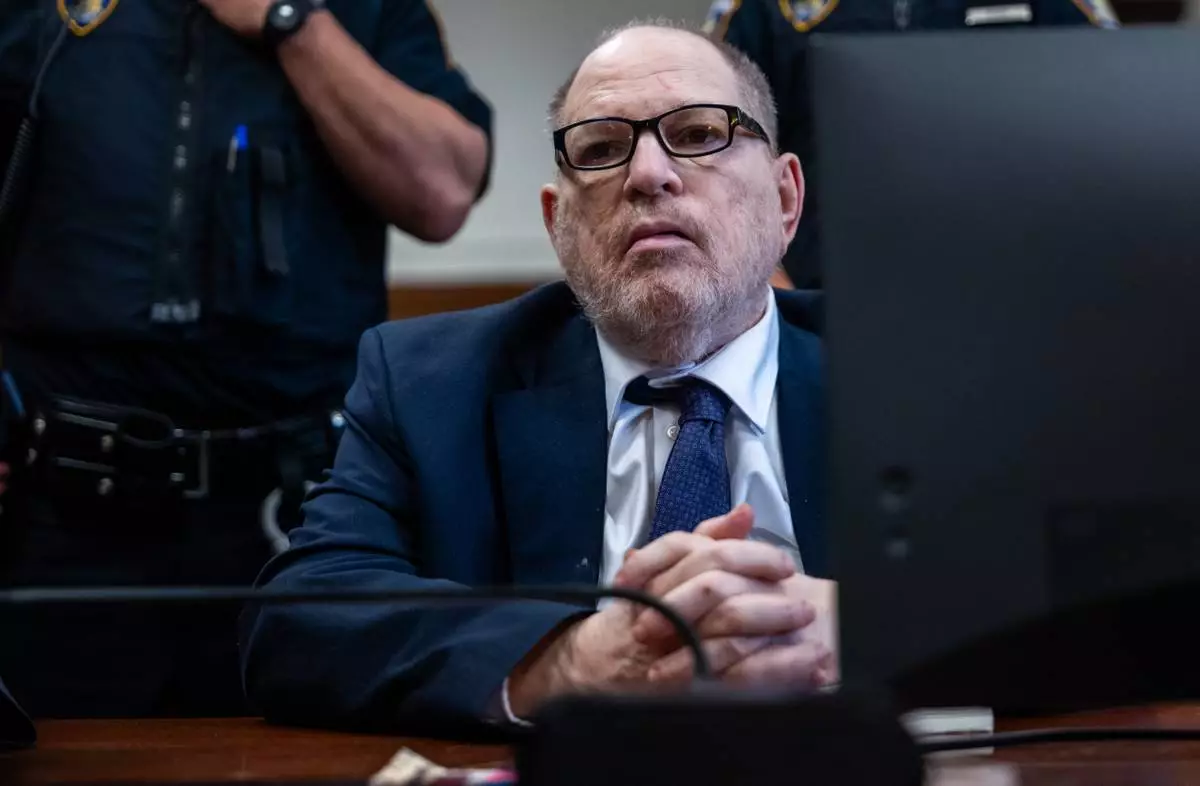
Harvey Weinstein appears with attorney Marc Agnifilo in Manhattan criminal court, Thursday, May 14, 2026, in New York. (Spencer Platt/Pool Photo via AP)

Harvey Weinstein appears with attorney Marc Agnifilo in Manhattan criminal court, Thursday, May 14, 2026, in New York. (Spencer Platt/Pool Photo via AP)
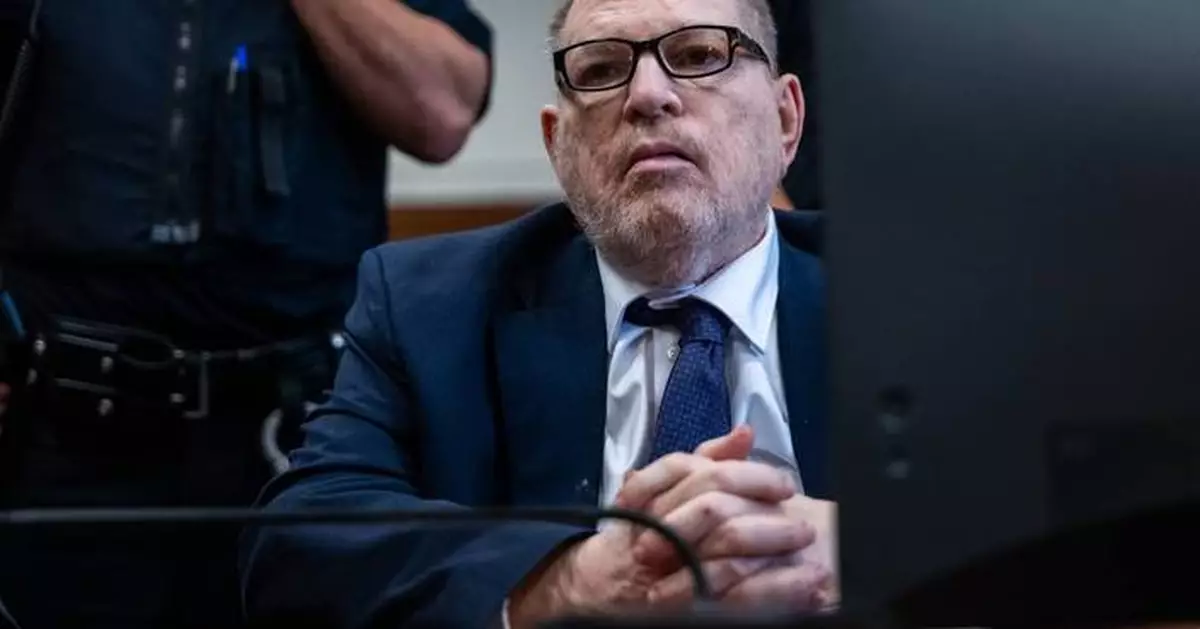
Harvey Weinstein appears in Manhattan criminal court, Thursday, May 14, 2026, in New York. (Spencer Platt/Pool Photo via AP)
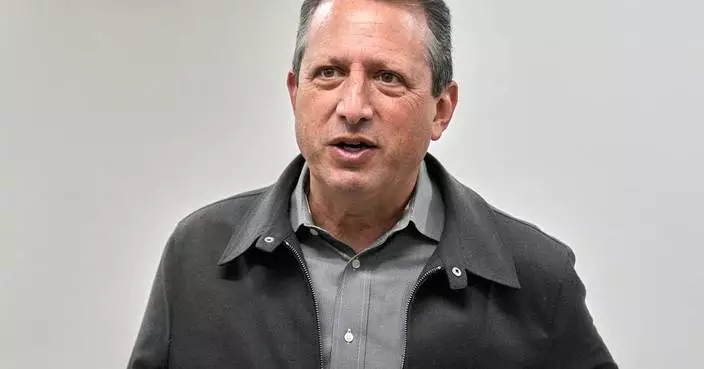
Harvey Weinstein appears in Manhattan criminal court, Thursday, May 14, 2026, in New York. (Spencer Platt/Pool Photo via AP)
McALESTER, Okla. (AP) — Oklahoma has executed a man who was convicted of killing his ex-girlfriend and her 7-month-old daughter nearly 20 years ago.

Raymond Johnson, 52, was pronounced dead at 10:12 a.m. Thursday following a three-drug injection at the Oklahoma State Penitentiary in McAlester, prison officials said.

He was sentenced to death for killing 24-year-old Brooke Whitaker and her 7-month-old daughter, Kya, in June 2007.

Prosecutors said Johnson and Whitaker had been arguing at her home in Tulsa before he repeatedly hit her over the head with a metal claw hammer. Whitaker’s skull was fractured and she had more than 20 lacerations on her face and scalp. But she was still conscious and begged Johnson to spare her and Kya, who was sleeping in a bedroom, prosecutors said in documents prepared for Johnson’s clemency hearing in April.

“She begged him to call 911. She begged him to let her mom come get baby Kya. She begged him to think of her children,” the Oklahoma Attorney General’s Office said. Whitaker had three other children.

Johnson retrieved a gas can from a tool shed in the backyard, doused Whitaker and the house with gasoline, lit a dish towel on fire, threw it at Whitaker and left, the attorney general’s office said. Whitaker died from head injuries and smoke inhalation while her daughter died from severe burns.

“Raymond Johnson is a cruel murderer who inflicted unimaginable pain and suffering on his victims,” Oklahoma Attorney General Gentner Drummond said in a statement.

Johnson’s attorneys did not file a last-minute appeal with the U.S. Supreme Court to stop his execution.

His attorneys unsuccessfully argued in earlier appeals that Johnson’s arrest was illegal, police coerced his confession from him and that his trial lawyer conceded his guilt in Whitaker’s death without his permission.

In April, Oklahoma’s five-member Pardon and Parole Board voted unanimously to deny Johnson clemency. During that clemency hearing, Johnson apologized to the victims’ family and asked for forgiveness, saying he was a changed person.

“I apologize. No excuses, no justifications, a sincere apology. And to know that it’s sincere, look at my actions. Look at my life. Look how I’ve changed. I’m living a remorseful life. I’m living it,” Johnson said in an interview with Death Penalty Action, a national anti-death penalty group.

Whitaker’s family members asked for the lethal injection to proceed.

“Executing him will not give me my mom or sister back, it will not take away almost 20 years of pain. What it will do is finally stop him from continuing to hurt us,” Logan Kleck, Whitaker’s oldest daughter, said in a letter to the board.

In addition to his first-degree murder conviction, Johnson also served nine years of a 20-year sentence after being convicted of manslaughter in 1996.

Johnson was the second person put to death this year in Oklahoma and the 11th in the country.

Lozano reported from Houston. Follow Juan A. Lozano: https://x.com/juanlozano70

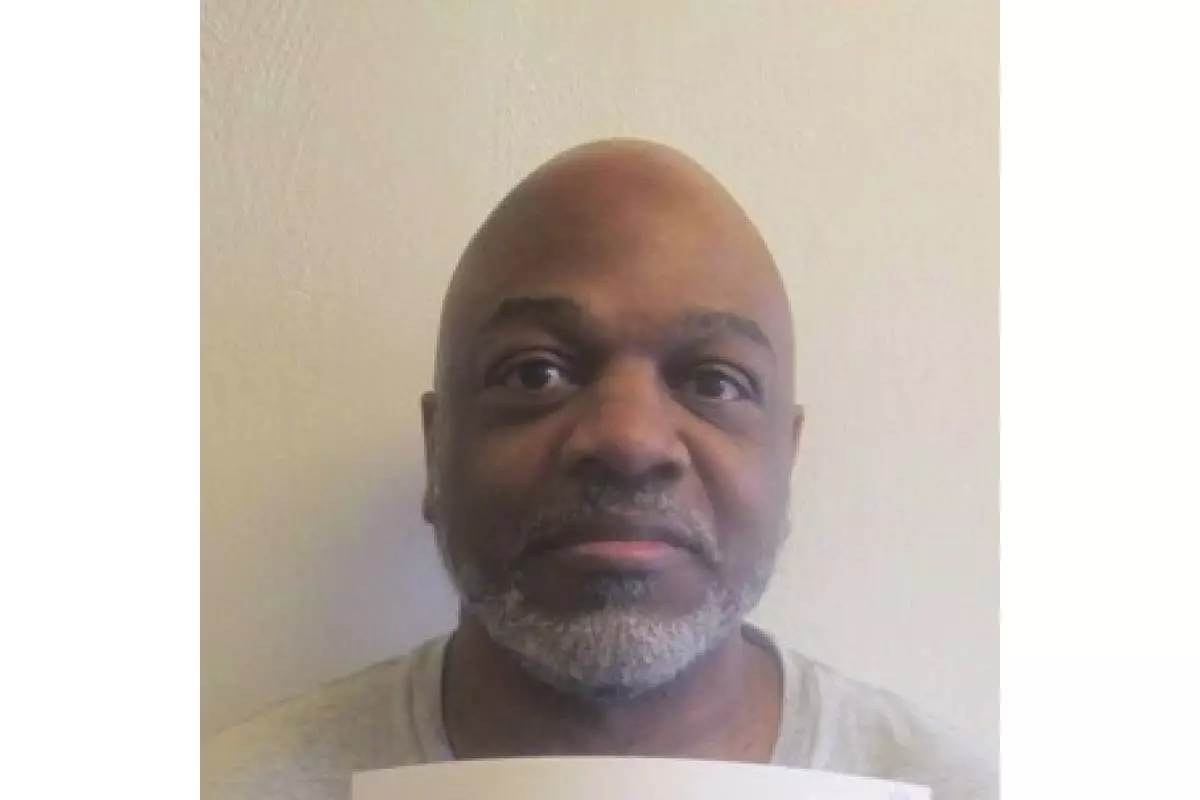
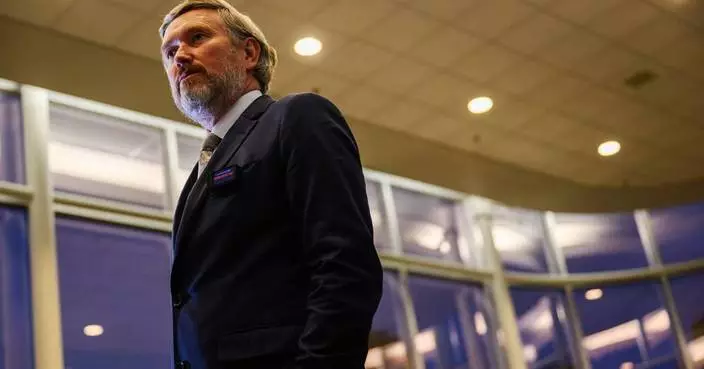
This image provided by the Oklahoma Department of Corrections shows Raymond Johnson. (Oklahoma Department of Corrections via AP)

This image provided by the Oklahoma Department of Corrections shows Raymond Johnson. (Oklahoma Department of Corrections via AP)

Recommended Articles