Scholars from several Latin American countries have underscored the importance of the bilateral relationship between China and the United States, particularly expressing hope for cooperation in technology and climate change response.
At the invitation of Chinese President Xi Jinping, U.S. President Donald Trump is on a state visit to China from Wednesday to Friday, marking the first visit by a U.S. president to China in nearly nine years, since President Xi hosted Trump in the Chinese capital in November 2017.
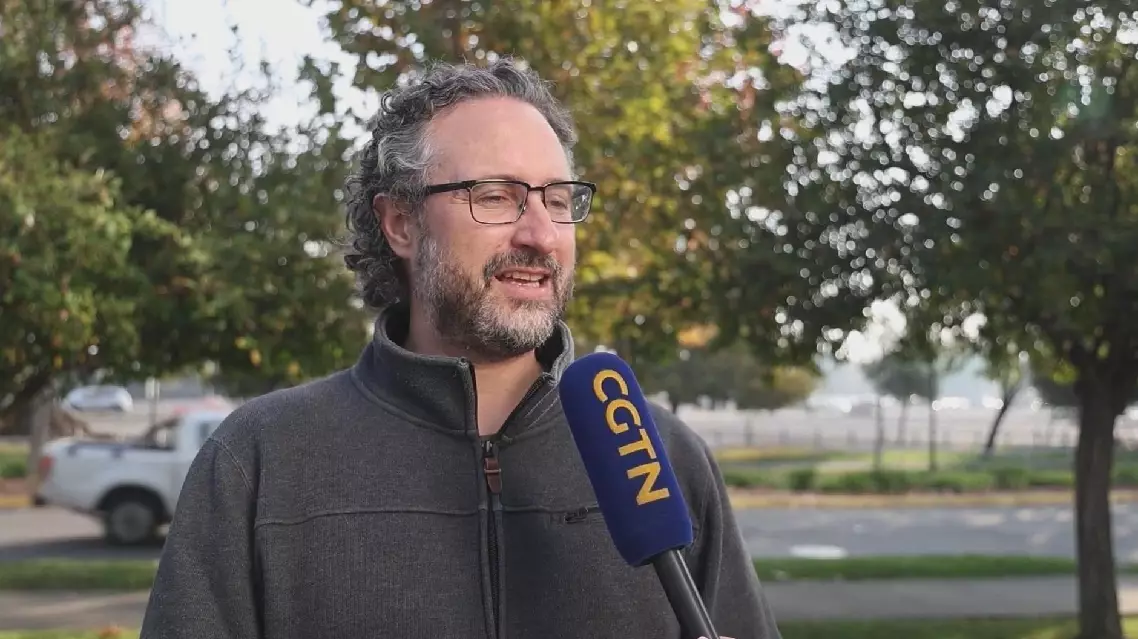
In a recent interview with China Global Television Network (CGTN), Cecilia Ibarra, a researcher and professor at the Faculty of Government of the University of Chile, emphasized that China and the United States both represent great hope for developing concrete and cost-effective solutions to global crises.
"Right now, China and the United States are technological and scientific powers, which is where we can find hope for concrete solutions, for solutions that will be cost-effective. Therefore, given the urgency, all possible alliances, all wisdom, funds, innovation, and intelligence need to be made available and coordinated by those who ultimately have the power and legitimacy to convene these solutions," she said.
Without collaboration between the two countries, it will be difficult to address climate change, said Cristóbal de la Maza, director of the Center for Economics for Sustainable Development at San Sebastián University in Chile.
"If the two countries reduce their collaboration, we are in a position where there is no progress. China has built a renewable energy, battery, and low-carbon technology industry. The United States, on the other hand, has resisted this and has strengthened its oil industry over time. For powers like China and the United States, making progress in reducing their dependence on fossil fuels is key and part of their global leadership strategy," he said.
Juan Carlos Gachúz Maya, a researcher at Mexico's University of the Americas Puebla, praised Beijing's strategy in the face of trade pressure, saying that its stance paves the way for a possible rapprochement.
"The Chinese government has taken a somewhat correct stance within this complicated situation of trade tensions and the trade war with the United States, and I believe that, eventually, bilateral negotiations could yield concrete results," he said.
Gachúz, also a member of the National System of Researchers, highlighted the major issues on the agenda and the areas where there may be room for cooperation.
"We hope that scientific, technological, and academic cooperation can also be a relevant point for dialogue between both countries, and that these restrictions can eventually be nuanced or renegotiated on other terms," he added.
Rasel Tomé, former vice president of the National Congress of Honduras, emphasized that cooperation between the two sides in science and technology benefits all humanity.
"Beijing and Washington must maintain a fundamental link to ensure that competition does not lead to a disconnect that affects the international system and global access to knowledge. We believe this is a great step, and that multilateral solutions should always be the path forward. They must be attentive to climate change, the food security situation, and public health issues, and the major powers must always maintain these multilateral relationships," he said.
Latin American scholars stress importance of China-U.S. cooperation on climate, technology
A decades-old friendship between Chinese President Xi Jinping and residents of Muscatine, Iowa, continues to shape China-U.S. exchanges across generations.
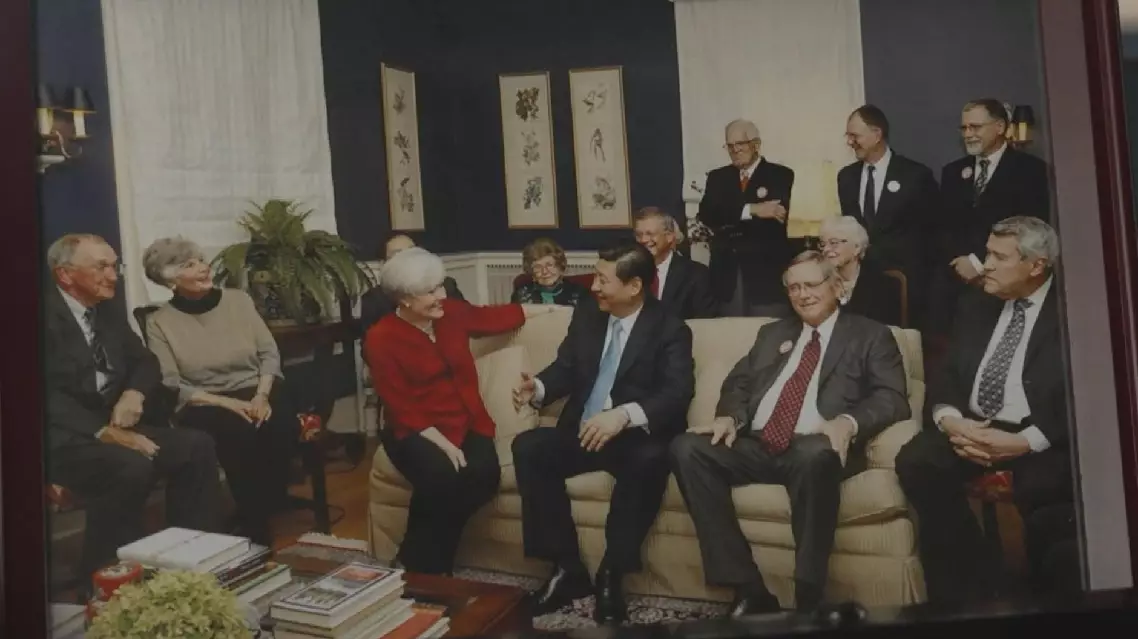
Sarah Lande is one of the small Iowa town's residents who have known Chinese President Xi Jinping for more than 40 years. In China, their enduring friendship is warmly remembered as that of "old friends."
"When we visited China as part of this, 'old friends coming again', I was able to sit next to Madame Peng and she said, 'I just had to meet the people from Iowa and find out why my husband was so fond of them,'" Lande, who is also a member of Iowa's "sister state" organization, recalled a conversation with Xi's wife.
In 1985, Xi, then a county-level official, visited Muscatine, where he was warmly received by local residents, including Lande.
Twenty-seven years later, in 2012, during a visit to the United States as China's Vice President, Xi returned to Muscatine and made a special stop to reunite with those same friends at Lande's home.
As a result of that friendship, these "old friends" have played an important role in fostering people-to-people exchanges between China and the United States in Muscatine and beyond.
"It's really been a tremendous ride. When (former Iowa Governor Terry) Branstad became the ambassador to China, that took it to a whole another level. Then, people on the grass floor like Sarah and Luca have really carried the torch and kept the relationship alive and brought in everybody else that's really benefited from the relationship," said Dan Stein, chairman of the Muscatine-China Initiatives Committee.
The memories are carefully preserved by Lande in photo albums and letters. Page by page, a friendship that began four decades ago still lives on, including in Hebei Province, which calls Iowa its sister state. Inside one school in Hebei, a new chapter is being written by students.
"In 2023, we and our old friends in Iowa were already discussing the possibility of a new program for our youth -- one that would enhance exchange visits between students from our school and young people in Iowa. That's how we launched the 'Inheritance of Friendship Study Tour,'" said Pei Hongxia, principal of Shijiazhuang Foreign Language School.
After President Xi, in San Francisco in November 2023, proposed inviting 50,000 American youths to China over the next five years, Pei's old friends in Iowa suggested sharing the program with Xi, and with the students. Lande wrote a letter, and on January 4, 2024, President Xi replied, inviting Muscatine students to join and encouraging more American youths to visit China.
Wang Xiyan, a student at Shijiazhuang Foreign Language School, formed a friendship with Sophia Catherine Cronin from Iowa during a study tour in the United States, where she stayed with her host family.
The two later reunited when Sophia traveled to China as part of the five-year youth exchange initiative.
"This is the first day I arrived there. I was still a bit nervous. But she talked a lot with me about her high school life, which made me feel a little bit more relaxed," Wang said.
"We were both shy, both nervous, but it was nice to have that first impressions and first connections as well," said Sophia.
Despite being separated by thousands of miles and growing up in different cultures, the two students soon discovered they had more in common than they expected.
"I think overall, we're more similar than different. We share the same hobbies and we share the same dreams," Wang said.
"We are so similar in many ways. We have similar interests. We both like to read books. We have similar music tastes," said Sophia.
On the final day of 2025, during Sophia's visit to China, students from both countries hung their New Year's resolutions on the same tree. Inspired by their friendship, Sophia and Xiyan wrote the following message:
"This rare bond across the Pacific is truly precious. Just like her country, she is so beautiful, smart, funny and interesting. As more young people from China and the United States meet and get to know one another, the world will gain a little more understanding and hope."
Xi's four-decade bond with Iowan friends bolsters China-U.S. ties