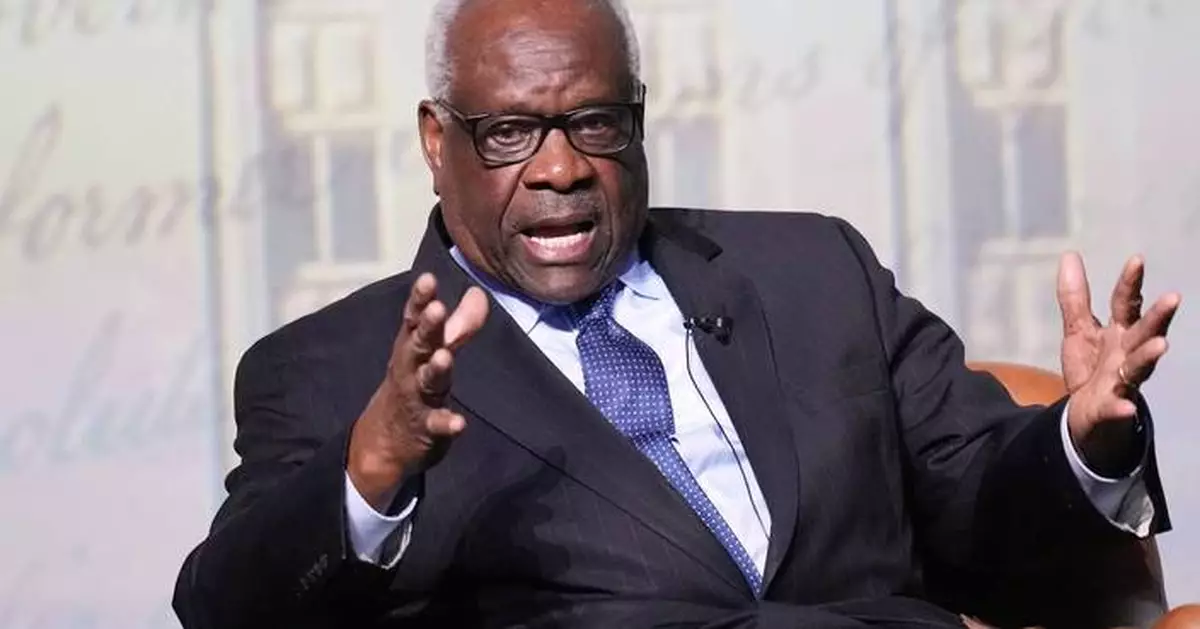
MIAMI (AP) — Supreme Court Justice Clarence Thomas urged Americans to celebrate the 250th anniversary of independence not with fireworks or empty platitudes, but by standing up for their deeply held beliefs, with the comforting knowledge that the U.S. Constitution protects free speech and serves as a common bedrock in a society otherwise beset by deep divisions.
“We can disagree on all sorts of things, but we’ve got to have something in common or we don’t have a country,” Thomas said at a judicial conference near Miami. “These documents, our founding documents, our founding history, whether we think it’s perfect or it shouldn’t be amended, or we might disagree about how far it goes, but we can say this is something that we all treasure.”
Thomas' remarks came in response to an interview with one of his former Supreme Court clerks, Kasdin Mitchell, who was nominated this month by President Donald Trump to serve on the federal bench in Dallas.
Thomas — who recently became the second longest-serving justice in Supreme Court history — looked back on his upbringing in the segregated South and his more than three decades on the high court.
But he gave no indication that, at age 77, he is looking to retire anytime soon and give President Trump the opportunity to further cement his influence on the Supreme Court and nominate his fourth justice, the most of any president in almost a century.
“Justice Marshall said you take a job for life, you do it for life,” referring to Thurgood Marshall, the Supreme Court's first African American justice, who Thomas replaced on the high court.
But he said his long tenure had given him a unique perspective on the cynicism that pervades so much of society and contributes to Americans' distrust in government.
He spoke about the example set by his grandfather, the son of a freed slave with barely any formal education, who nonetheless believed in America's promise of a more perfect union, to describe his judicial philosophy in a limited form of government.
“One of the rods in this society versus so many of the others where the rights are parceled down by a government is that we were taught from the cradle that we were equal in God’s eyes, that was self-evident," said Thomas. "If you look at Frederick Douglass, Martin Luther King or Abraham Lincoln, they all speak in terms of these transcendent rights beyond the ability of man to take away even though man had the power to infringe upon them.”
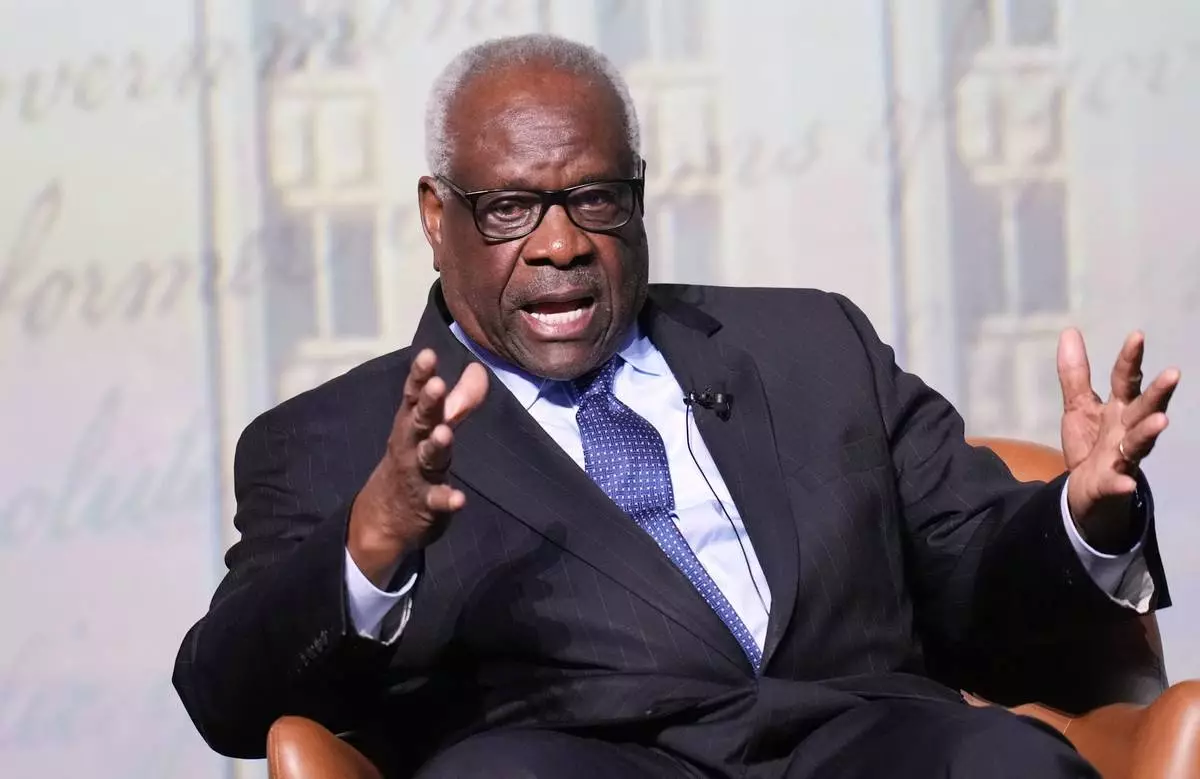
FILE - U.S. Supreme Court Associate Justice Clarence Thomas answers questions during a visit to the University of Texas at Austin, in Austin, Texas, April 15, 2026. (AP Photo/Eric Gay, File)
WASHINGTON (AP) — The Supreme Court on Thursday preserved women’s access to a drug used in the most common method of abortion, rejecting lower-court restrictions while a lawsuit continues.
The court’s order allows women seeking abortions to continue obtaining the drug, mifepristone, at pharmacies or through the mail, without an in-person visit to a doctor. Access is likely to remain uninterrupted at least until into next year as the case plays out, including a potential appeal to the high court.
The justices granted emergency requests from makers of mifepristone, who are appealing a federal appeals court ruling that would require women to see a doctor in person and halt delivery of mifepristone through the mail. The federal Food and Drug Administration, which first approved mifepristone for use in abortion in 2000, stopped requiring in-person visits five years ago.
Justices Clarence Thomas and Samuel Alito dissented, with Thomas writing that the two companies, Danco Laboratories and GenBioPro, are not entitled to the court's action to spare them “lost profits from their criminal enterprise.”
Anti-abortion groups, frustrated with President Donald Trump’s administration, are pushing the FDA to move faster with a review that they hope will result in restrictions on mifepristone, including blocking its prescribing via telehealth platforms. The Republican administration says the work takes time.
Earlier this week, FDA Commissioner Marty Makary resigned after months of criticism from Trump’s political allies, including abortion opponents.
Susan B. Anthony Pro-Life America and similarly aligned groups had called on Trump to fire Makary over the slow pace of the mifepristone review.
The court is dealing with its latest abortion controversy four years after its conservative majority overturned Roe v. Wade and allowed more than a dozen states to effectively ban abortion outright.
The case before the court stems from a lawsuit Louisiana filed to roll back the Food and Drug Administration’s rules on how mifepristone can be prescribed. The state claims that the policy undermines the ban there, and it questions the safety of the drug, which has repeatedly been deemed safe and effective by FDA scientists.
Alito, who wrote the opinion overturning Roe, agreed that the state's efforts have been thwarted by medical providers and private organizations that mail the pills to women in Louisiana, despite the abortion ban. Danco and GenBioPro “are obviously aware of what is going on yet nevertheless supply the drug and reap profits from its felonious use in Louisiana,” he wrote.
Thomas said those who mail the pills are in violation of the Comstock Act, a 19th-century law that has long gone unenforced and bans mailing any “article, instrument, substance, drug, medicine, or thing which is advertised or described in a manner calculated to lead another to use or apply it for producing abortion.”
Lower courts concluded that Louisiana is likely to prevail, and a three-judge panel of the 5th U.S. Circuit Court of Appeals ruled that mail access and telehealth visits should be suspended while the case plays out.
The drug is most often used for abortion in combination with another drug, misoprostol. Medication abortions accounted for nearly two-thirds of all abortions in the U.S. in 2023, the last year for which statistics are available.
Telehealth prescribers were prepared to switch to sending abortion patients a regimen that uses only misoprostol.
While Thursday’s ruling keeps the status quo in place for now, abortion-rights advocates warn that the case isn’t settled forever.
“We are relieved that access to mifepristone remains protected for now, but this should never have been on the table in the first place,” Serra Sippel, executive director of The Brigid Alliance, which helps coordinate and fund travel and other logistics to assist women traveling for abortion, said in a statement. “Patients and providers should not be forced to wait on court rulings to know whether people can access critical health care.”
The decision is “extremely disappointing” but not a defeat, said Gavin Oxley, a spokesperson for the anti-abortion advocacy group Americans United for Life. “The Supreme Court still has the opportunity to hear the case in full and bring justice to Louisiana,” he said.
The current dispute is similar to one that reached the court three years ago, when the justices blocked a 5th Circuit ruling in a suit filed by anti-abortion doctors and kept mifepristone widely available, over dissents from Alito and Thomas.
Then, in 2024, the high court unanimously dismissed the doctors’ suit, reasoning they did not have the legal right, or standing, to sue.
In the current dispute, mainstream medical groups, the pharmaceutical industry and Democratic members of Congress have weighed in cautioning the court against limiting access to the drug. Pharmaceutical companies said a ruling for abortion opponents would upend the drug approval process.
Debate over the safety of mifepristone has churned for more than 25 years. The FDA has eased a number of restrictions initially placed on the drug, including who can prescribe it, how it is dispensed and what kinds of safety complications must be reported.
Despite those determinations, anti-abortion groups have filed a series of petitions and lawsuits against the agency, generally alleging that it violated federal law by overlooking safety issues with the pill.
Trump’s administration has been unusually quiet at the Supreme Court. It declined to file a written brief recommending what the court should do, even though federal regulations are at issue.
The case puts the administration in a difficult place. Trump has relied on the political support of anti-abortion groups but has also seen ballot question and poll results that show Americans generally support abortion rights.
Both sides took the administration’s silence as an implicit endorsement of the appellate ruling.
Associated Press writer Ali Swenson contributed to this report from New York. Mulvihill reported from Haddonfield, N.J.
Follow the AP’s coverage of the U.S. Supreme Court at https://apnews.com/hub/us-supreme-court.
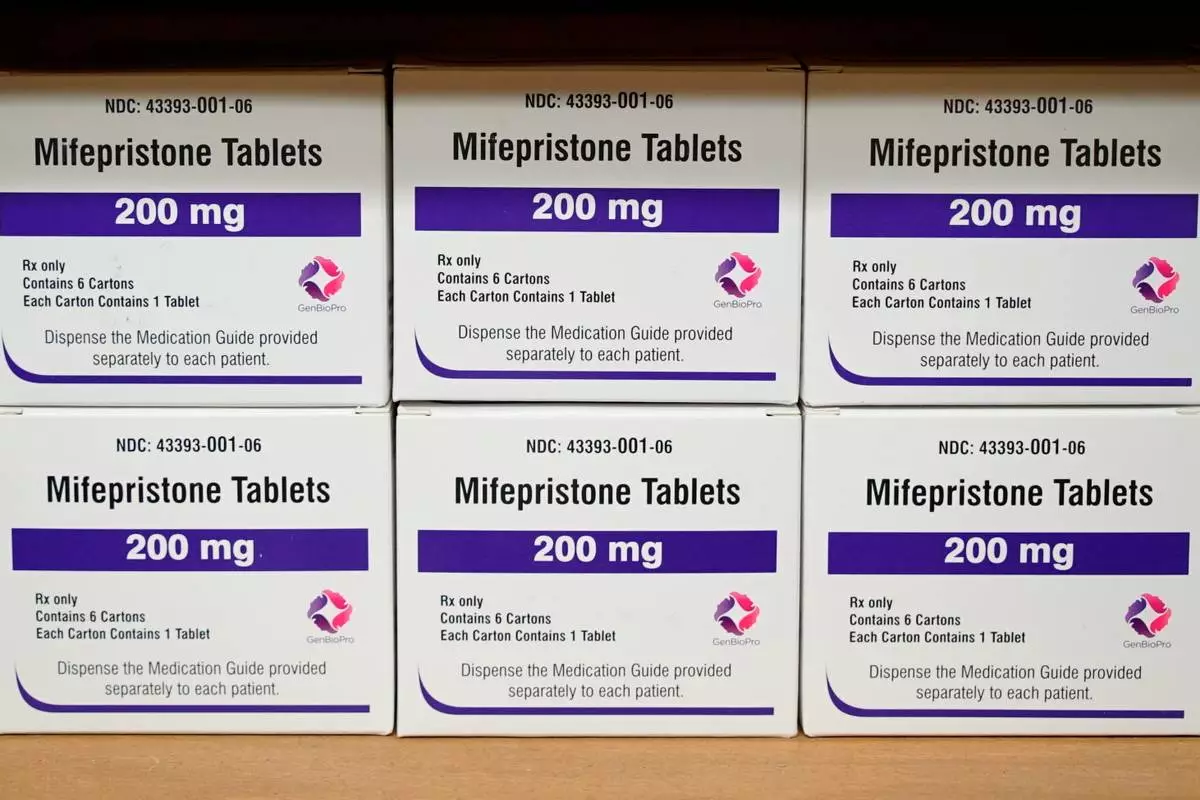
FILE - Boxes of the drug mifepristone sit on a shelf at the West Alabama Women's Center in Tuscaloosa, Ala., March 16, 2022. (AP Photo/Allen G. Breed, File)