HARARE, Zimbabwe (AP) — Have-A-Look. Handsome. Thanks. Trust. Privilege. Doubt. Problem. Shame. In Zimbabwe, these aren’t just random words. They are names chosen with intention in a culture where naming a child goes beyond identity and can offer a snapshot of family history, emotion and circumstance.
At first, Privilege Mubani, a 37-year-old bar manager in the capital, Harare, didn’t give much thought to her name.
Click to Gallery
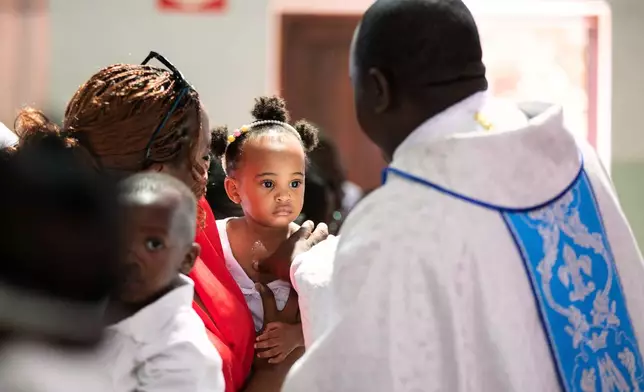
A priest anoints a child with oil during a baptism ceremony at the Roman Catholic Cathedral in Harare, Zimbabwe, Sunday, April 5, 2026. (AP Photo/Aaron Ufumeli)
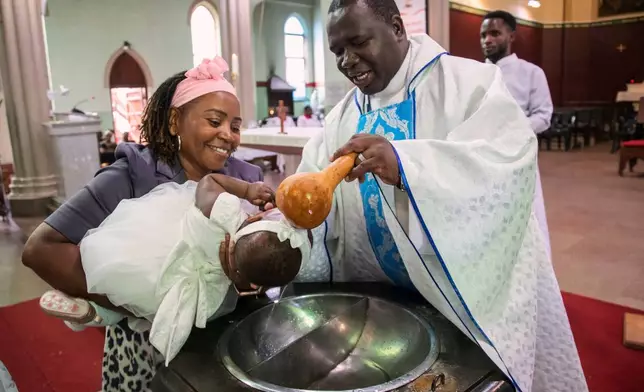
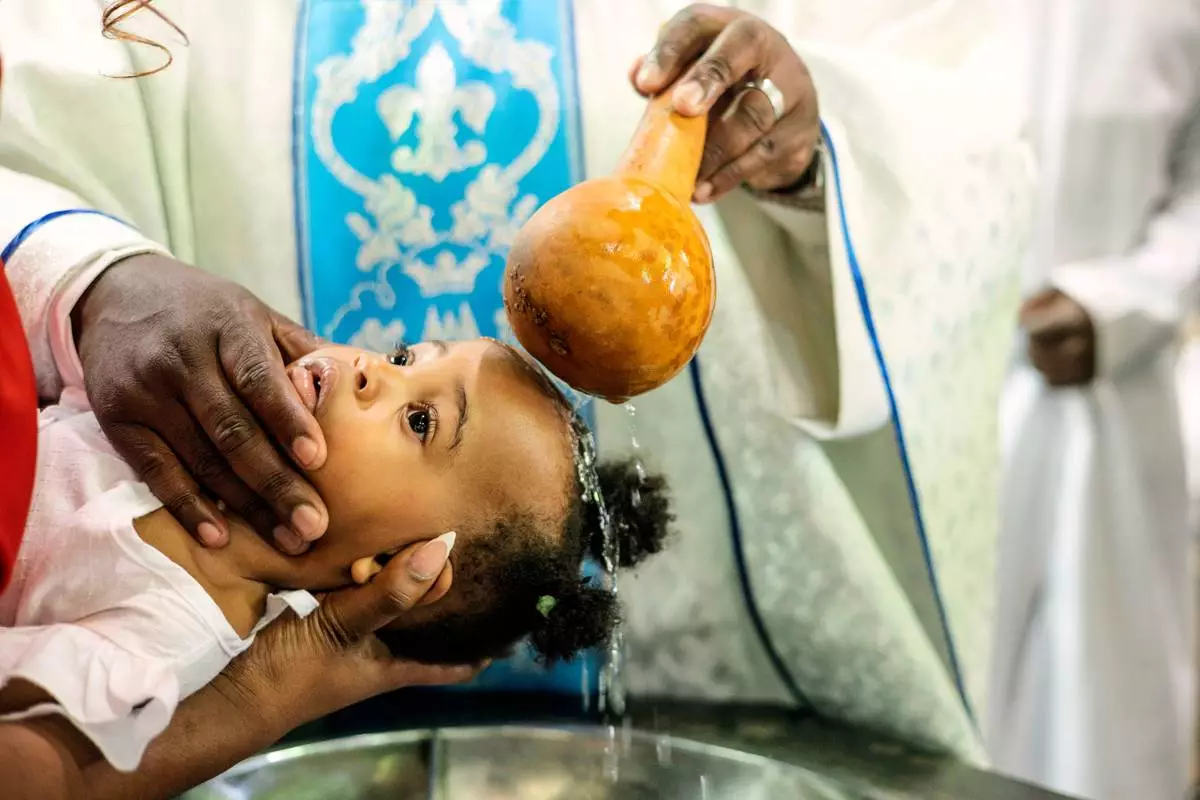
A child is baptised at the Roman Catholic Cathedral in Harare, Zimbabwe, Sunday, April 5, 2026. (AP Photo/Aaron Ufumeli)
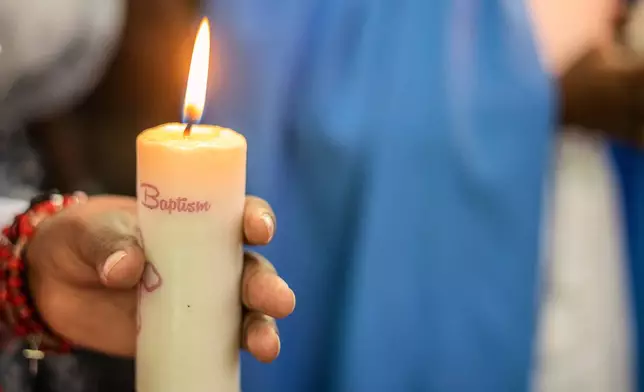
A parent holds a candle during a baptism ceremony at the Roman Catholic Cathedral in Harare, Zimbabwe, Sunday, April 5, 2026. (AP Photo/Aaron Ufumeli)
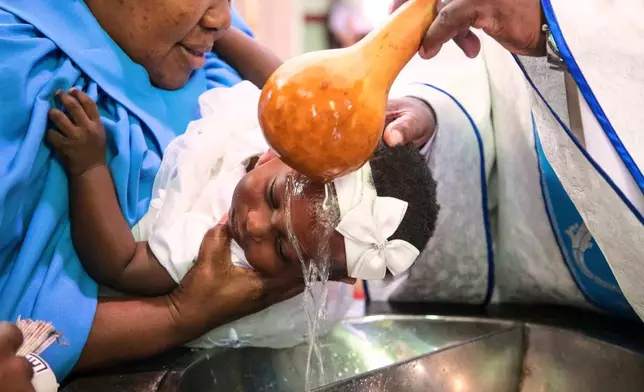
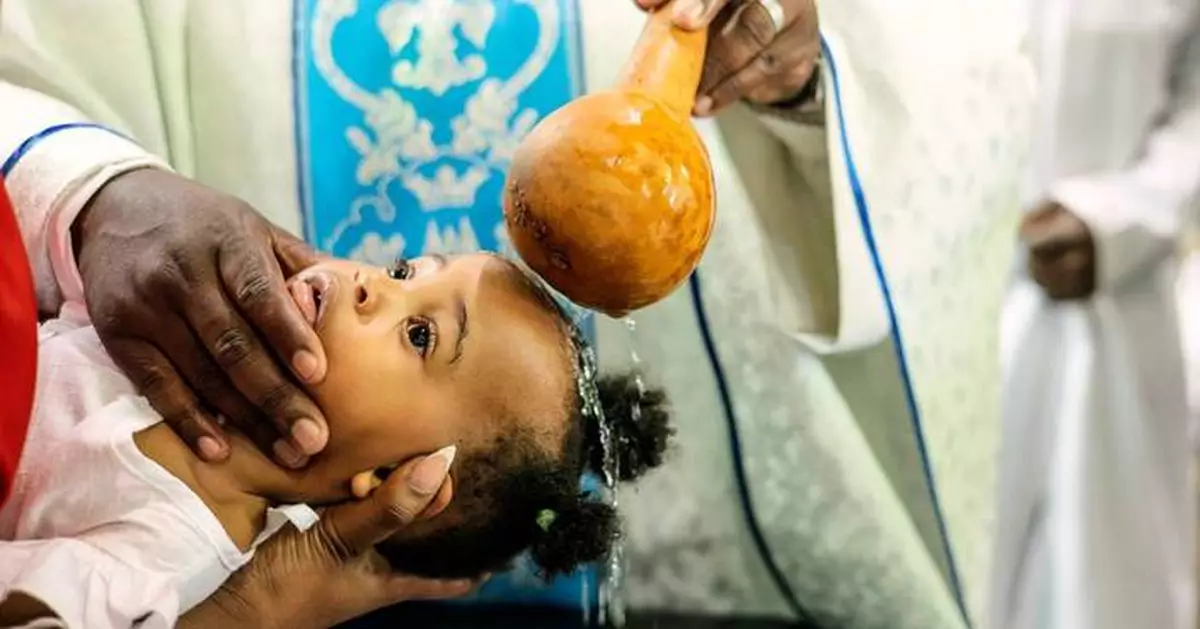
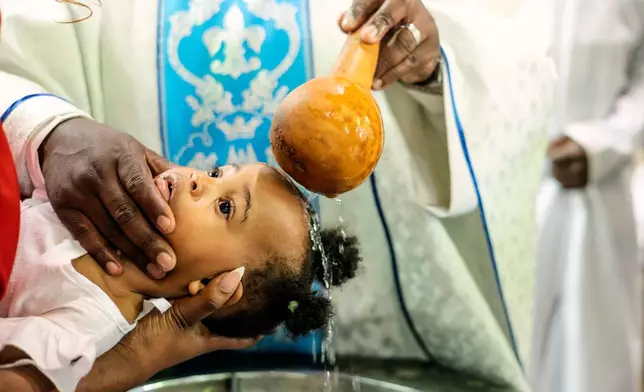
A priest pours water over the head of a child during a baptism ceremony at the Roman Catholic Cathedral in Harare, Zimbabwe, Sunday, April 5, 2026. (AP Photo/Aaron Ufumeli)
But as she grew older, she asked her father what her name meant. The answer unlocked a story she had never imagined, one filled with stigma, resilience and unexpected joy.
Her mother had become pregnant out of wedlock. In a conservative society where single motherhood is frowned upon, she had given up any hope of getting married.
Then a suitor swept in and tied the knot despite the stigma, and her mother felt redeemed.
“People had been laughing at her. She was being mocked for having a ‘fatherless’ child. Naming me Privilege was her own expression of gratitude,” she said with a grin.
Zimbabwe’s affinity for English-language names reflects its history as a former British colony and a largely Christian nation. English remains an official language and the dominant one in schools and government.
But the practice runs deeper than the colonial legacy.
Names in the southern African nation often function as miniature narratives of joy, regret, faith, hardship or resilience at the time of a child’s birth, said David Chikwaza, a decolonization researcher at Dublin City University’s School of History and Geography in Ireland.
“It is an echo of pre-colonial naming traditions. Zimbabweans, and Africans in general, are very spiritual and the naming of a child always carried deep symbolism,” Chikwaza said. “Parents would name their child as a way of addressing a societal or a personal issue. Colonialism promoted English as a language of sophistication, so Africans simply turned to the English vocabulary for expression, but the meanings remain the same.”
The result is a naming culture that often fascinates outsiders.
During the African Cup of Nations soccer tournament in January, Zimbabwe’s national team drew attention for the striking names on the team sheet, which quickly trended on social media.
“I have never seen a team with cooler names. I am hearing the commentator say these names and I am like, there’s no way these are real,” one TikTok user said, reacting to players named Teenage, Godknows, Divine, Marvellous, Knowledge, Prince and Prosper.
The novelty also feeds into comedy.
Learnmore Jonasi, a finalist on “America’s Got Talent” in 2024, often draws laughs from audiences in the United States by riffing on his name and others from back home.
Givemore, Best, Promise, Guarantee, Anxious, Innocent, Confidence and Hardlife are among dozens of names that might attract attention elsewhere, but not in Zimbabwe.
For many, the names are seen with pride and even as something to live up to.
Take Lovejoy Mutongwiza, a 33-year-old journalist and chief executive of 263chat, an online news outlet. He sees his name as a celebration.
“My mum and dad said they were madly in love and in a happy place in their lives when they conceived me, so they aptly named me Lovejoy,” he said. “It’s a befitting name. I think I have lived up to it because I am rarely angry. I am naturally a bubbly person.”
Others embrace names that others might view as degrading.
Shame Chikwana said he has never felt burdened by his name and resisted pressure from his sister to adopt a more conventional one as an adult.
“I would never trade it for any other name. I was named after my late grandfather so it’s a heritage I am carrying,” said the 51-year-old, adding that his parents refused to divulge why his grandfather was given the name.
“I hope it stays within the family for generations to come,” he said.
For more on Africa and development: https://apnews.com/hub/africa-pulse
The Associated Press receives financial support for global health and development coverage in Africa from the Gates Foundation. The AP is solely responsible for all content. Find the AP’s standards for working with philanthropies, a list of supporters and funded coverage areas at AP.org.
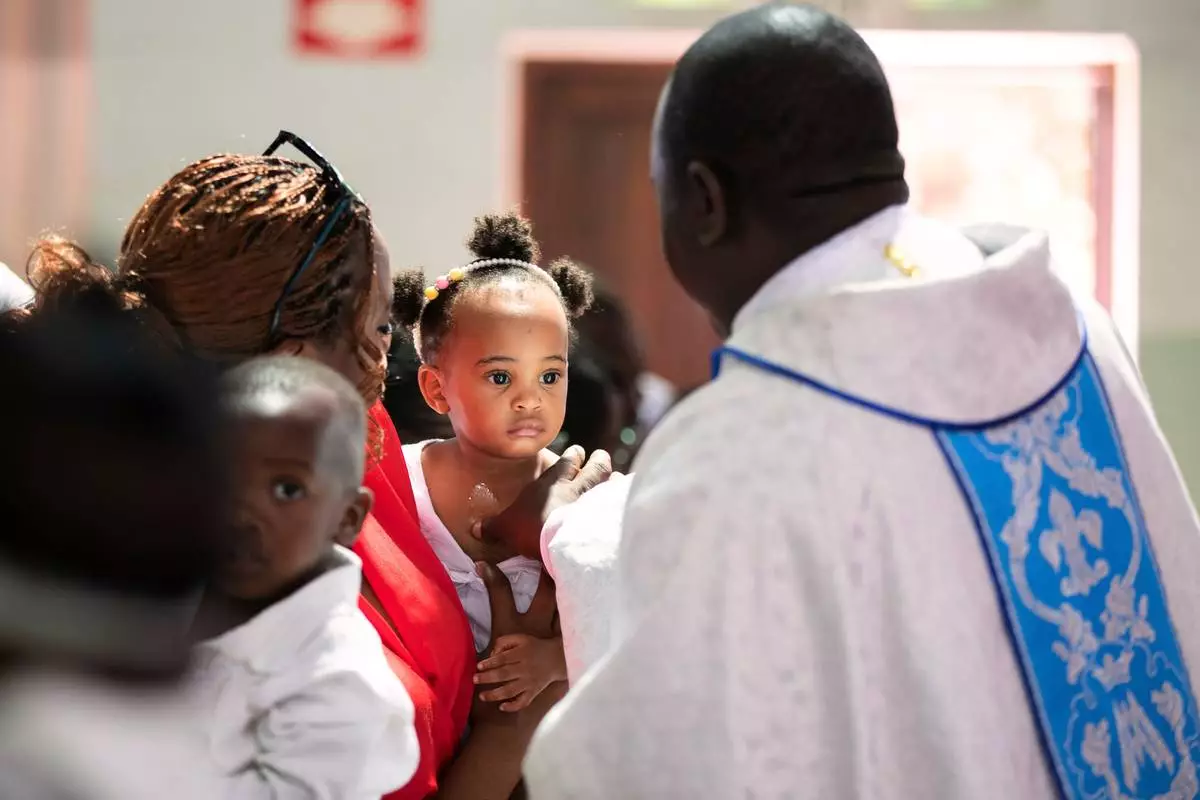
A priest anoints a child with oil during a baptism ceremony at the Roman Catholic Cathedral in Harare, Zimbabwe, Sunday, April 5, 2026. (AP Photo/Aaron Ufumeli)
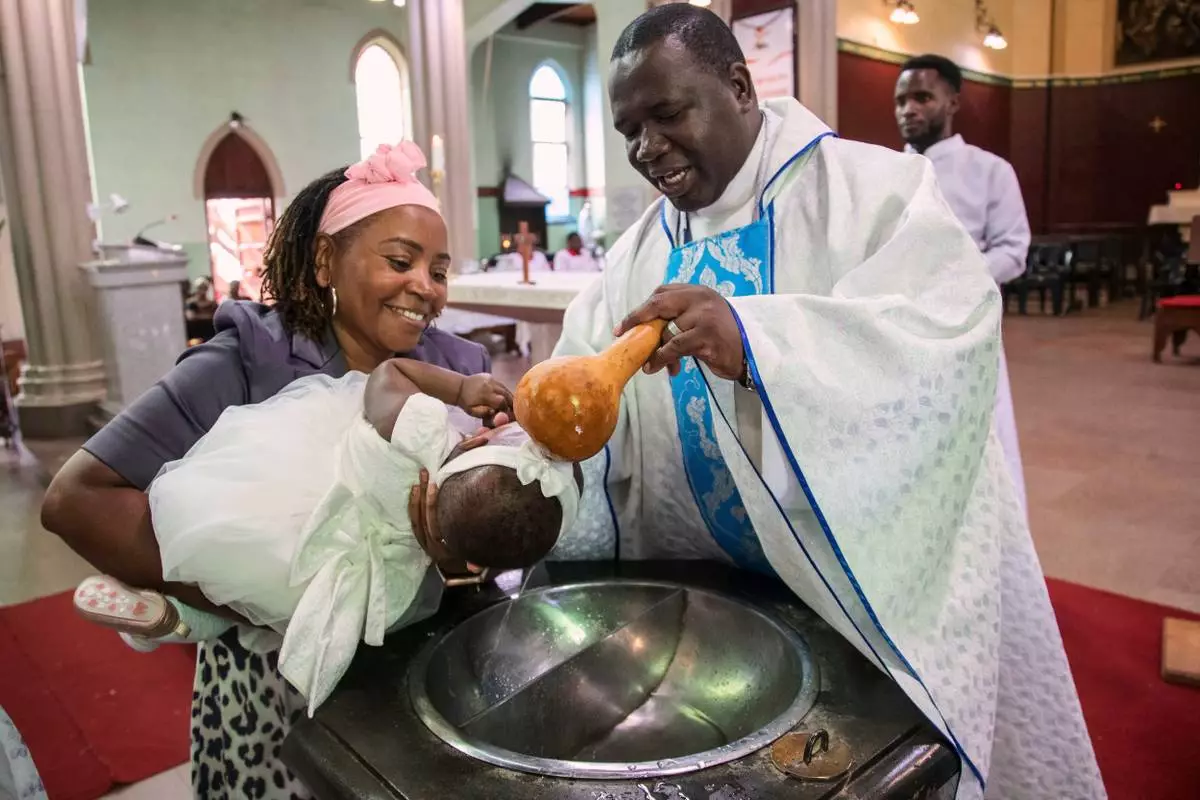
A child is baptised at the Roman Catholic Cathedral in Harare, Zimbabwe, Sunday, April 5, 2026. (AP Photo/Aaron Ufumeli)
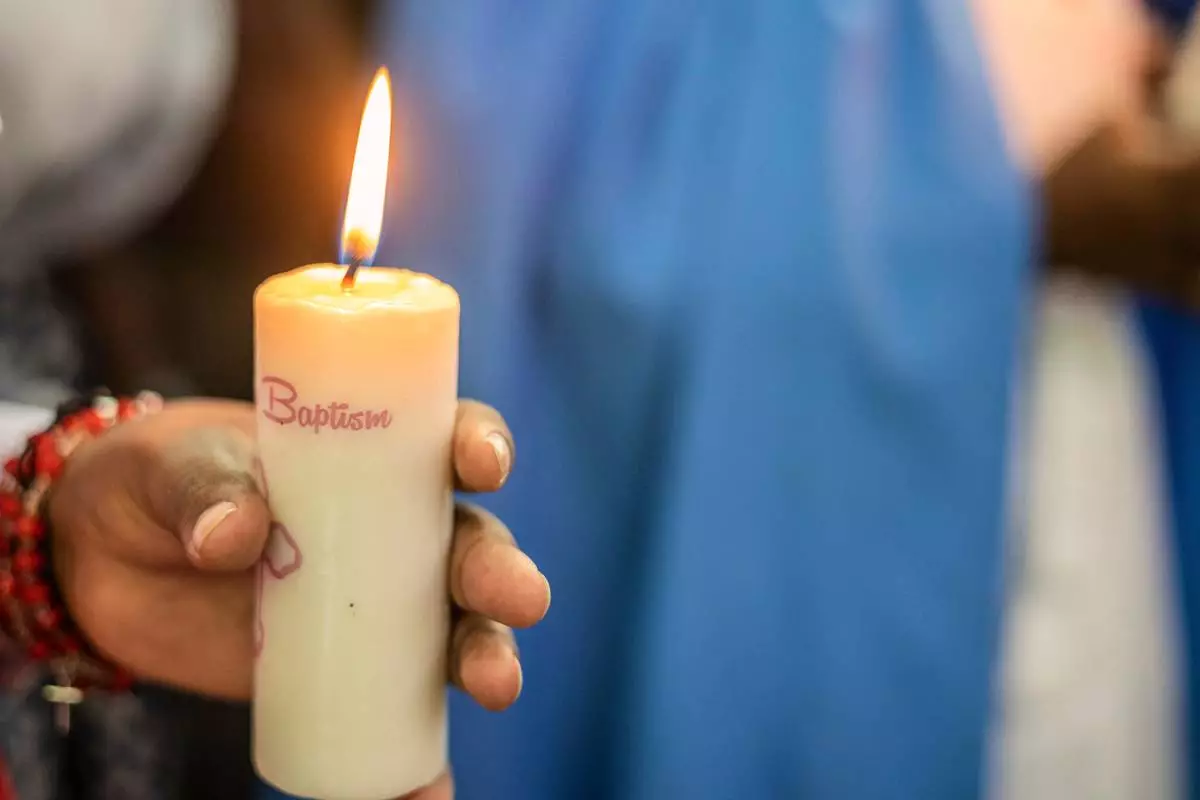
A parent holds a candle during a baptism ceremony at the Roman Catholic Cathedral in Harare, Zimbabwe, Sunday, April 5, 2026. (AP Photo/Aaron Ufumeli)
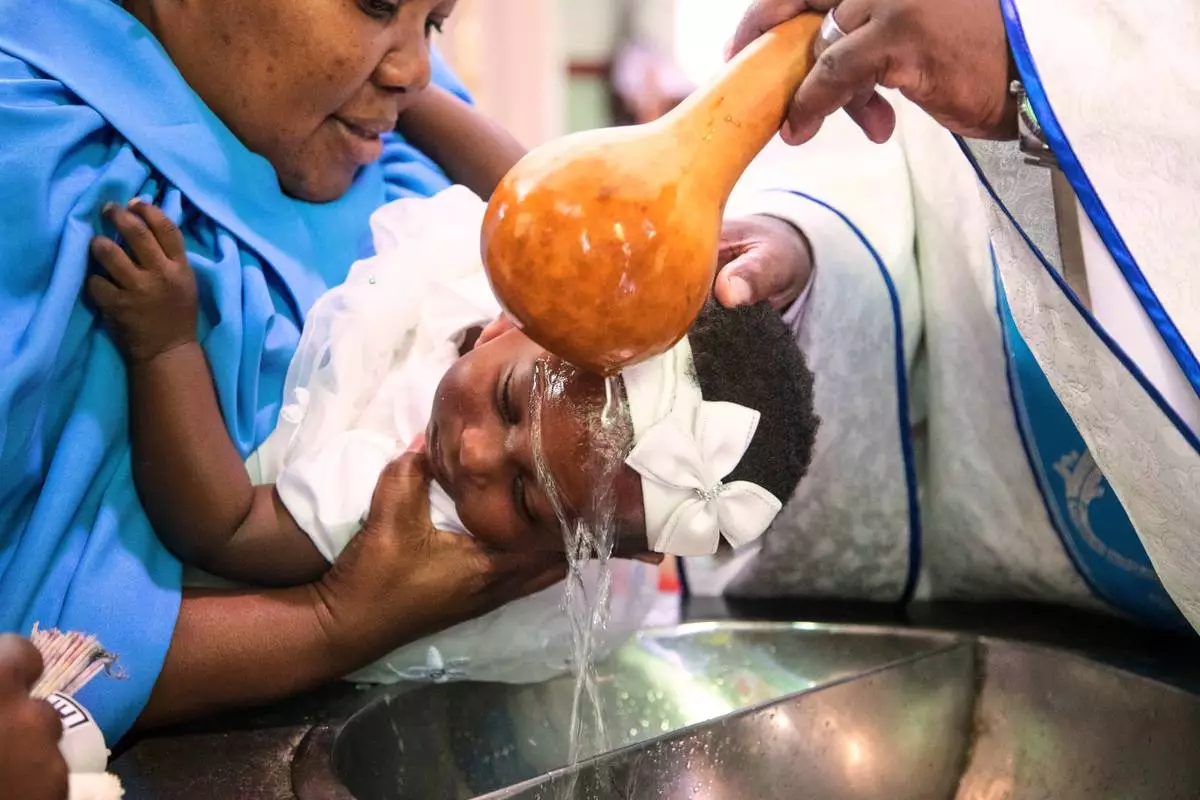
A priest pours water over the head of a child during a baptism ceremony at the Roman Catholic Cathedral in Harare, Zimbabwe, Sunday, April 5, 2026. (AP Photo/Aaron Ufumeli)

DES MOINES, Iowa (AP) — The two Democrats vying to be Iowa's next U.S. senator each tried to explain in a debate Thursday why he's the one to flip the Republican-held seat, showcasing a struggle within the party over the best strategy to reclaim the U.S. Senate this fall.
State Rep. Josh Turek said he's the “battle-tested” candidate who has won in his red state House district by reaching independents and moderate Republicans who supported President Donald Trump. State Sen. Zach Wahls criticized national Democratic leaders, including Sen. Chuck Schumer, who he says have abandoned rural and working-class voters who are frustrated with both parties.
The two spent a largely cordial hour showing many areas of agreement, but an influx of outside spending and recent big-name endorsements has intensified one of the few remaining competitive Democratic Senate primaries this year.
Both Democrats directed most of their attacks toward Rep. Ashley Hinson, who is seeking the GOP nomination.
Iowa’s Republican Sen. Joni Ernst opted out of a reelection bid, leaving the seat open for the first time since she replaced retiring Democratic Sen. Tom Harkin in 2014. Republican Senate leaders have backed Hinson, who represents northeast Iowa, and the campaign arm has committed $29 million to help her keep their thin majority.
Democrats see an opportunity to flip seats in the once-competitive state, despite Trump’s double-digit win in the last presidential election and an all-Republican federal delegation. The political committee aligned with Senate Democrats said Thursday it was investing $13 million in the state. But Iowa Democrats first need to settle on which federal candidate will be at the top of the ticket. Early voting began Wednesday.
Turek said his win in a Trump district will translate statewide, making him the best candidate to go up against a full-fledged Republican operation heading into the general election.
“My opponent, Zach Wahls, has never run against a Republican,” Turek said. “I know that there is something specific about my story, my background, my resume ... that really has this unique ability to win over independents, which are the kingmakers in the process, and moderate Republicans.”
Wahls said he's gone up against plenty of Republicans to advocate and “defend families like mine,” referencing a 2011 speech he made to Iowa lawmakers about his two moms that went viral. Wahls maintained that winning back rural and working-class voters lies with offering a different kind of Democratic Party and a new leader of Senate Democrats.
“We need to win back the trust of rural and blue-collar voters who were written off and lost by Chuck Schumer,” Wahls said. “We have a choice: Run the same playbook that Chuck Schumer ran and lose, or fight for the voters that he wrote off and win them back.”
Wahls has been critical of Turek for not rejecting Schumer as caucus leader. Turek says he would question any leader candidate on what they would do for Iowa and Iowans.
Both candidates focused their attacks Thursday on Hinson. Turek and Wahls, aligned on many issues, criticized votes Hinson has taken in the House to support Trump's agenda.
Each said he would not support the Republican president’s tariffs or the war in Iran. Wahls said Hinson had “rubber stamped” Trump's approach by voting againsta resolution to curb the president's powers in the Iran war, which Wahls blamed for higher gas prices and farmer input costs, including diesel and fertilizer.
Turek criticized Hinson's support for Trump’s tax and spending cuts package. He said he supports no tax on tips and overtime, which he described as policies that support the middle class, but said the law's cuts to Medicaid and food assistance exacerbated a “crisis in this state, unique to Iowa.”
Both candidates criticized corruption in Washington and proposed higher taxes on corporations and wealthy Americans.
Wahls criticized Turek for missing several votes on bills related to reproductive health care, including one that bans most abortions after about six weeks of pregnancy and another that would have criminalized the death of an “unborn person.”
Turek explained his absence during the one-day special session vote on Iowa's abortion law, saying he had a serious medical issue related to his disability. He apologized in a newsletter after “to all of my constituents for not being able to cast my vote against this bill on your behalf.”
Wahls also hit Turek for a vote he took in committee supporting a wide-ranging bill that included funding for centers that discourage women from getting abortions. Turek voted against the bill on the House floor.
Both candidates said they would work to codify access to abortion in the U.S. Senate.
While Wahls and Turek have raised and spent similar amounts, a Democratic political organization, VoteVets, has spent about $7 million to support Turek in the final stretch of the campaign. That's more than the two candidates have spent combined.
Turek, who is not a veteran, was born with spina bifida after his father’s exposure to chemicals while serving in the Vietnam War. The group has said Turek is uniquely positioned to advocate for veterans’ services, especially health care and military families.
Wahls has criticized the influx of cash as insiders in Washington trying to exert outsized influence.
Another group purchased more than $40,000 in airtime to support Wahls this week, according to filings. Iowa Action was funded by a lawyer with a California address who has also donated directly to Wahls' campaign.
Follow the AP’s coverage of the 2026 election at https://apnews.com/projects/elections-2026/.
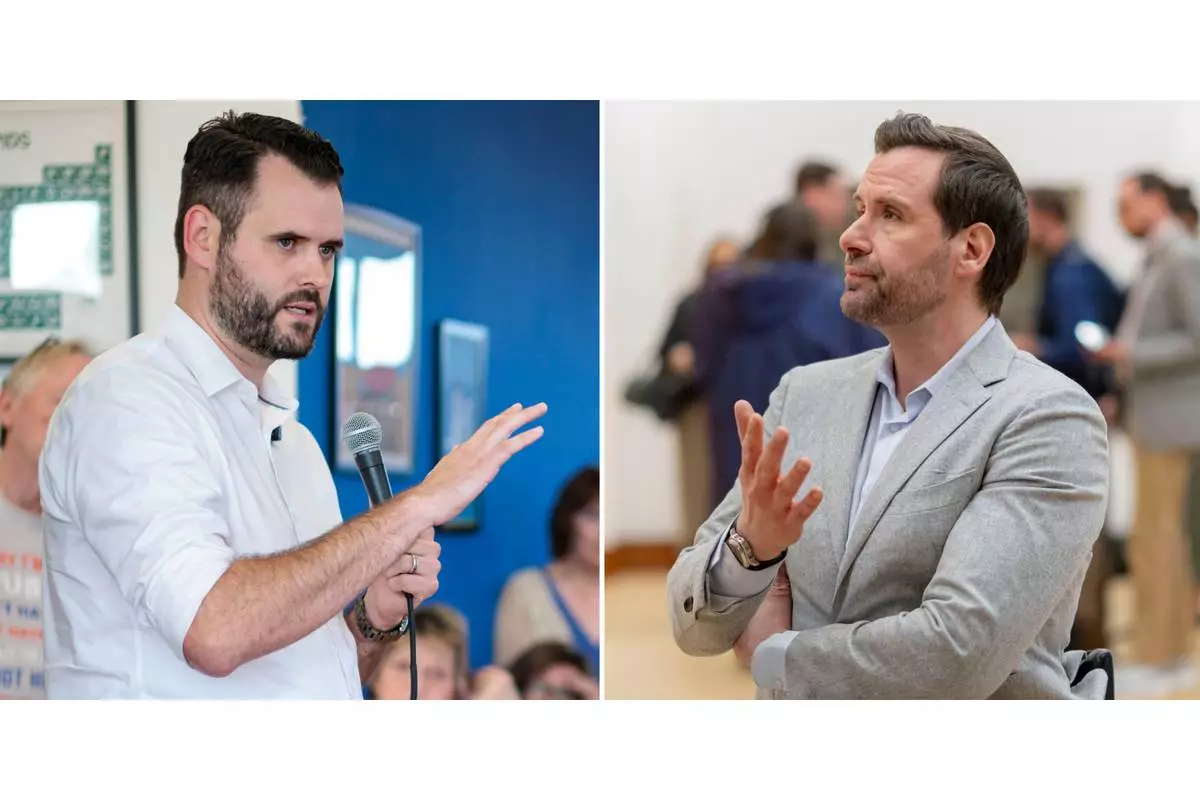
This combination of file photos shows Iowa State Sen. and candidate for the Democratic nomination for U.S. Senate Zach Wahls speaking in Cedar Rapids, Iowa, Sept, 11, 2025, left, and Iowa state Rep. Josh Turek speaking in Des Moines, Iowa, April 8, 2026, right. (Nick Rohlman/The Gazette via AP, File)