VIENNA (AP) — At the Eurovision Song Contest, performers get three minutes to make a big impression.
Grabbing viewers’ attention as one of 25 acts competing in quick succession in Saturday’s grand final in Vienna means pulling out all the stops, both musically and visually.
Click to Gallery
Linda Lampenius and Pete Parkkonen, who compete as Liekinheitin for Finland at the 70th Eurovision Song Contest, talk during an interview with The Associated Press in Vienna, Austria, Thursday, May 14, 2026. (AP Photo/Martin Meissner)
Linda Lampenius and Pete Parkkonen, who compete as Liekinheitin for Finland at the 70th Eurovision Song Contest, watch the camera after an interview with The Associated Press in Vienna, Austria, Thursday, May 14, 2026. (AP Photo/Martin Meissner)
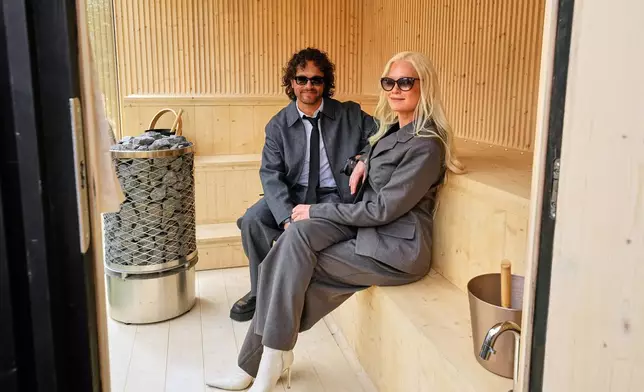
Linda Lampenius and Pete Parkkonen, who compete as Liekinheitin for Finland at the 70th Eurovision Song Contest, sit in a Finnish sauna after an interview with The Associated Press in Vienna, Austria, Thursday, May 14, 2026. (AP Photo/Martin Meissner)
Linda Lampenius and Pete Parkkonen from Finland perform the song "Liekinheitin" during the first semifinal of the 70th Eurovision Song Contest in Vienna, Austria, Tuesday, May 12, 2026. (AP Photo/Martin Meissner)
Linda Lampenius and Pete Parkkonen from Finland perform the song "Liekinheitin" during the first semifinal of the 70th Eurovision Song Contest in Vienna, Austria, Tuesday, May 12, 2026. (AP Photo/Martin Meissner)
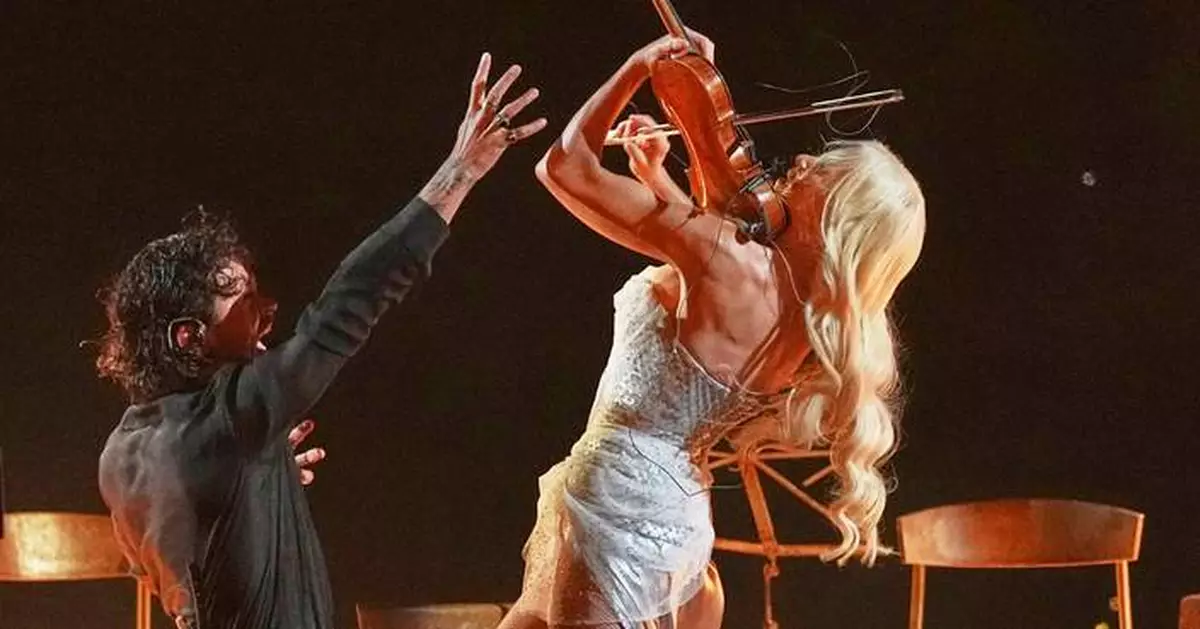
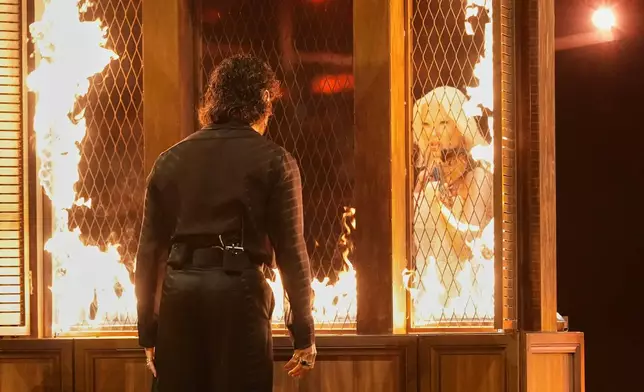
In the case of this year’s favorites to win, the Finnish duo of pop singer Pete Parkkonen and classical violinist Linda Lampenius, that involves jets of flame, a valuable 18th-century violin and a team of “ninjas” working to avert disaster.
The pair’s song “Liekinheitin,” or “Flamethrower,” is a favorite with both fans and betting markets with its melding of pop and classical influences — and its spectacular staging.
Here’s what it takes to create the eye-catching performance.
Parkkonen and Lampenius dub their sound “new pop with a classical touch." Their song of burning love is an explosion of energy in which Parkkonen’s passionate vocals act as counterpoint to Lampenius’ frenetic fiddling.
The Finnish delegation had to secure special permission for Lampenius to play live. Eurovision rules state that lead vocals must be performed live, but instruments are prerecorded, to help speed changeovers between songs.
Lampenius says “Flamethrower” was “written as a duet,” and both performers need to be live for it to work.
“It’s a woman and a man, it’s a female voice and a male voice. So I do all my lyrics through my violin, by playing, and you (Parkkonen) are singing it with words. But we are talking. We are (equally) as important, both of us.”
The pair were not certain when they arrived in Vienna that Eurovision organizers would allow the request. They were only given final approval after performing in front of an audience in a live rehearsal.
The European Broadcasting Union, which runs Eurovision, said contest rules allow that “live audio capture of instruments may exceptionally be permitted where artistically justified.”
Lampenius had brought two violins just in case – a treasured Gagliano made in 1781 so live performance would “sound perfect,” and a cheaper instrument to use if she had to rely on playback. That would remove any risk to the Gagliano from the slightly hazardous staging.
Lampenius and Parkkonen say they have been rehearsing for this moment since November. They won Finland’s national selection contest for Eurovision in February and say by now they have performed the song hundreds of times.
It is crucial to get it right. The performance builds to a climax that sees jets of flame spurt from a stage on which Lampenius, fanned by a leaf blower and wearing a flowing dress, is playing her precious violin.
Lampenius concedes it's “a bit scary when you think of it."
But she says she is secure in the knowledge she has black-clad stagehands who call themselves “ninjas” on hand to keep her dress away from the flames – an essential piece of the performance that goes unseen by viewers watching at home.
“They’re running with me – first one guy carrying my dress when I’m running, then the other one catching me during my run,” she said. “And he helps me also when I jump up on the stage and do the pirouette.”
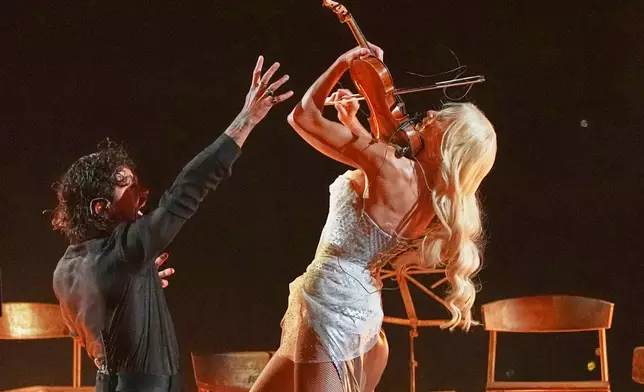
For the striking final pose in which Lampenius perches atop chairs in high heels, violin aloft, Parkkonen combines singing with his role as a security spotter, there to catch her if she topples over.
“That’s my work,” the singer said.
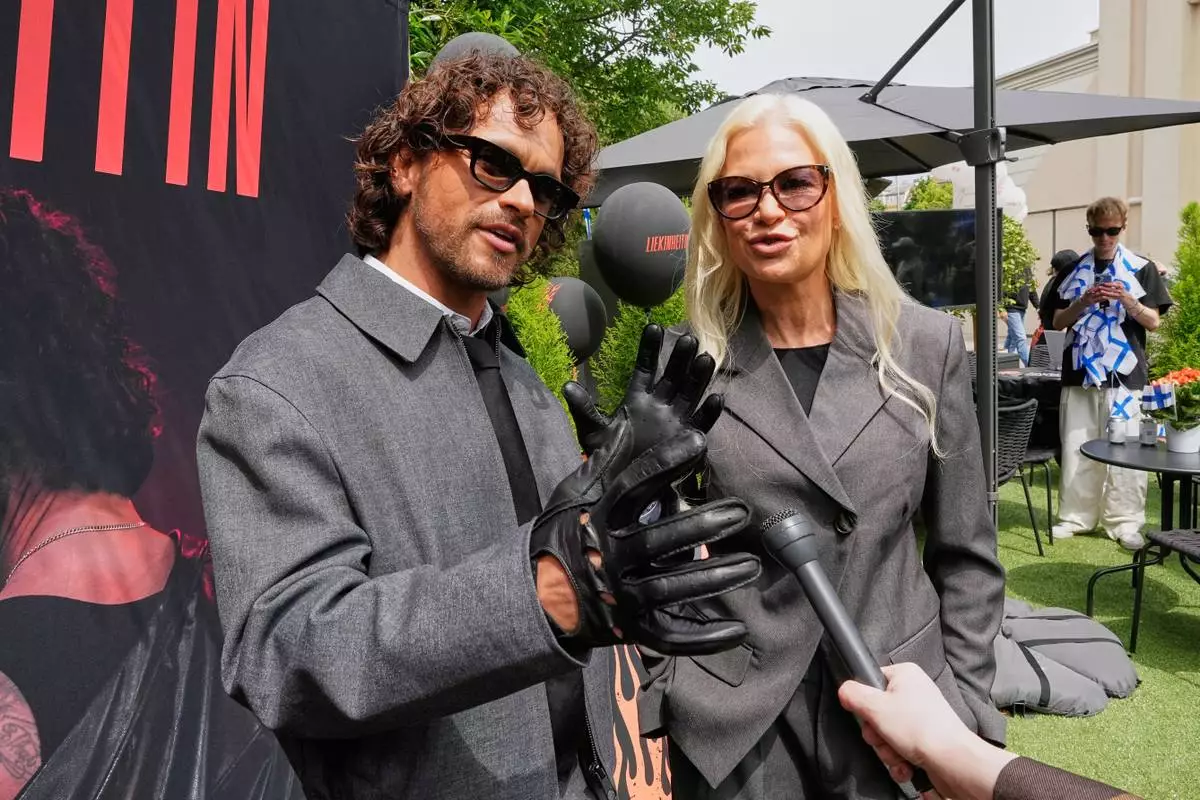
Linda Lampenius and Pete Parkkonen, who compete as Liekinheitin for Finland at the 70th Eurovision Song Contest, talk during an interview with The Associated Press in Vienna, Austria, Thursday, May 14, 2026. (AP Photo/Martin Meissner)

Linda Lampenius and Pete Parkkonen, who compete as Liekinheitin for Finland at the 70th Eurovision Song Contest, watch the camera after an interview with The Associated Press in Vienna, Austria, Thursday, May 14, 2026. (AP Photo/Martin Meissner)
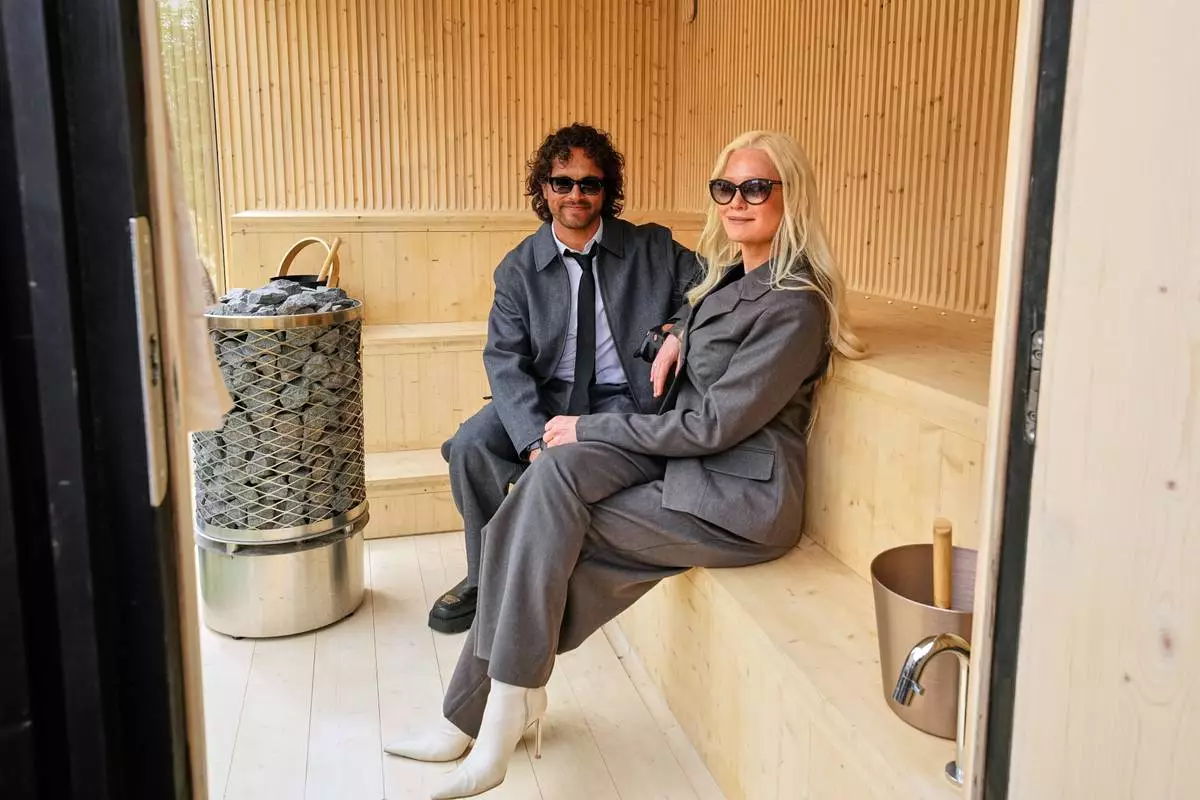
Linda Lampenius and Pete Parkkonen, who compete as Liekinheitin for Finland at the 70th Eurovision Song Contest, sit in a Finnish sauna after an interview with The Associated Press in Vienna, Austria, Thursday, May 14, 2026. (AP Photo/Martin Meissner)
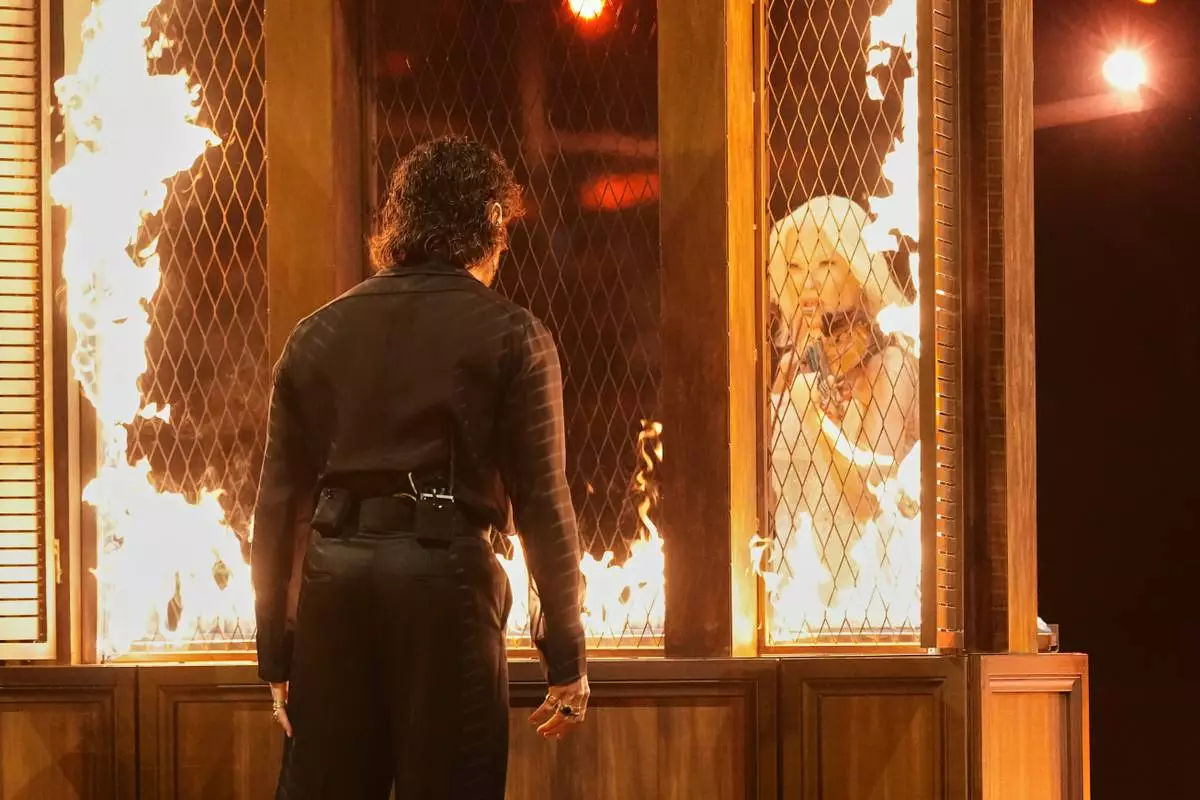
Linda Lampenius and Pete Parkkonen from Finland perform the song "Liekinheitin" during the first semifinal of the 70th Eurovision Song Contest in Vienna, Austria, Tuesday, May 12, 2026. (AP Photo/Martin Meissner)
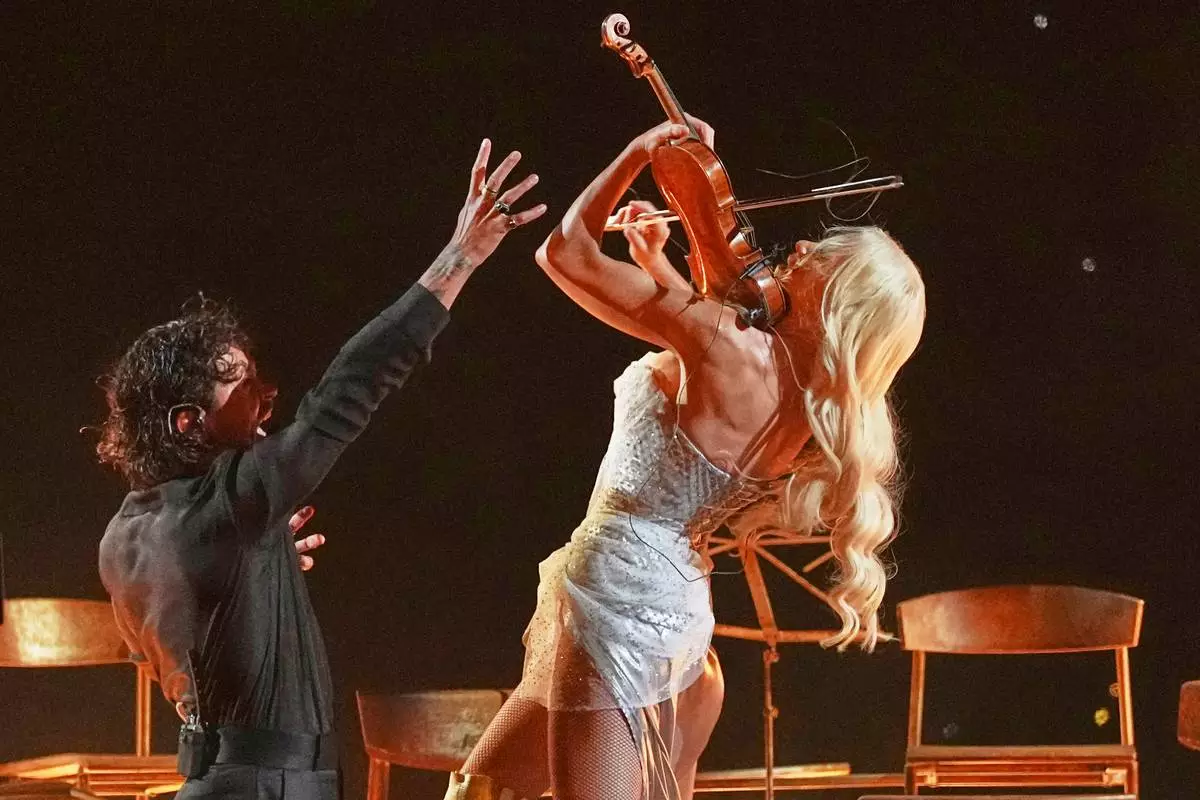
Linda Lampenius and Pete Parkkonen from Finland perform the song "Liekinheitin" during the first semifinal of the 70th Eurovision Song Contest in Vienna, Austria, Tuesday, May 12, 2026. (AP Photo/Martin Meissner)
CHIYAH, Lebanon (AP) — Ayman al-Zain watched on a recent afternoon as a bulldozer cleared the rubble of what used to be his sports clothing store, which was one of dozens of buildings destroyed in Israeli strikes against the Hezbollah militant group.
With a nominal truce in place that has reduced but not halted the fighting, Al-Zain tried to assess whether to rebuild the shop in Beirut’s southern suburbs that he once hoped to pass down to his kids. But it's unlikely he will be able to do so anytime soon, and not only because of the fear of more airstrikes.
“Everything is expensive,” he told The Associated Press. “If I want to open a new store and get mannequins, hangers and some accessories, the prices are very different than before.”
The U.S.-Israeli war with Iran, and the closure of the Strait of Hormuz, have sent economic shock waves across the Mideast. In Lebanon, those woes have been compounded by the country's existing economic problems and by largely unregulated markets that are vulnerable to price gouging.
“This continues to be a major economic shock, one of honestly an existential nature,” said Economy Minister Amer Bisat, who is part of the Lebanese Cabinet that came into office over a year ago on a reformist agenda.
Since 2019, the tiny Mediterranean country has been in the throes of an economic crisis that pulverized the value of its local currency and its banking system.
That's when Lebanese banks collapsed, which evaporated depositors’ savings and plunged about half of the population of 6.5 million into poverty, after decades of rampant corruption, waste and mismanagement. The country suffered some $70 billion in losses in its financial sector, further compounded by about $11 billion in the 2024 war between Israel and Hezbollah, according to the World Bank. The Lebanese pound has since lost over 90% of its value against the U.S. dollar.
The cash-strapped state electricity company provides only a few hours of power a day, and most Lebanese rely on diesel generators to make up the difference. That makes the economy particularly vulnerable to fuel price increases.
Lebanon was already “grappling with multiple rounds of crises,” said Mohamad Faour, professor of finance at the American University of Beirut. "So this round of war only made an already fragile situation more fragile.”
With this new war, 1.2 million Lebanese have been displaced, largely from southern Lebanon and Beirut's southern suburbs. Many are sheltering in schools with no work or draining whatever money they have renting out apartments or hotel rooms.
In an interview with the AP from his office, Bisat estimated that the country faces an economic loss of around 7% of its gross domestic product due to the war because “companies are closing, people are losing their jobs, tourists are not showing up.”
Evidence of inflation abounds.
In the usually bustling produce market in Sabra, south of Beirut, vendor Ahmad al-Farra looked dejected as an elderly woman shopping for watermelon, tomatoes and potatoes walked away without buying anything after checking the price tags.
Prices have spiked since the U.S. and Israel launched a war against Iran on Feb. 28, followed quickly by a resurgence of war between Israel and Hezbollah.
“We're keeping our prices low so we can sell, and even then we're not selling,” al-Farra said as the sound of an Israeli drone whizzed overhead.
Even consumers who can afford to spend are anxious and cutting back on nonessential purchases, leaving many businesses empty.
Riad Aboulteif, who runs several restaurants and bars in the capital, said his revenue has dropped by some 90% since the war began, as Lebanon’s shrinking middle class cuts costs.
People are saving more money for their survival and not making plans to celebrate birthdays or other special occasions, he said at one of his bars in the bustling Hamra district of Beirut, where the loud chatter of customers once overpowered the jazz music coming through the sound system.
That night, only a few tables were occupied. He's had to downsize his staff and restructure his menus to offer more affordable items.
Meanwhile, the country’s bankrupt government has struggled to crack down on unfair and illicit profiteering and the hoarding of fuel and other essential items.
Many agricultural areas in southern and eastern Lebanon are no longer accessible because of airstrikes and clashes, but al-Faraa believes suppliers have raised prices beyond what is necessary to cover cost increases.
Some of the starkest increases have been in generator bills.
Families and businesses for years have paid multiple utility bills to cover privately supplied electricity and water in the absence of government services. Neighborhood generator owners charge a monthly fee, and some landlords have their own generators and charge the cost to tenants.
Frustrated business owners have said that generator bills have doubled at times, forcing them to shorten their hours of operation or even close on some days to cut costs.
“If we didn’t take these measures, we cannot continue,” Aboulteif said.
Bisat said his ministry has conducted over 4,000 inspections of private generators, gas stations and shops across the country since the start of the war in March and lodged dozens of complaints to the courts. But the issue will not be quickly resolved.
In the meantime, the government has little ability to crack down on the handful of companies that import and distribute fuel and other goods.
With no end to the war in sight, the economic situation shows no sign of easing.
A tenuous ceasefire is in place between the U.S. and Iran, but talks between Washington and Tehran are gridlocked. A nominal truce between Israel and Hezbollah has reduced but not stopped the fighting in Lebanon.
For now, Lebanese families and business owners are confronting the challenges day by day and hoping for the best.
“Only God knows how we’ve been trying to manage ourselves," al-Farra said.
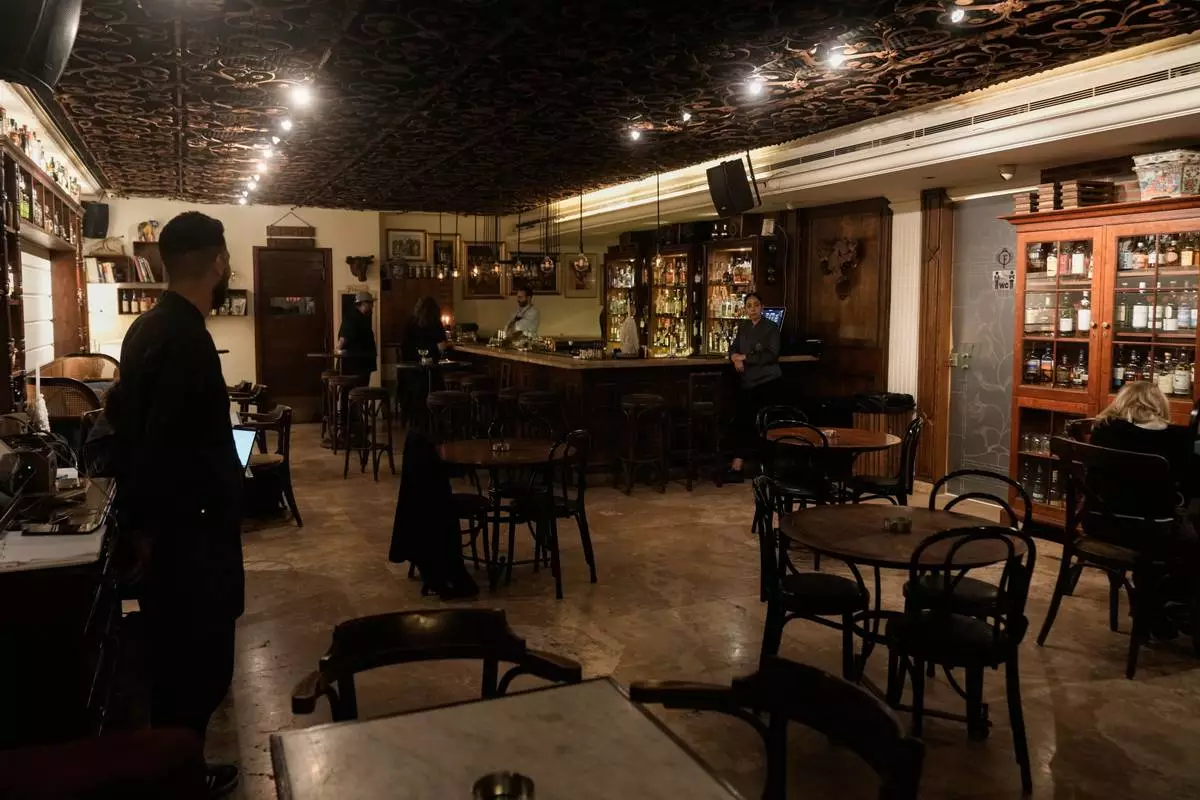
People spend time at an almost empty bar on Hamra Street in Beirut, Lebanon, May 5, 2026. (AP Photo/Bilal Hussein)
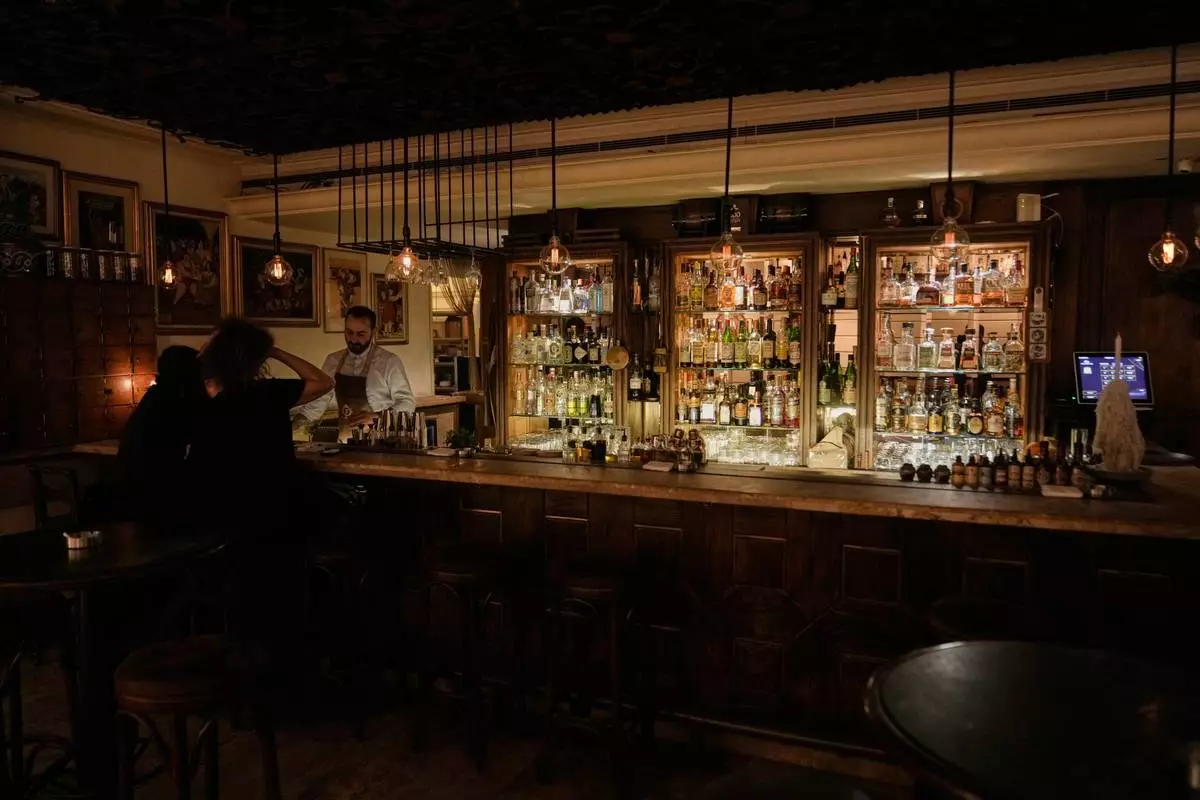
People spend time at an almost empty bar on Hamra Street in Beirut, May 5, 2026. (AP Photo/Bilal Hussein)
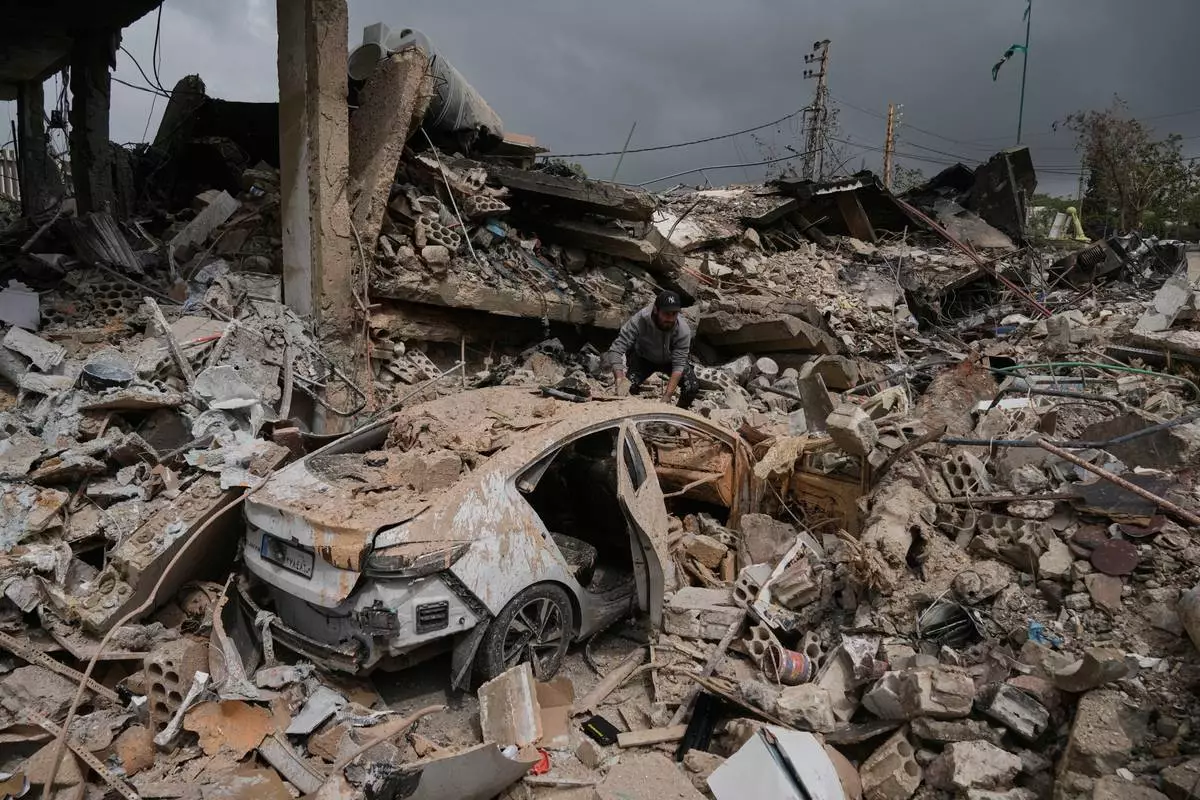
A man inspects his damaged car amid the rubble of shops destroyed in previous Israeli airstrikes in the Hosh neighborhood of Tyre, southern Lebanon, April 19, 2026. (AP Photo/Bilal Hussein)
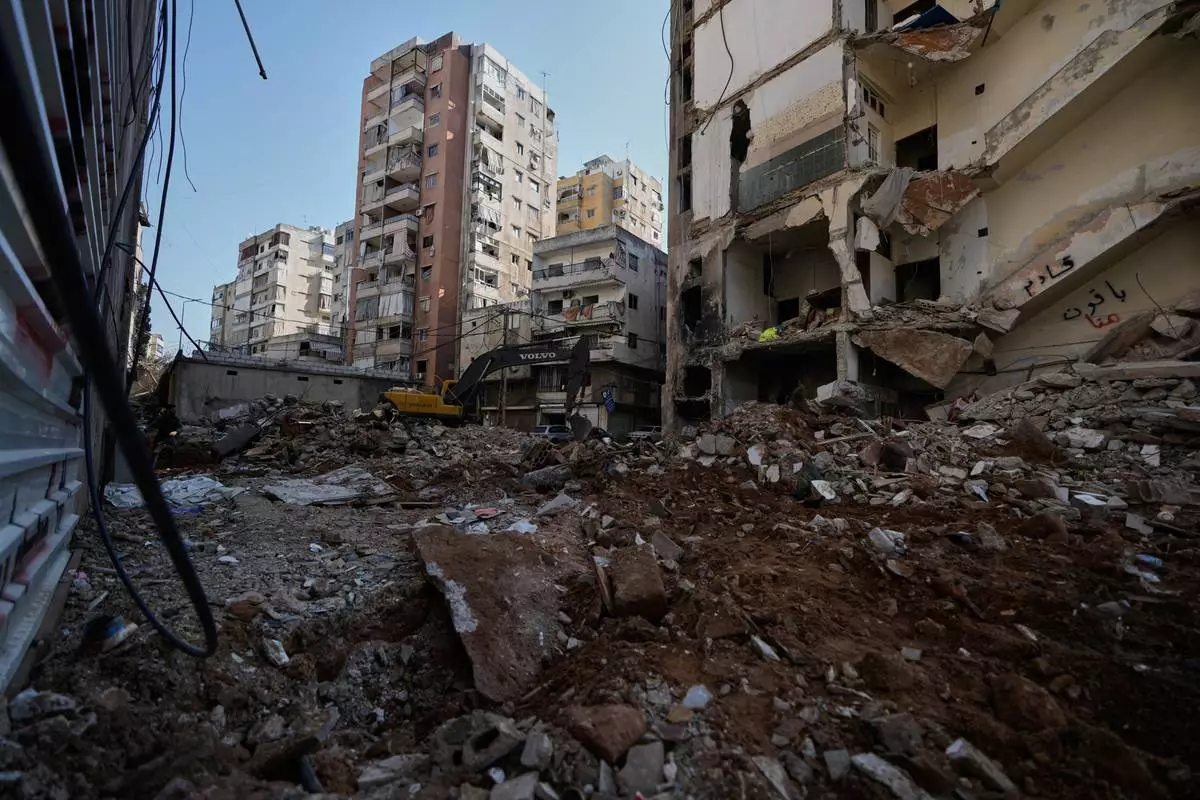
A bulldozer clears the rubble where a sports clothing shop was destroyed in a previous Israeli airstrike in Chiyah, a southern Beirut suburb, May 6, 2026. (AP Photo/Bilal Hussein)

Bar and restaurant owner Riad Aboulteif speaks during an interview with The Associated Press at his bar on Hamra Street in Beirut, May 5, 2026. (AP Photo/Bilal Hussein)