WATERLOO, Ontario--(BUSINESS WIRE)--May 15, 2026--
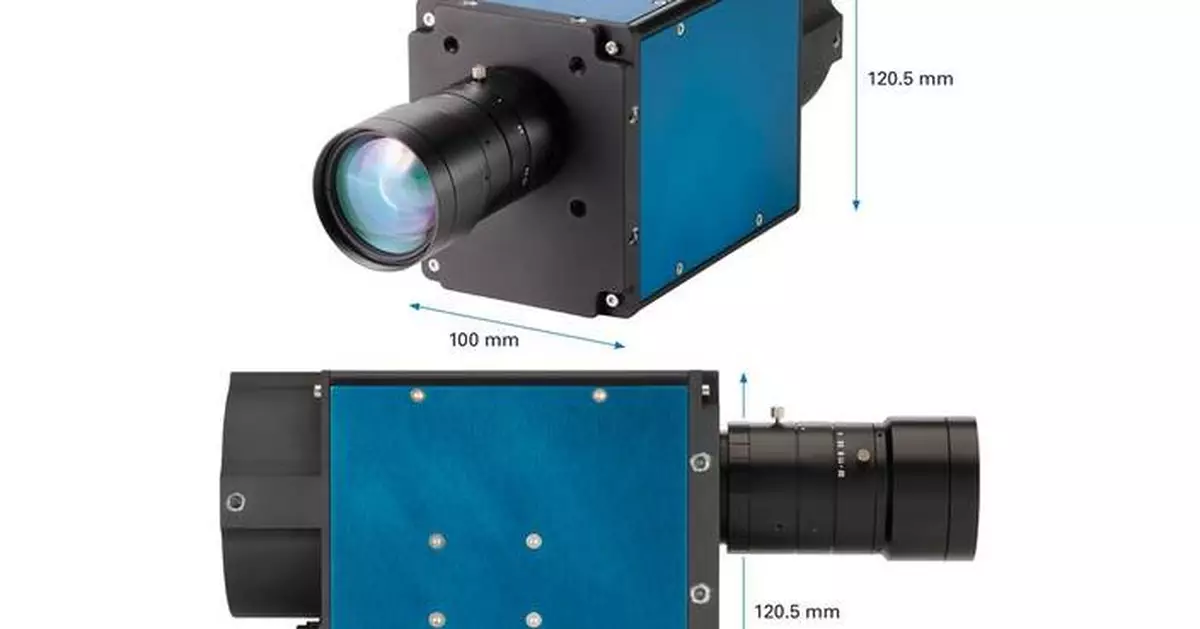
Teledyne DALSA, a global leader in machine vision, today announced Kaleido™, a groundbreaking short‑wave infrared (SWIR) hyperspectral camera. Engineered to overcome the integration and performance barriers of industrial sorting, Kaleido targets critical applications in recycling, food safety, pharmaceuticals, and waste management. By significantly advancing material discrimination and increasing throughput, Kaleido redefines the cost-to-performance ratio for hyperspectral inspection.
This press release features multimedia. View the full release here: https://www.businesswire.com/news/home/20260515433727/en/
Fully designed and vertically manufactured by Teledyne and encompassing the sensor, spectrograph, and interface, Kaleido delivers up to 1,280 pixel spatial resolution with line rates exceeding 2.3 kHz. This high-speed capability allows for the inspection of higher volumes in less time without sacrificing spectral precision.
“Kaleido is an example of how we leverage the collective power of Teledyne’s global technologies and capabilities. It combines deep sensor physics, advanced optical design, and world-class system engineering to reduce the complexity and cost of hyperspectral deployment,” said Sadiq Panjwani, Senior Executive Vice President and General Manager of the Machine Vision Cameras Group. “Kaleido is a scalable solution that improves global outcomes by ensuring food safety, driving cleaner manufacturing, and enabling more responsible resource management. This is the future of industrial intelligence.”
Kaleido simplifies the user experience with built‑in spectral band selection and spectrograph‑based aberration correction, ensuring consistent calibration across units throughout the full operating temperature range. These innovations reduce system complexity and accelerate time-to-market for machine builders. Additionally, Teledyne has integrated proven features from its award‑winning line scan families, such as metadata tagging and multiple regions of interest (ROI), ensuring that only the most relevant data is delivered to the processing engine for maximum efficiency.
The camera utilizes a 10 GigE interface fully compliant with GigE Vision® and GenICam® standards. Optimized for high responsivity, the Kaleido sensor maintains strong signal integrity even in low‑light conditions, allowing for the effective use of modern, energy-efficient SWIR LED lighting. With flexible lens options and a robust global partner network, Kaleido is built for rapid scaling.
Kaleido will be showcased at the Conference for Hyperspectral Imaging in Industry 2026, from May 20 to May 21 in Graz-Gösting, Austria. Visit the Teledyne stand or contact us online for more information.
About Teledyne Vision Solutions
Teledyne Vision Solutions offers the world’s most comprehensive, vertically integrated portfolio of industrial and scientific imaging technology. Aligned under one umbrella, Teledyne DALSA, e2v CMOS image sensors, FLIR IIS, Lumenera, Photometrics, Princeton Instruments, Judson Technologies, Acton Optics, and Adimec form an unrivaled collective of expertise across the spectrum with decades of experience and best-in-class solutions. Together, they combine and leverage each other’s strengths to provide the deepest, widest sensing and related technology portfolio in the world. Teledyne offers worldwide customer support and the technical expertise to handle the toughest tasks. Their tools, technologies, and vision solutions are built to deliver to their customers a unique and competitive advantage.
About Teledyne
Teledyne (NYSE:TDY) is a leading provider of sophisticated digital imaging products and software, instrumentation, aerospace and defense electronics, and engineered systems. Teledyne's operations are primarily located in the United States, Canada, the United Kingdom, and Western and Northern Europe. For more information, visit Teledyne's website at www.teledyne.com.
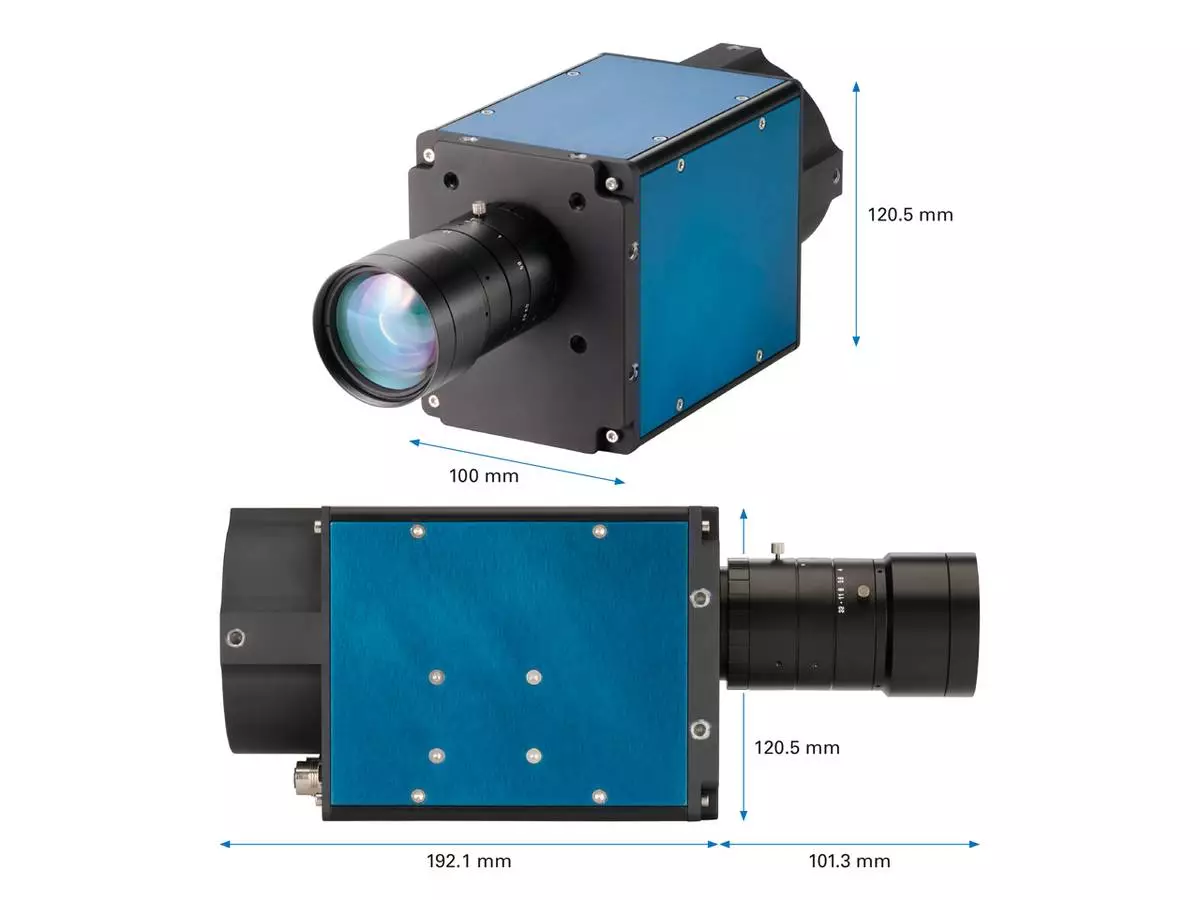
Teledyne’s Kaleido SWIR Hyperspectral Camera