DAKAR, Senegal (AP) — It’s an existence that Congo’s president has described as “living the Congolese dream.” For the 15 Latin Americans deported to the African nation under the Trump administration’s widely criticized crackdown on migrants, it feels more like a nightmare.
The Associated Press spoke with one, a 29-year old Colombian woman who confirmed what people deported to other African nations have described: A shackled deportation despite a U.S. immigration judge’s protection order. Confinement in a hotel with supervised outings.
And an impossible choice: Return to a home country with the risk of persecution or stay in Congo, a country the Colombian woman had never heard of before she arrived.
“They treat us like we’re children,” she said as their three-month Congolese visas near an end, with no plan in sight.
“What would one do in a completely unknown place, without a place to live and without knowing what to do?” she added, speaking on condition of anonymity for fear of reprisals.
It was not immediately clear what a new U.S. court ruling, saying the U.S. likely broke the law by deporting a fellow Colombian to Congo, will mean for her.
In her interview from the hotel in Congo’s capital, Kinshasa, where she and other deportees are held, the woman gave new details about the central role that a United Nations-affiliated body, the International Organization for Migration, is playing.
She said deportees are allowed to leave the hotel about once a week and only accompanied by IOM staff. When they shop at a supermarket or withdraw money they are quickly ushered back to their vehicle, with IOM staff never out of sight.
“They choose where we go and what we buy,” she said.
At the hotel, she said, IOM staff have organized activities like painting, music and volleyball but many deportees have stopped participating, bored with the routine. She goes for meals and remains in her room otherwise, making late-night calls to her 10-year-old daughter in Colombia and worrying when she will see her again.
Most striking is the role IOM staff are playing in presenting deportees with their possible fates.
They have offered the woman two paths: Return to Colombia, where a U.S. judge has ruled she cannot safely be sent back, while receiving IOM “protection and assistance,” or remain in Congo with no support.
“They are given impossible choices,” said Alma David, the woman’s U.S.-based attorney. “By deporting them to a third country with no opportunity to contest being sent there, the U.S. not only violated their due process rights but our own immigration laws and our obligations under international treaties.”
Congo is one of at least eight African countries that have made deals with the Trump administration to facilitate deportations of third-country nationals, which legal experts say are effectively a legal loophole for the U.S. Most deportees had received legal orders of protection from U.S. judges shielding them against being returned to their home countries, lawyers said.
The AP has interviewed others sent to African nations who were forced to make risky decisions, such as a gay Moroccan asylum-seeker deported to Cameroon, a country where homosexuality is illegal.
The U.S. Department of Homeland Security did not respond to questions about the Colombian woman’s case, but it has asserted that third-country deportation agreements “ensure due process under the U.S. Constitution.” The Trump administration says the agreements are needed to “remove criminal illegal aliens” whose country of origin will not take them back.
The details of Congo’s deal with the Trump administration are not clear. Other countries have received millions of dollars to participate.
Earlier this month, Congolese President Félix Tshisekedi called the agreement an “act of goodwill between partners,” with no financial compensation. It comes as Washington has ramped up pressure on neighboring Rwanda over its support for the M23 rebel group that has seized cities in eastern Congo — a dynamic some analysts say may explain Kinshasa’s willingness to take deportees.
“We agreed to do so as a friendly gesture, simply because it was what the Americans wanted,” Tshisekedi said, adding that the migrants are free to leave Congo at any time.
“We understand that psychologically they must be unsettled because, at first, they dreamed of living the American dream, and now they are living the Congolese dream — in a country they probably did not know and may never even have noticed on a map of the world,” Tshisekedi said.
Congolese human rights groups have called it a violation of international refugee law. The Congo-based Institute for Human Rights Research described the situation as “arbitrary detention by proxy for the United States.”
The current U.S. Immigration and Customs Enforcement policy says if a government has made blanket diplomatic assurances that it won’t persecute people who are deported, no further process is required for deportation, not even giving deportees notice where they are being sent, said David, the attorney.
“When they told me they were going to deport me, I almost fainted," the Colombian woman said. She was told about Congo the day before the flight.
She said she left Colombia in 2024, following threats from armed groups and abuse by a former partner who worked for the government.
She went to Mexico, where she waited for a border appointment booked with the U.S. government. When she presented herself at an Arizona port of entry in September 2024, immigration officials determined she had a credible fear of persecution, clearing her to apply for asylum, but kept her in ICE detention.
“You spend a year and a half locked up, living the same day over and over again. You see fights, punishments where people are locked in cells for many hours. You lose your privacy even to use the bathroom,” she said.
Some officers made racist remarks. “They made derogatory comments toward us as migrants, shouted at us all the time and sometimes denied basic things like showers as punishment,” she said.
In May 2025, a federal judge granted her protection under the U.N. Convention Against Torture, ruling she could not be safely returned to Colombia, according to court documents seen by the AP.
She filed a habeas corpus petition and won her release in February. She moved to Texas and was required to wear a GPS monitoring device, but at her first check-in appointment with ICE, she was detained again.
“All they told me was that I was under detention, as they had found a third country for me,” she said.
Less than three weeks later, she was put on a plane to Congo. She and the other deportees arrived on April 17 after a nearly 24-hour charter flight during which their hands and feet were restrained.
Now they stay at a hotel near Kinshasa's airport, in tidy white bungalows. Congo’s government covers the cost, the IOM said. It was not clear whether that would last after the deportees' visas run out.
The hotel gates are locked according to one of the deportees lawyers. The Colombian woman also said security personnel do not let them leave on their own.
They were told they could apply for asylum, an option no one has chosen. “I don’t feel safe in Congo,” the woman said.
An IOM spokesperson said the organization has provided her with humanitarian assistance based on an assessment of her vulnerability. It includes “protection interventions, referrals, rights safeguarding and promotion of migrants’ overall well-being,” with no details.
The IOM also may offer “assisted voluntary return” — covering documents, flights, transit and temporary housing on arrival — with migrants' consent.
The IOM said it plays no role in determining who is deported and reserves the right to withdraw its assistance for deportees if “minimum protection standards” aren’t met.
The Colombian woman remains in limbo, anxious. She said the food “has made us very sick,” with stomach ailments ongoing.
Local languages, like French and Lingala, are as foreign as her surroundings.
“The worst part is having to go through all of that without having committed any crime, simply for going to another country to ask for safety and protection.”
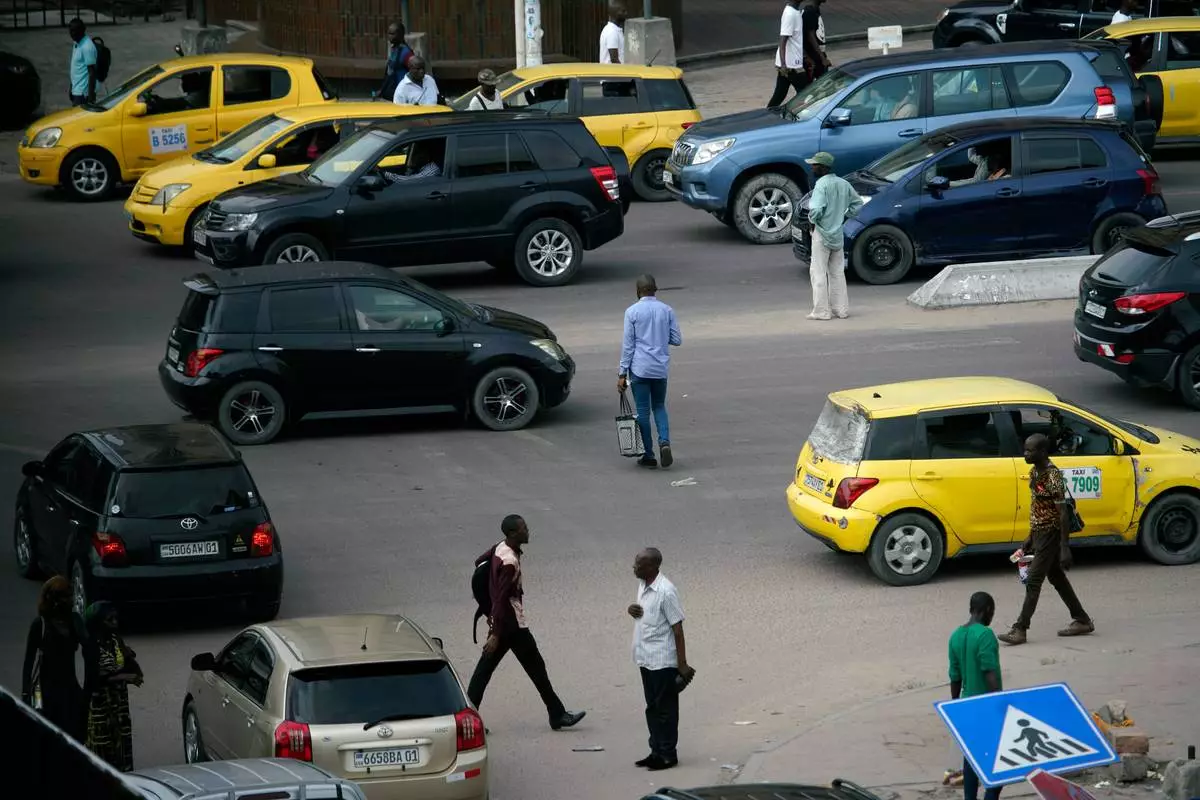
FILE - Pedestrians slalom between traffic to cross the road in Kinshasa, Congo, Tuesday Jan. 8, 2019. (AP Photo/Jerome Delay, file)
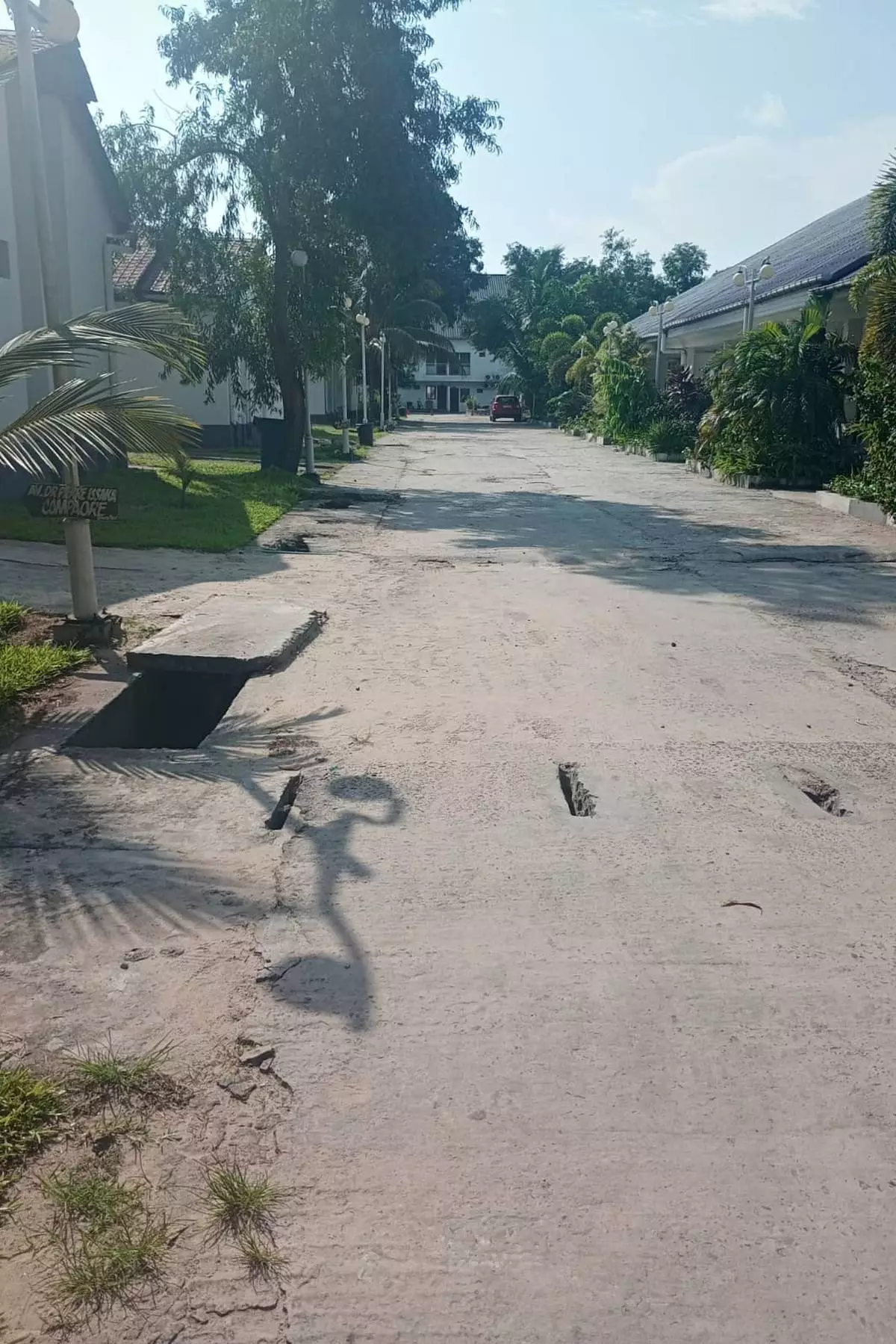
An exterior view of a hotel where a Colombian woman was deported to from the United States, in Kinshasa, Congo, Saturday, May 10, 2026. (UGC via AP)
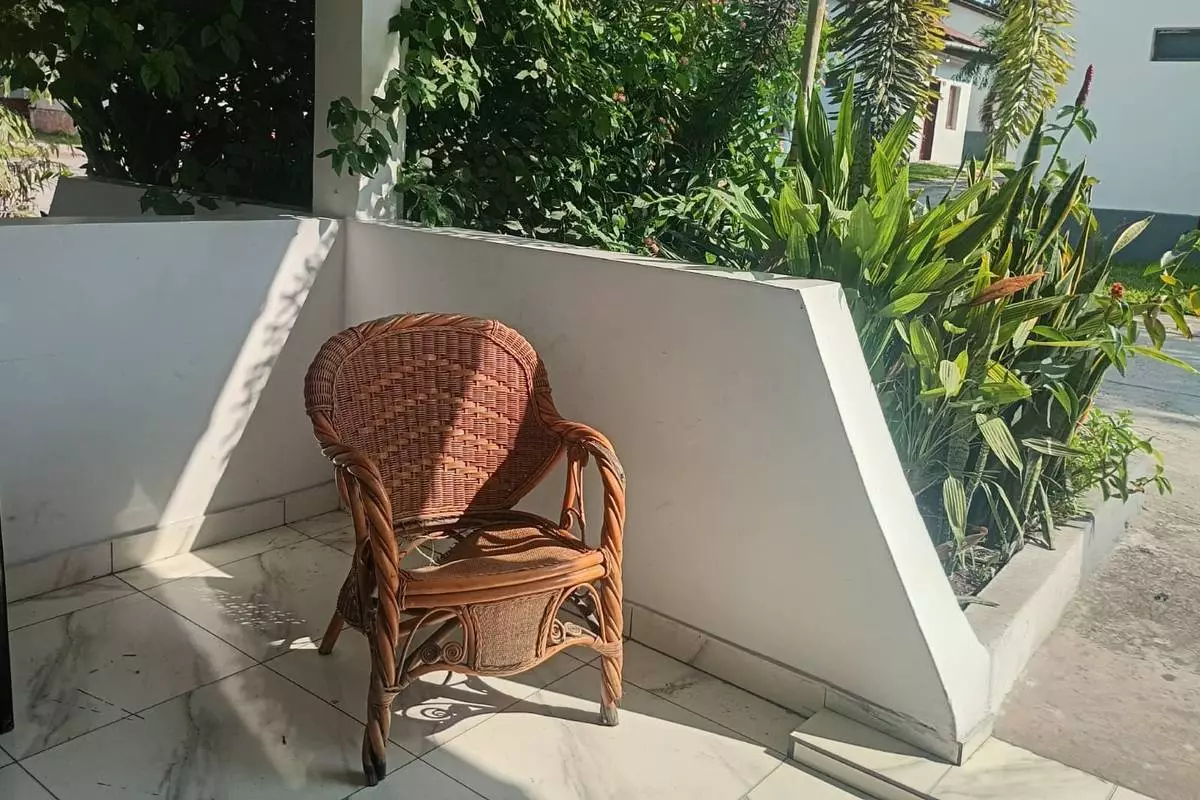
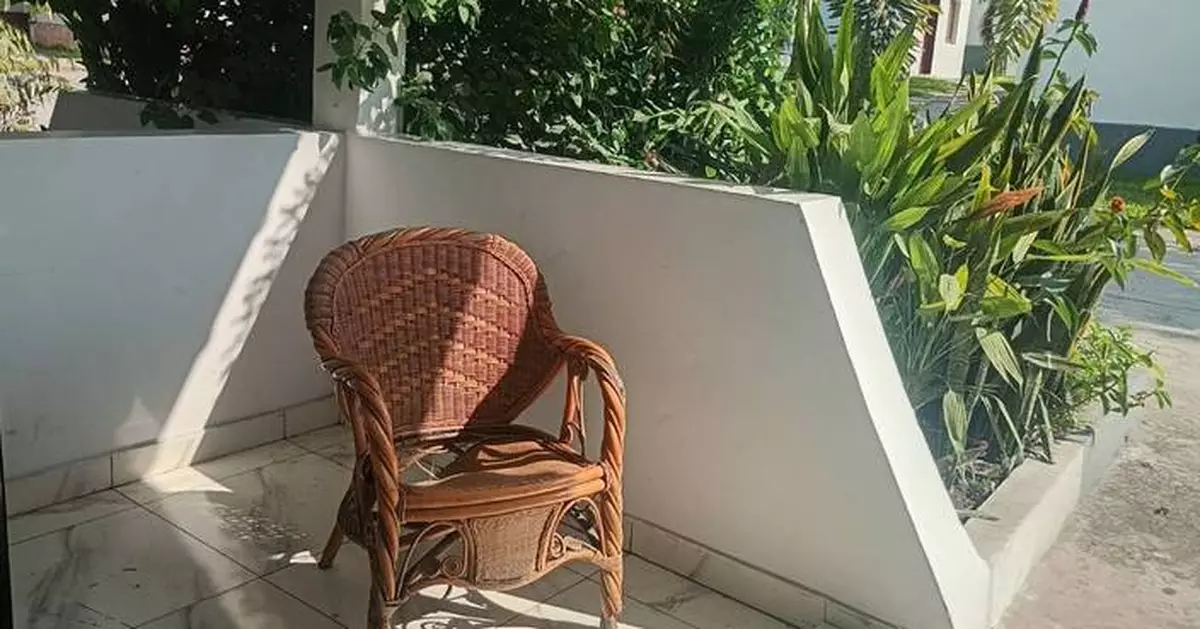
A chair is seen outside a hotel room where a Colombian woman was deported to from the United States, in Kinshasa, Congo, Saturday, May 10, 2026. (UGC via AP)