Skip to Content Facebook Feature Image

Iran's top diplomat says a lack of trust is impeding talks to end war with the US

News

Iran's top diplomat says a lack of trust is impeding talks to end war with the US
News

News

Iran's top diplomat says a lack of trust is impeding talks to end war with the US

2026-05-15 22:58 Last Updated At:23:01

NEW DELHI (AP) — Iran ’s foreign minister said a lack of trust is the biggest obstacle in negotiations to end the war with the U.S., saying Friday that Tehran would be open to diplomatic help, particularly from China, to help ease tensions.

Iranian Foreign Minister Abbas Araghchi said contradictory messages have “made us reluctant about the real intentions of Americans.”

“We are in doubt about their seriousness,” he told reporters in New Delhi, adding that negotiations would move forward if Washington was ready for a “fair and balanced deal.”

U.S. President Donald Trump earlier this week dismissed Iran's latest formal proposal as “garbage.” While Iran was said to include some nuclear concessions, Trump has said he wants to remove highly enriched uranium from the country and prevent it from developing nuclear weapons. Iran says its nuclear program is for peaceful purposes.

With talks between Iran and the U.S. at a standstill during the shaky ceasefire, tensions remain high and threaten to tip the Middle East back into open warfare and prolong the worldwide energy crisis sparked by the conflict.

Iran still has a chokehold on the Strait of Hormuz, a vital waterway where a fifth of the world’s oil passed through before the war, and America is blockading Iranian ports.

Trump and Chinese President Xi Jinping, who finished talks on Friday, agreed the strait needs to be reopened.

Araghchi said Friday that Iran would welcome diplomatic support from other countries, particularly from China, citing Beijing’s previous role in facilitating the restoration of ties between Iran and Saudi Arabia.

“Chinese have a good intention. So anything that can be done by them to help diplomacy would be welcomed by the Islamic Republic of Iran,” he said.

Beijing has shown little public interest in U.S. requests to get more involved, even though Trump told Fox News’ Sean Hannity that Xi had in their conversations offered to help.

Pakistan said Thursday it was continuing diplomatic efforts to help ease regional tensions amid ongoing contacts over Iran-related ceasefire proposals. But it declined to disclose details of the discussions or say whether the United States had formally responded.

“The clock on diplomacy has not stopped. The peace process is working,” Foreign Ministry spokesperson Tahir Andrabi told reporters in Islamabad.

Trump has demanded a major rollback of Iran’s nuclear activities while Iran has said that it has a right to enrich uranium.

Israeli Prime Minister Benjamin Netanyahu, who launched the war with Trump on Feb. 28, has also demanded that all of Iran’s highly enriched uranium be removed from the country.

Iran’s foreign minister said Friday that the issue of its enriched uranium stockpile is one of the most difficult subjects in negotiations with the U.S.

Russia has previously offered to take the stockpile if Iran is willing to give it up. Araghchi said Russia’s proposal was not currently under active discussion, but could be revisited if negotiations progress.

“When we come to that stage, obviously we will have more consultations with Russia and see if the Russian offer can help or not. This is not something for the time being,” he said.

A Chinese private security company said it lost communication Thursday with a ship it was operating as an offshore work platform — the same day the United Kingdom Maritime Trade Operations center reported that a ship anchored off the United Arab Emirates coast had been seized.

Sinoguards said it had “been informed through relevant channels" that the vessel Hui Chuan was taken into Iranian waters for documentation and compliance inspection by the authorities.

The company's emailed statement said there was no indication of any injuries on the ship and that it was cooperating with the request for vessel and crew documentation.

The security company and the U.K. maritime center did not say who was behind the seizure. It happened as a senior Iranian official reiterated his country’s claim of control over the Strait of Hormuz and another said it had a right to seize oil tankers connected to the U.S.

The U.S. seized vessels in the Gulf of Oman last month and on Friday the foreign minister of Pakistan said it had secured the return of 11 Pakistani nationals and 20 Iranian citizens who were aboard those vessels. “All individuals are in good health and high spirits,” said the foreign minister, Ishaq Dar, said.

The United Arab Emirates is speeding up the completion of a new pipeline that will allow the Gulf federation to export more oil without routing it through the Strait of Hormuz.

Sheikh Khaled bin Mohammed bin Zayed Al Nahyan, the crown prince of Abu Dhabi, directed state oil company ADNOC to accelerate work on the pipeline during a meeting of the Emirati capital’s executive council, the Abu Dhabi Media Office said Friday.

The state oil company already runs a pipeline designed to carry 1.5 million barrels a day from its oil fields in the west of the country to the port of Fujairah on the Gulf of Oman.

The new pipeline is expected to double the company’s export capacity through that port. It will become operational next year, the media office said.

Schreck reported from Dubai, United Arab Emirates. Associated Press reporters Munir Ahmed in Islamabad and Mae Anderson in New York contributed.
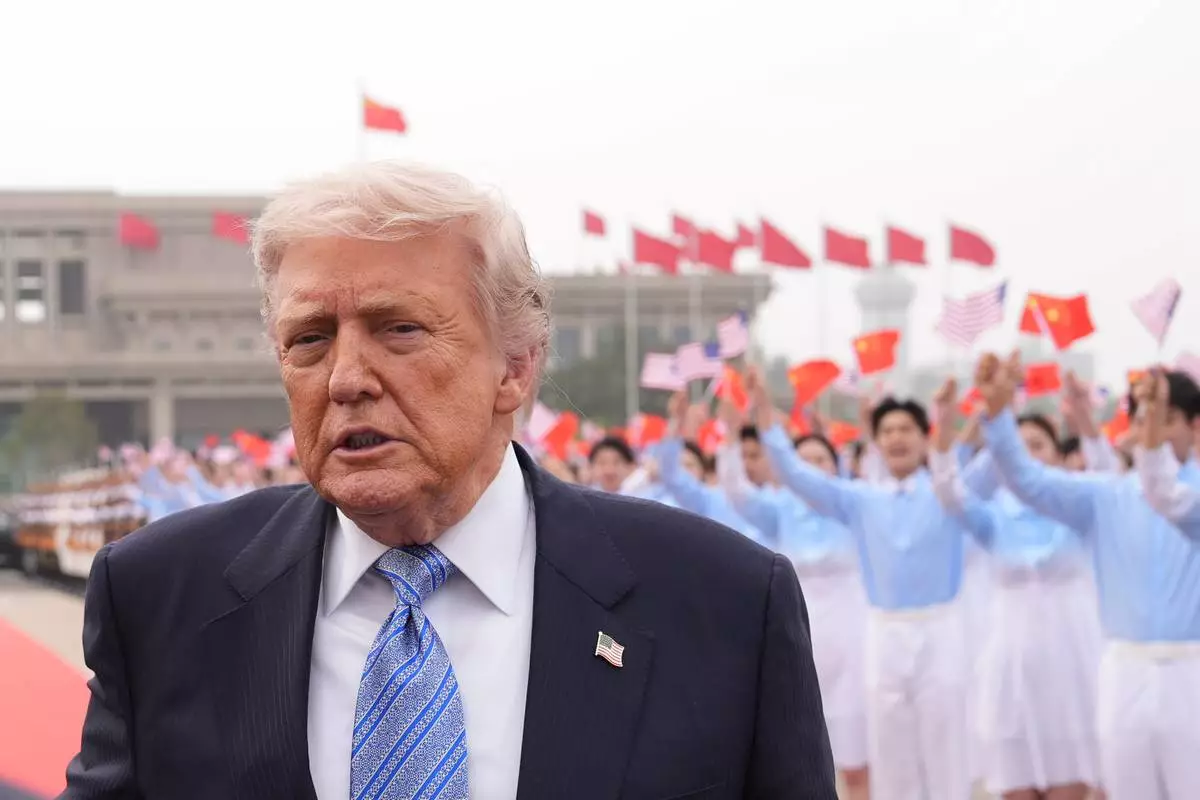
President Donald Trump walks to board Air Force One, Friday, May 15, 2026, at Beijing Capital International Airport in Beijing. (AP Photo/Mark Schiefelbein)
President Donald Trump walks to board Air Force One, Friday, May 15, 2026, at Beijing Capital International Airport in Beijing. (AP Photo/Mark Schiefelbein)
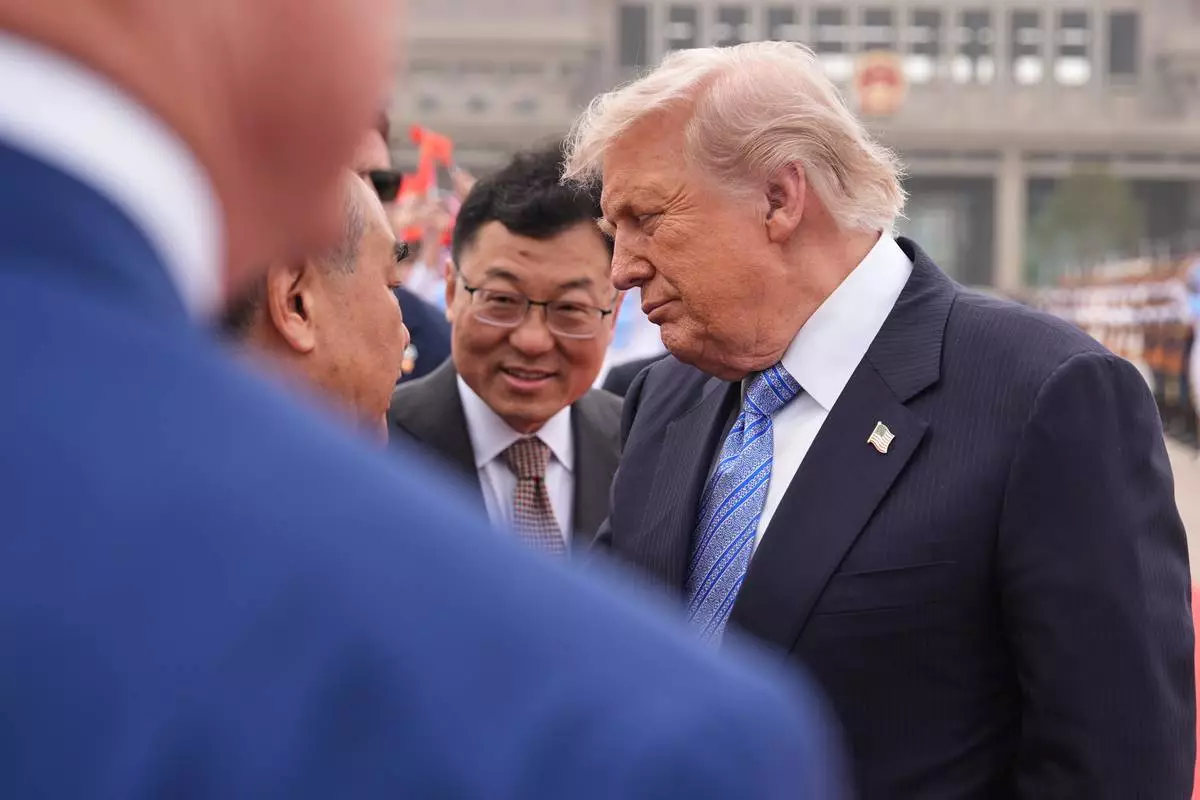
President Donald Trump interacts with China's Foreign Minister Wang Yi before boarding Air Force One, Friday, May 15, 2026, at Beijing Capital International Airport in Beijing. (AP Photo/Mark Schiefelbein)

President Donald Trump interacts with China's Foreign Minister Wang Yi before boarding Air Force One, Friday, May 15, 2026, at Beijing Capital International Airport in Beijing. (AP Photo/Mark Schiefelbein)

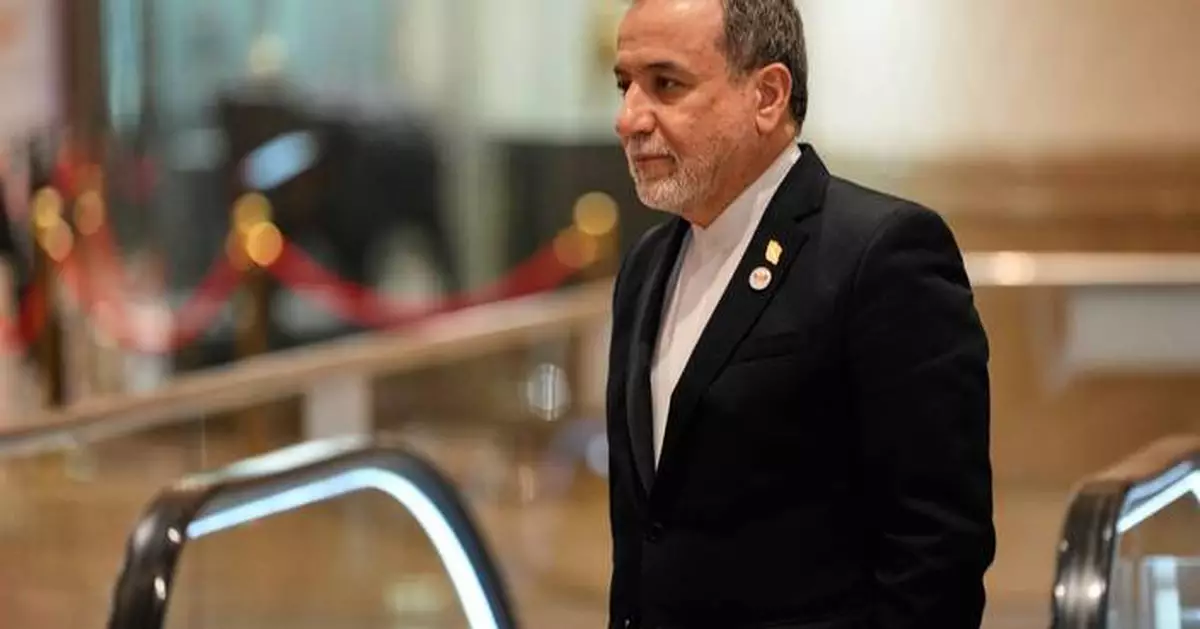
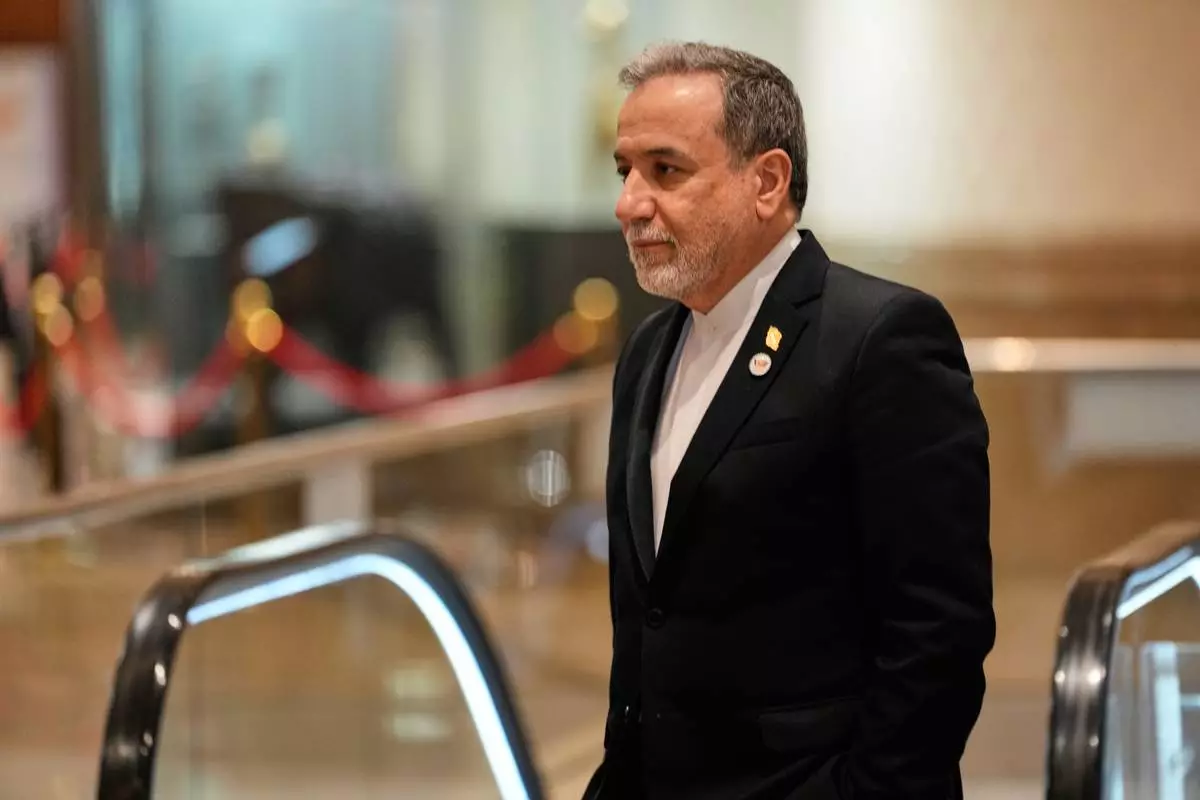
Iranian Foreign Minister Abbas Araghchi arrives for a meeting during the two-day BRICS summit in New Delhi, India, Thursday, May 14, 2026. (AP Photo/Manish Swarup)

Iranian Foreign Minister Abbas Araghchi arrives for a meeting during the two-day BRICS summit in New Delhi, India, Thursday, May 14, 2026. (AP Photo/Manish Swarup)
NEW YORK (AP) — The U.S. stock market is falling from its records Friday and joining a worldwide drop for stocks, as higher oil prices send a shiver through the bond market. Stocks that had been caught up in the euphoria around artificial-intelligence technology led the way lower.

The S&P 500 fell 1.2% from its all-time high set the day before. The Dow Jones Industrial Average was down 426 points, or 0.9%, as of 10 a.m. Eastern time, and the Nasdaq composite was down 1.8% from its own record.

Technology stocks tumbled in a sharp turnaround from their meteoric rises for much of the year, which had carried markets worldwide to records but also raised criticism that they had gone too far.

Nvidia, the stock that quickly became the face of the AI revolution, dropped 4.5% and was the heaviest weight on the S&P 500. It had come into the day with a gain of more than 26% for the year so far.

Applied Materials fell 2.3% even though it reported stronger profit growth for the latest quarter than analysts expected, thanks to the global build out of AI. The company, whose products help make chips and displays, came into the day with a gain of more than 70% for the year so far.

“To us, it looks like markets have pushed into overbought territory,” according to Brian Jacobsen, chief economic strategist at Annex Wealth Management. He said the strong corporate profits and durable U.S. economy that launched U.S. stocks to records remain intact, but “the path is unlikely to be smooth. Periods like this call for discipline more than hope.”

In the meantime, rising oil prices are raising the pressure after already worsening inflation by more than economists had feared. The war with Iran is continuing, and the Strait of Hormuz remains shut to oil tankers, which is preventing them from delivering crude to customers worldwide and driving up oil’s price.

The price for a barrel of Brent crude oil, the international standard, rose 2.7% to $108.57 and is well above its level of roughly $70 from before the war.

Many big U.S. companies have been saying their customers have been able to keep spending on their products and services despite having to pay higher prices for gasoline. But U.S. households have also been telling surveys they’re feeling discouraged about the economy and the pressures building on them because of the war and tariffs.

The worries were most clear Friday in the bond market, where Treasury yields climbed. The yield on the 10-year Treasury rose to 4.57% from 4.47% late Thursday. That’s a notable move for the bond market, and it’s well above its 3.97% level from before the war. The yield on the 30-year Treasury is near its highest level since 2023 after breaking above 5%.

Higher yields can make mortgages and other kinds of loans going to U.S. households and businesses more expensive, which slows the economy. They also tend to push downward on prices for stocks and all kinds of other investments.

Stocks of smaller companies had some of Friday's sharpest drops as yields jumped. Many of them need to borrow cash to grow, which means higher borrowing costs can hurt them more than their big rivals. The Russell 2000 index of the smallest U.S. stocks fell 2.3%.

Yields have been climbing since the war on worries about higher inflation and how it may tie the Federal Reserve’s hands when it comes to short-term interest rates. Not only have traders abandoned virtually all expectations that the Fed will resume its cuts to interest rates this year, they’ve been building some bets that it may even hike rates in 2026, according to data from CME Group.

A couple of reports on the U.S. economy that came in better than expected also helped to lift yields. One said U.S. industrial production improved by more last month than economists expected, while another said manufacturing in New York state is expanding at a faster rate.

In stock markets abroad, indexes fell sharply across Europe and Asia.

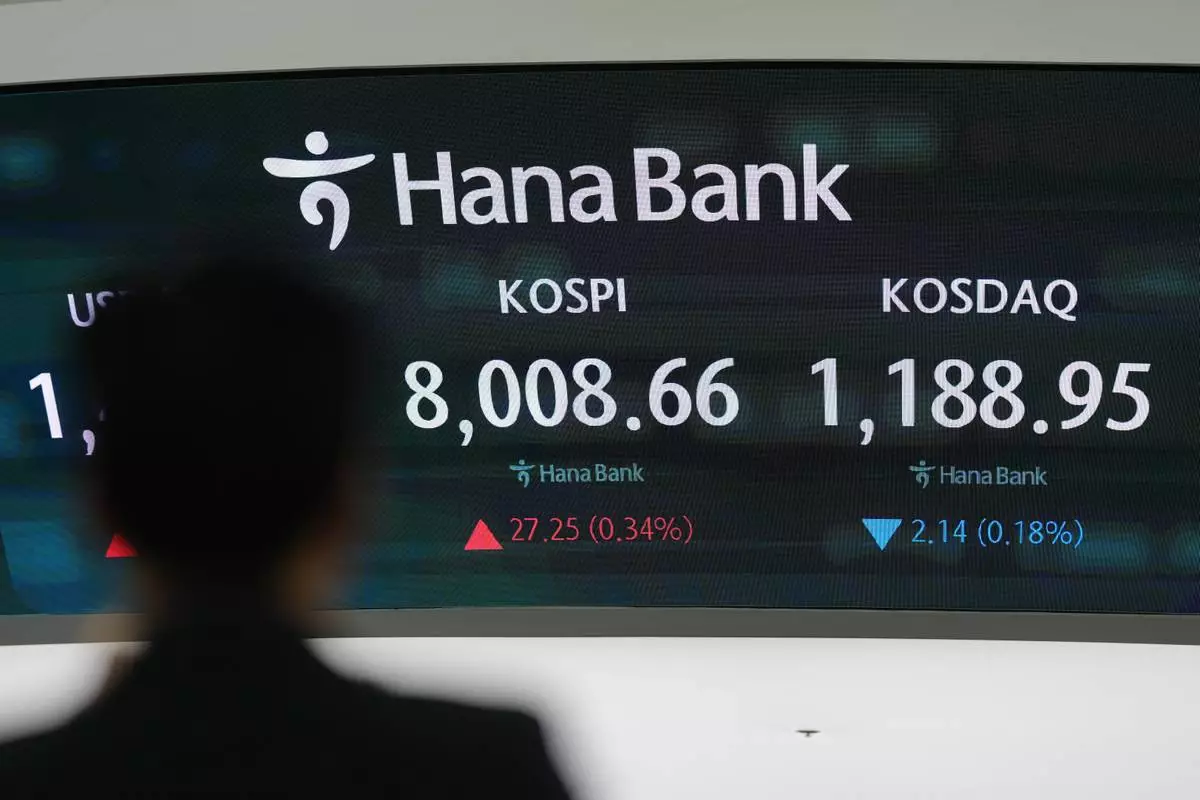
South Korea’s Kospi dropped 6.1% for one of the biggest moves. It had been reaching records this year because of the influence of AI beneficiaries like SK Hynix. But it quickly reversed momentum Friday after briefly topping the 8.000 level for the first time.

Some on Wall Street have been warning about a possible break in momentum for tech stocks in general and AI winners in particular.

“If nothing else this should be a ‘shot across the bow’ for how volatility works both ways,” according to Jonathan Krinsky, chief market technician at BTIG.

AP Business Writer Chan Ho-him contributed.

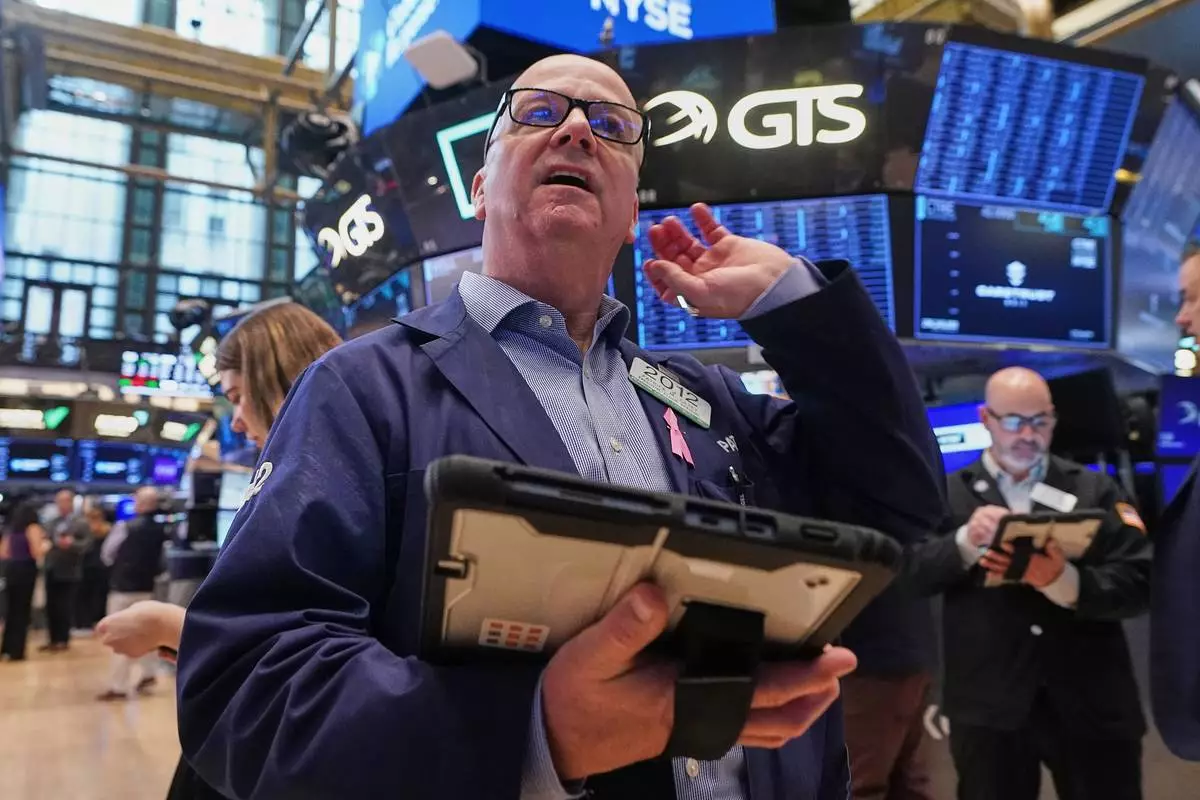
Trader Patrick Casey works on the floor of the New York Stock Exchange, Wednesday, May 13, 2026. (AP Photo/Richard Drew)

Trader Patrick Casey works on the floor of the New York Stock Exchange, Wednesday, May 13, 2026. (AP Photo/Richard Drew)

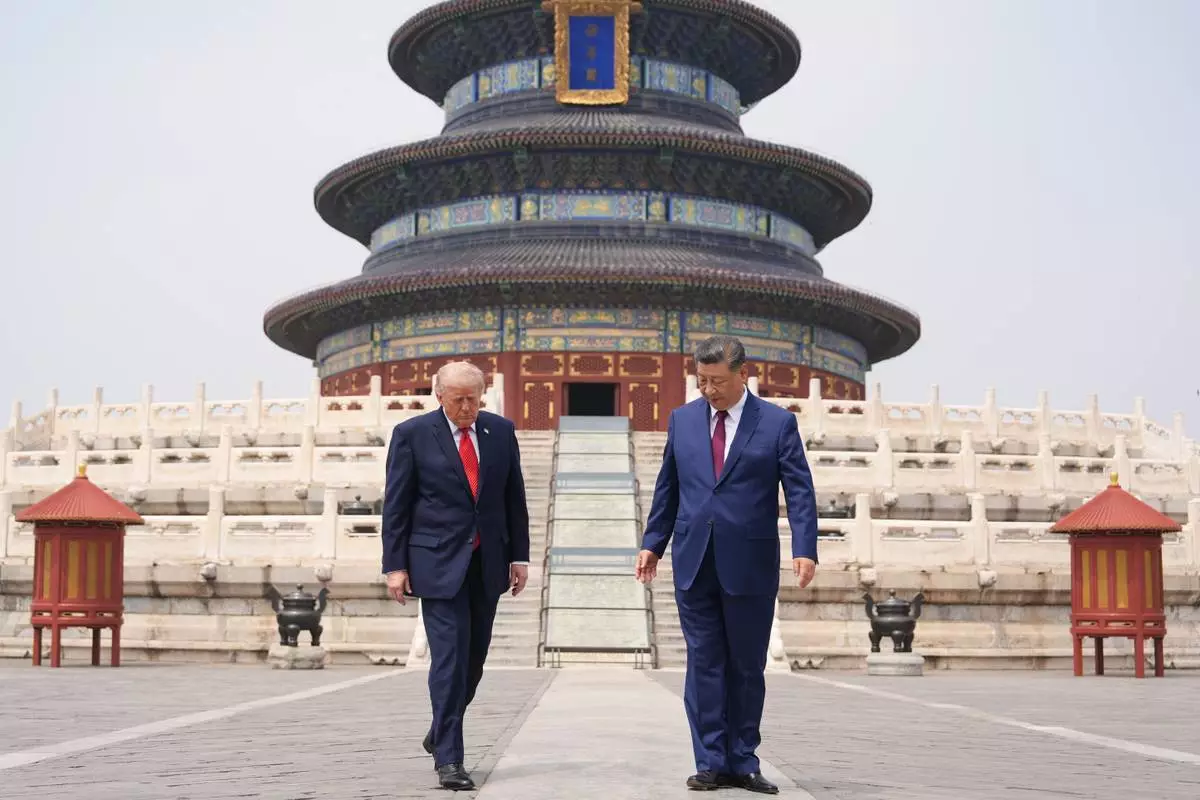
President Donald Trump, left, walks with Chinese President Xi Jinping at the Temple of Heaven on Thursday May 14, 2026, in Beijing. (AP Photo/Mark Schiefelbein)

President Donald Trump, left, walks with Chinese President Xi Jinping at the Temple of Heaven on Thursday May 14, 2026, in Beijing. (AP Photo/Mark Schiefelbein)

A dealer stands near the screens showing the Korea Composite Stock Price Index (KOSPI), and the Korean Securities Dealers Automated Quotations (KOSDAQ) at a dealing room of Hana Bank in Seoul, South Korea, Friday, May 15, 2026. (AP Photo/Lee Jin-man)

A dealer stands near the screens showing the Korea Composite Stock Price Index (KOSPI), and the Korean Securities Dealers Automated Quotations (KOSDAQ) at a dealing room of Hana Bank in Seoul, South Korea, Friday, May 15, 2026. (AP Photo/Lee Jin-man)

Employees of Hana Bank celebrate in a photo-op to mark the Korea Composite Stock Price Index (KOSPI) of over 8,000 points at a dealing room of Hana Bank in Seoul, South Korea, Friday, May 15, 2026. (AP Photo/Lee Jin-man)

Employees of Hana Bank celebrate in a photo-op to mark the Korea Composite Stock Price Index (KOSPI) of over 8,000 points at a dealing room of Hana Bank in Seoul, South Korea, Friday, May 15, 2026. (AP Photo/Lee Jin-man)

Recommended Articles