NEW YORK (AP) — An Iraqi national accused of plotting at least 18 terror attacks in Europe in retaliation for the U.S. and Israel’s war with Iran, including firebombing a bank in Amsterdam and stabbing Jewish men in London, has been arrested and charged with supporting Iran-backed terrorist organizations.
According to a complaint unsealed Friday in federal court in Manhattan, Mohammad Baqer Saad Dawood Al-Saadi sought to attack a New York City synagogue last month and provided an undercover law enforcement officer with photos and maps of Jewish centers in Los Angeles and Scottsdale, Arizona, that he planned to target.
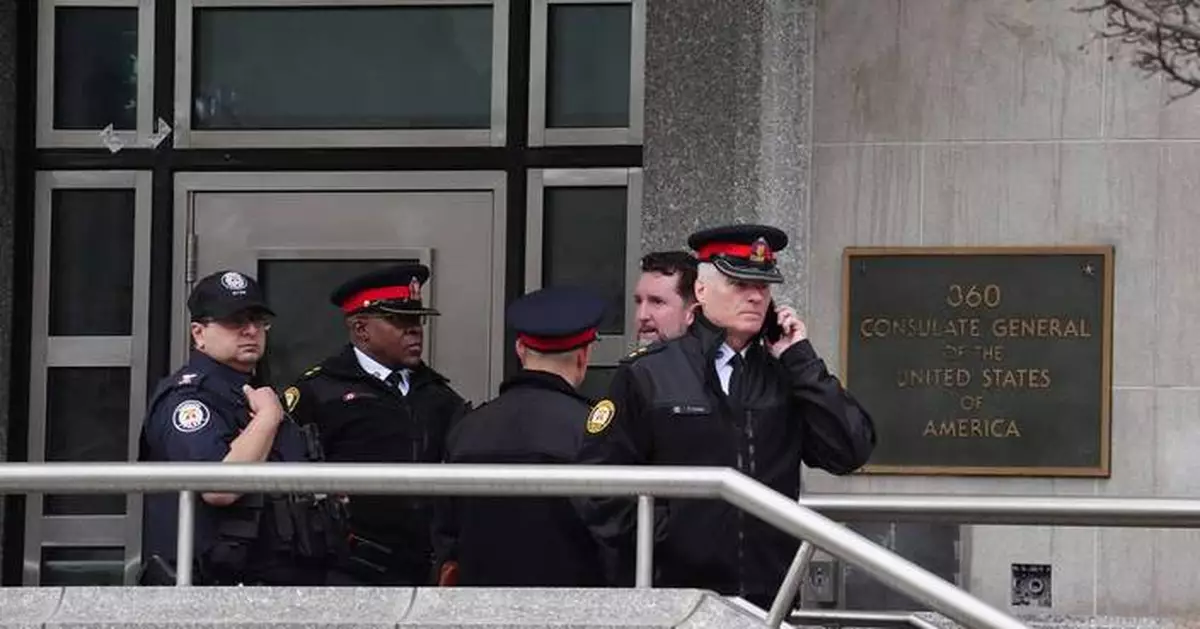
Al-Saadi is also accused of involvement in two recent attacks in Canada: an attack on a synagogue and a shooting at the U.S. consulate in Toronto in March. U.S. prosecutors said he directed and urged other people to attack U.S. and Israeli interests, including by killing Americans and Jews.
Al-Saadi posted about the attacks on Snapchat and Telegram and spoke about them in phone calls recorded by an FBI informant whose help he solicited in planning attacks in the U.S., the complaint said. Al-Saadi told the informant he was willing to kill people in any such attacks, the complaint said.
Al-Saadi, 32, is charged with conspiracy to provide material support to Kata’ib Hizballah, an Iran-backed Iraqi Shia militant group, and Iran's Islamic Revolutionary Guard Corps, both of which have been designated by the U.S. government as foreign terrorist organizations. U.S. prosecutors said Al-Saadi was a Kata’ib Hizballah commander.
He is also charged with conspiring and providing material support for acts of terrorism and conspiring to bomb a place of public use.
FBI Director Kash Patel described Al-Saadi as a "high-value target responsible for mass global terrorism" and said his arrest was the product of "a righteous mission executed brilliantly” by the agency's agents, investigators, tactical units and law enforcement partners.
New York City Police Commissioner Jessica Tisch, whose officers investigated Al-Saadi as part of the FBI’s Joint Terrorism Task Force, said the case “puts into stark relief the global threats posed by the Iranian regime and its proxies like Kata’ib Hizballah.”
Al-Saadi smiled throughout his initial court appearance but did not speak.
Through his lawyer, he called himself a political prisoner and a prisoner of war and said he is being persecuted by U.S. authorities for his relationship with Qasem Soleimani, the Revolutionary Guard leader who was killed in a U.S. drone strike in Baghdad in 2020.
Al-Saadi was not required to enter a plea. He will remain jailed but could request bail.
His lawyer, Andrew Dalack, said Al-Saadi was arrested in Turkey and turned over to U.S. authorities. In his statement, Patel thanked U.S. Ambassador to Turkey Tom Barrack, calling him "instrumental in bringing this successful mission home to the United States.”
Al-Saadi has been kept in solitary confinement since he arrived at a federal jail in Brooklyn on Thursday night, Dalack said, adding that such treatment was “unusual given the nature of charges in the complaint."
According to the criminal complaint, Al-Saadi and unnamed associates planned, coordinated, and claimed responsibility for a barrage of attacks in the name of Harakat Ashab al-Yamin al-Islamiya, a component of Kata’ib Hizballah, since the war started on Feb. 28.
They include the bombing of a Bank of New York Mellon building in Amsterdam in mid-March and a thwarted bomb attack on a Bank of America office in Paris on March 28, the complaint said. Teenage suspects were previously arrested in both cases.
The Amsterdam attack caused a fire and significant damage to the building, but no injuries, according to local media reports. It followed an explosion outside a Jewish school in Amsterdam, which Al-Saadi celebrated on Snapchat with an Ashab al-Yamin-branded video showing the blast and the assailants fleeing on a motorcycle, the criminal complaint said.
In Paris, police found a homemade bomb consisting of a gasoline-filled container taped to a powerful firework. Forensic experts said the device contained 650 grams (about 23 ounces) of explosives and that it could have produced a large fireball and ignited a significant blaze.

FILE - Members of the community watch as forensic officers search the area after two people were stabbed in the Golders Green neighborhood, that has a large Jewish community, in London, April 29, 2026. (AP Photo/Kin Cheung, File)
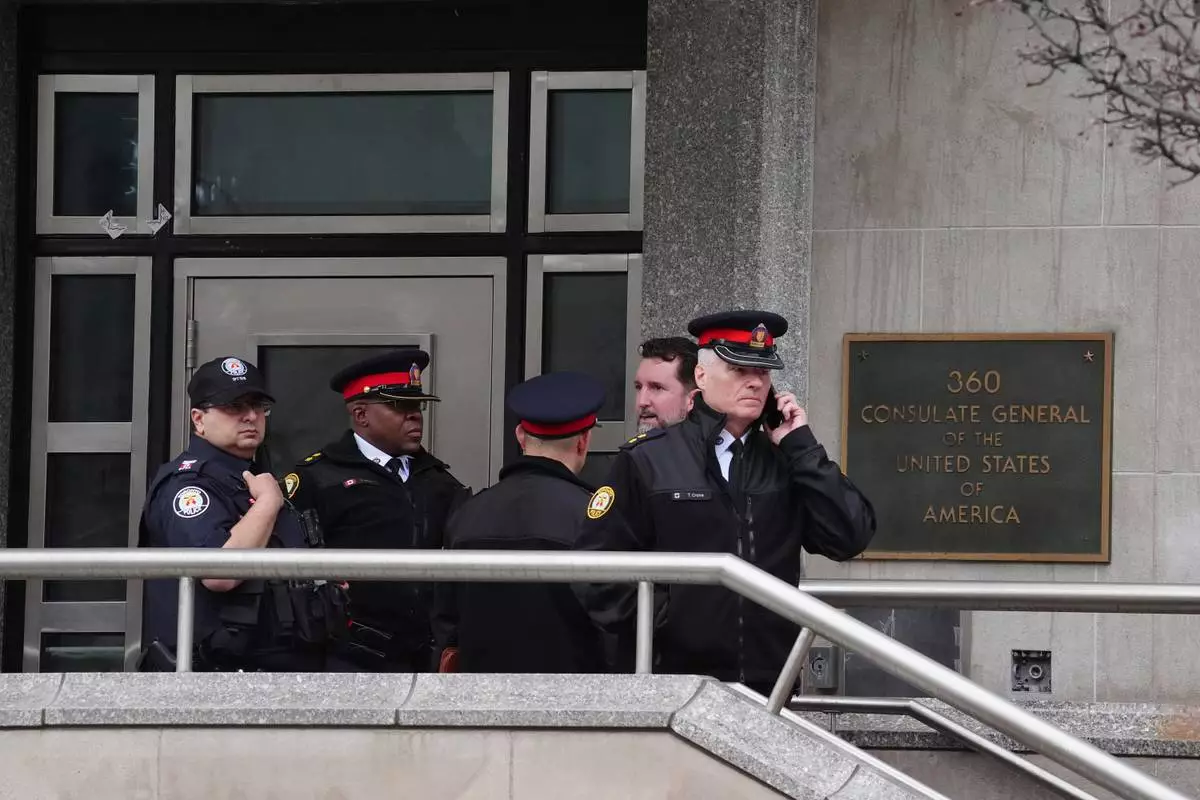
FILE - Toronto police officers investigate outside the U.S. consulate in Toronto on March 10, 2026. (Frank Gunn/The Canadian Press via AP, File)
NEW YORK (AP) — The U.S. stock market fell from its records and joined a worldwide drop for stocks after higher oil prices sent a shiver through the bond market. The S&P 500 fell 1.2% Friday from its all-time high. The Dow Jones Industrial Average dropped 1.1%, and the Nasdaq composite sank 1.5% from its own record. Technology stocks led the market lower, particularly AI winners. They had shot so high that some critics said they had gone too far. Yields jumped in the bond market on worries about how much rising oil prices will worsen inflation. The 30-year Treasury yield is back to where it was in 2007.
THIS IS A BREAKING NEWS UPDATE. AP’s earlier story follows below.
NEW YORK (AP) — The U.S. stock market fell from its records Friday and joined a worldwide drop for stocks, as higher oil prices sent a shiver through the bond market. Stocks that had been caught up in the euphoria around artificial-intelligence technology led the way lower.
The S&P 500 fell 0.9% from its all-time high set the day before. The Dow Jones Industrial Average was down 465 points, or 0.9%, with an hour remaining in trading, and the Nasdaq composite was down 1% from its own record.
Technology stocks tumbled in a sharp turnaround from their meteoric rises for much of the year, which had carried markets worldwide to records but also raised criticism that they had gone too far.
Nvidia, the stock that quickly became the face of the AI revolution, dropped 3% and was the heaviest weight on the S&P 500. It had come into the day with a gain of more than 26% for the year so far.
Micron Technology was another one of the heaviest weights on the market after falling 4.9%. It's still up nearly 159% for the year so far.
“To us, it looks like markets have pushed into overbought territory,” according to Brian Jacobsen, chief economic strategist at Annex Wealth Management. He said the strong corporate profits and durable U.S. economy that launched U.S. stocks to records remain intact, but “the path is unlikely to be smooth. Periods like this call for discipline more than hope.”
In the meantime, rising oil prices are raising the pressure after already worsening inflation by more than economists had feared. The war with Iran is continuing, and the Strait of Hormuz remains shut to oil tankers, which is preventing them from delivering crude to customers worldwide and driving up oil’s price.
The price for a barrel of Brent crude oil, the international standard, rose 3.3% to settle at $109.26 and is well above its level of roughly $70 from before the war.
Many big U.S. companies have been saying their customers have been able to keep spending on their products and services despite having to pay higher prices for gasoline. But U.S. households have also been telling surveys they’re feeling discouraged about the economy and the pressures building on them because of the war and tariffs.
The worries were most clear Friday in the bond market, where Treasury yields climbed. The yield on the 10-year Treasury rose to 4.59% from 4.47% late Thursday. That’s a notable move for the bond market, and it’s well above its 3.97% level from before the war.
The yield on the 30-year Treasury rose as high as 5.13% and is back to where it was in 2007, before the financial crisis sent yields crashing close to zero in the ensuing year.
Higher yields can make mortgages and other kinds of loans going to U.S. households and businesses more expensive, which slows the economy. They also tend to push downward on prices for stocks and all kinds of other investments.
Stocks of smaller companies had some of Friday’s sharpest drops. Many of them need to borrow cash to grow, which means higher borrowing costs can hurt them more than their big rivals. The Russell 2000 index of the smallest U.S. stocks fell 2,1%, more than double the S&P 500’s loss.
Yields have been climbing since the war on worries about higher inflation and how it may tie the Federal Reserve’s hands when it comes to short-term interest rates. Not only have traders abandoned virtually all expectations that the Fed will resume its cuts to interest rates this year, they’ve been building some bets that it may even hike rates in 2026, according to data from CME Group.
A couple of reports on the U.S. economy that came in better than expected also helped to lift yields. One said U.S. industrial production improved by more last month than economists expected, while another said manufacturing in New York state is expanding at a faster rate.
In stock markets abroad, indexes fell sharply across Europe and Asia.
South Korea’s Kospi dropped 6.1% for one of the biggest moves. It's set records this year because of the influence of AI beneficiaries like SK Hynix. But it quickly reversed momentum Friday after briefly topping the 8,000 level for the first time.
Some on Wall Street have been warning about a possible break in momentum for tech stocks in general and AI winners in particular.
“If nothing else this should be a ‘shot across the bow’ for how volatility works both ways,” according to Jonathan Krinsky, chief market technician at BTIG.
AP Business Writer Chan Ho-him contributed.
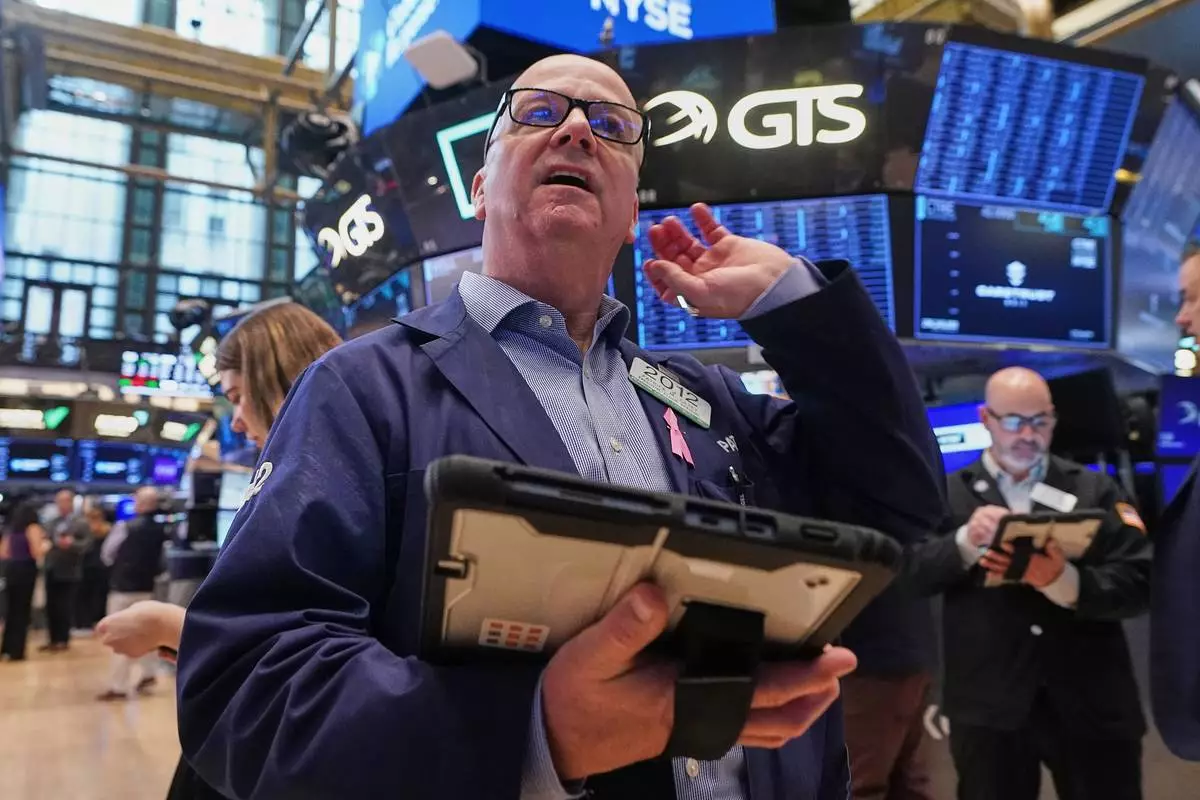
Trader Patrick Casey works on the floor of the New York Stock Exchange, Wednesday, May 13, 2026. (AP Photo/Richard Drew)

President Donald Trump, left, walks with Chinese President Xi Jinping at the Temple of Heaven on Thursday May 14, 2026, in Beijing. (AP Photo/Mark Schiefelbein)
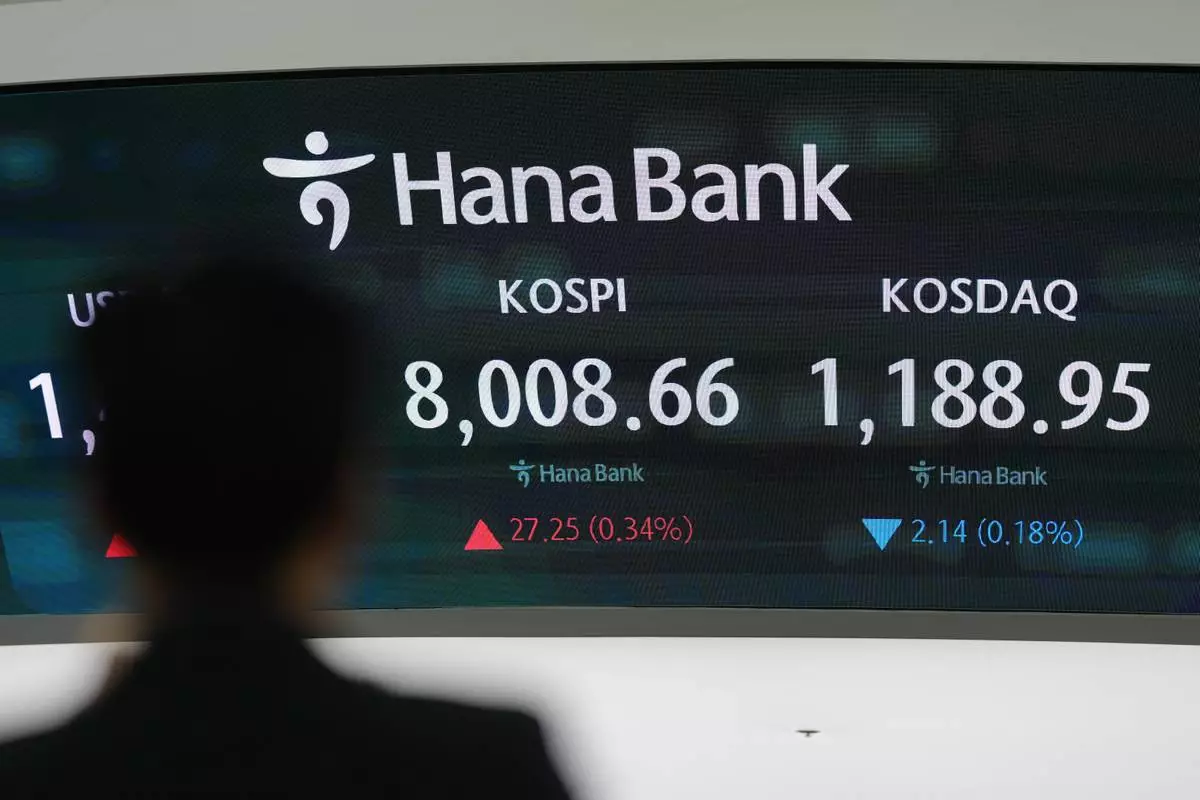
A dealer stands near the screens showing the Korea Composite Stock Price Index (KOSPI), and the Korean Securities Dealers Automated Quotations (KOSDAQ) at a dealing room of Hana Bank in Seoul, South Korea, Friday, May 15, 2026. (AP Photo/Lee Jin-man)

Employees of Hana Bank celebrate in a photo-op to mark the Korea Composite Stock Price Index (KOSPI) of over 8,000 points at a dealing room of Hana Bank in Seoul, South Korea, Friday, May 15, 2026. (AP Photo/Lee Jin-man)