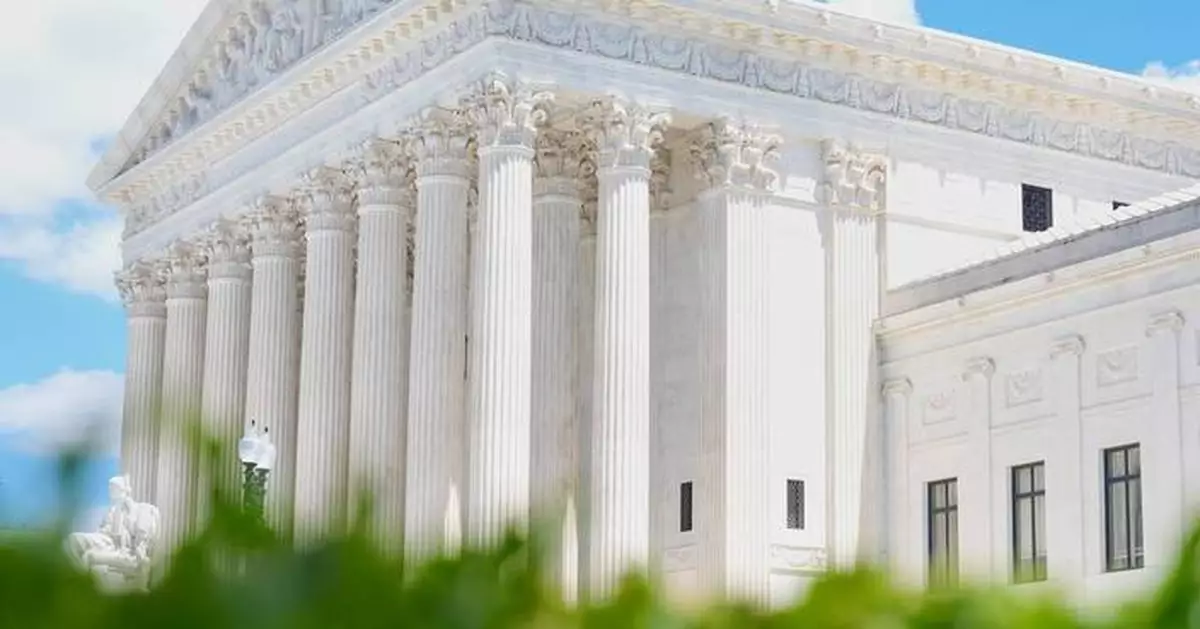
WASHINGTON (AP) — The Supreme Court on Friday rejected Virginia’s bid to restore a congressional map that would have given Democrats a chance to pick up four seats in the closely divided House of Representatives.
The court’s order, issued without any noted dissent, is the latest twist in the nation’s mid-decade redistricting competition. It was kicked off last year by President Donald Trump urging Republican-controlled states to redraw their lines and was supercharged by a recent Supreme Court ruling severely weakening the Voting Rights Act that opened up even more winnable seats for the GOP.
In recent days, the justices have sided with Republicans in Alabama and Louisiana who hope to redo their congressional maps to produce more GOP-leaning seats following the court’s voting rights decision.
But the Virginia situation was different, stemming from a 4-3 ruling by the Virginia Supreme Court that struck down a constitutional amendment that voters narrowly passed just last month.
The state court found that the Democratic-controlled legislature improperly began the process of placing the amendment on the ballot after early voting had begun in Virginia’s general election last fall.
The Supreme Court typically doesn’t intervene in state court proceedings unless they present an issue of federal law. Virginia Democrats had hoped to persuade the justices that the Virginia court misread federal law and Supreme Court precedent that hold that, even if early voting is underway, an election does not happen until Election Day itself.
Virginia’s amendment had been intended as a response to Republican gains in Texas, Missouri, North Carolina and Ohio, and to blunt a new map in Florida that just became law. Once the Virginia amendment passed, it briefly turned the nationwide redistricting scramble into a draw between the two parties.
That was unraveled by the Virginia Supreme Court’s decision.
It’s possible Democrats could use the high court’s rejection of their bid, while also blessing Republican efforts in Alabama and Louisiana, in election-year messaging about a partisan Supreme Court.
The state’s top Democrats disagreed about whether it was even too late for help from the Supreme Court. “Time grows short, but it is not yet too late,” lawyers for the Democratic leaders of the legislature as well as the state told the justices in a brief filed Friday.
A day earlier, the office of Democratic Gov. Abigail Spanberger already had confirmed that the state will hold this year’s elections under the current districts established in 2021. Last month, Virginia Commissioner of Elections Steve Koski said a court order was needed by this past Tuesday to set the district lines for primary elections on Aug. 4.
The leader of the state's Republican party said the justices made the right call. “Wisely, the Supreme Court of the United States has confirmed the judgment of the Supreme Court of Virginia,” state party chairman Jeff Ryer said. “This should once and for all put to rest the Democrats’ effort to disenfranchise half of Virginia.”
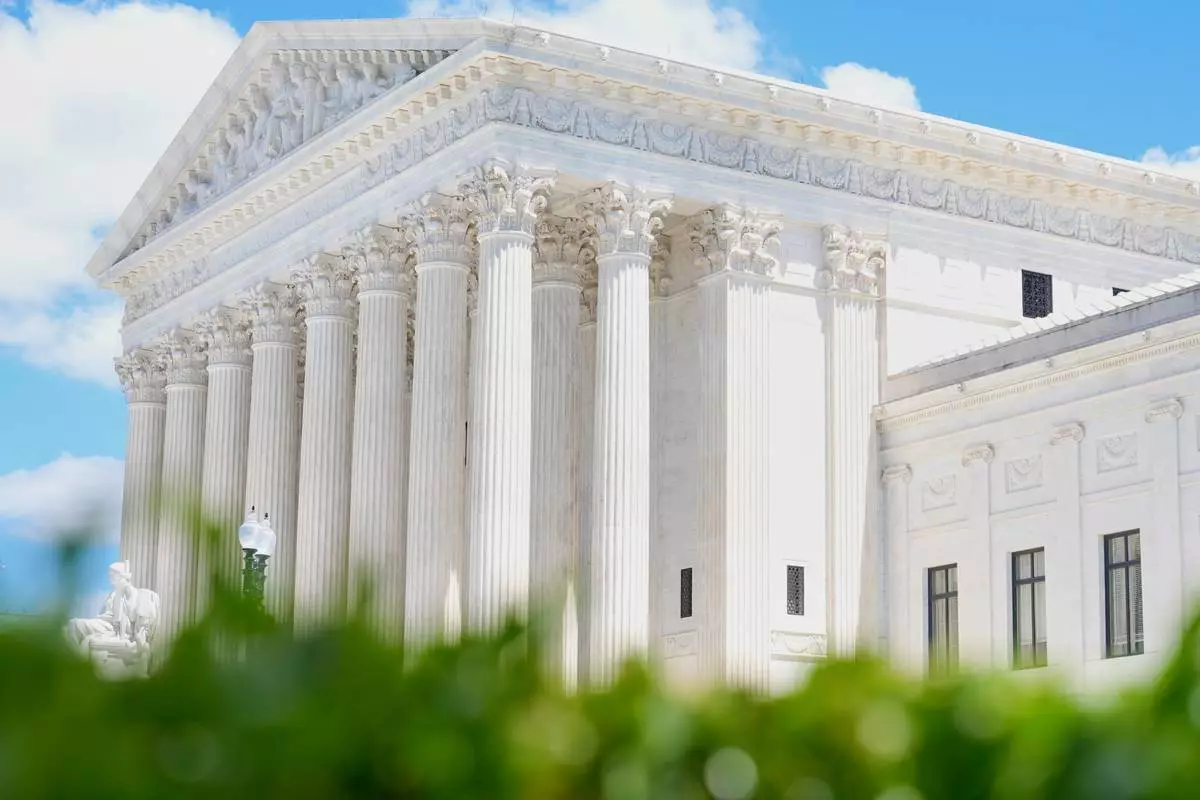
A statue titled the "Authority of Law" sits in front of the Supreme Court on Friday, May 15, 2026, in Washington. (AP Photo/Mariam Zuhaib)
NEW YORK (AP) — A New York judge declared a mistrial Friday in Harvey Weinstein ’s rape case from the #MeToo-era that has gone to trial three times so far after a jury was unable to come to a unanimous decision.
The trial centered on whether Weinstein raped Jessica Mann, a hairstylist and actor, in 2013 during a relationship between the then-married Weinstein and the decades-younger Mann. Weinstein’s lawyers argued that the encounter was consensual, while Mann described a hotel-room encounter when he forced himself upon her.
The current jury heard nearly three weeks of testimony, including from Mann. Weinstein decided not to testify.
Here’s what you need to know about the case:
Weinstein was initially convicted in 2020, but an appeals court overturned that verdict after the court ruled the trial judge unfairly allowed testimony against Weinstein based on allegations that weren’t part of the case.
Jurors at a retrial last year convicted Weinstein of one count of criminal sex act and acquitted him of another. But they stopped deliberating on Mann's rape charge when the foreperson refused to participate further, leaving the case unresolved and leading to the retrial that ended as a mistrial Friday.
On the third day of deliberations, the jury told the judge they were stuck, but he told them to keep trying. Ultimately, they sent another note saying: “We feel that no one is going to change where they stand.”
When a jury in criminal court cannot reach a unanimous decision, the judge typically declares a mistrial.
Some jurors on the majority-male Manhattan jury questioned the credibility of Mann’s testimony and said outside court that nine out of 12 wanted to acquit Weinstein.
A juror, Josh Hadar, said Mann had an “incredible memory” when she testified for the prosecution but “forgot a lot of things” when questioned by defense attorneys.
Mann underwent five days of fraught, often tearful testimony that included hours of questioning at a time.
District Attorney Alvin Bragg said his staff will consult Mann about another trial and also take into account what happens to Weinstein when he is sentenced for his conviction from the last trial.
A hearing was set for June 24 for prosecutors to decide if they will go to a fourth trial.
Weinstein had been in a New York prison serving a 23-year sentence after his initial conviction in 2020. After that was overturned, he remained behind bars because he was convicted in Los Angeles in 2022 of rape and sexual assault and sentenced to 16 years in prison. He is currently being held at the Rikers Island jail while awaiting further legal proceedings.
During a retrial last June, Weinstein was convicted of one count of criminal sex act, when a jury found he forcibly performed oral sex on a TV and movie producer and production assistant, Miriam Haley, nearly two decades ago.
She had worked on the Weinstein-produced show “Project Runway" and testified that he assaulted her in July 2006 after inviting her to stop by his SoHo apartment before a flight. Weinstein is appealing the conviction.
In Los Angeles, he was convicted during a December 2022 trial of one count of rape and two counts of sexual assault against an Italian actor and model. The woman said he arrived uninvited at her hotel room during a 2013 film festival in the run-up to the Oscars, talking his way in and assaulting her.
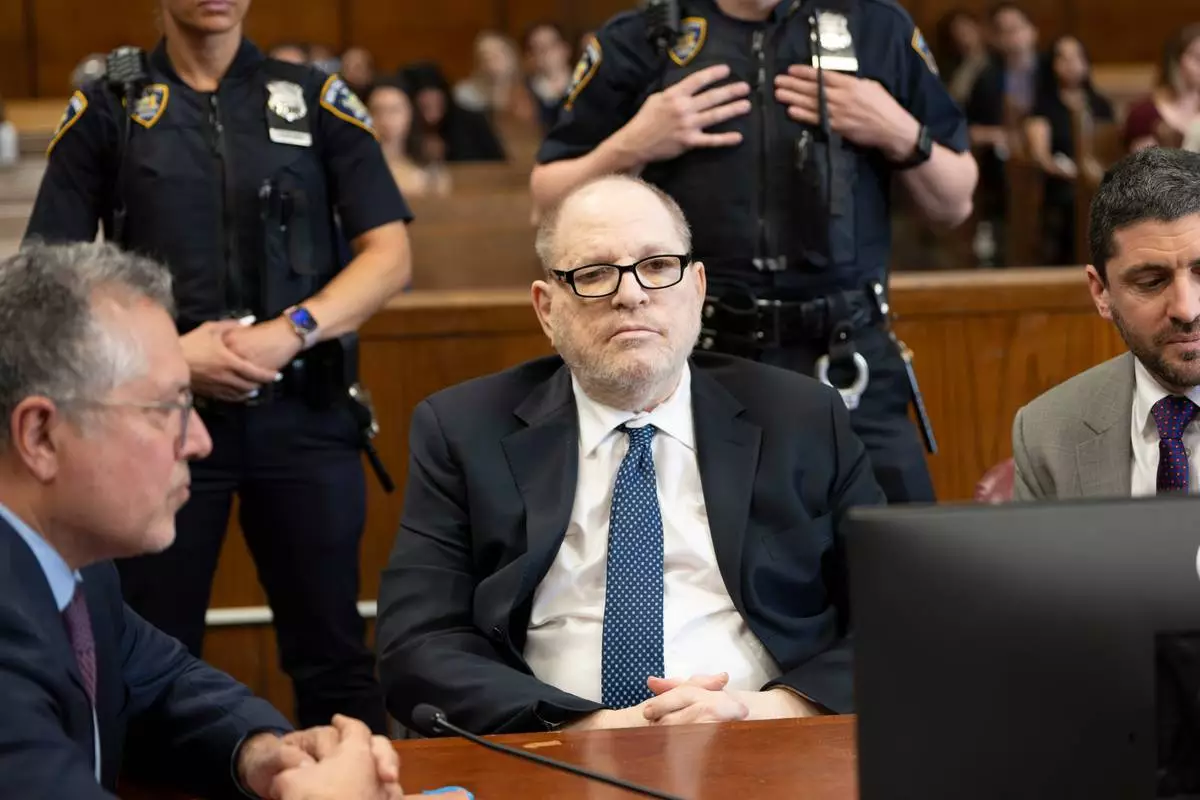
Harvey Weinstein appears in Manhattan criminal court on Friday, May 15, 2026, in New York. (Steven Hirsch /New York Post via AP, Pool)