WASHINGTON (AP) — A proposal to fund $1 billion in security additions for the White House campus and the president’s new ballroom fails to meet procedural rules, according to the Senate parliamentarian, dealing a blow to Republican plans to include it as part of a bill to fund immigration enforcement agencies for the next three years.
The parliamentarian's ruling, described late Saturday by Senate Democrats, said that funding for a project as large and complex as President Donald Trump's massive East Wing renovation is too broad to be included in the narrow GOP budget bill, which cannot be filibustered and only needs a simple majority to pass.
It's unclear if Republicans will be able to immediately salvage any part of the billion-dollar Secret Service proposal, which would fund security for Trump's ballroom along with other parts of the White House, including a new visitor screening center, additional training for agents and extra reinforcements for large events. Republicans said Saturday night that they are revising the legislation based on the parliamentarian's advice.
Ryan Wrasse, a spokesman for Senate Majority Leader John Thune, wrote in a post on X that “none of this is abnormal” during the complicated budget process that Republicans are using to try and pass the immigration enforcement and White House security money on a partisan basis.
“Redraft. Refine. Resubmit,” Wrasse said in the post.
Democrats have seized on the security request, accusing Republicans of dedicating precious federal resources to the ballroom effort instead of focusing on helping Americans with rising costs. Republicans have insisted that private donations will be used to build the ballroom and that the federal dollars are focused just on much-needed security enhancements.
Senate Minority Leader Chuck Schumer, D-N.Y., took credit for the ruling after Democrats argued to the parliamentarian that the security money doesn't belong in the bill.
“Republicans tried to make taxpayers foot the bill for Trump’s billion-dollar ballroom," Schumer said Saturday evening. “Senate Democrats fought back — and blew up their first attempt.”
Schumer added that Democrats “will be ready to stop them again” as Republicans say they will revise the bill.
The ruling from the Senate parliamentarian is just advisory, but such rulings are rarely if ever ignored when lawmakers put together legislation that can pass with a simple majority. Most bills are subject to a filibuster and thus need 60 votes for passage — meaning Republicans must find some Democratic support in the 53-47 Senate.
Republicans are looking to approve a roughly $72 billion package to fund Immigration and Customs Enforcement and Customs and Border Protection until the end of Trump's term after Democrats have blocked the money for months.
As part of that package, Republicans included $1 billion for White House security enhancements, part of it connected to Trump's new ballroom. The Secret Service had requested the money after a man was charged with trying to assassinate Trump at the White House Correspondents' Association dinner last month.
The overall budget package is providing another boost of funding for Trump's immigration and deportation agenda, fueling operations through September 2029. It comes on top of ICE and Border Patrol funds Congress provided last year in the big tax breaks bill Trump signed into law.
The parliamentarian kept most of the immigration portion of the legislation intact, though some minor provisions were blocked, including Customs and Border Patrol funds to hire, train and pay Border Patrol agents. Republicans said those were only technical fixes.
Oregon Sen. Jeff Merkley, the top Democrat on the Senate Budget Committee, said Saturday evening that “Democrats are prepared to challenge any change to this bill.”
Americans shouldn't spend “a single dime” on Trump's “Louis XIV-style ballroom and throw tens of billions more at two lawless agencies," Merkley said.
Associated Press writer Lisa Mascaro contributed to this report.

Work continues on the construction of the ballroom at the White House, Saturday, May 16, 2026, in Washington, where the East Wing once stood. (AP Photo/Rod Lamkey, Jr.)
BATON ROUGE, La. (AP) — U.S. Rep. Julia Letlow advanced to a runoff in Louisiana’s Republican Senate primary Saturday, capitalizing on the power of President Donald Trump’s endorsement in another attempt to purge his party of people he views as disloyal. State Treasurer John Fleming came in second to join her in the next round of voting.
Trump supported Letlow over incumbent Sen. Bill Cassidy, one of the few Republican senators who voted to convict him during his second impeachment trial over the attack on the U.S. Capitol on Jan. 6, 2021. Cassidy, a doctor, has also clashed with Health Secretary Robert F. Kennedy Jr. over vaccine policy, though he provided crucial support to help Kennedy get confirmed.
By receiving less than 50% of the vote, Letlow and Fleming, a former U.S. House member and Trump administration official, were unable to avoid the runoff, which will take place June 27. The GOP winner will almost certainly take the November general election because of the state’s Republican leanings.
Trump has been trying to dislodge Cassidy, one of the few Republican senators who voted to convict him during his second impeachment trial over the attack on the U.S. Capitol on Jan. 6, 2021.
The Louisiana primary comes in the middle of a month of campaigns by Trump to exact retribution on politicians who have crossed him. On May 5 he helped dislodge five of seven Indiana state senators who rejected his redistricting plan.
Next Tuesday, U.S. Rep. Thomas Massie of Kentucky will face a Trump-backed challenger, Ed Gallrein, in another Republican primary. Massie angered Trump by opposing his signature tax legislation over concerns about the national debt, pushing for the release of the Jeffrey Epstein files and opposing his decision to go to war with Iran.
The president unloaded on Cassidy on Saturday morning, calling him “a disloyal disaster” and “a terrible guy” on social media. In the evening he followed up with: “Congratulations to Congresswoman Julia Letlow on a fantastic race, beating an Incumbent Senator by Record Setting Numbers.”
Jeanelle Chachere, a 66-year-old nurse, said she considers Cassidy “a phony” and voted for Letlow solely because Trump endorsed her.
“I’m going by what he says, because I like what he does,” she said.
The election was scrambled by a recent U.S. Supreme Court decision gutting a part of the Voting Rights Act that affects how congressional maps are drawn. Although the Senate primary is moving forward, Louisiana leaders decided to delay House primaries until a future date to allow them to redo district lines ahead of time, a shift that threatened to cause confusion for voters on Saturday.
Mary-Patricia Wray, who has consulted for Republican and Democratic candidates in Louisiana, said the change could weigh against Cassidy by dampening turnout among voters who are less fervently pro-Trump.
“Suspending the congressional primaries hurts Cassidy,” she said. “Some people believe the Senate primary is canceled.”
Cassidy also complained that a new primary system enacted last year confused voters by requiring them to ask for a partisan ballot instead of the all-party primary previously in place. He said some called his office to say they had been unable to vote for him.
“The process that was set up was destined to be confusing,” Cassidy told reporters Friday.
Dadrius Lanus, executive director of the state Democratic Party, said his team fielded hundreds of calls from voters statewide who said the changes undermined their ability vote as they planned.
“A lot of the information should have gotten to voters well in advance,” Lanus said. “It’s literally been a whirlwind of confusion.”
Cassidy waged an aggressive campaign to convince voters he should not be counted out.
The senator's campaign was expected to have spent roughly $9.6 million on advertising through May 16, according to the ad-tracking firm AdImpact. And Louisiana Freedom Fund, a super PAC supporting him, was on track to spend $12.3 million.
By comparison Letlow’s campaign, which launched Jan. 20, spent roughly $3.9 million, while a super PAC backing her, the Accountability Project, spent about $6 million.
Fleming's campaign spent about $1.5 million.
Cassidy and Louisiana Freedom Fund ran ads attacking Letlow within days of her entering the race for supporting diversity, equity and inclusion initiatives, which Trump has tried to root out of the federal government.
Letlow, a college administrator before her election to the House, said she supported DEI while interviewing for the position of president of University of Louisiana-Monroe in 2020.
The ads, an attempt to characterize Letlow as a progressive trying to pass as a conservative, were one way Cassidy tried to flip the script in a race where he was on the outs with Trump.
The senator's vote in favor of convicting the president after his 2021 impeachment has shadowed Cassidy throughout his second Senate term.
John Martin, a 68-year-old retired engineer in south Louisiana, said he would vote for Letlow because he was still upset by Cassidy's decision. He waved a flyer from Letlow’s campaign showing her standing alongside the president.
“I know a lot more about Cassidy than I do about her,” Martin said. “But if she’s endorsed by Trump, I’m going to believe that.”
Cassidy steered clear of Trump’s ire last year, supporting Kennedy to lead the Department of Health and Human Services despite his public reservations about the nominee’s anti-vaccine views.
As chair of the Senate health committee, Cassidy has been more publicly critical of Kennedy, including over funding cuts for vaccine development.
Trump blamed Cassidy for the failed nomination of his second choice for surgeon general, Casey Means, who raised doubts about vaccinating newborns for hepatitis B, a practice Cassidy supports. Trump withdrew the Means nomination and blasted Cassidy.
Letlow considered running last year but only entered the race after Trump announced his endorsement in January.
By that time Fleming, a former House member and Trump administration official who was elected state treasurer in 2023, was already in the race as a Trump devotee. But Landry was looking for a better-known challenger, and he suggested Letlow to the president.
Letlow had an unconventional and tragic entry into politics.
In 2020, while she was a college administrator, her husband Luke was elected to the U.S. House but died of COVID-19 before he could be sworn in. Letlow ran for and won the seat in a March 2021 special election and was reelected in 2022 and 2024.
Beaumont reported from Des Moines, Iowa.
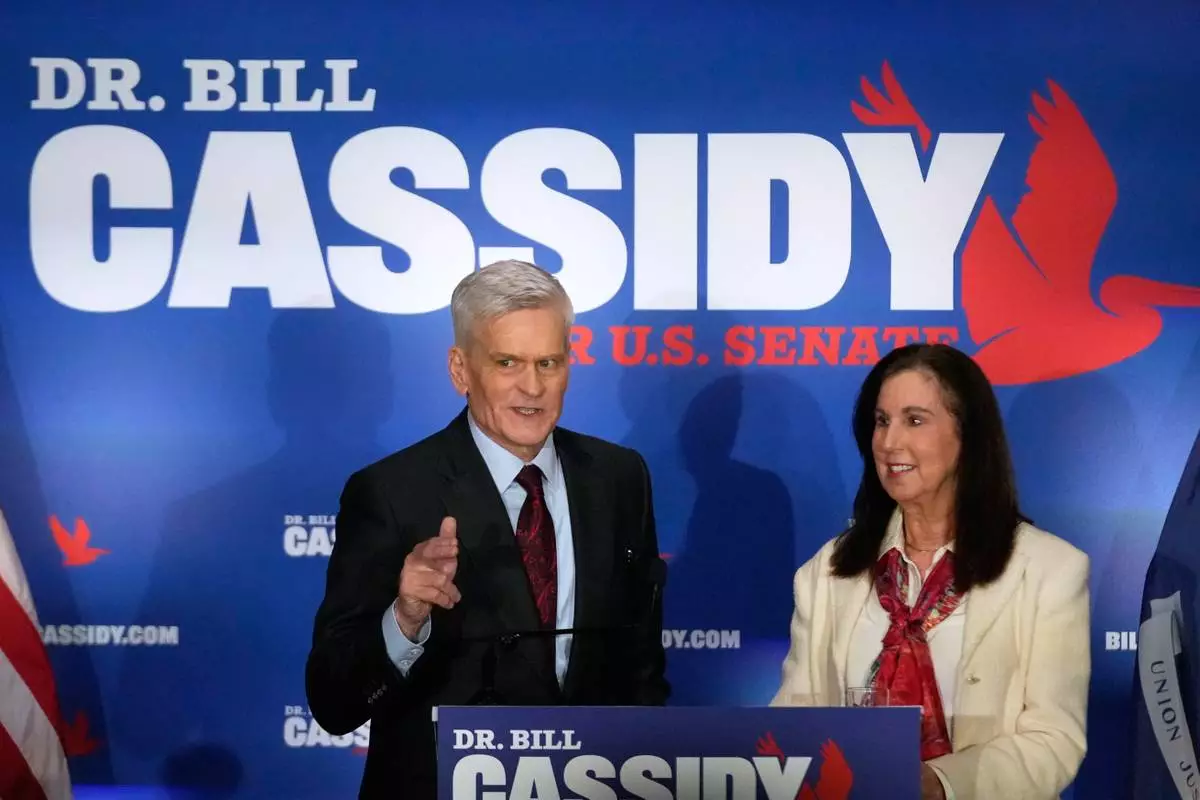
Sen. Bill Cassidy, R-La., left, speaks to supporters alongside his wife, Laura, during an election night watch party Saturday, May 16, 2026, in Baton Rouge, La. (AP Photo/Gerald Herbert)

U.S. Senate candidate Rep. Julia Letlow, R-La., speaks to media during an election night watch party Saturday, May 16, 2026, in Baton Rouge, La. (AP Photo/Matthew Hinton)
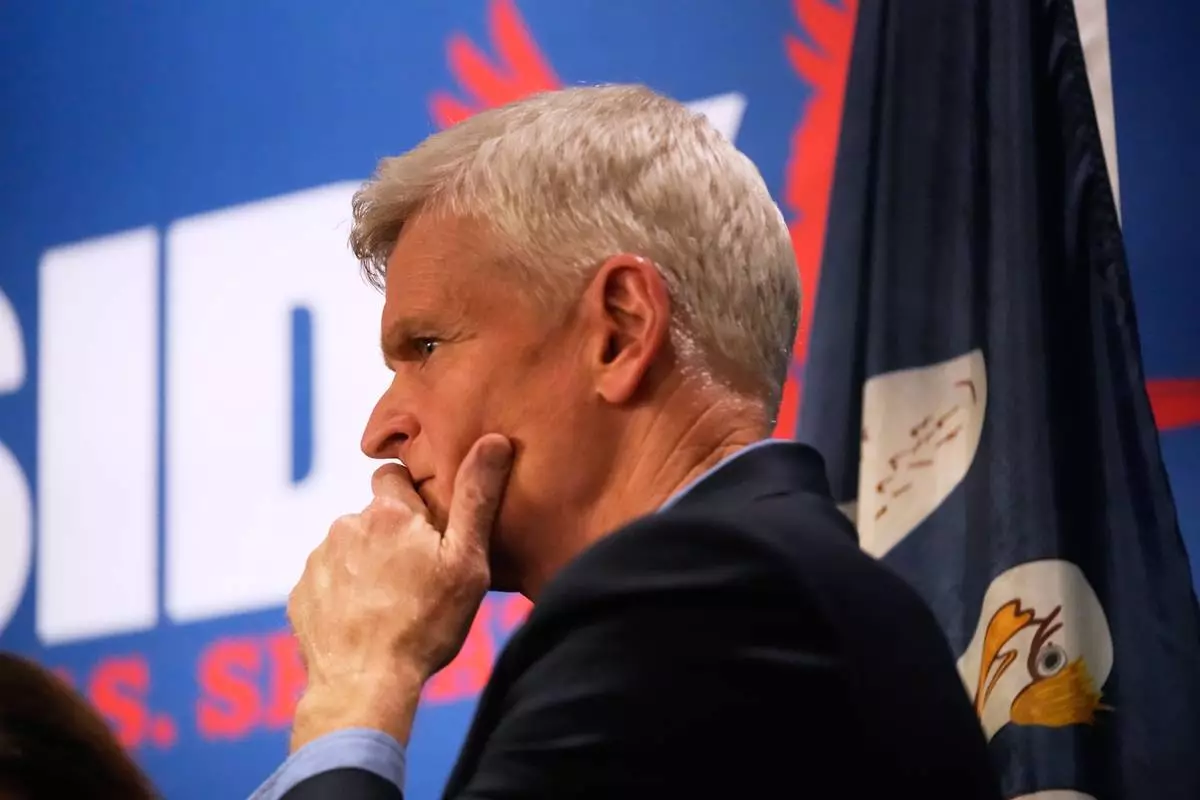
U.S. Sen. Bill Cassidy, R-La., greets supporters at a campaign stop at Drago's Restaurant Tuesday, May 5, 2026, in Metairie, La. (AP Photo/Gerald Herbert)
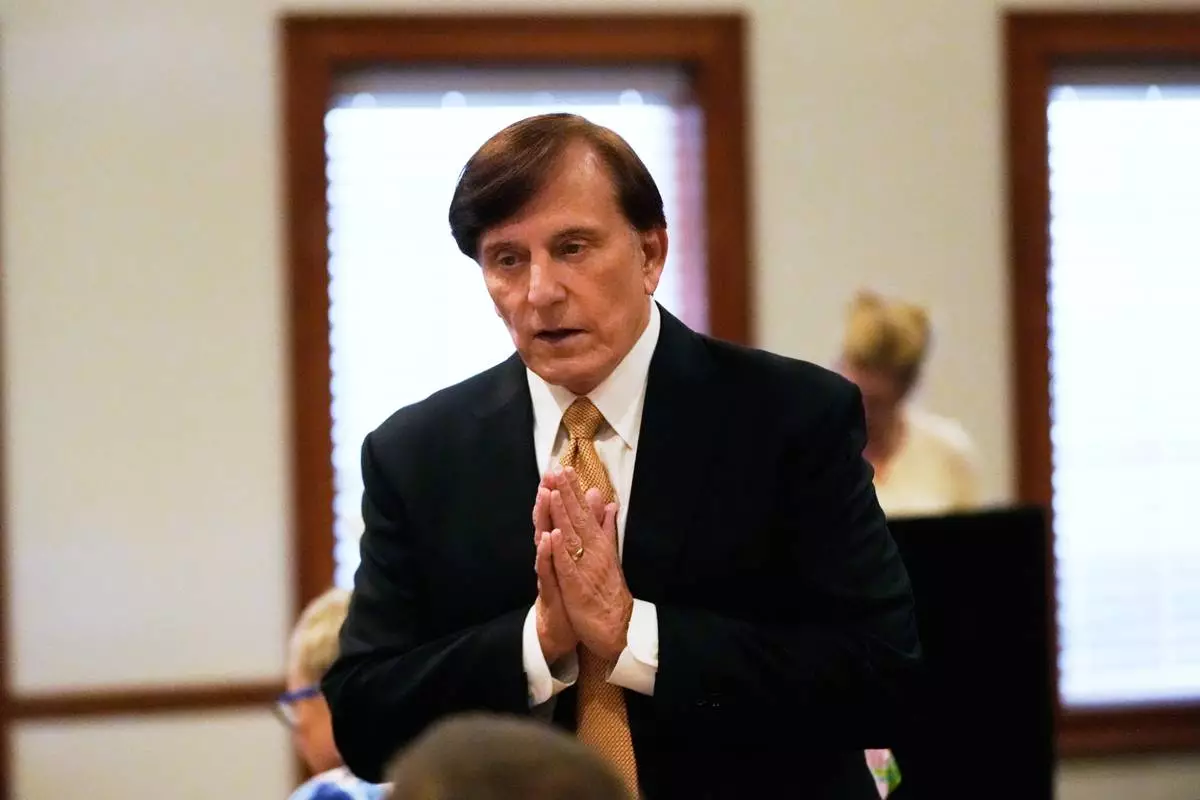
U.S. Senate candidate, current Louisiana treasurer and former U.S. Representative (R-La.) John Fleming, speaks at a Ronald Reagan Newsmaker Luncheon in Baton Rouge, La., Tuesday, May 12, 2026. (AP Photo/Gerald Herbert)
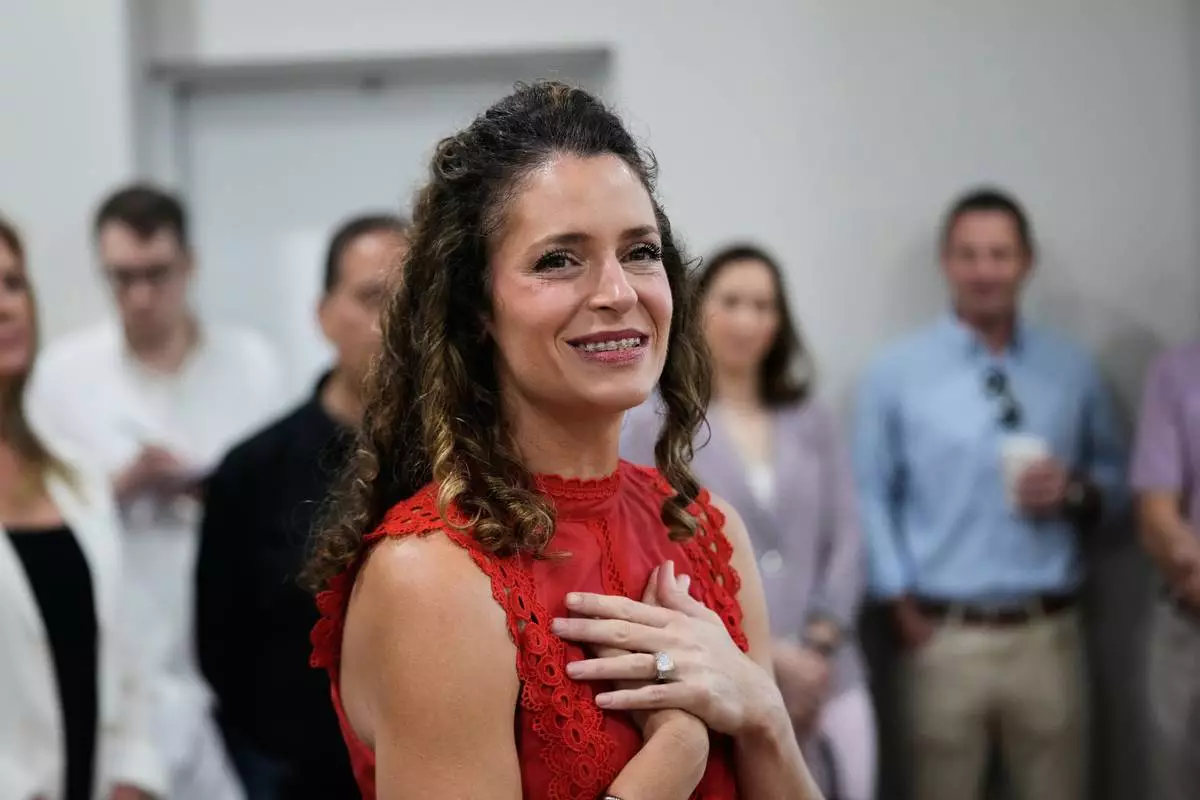
U.S. Senate candidate Julia Letlow greets supporters at a campaign stop at Hammond Northshore Regional Airport in Hammond, La., Wednesday, May 6, 2026. (AP Photo/Gerald Herbert)
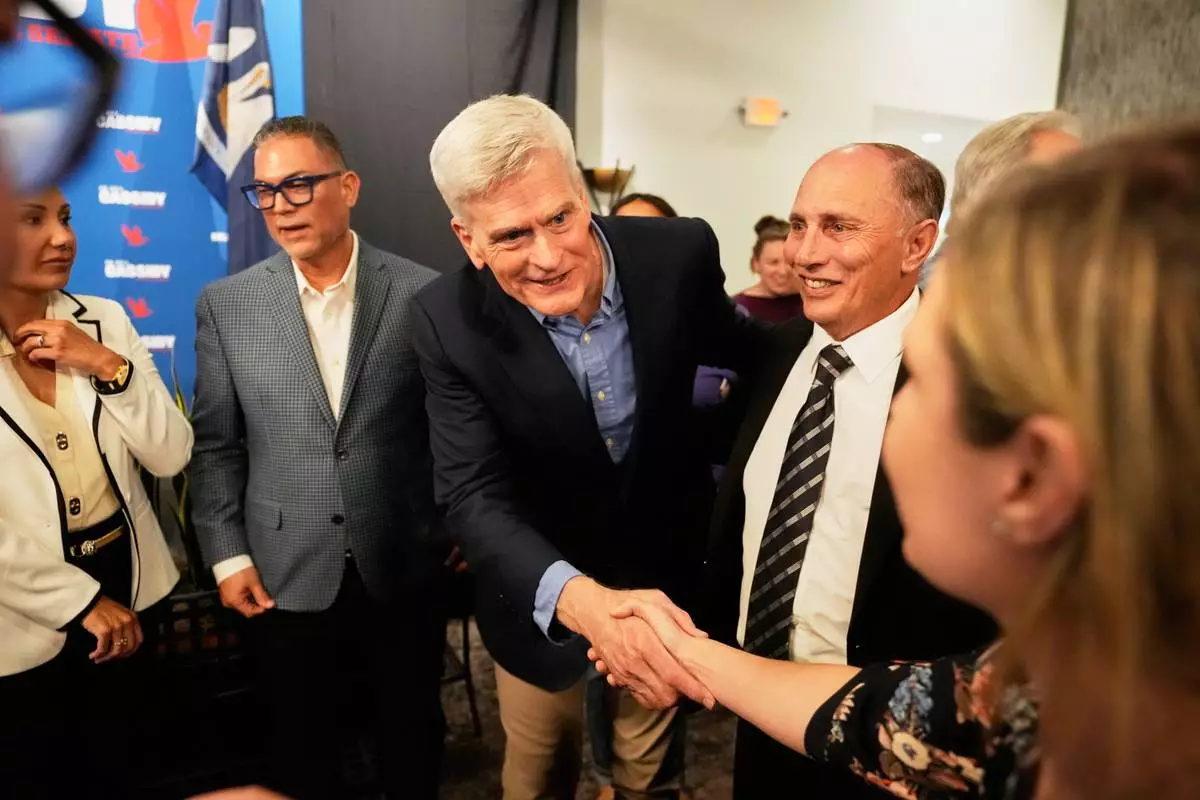
U.S. Sen. Bill Cassidy, R-La., greets supporters at a campaign stop at Drago's Restaurant Tuesday, May 5, 2026, in Metairie, La. (AP Photo/Gerald Herbert)