The World Health Organization (WHO) on Sunday declared an Ebola outbreak in the Democratic Republic of the Congo (DR Congo) and Uganda a "public health emergency of international concern."
The WHO said in a statement that the outbreak, caused by the Bundibugyo virus, does not meet the criteria of a pandemic emergency, as defined under the International Health Regulations (IHR).
The statement said that the director-general of the WHO, under the provisions of the International Health Regulations (IHR), will be convening an emergency committee as soon as possible to advice on the proposed temporary recommendation for state parties to response to the event.
As of Saturday, eight laboratory-confirmed cases, 246 suspected cases, and 80 suspected deaths had been reported in DR Congo's Ituri Province, across at least three health zones, according to the statement.
The Bundibugyo virus could cause Ebola hemorrhagic fever, primarily transmitted through direct contact with the blood, body fluids, secretions, or excretions of infected individuals or animals. Clinical symptoms include fever, bleeding and multi-organ damage. The disease has a fatality rate as high as 50 to 90 percent.
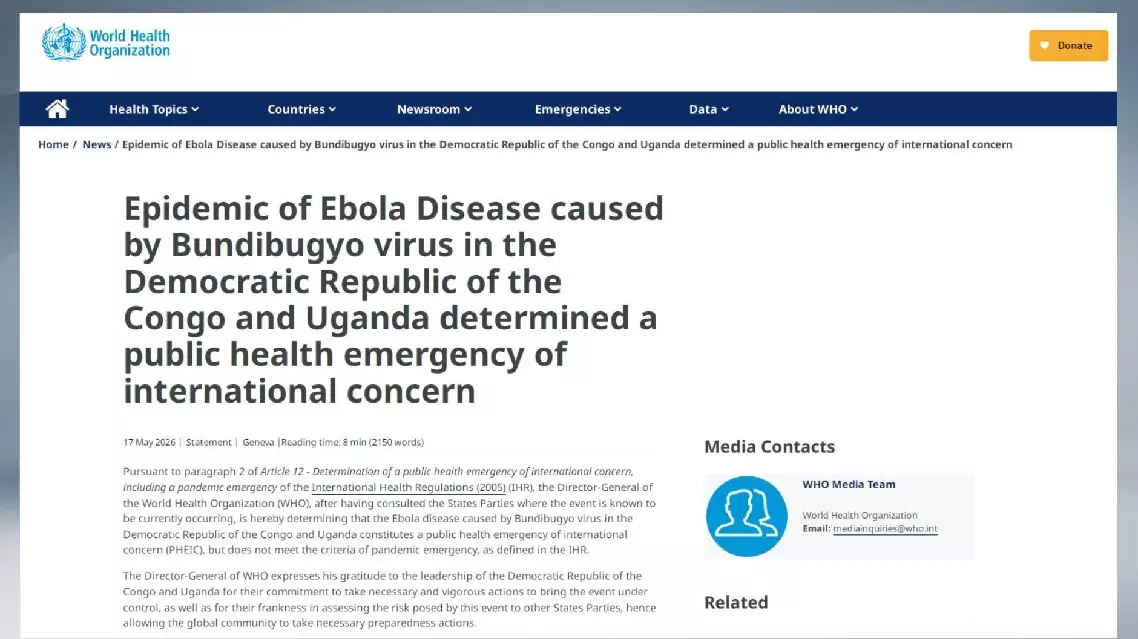
WHO declares Ebola outbreak in DR Congo, Uganda global public health emergency
Iran's stock market will reopen on Tuesday after being suspended by the U.S.-Israeli war against the country, the Securities and Exchange Organization of Iran (SEOI) said on Saturday.
The deputy director of the SEOI said coordination work and necessary approvals had been completed, paving the way for the resumption of trading in stocks, investment funds and derivatives.
The suspension, initially imposed on March 1 and later extended indefinitely on March 7, was intended to protect shareholders' assets, prevent emotional trading, and allow time for the market to operate under more accurate and transparent conditions, the official said.
With the reopening, all segments of Iran's capital market are expected to return to normal operation.
The United States and Israel launched joint military strikes against Tehran and other Iranian cities on Feb. 28, killing Iran's then Supreme Leader Ali Khamenei, senior Iranian officials and civilians. Iran responded with missile and drone attacks against Israel and U.S. interests in the region and tightened control over the Strait of Hormuz.
A ceasefire between the United States and Iran took effect on April 8, which was followed by talks between Iranian and U.S. delegations in Pakistan's Islamabad on April 11 and 12 that ended without an agreement. Later, the United States imposed its own blockade on the strait.
Since the ceasefire, the U.S. and Iranian forces have engaged in multiple direct exchanges of fire in and around the strait.
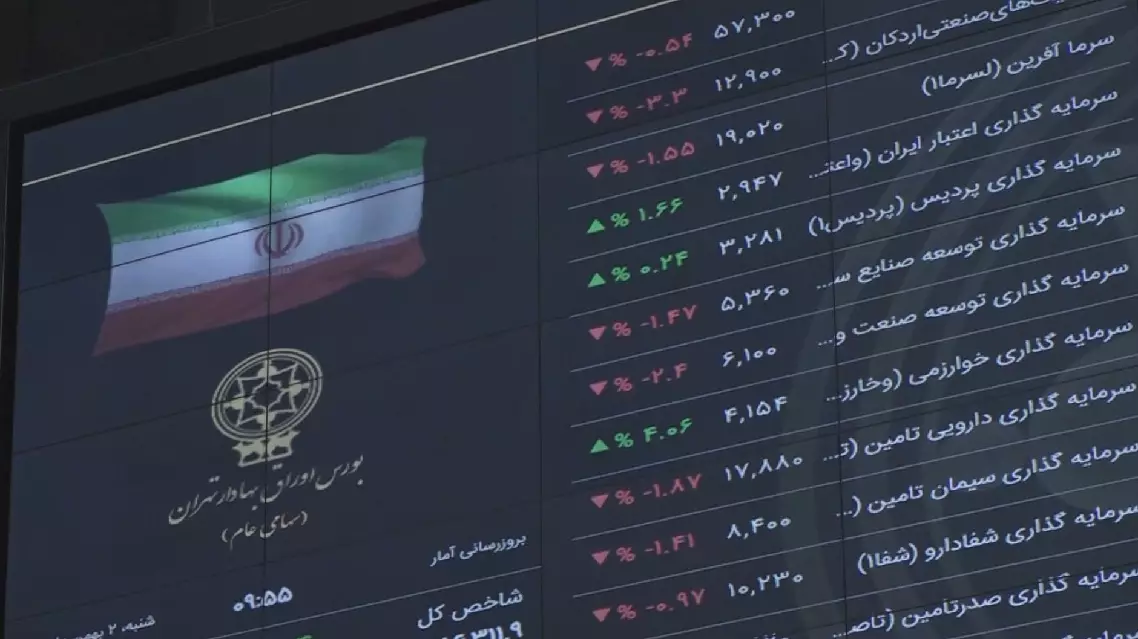
Iran's stock market set to reopen on Tuesday