GLASGOW, Scotland (AP) — Scottish soccer authorities say they “utterly condemn” the field invasion that followed Celtic’s title-sealing goal in its thrilling final-round showdown with Hearts.
Callum Osmand’s goal in the eighth and last minute of stoppage time sealed a 3-1 win for Celtic on Saturday and sparked wild celebrations among its fans, with hundreds running onto the pitch and getting close to Hearts’ dejected players.
Click to Gallery
Celtic coach Shaun Maloney with the Scottish Premier League Trophy following his side's title deciding match against Heart of Midlothian at Celtic Park, in Glasgow, Scotland, Saturday May 16, 2026. (Andrew Milligan/PA via AP)
Celtic fans celebrate after their side won the Scottish Premiership title in Glasgow, Scotland, Saturday, May 16, 2026. (Steve Welsh/PA via AP)
Celtic fans celebrate their side's victory over Heart of Midlothian following the Premiership soccer match between Celtic and Heart of Midlothian, in Glasgow, Scotland, Saturday May 16, 2026. (Andrew Milligan/PA via AP)
Celtic fans invade the pitch at full time following following the Scottish Premiership soccer match against Heart of Midlothian in Glasgow, Scotland, Saturday, May 16, 2026. (Andrew Milligan/PA via AP)
Hearts captain Lawrence Shankland was reportedly punched by a Celtic fan as he tried to leave the field, with the game appearing to end before playing the full amount of stoppage time.
The Hearts delegation quickly left Celtic Park and players were still dressed in game uniforms when they got off the team bus at their Tynecastle Park home. The club said “reports of serious physical and verbal abuse towards our players and staff” were “deeply disturbing” and called for the “strongest action possible to be taken” by Scotland’s soccer authorities.
In a statement released Sunday, the Scottish Professional Football League said it was awaiting the report from its match delegate regarding any specific incidents that took place.
“But, regardless, supporters entering the field of play in any circumstances is wholly unacceptable,” the body said, “and puts those participating and working at a match at risk.”
The SPFL felt it necessary to make clear that “prior to awarding the trophy, we were informed by the match referee that the match had ended and had not been abandoned.”
“Yesterday’s match showed off the very best of the Scottish game and the drama and excitement that it is rightly famed for,” the statement added.
Celtic was crowned champion for the fifth straight year and 14th time in 15 seasons, while Hearts — the long-time leader — was denied a first Scottish league title since 1960.
AP soccer: https://apnews.com/hub/soccer

Celtic coach Shaun Maloney with the Scottish Premier League Trophy following his side's title deciding match against Heart of Midlothian at Celtic Park, in Glasgow, Scotland, Saturday May 16, 2026. (Andrew Milligan/PA via AP)

Celtic fans celebrate after their side won the Scottish Premiership title in Glasgow, Scotland, Saturday, May 16, 2026. (Steve Welsh/PA via AP)

Celtic fans celebrate their side's victory over Heart of Midlothian following the Premiership soccer match between Celtic and Heart of Midlothian, in Glasgow, Scotland, Saturday May 16, 2026. (Andrew Milligan/PA via AP)

Celtic fans invade the pitch at full time following following the Scottish Premiership soccer match against Heart of Midlothian in Glasgow, Scotland, Saturday, May 16, 2026. (Andrew Milligan/PA via AP)
HARARE, Zimbabwe (AP) — A new and deadly Ebola outbreak in Congo and Uganda is the latest health emergency forcing African governments to break free of dependency on global donors like the United States as international support has been slashed in half over the past five years.
Shrinking assistance worsened by the Trump administration's sweeping cuts is colliding with Africa's fast-growing population of over 1.5 billion people. The Ebola outbreak of a strain with no approved therapeutics or vaccines comes days after a rare hantavirus outbreak on a cruise ship put officials on the continent on alert.
Africa faces “an equally dangerous threat” of funding, Dr. Jean Kaseya, director-general of the Africa Centers for Disease Control and Prevention, said while launching an initiative for African self-reliance in health financing earlier this year.
“Every time we have an outbreak, many countries start to ask for partners because they don’t have in their budgets funding to respond, even to prepare for these outbreaks,” he added during a briefing on the new Ebola outbreak.
But African nations know that must change.
The Africa CDC says the continent now faces “an unprecedented financing crisis.”
It says official development assistance has dropped sharply, from about $26 billion in 2021 to around $13 billion in 2025, as wealthy nations turn attention instead to wider geopolitical issues like the Iran war and domestic pressures.
African leaders for years had pledged to better finance their own health systems, but commitments remained on paper. In 2001, countries committed to allocating at least 15% of national budgets to health, yet only Rwanda, Botswana and Cape Verde are on track out of Africa's 54 nations.
“The conversation was somehow theoretical because the donor system was still functioning,” said Dr. Alex Ajangba, a health financing expert and co-editor of the new African Journal of Health Economics, Systems and Policy. “But now that cushion is gone."
He added: "What we are seeing here is not a temporary dip of donor funding that we will recover from.”
Governments are accelerating efforts toward “health sovereignty,” with aspirations to finance and manage systems with far less reliance on external aid.
Initiatives like Ghana’s “Accra Reset” launched in September, and the Africa Health Security and Sovereignty Agenda, adopted by African leaders in February, aim to strengthen long-term resilience.
Health ministers are proposing domestic solutions, including higher taxes on tobacco, alcohol and sugary foods, pooled procurement of medicines to lower costs, expanding local pharmaceutical and vaccine manufacturing and tackling inefficiencies.
The need is stark. Africa imports more than 90% of its health commodities such as vaccines and medicines, while health emergencies — from mpox to cholera to Ebola — surged from 153 outbreaks to 242 between 2022 and 2024, according to the Africa CDC. It wants the continent to produce 60% of its vaccines by 2040.
“The word ‘health sovereignty’ has become a phrase that is used in almost every continental policy meeting right now,” Ajangba said, warning it risks being just a “slogan.”
Experts say the continent has plenty of wealth. Africa holds about 30% of the world’s mineral reserves, including those essential to technology and renewable energy, yet much of that value is lost through opaque or weak contracts, illicit financial flows, debt burdens and limited local processing of minerals that are largely exported raw, Ajangba said.
The continent loses about $40 billion annually to illicit financial flows in an extractive sector that includes mining, gas and oil, according to the United Nations Economic Commission for Africa.
Aside from tackling those issues, another key pillar of African nations' transition away from aid dependency is co-financing, requiring countries to contribute more alongside donors.
Gavi, the global vaccine alliance, says lower-income countries contributed a record $302 million toward vaccines in 2025, and about $1 billion over the past five years.
“This creates predictability,” Gavi chief executive Sania Nishtar told The Associated Press. “Reliance on aid for basic services does not.”
But the shift can be contentious. The Trump administration has pushed co-financing as a key condition of the “America First” health deals it has agreed with nearly two dozen African nations. They reinvent aid to Africa by requiring countries to increase domestic spending within a specified time or risk losing support.
Some countries have rejected the proposed deals, outraged over U.S. requests for sharing of health data with no promises that nations will receive any benefit from it. Others criticize proposed swaps of health support for natural resources.
Though most governments say Africa needs to move toward self-sufficiency, critics say some of the U.S. conditions place unrealistic pressure on already strained economies.
“They are being set up to fail,” said Asia Russell, executive director of Health GAP, an international advocacy group. “When an administration says, ‘If you don’t hit these numbers, you’re not going to get resources anymore,’ that is extremely serious.”
Many African countries are under mounting debt burdens. Already, about 40% are spending more on debt than health.
“Many of these countries have huge debt service and other challenges,” said Jen Kates, a senior vice president at the nonprofit KFF, which focuses on health policy. “At the end of the day, it’s going to be people who live in those countries who will feel the effects.”
Africa’s debt has surged to about $1.2 trillion, according to the African Export-Import Bank, forcing brutal trade-offs. Debt servicing consumes roughly 19% of government revenue in sub-Saharan African countries, according to the United Nations.
For more on Africa and development: https://apnews.com/hub/africa-pulse
The Associated Press receives financial support for global health and development coverage in Africa from the Gates Foundation. The AP is solely responsible for all content. Find AP’s standards for working with philanthropies, a list of supporters and funded coverage areas at AP.org.
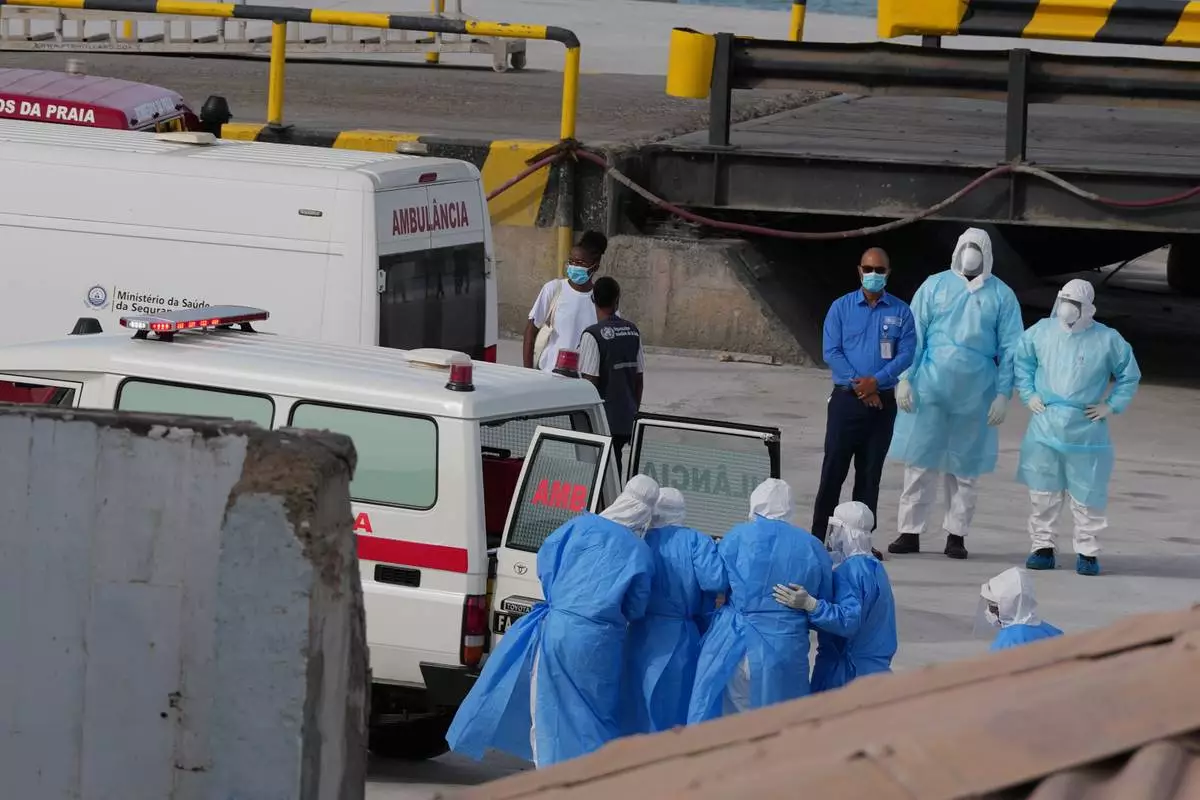
Health workers in protective gear evacuate patients from the MV Hondius cruise ship into an ambulance at a port in Praia, Cape Verde, Wednesday, May 6, 2026. (AP Photo/Misper Apawu)
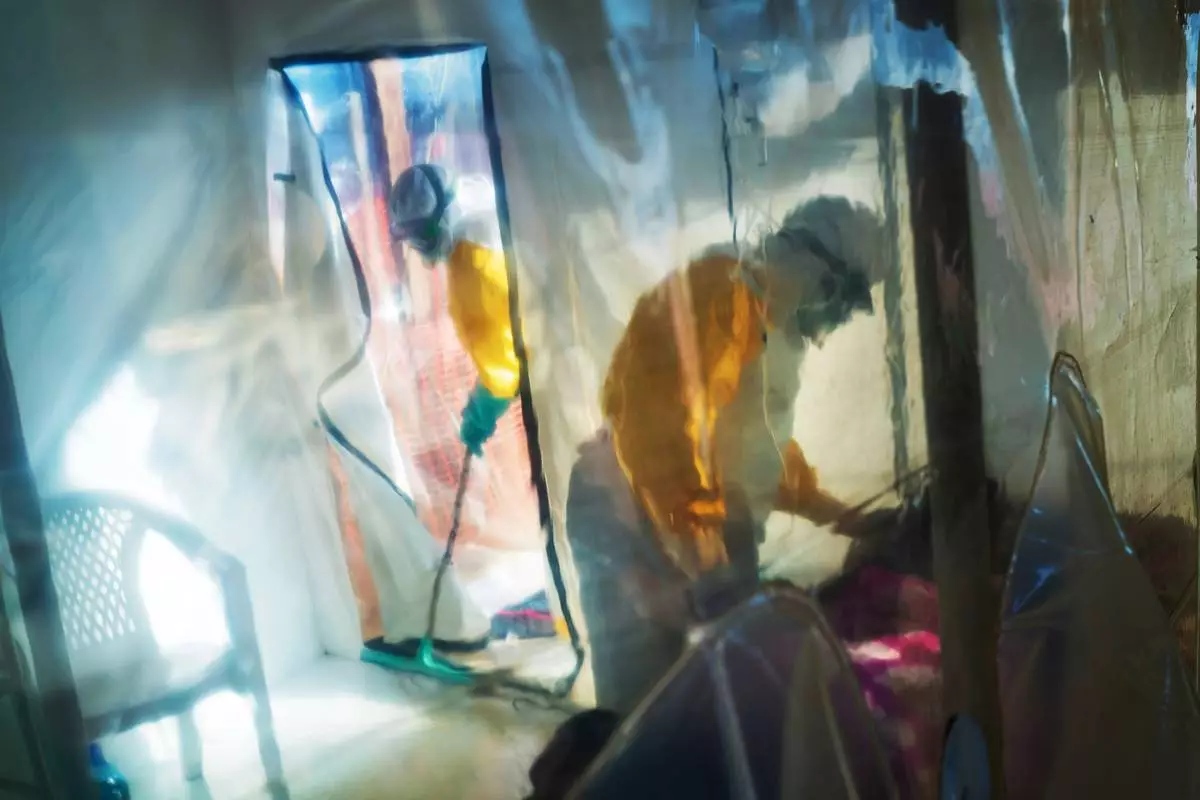
FILE - Health workers wearing protective suits tend to an Ebola victim kept in an isolation tent in Beni, Congo, July 13, 2019. (AP Photo/Jerome Delay, File)
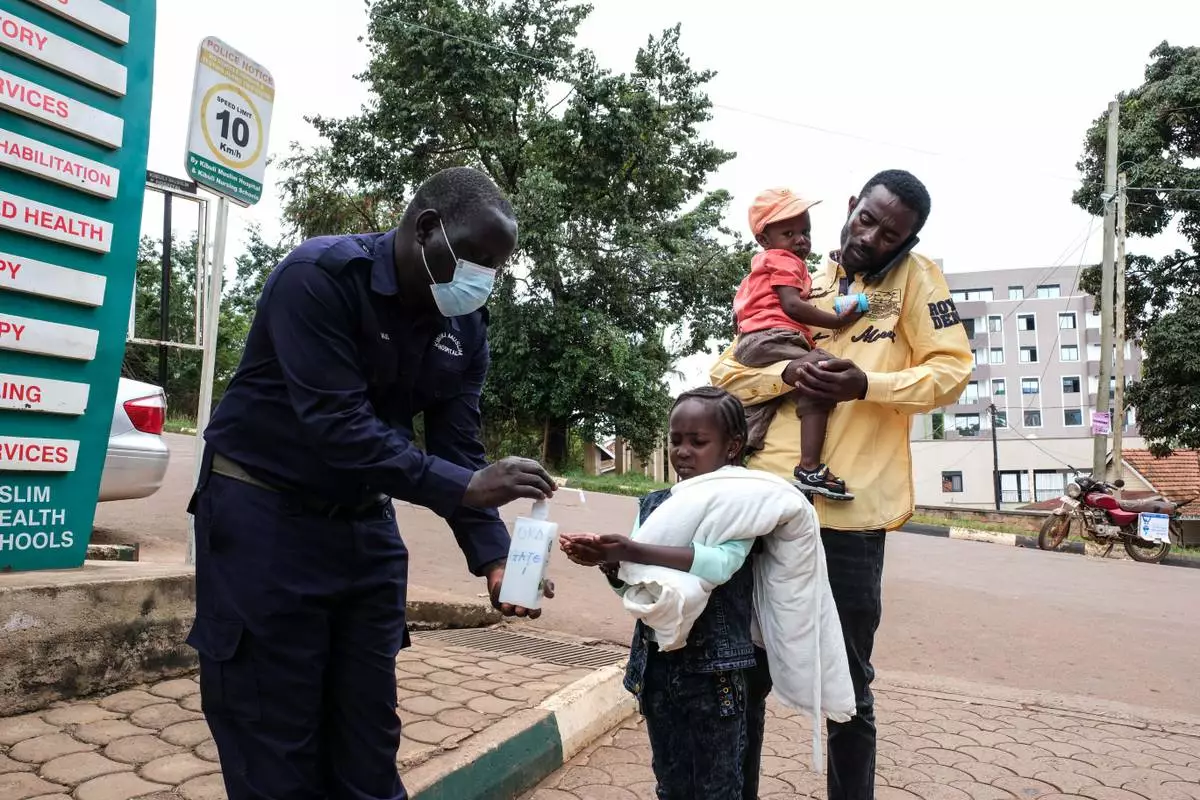
A girl sanitises her hands in front of Kibuli Muslim Hospital in Kampala, Uganda, Saturday, May 16, 2026. (AP Photo/ Hajarah Nalwadda)
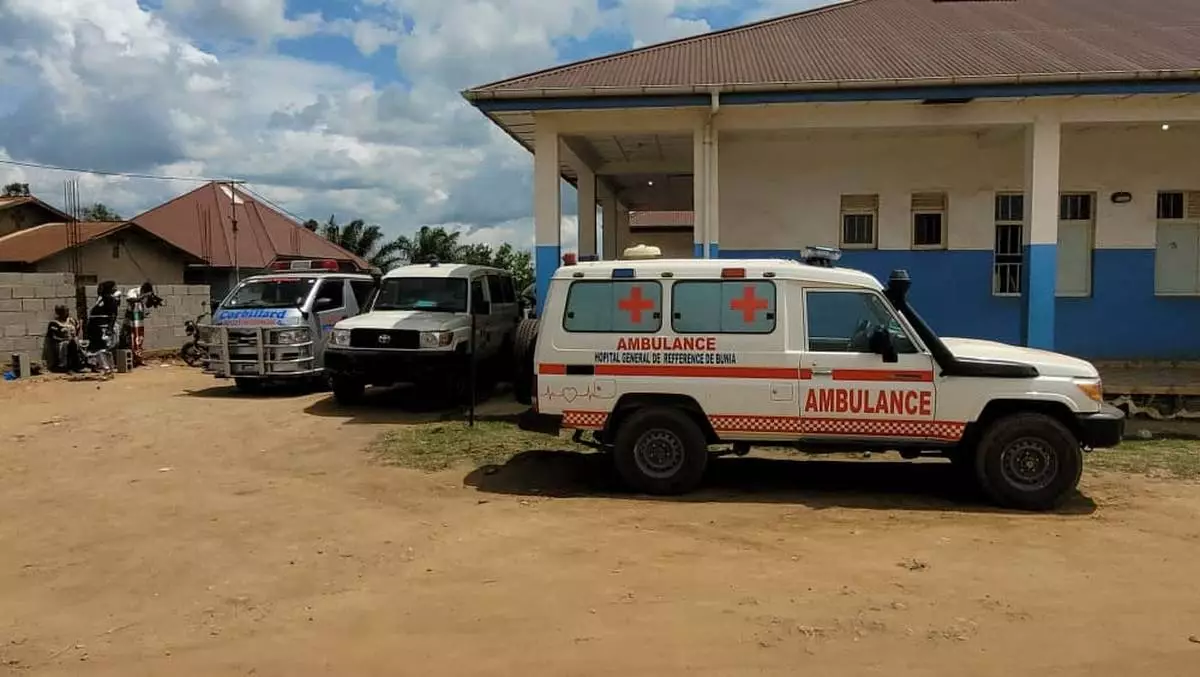
Ambulances are parked outside a hospital in Bunia, Congo, Saturday, May 16, 2026. (AP Photo/Constant Same Bagalwa)
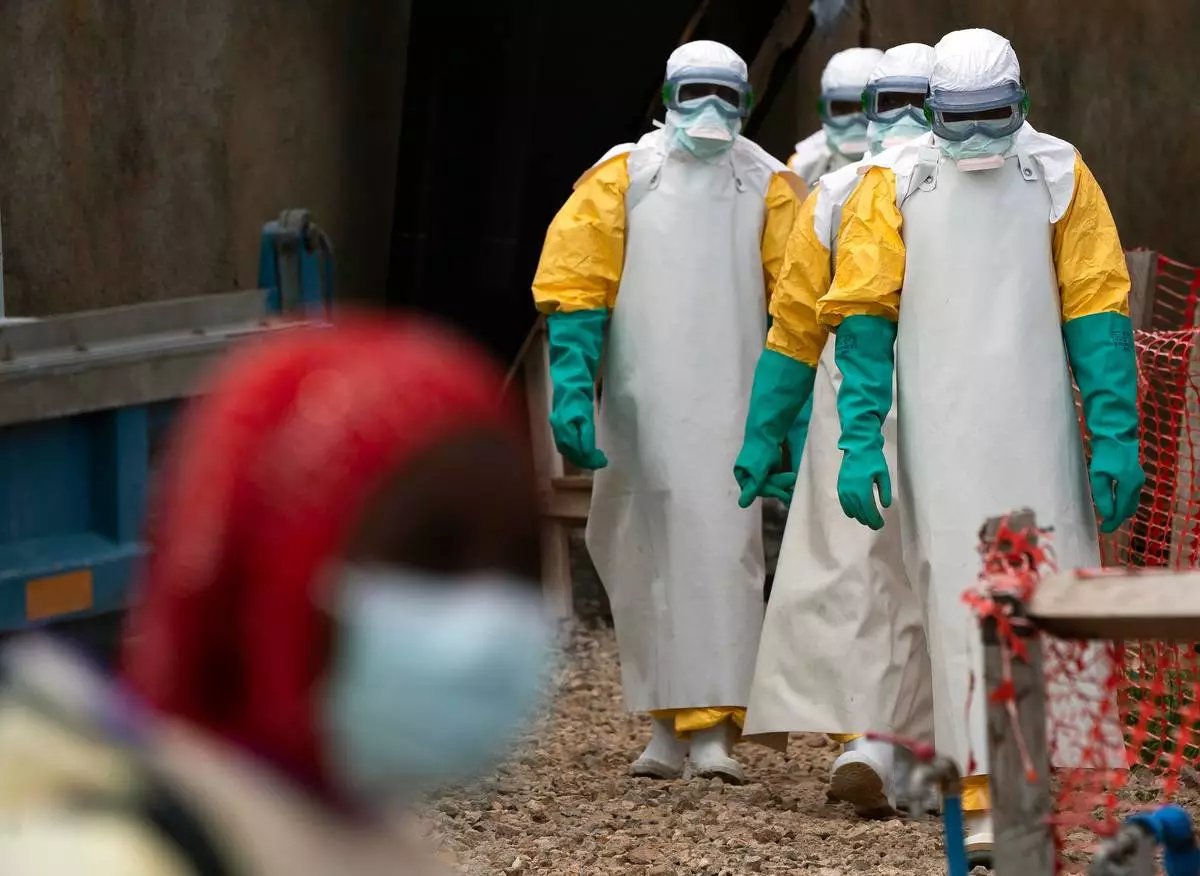
FILE - Health workers dressed in protective gear begin their shift at an Ebola treatment center in Beni, Congo, July 16, 2019. (AP Photo/Jerome Delay, File)