LOS ANGELES--(BUSINESS WIRE)--May 17, 2026--
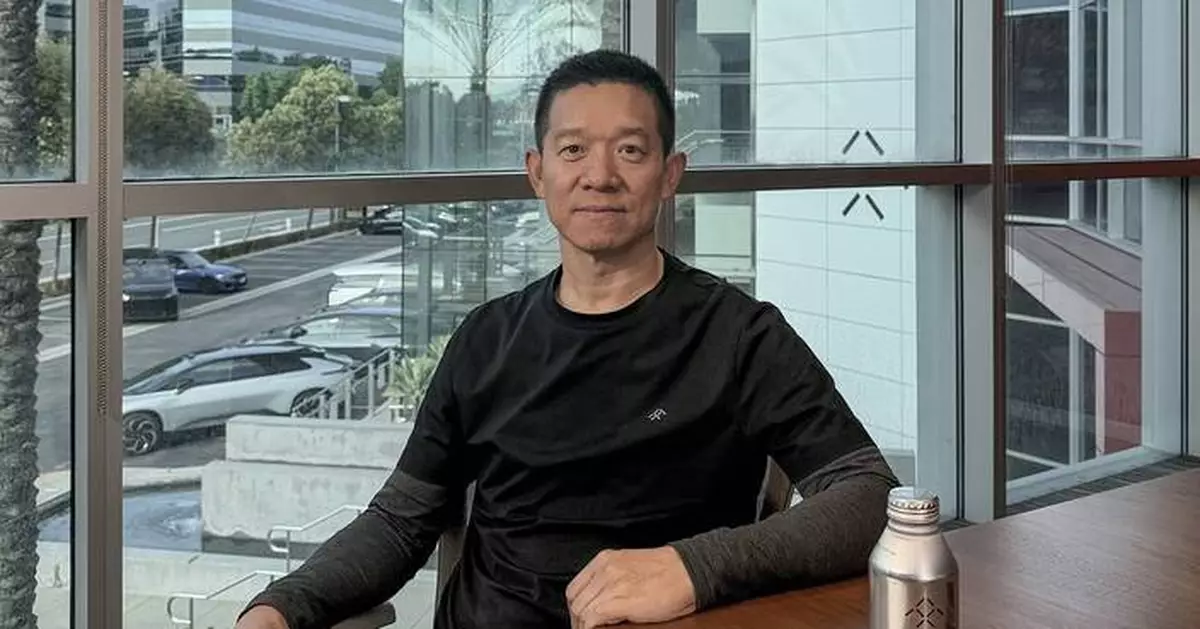
Faraday Future Intelligent Electric Inc. (NASDAQ: FFAI) (“Faraday Future”, “FF” or the “Company”), a California-based global Embodied AI (EAI) ecosystem company, today shared a weekly business update from YT Jia, Founder and Global CEO of FF.
This press release features multimedia. View the full release here: https://www.businesswire.com/news/home/20260517296928/en/
“Dear investors, stockholders, and Futurists, I hope this message finds you well.
Ten days ago, FF celebrated its 12th anniversary. Last week, after seven years, I returned to the role of Global CEO of FF. Two days ago, FF completed its latest round of $25 million financing. With $70 million in financing raised recently, we believe this is enough to support the first-phase strategic goals of our robotics business.
Today, standing at the forefront of a new wave of industrial revolution, I release this letter to all of you with great excitement and a deep sense of purpose. Our goal is to lead the team, over the next two years, to finally realize the dream that FF has been fighting for over the past 12 years. With AI First and Stockholders First as our core principles, we will build the Three-in-One ecosystem strategy around EAI, and truly rebuild FF into a Physical AI ecosystem company. This is a mission we must win. There will be no excuses. After years of life-and-death struggles, major ups and downs, and hard-earned lessons, FF’s differentiated advantages and value in this new wave of industrial competition have become even more clear. We must seize this momentum. Through five new transformations, we will move quickly to strengthen the Company’s five unique values:
First, the value created by FF becoming the first U.S company to sell and deliver both humanoid and bionic EAI robots, and by our full ramp-up toward scaled deployment. We aim to take the lead in large-scale deployment across real-world use cases and strengthen our first-mover advantage.
Second, the value created by the continuous evolution of the EAI Brain and Developer Platform.
Third, the value created by real-world data from the EAI Data Factory. In the AI era, core competitiveness is not only about models and computing power. It is also about the ability to collect real-world, high-frequency, multi-dimensional data.
Fourth, the value created by FF’s role as a global EAI industry bridge, especially in cost and efficiency. FF connects the world’s most advanced technology chain, the highest-quality industrial chain, and the most valuable users and use cases. This bridge can help deeply integrate global industrial resources, create stronger coordination, and amplify value.
Fifth, the value created by strategic vision and focus. Together, the four values above — the Three-in-One ecosystem plus the global EAI industry bridge — will form the evolutionary flywheel of the EAI ecosystem. This is our most important long-term value and competitive moat.
On execution, compared with Tesla, one of the leading companies in Embodied AI, FF has six clear points of differentiation:
1. Ecosystem model: FF combines in-house development, an open-source and open developer platform, and a data factory. Tesla follows a full-stack in-house development model, with data mainly used within its own ecosystem.
2. EAI device portfolio: FF offers robots in three humanoid forms and multiple bionic forms. Tesla is focused on one general-purpose humanoid robot.
3. Price range: FF offers a disruptive entry price starting at $10,000, while Tesla is expected to start at approximately $20,000 to $30,000.
4. First-phase market: FF is pioneering the education market and building deep capabilities in B2C family education. Tesla is focused on B2B industrial applications.
5. Technology Approach: FF combines a general-purpose EAI Brain with use-case-specific profession. Tesla focuses on a generalized universal brain.
6. Capital investment: FF combines core in-house AI development with its Bridge model, creating a more asset-light path. Tesla follows a full-stack in-house development model that requires heavier capital investment.
Next, we will carry out a comprehensive transformation across five areas: strategy; product, technology and business; finance; capital; and our AI operating system. We will move forward in three major stages — 2026, the next two years, and the next five years — to maximize FF’s five unique values.
I. Strategic Transformation:
FF has officially upgraded into a U.S.-based Physical AI ecosystem company. Guided by the AI First principle, FF is focused on EAI robotics technology and two major product engines: EAI humanoid and bionic robots, and EAI automotive robots. We are building three major sub-strategies: EAI Devices, EAI Data Factory, and EAI Brain & Open-Source and Open Platform. Together, they form the Three-in-One EAI ecosystem, creating an evolutionary flywheel effect and maximizing commercial value. Our goal is to become one of the top three robotics companies in North America within five years by real-world deployment volume in EAI humanoid and bionic robots. In EAI automotive robots, our goal is to become a leader in the North American EAI MPV market.
II. Product, Technology, and Business Transformation:
In Phase one, the company will concentrate resources on fully scaling our EAI humanoid and bionic robot business. On the EAI Device side, based on our four major product lines and key use cases—including education, security and inspection, reception and guidance, performances, and university research—we have increased our 2026 robot shipment target from 1,000 units to 1,500 units.
We believe the education sector, especially family education—will become the primary use case for the first phase of the 2C robotics market. FF aims not only to pioneer robotics education products, but also to become one of the primary driving forces behind the inaugural year of the U.S. EAI robotics education ecosystem.
For EAI Brain and the Open Source & Open Developer Platform, through our 5×4 architecture, we aim to evolve robots from task-level autonomy toward long-horizon autonomy using VAM, world models, and WBC force-control systems, while leveraging shadow-mode iterations on weekly and monthly cycles. At the same time, we are accelerating commercialization of the EAI Brain, building an open platform architecture, and closing the ‘platform-deployment-data feedback’ loop. Our goal is to attract more than 100 developers and launch over 100 Skills and Agents, significantly enhancing the practical use value of our robots.
For the EAI Data Factory, our goal is to turn real-world data collection and deployment into a flagship industry use case, complete full in-house development of our data software stack, and scale our data business to over $1 million in revenue.
For our Middle East business, our goal is to achieve positive operating cash flow, exceed 200 robot sales and deployments, and expand operations across three countries in the region. The upside potential of our Phase One strategy is that once we secure strategic or long-term investment sufficient to fully fund Super One mass production, we will comprehensively accelerate our EAI EV business and establish dual growth engines.
III. Financial Transformation:
We will continue advancing a balanced approach between financial discipline and business growth, while rapidly improving operating quality and key financial metrics. Our target is to achieve positive operating cash flow by Q4 2027. The core measures include: maintaining the comprehensive gross profit margin of the humanoid and bionic robot device sales, maintaining high gross profit for ecosystem business revenue; shifting from relying on financing cash flow to focusing on operating cash flow; reconstructing the AI system to achieve real-time cost control and operational analysis capabilities; managing the income statement, cash flow statement, and balance sheet well, and maximizing the ‘Three-in-One’ business operating results.
IV. Capital Transformation:
Our goal is to restore the market value of FFAI back to the level it was at when it went public on the NASDAQ in 2021 within two years. This is our most important commitment to stockholders and the most critical performance benchmark for our company. The recent $70 million fundraising from institutional investors is an important starting point for the company’s financing structure to transition from ‘liquidity-driven’ to ‘capital structure governance-driven.’ Going forward, we will gradually transition toward medium to long-term financial investors and strategic investors, while building a financing structure centered on operating cash flow, industrial partnerships, and long-term capital. At the same time, we aim to reduce our reliance on highly dilutive convertible debt financing instruments with short investment cycles. We will continue optimizing our stockholder structure for long-term alignment, while also continuing legal actions against illegal short selling and market manipulation activities.
V. AI System Transformation:
We will not only make AI robots but also transform the company into an AI. We are fully upgrading FF into an AI First operating and management system, transitioning from ‘PPTIA’ toward ‘AI-PPTI,’ while building an AI-native enterprise operating system and a hybrid organization combining humans and AI Agents. This will accelerate the adoption of AI across governance, decision-making, operations, products, and execution. More detailed information regarding Phase One, as well as our goals and initiatives for Phases Two and Three, will be shared during upcoming company all-hands meetings.
Over all these years, many things have changed. But for me personally, three things have never changed: My belief in originality for both technology and product innovation. My commitment to rewarding our stockholders and investors. And my determination to deliver on our promises.
FF will rebuild organizational execution around founder spirit and partner spirit, entering a ‘zero excuses, zero internal friction, results-oriented’ operating mode as we work tirelessly to deliver on our commitments to stockholders and users.
Every day when I walk into the office and see the fire in our team’s eyes, I become even more convinced that the spark we ignited 12 years ago is now burning stronger than ever. The next two years will be the most critical two years in FF’s history. The era of physical AI has arrived, and FF has the opportunity to once again stand at the forefront of the times and become an important driver of the commercialization of real EAI scenarios. FF’s brightest days are ahead of us! Thank you.”
ABOUT FARADAY FUTURE
Founded in 2014, Faraday Future (FF) is a U.S.-based Physical AI ecosystem company dedicated to reshaping the future of robotics and mobility solutions through AI innovation and technologies. FF focuses on two major product strategies within the Embodied AI (EAI) robotics business: EAI humanoid and bionic robots, and EAI automotive-focused robots. By building a Three-in-One ecosystem of “Device, Data, EAI Brain & Open-Source and Open Platform,” FF aims to create an evolutionary flywheel: scaled device delivery, data collection and training, continuous evolution of the EAI Brain, stronger product capability, and even larger-scale delivery and deployment. Through this flywheel, FF seeks to maximize its commercial value and lead to the advancement of Physical AI. For more information, please visit Faraday Future’s official website: https://www.ff.com/
FORWARD LOOKING STATEMENTS
This press release includes “forward looking statements” within the meaning of the safe harbor provisions of the United States Private Securities Litigation Reform Act of 1995. When used in this press release, the words “plan to,” “can,” “will,” “should,” “future,” “potential,” and variations of these words or similar expressions (or the negative versions of such words or expressions) are intended to identify forward-looking statements. These forward-looking statements, which include statements regarding potential future legal actions against alleged illegal market manipulation or similar improper activities, and FF’s entry into the embodied AI robotics market and robotics deliveries and development, involve a number of known and unknown risks, uncertainties, assumptions and other important factors, many of which are outside the Company’s control, which could cause actual results or outcomes to differ materially from those discussed in the forward-looking statements.
Important factors, that may affect actual results or outcomes include, among others: the Company’s ability to timely regain compliance with Nasdaq’s minimum bid requirement; the Company’s common stock will be suspended from trading on Nasdaq if it’s closing price is $0.10 or less for 10 consecutive trading days; the Company’s ability to continue as a going concern and improve its liquidity and financial position; the Company’s ability to pay its outstanding obligations, which it currently lacks; the availability of sufficient share capital to meet its current obligations and execute on its strategy, which the Company currently lacks; the agreement of stockholders to substantially increase the Company’s share capital, which could result in substantial additional dilution; the willingness of convertible debt investors to fund the Company while it lacks sufficient share capital for conversions; demand for the Company’s robotics products; the ability of B2B preorder companies to locate customers to purchase our robotics products, on which their nonbinding preorders substantially depend; competition in the robotics industry, which includes companies with far superior experience, funding and name recognition; the Company’s reliance on a single OEM for most of its robotics products; the Company’s ability to get the planned robotics products to comply with all applicable U.S. rules and regulations; the ability of the robotics OEM to timely supply robotics to the Company; tariff uncertainty for imported products, particularly from China; demand from automobile dealers for robotics products; the Company's ability to homologate FX vehicles for sale; the Company’s ability to secure the necessary funding to execute on the FX strategy, which is substantial; the Company’s ability to secure an occupancy certificate covering all of its Hanford facility; the Company's ability to remediate its material weaknesses in internal control over financial reporting and the risks related to the restatement of previously issued consolidated financial statements; the Company’s limited operating history and the significant barriers to growth it faces; the Company’s history of substantial losses and expectation of continued losses; the success of the Company’s payroll expense reduction plan; the Company’s ability to execute on its plans to develop and market its vehicles and the timing of these development programs; the Company’s estimates of the size of the markets for its vehicles and cost to bring those vehicles to market; the rate and degree of market acceptance of the Company’s vehicles; the Company’s ability to cover future warranty claims; the success of other competing manufacturers; the performance and security of the Company’s vehicles; current and potential litigation involving the Company; the Company’s ability to receive funds from, satisfy the conditions precedent of and close on the various financings described elsewhere by the Company; the result of future financing efforts, the failure of any of which could result in the Company seeking protection under the Bankruptcy Code; the Company’s indebtedness; the Company’s ability to use its “at-the-market” program; insurance coverage; general economic and market conditions impacting demand for the Company’s products; potential negative impacts of a reverse stock split; potential cost, headcount and salary reduction actions may not be sufficient or may not achieve their expected results; circumstances outside of the Company's control, such as natural disasters, climate change, health epidemics and pandemics, terrorist attacks, and civil unrest; risks related to the Company's operations in China; the success of the Company's remedial measures taken in response to the Special Committee findings; the Company’s dependence on its suppliers and contract manufacturer; the Company's ability to develop and protect its technologies; the Company's ability to protect against cybersecurity risks; and the ability of the Company to attract and retain employees, any adverse developments in existing legal proceedings or the initiation of new legal proceedings, and volatility of the Company’s stock price. You should carefully consider the foregoing factors and the other risks and uncertainties described in the “Risk Factors” section of the Company’s Form 10-Q for the quarter ended March 31, 2026, filed with the SEC on May 14, 2026, and Form 10-K filed with the SEC on March 31, 2026, and other documents filed by the Company from time to time with the SEC.
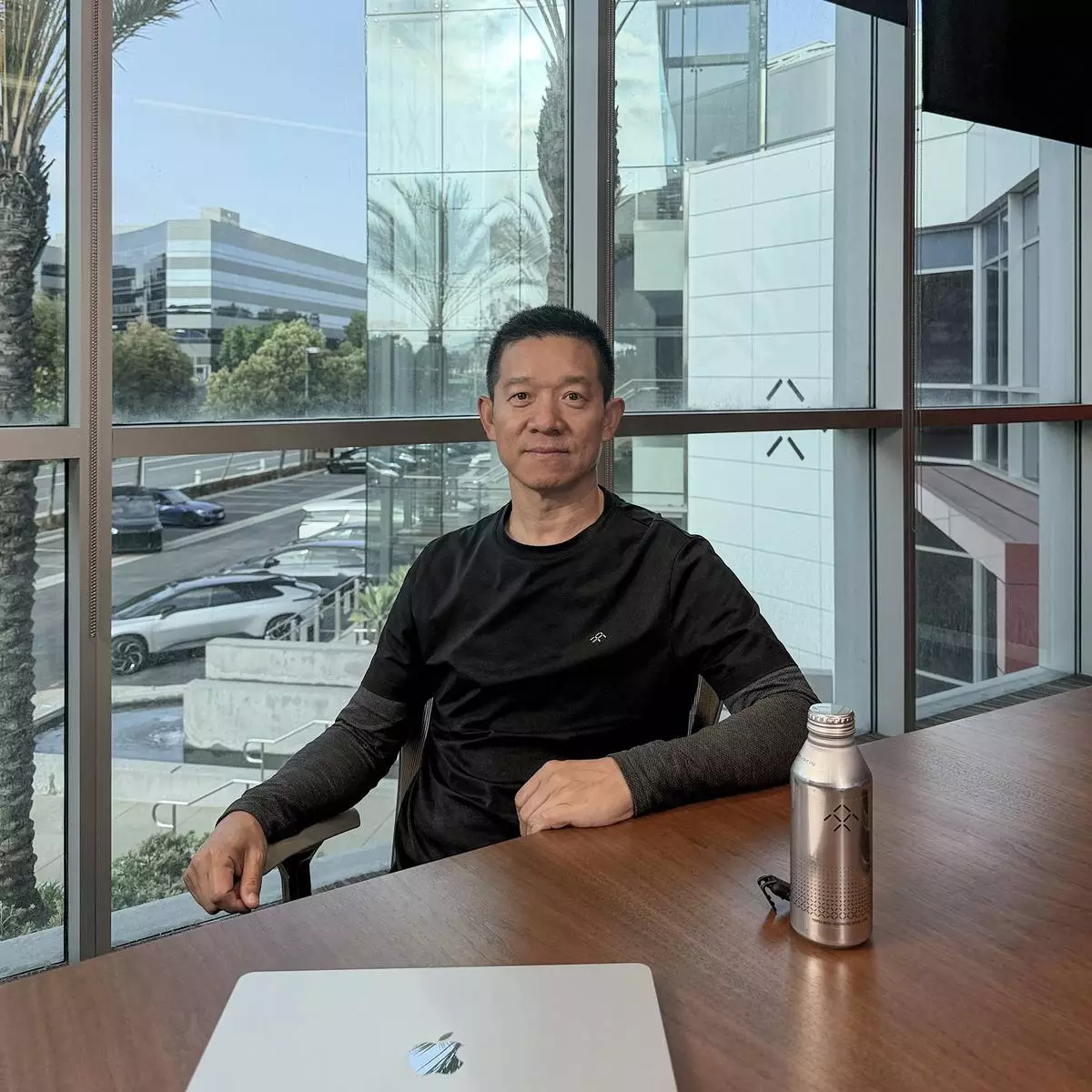
Faraday Future Founder and Global CEO YT Jia Shares Weekly Investor Update: Announces the Company’s Comprehensive Transformation Across Five Areas: Strategy; Product, Technology and Business; Finance; Capital; and FF’s AI Operating System