The ongoing 10th China-Russia Expo is bringing tangible economic gains, enhanced mutual trust and more cooperation opportunities for the two countries, said a Chinese scholar in Beijing on Sunday.
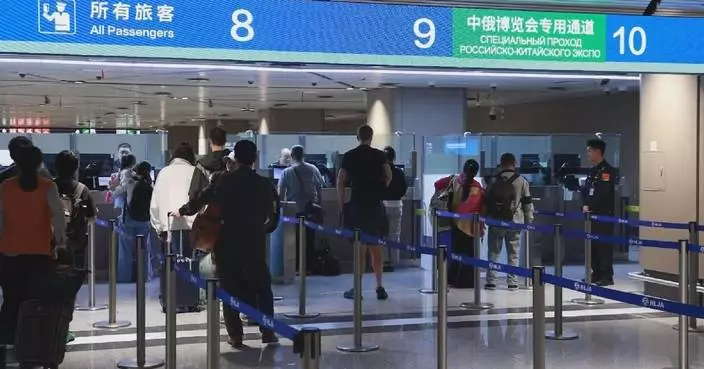
The expo opened in Heilongjiang's provincial capital Harbin City in northeastern China on Sunday.
Running until May 21, it covers a total exhibition area of 55,000 square meters and features more than 1,500 Chinese and foreign companies from 46 countries and regions across the world.
Nearly 300 Russian companies are showcasing their products at the expo, and the number of Russian buyers is expected to exceed 5,000.
"It is more than a trade exhibition; it carries strong political support and turns neighborhood into real businesses. That content is becoming more solid. Besides energy and farm products, recent exports have brought real deals in minerals, machinery, new energy vehicles and digital payments. It is clear signs that cooperation is moving from raw materials to high-tech industries. The results are easy to see -- bilateral trade reached a record of more than 240 billion U.S. dollars in 2024, with more than 90 percent paid in yuan or rubles, building a stable and convenient financial link between the two sides. In short, export helps both sides know each other better, trust each other more, and find new areas to work together," said Shi Jing, an assistant professor at the Institute for International and Area Studies at Tsinghua University in an interview with China Global Television Network via video link.
On the education front, China and Russia have taken significant steps to strengthen collaboration and cultural exchange in recent years, highlighted by a series of agreements between higher education institutions in both countries and closer ties in language learning.
Shi said education cooperation is even more important than trade collaboration as people-to-people exchanges are more enduring.
"China-Russia educational cooperation has become a solid pillar of the bilateral relationship, with real achievements on the ground. Both countries have become one of the top destinations for each other's international students, and the scale keeps growing year by year. Joint programs are moving from paper to practice, the Shenzhen MSU-BIT University co-built by leading Chinese and Russian universities, has already trained thousands of graduates and become a model of deep cooperation. More joint laboratories and joint degree programs are also being launched in key fields. Two clear new trends stand out. First, cooperation is becoming deeper and more systematic, moving from simple students exchange to joint research, joint training and shared laboratories. Second, youth exchanges are expanding fast, through summer camps, sister school programs, and online courses. Trade can rise and fall, but people to people bonds last. That is why educational cooperation is, in my opinion, the most farsighted investment the two countries are making together," he said.
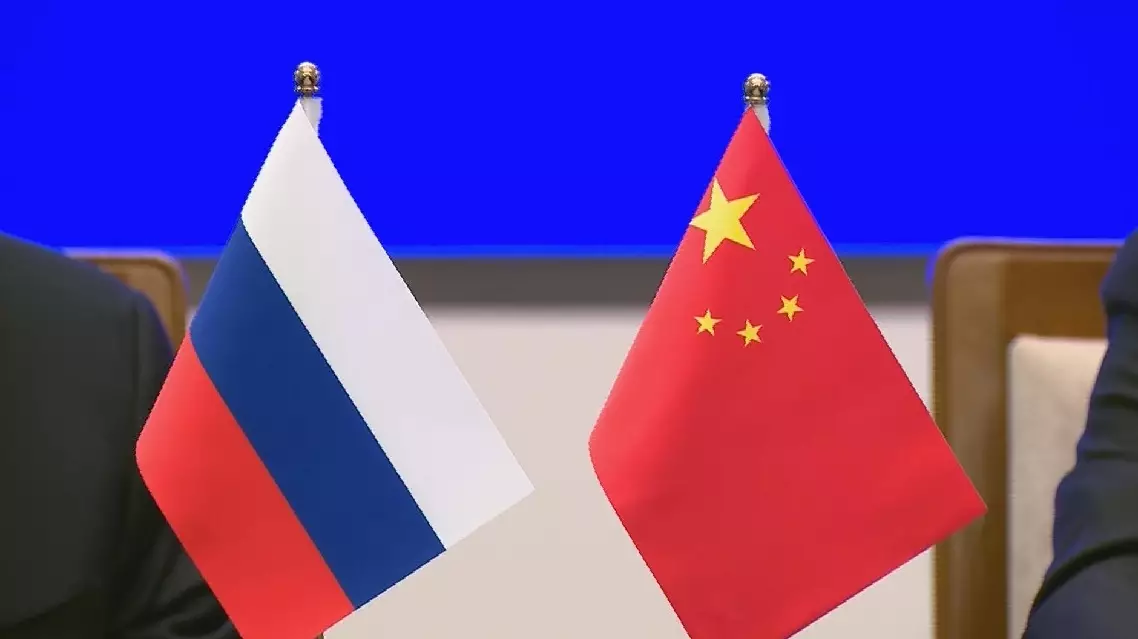
China-Russia Expo brings economic gains, enhances mutual trust: scholar
The 2026 Asia-Pacific Economic Cooperation (APEC) Ministers Responsible for Trade Meeting will be held from May 22-23 in Suzhou City, east China's Jiangsu Province, with preliminary consultations and seminars kicking off on Monday.
Multiple consultations have commenced, including discussions on the joint statement to be issued at the meeting and ways to promote cooperation in digital trade.
Additionally, the "Big Market for All: Export to China" Suzhou special event and the Suzhou products promotion event opened Monday.
Experts emphasized that the minister's meeting will play a timely role in advancing regional economic integration and tackling emerging trade challenges through deeper cooperation in digital and green sectors.
"APEC is the highest-level and most influential economic cooperation mechanism in the Asia-Pacific region. On the 20th anniversary of the vision for a Free Trade Area of the Asia-Pacific (FTAAP), the 2026 Suzhou APEC Ministers Responsible for Trade Meeting will play a positive role in safeguarding the multilateral trading system, stabilizing Asia-Pacific cooperation, and leading global open development, countering the increasingly intensifying wave of trade protectionism," said Yuan Qian, deputy director of the trade and investment research division of the Institute of World Economics and Politics, which is under the administration of the Chinese Academy of Social Sciences.
"At the same time, as a new round of technological revolution and industrial transformation accelerates, this meeting takes cooperation in emerging areas such as digital and green as important content, better aligning with the trend of global technological innovation and development, countering global economic growth pressures, and opening up new spaces for regional cooperation and development," the expert added.
Terms such as digital economy, electronic bills of lading, and green supply chains appear frequently in the agenda of the APEC trade ministers' meeting.
"Although electronic bills of lading may seem small, their impact on international trade is very critical. They can improve customs clearance efficiency and reduce customs clearance costs. If promoted, it will not only affect these developed economies and large traders, but more importantly, it will significantly enhance the ability of some small and medium-sized economies and some developing countries to participate in international trade and improve their trade efficiency," said Zhou Mi, deputy director of the Institute of American and Oceania, Chinese Academy of International Trade and Economic Cooperation, which is under the administration of the Ministry of Commerce.
This year, a key topic of the meeting is the digital economy.
"In the past, people thought the digital economy was an option; now it has become a must. Because having advantages in digital economy development means having greater advantages in international trade. They (member economies) have seen some of China's practices and approaches in the digital economy field and hope to use such a platform to further improve their own technology and strengthen coordination with China," said Zhou.
Founded in 1989, the APEC is the highest-level, broadest and most influential economic cooperation mechanism in the Asia-Pacific region. About 700 representatives from 21 APEC economies and international organizations will gather in Jiangsu for the APEC Ministers Responsible for Trade Meeting.
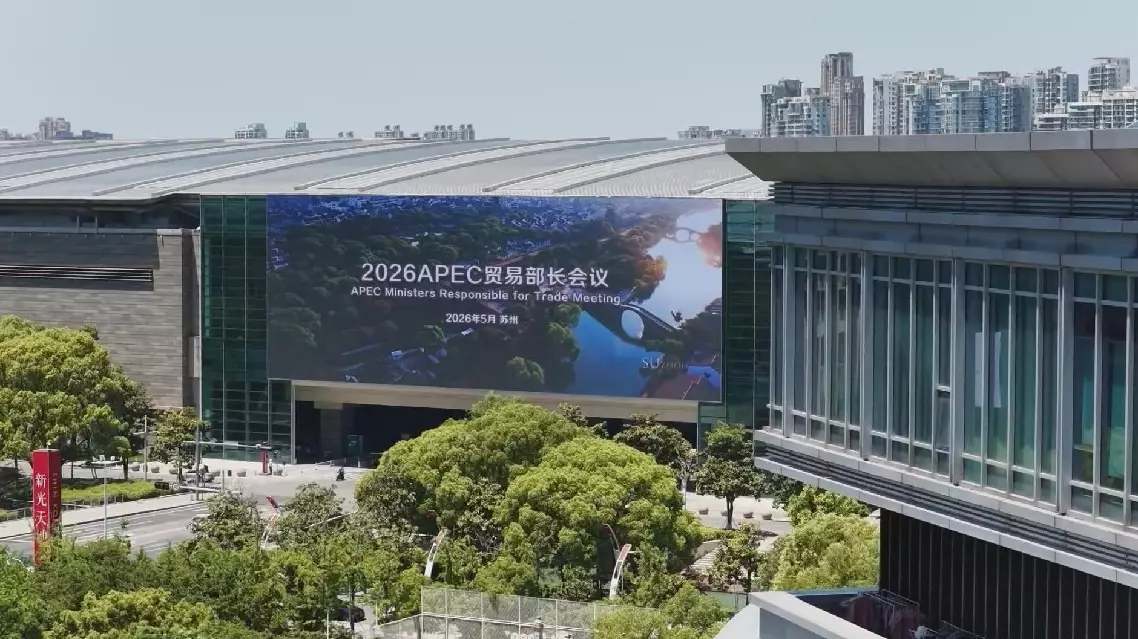
Preliminary consultations begin for APEC trade ministers' meeting