BEIRUT (AP) — The death toll in the latest round of fighting between Israel and the Iranian-backed Hezbollah in Lebanon surpassed 3,000, Lebanon's health ministry said Monday.
The ministry said the toll is now 3,020 killed in the Israeli strikes, including 292 women and 211 children. Fighting began on March 2 with the Hezbollah militant group firing at Israel, two days after the U.S. and Israel attacked Iran. Attacks from both sides have not stopped despite a fragile ceasefire.
Israel has since invaded southern Lebanon and bombarded the capital, Beirut, and other areas, saying it is targeting Hezbollah efforts to rearm. Hezbollah, also a powerful political entity in Lebanon, has resisted pressure, including by the Lebanese government, to disarm.
More than a million people have been displaced in Lebanon by the fighting, with some sheltering in tents along roads and the sea in Beirut. Israel, meanwhile, has struggled to halt frequent Hezbollah drone attacks targeting both their troops on Lebanese soil and in northern Israeli border towns.
Israeli strikes on Lebanon have continued daily, even after groundbreaking ongoing talks between Lebanon and Israel in Washington produced a ceasefire that began on April 17 and has been extended into June. Israeli troops remain in large swaths of southern Lebanon.
Hezbollah, however, is not part of the talks and has opposed them. The group, instead, backs its key ally Iran in its own talks with the United States mediated by Pakistan.
The neighbors have been officially in a state of war since Israel was created in 1948.
Israeli military Arabic spokesperson Avichay Adaree called on residents in several towns near the southern coastal city of Tyre on Monday to evacuate ahead of airstrikes. Meanwhile, the militant Palestinian Islamic Jihad group said one of its officials was killed in an Israeli strike on his house at midnight alongside his daughter in the city of Baalbek near the Syrian border.
Israeli officials have focused on disarming Hezbollah and described the negotiations as a precursor to a potential normalization of diplomatic relations.
Lebanese officials have said they seek a security agreement or armistice that would stop short of normalization, focusing on Israeli troop withdrawal from Lebanon, while maintaining their commitment to disarming the Iran-backed group.
Despite the ongoing attacks, the two sides agreed Friday to extend the ceasefire by 45 days and announced that military delegations will take part in direct talks of their own on May 29.
U.S. President Donald Trump has publicly called for a meeting between Lebanese President Joseph Aoun and Israeli Prime Minister Benjamin Netanyahu. However, Aoun has declined to go to Washington to meet or speak directly with Netanyahu at this stage — a move that would likely generate blowback in Lebanon, where talks with Israel were met with protests.
Twenty Israeli soldiers, two Israeli civilians inside Israel and a defense contractor working in southern Lebanon have been killed on the Israeli side since the latest fighting started.
U.N. peacekeeping forces in southern Lebanon have also been caught in the crossfire and six have been killed.
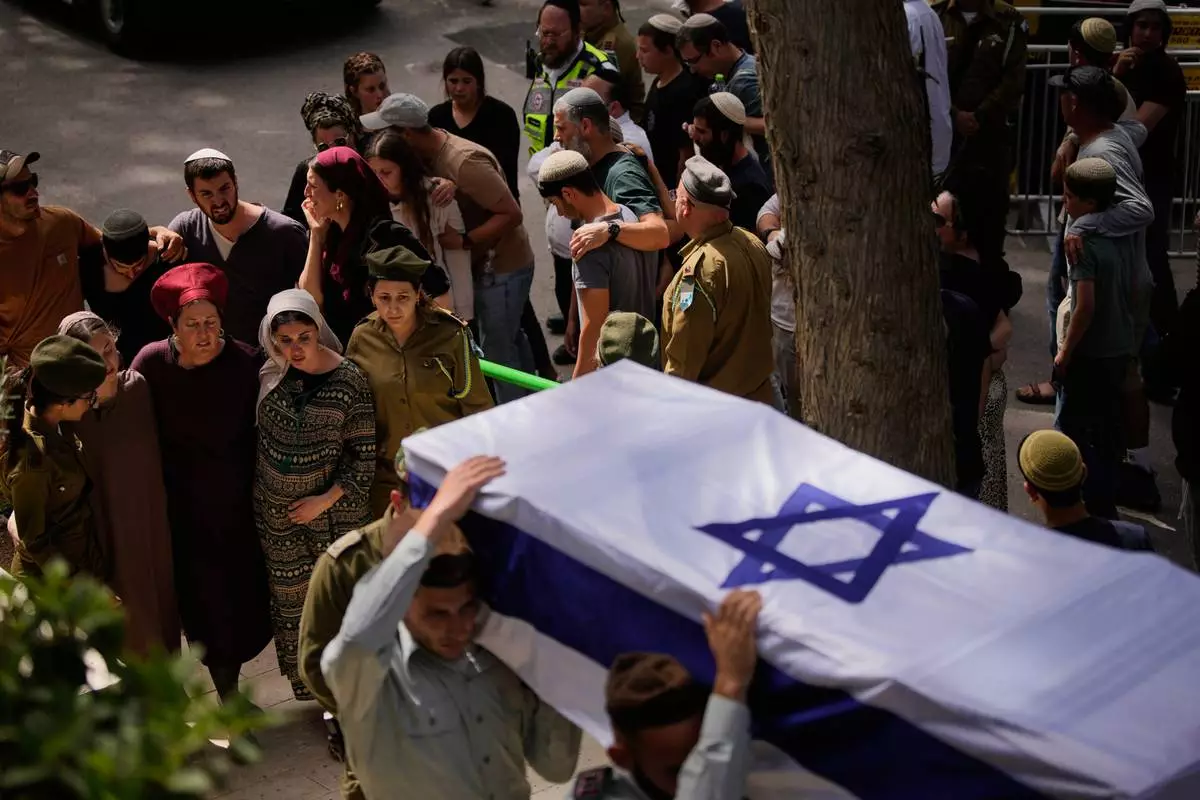
Israeli soldiers carry the flag-draped casket of Capt. Maoz Israel Recanati who was killed in a Lebanese drone attack in southern Lebanon, during his funeral in Mt. Herzl military cemetery in Jerusalem, Sunday, May 17, 2026. (AP Photo/Ohad Zwigenberg)
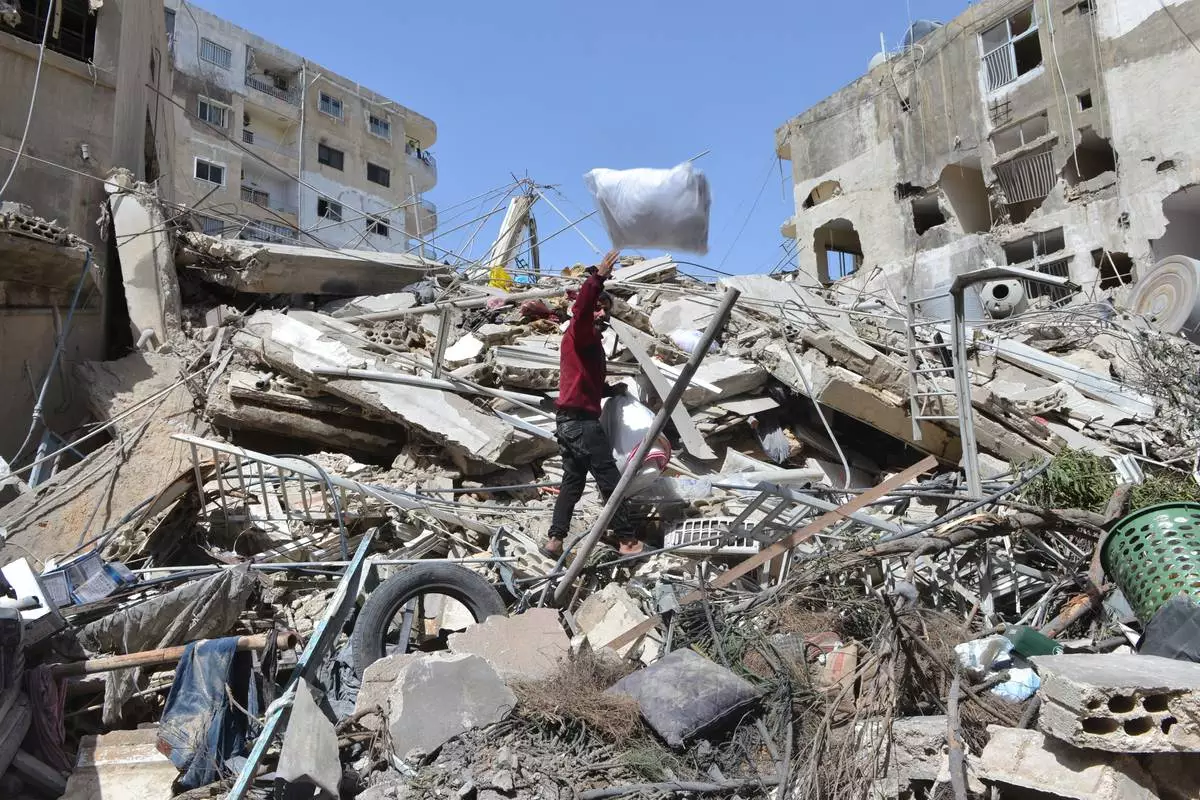
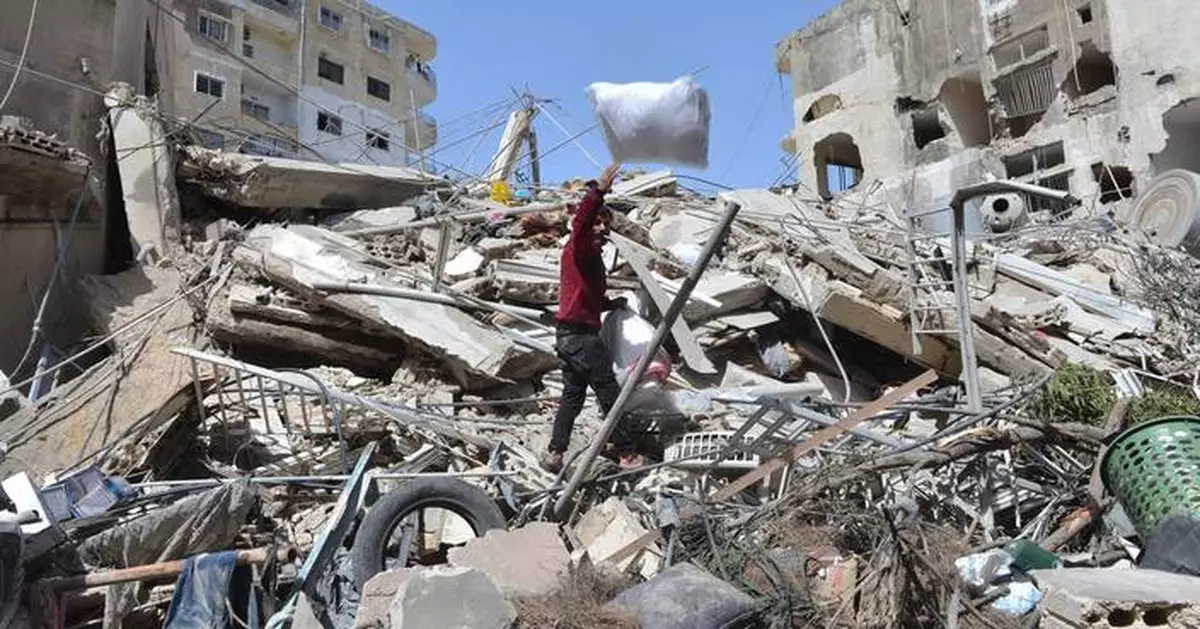
A man collects his family's belongings from the rubble of a building destroyed in an Israeli airstrike the previous day in the southern village of Maarakeh, Lebanon, Sunday, May 17, 2026. (AP Photo/Mustafa Jamalddine)
ROME (AP) — A car-ramming and stabbing attack in Italy's northern city of Modena by a citizen of Moroccan descent highlights the challenges around integration even for those in the second generation, the interior minister said Monday.
Eight people were wounded, four critically, when the 31-year-old man drove into pedestrians Saturday before crashing into a shop window.
Despite ruling out terrorism, Interior Minister Matteo Piantedosi said it cannot be dismissed as an isolated incident. He said investigators must fully examine the factors behind the attack, suggesting social marginalization and perceived discrimination might have played a role.
Some Italian politicians seized on the attack to voice xenophobic rhetoric, and renewed focus on so-called second-generation Italians — people born or raised in Italy to foreign parents — who are often at the center of debates over identity, citizenship and integration.
“At this stage, there are no elements that correspond to the classic profile of a terrorist who plans violent actions,” Piantedosi told the daily Il Giornale, noting the man's mental health concerns and social distress. “But all this cannot lead us to dismiss the attack as the act of an isolated madman.”
Italian authorities said the suspect, identified as Salim El Koudri, attempted to flee and slightly wounded a bystander with a knife before being overpowered by passersby and detained by police. Prosecutors arrested him on charges including massacre and aggravated injury. A court hearing on whether to validate his detention was postponed to Tuesday.
El Koudri's lawyer said he will request a psychiatric evaluation, describing his client as “not lucid” and unable to explain what happened.
Fausto Gianelli, who met El Koudri in the Modena jail, said the man appears to be in a state of “absolute confusion” and lacks awareness of the events, which he seems to relive “as if for the first time” when they described them to him, the lawyer told Italian TV.
A woman remains in life-threatening condition while other victims also sustained severe injuries, officials said.
The suspect, born in Italy and university-educated, had been diagnosed with a personality disorder and had shown frustration over his work and social condition, local authorities said. They said he underwent treatment in 2022 for what officials described as a schizoid disorder before dropping out of care.
Still, the case has fueled political debate in Italy, where controlling and limiting migration is a key priority in Premier Giorgia Meloni ’s conservative agenda.
Deputy Premier Matteo Salvini, leader of the anti-migrant League party, referred to the suspect as a “second-generation criminal” in a social post, renewing calls for stricter migration measures.
Salvini said he has instructed a group of jurists to refine security proposals recently presented by League, including the revocation of residence permits for foreigners who commit crimes, with immediate expulsion. He didn't provide data backing his proposal.
Opposition politicians criticized the government for seeking to use the case to toughen immigration rules.
“Even before the responsibilities and circumstances surrounding the incident had emerged, the deputy premier (Salvini) transformed a dramatic episode into an anti-immigrant rally,” said Carlo Calenda, leader of opposition party Azione.
Piantedosi sought to draw a distinction between the Modena attack and the government’s migration policies, stressing the suspect’s Italian citizenship while noting that doesn't guarantee successful integration.
He highlighted an email El Koudri sent to his university containing insulting language against Christians before later apologizing, suggesting possible resentment linked to perceived discrimination.
Piantedosi said investigators are still working to establish the full motive for the attack. He said the incident raises “profound questions” about integration, identity and marginalization, particularly among some second-generation immigrants.
Under Italy’s citizenship system, many are not automatically recognized as Italian at birth and may have to apply later in life. They may also face pressures linked to integration, including challenges in education, employment and social inclusion.
Modena Mayor Massimo Mezzetti called generalizations about foreigners “nonsense,” noting that two Egyptian migrants were among those who helped stop the attacker.
Thousands of residents gathered in Modena’s central Piazza Grande over the weekend in a show of solidarity with the victims.
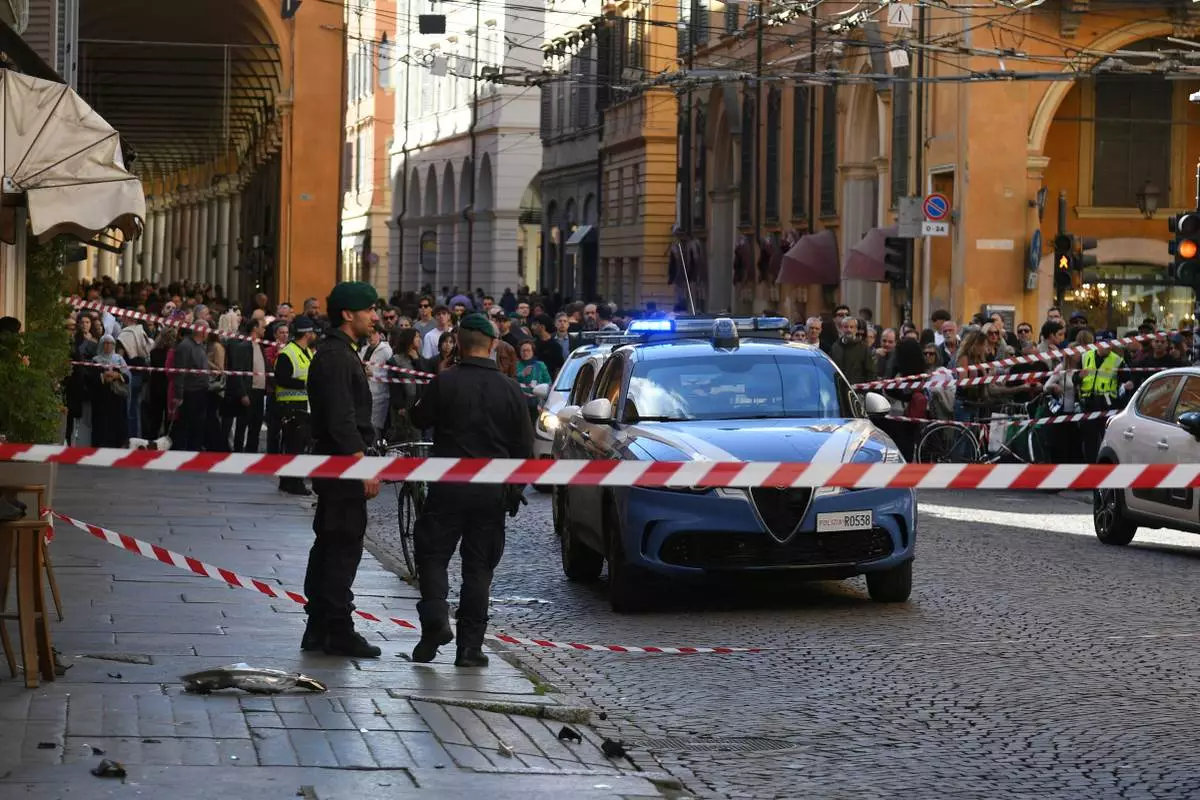
Financial Police patrol a scene after a car incident in a street of Modena, Italy, Saturday, May 16, 2026. (Lapresse via AP)
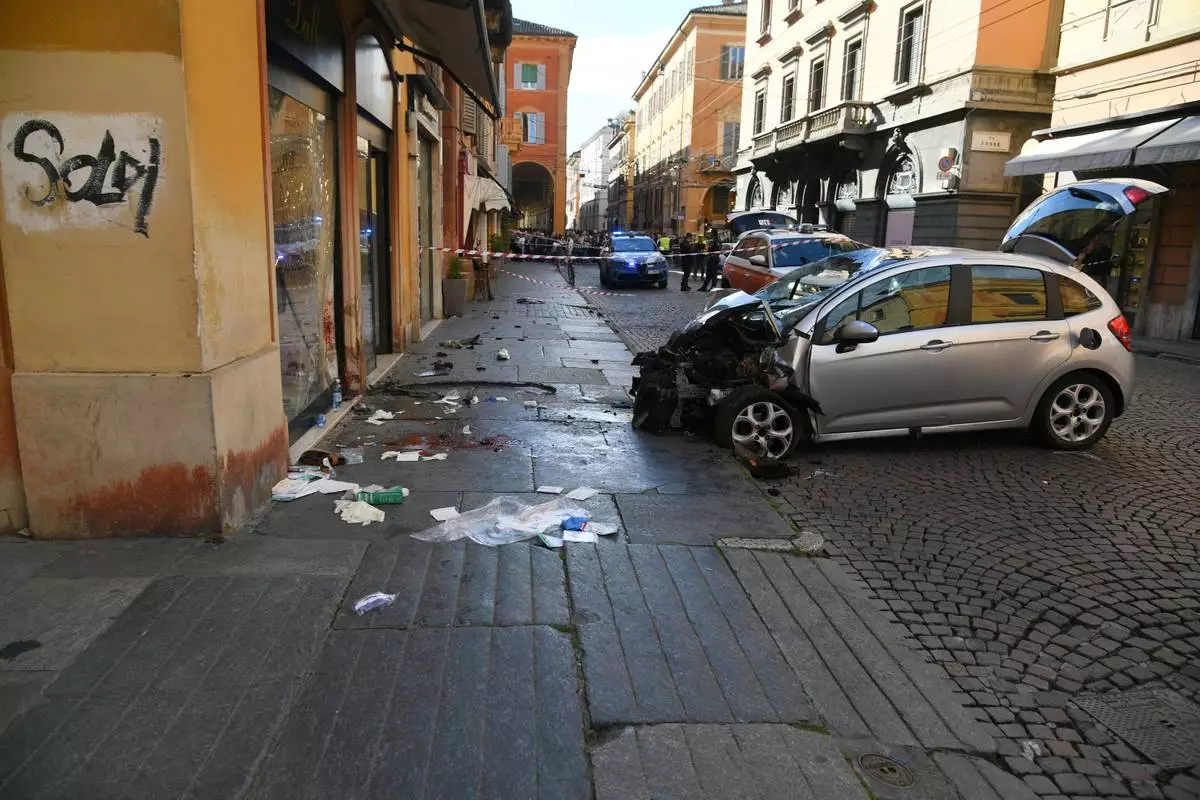
Blood is seen next to a destroyed car on a street of Modena, Italy, Saturday, May 16, 2026. (Lapresse via AP)