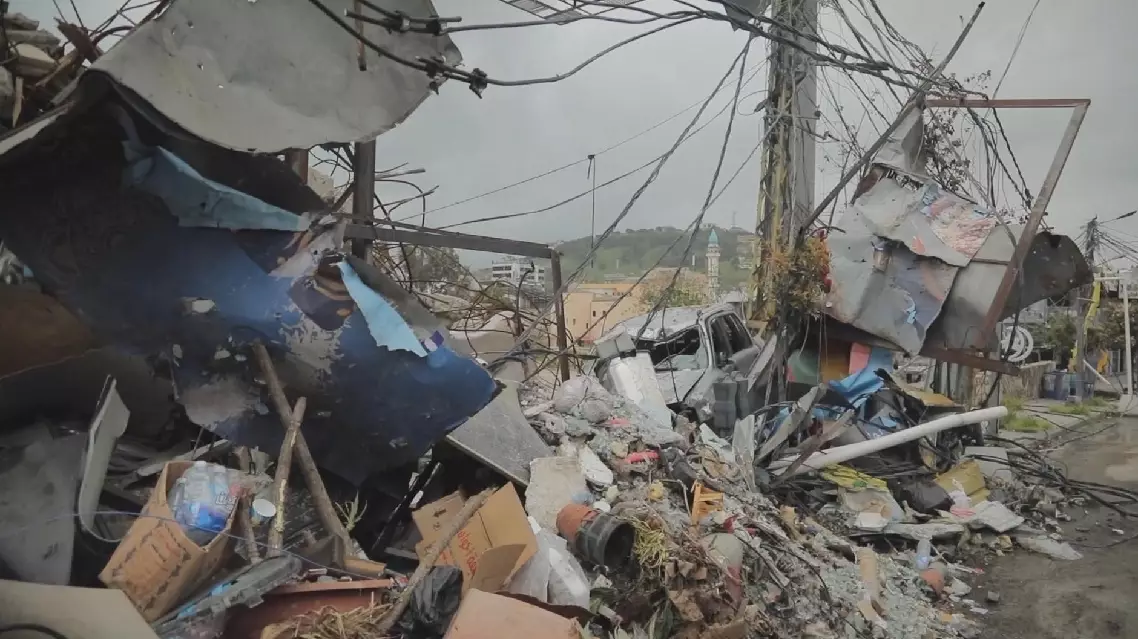
Lebanon's Health Ministry said Monday that the cumulative death toll from Israeli attacks since March 2 has risen to 3,020, with 9,273 others wounded, as Israeli strikes and shelling across the country continued from Sunday night into Monday morning.
There has been no immediate response from the Israeli side regarding the figures.
Amid the mounting toll, Lebanese President Joseph Aoun vowed on Monday to do the "impossible" to stop the Israeli war in Lebanon, saying he would do "whatever is less costly" to spare the country and its people from further conflict.
Aoun said the framework set by Lebanon for the negotiations to end the cross-border hostilities includes an Israeli withdrawal, a ceasefire, the deployment of the Lebanese army along the border, the return of displaced residents, and economic and financial assistance to Lebanon.
"Anything discussed outside this framework is incorrect," he said.
With U.S. mediation, Lebanese and Israeli representatives held two rounds of ambassador-level talks in Washington, D.C. on April 14 and April 23. A 10-day ceasefire between the two countries began on April 17, and on April 23, U.S. President Donald Trump announced that the truce would be extended for an additional three weeks.
On May 15, Lebanon said a third round of trilateral talks among Lebanon, the United States and Israel in Washington, D.C. had achieved diplomatic progress in Lebanon's favor, and the parties agreed to extend the ceasefire by another 45 days.
Despite the truce, the Israeli military has continued near-daily airstrikes in southern Lebanon, citing alleged violations of the ceasefire agreement by Hezbollah.
Israeli forces have also been dismantling and demolishing what they describe as Hezbollah military infrastructure in areas of southern Lebanon under Israeli control.
Lebanon says death toll from Israeli attacks tops 3,000 since March 2