|
2026 State of Smart Manufacturing Report shows manufacturers scaling AI, strengthening operations and focusing on measurable outcomes
MILWAUKEE, May 19, 2026 /PRNewswire/ -- Rockwell Automation, Inc, (NYSE: ROK), the world's largest company dedicated to industrial automation and digital transformation, today released findings from its 11th annual "State of Smart Manufacturing" report. The global study of more than 1,500 manufacturers across 17 countries shows a shift in industry focus: manufacturers are no longer debating whether to adopt digital technologies, but how to execute, scale and deliver measurable value from them.
The report reflects an inflection point for the industry, as many manufacturers move beyond experimentation and toward broader deployment of digital capabilities. Fewer organizations are operating in pilot mode, while more report active use of smart manufacturing technologies to support day-to-day operations.
The study found that 90% of manufacturers now say digital transformation is essential to staying competitive, reflecting its evolution into a baseline business requirement.
"Across the industry, manufacturers are facing more complexity and pressure than at any point in the last decade," said Blake Moret, chairman & CEO, Rockwell Automation. "What stands out in this year's research is not just the challenges, but how leaders are responding - by making digital transformation a core operating priority. The organizations that are seeing results are those that connect technology, people and processes to turn insight into better decisions, stronger performance and greater resilience."
Key findings from the "2026 State of Smart Manufacturing" report include:
Manufacturers are moving from pilots to scale:
6 in 10 manufacturers (59%) report actively using smart manufacturing technologies to support operations, while only 18% remain in pilot mode, marking the decline of the pilot-heavy phase that dominated previous years.
AI is becoming the engine of industrial advantage:
One-third of operations (34%) are AI-augmented today, supporting functions such as quality, cybersecurity and process optimization. Manufacturers expect more than half of operations to be AI-supported by 2030, reinforcing AI's role as a core operational capability.
Operational intelligence is now a competitive divider:
While organizations continue to collect growing volumes of data, only 43% is being used effectively, highlighting execution — not data availability — as a constraint on performance.
Cybersecurity is an operational reality:
Nearly half of manufacturers (46%) experienced at least one cyber incident in the past year, reflecting rising exposure as operations become more connected and autonomous. Secure, integrated IT/OT architectures are now foundational to scaling AI and advanced automation.
The report also finds that manufacturers are targeting transformation investments toward measurable outcomes – improving quality, reducing cost, lowering operational risk and increasing overall equipment effectiveness. One-third of operating budgets remain dedicated to industrial technology, signaling sustained, execution-focused investment rather than short-term experimentation.
The 2026 State of Smart Manufacturing Report draws on more than a decade of global research to highlight the capabilities shaping modern industrial operations, including intelligence, resilience, adaptability and workforce transformation.
The complete 2026 "State of Smart Manufacturing" report is available here.
Methodology
This report analyzes feedback from 1,560 respondents across 17 of the top manufacturing countries representing roles from management through C-suite and was conducted by Sapio Research in association with Rockwell Automation. The survey sampled from a range of industries including Consumer Packaged Goods, Food & Beverage, Automotive, Semiconductor, Energy, Life Sciences, and more. With a balanced distribution of company sizes with revenues spanning $100 million to over $30 billion, it offers a wide breadth of manufacturing business perspectives.
About Rockwell Automation
Rockwell Automation, Inc. (NYSE: ROK), is a global leader in industrial automation and digital transformation. We connect the imaginations of people with the potential of technology to expand what is humanly possible, making the world more productive and more sustainable. Headquartered in Milwaukee, Wisconsin, Rockwell Automation employs approximately 26,000 problem solvers dedicated to our customers in more than 100 countries. To learn more about how we are bringing the Connected Enterprise® to life across industrial enterprises, visit www.rockwellautomation.com.
2026 State of Smart Manufacturing Report shows manufacturers scaling AI, strengthening operations and focusing on measurable outcomes
MILWAUKEE, May 19, 2026 /PRNewswire/ -- Rockwell Automation, Inc, (NYSE: ROK), the world's largest company dedicated to industrial automation and digital transformation, today released findings from its 11th annual "State of Smart Manufacturing" report. The global study of more than 1,500 manufacturers across 17 countries shows a shift in industry focus: manufacturers are no longer debating whether to adopt digital technologies, but how to execute, scale and deliver measurable value from them.
The report reflects an inflection point for the industry, as many manufacturers move beyond experimentation and toward broader deployment of digital capabilities. Fewer organizations are operating in pilot mode, while more report active use of smart manufacturing technologies to support day-to-day operations.
The study found that 90% of manufacturers now say digital transformation is essential to staying competitive, reflecting its evolution into a baseline business requirement.
"Across the industry, manufacturers are facing more complexity and pressure than at any point in the last decade," said Blake Moret, chairman & CEO, Rockwell Automation. "What stands out in this year's research is not just the challenges, but how leaders are responding - by making digital transformation a core operating priority. The organizations that are seeing results are those that connect technology, people and processes to turn insight into better decisions, stronger performance and greater resilience."
Key findings from the "2026 State of Smart Manufacturing" report include:
Manufacturers are moving from pilots to scale:
6 in 10 manufacturers (59%) report actively using smart manufacturing technologies to support operations, while only 18% remain in pilot mode, marking the decline of the pilot-heavy phase that dominated previous years.
AI is becoming the engine of industrial advantage:
One-third of operations (34%) are AI-augmented today, supporting functions such as quality, cybersecurity and process optimization. Manufacturers expect more than half of operations to be AI-supported by 2030, reinforcing AI's role as a core operational capability.
Operational intelligence is now a competitive divider:
While organizations continue to collect growing volumes of data, only 43% is being used effectively, highlighting execution — not data availability — as a constraint on performance.
Cybersecurity is an operational reality:
Nearly half of manufacturers (46%) experienced at least one cyber incident in the past year, reflecting rising exposure as operations become more connected and autonomous. Secure, integrated IT/OT architectures are now foundational to scaling AI and advanced automation.
The report also finds that manufacturers are targeting transformation investments toward measurable outcomes – improving quality, reducing cost, lowering operational risk and increasing overall equipment effectiveness. One-third of operating budgets remain dedicated to industrial technology, signaling sustained, execution-focused investment rather than short-term experimentation.
The 2026 State of Smart Manufacturing Report draws on more than a decade of global research to highlight the capabilities shaping modern industrial operations, including intelligence, resilience, adaptability and workforce transformation.
The complete 2026 "State of Smart Manufacturing" report is available here.
Methodology
This report analyzes feedback from 1,560 respondents across 17 of the top manufacturing countries representing roles from management through C-suite and was conducted by Sapio Research in association with Rockwell Automation. The survey sampled from a range of industries including Consumer Packaged Goods, Food & Beverage, Automotive, Semiconductor, Energy, Life Sciences, and more. With a balanced distribution of company sizes with revenues spanning $100 million to over $30 billion, it offers a wide breadth of manufacturing business perspectives.
About Rockwell Automation
Rockwell Automation, Inc. (NYSE: ROK), is a global leader in industrial automation and digital transformation. We connect the imaginations of people with the potential of technology to expand what is humanly possible, making the world more productive and more sustainable. Headquartered in Milwaukee, Wisconsin, Rockwell Automation employs approximately 26,000 problem solvers dedicated to our customers in more than 100 countries. To learn more about how we are bringing the Connected Enterprise® to life across industrial enterprises, visit www.rockwellautomation.com.
** This press release is distributed by PR Newswire through automated distribution system, for which the client assumes full responsibility. **

90% of Manufacturers Say Digital Transformation Is Now Essential, According to New Global Study
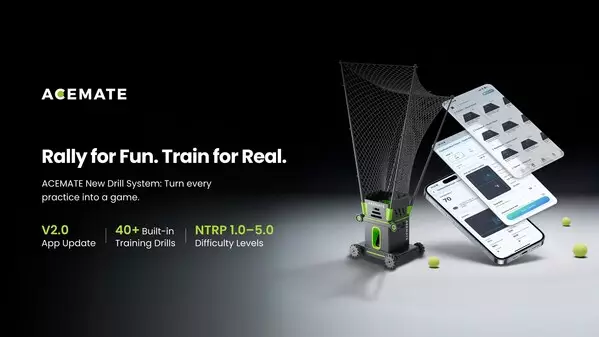
HONG KONG, May 19, 2026 /PRNewswire/ -- Acemate, the AI-powered tennis training device company backed by OneRobotics (HKG: 6600), today announced its most significant software update to date. Centered on the all-new Drill Mode, the update introduces real-time shot tracking, target-zone training, post-session scoring, and a library of structured training templates, designed to bring data-driven precision to on-court training. This release transitions Acemate from a premier rally partner into an AI-powered coaching ecosystem.
 
From Free Rally to a Complete Training System
Since launch, Acemate has revolutionized the tennis world by introducing a robotic partner that moves, receives, and returns shots like a real player. But as users trained more, a pattern emerged. Sessions often started without a clear goal. The only way to adjust difficulty was through manual parameter settings like depth, spin, and speed, which felt technical rather than intuitive. And when a session ended, there was no score, no summary, and no clear sense of what to work on next. Drill Mode is built to change that.
Introducing Drill System: From "Keep It In" to "Put It There"
Drill Mode is one of the biggest updates to Acemate since launch. Instead of simply keeping the ball in play, players now train with clear intent and measurable targets. It adds a structured training layer to the app where players set a target zone on the court and focus every rep on hitting that zone with precision. Acemate only receives balls that land within the designated area, keeping both player and machine locked in on the same skill. A Training Templates library has also been introduced, offering pre-built sessions designed for different goals and skill levels, so players can jump into focused practice without configuring parameters. Every shot is tracked, every session is scored, and every drill ends with a clear picture of where players stand. Together with Rally and Ball Machine modes, the Drill System creates a complete training setup—combining free play with structured, goal-driven practice.
A Complete Training Loop
The update touches every stage of a training session:
Get set: Pick a goal, not a parameter.
Instead of manually adjusting depth, spin, speed, and target zones, players browse Training Templates with pre-built sessions like mini tennis, cross-court drills, and down-the-line exercises, then go.
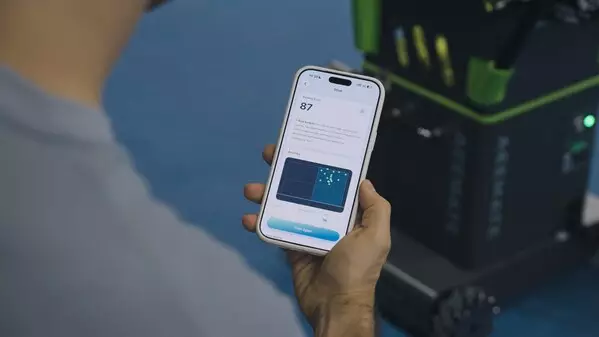
In the Drill: Every shot tracked, every target scored. Each shot is tracked in real time. The app displays live metrics including shot count, target hit distribution, average speed, and session duration. Because Acemate responds dynamically to each shot, drills combine targeted practice with the unpredictability of real match play.
Results in: A score, a breakdown, and a clear next step. Each session ends with a training score based on accuracy and quality, plus a detailed breakdown of shot accuracy rate, ball speed, and net clearance. This creates a full training loop—giving players clear feedback and actionable next steps after every session.
A Streamlined App for a Better Training Flow
Beyond Drill Mode, the entire app has been refreshed with a cleaner layout designed to make every session smoother.
The new Training Home puts modes and templates front and center, helping players get into training faster. Data Pages sit right alongside, so players can review session history, track trends, and compare results across drills as soon as a session ends. Machine controls for connection, positioning, and shot direction are now consolidated into a single Device tab, making setup and adjustments more intuitive. Players can also access guides, FAQs, and support through My Account, which now includes unit switching and language options for English, Chinese, Japanese, and Korean.
"Rally Mode showed us that players want more than just a machine that hits balls back. They want to know what to practice, whether they're getting better, and what to focus on next," said YI, CEO of Acemate. "That's why we built the Drill System. It's not just a new feature. It's a shift in what Acemate is here to do: help players actually improve, one session at a time."
"Our goal is to make Acemate feel less like a training device and more like a personal coach. With Drill Mode, structured templates, and post-session scoring, we're taking the first real step in that direction. There's a lot more to come."
The Road Ahead
Drill Mode is the beginning, the team is continuing to expand the Training Templates library while exploring a broader vision: a full tennis AI Coach. By bringing together video recording and stroke analysis, integrated training data, long-term progress tracking, and personalized recommendations, Acemate aims to evolve into a system that gives every player a training plan built around their game, and helps them get measurably better over time.
About Acemate
Acemate is building the future of tennis training. Its AI-powered tennis robot moves, rallies, and coaches players in real time, combining hardware engineering with intelligent software to deliver structured, data-driven practice for players of all levels. The company was founded by engineers from Microsoft and Google, and is backed by publicly listed OneRobotics (HKG: 6600). Since its 2025 Kickstarter launch, where it raised $2.4M, Acemate has been named one of TIME's Best Innovations of 2025 and has won awards at IFA and ISPO.
For more information, visit Acemate's official website or follow Acemate on X, Instagram, YouTube, Facebook, LinkedIn, TikTok, and Discord.
** This press release is distributed by PR Newswire through automated distribution system, for which the client assumes full responsibility. **
Acemate Launches Drill System, Bringing Scored, Targeted Training to Its AI Tennis System
Acemate Launches Drill System, Bringing Scored, Targeted Training to Its AI Tennis System