Major League Baseball is experiencing an epidemic of (mostly) guys being dudes.
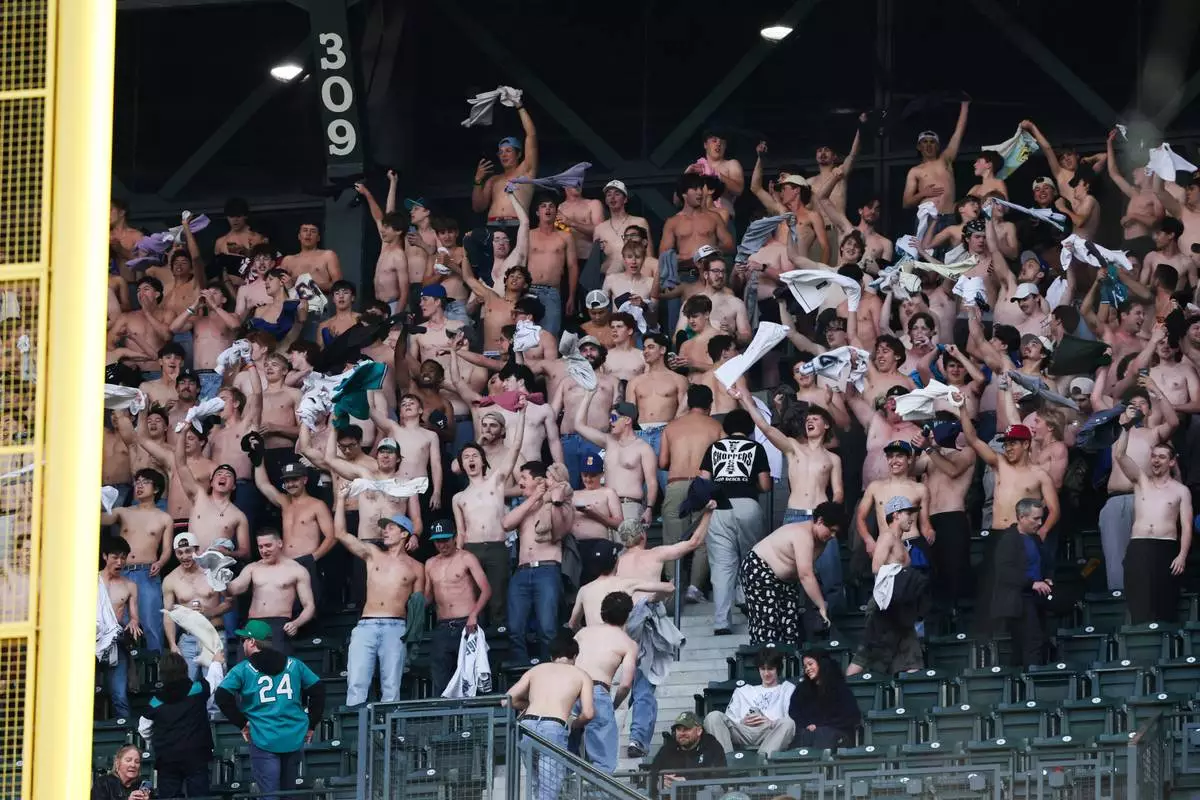
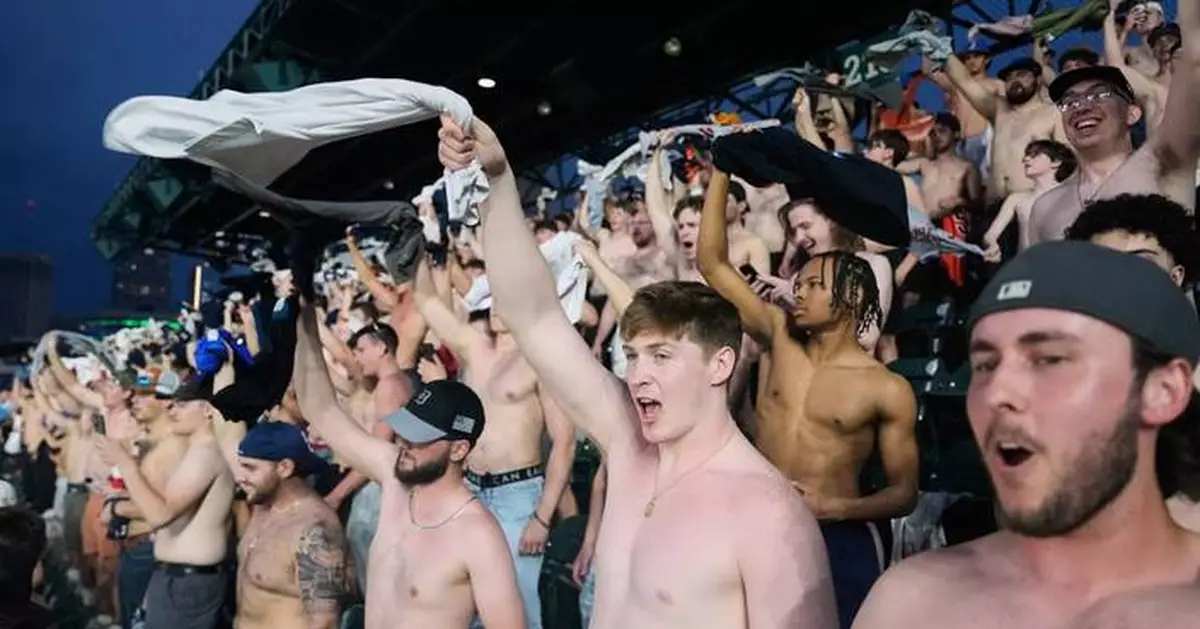
At ballparks all across the country, groups consisting of mostly young men are joining in on the “Tarps Off” trend that's loud, goofy, infectious and new to the baseball world. Joining in on the fun is simple: Go to the section where the party is happening, take off your shirt and start twirling it above your head.
Click to Gallery
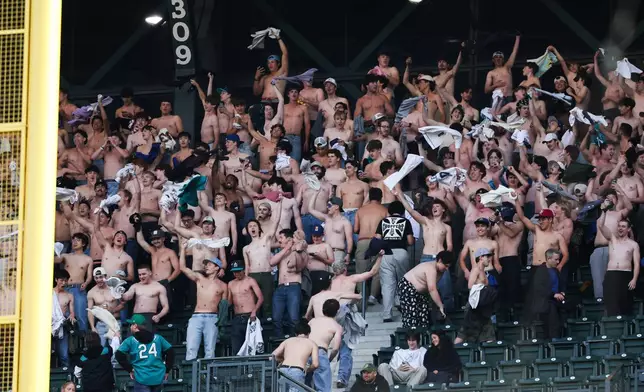
Fans go "tarps off"in the sixth inning of a baseball game between the Seattle Mariners and Chicago White Sox, Tuesday, May 19, 2026, in Seattle. (AP Photo/Kevin Ng)
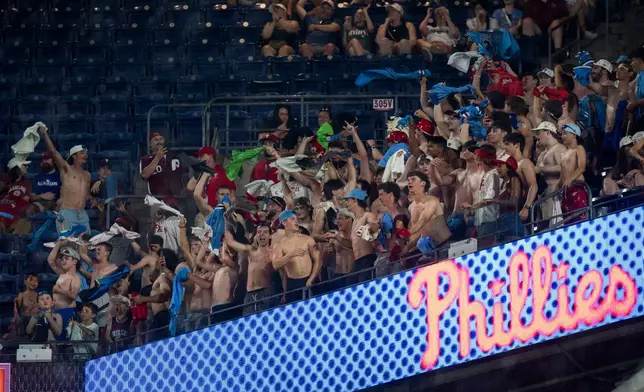
A group of fans in the upper deck wave their shirts as they go "tarps off" during the eighth inning of a baseball game between the Cincinnati Reds and the Philadelphia Phillies, Tuesday, May 19, 2026, in Philadelphia. (AP Photo/Chris Szagola)
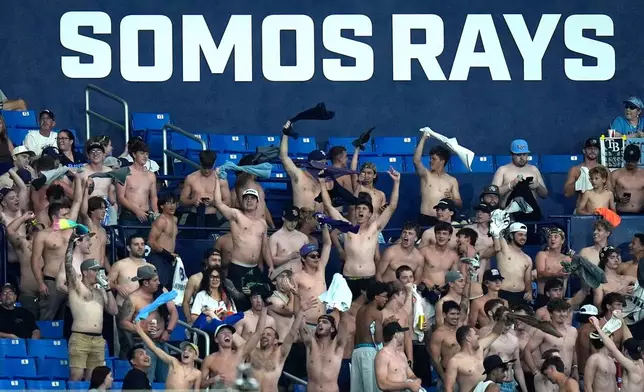
Tampa Bay Rays fans cheer on the team during the eighth inning of a baseball game against the Baltimore Orioles Monday, May 18, 2026, in St. Petersburg, Fla. (AP Photo/Chris O'Meara)
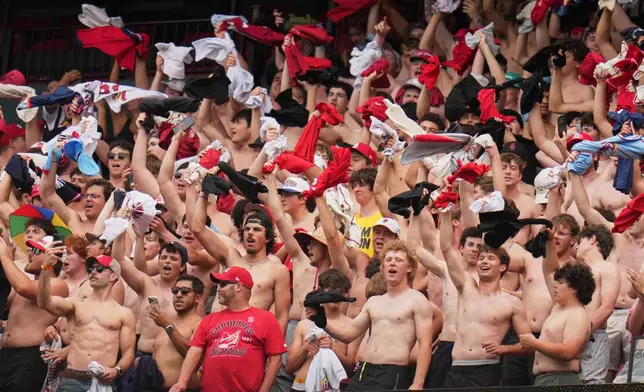
Fans cheer and wave their shirts above their heads during the fifth inning of a baseball game between the St. Louis Cardinals and the Kansas City Royals Saturday, May 16, 2026, in St. Louis. (AP Photo/Jeff Roberson)
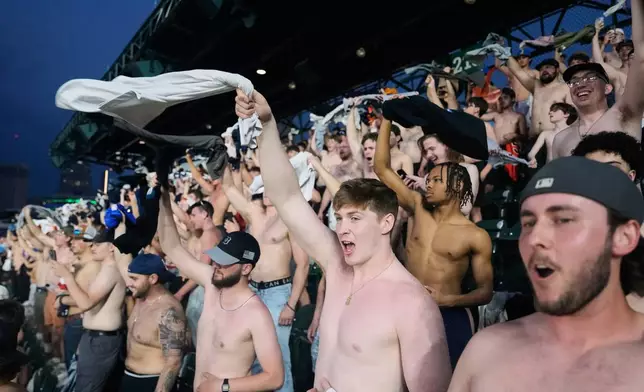
Fans cheer with their shirts off after heading to the upper deck outfield seating during the ninth inning of a baseball game between the Detroit Tigers and Cleveland Guardians Tuesday, May 19, 2026, in Detroit. (AP Photo/Paul Sancya)
Soccer-like chants or singing usually follow — injecting a jolt of energy for a sport that is occasionally chided for its lack of energy inside the stadium.
After getting it's start in St. Louis last Friday, it has spread across the league to places like Detroit, Tampa Bay, Philadelphia, Seattle and Anaheim, California.
Chad Bitzer — who has been coming to Mariners games for about 13 years — was among the shirtless fans in Seattle. His reasoning was simple: “Cause everyone else was taking it off. Why not?”
“It’s fresh. It’s a beautiful night. Take it off," Bitzer said. "Great Northwest night. We live for the summers. We live for the good weather.”
Ground zero for the shirtless outbreak was in St. Louis last Friday, when a club baseball team affiliated with Stephen F. Austin State University was in Alton, Illinois, for the National Club Baseball Division II World Series. The Cardinals offered tickets to the team, and 17 players attended.
That group started the fun, dozens of others joined and suddenly their were a couple hundred fans creating a ruckus in right field that helped propel the Cardinals to a 5-4 victory in 11 innings over the Kansas City Royals. Cardinals manager Oliver Marmol loved the energy so much that he bought tickets for the shirtless revelers for Saturday's game and they returned.
“It’s hard not to have fun when the fans are like that,” Cardinals shortstop Masyn Winn said on Friday. “We’ve got the best fans in the world, but it seems like the younger generation makes it more like a college atmosphere.”
Even the Cardinals' mascot Fredbird joined in on the fun.
Now it might be the start of a tradition — more shirtless fans cheered for the Cardinals in Tuesday's game against the Pirates. It certainly seems to be a boost for the club's homefield advantage: Ivan Herrera hit a three-run homer to lift the Cardinals to a 9-6 win in 10 innings.
A similar outbreak of shirtless fans broke out at a Tampa Bay Rays game on Monday and again Tuesday. Another small group celebrated in Philadelphia as the Reds and Phillies played in the rain. Angels' fans celebrated with a mix of joy and irritation, chanting for owner Arte Moreno to sell the team.
MLB certainly won't complain about the recent attention. Attendance is up at big-league stadiums so far this season, averaging roughly 1,000 more fans per game than a year ago through Monday's contests.
If the trend continues, baseball could average 30,000 fans per game for the first time since 2016.
More and more — they might just be shirtless.
AP Sports Writer Andrew Destin in Seattle and AP freelance writer Warren Mayes in St. Louis contributed to this story.
AP MLB: https://apnews.com/MLB
Fans go "tarps off"in the sixth inning of a baseball game between the Seattle Mariners and Chicago White Sox, Tuesday, May 19, 2026, in Seattle. (AP Photo/Kevin Ng)
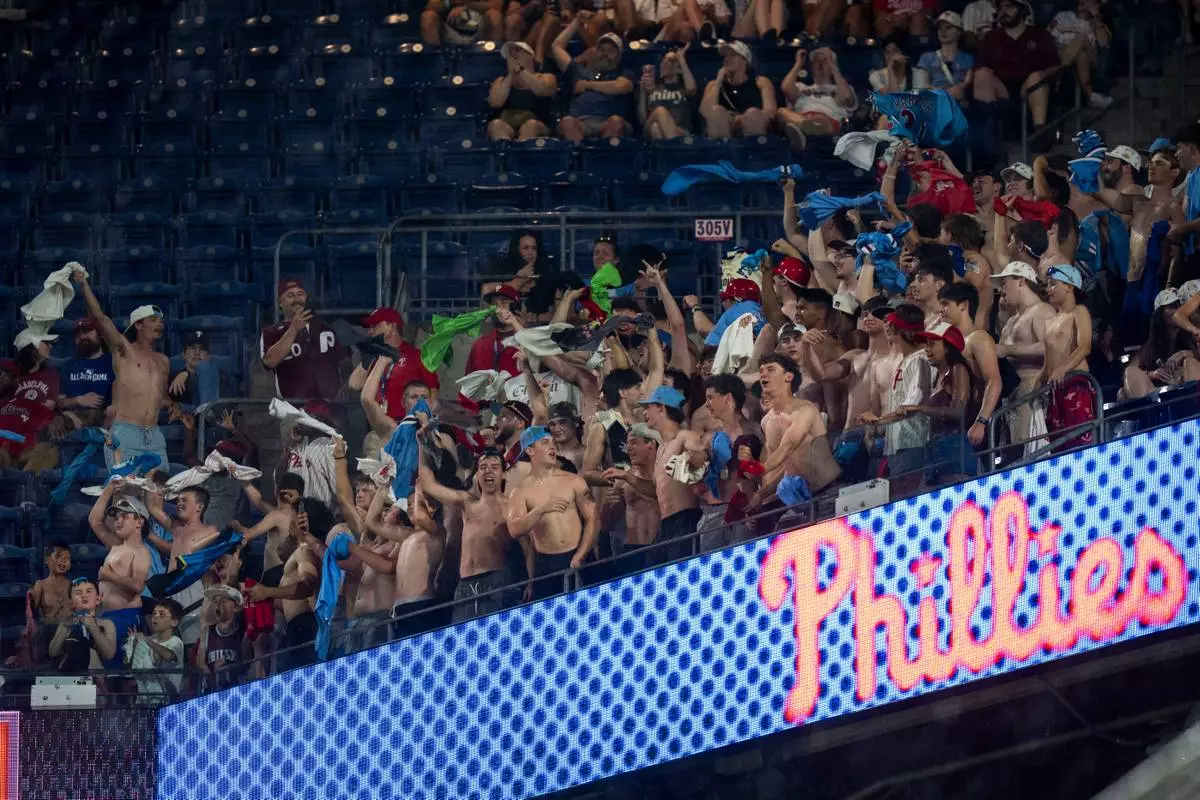
A group of fans in the upper deck wave their shirts as they go "tarps off" during the eighth inning of a baseball game between the Cincinnati Reds and the Philadelphia Phillies, Tuesday, May 19, 2026, in Philadelphia. (AP Photo/Chris Szagola)
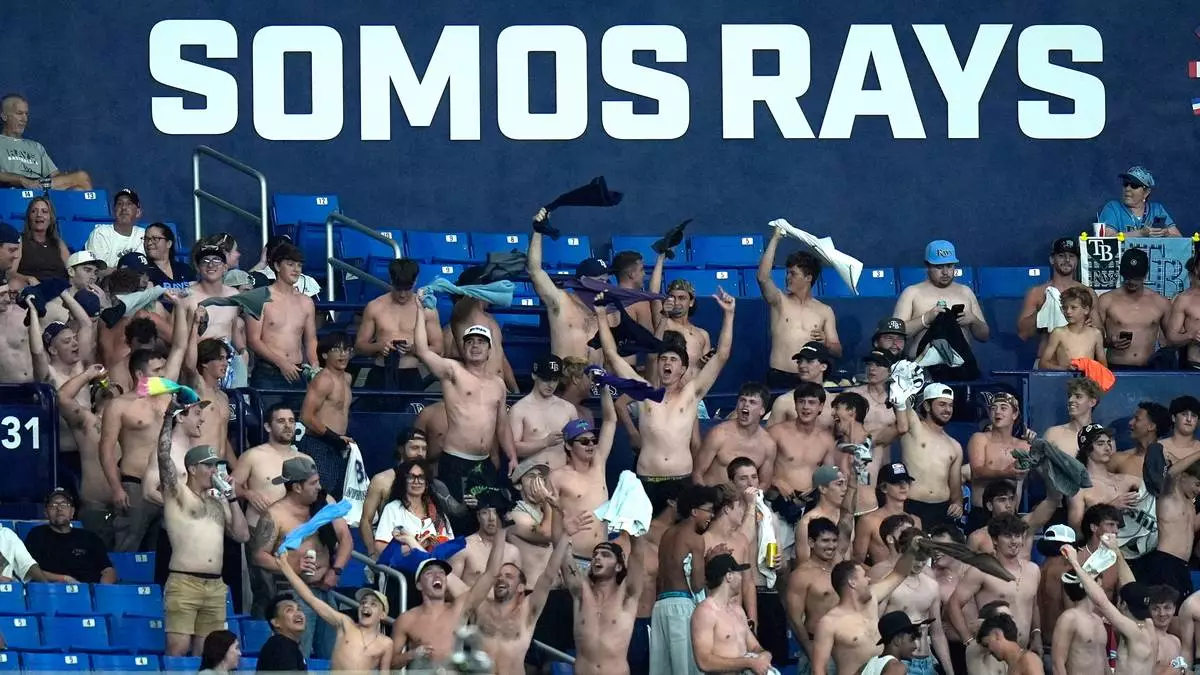
Tampa Bay Rays fans cheer on the team during the eighth inning of a baseball game against the Baltimore Orioles Monday, May 18, 2026, in St. Petersburg, Fla. (AP Photo/Chris O'Meara)
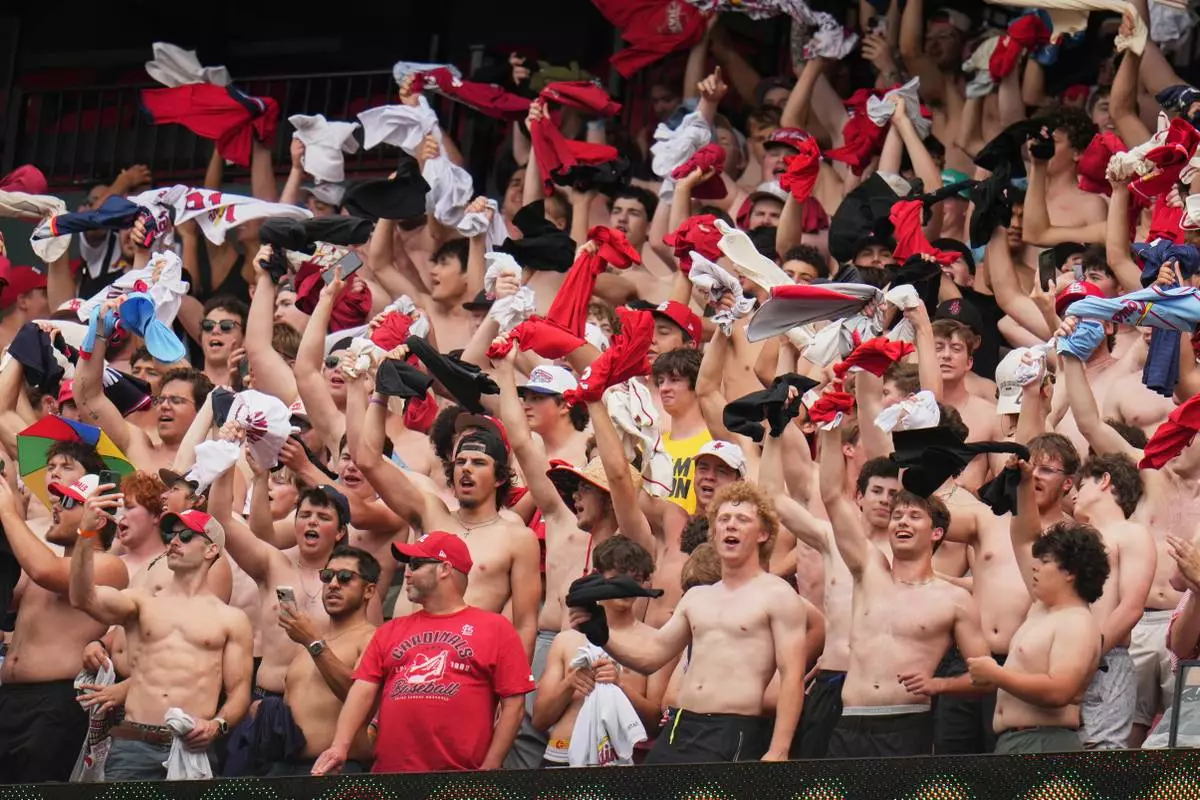
Fans cheer and wave their shirts above their heads during the fifth inning of a baseball game between the St. Louis Cardinals and the Kansas City Royals Saturday, May 16, 2026, in St. Louis. (AP Photo/Jeff Roberson)
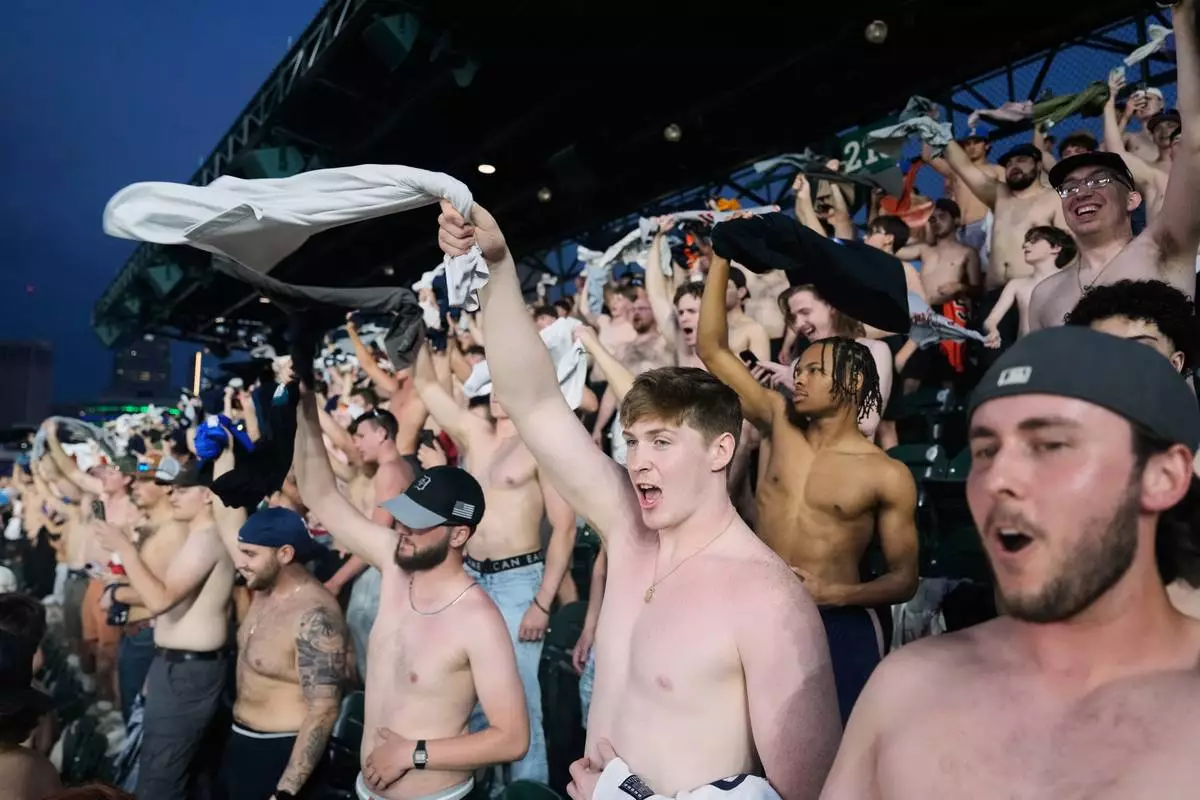
Fans cheer with their shirts off after heading to the upper deck outfield seating during the ninth inning of a baseball game between the Detroit Tigers and Cleveland Guardians Tuesday, May 19, 2026, in Detroit. (AP Photo/Paul Sancya)

NEW YORK (AP) — President Donald Trump scored another win Tuesday against a Republican rival, dislodging Rep. Thomas Massie in Kentucky’s primary and knocking out one of his most outspoken critics on Capitol Hill.
Massie has been a particularly difficult thorn in Trump’s side. He pushed for the release of the Jeffrey Epstein files, opposed the war with Iran and voted against Trump’s signature tax legislation last year. He lost to Trump-backed challenger Ed Gallrein following the most expensive U.S. House primary in history.
While Trump has racked up several wins this primary season, this one perhaps sends an even more forceful message to the president's Republican critics. Massie was entrenched in his deep-red Kentucky district before his feud with Trump exploded, cutting short a congressional career that began in 2012.
Still, Massie will remain in Congress until his term ends in January, and without a Republican primary on the horizon, he now has a freer hand than ever to antagonize Trump.
Massie’s defeat is another sign that Republicans give their politicians vanishingly little leeway to cross Trump, who is bent on retribution and has persuaded his voters to defeat his adversaries again and again.
Here are takeaways from primaries in Alabama, Georgia, Idaho, Kentucky, Oregon and Pennsylvania.
Gallrein was boosted by significant spending from AIPAC and pro-Israel groups, which provided about half of the money benefiting his candidacy, according to AdImpact.
However, there's no question Trump was the key factor. He has repeatedly shown that Republican primary voters will follow his lead, even as his popularity wanes with the broader electorate.
Before Massie's loss, Republican Sen. Bill Cassidy of Louisiana failed to even make a runoff on Saturday, unable to repair his relationship with Trump five years after voting to convict him during his second impeachment trial. And earlier this month, Trump successfully dislodged five of seven Indiana Republicans he targeted for voting against his redistricting plan.
Trump is flexing his influence in other places Tuesday.
In the race for Georgia governor, Trump backed Lt. Gov. Burt Jones in an unexpectedly ugly battle for the Republican nomination. Jones, who comes from a wealthy Georgia family, has given his campaign $19 million. But billionaire Rick Jackson, a healthcare tycoon, has put more than $83 million of his fortune into the race. Trump’s endorsement power has rarely been tested against that level of lopsided spending, and Jones and Jackson are heading for a June 16 runoff.
Trump stayed on the sidelines of Georgia’s Senate race, leaving a crowded field of hopefuls seeking to take on Democratic Sen. Jon Ossoff, who’s running unopposed for his party’s nomination. But in Alabama, Trump endorsed Rep. Barry Moore for Senate to replace Tommy Tuberville, who is running for governor.
After staying on the sidelines of a Senate runoff in Texas that's taking place next week, Trump on Tuesday endorsed Attorney General Ken Paxton over incumbent Sen. John Cornyn.
While Trump had a big night on the Republican side, Democratic Pennsylvania Gov. Josh Shapiro showed some political strength of his own.
Shapiro, who may look to succeed Trump in the White House, endorsed four Democrats running for Congress, three of them in contested primaries. And all four won their primaries.
Shapiro’s endorsed candidates included Paige Cognetti, mayor of Scranton; Bob Brooks, president of the state firefighters’ union; Bob Harvie, a Bucks County commissioner; and Janelle Stelson, a former television news personality who narrowly lost two years ago.
It was a relatively low bar in some cases — Cognetti ran unopposed — but Shapiro did not show any weakness as he plows toward a November reelection in swing-state Pennsylvania that is expected to launch him into the 2028 presidential contest.
Shapiro may have an even stronger case if the four Democrats he picked Tuesday succeed in flipping Republican seats in the fall.
Pennsylvania’s Democratic Party chairman Eugene DePasquale told an election night crowd that “no one” is more invested in flipping seats and “taking back the country” than Shapiro.
Georgia offered a case study in just how bad it can get for Republicans who defy Trump — especially those who push back on his false claims of election fraud.
Secretary of State Brad Raffensperger and former Lt. Gov. Geoff Duncan were among the few Republicans to speak out against Trump’s attempt to overturn his 2020 loss. They were on the ballot for governor on Tuesday — Raffensperger as a Republican and Duncan as a Democrat.
Both lost decisively.
Raffensperger spent millions of his own money trying to reintroduce himself to Republicans by reminding them of his long career in conservative politics before defying Trump. Duncan, meanwhile, tried to convince Democratic voters that they can trust him after renouncing his prior opposition to abortion rights, gun control and the expansion of Georgia’s Medicaid program.
It didn't work.
The president has continued to falsely insist that he only lost the 2020 election because of fraud, and he's spread baseless fears about the upcoming November midterm elections.
But the results for Raffensperger and Duncan may remind Republicans of the risks of pushing back.
The leading Republican candidates in the governor’s race, Jackson and Jones, have both questioned or denied the 2020 election outcome. Jackson actually ran a political ad in the weeks leading up to the primary attacking Raffensperger for defying Trump’s effort to overturn 2020.
More than 100,000 people cast ballots in four of Alabama’s seven congressional districts that may not count.
That’s because Republican Gov. Kay Ivey moved just last week to postpone the primaries until Aug. 11, emboldened by the recent U.S. Supreme Court decision that hollowed out the Voting Rights Act. Republicans across Alabama, South Carolina, Louisiana and Tennessee are now scrambling to redraw congressional boundaries to eliminate some majority-Black U.S. House districts to maximize their political advantage.
Over the weekend, thousands of civil rights activists rallied in Alabama against the changes, but the redistricting plan is moving forward. That means ballots cast Tuesday in primaries for Alabama’s 1st, 2nd, 6th and 7th congressional districts will be voided, the secretary of state says, while state officials restore a previous set of Republican-drawn district boundaries.
However, the district lines remain the subject of litigation as the NAACP Legal Defense Find and other groups try to stop the use of the new map. If they are successful, the Tuesday primaries will determine the party nominees.
You’d be excused for being confused. Alabama voters still chose nominees Tuesday as planned for the 3rd, 4th and 5th congressional districts, as well as for U.S. Senate and a full slate of state and local offices.
Oregon voters overwhelmingly rejected a 6-cent gas tax increase proposed by the state's Democratic lawmakers.
The measure was failing by huge margins in every county, crossing every political divide — liberal and conservative, urban and rural, prosperous and struggling.
Tax proponents may have fallen victim to bad timing, with the vote coming as Americans already feel stretched by high gas prices brought on by the war in Iran.
Oregon legislative Democrats voted last year for the tax increase and a series of related fee hikes to help pay for road improvements and plug a hole in the state’s transportation budget. Republicans responded by launching a successful referendum campaign to put the issue before voters.
The failure of the gas tax was no surprise to Democrats. It also ran counter to the party’s national strategy that relies on channeling voter angst about the high cost of living to win back control of Congress.
The late Rep. David Scott, D-Ga., was the fourth Democrat to die in office this term, fueling a growing restlessness on the left over the party's aging leadership. Scott, who was 80 when he died, was seeking a 13th term.
Scott's name appeared on the ballot alongside five other candidates running in the Democratic primary, but votes for him will not be counted.
State Rep. Jasmine Clark won the nomination Tuesday night, and she is almost certain to win the general election in a district that tilts overwhelmingly toward the Democrats.
Young Democrats have been challenging their elders in primaries around the country. Although some have fallen short, the races have channeled angst that an aging generation of lawmakers is unable or unwilling to mount a bare-knuckles opposition to Trump.
Rep. Thomas Massie, R-Ky., holds a drink as he speaks during an election night watch party after losing the Republican party's nomination at the Marriott Cincinnati Airport, Tuesday, May 19, 2026, in Hebron, Ky. (AP Photo/Carolyn Kaster)
An empty glass is seen after Rep. Thomas Massie, R-Ky., spoke during an election night watch party after losing the Republican party's nomination at the Marriott Cincinnati Airport, Tuesday, May 19, 2026, in Hebron, Ky. (AP Photo/Carolyn Kaster)
Georgia gubernatorial candidate Rick Jackson speaks to the Atlanta Young Republicans in Atlanta Thursday, May 7, 2026 (AP Photo/Jeff Amy)
Georgia Republican candidate for governor Burt Jones speaks to supporters Tuesday, May 12, 2026, in Smyrna, Ga. (AP Photo/Brynn Anderson)
Republican congressional candidate for Kentucky, Ed Gallrein, stands for a portrait during the Kenton County Republican Party Lincoln Day Dinner, Thursday, April 30, 2026, in Covington, Ky. (AP Photo/Jon Cherry)
Rep. Thomas Massie, R-KY, sits at a table alone in the studio ahead of a Kentucky Educational Television (KET) debate, Monday, May 4, 2026, in Lexington, Ky. (AP Photo/Jon Cherry)
President Donald Trump gestures to reporters as he walks across the South Lawn of the White House, Friday, May 15, 2026, in Washington, on return from Beijing where he met with China's President Xi Jinping. (AP Photo/Jacquelyn Martin)