The newest agricultural drones offer enhanced capabilities for treating orchards, and an intuitive design for more streamlined operations
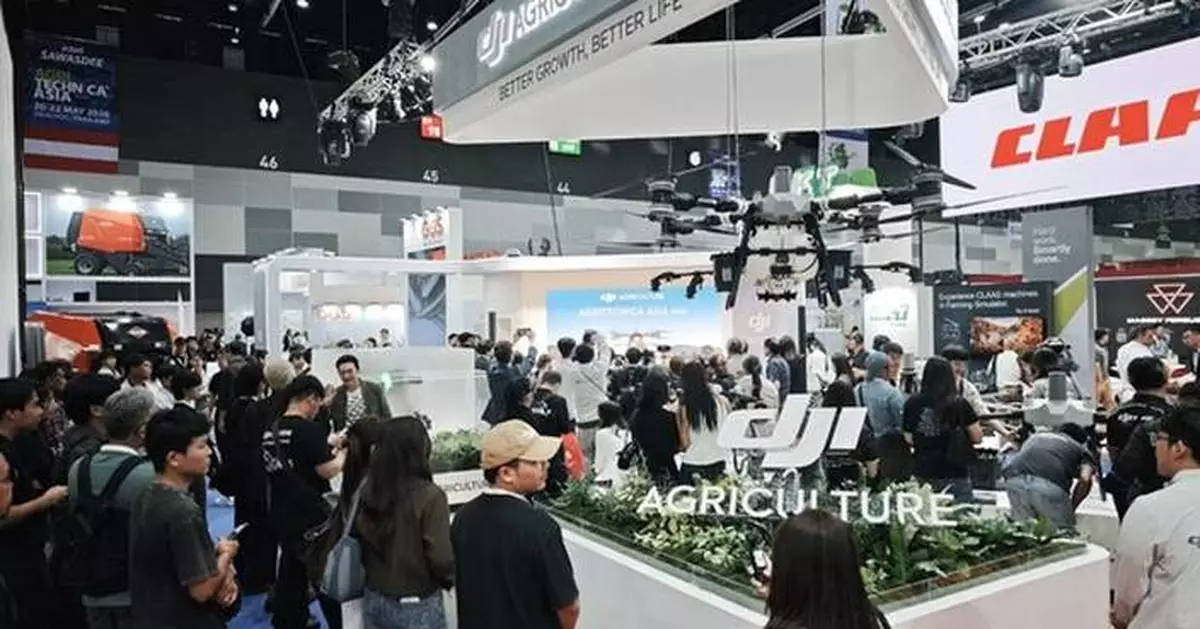
SHENZHEN, China, May 20, 2026 /PRNewswire/ -- DJI Agriculture, the global leader in innovative agricultural drone technology, today introduces the DJI Agras T55 and DJI Agras T100 Dual Battery Spraying System to the Thai market at AGRITECHNICA ASIA 2026 at BITEC, Bangkok. Other models on display at the exhibition include the T100, T70P, T25P, and Dock 3. The T70P has also won the Sustainable Practices Award at this year's AGRITECHNICA Asia. Building on 14 years of dedicated research and development, these new agricultural drones expand on the capabilities of the company's most popular agricultural drones. The Agras T55 adds the latest industry-leading safety systems to the company's popular agricultural drone with a 50 L payload capacity. Meanwhile, the Agras T100 Dual Battery Spraying System enhances the effectiveness and efficiency of treating orchards.
"For more than seven years, DJI Agriculture has advanced precision farming in Thailand with our drone technology. Since entering the Thai market in 2019, over 19,000 certified drone operators have been trained. To support the growing demand for agricultural drones, DJI Agriculture has established a network of more than 300 stores across more than 70 provinces, including all key agricultural provinces. As of December 2025, sales in the Thai market accounted for 50% of total sales across Southeast Asia," said Yuan Zhang, Head of Sales for DJI Agriculture. "In working closely with local farmers worldwide, we are able to deliver innovations that specifically address the challenges they face in the fields. With the enhancements to the Agras T55's safety system, Thai farmers can more confidently treat their fields without worrying about how to avoid nearby powerlines and other obstacles."
Simplify Aerial Spraying and Seeding with Agras T55
The Agras T55 is a light, intuitive agricultural drone with a streamlined setup process. With a 50 L payload capacity, it can carry 50 L for spraying and 55 kg for spreading. The Agras T55 Lift System supports a lifting payload of 40 kg and features Auto Balance Control and Emergency Cable Release. It also features an upgraded safety system that offers comprehensive protection and worry-free operations. The upgraded sensing system ensures more precise obstacle detection, enabling smooth avoidance of obstacles such as power lines and utility poles – even in rain or fog. These obstacles are logged, ensuring the drone remembers to avoid them in the future, thereby increasing safety over time. Meanwhile, the all-new quad-vision system combines three top-mounted cameras with a low-light full-color FPV camera, helping operators view scenes in front, behind, to the left, to the right, and below the drone.
Treat Ochards with Precision with Agras T100 Dual Battery Spraying System
The Agras T100 Dual Battery Spraying System expands the capabilities of the Agras T100, delivering greater versatility across a range of agricultural tasks and improved efficiency. Equipped with two intelligent flight batteries, the hovering time while carrying a 90 L effective payload for spraying increases by 50%, making continuous operations easier. Meanwhile, the dual-atomized centrifugal sprinklers enable even faster flight speeds, wider spray coverage, and greater operational efficiency for large-scale field applications. With the optional mist sprinkler set, treating orchards is more effective. The enhanced flow rates and atomization can penetrate dense canopies and reach the undersides of leaves on tall, thickly canopied trees.
Availability
The DJI Agras T100 Dual Battery and T55 are now available for sale in Thailand. Interested buyers should contact their local authorized DJI Agriculture dealers for availability and pricing.
Learn more: https://ag.dji.com/th/t55
Read the full 2025/2026 Agricultural Drone Industry Insight Report here.
| *All data was measured using a production model in a controlled environment. For more information, please refer to our official website: ag.dji.com |
*All data was measured using a production model in a controlled environment. For more information, please refer to our official website: ag.dji.com
About DJI Agriculture
DJI Agriculture was established by DJI in 2015 with the mission to bring innovative drone technology to farming, making it more sustainable, efficient, and safer. DJI began investing in research and development for the advancement of spray drones in 2012, before it created a dedicated business unit for agriculture drones. As the global leader of the drone industry, DJI is building a better world by continuously promoting human advancement through products that add value to lives around the world in more profound ways than ever before. Today, an estimated 500,000 agricultural drones are in use worldwide to treat more than 300 types of crops in more than 100 countries and regions.
Website: ag.dji.com
Facebook: facebook.com/DJIAgriculture
Twitter: twitter.com/DJIAgriculture
YouTube: youtube.com/@DJIAgriculture
Instagram: instagram.com/djiagriculture_official
** This press release is distributed by PR Newswire through automated distribution system, for which the client assumes full responsibility. **

DJI Agriculture Debuts Agras T55 and T100 Dual Battery Spraying System in Thailand at AGRITECHNICA Asia 2026
DJI Agriculture Debuts Agras T55 and T100 Dual Battery Spraying System in Thailand at AGRITECHNICA Asia 2026
|
BEIJING, HANGZHOU, China and CAMBRIDGE, Mass., May 20, 2026 /PRNewswire/ -- METiS TechBio (7666.HK), a global leader in AI-powered drug delivery innovation, today announced that new preclinical data from its heart-targeted LNP program has been selected for a Late-Breaking oral presentation at the 2026 Controlled Release Society (CRS) Annual Meeting. Dr. Andong Liu, Vice President and Head of Technology Platform at METiS TechBio, will deliver a Late-Breaking oral presentation at the 2026 CRS Annual Meeting in Lisbon, Portugal, this July. The presentation is titled "Systemic Heart-Selective Lipid Nanoparticles for High-Efficiency In Vivo Delivery and Cardiomyocyte Gene Editing."
In this study, leveraging its proprietary NanoForge AI nanodelivery platform, METiS TechBio achieved near-complete (~100%) cardiomyocyte transfection and significant gene editing following intravenous administration through AI-driven lipid discovery, formulation optimization, and active targeting ligand engineering. The selection of these findings for a Late-Breaking oral presentation at this year's CRS Annual Meeting represents a significant advance in extrahepatic LNP delivery, establishing a first-in-class precision delivery capability to cardiomyocytes.
The heart has long been considered one of the most challenging organs for extrahepatic LNP delivery. Cardiomyocytes, due to their high density and low endocytic activity, are widely recognized in the industry as one of the most difficult cell types for efficient delivery. Achieving near-complete cardiomyocyte transfection means that, for the first time, genetic medicines may be able to reach cardiomyocytes via systemic administration with substantially improved precision and efficiency while reducing off-target risks. This opens up new therapeutic possibilities for major cardiovascular diseases and clinical needs, including hereditary cardiomyopathies, heart failure, and post-myocardial infarction repair. It also signals that AI-driven organ-targeted delivery technology is advancing from proof-of-concept toward potential clinical value.
"Extrahepatic delivery remains one of the most important challenges in genetic medicine," said Dr. Chris Lai, Chairman and CEO of METiS TechBio. "These findings demonstrate the potential of our AI-driven NanoForge platform to enable precise delivery to cardiomyocytes, which could open new possibilities for in vivo gene editing therapies targeting cardiovascular diseases."
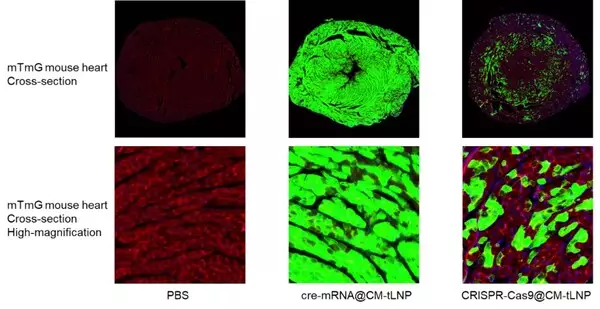
Lipid nanoparticles (LNPs) are a versatile and clinically validated non-viral platform for delivering large genetic payloads. However, achieving organ-specific delivery beyond the liver remains a major unresolved challenge in the field of genetic medicine. In this study, METiS TechBio utilized the high-throughput in vivo screening system and AI lipid design engine under the NanoForge platform to identify LNPs with specific tissue tropism. The research team evaluated candidate LNPs in mTmG mouse models, using Cre-mRNA to induce eGFP expression as a readout for functional intracellular delivery. After identifying lead lipids with heart-specific tropism, the team further optimized the formulation to enhance cellular uptake, and subsequently functionalized the particles with antibody-targeting ligands to generate actively targeted LNPs (tLNPs). To evaluate their therapeutic potential, lead tLNPs were used to deliver the CRISPR-Cas9 system to quantify gene editing efficiency in the myocardium.
The initial lead lipids exhibited a cardiomyocyte delivery efficiency of ~30%, which increased to ~70% following formulation optimization. Upon functionalization with targeting ligands, the cardiomyocyte-targeted tLNP (CM-tLNP) achieved near-complete (~100%) cardiomyocyte transfection. Furthermore, delivery of the CRISPR-Cas9 system resulted in significant genomic editing within the myocardium, confirming the strong therapeutic potential of the platform for cardiac applications.
NanoForge is the world's first AI nanodelivery platform independently developed by METiS TechBio. It features the world's largest ionizable lipid library at the scale of tens of millions, a proprietary lipid de novo generation algorithm and lipid language model, the world's first end-to-end lipid and lipid nanoparticle (LNP) screening platform, and an original AI-powered multiscale simulation platform for small-molecule formulation development. Building upon NanoForge, the Company has developed three major technology solutions: AiTEM, AiLNP, and AiRNA. The AiLNP platform currently provides deep analytical insights through artificial intelligence and molecular dynamics simulations, predicts more than 20 lipid property parameters, and enables the design and optimization of key LNP components and their ratios to build customized, high-performance delivery systems.
Founded in 1978, the Controlled Release Society (CRS) is one of the world's most authoritative non-profit academic organizations in the fields of drug delivery systems and nanomedicine. With members from more than 50 countries and regions, CRS spans interdisciplinary fields including pharmaceutics, materials science, biomedical engineering, nucleic acid therapeutics, and translational medicine. The CRS Annual Meeting attracts thousands of experts from leading international universities, research institutions, and multinational pharmaceutical companies each year, and is regarded as a leading forum and launchpad for global drug delivery and nanomedicine technologies.
About METiS TechBio (7666.HK)
AI nanodelivery, unlocking a healthier future. METiS TechBio is a Hong Kong Stock Exchange-listed company driven by artificial intelligence (AI)-enabled nanomaterial innovation. The Company focuses on leveraging targeted drug delivery and drug discovery technologies to help lives overcome disease and aging, and regain health and vitality.
METiS TechBio was co-founded in 2020 by Dr. Hongmin Chen, a member of the U.S. National Academy of Engineering, together with MIT scientists Dr. Chris Lai and Dr. Wenshou Wang. On May 13, 2026, the Company was successfully listed on the Hong Kong Stock Exchange as the world's first publicly listed AI-powered drug delivery company. The Company has independently developed NanoForge, the world's first AI-powered nanodelivery platform, and possesses the world's largest LNP lipid library at the scale of tens of millions. Building upon NanoForge, it has created three core solutions: AiLNP (AI Nanodelivery System Design Platform), AiRNA (AI mRNA Sequence Design Platform), and AiTEM (AI Small-Molecule Formulation Design Platform).
The Company has achieved the capability to deliver precisely to eight key organs or tissues, including the liver, lungs, muscles, and immune cells. It has made breakthrough progress in addressing the challenges of multi-organ and multi-tissue targeted delivery, creating drug development opportunities in oncology, metabolic diseases, autoimmune diseases, neurodegenerative diseases, and other therapeutic areas, while also enabling organ-level anti-aging interventions.
BEIJING, HANGZHOU, China and CAMBRIDGE, Mass., May 20, 2026 /PRNewswire/ -- METiS TechBio (7666.HK), a global leader in AI-powered drug delivery innovation, today announced that new preclinical data from its heart-targeted LNP program has been selected for a Late-Breaking oral presentation at the 2026 Controlled Release Society (CRS) Annual Meeting. Dr. Andong Liu, Vice President and Head of Technology Platform at METiS TechBio, will deliver a Late-Breaking oral presentation at the 2026 CRS Annual Meeting in Lisbon, Portugal, this July. The presentation is titled "Systemic Heart-Selective Lipid Nanoparticles for High-Efficiency In Vivo Delivery and Cardiomyocyte Gene Editing."
In this study, leveraging its proprietary NanoForge AI nanodelivery platform, METiS TechBio achieved near-complete (~100%) cardiomyocyte transfection and significant gene editing following intravenous administration through AI-driven lipid discovery, formulation optimization, and active targeting ligand engineering. The selection of these findings for a Late-Breaking oral presentation at this year's CRS Annual Meeting represents a significant advance in extrahepatic LNP delivery, establishing a first-in-class precision delivery capability to cardiomyocytes.
The heart has long been considered one of the most challenging organs for extrahepatic LNP delivery. Cardiomyocytes, due to their high density and low endocytic activity, are widely recognized in the industry as one of the most difficult cell types for efficient delivery. Achieving near-complete cardiomyocyte transfection means that, for the first time, genetic medicines may be able to reach cardiomyocytes via systemic administration with substantially improved precision and efficiency while reducing off-target risks. This opens up new therapeutic possibilities for major cardiovascular diseases and clinical needs, including hereditary cardiomyopathies, heart failure, and post-myocardial infarction repair. It also signals that AI-driven organ-targeted delivery technology is advancing from proof-of-concept toward potential clinical value.
"Extrahepatic delivery remains one of the most important challenges in genetic medicine," said Dr. Chris Lai, Chairman and CEO of METiS TechBio. "These findings demonstrate the potential of our AI-driven NanoForge platform to enable precise delivery to cardiomyocytes, which could open new possibilities for in vivo gene editing therapies targeting cardiovascular diseases."
Lipid nanoparticles (LNPs) are a versatile and clinically validated non-viral platform for delivering large genetic payloads. However, achieving organ-specific delivery beyond the liver remains a major unresolved challenge in the field of genetic medicine. In this study, METiS TechBio utilized the high-throughput in vivo screening system and AI lipid design engine under the NanoForge platform to identify LNPs with specific tissue tropism. The research team evaluated candidate LNPs in mTmG mouse models, using Cre-mRNA to induce eGFP expression as a readout for functional intracellular delivery. After identifying lead lipids with heart-specific tropism, the team further optimized the formulation to enhance cellular uptake, and subsequently functionalized the particles with antibody-targeting ligands to generate actively targeted LNPs (tLNPs). To evaluate their therapeutic potential, lead tLNPs were used to deliver the CRISPR-Cas9 system to quantify gene editing efficiency in the myocardium.
The initial lead lipids exhibited a cardiomyocyte delivery efficiency of ~30%, which increased to ~70% following formulation optimization. Upon functionalization with targeting ligands, the cardiomyocyte-targeted tLNP (CM-tLNP) achieved near-complete (~100%) cardiomyocyte transfection. Furthermore, delivery of the CRISPR-Cas9 system resulted in significant genomic editing within the myocardium, confirming the strong therapeutic potential of the platform for cardiac applications.
NanoForge is the world's first AI nanodelivery platform independently developed by METiS TechBio. It features the world's largest ionizable lipid library at the scale of tens of millions, a proprietary lipid de novo generation algorithm and lipid language model, the world's first end-to-end lipid and lipid nanoparticle (LNP) screening platform, and an original AI-powered multiscale simulation platform for small-molecule formulation development. Building upon NanoForge, the Company has developed three major technology solutions: AiTEM, AiLNP, and AiRNA. The AiLNP platform currently provides deep analytical insights through artificial intelligence and molecular dynamics simulations, predicts more than 20 lipid property parameters, and enables the design and optimization of key LNP components and their ratios to build customized, high-performance delivery systems.
Founded in 1978, the Controlled Release Society (CRS) is one of the world's most authoritative non-profit academic organizations in the fields of drug delivery systems and nanomedicine. With members from more than 50 countries and regions, CRS spans interdisciplinary fields including pharmaceutics, materials science, biomedical engineering, nucleic acid therapeutics, and translational medicine. The CRS Annual Meeting attracts thousands of experts from leading international universities, research institutions, and multinational pharmaceutical companies each year, and is regarded as a leading forum and launchpad for global drug delivery and nanomedicine technologies.
About METiS TechBio (7666.HK)
AI nanodelivery, unlocking a healthier future. METiS TechBio is a Hong Kong Stock Exchange-listed company driven by artificial intelligence (AI)-enabled nanomaterial innovation. The Company focuses on leveraging targeted drug delivery and drug discovery technologies to help lives overcome disease and aging, and regain health and vitality.
METiS TechBio was co-founded in 2020 by Dr. Hongmin Chen, a member of the U.S. National Academy of Engineering, together with MIT scientists Dr. Chris Lai and Dr. Wenshou Wang. On May 13, 2026, the Company was successfully listed on the Hong Kong Stock Exchange as the world's first publicly listed AI-powered drug delivery company. The Company has independently developed NanoForge, the world's first AI-powered nanodelivery platform, and possesses the world's largest LNP lipid library at the scale of tens of millions. Building upon NanoForge, it has created three core solutions: AiLNP (AI Nanodelivery System Design Platform), AiRNA (AI mRNA Sequence Design Platform), and AiTEM (AI Small-Molecule Formulation Design Platform).
The Company has achieved the capability to deliver precisely to eight key organs or tissues, including the liver, lungs, muscles, and immune cells. It has made breakthrough progress in addressing the challenges of multi-organ and multi-tissue targeted delivery, creating drug development opportunities in oncology, metabolic diseases, autoimmune diseases, neurodegenerative diseases, and other therapeutic areas, while also enabling organ-level anti-aging interventions.
** This press release is distributed by PR Newswire through automated distribution system, for which the client assumes full responsibility. **
METiS TechBio to Present Late-Breaking Data on Near-Complete Cardiomyocyte Delivery at CRS 2026