Skip to Content Facebook Feature Image

House committee discusses modernizing the TSA as Trump seeks to privatize airport screening

News

House committee discusses modernizing the TSA as Trump seeks to privatize airport screening
News

News

House committee discusses modernizing the TSA as Trump seeks to privatize airport screening

2026-05-21 06:06 Last Updated At:06:11

NEW YORK (AP) — A House committee on Wednesday expressed bipartisan support for ensuring Transportation Security Administration officers get paid during future government shutdowns and are equipped with the latest technology, discussing the agency's future as the Trump administration lobbies to make airport screening a job for private contractors.

Members of the House Committee on Homeland Security held a hearing on ways to modernize the TSA nearly 25 years after it was created in the wake of the Sept. 11 attacks. But the morale of TSA officers who went without pay during three funding lapses since Oct. 1, and whom the administration wants to replace at small U.S. airports, overshadowed the talk about better machines and reliable funding.

“Between the 2025 and 2026 shutdowns, transportation security officers endured a total of 119 days impacted by shutdown conditions," Republican Andrew Garbarino of New York, the committee’s chairman, said in his opening remarks. "That means TSA officers spent roughly 40% of this fiscal year reporting to work without a paycheck while continuing to carry out one of the most important security missions in the federal government.”

Several other committee members noted that Congress has failed to pass any of the pending bills seeking to guarantee continued pay for TSA workers. Rep. Lou Correa, a California Democrat, said if TSA workers don't get paid during shutdowns, neither should lawmakers.

Correa also took aim at President Donald Trump's proposed budget, which in addition to spending $477.3 million to have private companies take over airport screening at about 250 smaller airports would cut more than 4,500 TSA positions to save $529.3 million in compensation and benefits. The TSA this week also authorized contractors in its airport staffing program to acquire and maintain screening equipment, which previously was strictly a government function.

“Technology alone can’t replace the experienced people who make the security checkpoints work as they have for the past 25 years,” Correa said. “It's about pushing an antigovernment privatization ideology.”

About 20 U.S. airports already staff their checkpoints through the Screening Partnership Program. Currently airports choose whether or not to opt in. Under Trump's proposed budget, smaller airports would be required to participate.

The TSA has proposed letting private screeners handle security at airports with scheduled flights of passenger planes with 10-30 seats and ones that accomodate charter flights and private planes without fixed schedules. Examples include Oxnard Airport in California, Ocala International Airport in Florida, Alabama's Tuscaloosa International Airport and Gary-Chicago International Airport in Indiana, according to a spreadsheet maintained by the Federal Aviation Administration.

The witnesses at the hearing included Christopher Sununu, president and CEO of the airline trade group Airlines for America; Dallas Fort Worth International Airport CEO Chris McLaughlin; American Federation of Government Employees President Everett Kelley, whose union represents TSA workers. All three said they thoughts airports should get to decide whether to employ private screeners.

“Ensuring SPP remains an option for airports and does not become a mandatory program is paramount to the U.S. aviation industry,” Sununu said.

Kelley took a strong stand against the plans in Trump's budget.

“I'm totally against the privatization of any airport,” he said. “You don't contract out the CIA, do you?”

After several more Democrats on the committee said they thought that handing off airport security to businesses would leave U.S. airspace more vulnerable, Garbarino interjected to point out that “the very conservative cities of San Francisco, Seattle and Atlanta” all use private screeners at their airports, “so yeah, maybe it's not a Republican thing.”

Garbarino and Rep. Tim Kennedy, a New York Democrat, championed legislation he and three other committee members introduced earlier this month that would double, from $250 million to $500 million, the amount of money the TSA administrator is required to set aside to reimburse airports for capital costs associated with security. The bill also would establish an annual TSA fund of $250 million for airport screening technology.

Revenue for both would come from a $5.60 fee that airline customers pay for each one-way trip they take on U.S. flights. The 9/11 Passenger Security Fee has existed since 2002, but Congress decided in 2013 that a certain amount had to be used each year to reduce the federal deficit. Since then, an estimated $15 billion went to the U.S. Treasury for that purpose, according to the bill's co-sponsors,.

“Americans and Congress expected this fee to directly fund our aviation security system, but that is not the case. Nearly half the fee's revenue goes to something else,” Garbarino said. “Congress must restore the passenger security fee to its original intent, to fund the next generation of screening technology that protects our people in the skies.”

Trump's fiscal 2027 budget proposal would end the practice of diverting passenger fees and fund the TSA partly with the $1.68 billion that was expected to go to deficit-reduction.
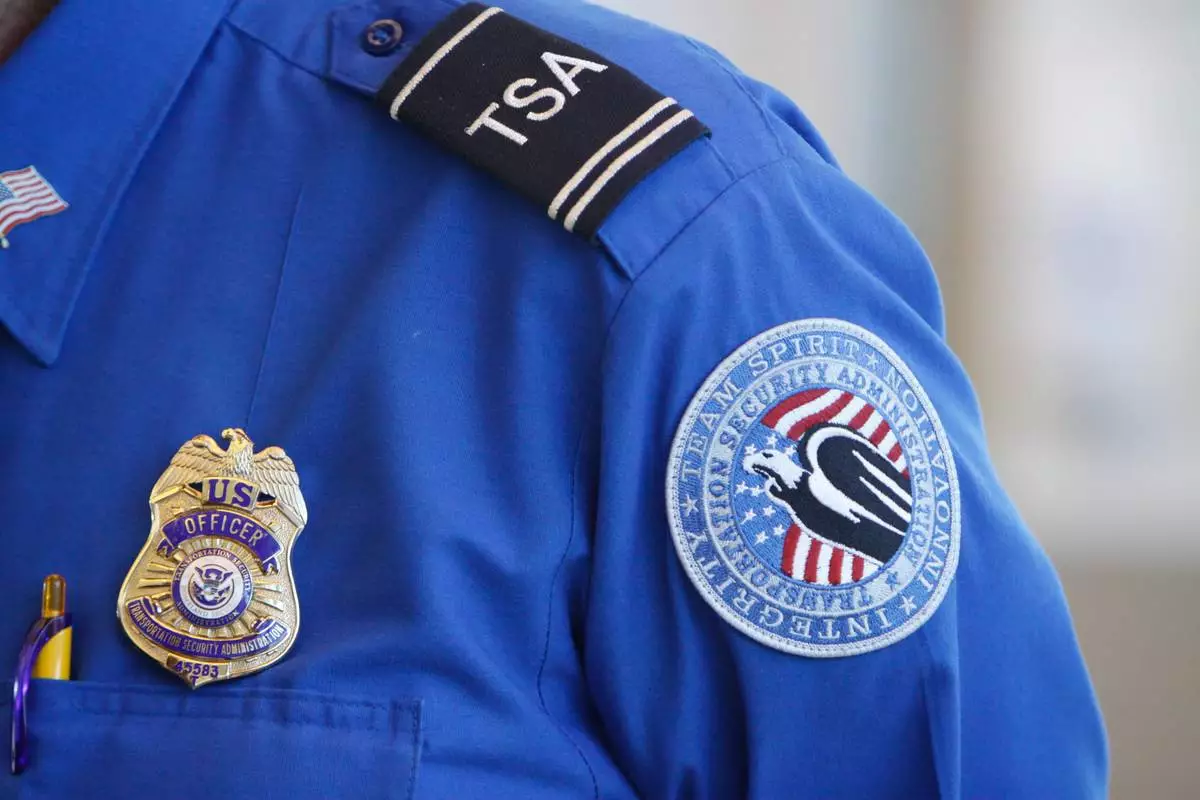
FILE -The badge and TSA logo patch are seen on the uniform of a Transportation Security Administration employee at one of the security checkpoints inside Lambert- St. Louis International Airport Oct. 7, 2010, in St. Louis. (AP Photo/Jeff Roberson, File)
FILE -The badge and TSA logo patch are seen on the uniform of a Transportation Security Administration employee at one of the security checkpoints inside Lambert- St. Louis International Airport Oct. 7, 2010, in St. Louis. (AP Photo/Jeff Roberson, File)

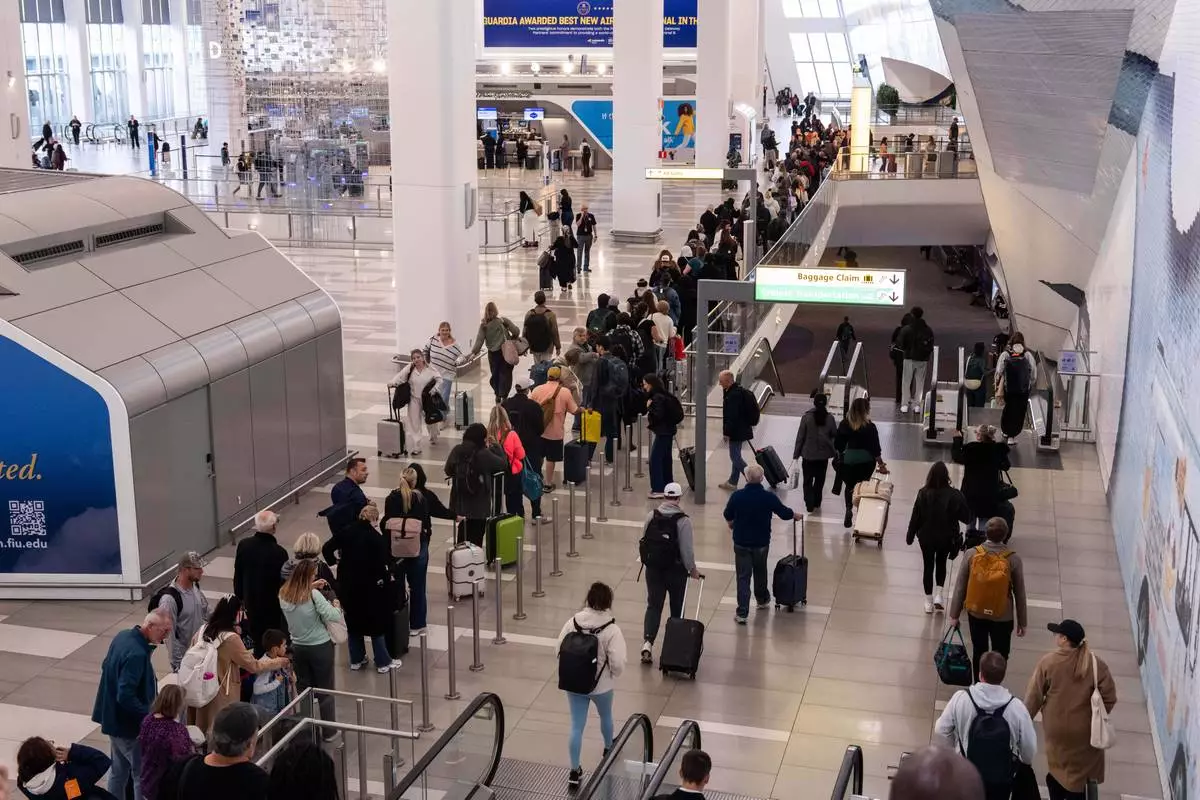
FILE - People wait in line at a Transportation Security Administration (TSA) security checkpoint at LaGuardia Airport in the Queens borough of New York, Nov. 9, 2025. (AP Photo/Adam Gray, File)
FILE - People wait in line at a Transportation Security Administration (TSA) security checkpoint at LaGuardia Airport in the Queens borough of New York, Nov. 9, 2025. (AP Photo/Adam Gray, File)

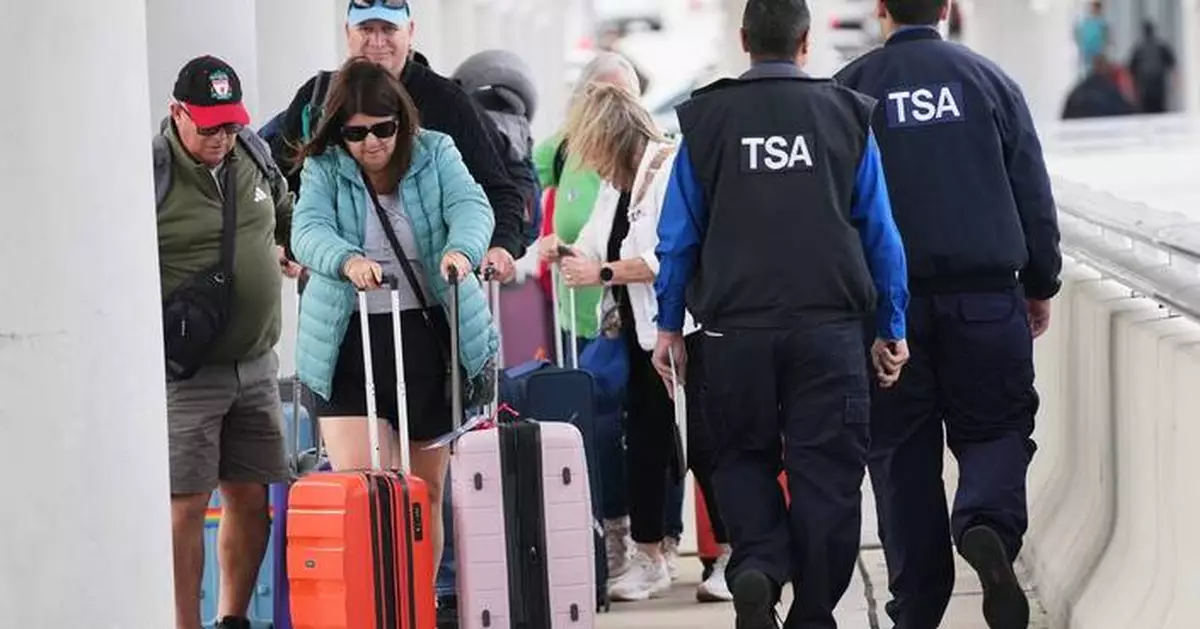
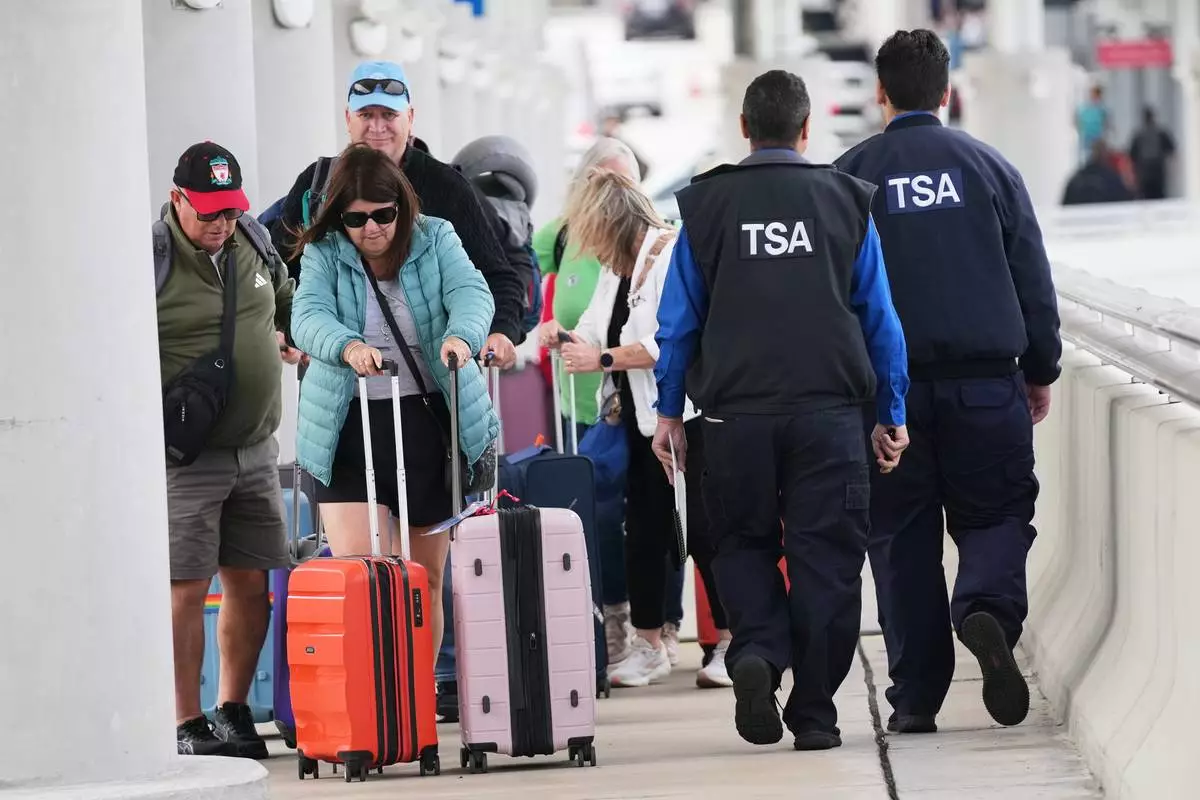
FILE - Travelers walk with their luggage past TSA agents at Fort Lauderdale-Hollywood International Airport, Nov. 13, 2025, in Fort Lauderdale, Fla. (AP Photo/Lynne Sladky, File)

FILE - Travelers walk with their luggage past TSA agents at Fort Lauderdale-Hollywood International Airport, Nov. 13, 2025, in Fort Lauderdale, Fla. (AP Photo/Lynne Sladky, File)
FLORENCE, Ariz. (AP) — An Arizona prisoner convicted of killing another man by throwing gasoline at him and lighting a match was put to death Wednesday, the first of three executions planned this week around the U.S.

Leroy Dean McGill, 63, was pronounced dead at 10:26 a.m. PDT following a lethal injection at the Arizona State Prison Complex in Florence. McGill was convicted of murder in the death of Charles Perez, who was attacked with his girlfriend in a north Phoenix apartment on July 13, 2002.

It was the first lethal injection carried out this year in Arizona, and McGill didn’t appear to be resisting at any point during the procedure. After a lethal dose of pentobarbital began flowing, he began breathing heavily and made a snoring sound. And, about 21 minutes after the IV insertion process began, he was pronounced dead.

While the state was criticized for having difficulty in inserting IV lines during executions in 2022, it took just one attempt on each of McGill’s arms to successfully insert IVs.

“Today’s process went according to plan,” said John Barcello, deputy director of the Arizona Department of Corrections, Rehabilitation and Reentry. Barcello quoted McGill’s last words as: “I just want to thank everyone for being so accommodating and nice.”

Before the injection began, McGill looked at the witnesses, smiled and nodded. Media witness Josh Kelety from The Associated Press said he heard McGill at one point say: “I’m going home soon.”

Arizona Attorney General Kris Mayes, whose office pressed for the execution to be carried out, said her thoughts were with the victims.

Media witness Sean Rice from Phoenix television station KPN said the execution was carried out smoothly.

"I didn’t see any issue at all finding a vein on either arm,” he said. Rice said he also observed a slight twitching on the right side of McGill’s head about four minutes before the inmate was pronounced dead.

Authorities said that in 2002 McGill threw gasoline at Perez and Perez’s girlfriend, Nova Banta, as they sat on a sofa in the apartment, setting them on fire. Perez and Banta had accused McGill of stealing a gun from the apartment before the attack. At the time, McGill was using methamphetamine and hadn’t slept in several days.

Banta survived, but Perez died.

Twelve people have been executed so far this year in the United States. Tennessee and Florida each are scheduled to carry out an execution Thursday.

At the Arizona trial, Banta testified that McGill had told her and Perez not to talk behind people's backs. Before they could respond, McGill lit them on fire, authorities said.

Perez and Banta ran out of the apartment. Another man who lived in the apartment used a blanket to put out the flames on Banta, who suffered third-degree burns over three-quarters of her body. Perez died later at a hospital in extreme pain, prosecutors said.

Banta identified McGill as the attacker at trial.

Jurors deliberated for less than an hour before convicting McGill of murder in Perez’s death in October 2004. He also was convicted of attempted murder for attacking Banta, arson and endangerment of people who escaped without injuries when the fire forced them to flee the apartment and a nearby unit where flames spread.

McGill’s lawyers had argued for leniency by presenting evidence about abuse he suffered as a child as well as mental impairment and psychological immaturity. The jury ultimately returned the death sentence.

This spring, McGill’s lawyers made a last-ditch bid to get him resentenced, but a lower-court judge rejected it. The Arizona Supreme Court also declined a request from McGill’s lawyers to postpone the execution.

McGill, who declined an interview request from The Associated Press, waived his right to seek clemency.

Arizona last applied the death penalty in 2025, executing Richard Kenneth Djerf for the 1993 killings of four members of a Phoenix family and Aaron Gunches for the 2002 fatal shooting of his girlfriend’s ex-husband.

The state carried out three executions in 2022 following a nearly eight-year hiatus brought on by difficulties obtaining execution drugs and by criticism that a 2014 execution was botched. In that 2014 execution, Joseph Wood was injected with 15 doses of a two-drug combination over two hours, leading him to snort repeatedly and gasp hundreds of times before he died.

The state’s current execution protocol calls for administering two syringes of pentobarbital, a powerful sedative.

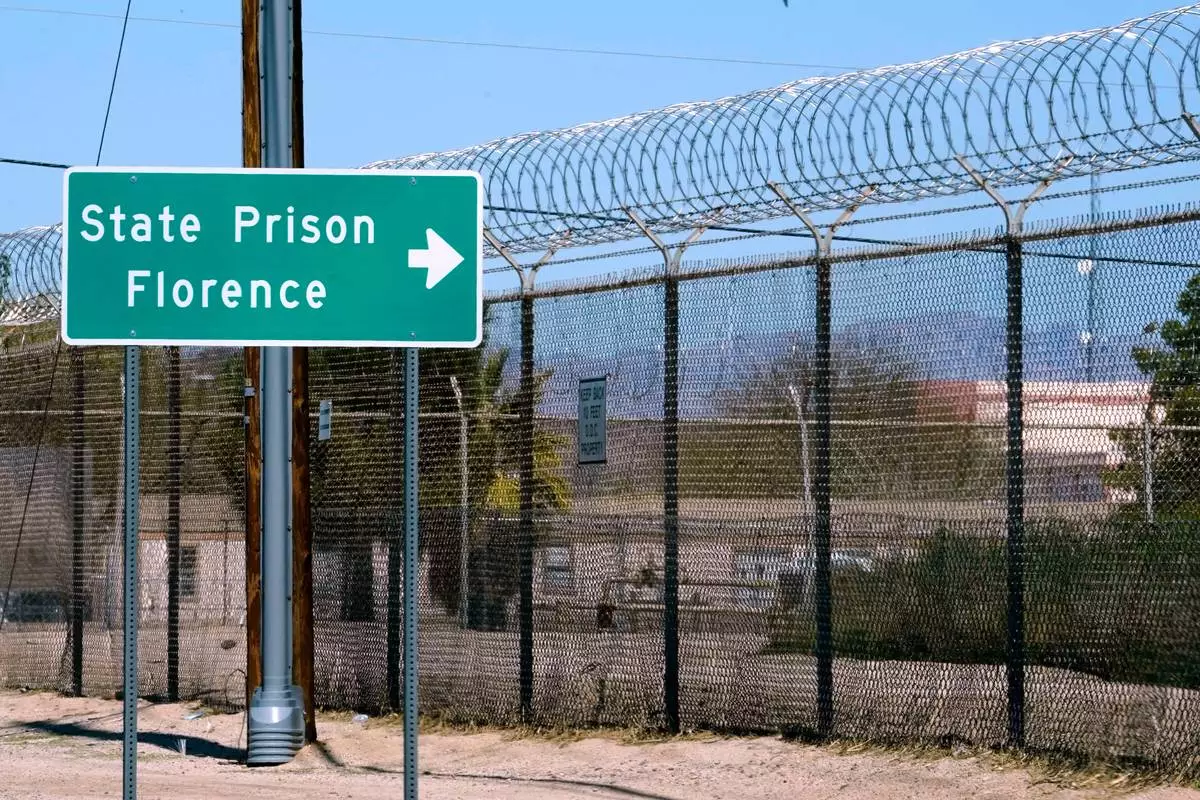
FILE - A sign points in the direction of the Arizona State Prison in Florence, Ariz., March 19, 2025. (AP Photo/Darryl Webb, File)

FILE - A sign points in the direction of the Arizona State Prison in Florence, Ariz., March 19, 2025. (AP Photo/Darryl Webb, File)

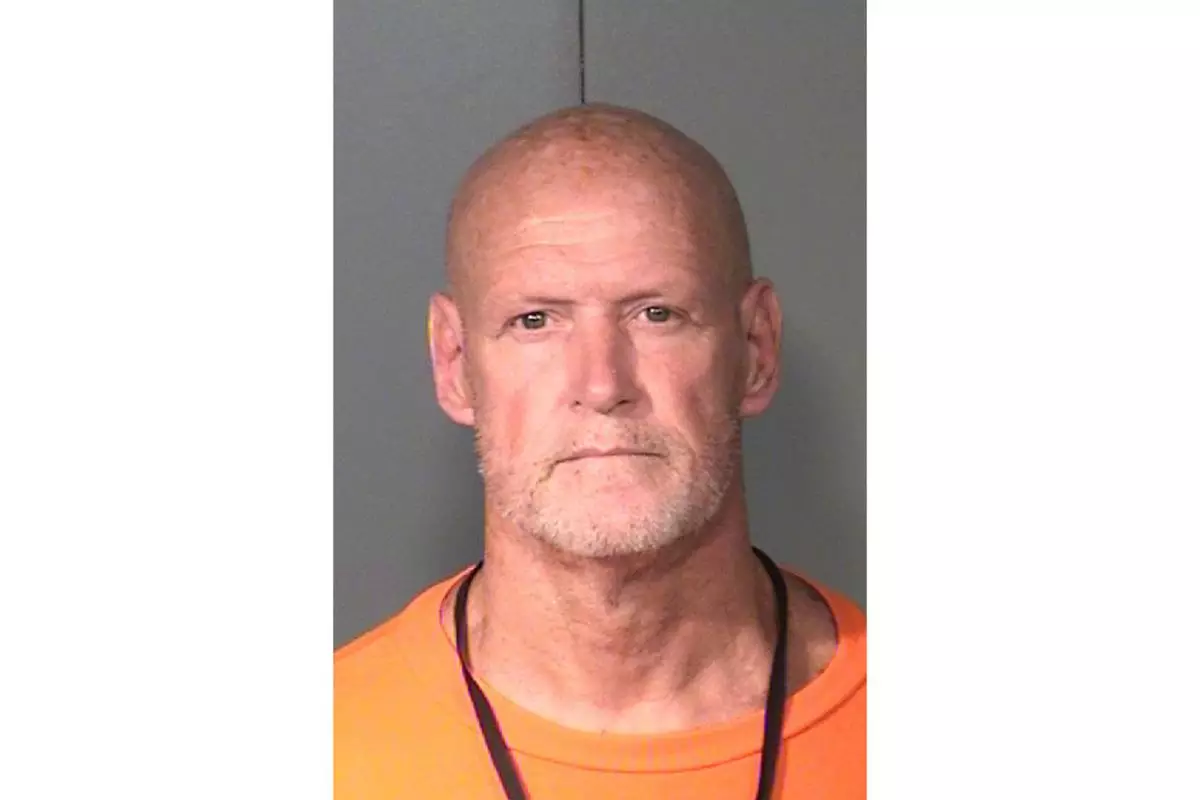
FILE - This undated photo provided by Arizona Department of Corrections, Rehabilitation and Reentry shows prisoner Leroy McGill, who is scheduled to be executed on May 20, 2026, in the 2002 killing of Charles Perez . (Arizona Department of Corrections, Rehabilitation and Reentry via AP, File)

FILE - This undated photo provided by Arizona Department of Corrections, Rehabilitation and Reentry shows prisoner Leroy McGill, who is scheduled to be executed on May 20, 2026, in the 2002 killing of Charles Perez . (Arizona Department of Corrections, Rehabilitation and Reentry via AP, File)

Recommended Articles